JACKSON, Miss. (AP) — At 16, Edward Blackmon Jr. was arrested during a protest for voting rights in his Mississippi hometown. He was loaded with schoolmates into a truck once used to haul chickens and was left in the summer heat before spending three nights in an overcrowded jail cell without a bed.
It was a moment that set him on a path to become a civil rights lawyer and one of the first Black lawmakers elected in the state since Reconstruction.
Click to Gallery
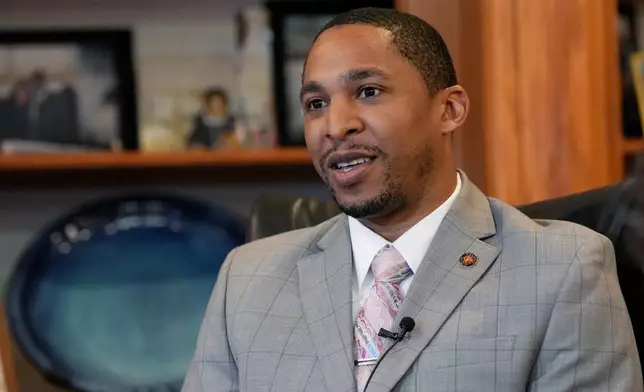
Mississippi State Sen. Bradford Blackmon, D-Canton, reacts to Wednesday's U.S. Supreme Court ruling in a decision that limits how the Voting Rights Act can be used to challenge voting maps, Friday, May 1, 2026, in Canton, Miss. (AP Photo/Rogelio V. Solis)
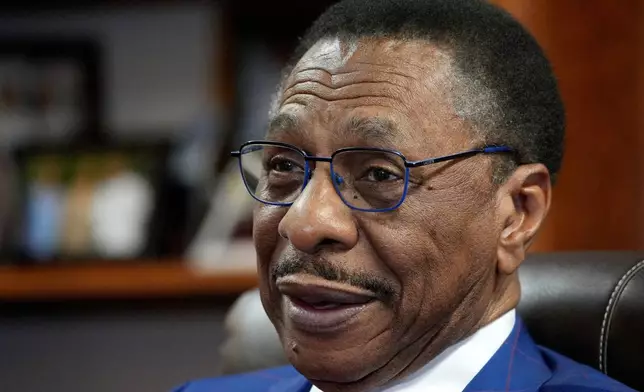
Attorney Edward Blackmon Jr., 78, a civil rights attorney and a former state representative, reacts to Wednesday's U.S. Supreme Court ruling, Friday, May 1, 2026, in Canton, Miss. (AP Photo/Rogelio V. Solis)
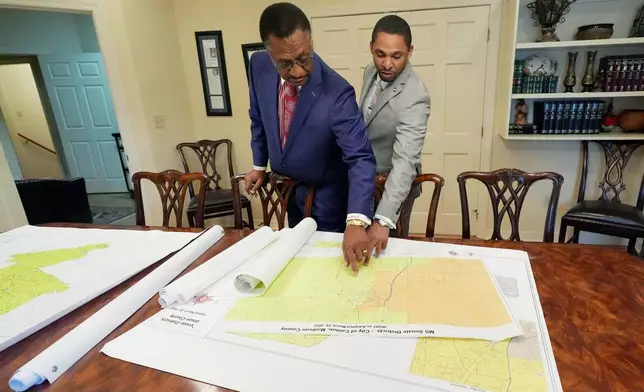
Attorney Edward Blackmon Jr., 78, a civil rights attorney and a former state representative, left, and his son, State Sen. Bradford Blackmon, D-Canton, review a 2022 redistricting map in their law office in Canton, Miss., Friday, May 1, 2026. (AP Photo/Rogelio V. Solis)
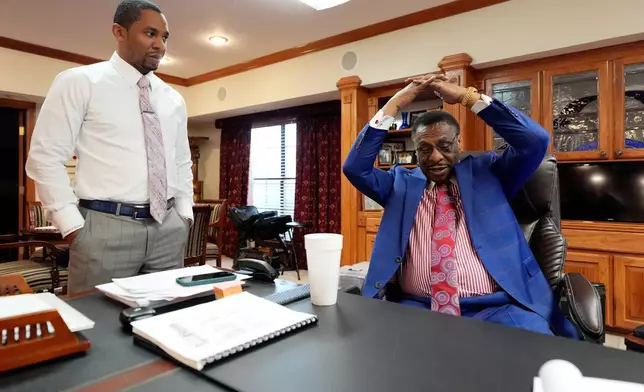
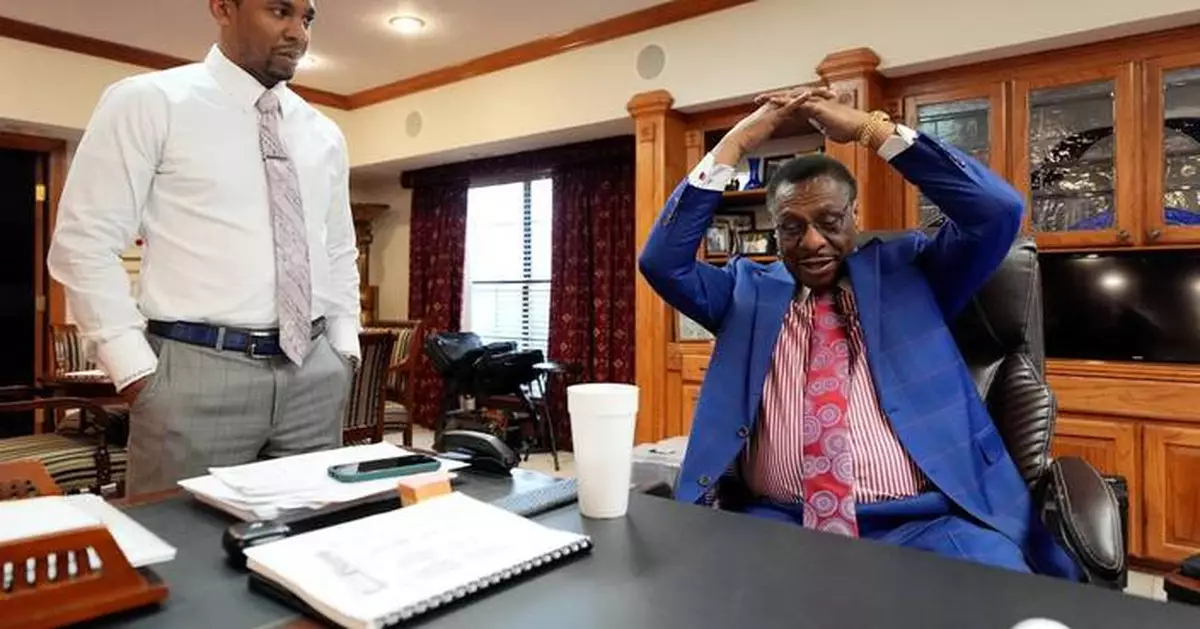
Attorney Edward Blackmon Jr., 78, a civil rights attorney and a former state representative, right, demonstrates how he and other civil rights marchers were taught how to protect themselves if physically set upon by lawmen to his son State Sen. Bradford Blackmon, D-Canton, in Canton, Miss., Friday, May 1, 2026. (AP Photo/Rogelio V. Solis)
Blackmon was part of a generation of Black Americans across the South who fought in courtrooms and in the streets to dismantle barriers to voting and achieve political representation in a region scarred by the legacy of slavery and its aftermath.
One of the crown jewels of that struggle, the Voting Rights Act, was hollowed out this week by the U.S. Supreme Court. The court's conservative majority said states should not rely on racial demographics when drawing congressional districts, a ruling that opened the door to transforming how political power is distributed and making it harder for minorities to get elected.
The majority opinion described racism as a problem of the past. Others saw the decision as another example of its resurgence — “a defibrillator to the heart of Jim Crow," as one Louisiana politician put it.
Blackmon's son, Bradford, a 37-year-old state senator in Mississippi, said how the political lines are drawn "shapes who has a real chance before anyone ever votes.”
"It’s just sad that we made progress and then they are always trying to roll it back when it shows that minorities are making more progress than I would guess that those in charge think that they’re allowed to make," he said.
The elder Blackmon, now 78, said he was resigned to the reality that the fight of his youth is not over.
“It’s just another cycle — an ongoing struggle without a foreseeable ending,” he said.
The case, involving a challenge to Louisiana's congressional map, clarified how the Voting Rights Act can be used to contest district lines that may weaken the voting power of Black residents.
For many Black Americans, the decision was a death knell for a cherished pillar of the Civil Rights Movement. Before the Voting Rights Act of 1965, Black voters in the Deep South had no guarantee of equal access to the ballot. Within a year of its passage, more than 250,000 Black Americans had gained the right to vote. By 2024, nearly 22 million Black voters were registered nationwide, according to the U.S. Census Bureau.
The United States is now witnessing the unraveling of nearly a century of organizing, civil disobedience and personal sacrifice by ordinary people who helped build Black political power to heights unseen since Reconstruction. Veterans of the voting rights movement — people who bled with John Lewis on the 1965 march in Selma, Alabama, that became known as Bloody Sunday or marched with the Rev. Martin Luther King Jr. — are seeing those hard-won victories stripped away from their descendants.
“I’m the first generation of Americans born with equal rights,” said Jonathan Jackson, a Democratic congressman from Illinois who is the 60-year-old son of the Rev. Jesse Jackson, the late civil rights leader. Jonathan Jackson said the idea that his children could grow up with fewer protections was “surreal and devastating.”
For Charles Mauldin, who was beaten by law enforcement as a teenager on Bloody Sunday, the ruling reflects a skirmish that was never as settled as some hoped.
“I’m disappointed but not surprised,” said Mauldin, 78, of Birmingham, Alabama. “They’ve been chipping away at the 1965 Voting Rights Act for the last 60 years.”
In Louisiana, younger Black politicians say the high court's ruling could reshape not just who wins elections, but whether candidates can compete at all, particularly in down-ballot races that often serve as steppingstones to higher office.
Davante Lewis, a 34-year-old Democrat who serves on the state’s utility regulatory board, said he expects districts could be redrawn in ways that make it harder for candidates like him to win.
“They can target my communities … to ensure that I can’t get to an elected office,” said Lewis, who one of several plaintiffs in the original Louisiana gerrymandering case that went to the Supreme Court.
Jamie Davis, a Black farmer in northeast Louisiana and a Democratic candidate for U.S. Senate, said the decision risks discouraging voters already skeptical that their voices matter.
“I want to be optimistic, but how can you be optimistic when voter turnout in the past election cycles has been really low,” Davis said.
Tennessee is among the states bracing for new redistricting efforts. State Rep. Justin Pearson, who represents Memphis and is running for Congress, said people who struggled to pass the Voting Rights Act are “shocked and devastated that they’re having to relitigate the same fights that they fought 60 years ago.”
But he also predicted that efforts to reduce Black representation could “reinvigorate a civil rights movement in the South that demands equal representation, that demands fairness, that demands justice and equality.”
Supporters of the Supreme Court ruling said it reinforces a race-neutral approach to redistricting and they say political lines should not be drawn primarily based on race.
Mississippi state Rep. Bryant Clark said that view ignores how race and party align in the state. In Mississippi, where most Black voters are Democrats and most white voters are Republicans, he said the two are often indistinguishable.
“It’s just a roundabout way to basically legalize racially discriminatory redistricting in the state,” Clark said.
In 1967, his father, Robert Clark Jr., became the first Black lawmaker elected to the Mississippi Legislature since Reconstruction.
With Black residents making up about 38% of Mississippi’s population, Edward Blackmon Jr. said the current maps allow Black voters to elect candidates in some districts while keeping Republican majorities intact across much of the state.
He said lawmakers have little incentive to change that balance because moving Black voters into more districts would make those seats less reliably conservative and force candidates to compete for a broader electorate.
“Where do you think the population goes? They don’t just disappear,” Blackmon said. “What incumbent wants that type of district right now?”
Blackmon was raised in Canton, “when Jim Crow was in full bloom.”
Black children attended separate schools, and during cotton-picking season, classes let out early as rickety trucks with wooden sides arrived to take students to the fields, where they spent hours working.
At home, he watched those inequalities play out in quieter ways.
His father, a World War II veteran who left the sharecropping farm where Blackmon’s grandfather had worked, struggled to find steady work in Mississippi after returning from military service and becoming involved in civil rights organizing. He eventually left for New York to make a living — part of a generation of Black veterans who faced barriers to jobs and opportunities their white counterparts received.
Blackmon remembers sitting nearby as his father and other community leaders gathered on the porch, talking late into the night about forming a local NAACP chapter.
“It was embedded in my memory and experience that it was worth the struggle,” he said.
When the Voting Rights Act passed, it did not immediately change those realities. In places like Canton, federal officials set up registration tables on downtown streets so Black residents could sign up to vote without facing harassment or intimidation from local authorities.
In the years that followed, Blackmon and other lawyers used the law to challenge at-large election systems that prevented Black communities from electing candidates of their choice. Cities and counties were forced to redraw maps into single-member districts.
When those districts still diluted Black voting strength, activists returned to court.
“Without the Voting Rights Act, Mississippi would look so much different than it looks now,” Blackmon said.
Willingham reported from Boston, Brook from New Orleans and Amy from Atlanta. Associated Press writers Kristin Hall and Travis Loller in Nashville, Tennessee, and Safiyah Riddle and Kim Chandler in Montgomery, Alabama, contributed to this report.
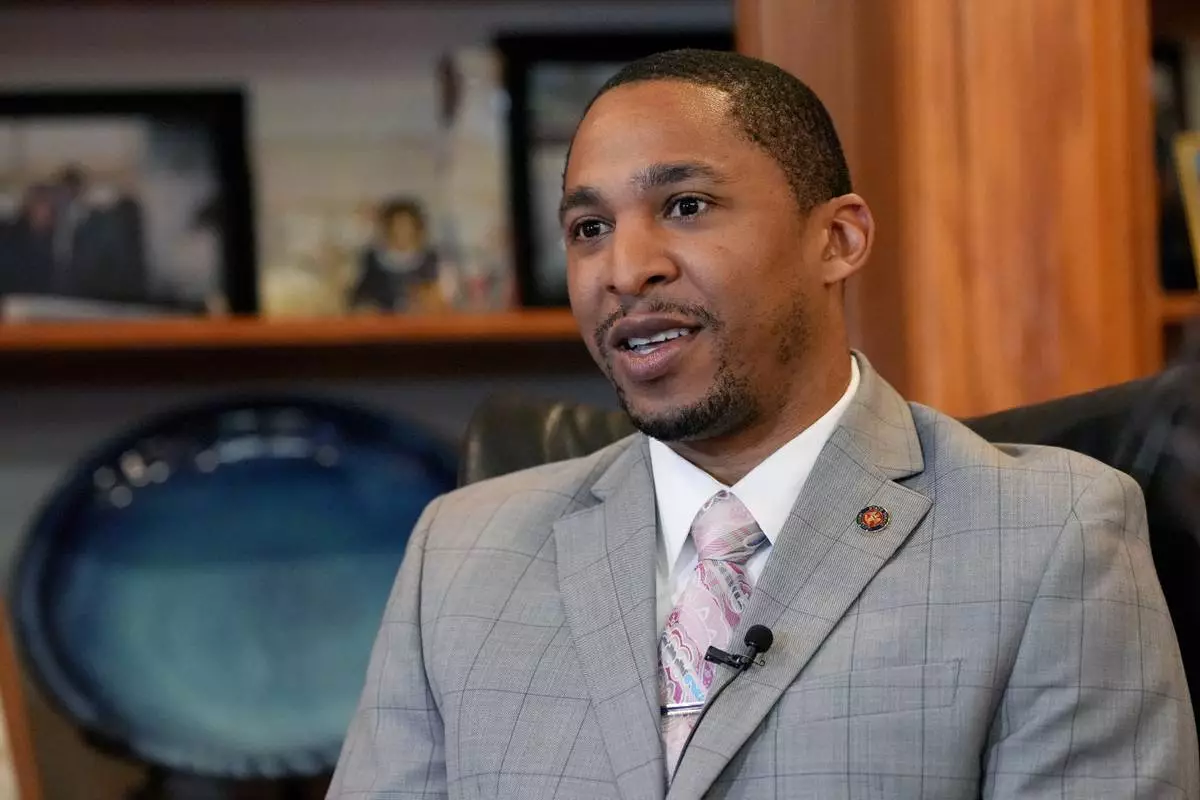
Mississippi State Sen. Bradford Blackmon, D-Canton, reacts to Wednesday's U.S. Supreme Court ruling in a decision that limits how the Voting Rights Act can be used to challenge voting maps, Friday, May 1, 2026, in Canton, Miss. (AP Photo/Rogelio V. Solis)
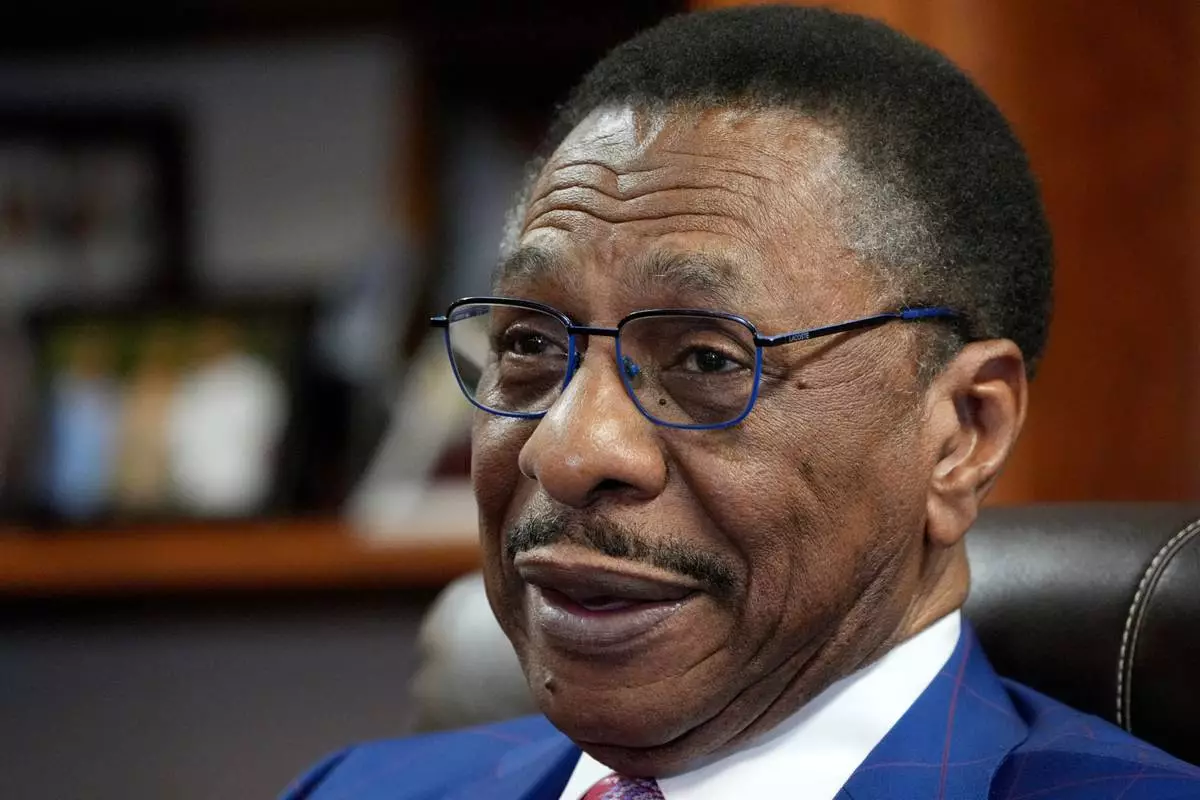
Attorney Edward Blackmon Jr., 78, a civil rights attorney and a former state representative, reacts to Wednesday's U.S. Supreme Court ruling, Friday, May 1, 2026, in Canton, Miss. (AP Photo/Rogelio V. Solis)
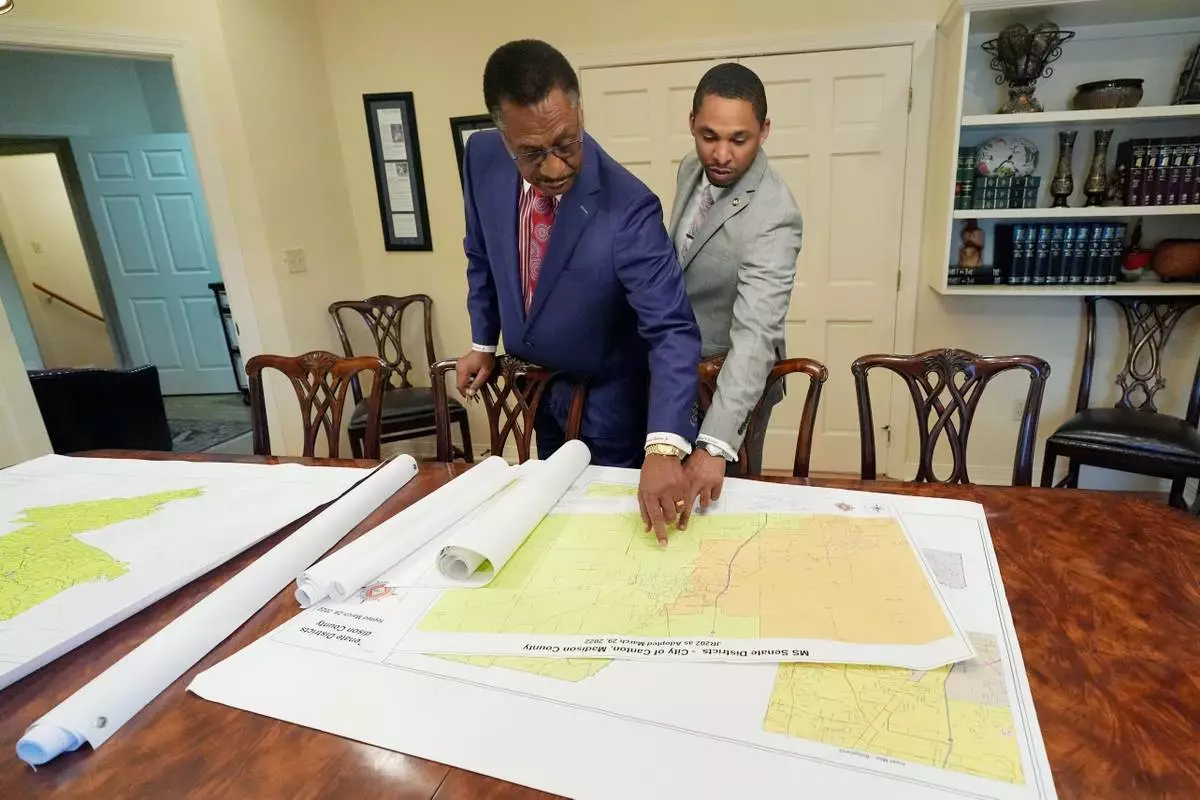
Attorney Edward Blackmon Jr., 78, a civil rights attorney and a former state representative, left, and his son, State Sen. Bradford Blackmon, D-Canton, review a 2022 redistricting map in their law office in Canton, Miss., Friday, May 1, 2026. (AP Photo/Rogelio V. Solis)
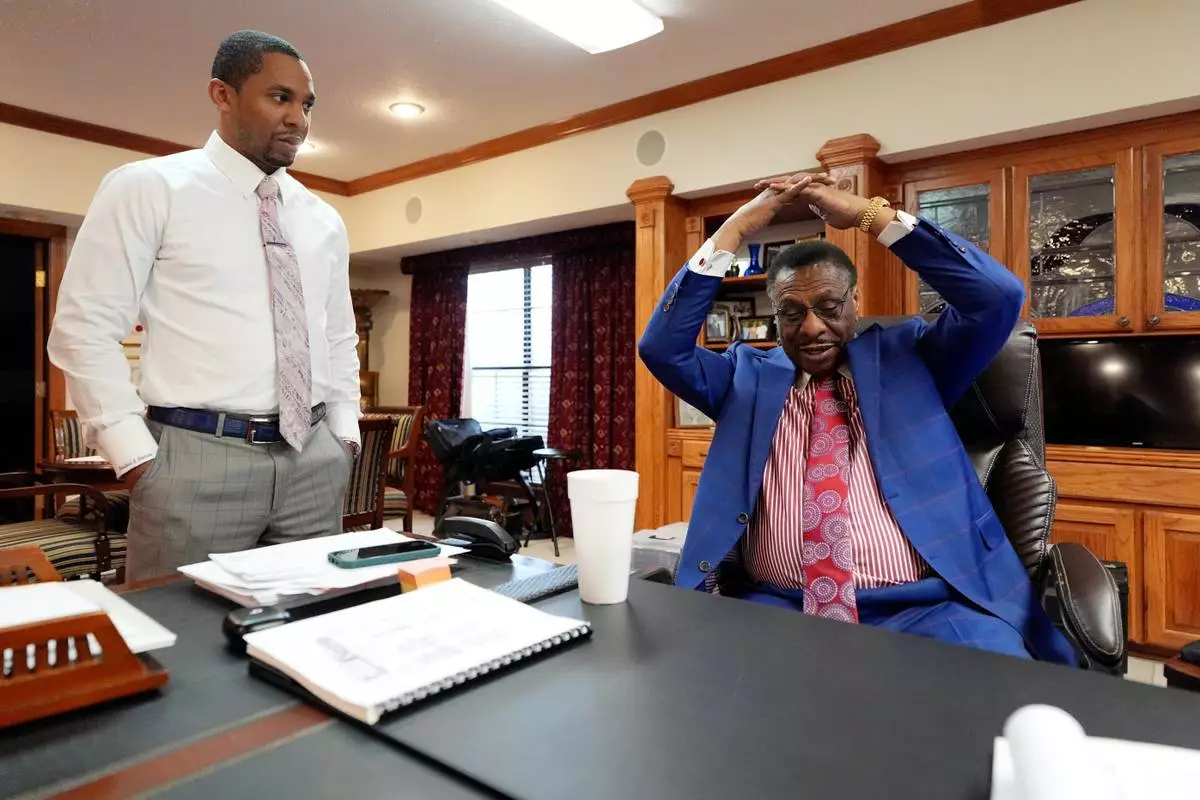
Attorney Edward Blackmon Jr., 78, a civil rights attorney and a former state representative, right, demonstrates how he and other civil rights marchers were taught how to protect themselves if physically set upon by lawmen to his son State Sen. Bradford Blackmon, D-Canton, in Canton, Miss., Friday, May 1, 2026. (AP Photo/Rogelio V. Solis)