WASHINGTON (AP) — Vice President JD Vance announced Wednesday that the Trump administration would “temporarily halt” some Medicaid funding to the state of Minnesota over fraud concerns, as part of what he described as an aggressive crackdown on misuse of public funds.
Vance, who made the announcement with Dr. Mehmet Oz, the administrator for the Centers for Medicare and Medicaid Services, said the administration was taking the action “in order to ensure that the state of Minnesota takes its obligations seriously to be good stewards of the American people’s tax money.”
Oz, who referred to people committing fraud as “self-serving scoundrels,” said the federal government would hold off on paying $259.5 million to Minnesota in funding for Medicaid, the health care safety net for low-income Americans.
“This is not a problem with the people of Minnesota, it’s a problem with the leadership of Minnesota and other states who do not take Medicaid preservation seriously,” Oz said.
Wednesday’s move is part of a larger Trump administration effort to spotlight fraud around the country. That effort comes after allegations of fraud involving day care centers run by Somali residents in Minneapolis prompted a massive immigration crackdown in the Midwestern city, resulting in widespread protests. President Donald Trump, in his State of the Union address on Tuesday, announced Vance would spearhead a national “war on fraud.”
Trump also recently nominated Colin McDonald to serve as the first assistant attorney general in charge of a Justice Department division dedicated to rooting out fraud.
Oz said the administration was simultaneously notifying Minnesota’s Democratic Gov. Tim Walz as he was making the announcement publicly.
“We will give them the money, but we’re going to hold it and only release it after they propose and act on a comprehensive corrective action plan to solve the problem,” Oz said.
He said Walz would have 60 days to respond and advised health care providers and Medicaid beneficiaries who were concerned to contact Walz’s office.
Walz, former Vice President Kamala Harris’ 2024 running mate, said in a pair of social media posts that the administration’s move had nothing to do with fraud.
“This is a campaign of retribution. Trump is weaponizing the entirety of the federal government to punish blue states like Minnesota,” Walz said. “These cuts will be devastating for veterans, families with young kids, folks with disabilities, and working people across our state.”
Minnesota Attorney General Keith Ellison said in a statement that his team has secured over 300 Medicaid fraud convictions since he took office in 2019. And he noted that he called on the Legislature earlier Wednesday to give him more staff and new legal tools to combat Medicaid fraud.
"Courts have repeatedly found that their pattern of cutting first and asking questions later is illegal, and if the federal government is unlawfully withholding money meant for the 1.2 million low-income Minnesotans on Medicaid, we will see them in court,” Ellison said.
Oz said the Centers for Medicare and Medicaid Services were also taking action to crack down on fraud in Medicare, the health care system relied upon by millions of older adults.
He said CMS for six months would block any new Medicare enrollments for suppliers of durable medical equipment, prosthetics, orthotics or other supplies used to treat chronic conditions or assist in injury recovery.
The Office of the Inspector General for the U.S. Department of Health and Human Services found last year that Medicare improperly paid suppliers nearly $23 million for durable medical equipment from 2018 through 2024. But it found that most of that was before January 2020, when changes to the system were implemented.
Oz also announced a new crowdsourcing effort he said would help “crush fraud” by soliciting Americans’ tips and suggestions.
“All of us are smarter than any one of us,” he said.
In a news release accompanying the announcement, CMS said the funding being paused in Minnesota included some $244 million in unsupported or potentially fraudulent Medicaid claims and about $15 million in claims involving “individuals lacking a satisfactory immigration status.”
Immigrants who are not living in the U.S. legally, as well as some lawfully present immigrants, are not allowed to enroll in the Medicaid program that provides nearly-free coverage for health services.
CMS said in the release that if Minnesota fails to satisfy its requirements, it may defer up to $1 billion in federal funds to the state over the next year. CMS spokesperson Catherine Howden said the agency's review of potential fraud cases would include sampling claims to see if they comply with federal requirements, and potentially requesting more information about specific claims.
Akeiisa Coleman, the senior program officer for Medicaid at the Commonwealth Fund, said CMS was taking a “highly unusual step" in deferring funding. She said if the state doesn't have enough funds available, it may have to halt payments to providers, which could affect care.
The administration has threatened to cut off funding for various programs for some Democratic-run states over fraud concerns over the last few months.
One judge blocked those actions and required that payments flowing to Minnesota and four other states — California, Colorado, Illinois and New York — for a variety of social service programs. The government had said that there was “reason to believe” that those states were granting benefits to people in the country illegally. It did not initially explain where that information came from, but a government lawyer told the judge it was largely in reaction to news reports about possible fraud.
Another judge said she would not let it cut off funding for administrative costs for 22 states that have refused to hand over information about applicants and recipients of food aid through the Supplemental Nutritional Assistance Program.
The latest action was prompted in part by a series of fraud cases, including a nonprofit called Feeding Our Future accused of stealing pandemic aid meant for school meals. Prosecutors have put the losses from that case at $300 million.
Since then, Trump has targeted the Somali diaspora in Minnesota with immigration enforcement actions and has made a series of disparaging comments about the community. During his State of the Union address on Tuesday, Trump said “pirates” have “ransacked Minnesota.”
Federal agencies have also been enlisted to assist in targeting fraud in Minnesota.
Last December, the U.S. Treasury Department issued an order requiring money wire services that people use to send money to Somalia to submit additional verification to the Treasury.
The Center for Medicare and Medicaid Services told Minnesota in January that it intended to freeze parts of payments for some Medicaid programs that were deemed high-risk. The state said that those cuts would add up to more than $2 billion annually if they lasted and made an administrative appeal.
Associated Press writers Geoff Mulvihill in Philadelphia, Steve Karnowski in Minneapolis and Fatima Hussein in Washington contributed to this report.
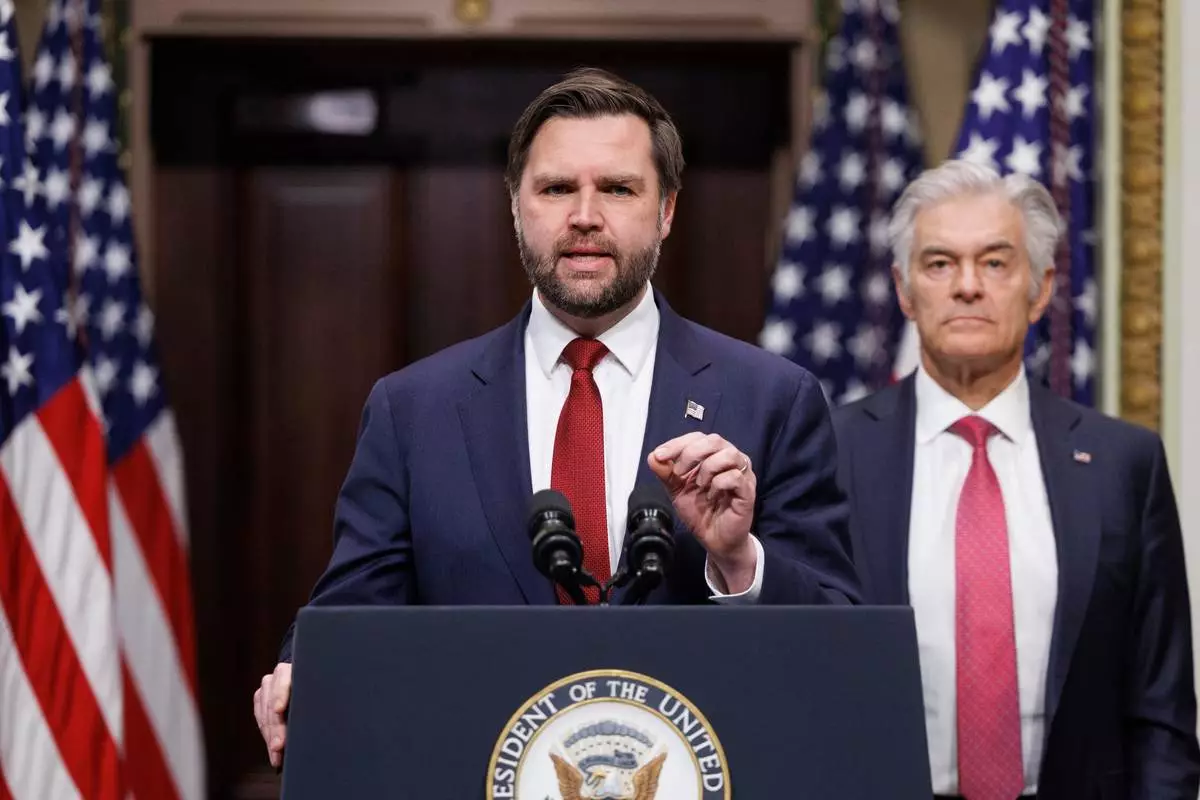
Vice President JD Vance speaks beside Administrator for the Centers for Medicare & Medicaid Services Dr. Mehmet Oz during a news conference in the Old Eisenhower Executive Office Building on the White House campus Wednesday, Feb. 25, 2026, in Washington. (AP Photo/Tom Brenner)
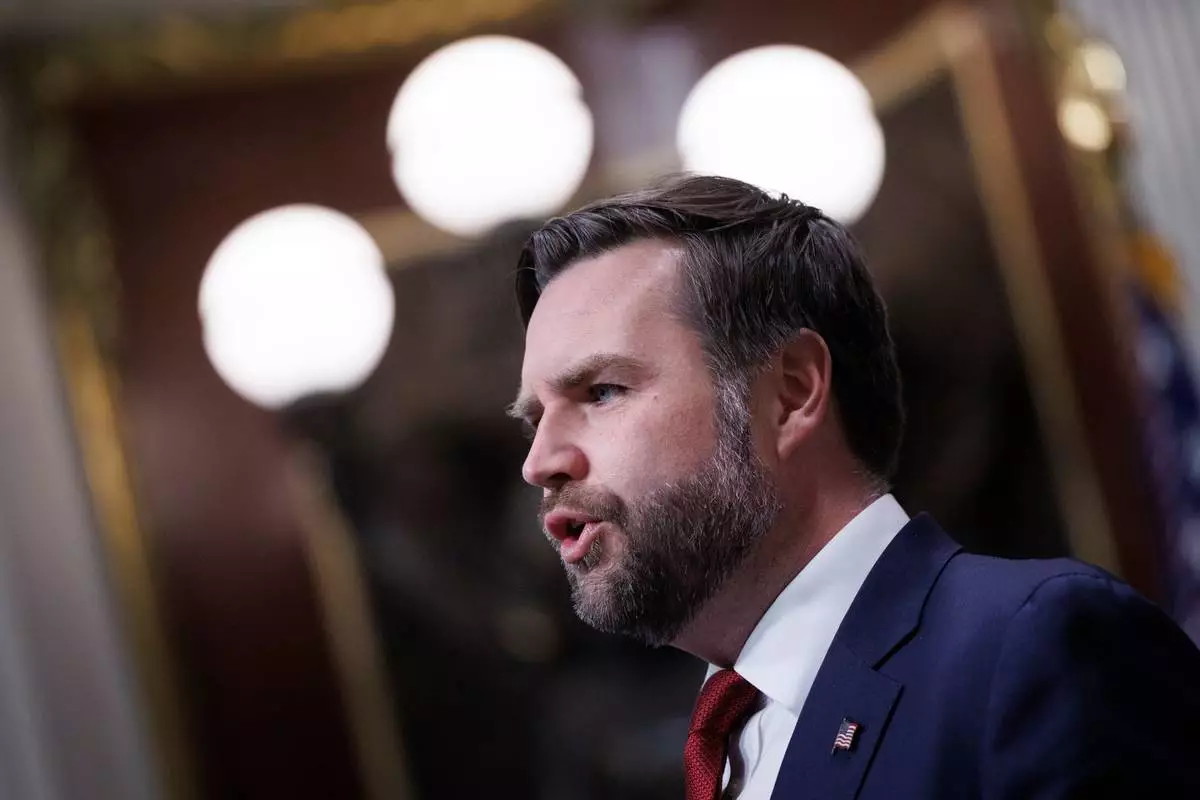
Vice President JD Vance speaks during a news conference in the Old Eisenhower Executive Office Building on the White House campus Wednesday, Feb. 25, 2026, in Washington. (AP Photo/Tom Brenner)
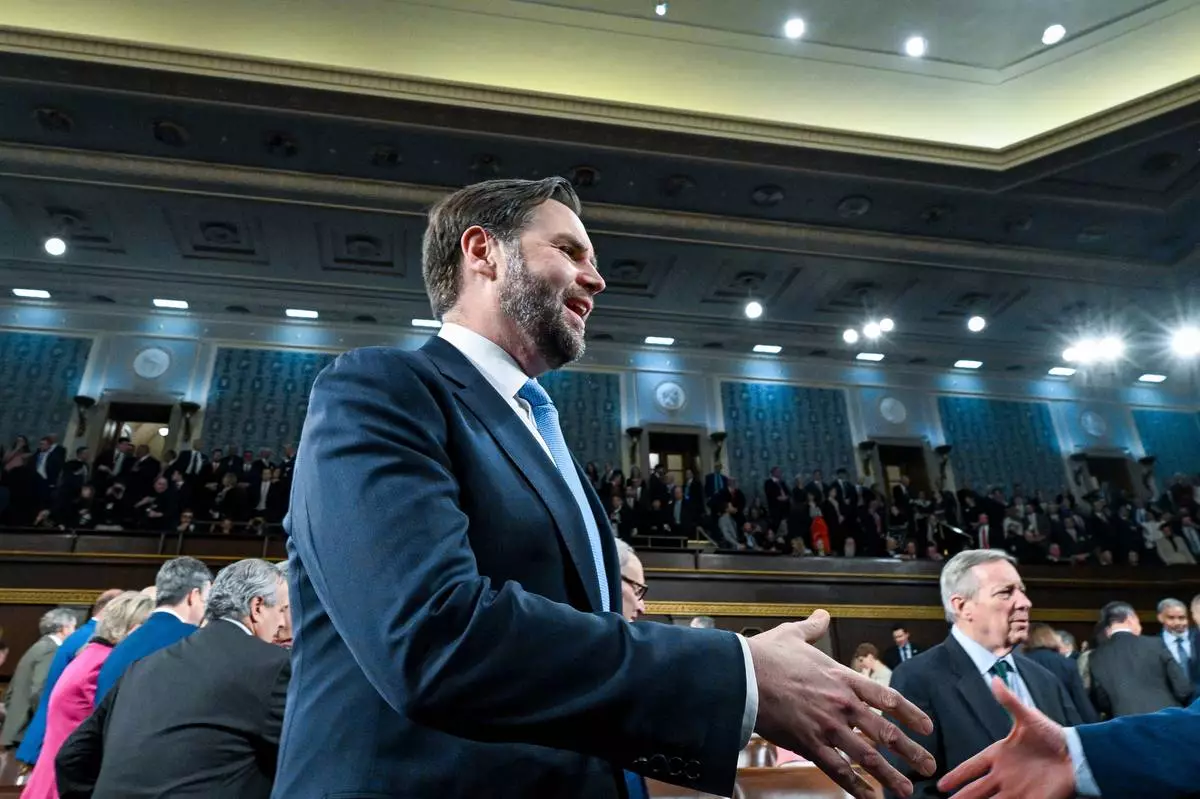
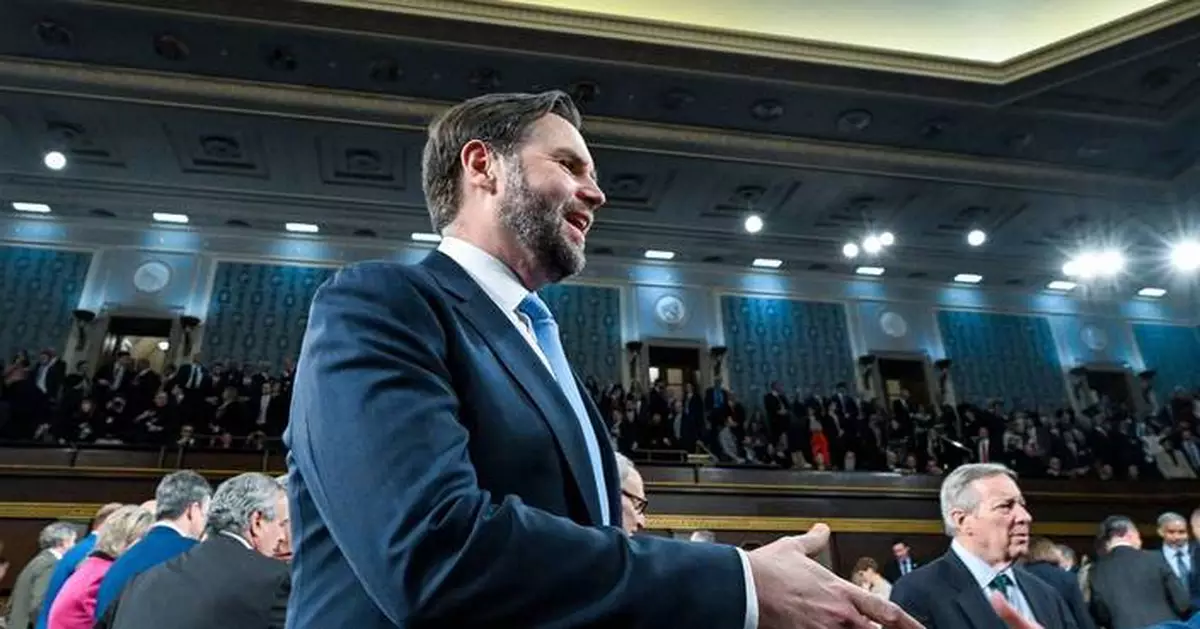
Vice President JD Vance arrives before President Donald Trump delivers the State of the Union address to a joint session of Congress in the House chamber at the U.S. Capitol in Washington, Tuesday, Feb. 24, 2026. (Kenny Holston/The New York Times via AP, Pool)
President Donald Trump is taking his Republican midterm rescue mission to Nebraska on Monday, campaigning alongside GOP Sen. Pete Ricketts, who is running against an independent candidate backed by national Democrats.
It’s part of what the Republican president says is a 32-day blitz of rallies ahead of Nov. 3 that so far has taken him to ruby-red territory such as Oklahoma and Alabama. His upcoming stop, Grand Island, is located in Nebraska’s solidly conservative south-central region.
Across the country, voters are frustrated with Trump’s handling of the economy, including persistently high costs for fuel and groceries. It’s a major issue for rural voters who have backed the president and his party in recent elections. But so far on the campaign trail, Trump has dismissed those economic concerns.
The administration’s plan to allow more imports of foreign beef has particularly roiled the agriculture-rich state of Nebraska. Trump wants to lower beef prices for consumers, but ranchers have rebelled against the import proposal, arguing it would undercut them.
The Latest:
Trump has concluded his rally in Nebraska by again urging his supporters to pretend that he is on the ballot next month.
“Just remember: I’m running. I’m running, OK?” he said from the stage. “We have to keep it going.”
Trump signed an executive order on stage at his Nebraska rally that he says will bring down sky-high diesel prices by allowing anyone to purchase red dye diesel tax free.
Trump says the order marks an “unprecedented step to bring down costs” amid escalating pressure to address surging prices ahead of the Nov. 3 midterm elections.
Diesel fuel prices have spiked due to the war in Iran, but dyed diesel fuel is cheaper because it’s exempt from federal and state excise taxes.
Trump said the order will save the typical trucker more than $100 each time they fill their tanks and drive down the costs of other goods, including groceries.
Trump is insisting the country is doing better than ever before, even as Americans say they are struggling to afford basic necessities.
“Right now we have the Golden Age of America,” Trump says at a rally in Nebraska on Monday night. “Our nation is doing better now than it’s ever done before.”
Trump is pointing to statistics like a record low poverty rate.
But polls suggest deep economic distress, including increasing worries about being able to afford basics like groceries and gas.
About half of U.S. adults in a new AP-NORC poll said they are “extremely” or “very” concerned about being able to fill their tanks, up from 39% in July. And about half said they were highly concerned about being able to afford food.
Trump is campaigning in yet another ruby red state ahead of the quickly-approaching midterm elections.
“I love Nebraska,” Trump said after taking the stage in Grand Island in the solidly conservative south-central part of the state.
Trump is stumping for GOP Sen. Pete Ricketts, who is running against an independent candidate backed by national Democrats. Trump called Ricketts “a great man” who is “respected by everyone.”
He is again urging his supporters to pretend that he on the ballot as he tried to bolster Republican turnout despite voter anger over high prices and the war in Iran, which he insists will end soon.
“It’s a small price to pay for keeping the world safe,” he says.
In a post on his social media site, Trump defended the ads, which cost close to at least $1.5 million in federal funds, as “positive promotion for our Great U.S.A.”
“This is a rather standard thing to do,” he wrote of the ads being paid for taxpayers.
Trump added that he’d “decided to do the Patriotic Ads, among others, and pay for them myself, and with money I raised for MAGA, Inc.,” which is his political fund.
The White House did not immediately answer a question on whether Trump’s political group might reimburse taxpayers for ads that have already aired, or how the president might prove he’d made good on his promise.
The president was responding to a reporter’s question when he said the most populous county in the presidential battleground state, home to Phoenix, should “be ashamed of themselves.”
“Now they’re saying it was an error,” Trump said. “Maricopa is a very, very dishonest county.”
The exchange referred to a vendor error that came to light over the weekend. The Maricopa County Recorder’s Office said Runbeck Election Services told it that it “mistakenly mailed 3,126 early ballots the previous day,” six days before they were scheduled to be sent to voters.
The ballots were mailed to the correct voters, are still valid and can be completed and returned by those voters, the recorder’s office said in a statement.
Judy Keane, a spokesperson for the office, did not offer a response to the president’s comments and referred to statements issued by her office and Runbeck.
Maricopa County has about 2.5 million registered voters.
The vice president and second lady Usha Vance were traveling to Alaska with their two youngest children, daughter Mirabel and baby Alec, who was born in July.
Vance joked with reporters that the trip would be their first long flight with the baby and he may look haggard upon arrival because of it.
AI experts testified about the dangers of the emerging technology in a lengthy New York City Council hearing, calling Monday for greater oversight as local governments move to respond to mounting concerns that the systems could endanger humanity, despite the Trump administration’s hands-off approach.
Recently departed employees of Anthropic, OpenAI and Google DeepMind described a reckless culture at the firms, saying the biggest tech companies are racing to create technology they do not understand how to control.
“The companies run on a startup mindset: Move fast, break things, fix them later. That works for a photo sharing app. It does not work for building the most powerful technology ever built,” said Jacob Coxon, a former engineer at Anthropic. “On the current path, I think it is more likely than not that humanity loses control to these AIs and it could end in human extinction.”
Trump has dismissed AI fears as a “hoax” and signed a “superintelligence” agreement that largely allows the AI companies to self-police.
▶ Read more
Slightly fewer than half of Democratic voters in the AP-NORC poll say their party is “too moderate,” while a similar share say it is “about right.” That is a sharp contrast with Republican voters, who mostly say their party is “about right.”
Voters such as Meagan Ludwig of Milwaukee illustrate the party discontent that has emerged in Wisconsin and other closely contested states this year. Ludwig voted for democratic socialist Francesca Hong in the Democratic primary for governor in August.
“We need to seize the opportunity to boldly enact policies that will improve the lives of Americans,” said Ludwig, who is married and has an elementary school-age child. “I’m tired of us pursuing incremental change.”
“I don’t know about Maine, I think we’re going to Maine, too,” the president told reporters while leaving the White House to fly to Nebraska. “But I’m going to Michigan in about a week and a half.”
Competitive Senate races in both Michigan and Maine have captured national attention.
Trump also said of the 30-plus trips he’s pledged to visit prior to Election Day on Nov. 3: “We’re sort of scheduled to be someplace almost every night.”
The president said he didn’t want to tempt “the enemy” by having Air Force bombers at base in England, prompting the airplanes to be brought home to the U.S.
The bombers had been used to strike Iran and Trump said, “We had a threat” connected to Iran. The return followed an investigation into a planned terror attack at the RAF Fairford base.
“So we moved them around a little bit, not very far,” Trump said.
“We’re looking at it very strongly. We just heard about it,” Trump told reporters at the White House on Monday when asked about a Siberian plague research institute where authorities say an employee died of pneumonia from an “unknown” case.
“We’ll help,” Trump added. “Anybody that has that kind of a problem, we’re always willing to help.”
Asked if he plans to aid farmers by easing limits on red dye diesel, the president said, “Yeah, I’ll be helping them with diesel.”
Diesel fuel prices have spiked in the aftermath of the Iran war, but dyed diesel fuel is cheaper because it’s exempt from federal and state excise taxes. Temporarily removing the limits would reduce cost pressures on the businesses that rely on diesel.
“We are doing a lot for the farmers,” Trump said. “We’ve given them a lot and we help them a lot. And the farmers are with me all the way.”
The Department of Energy is lending up to $4.2 billion to help modernize nuclear plants in Pennsylvania and Ohio.
The department announced a conditional loan commitment Monday for Vistra’s nuclear fleet to help meet the region’s growing electricity demand.
President Donald Trump set a goal of quadrupling domestic production of nuclear power within 25 years.
Vistra’s planned investments at Beaver Valley Power Station in Pennsylvania and Davis-Besse Nuclear Power Station and Perry Nuclear Power Plant in Ohio will produce more electricity from the nuclear plants and extend the life of the reactors.
Energy Secretary Chris Wright said this is a way to deliver more affordable, reliable, around-the-clock energy.
The vice president was asked about the administration’s plans to use $20 million in taxpayer money to pay for campaign-style television ads that glorify Trump and have drawn bipartisan criticism.
Vance defended the ads and said, “I don’t think there’s anything unusual or unorthodox about it. I’m sure that some people probably don’t like it, but if you look at the message of those advertisements, they’re not partisan.”
He added that, “It’s not like we’re advocating for a particular candidate.”
But the ads are openly extolling the president and one is nearly identical to an ad that his 2024 campaign aired.
There are tentative plans for Trump to travel in the weeks leading up to Election Day to Michigan, North Carolina, Georgia, Ohio, Kansas, Montana, Pennsylvania, Alaska, Nevada, Arizona, and Texas, according to a person familiar with the plans who spoke on condition of anonymity because they were not authorized to speak publicly. But the person cautioned that the plans could shift.
After stumping in the critical Senate battleground on Saturday, the president is returning to Ohio next week.
This time, he’ll be in Youngstown, which is in the northeastern part of the state. The rally is scheduled for Monday evening. Trump campaigned in Vandalia, just outside Dayton in southwestern Ohio, over the weekend.
Appointed GOP Sen. Jon Husted is running for election against former Democratic Sen. Sherrod Brown in one of the most closely watched Senate races this year.
Democrats say their nominee for governor in Ohio, Dr. Amy Acton, represents the party’s best chance in years to win that office.
To do so, she will have to win over independents, some Republicans upset with the direction of their party and Democrats who have drifted away from the party in recent years.
She is campaigning throughout the state, with a focus on rural areas that have swung heavily Republican since President Donald Trump emerged on the political stage. Focusing on the needs of rural Ohio also is a strategy pursued by Acton’s Republican opponent, Vivek Ramaswamy, a wealthy biotech entrepreneur and 2024 presidential contender.
▶ Read more
Trump last week announced plans for South Korea to invest in the project, but while the president described it as a done deal, South Korean officials said they needed to assess the project’s commercial viability before committing to the investment.
Vance said Monday that “I think it’s something that’s going to happen. Obviously, you still got to work out some of the details” and said that South Korean had “spoken to that.”
“I think we’re going to be able to get it done,” he added.
From the start, he had barely more than 100 days to mount a campaign against New England’s last Republican senator. Jackson is a logger, union activist and former president of the Maine Senate who is trying to flip a seat that’s key to Democrats’ effort to win control of the Senate.
Jackson has deficits in the race in terms of money, recognition around the state and, perhaps most of all, time. Jackson became the party’s nominee in late July after the campaign of Democratic primary winner Graham Platner fell apart.
▶ Read more
A major cryptocurrency spending group is backing 32 House candidates from both parties ahead of the November midterms.
Fairshake will spend $1 million each to support six candidates, including several in competitive races. All 32 backed a major crypto bill that stalled in the Senate this year.
Fairshake is emphasizing its bipartisan approach, but its largest general election investment is nearly $30 million against Democratic Senate candidate Sherrod Brown in Ohio.
The group also spent heavily against Brown in 2024. Fairshake and its affiliates still have about $120 million available, raising questions about where they will spend next.
▶ Read more
Voters give Democrats the advantage when it comes to which party would be better to handle the cost of living, according to a new AP-NORC poll.
The survey finds 38% of registered voters say the Democrats would be better for costs, compared with 27% who pick the Republicans. The issue was about evenly split among U.S. adults in February, with about 3 in 10 saying each party would be better.
Democrats have also gained ground on the economy. About 4 in 10 registered voters say the Democrats are better on this issue, compared with 26% of U.S. adults in February.
These shifts are good news for Democratic candidates who are hammering an increasingly unpopular president — and by extension, his party. But the survey also points to a bigger problem for both parties: Few registered voters think either party is able to solve important problems or help Americans like them.
▶ Read more
The former president plans to appear with Democratic Senate candidate Abdul El-Sayed at an Oct. 24 rally.
Other Michigan Democrats on the ballot also will be there, including Jocelyn Benson, the nominee for governor.
Obama is upping involvement in the midterm election. He taped two dozen ads last week for Democratic candidates for governor and Senate that will be released in the coming days and weeks. He’ll also announce additional campaign stops.
The rally for El-Sayed aims to help him shore up support in Detroit, where he was outperformed in the primary by Rep. Haley Stevens.
▶ Read more
A new rule was finalized that requires healthcare providers to disclose more accessible public pricing disclosures.
The rule requires providers to post machine-readable files monthly for each plan or coverage they offer, and mandates that insurers cut out “ghost rates”-- or negotiated rates between insurers and medical providers for services never performed.
The rule builds on standards crafted in 2020, by addressing issues with oversized files and difficult data navigation.
At a press conference, Health and Human Services Secretary Robert F. Kennedy Jr. said the new rule provides a “clear view of what healthcare actually costs.”
FTC Chairman Andrew Ferguson issued a formal warning to major for-profit hospital groups regarding their legal obligation to provide truthful pricing.
Kevin K. Russell made the argument on behalf of the city of Boulder which is asking the Supreme Court to allow it to move forward with a lawsuit against energy companies holding them responsible for the local costs of climate change.
The case involves complex questions about whether the high court can limit certain types of lawsuits from states. Justice Elena Kagan suggested the case is similar to state lawsuits against tobacco companies or opioid manufacturers.
But Chief Justice John Roberts told Russell that, if he won, he could envision numerous cities filing similar lawsuits the next day.
Russell acknowledged “there could be a lot of litigation,” but said “nothing in the constitution” prohibits that.
Nebraska Democrats are planning a protest Monday afternoon ahead of President Donald Trump’s speech at the home of the State Fair in Grand Island.
Trump is visiting the state on the day early voting begins to rally Republican support for incumbent Sen. Pete Ricketts and Gov. Jim Pillen, who are both running for reelection.
“Republicans are in trouble, even in Nebraska,” state Democratic Party Chair Jane Kleeb said. “Nebraskans are angry at the con job, the fake outrage and the broken promises.”
Ricketts and his independent challenger Dan Osborn have flooded the airwaves with ads attacking each other leading up to the election. The Democrats are supporting Osborn’s campaign and won’t have a candidate on the November ballot.
Trump won more than two-thirds of the vote in Hall County in 2024, so many are excited he is coming to Grand Island.
Rocke Jruzenski, who told KETV that he plans to attend the rally, said he is looking forward to the visit.
“I can’t believe the people that have negativity about this. This is one of the most amazing things that will ever happen to Grand Island,” Jruzenski said.
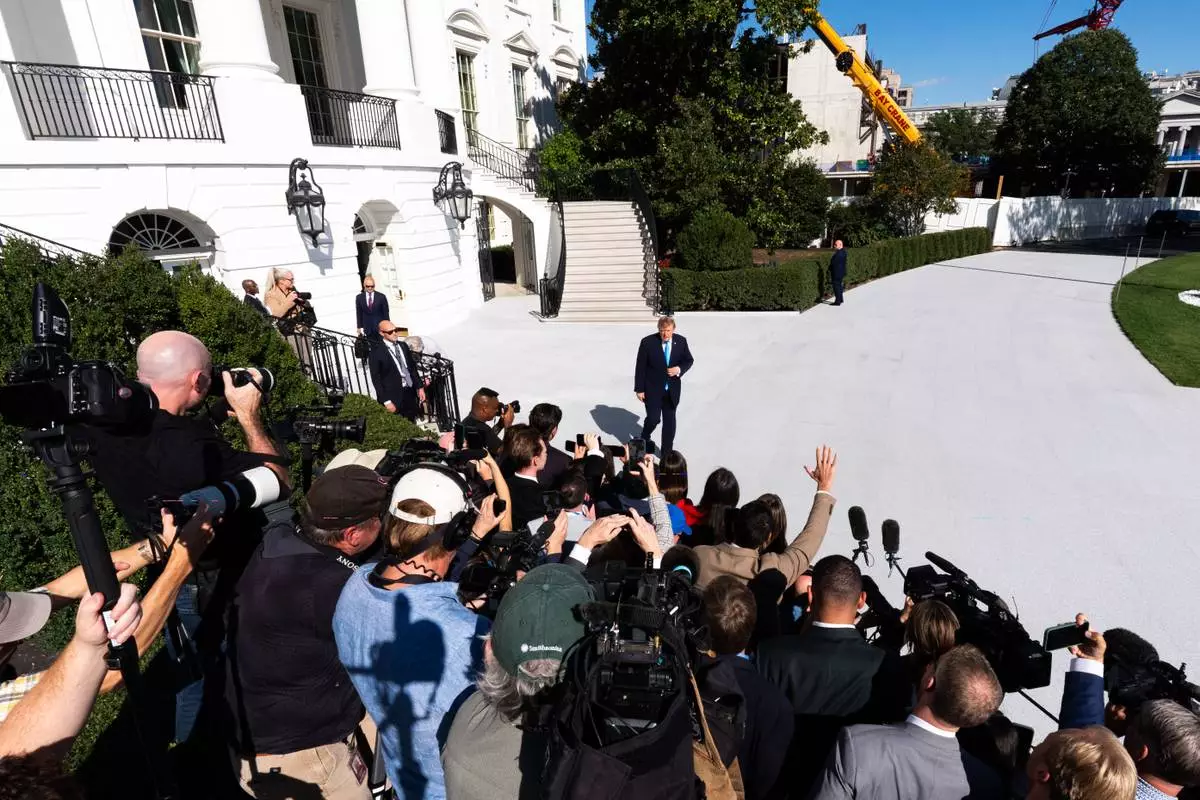
President Donald Trump talks with reporters before boarding Marine One on the South Lawn of the White House, Monday, Oct. 5, 2026, in Washington. (AP Photo/Julia Demaree Nikhinson)
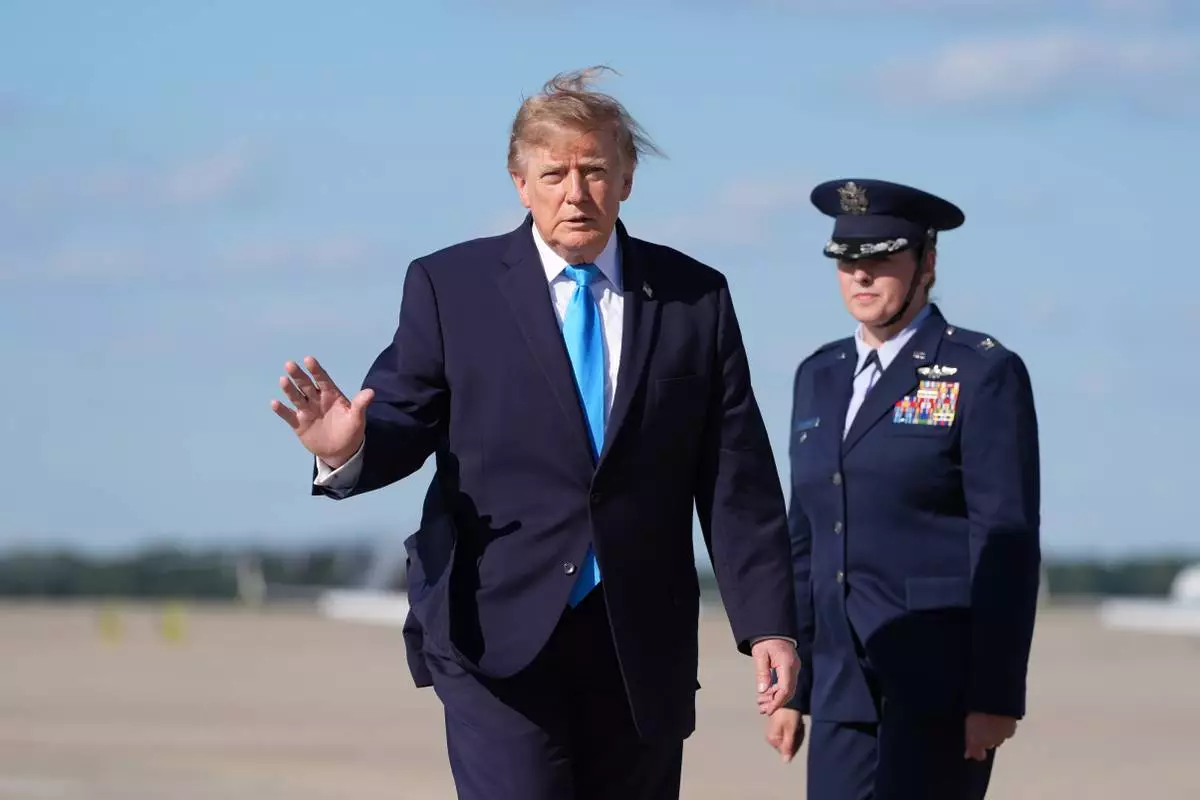
President Donald Trump walks to board Air Force One, Monday, Oct. 5, 2026, at Joint Base Andrews, Md., escorted by Air Force 89th Air Wing Deputy Commander Melissa Dombrock. (AP Photo/Alex Brandon)
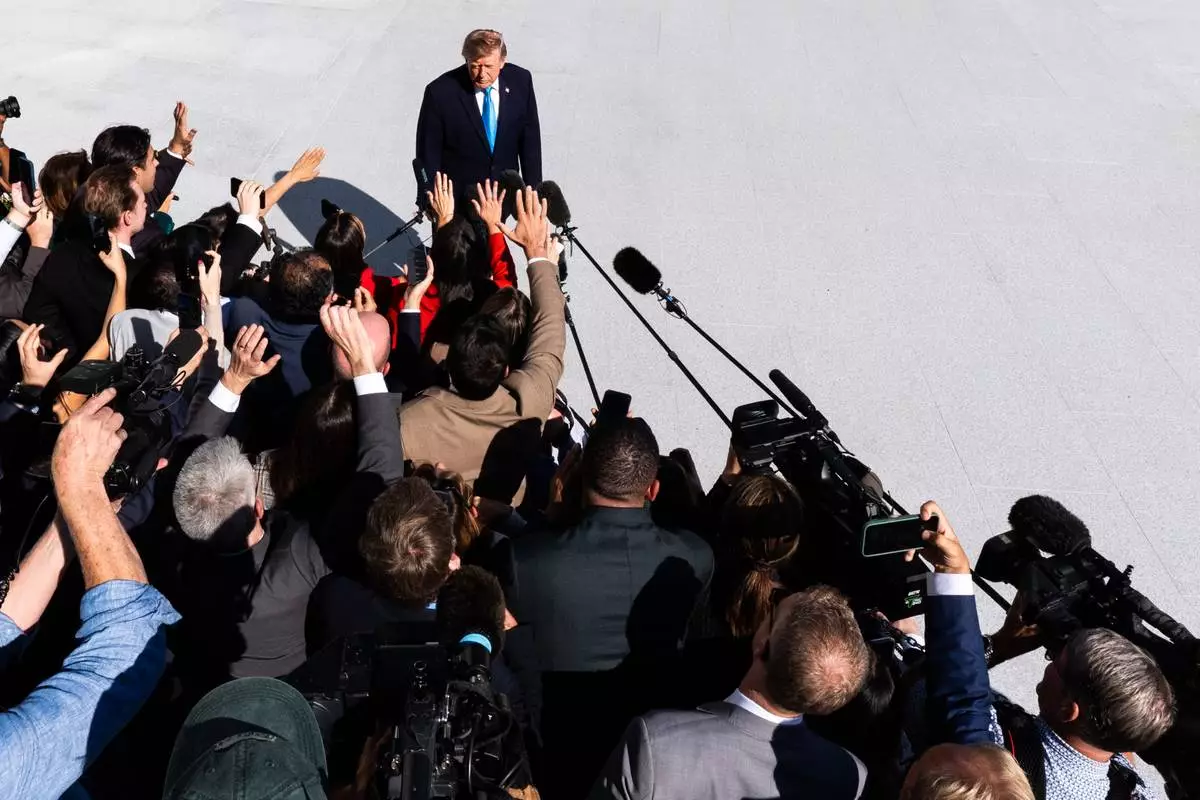
President Donald Trump talks with reporters before boarding Marine One on the South Lawn of the White House, Monday, Oct. 5, 2026, in Washington. (AP Photo/Julia Demaree Nikhinson)
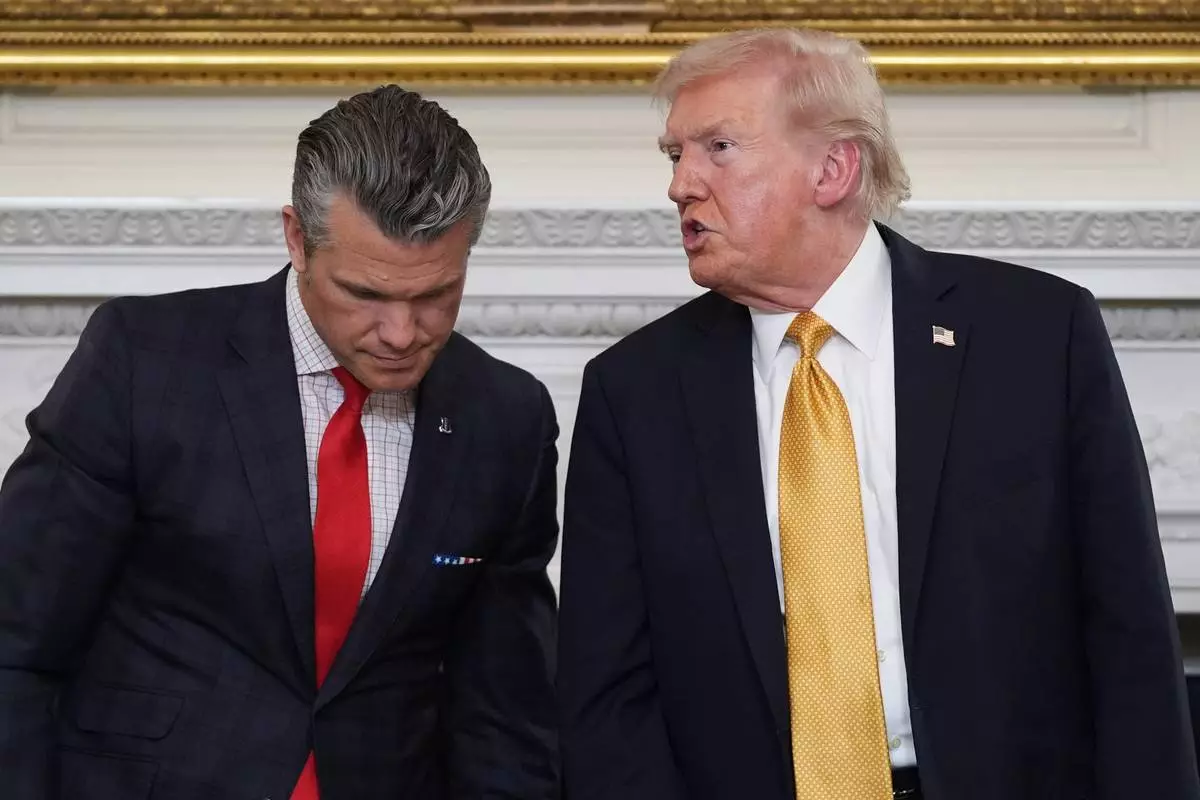
FILE - President Donald Trump talks with Defense Secretary Pete Hegseth after a roundtable on criminal cartels in the State Dining Room of the White House, Oct. 23, 2025, in Washington. (AP Photo/Evan Vucci, File)
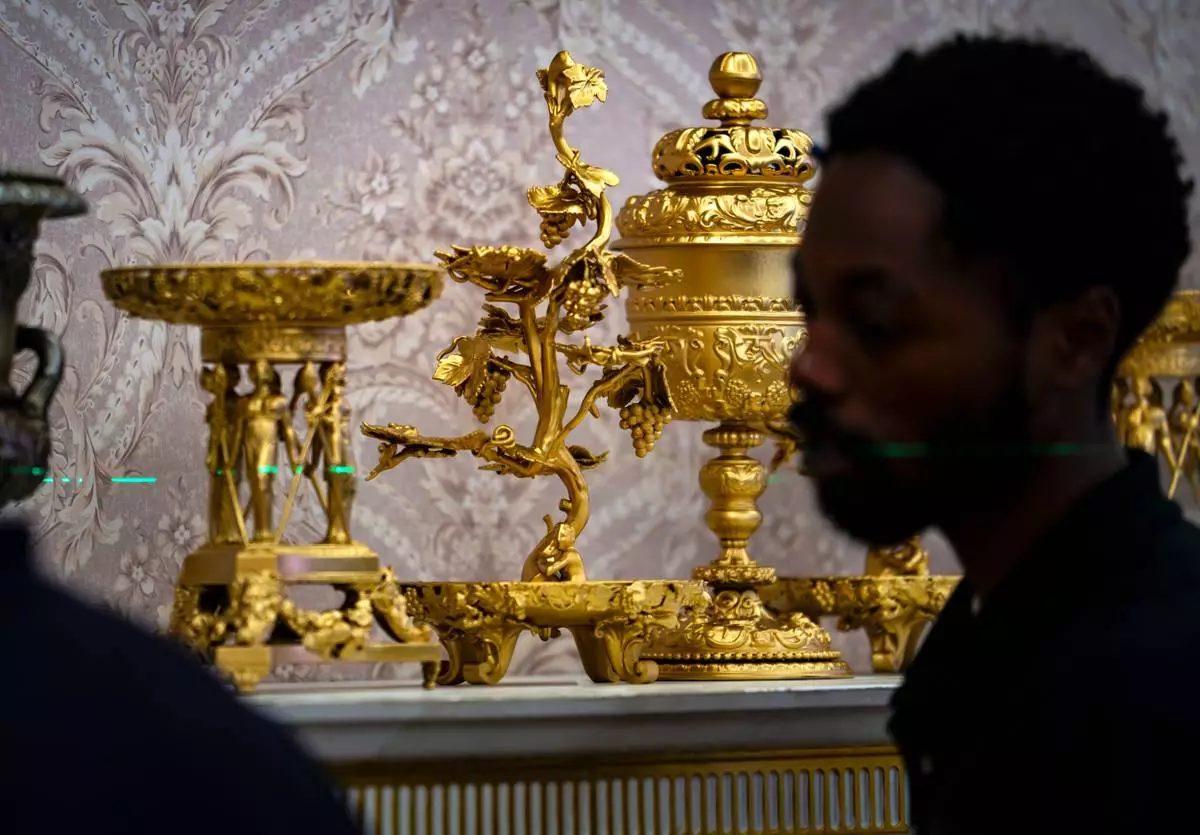
A replica of President Donald Trump's Oval Office is updated to the current decor by workers at "The People's House: A White House Experience," in Washington, Friday, Oct. 2, 2026. (AP Photo/J. Scott Applewhite)
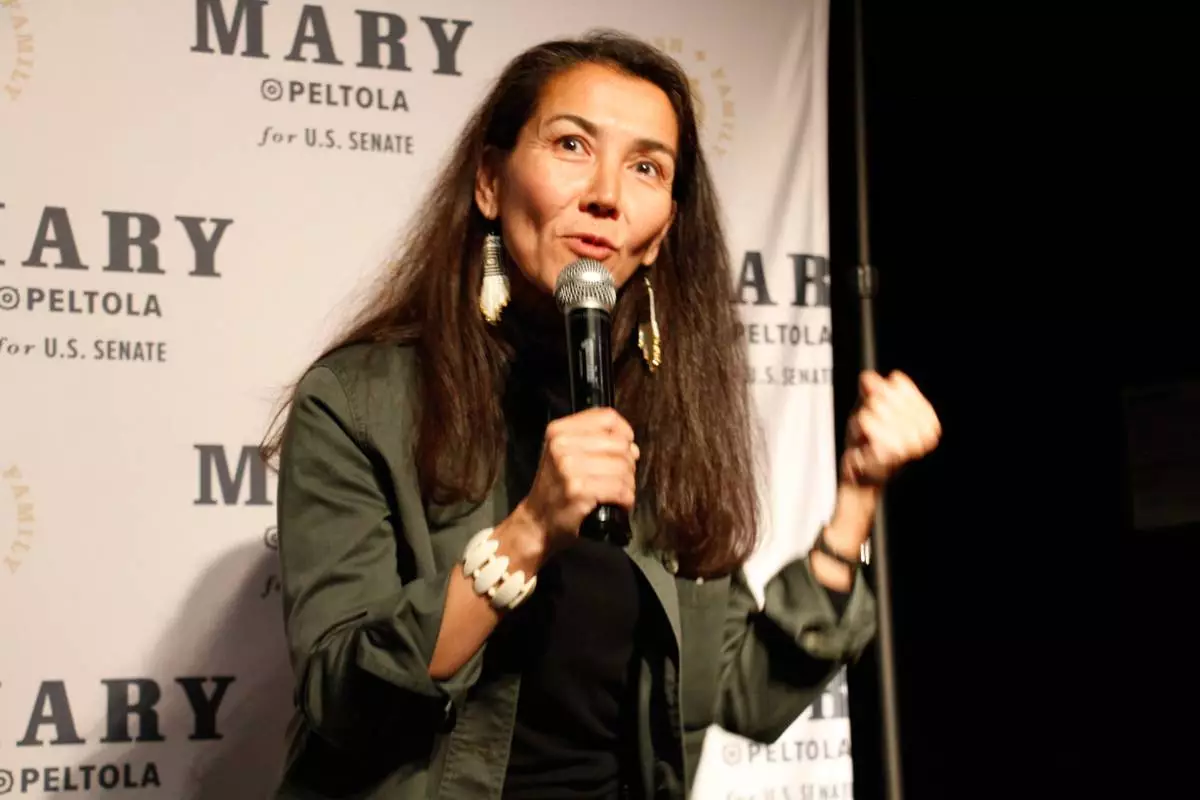
FILE - Mary Peltola, a Democrat running for the U.S. Senate seat in Alaska, addresses supporters at an election watch party on Aug. 18, 2026, in Anchorage, Alaska. (AP Photo/Mark Thiessen, File)
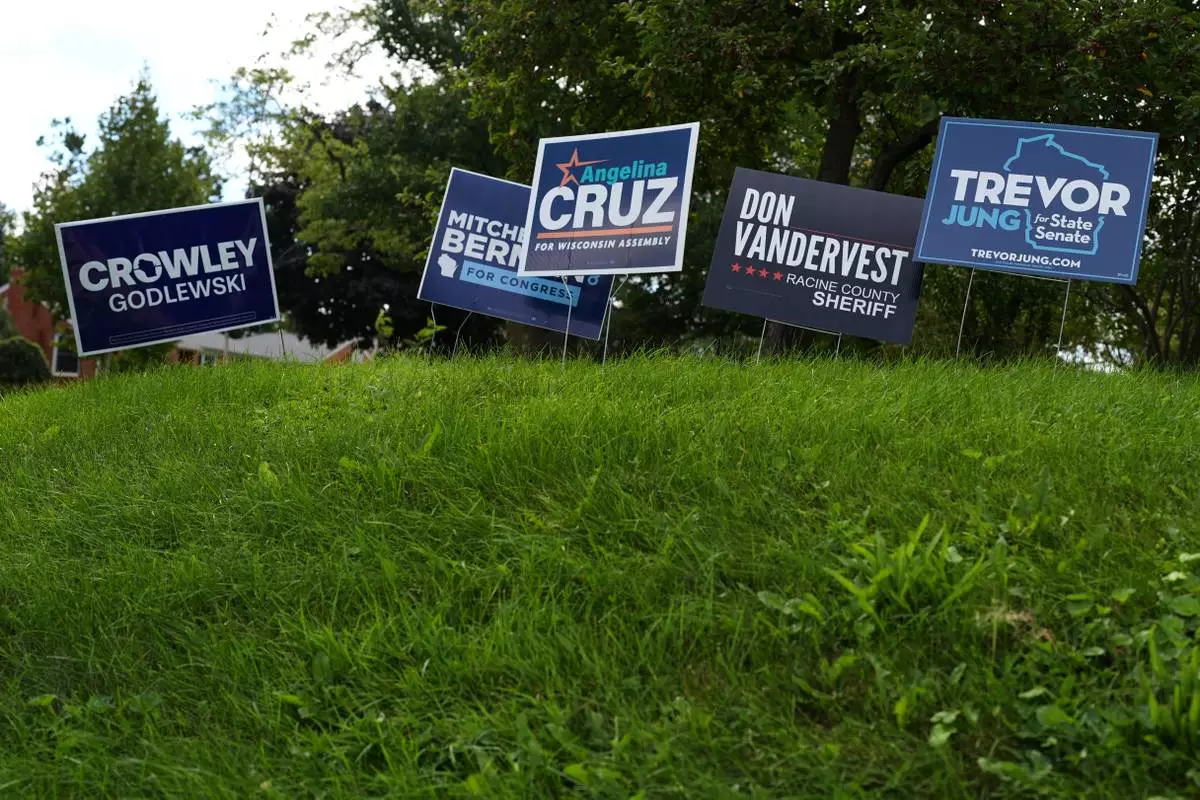
Signs for Democratic candidates in the 2026 midterm election are seen outside of a home in Racine, Wis., Tuesday, Sept. 22, 2026. (AP Photo/Nam Y. Huh)
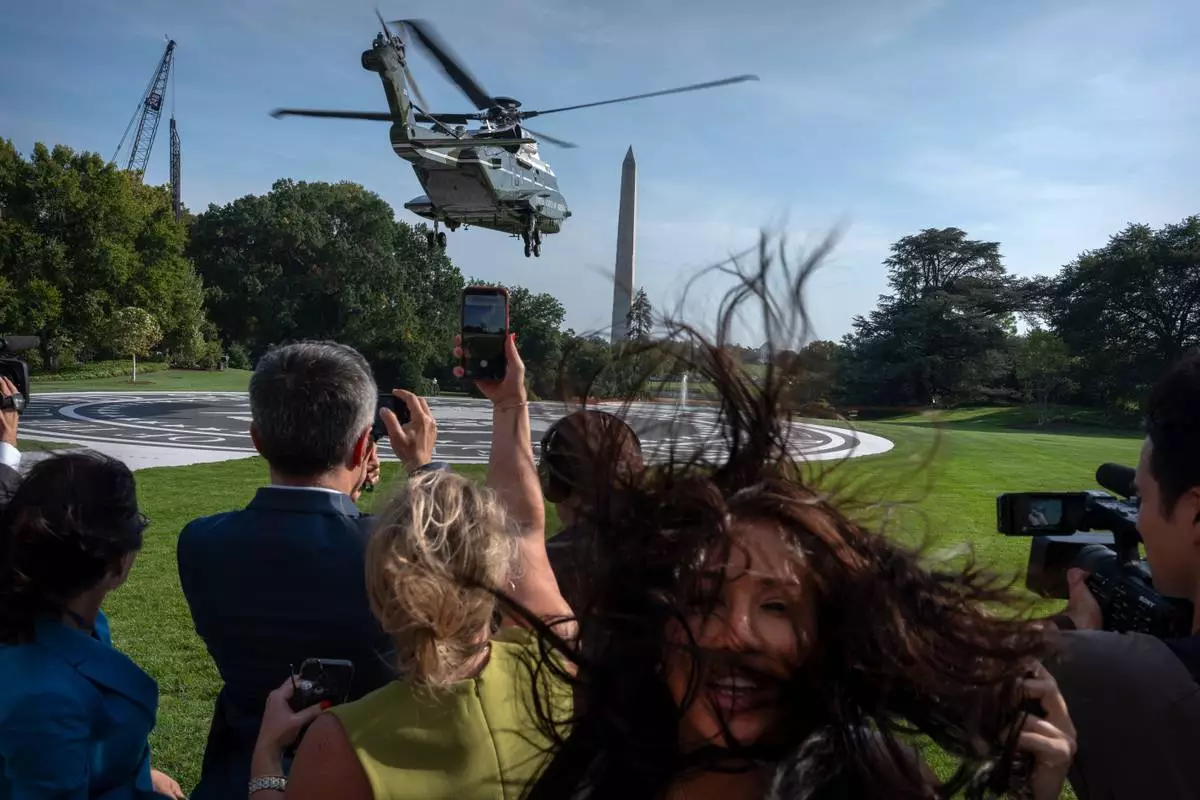
Members of the press watch as Marine One with President Donald Trump aboard lifts off from the South Lawn of the White House, Friday, Oct. 2, 2026, in Washington. (AP Photo/Mark Schiefelbein)