A city-based foreign trader from southern China's Guangdong Province has returned to his rural village to explore smart farming, applying new business thinking over the past few years. As a deputy to the National People's Congress (NPC), he is set to share his new insights at the annual "two sessions" again.
The "two sessions" are the annual meetings of China's top legislature, the NPC, and the top political advisory body, the National Committee of the Chinese People's Political Consultative Conference (CPPCC), which will open on March 5 and March 4 in Beijing this year, respectively.
The delegate, Chen Shirong,from Guangdong's Jiangmen,is typical of the new generation of Chinese farmers stepping up to use technology,business thinking in farmlands and participates in policy discussion.
"I used to work in foreign trade in Guangzhou just to make a living. What brought me back was the country's support for agriculture. Many people think farming has no future — and they looked at us differently. But that's why we need to apply modern thinking," said Chen.
That thinking led him to design special tracks in fields that can carry seedlings and water across the farmland, reducing the need for labor.
"Before installing the equipment, we needed at least 33 workers every day. I myself drove to three neighboring towns to hire help, and we struggled during peak season. Now, just five or six people can run the entire seedling base," he said.
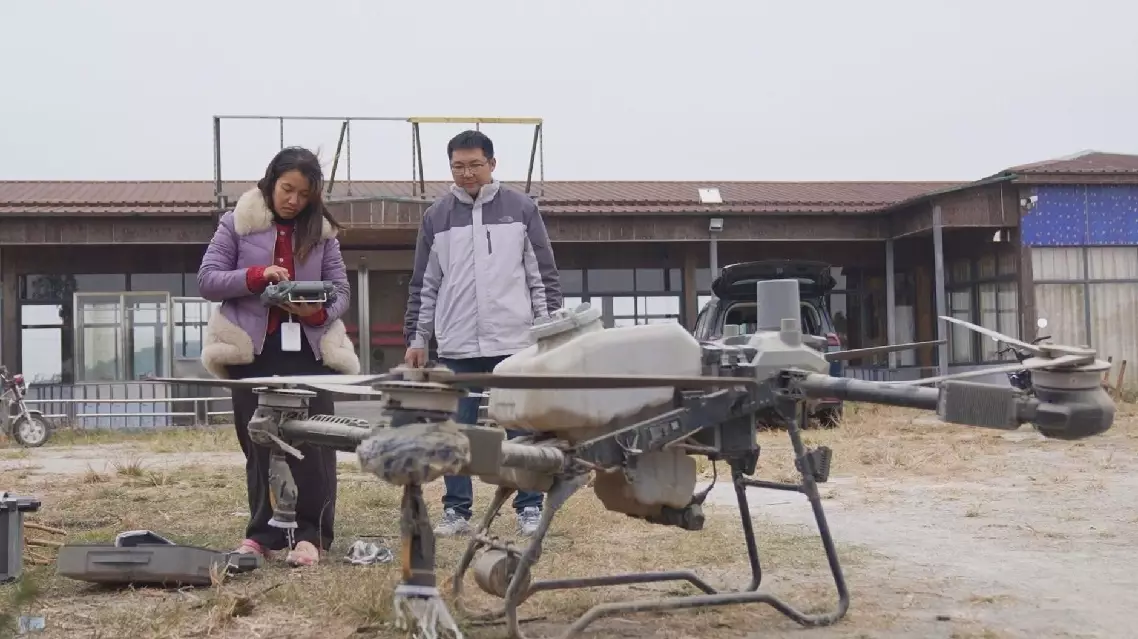
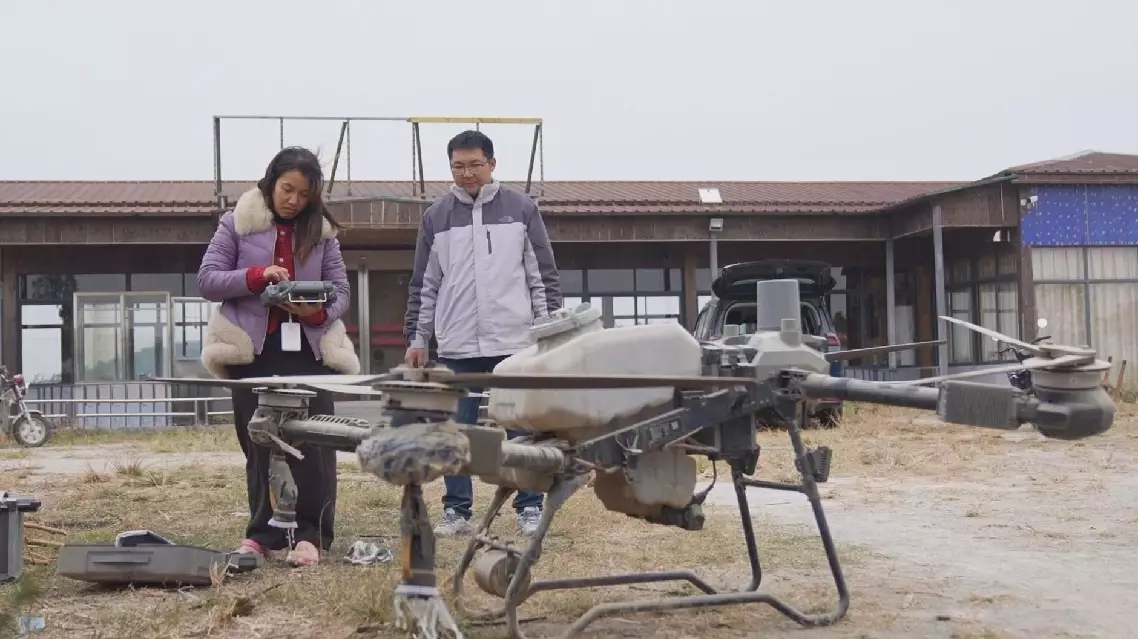
Smarter tools like the tracks changed everything. Chen and his wife also learned to operate drones to spray fertilizer and pesticides from the air.
Thanks to growing government subsidies, drones are now a common sight on Chinese farms.
According to Chen, the drone he bought cost about 50,000 yuan (around 7,263 U.S. dollars), with one-fifth covered by government subsidies. He said that after one year of use, it can pay for itself.
As a national lawmaker elected from the grassroots, Chen draws on hands-on experience to contribute to national discussions.
"Last year, I proposed promoting integrated farming, combining crops with livestock to get more value from the same field, and received a positive response from relevant ministries. My earlier suggestions on food security were also written into the law," he said.
The work doesn't stop at harvest. As consumers increasingly value healthy food, Chen sees strong demand for state-certified, premium organic products.
He set up an ecological agriculture company. It now supports more than 300 hectares of surrounding farmland. Through a cooperative, villagers can share in the profits, earning more while working less.
Looking ahead to China's agricultural development blueprint, Chen plans to bring forward a new proposal calling for more systematic training for farmers at the annual "two sessions".
"There used to be a saying: If you failed in the city, you went home to farm. But today's farmers require more skills: You must know how to farm, run a business, and manage operations. That's why training has to be upgraded," he said.
As China embarks on its 15th Five-Year Plan, farms are being asked to adapt, from simply feeding people to feeding them better with healthier food. Rural areas are also being upgraded - with modern facilities to support tourism and education. The goals are simple: higher incomes, better jobs, and a more fulfilling life in the countryside.
Foreign-trader-turned-farmer to bring tech insights to annual "two sessions" again
Foreign-trader-turned-farmer to bring tech insights to annual "two sessions" again
Foreign-trader-turned-farmer to bring tech insights to annual annual "two sessions" again