BMW AG Chairman Oliver Zipse said the automaker will debut its first Neue Klasse model designed specifically for China at the Beijing Auto Show, showcasing a new fusion of German engineering and Chinese digital innovation.
Ties between the two sides are in the spotlight this week as German Chancellor Friedrich Merz arrived in China on Wednesday for a two-day official visit, his first since taking office last May. Zipse is among senior executives from around 30 leading German companies accompanying the chancellor on the trip.
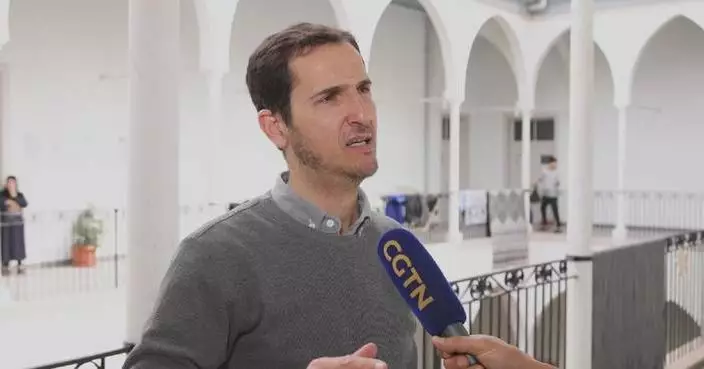
"It is the most Chinese car we've ever built, tailored specifically to the needs and wishes of our Chinese customers," said Zipse in an exclusive interview with China Global Television Network (CGTN) on Tuesday.
Zipse stressed that the car's innovations stem directly from BMW's deep partnerships with Chinese tech leaders.
"It features many innovations from our partnerships with leading Chinese players as, for example, battery cells come from CATL, autonomous driving stack is jointly developed with Momenta, and the large language model for the BMW Intelligent Personal Assistant is the result of our longstanding partnership with Alibaba," he said.
He presented these partnerships as a blueprint for the future of the global auto industry.
"These features are a perfect example of cross-border collaboration, joint pioneering spirit and mutual openness," Zipse said.
The 2026 Beijing Auto Show is scheduled to be held in Beijing from April 24 to May 3.

BMW to unveil China-tailored Neue Klasse at Beijing Auto Show
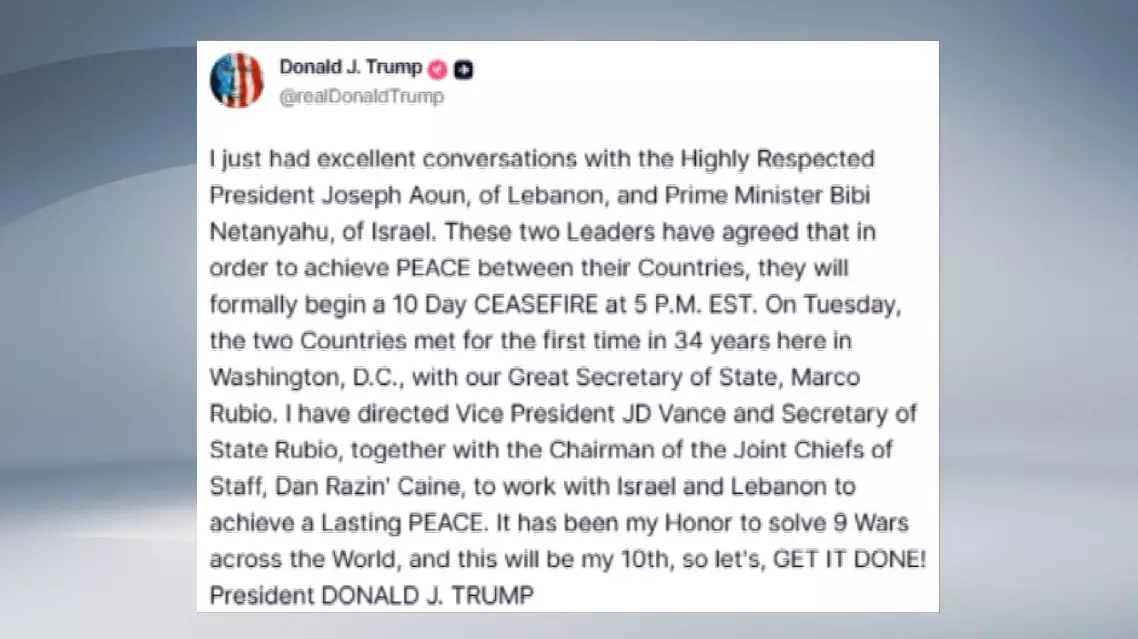
Israel and Lebanon will formally begin a 10-day ceasefire at 17:00 U.S. Eastern Time (2100 GMT) on Thursday, U.S. President Donald Trump announced after his phone calls with the two countries' leaders.
"I just had excellent conversations with the Highly Respected President Joseph Aoun, of Lebanon, and Prime Minister Bibi Netanyahu, of Israel. These two Leaders have agreed that in order to achieve PEACE between their Countries, they will formally begin a 10 Day CEASEFIRE at 5 P.M. EST," Trump wrote on Truth Social.
"I have directed Vice President JD Vance and Secretary of State Rubio, together with the Chairman of the Joint Chiefs of Staff, Dan Razin' Caine, to work with Israel and Lebanon to achieve a Lasting PEACE," he said.
He added that he will invite President Joseph Aoun and Prime Minister Benjamin Netanyahu to the White House "for the first meaningful talks between Lebanon and Israel since 1983," expressing belief that peace will be achieved between the two countries.
According to multiple Israeli media outlets, Netanyahu convened the security cabinet by phone to inform them of his acceptance of Trump's ceasefire request.
He told cabinet ministers that the Israeli army would remain in its current positions in southern Lebanon, which Israel defines as a security zone, and that the ceasefire conditions would allow Israeli forces to operate if it detected threats.
The prime minister noted that Israel has two main demands in these talks -- the disarmament of Hezbollah and a lasting peace agreement.
Following Trump's ceasefire announcement, a Hezbollah lawmaker said that the group will monitor Israel's "practical and effective" commitment to halting all hostile actions against Lebanon, following what he described as an Iran-mediated comprehensive ceasefire.
"We call on our people to wait for the actual implementation of the ceasefire, as we are accustomed to Israel reneging on its commitments," Hassan Fadlallah, the lawmaker, told Lebanese broadcaster Al Mayadeen.
Hezbollah sources, quoted by local Al Jadeed TV, said that any proposed ceasefire must include a comprehensive halt to Israeli attacks across all Lebanese territory and must not grant Israel any freedom of movement.
The sources added that the continued Israeli occupation of Lebanese territories grants Lebanon and its people the right to resist.
Israel and Lebanon held their first direct diplomatic talks since 1993 earlier this week in Washington, with both sides agreeing to launch "direct" negotiations after the meeting.
Lebanese health authorities said Thursday that the cumulative death toll from ongoing Israeli attacks on the country has risen to 2,196, with 7,185 others injured since March 2.
Trump says Israel, Lebanon to begin 10-day ceasefire