BERLIN (AP) — A German court said Thursday that the country's domestic intelligence agency can't label the Alternative for Germany party a proven right-wing extremist group while it considers a complaint by the opposition party against last year's designation.
The BfV intelligence agency announced its decision on Alternative for Germany, or AfD, in May. It described the party as a threat to the country’s democratic order, saying it “disregards human dignity” — in particular by what it called “ongoing agitation” against refugees and migrants.
AfD swiftly filed a suit to the administrative court in Cologne, where the agency is based. The agency then suspended the designation, which would allow it to carry out greater and broader surveillance of the party's activities, pending a ruling from the court.
The court said it issued an injunction Thursday that blocks the BfV from designating and treating AfD as a proven right-wing extremist group until it has issued a definitive ruling on the party's lawsuit. It said it isn't yet clear when it will deliver that ruling.
A court statement said that, on its examination of the evidence so far, it is sufficiently certain that there are “efforts against the free democratic fundamental order” inside the party. But it said those efforts don't characterize the party in a such a way that “a fundamental anticonstitutional tendency can be established in its overall picture.”
AfD finished second in a national election a year ago. It is now the biggest opposition party in the national parliament and it hopes to perform well in a string of state elections this year.
The U.S. administration last year criticized the designation by the intelligence service, prompting a retort from the German Foreign Ministry.
AfD co-leader Alice Weidel described Thursday's ruling in a post on X as “a great victory not just for AfD, but also for democracy and the rule of law!”
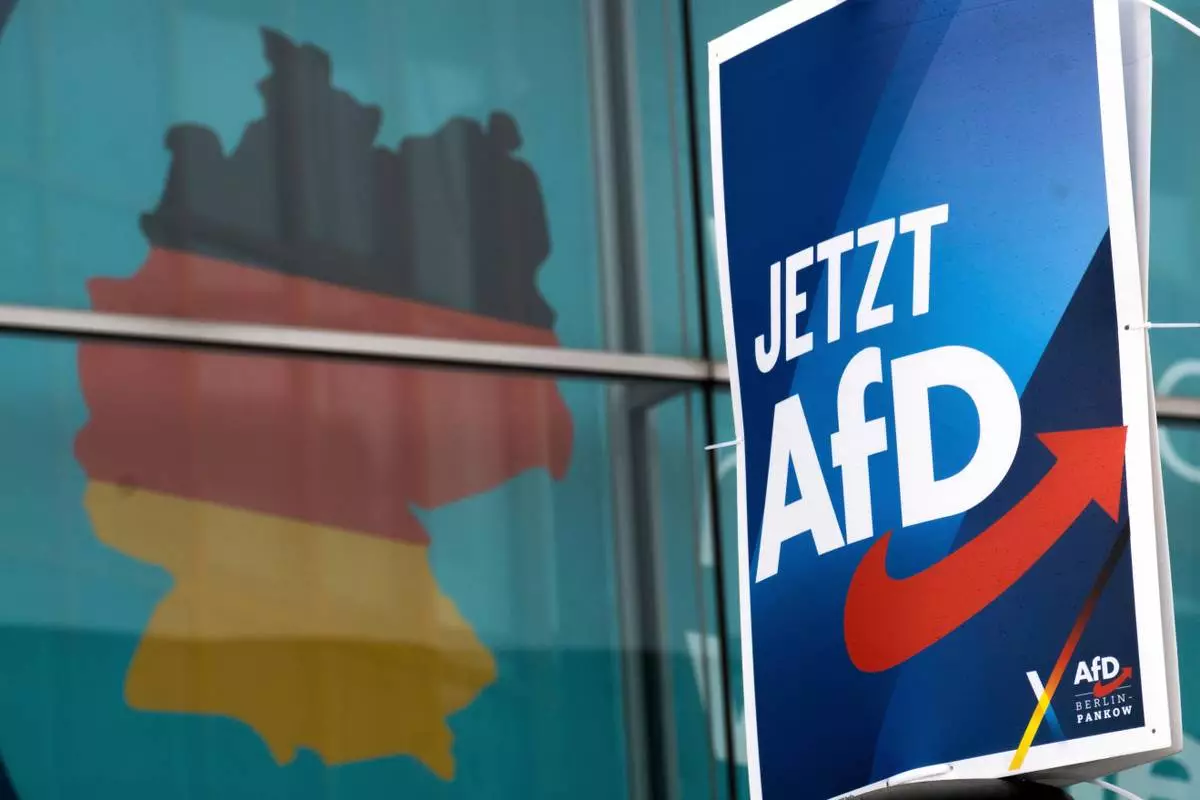
FILE - An election poster of the German far right Alternative for Germany party (AfD), right, is attached to a lamppost in front of a giant election poster showing a map of Germany, at the headquarters of the German Christian Democratic Union (CDU) in Berlin, Germany, Jan. 29, 2025. Slogan reads: 'Now AfD'. (AP Photo/Michael Sohn, File)
NEW YORK (AP) — Most U.S. stocks are rising on Thursday, but a drop for Nvidia is weighing on Wall Street.
The S&P 500 slipped 0.1% following sharp swings earlier in the week driven by hopes and worries created by the artificial-intelligence revolution. The Dow Jones Industrial Average was up 254 points, or 0.5%, as of 9:35 a.m. Eastern time, and the Nasdaq composite was 0.4% lower.
Nvidia, whose chips are helping to power the AI boom, reported another quarter of big profit growth that breezed past analysts’ expectations. It also gave a forecast for revenue in the current quarter that once again topped Wall Street’s estimates.
Such blowout performances have become so typical for Nvidia, though, that this one failed to impress. Its stock sank 2.4%.
“Our customers are racing to invest in AI compute — the factories powering the AI industrial revolution and their future growth,” Nvidia CEO Jensen Huang said.
Worries are nevertheless building that companies may eventually pull back on their spending on Nvidia chips and other AI investments amid doubts about whether they can ever possibly make back all those billions of dollars through future gains in productivity.
Because Nvidia’s is the largest stock in the U.S. market by value, it has more influence on the S&P 500’s direction than any other stock. That helped drag the index at the center of many 401(k) accounts lower, even though the majority of stocks within it rose.
On the winning side of Wall Street Thursday was Salesforce, which rose 1.4% after it likewise reported a stronger profit for the latest quarter than analysts expected.
It’s a return to gains for the stock, which is still down nearly 27% for the young year so far. It’s been under pressure because of worries that AI-powered competitors could undercut its business.
Beyond software, stocks of companies in industries as far flung as trucking logistics and financial services have also come under sudden and aggressive attack by investors who fear their businesses may lose out to AI or even become obsolete.
Salesforce uses AI itself in its platform that helps customers manage their own relationships with their customers. It also made several announcements that typically give a stock’s price a boost: It will send up to $50 billion to shareholders through buybacks of its stock, and it raised its dividend by nearly 6%.
“Agentic AI is a tailwind for our business,” CEO Marc Benioff said.
Salesforce also gave a forecast for revenue growth this fiscal year of 10% to 11%. The midpoint of that range fell slightly below analysts’ expectations.
Elsewhere on Wall Street, Warner Bros. Discovery shares edged down by 0.1% after the entertainment giant reported a $252 million loss for the fourth quarter. That didn’t seem to bother investors, who are likely more interested in which acquisition offer — Netfix or Paramount Skydance — the company and its shareholders ultimately accept.
Some of the strongest action in financial markets was for oil, where prices sank as the United States and Iran hold indirect talks to try to reach a deal about Iran’s nuclear program. A peaceful solution would remove the threat of war, which could block the global flow of oil and drive up its price.
A barrel of benchmark U.S. crude fell 1.7% to $64.32. Brent crude, the international standard, fell 1.3% to $69.75 per barrel.
In stock markets abroad, indexes rose modestly in Europe following a mixed finish in Asia.
South Korea’s Kospi leaped 3.7% to another record, driven by gains for tech-related stocks. It’s already surged nearly 50% since the turn of the year.
Hong Kong’s Hang Seng, meanwhile, lost 1.4%.
In the bond market, Treasury yields eased a bit. The yield on the 10-year Treasury fell to 4.03% from 4.05% late Wednesday.
A report showed that the number of U.S. workers applying for unemployment benefits ticked up last week, but not by any more than economists expected. It also remains relatively low compared with history.
AP Business Writers Chan Ho-him and Matt Ott contributed.
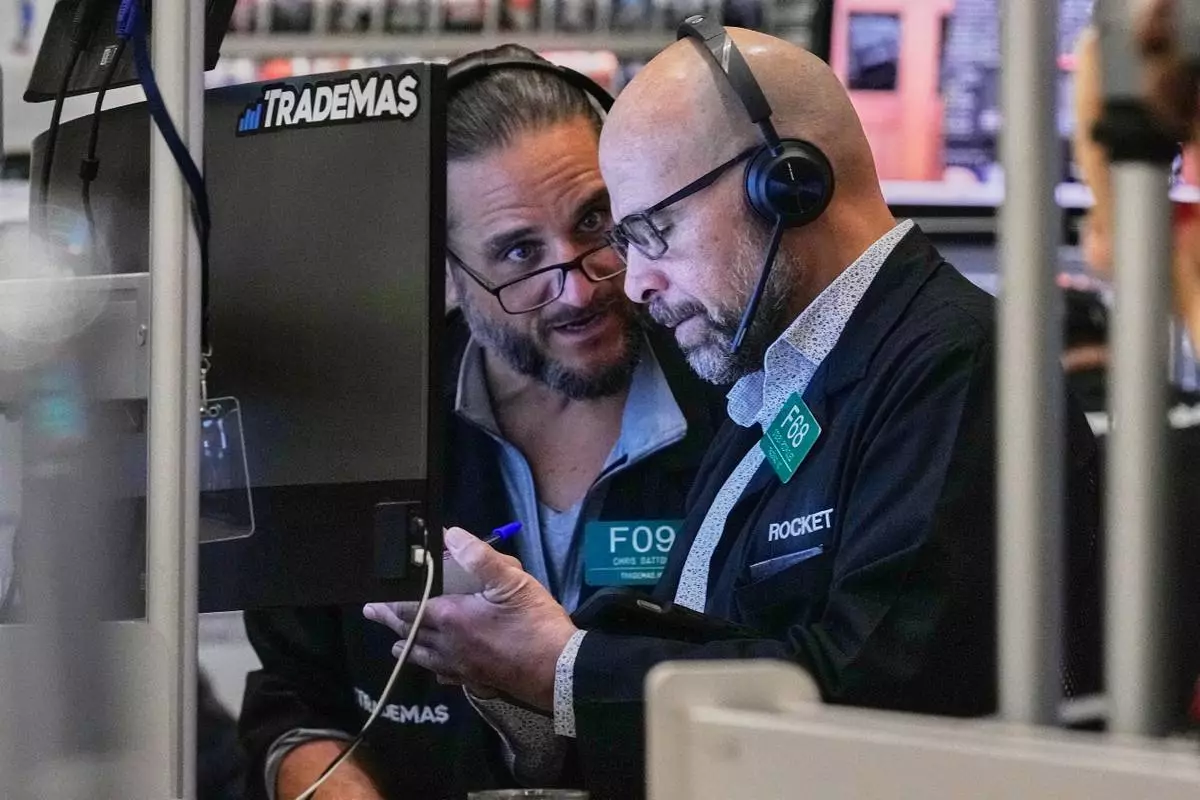
Options traders Chris Dattolo, left, and Steven Rodriguez work on the floor of the New York Stock Exchange, Friday, Feb. 20, 2026. (AP Photo/Richard Drew)
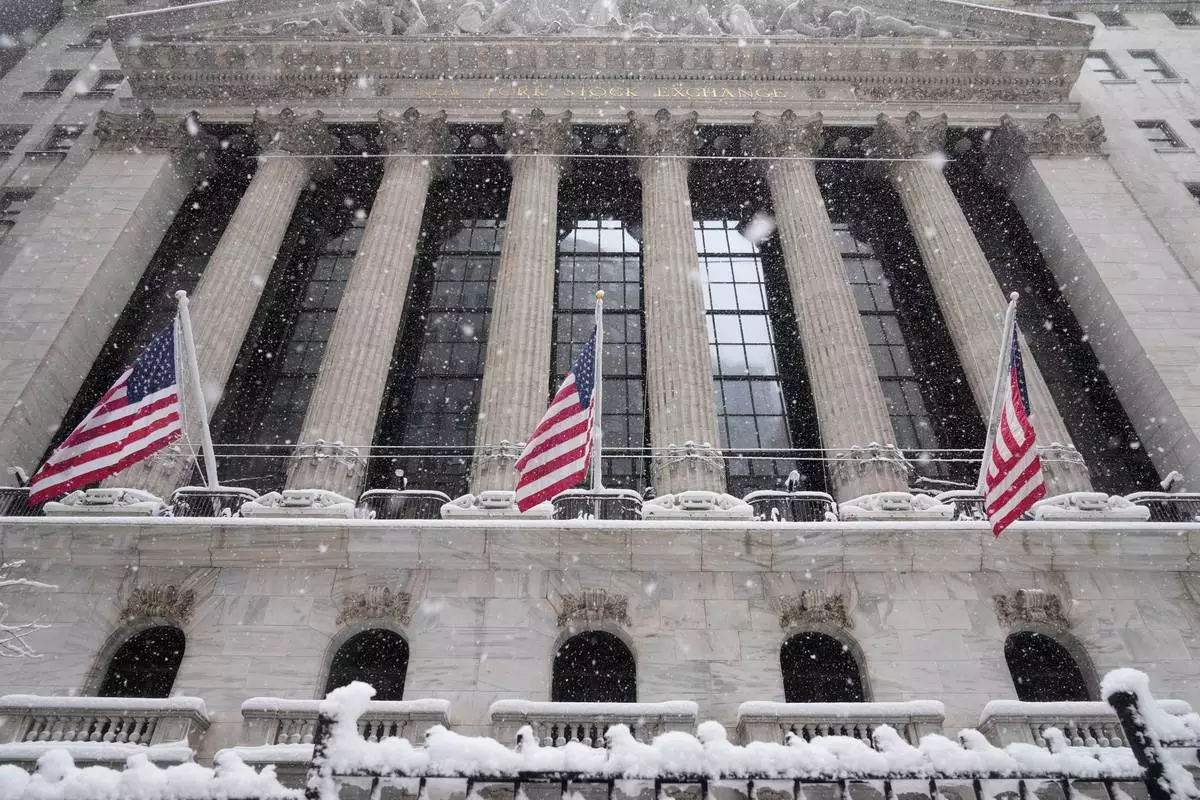
Snow falls outside the New York Stock Exchange, Monday, Feb. 23, 2026, in New York. (AP Photo/Seth Wenig)
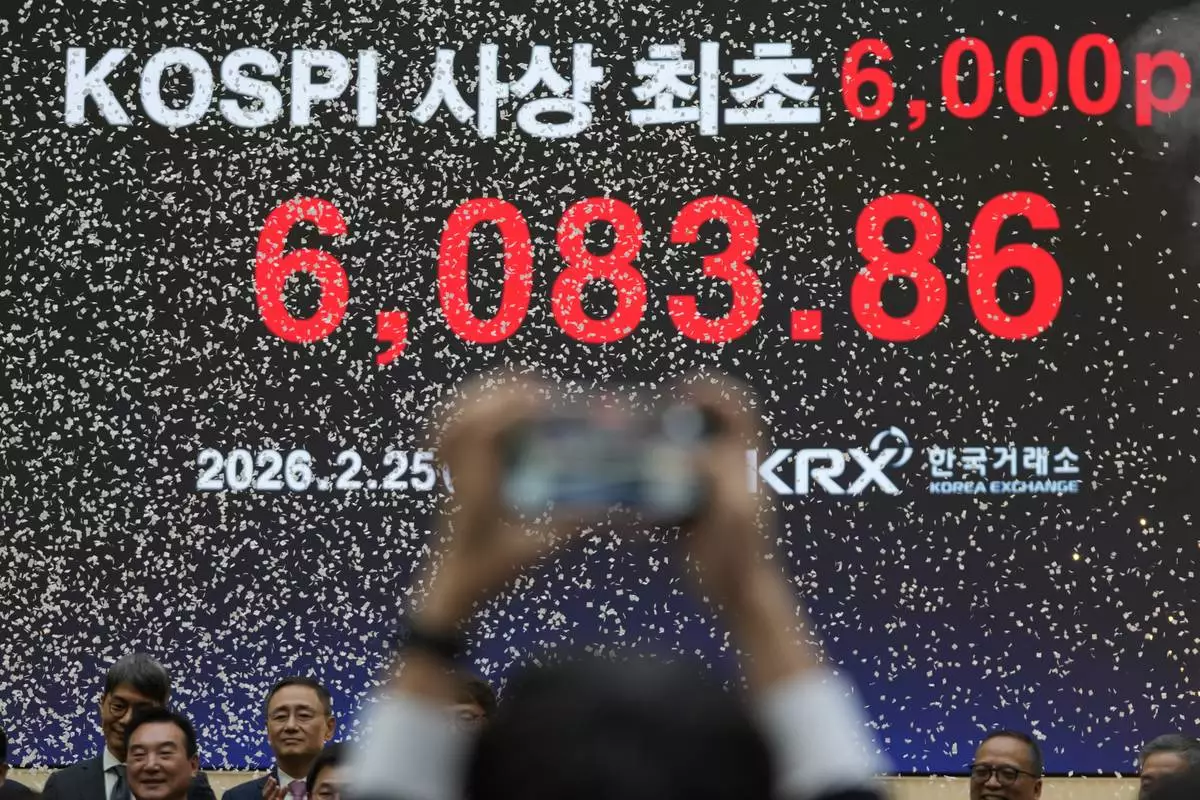
A screen shows the Korea Composite Stock Price Index (KOSPI) of over 6,000 points during a ceremony at the Korea Exchange in Seoul, South Korea, Wednesday, Feb. 25, 2026. (AP Photo/Lee Jin-man)
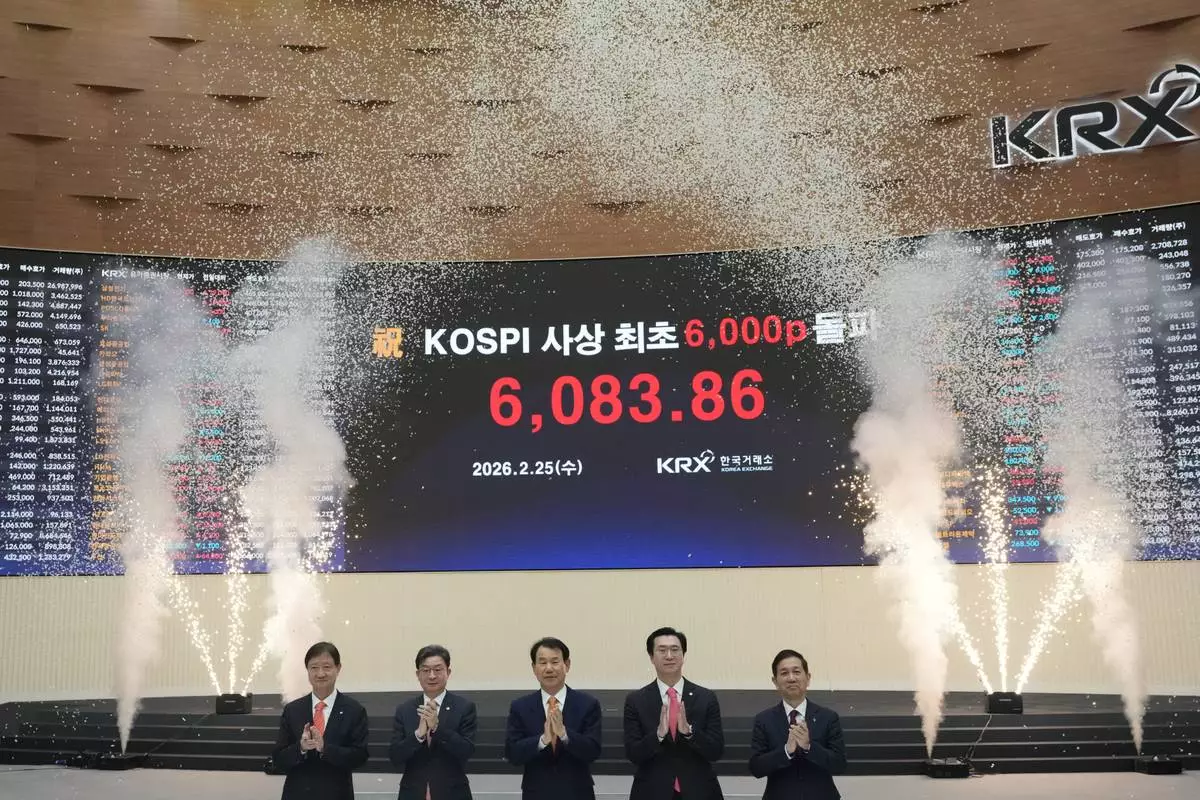
Chairman of the Financial Services Commission, Lee Eog-weon, second from left, Chairman & CEO of the Korea Exchange, Jeong Eun Bo, center, a and other officials celebrate as a screen shows the Korea Composite Stock Price Index (KOSPI) of over 6,000 points during a ceremony at the Korea Exchange in Seoul, South Korea, Wednesday, Feb. 25, 2026. (AP Photo/Lee Jin-man)
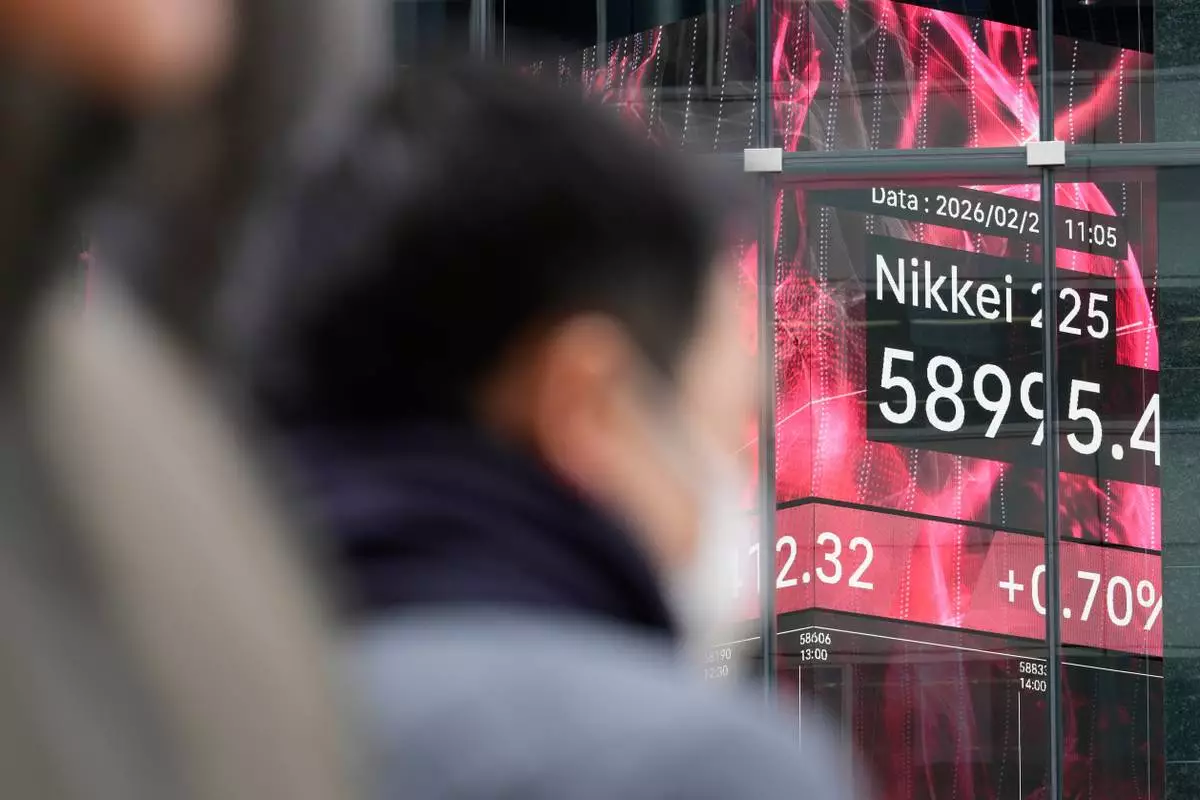
People walk near an electronic stock board showing Japan's Nikkei index at a securities firm Thursday, Feb. 26, 2026, in Tokyo. (AP Photo/Eugene Hoshiko)
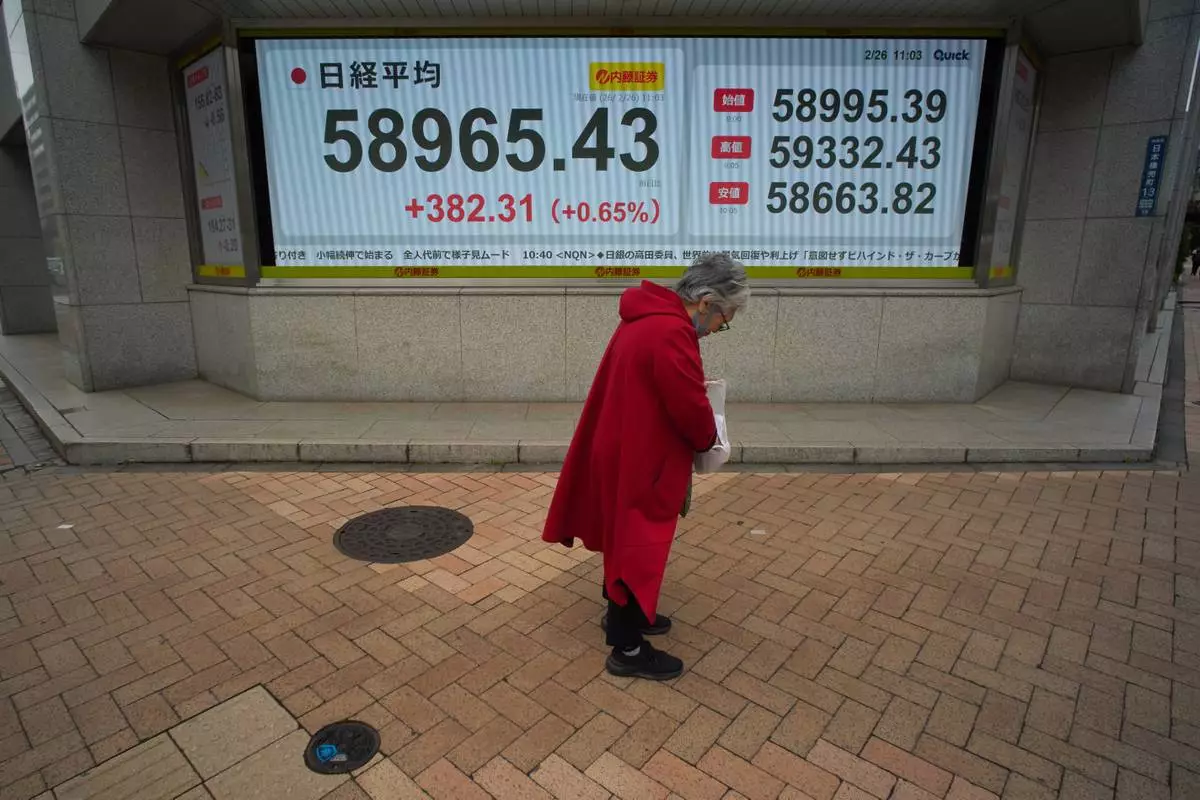
A person stands in front of an electronic stock board showing Japan's Nikkei index at a securities firm Thursday, Feb. 26, 2026, in Tokyo. (AP Photo/Eugene Hoshiko)

A person stands as a vehicle passes by in front of an electronic stock board showing Japan's Nikkei index at a securities firm Thursday, Feb. 26, 2026, in Tokyo. (AP Photo/Eugene Hoshiko)