INDIANAPOLIS (AP) — The NCAA football oversight committee is recommending emergency legislation to protect the transfer portal window by issuing penalties for schools and coaches who circumvent the rules.
The committee on Wednesday proposed the legislation to penalize schools who add players who did not make public their interest in transferring during the January transfer portal window.
The proposed legislation would become effective immediately if approved at the Division I cabinet meeting in April.
Among the proposed penalties, the head coach who accepts a transfer who did not properly enter the January portal would be prohibited from all recruiting, on-field coaching and team meetings for six games.
The school accepting the transfer would be fined 20% of its football budget. Also, the school would lose five roster spots for the following season, even if the coach who accepted the transfer is no longer employed.
Georgia athletic director Josh Brooks said it is important to enforce the transfer portal window rule.
“Attempts to circumvent the transfer window process is an issue for the sport," Brooks said in a statement released by the NCAA. "We want to let everyone know that this is not going to be allowed, and the committee wants to protect the transfer window that has been established.”
Buffalo athletic director Mark Alnutt, the chair of the oversight committee, said “significant penalties” are needed to enforce the transfer rule.
“We felt this was appropriate to place an emphasis on this rule with where we are in Division I football,” Alnutt said. "We have a window for student-athletes to notify their school when they would like to enter the transfer portal. If there is movement without going through the process as it is legislated, the committee felt there needed to be significant penalties.”
The committee also voted to eliminate the annual limit on official recruiting visits.
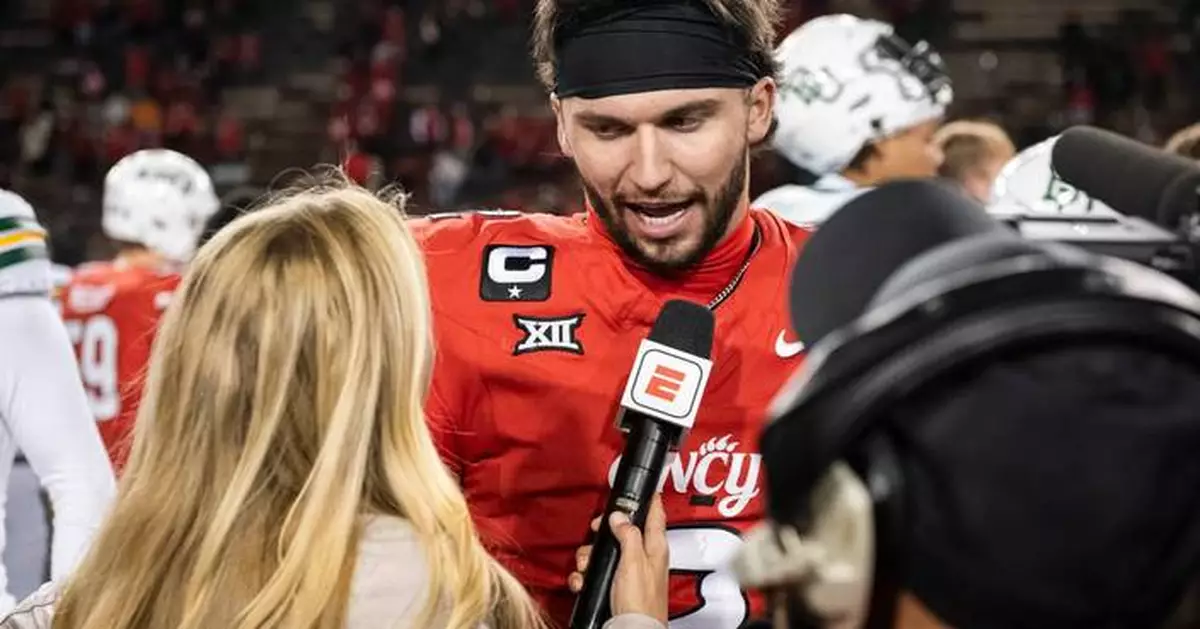
The transfer rule and compensation for players through name, image and likeness contracts have created other issues. The University of Cincinnati is suing its former quarterback, Brendan Sorsby, following his transfer to Texas Tech. Cincinnati is accusing Sorsby of breaching his NIL contract, which the school says was signed in July 2025 to cover the 2025 and 2026 seasons. Cincinnati says the contract included a $1 million buyout if Sorsby transferred.
Sorsby received the most lucrative deal of the portal period — a reported $5 million — to return to his home state for his final season.
Get poll alerts and updates on the AP Top 25 throughout the season. Sign up here. AP college football: https://apnews.com/hub/ap-top-25-college-football-poll and https://apnews.com/hub/college-football
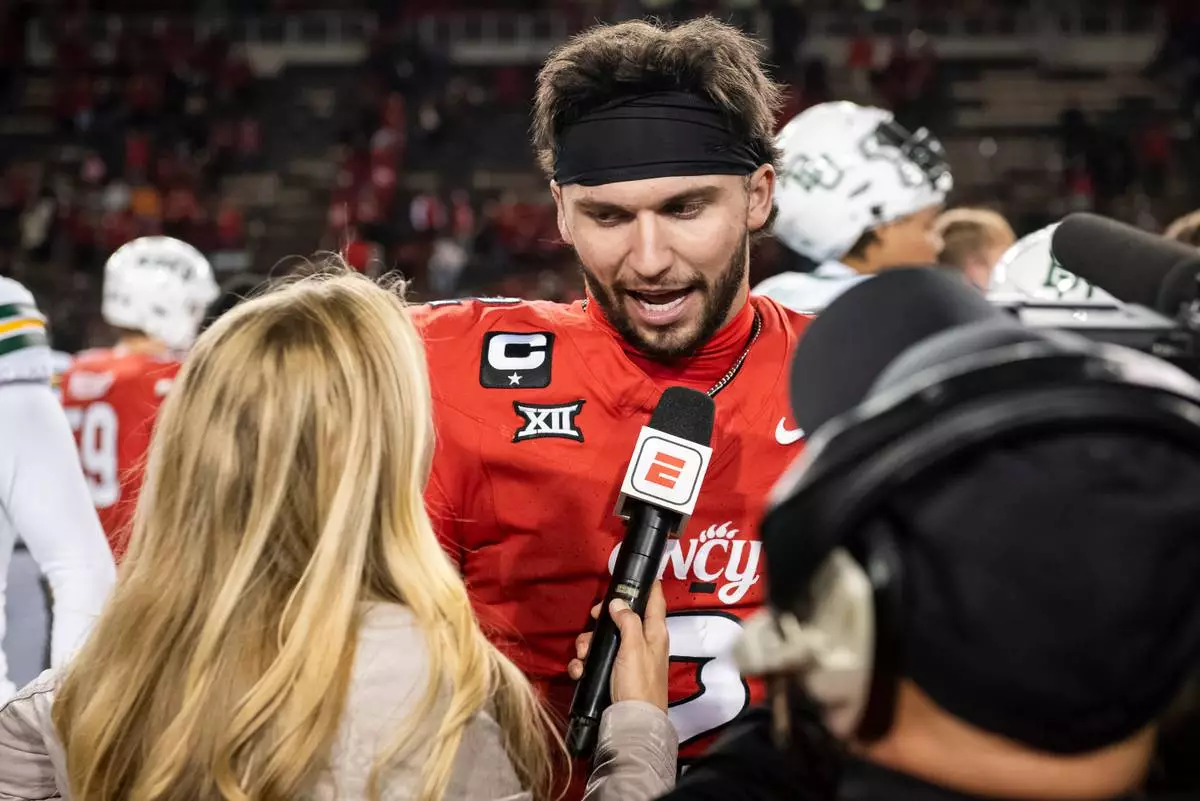
FILE - Cincinnati quarterback Brendan Sorsby (2) is interviewed after a NCAA college football game against Baylor, Saturday, Oct. 25, 2025, in Cincinnati. (AP Photo/Tanner Pearson,File)
NEW YORK (AP) — A Columbia University student was arrested Thursday by federal immigration agents who claimed to be searching for a “missing person” in order to gain access to a campus apartment, according to her attorneys and the school’s president.
Hours after she was taken into custody, though, New York City Mayor Zohran Mamdani said in a social media post that he had discussed the arrest during an unrelated meeting with President Donald Trump, who agreed to release the student “immediately."
The student, Ellie Aghayeva, is a senior from Azerbaijan studying neuroscience and political science. A self-described content creator, she has amassed a large social media following by sharing day-in-the-life videos and tips for navigating college as an immigrant.
At around 7:00 a.m., Aghayeva posted a message to her more than 100,000 followers on Instagram: “DHS illegally arrested me. Please help." A photo accompanying the post appeared to show the backseat of a vehicle.
A Department of Homeland Security spokesperson confirmed Aghayeva's arrest and said her student visa had been terminated in 2016 for failing to attend classes. The spokesperson didn't respond to questions about when or if she would be released.
In an emergency petition, attorneys for Aghayeva said she had entered the country on a visa in or around 2016. They said she was taken into custody early Thursday by Immigration and Customs Enforcement agents, who didn't have a warrant but “represented they were searching for a missing person to gain entry" to the university-owned apartment.
She was being held at the federal detention center in Lower Manhattan, the lawyers wrote. They declined to provide additional comment, including details about her immigration status.
In an email shared with students and staff, the university’s acting president, Claire Shipman, said that federal agents had entered a residential building at around 6:30 a.m., claiming they were seeking a missing person.
She said the university was in the process of reaching out to the student’s family and providing legal support.
The use of disguises or other misrepresentations by immigration authorities has drawn attention in recent months, after federal agents were seen posing as utility workers and other service employees in Minneapolis and elsewhere.
The practice is legal, in most cases. But immigration attorneys say such ruses are becoming increasingly common, adding to concerns about the Trump administration’s dramatic reshaping of immigration enforcement tactics nationwide.
The incident comes nearly one year after federal agents detained Mahmoud Khalil, then a Columbia graduate student and Palestinian activist, inside his university-owned housing. Khalil is out on bail, fighting his own deportation case.
In the months after his arrest, many students called on the university to do more to secure the campus from federal immigration enforcement.
Columbia currently requires that all law enforcement agents have a judicial warrant or subpoena to access non-public areas of the university, including housing.
In her email, Shipman said students should not allow law enforcement agents to enter non-public areas of the university and should not accept service of a warrant or subpoena, but should call campus public safety instead.
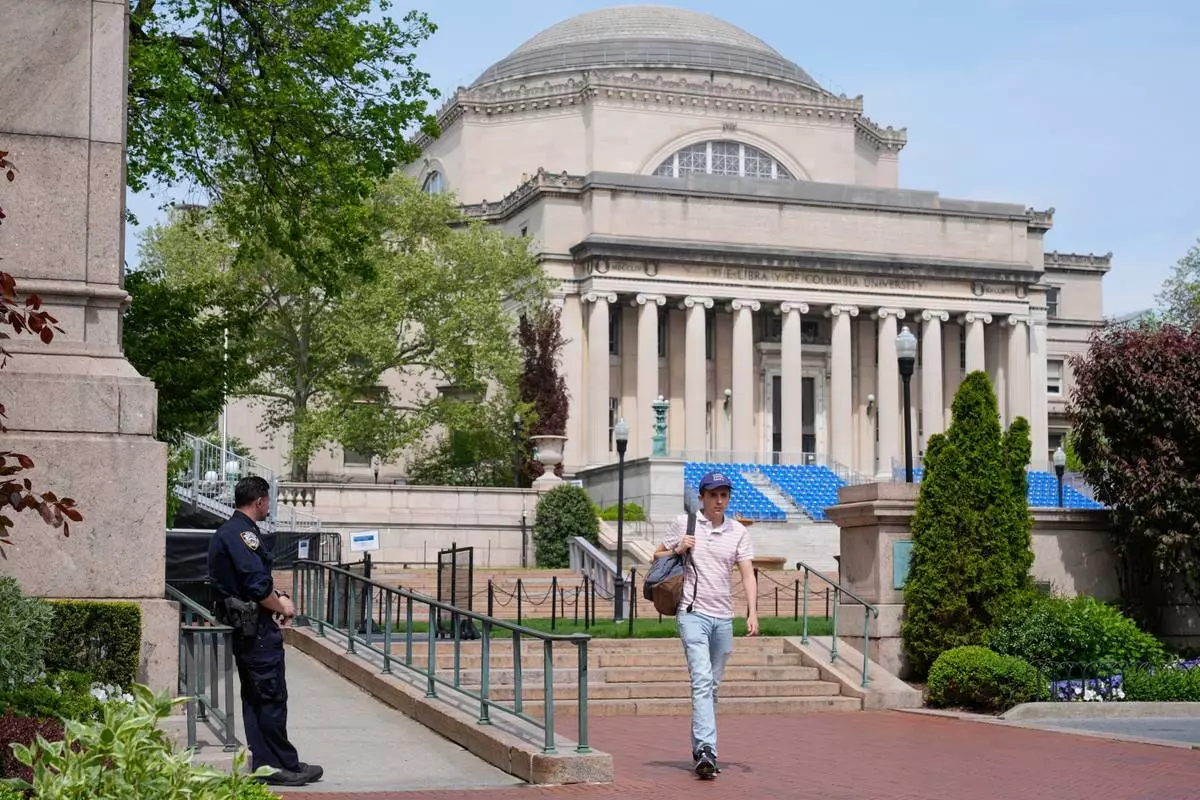
FILE - A New York City police officer keeps watch on the campus of Columbia University in New York, May 6, 2024. (AP Photo/Seth Wenig, File)