NEW YORK (AP) — A Columbia University student was arrested early Thursday by federal immigration agents who gained entry to a campus residence by claiming they were searching for a “missing person,” according to her attorneys and the school’s president.
The student, Ellie Aghayeva, is a senior from Azerbaijan who is studying neuroscience and political science, her lawyers said. A self-described content creator, she frequently shares inspirational stories and tips about navigating college as an immigrant to her sizable social media audience.
At around 7:00 a.m. on Thursday morning, Aghayeva posted a message to her more than 100,000 followers on Instagram. “DHS illegally arrested me. Please help," she wrote, referring to the Department of Homeland Security. A photo accompanying the post appeared to show the backseat of a vehicle.
In an emergency petition filed Thursday, attorneys for Aghayeva said Immigrations and Customs Enforcement entered her university-owned apartment in Manhattan early Thursday, then transferred to a federal detention center in Lower Manhattan.
The agents did not have a warrant, her attorneys said, but “represented they were searching for a missing person to gain entry.”
No reason was given for the arrest, according to the petition, which requests her immediate release. Aghayeva entered the United States on a visa in 2016, the petition stated.
A spokesperson for DHS did not respond to multiple inquiries about what prompted the arrest and whether Aghayeva's legal status had changed. Her lawyers also did not respond to additional questions.
In an email shared with students and staff, the university’s acting president, Claire Shipman, said that federal agents had entered a residential building at around 6:30 a.m., claiming they were seeking a missing person.
She said the university was in the process of reaching out to the student’s family and providing legal support.
The use of disguises or other misrepresentations by immigration authorities has drawn attention in recent months, after federal agents were seen posing as utility workers and other service employees in Minneapolis and elsewhere.
The practice is legal, in most cases. But immigration attorneys say such ruses are becoming increasingly common, adding to concerns about the Trump administration’s dramatic reshaping of immigration enforcement tactics nationwide.
The incident comes nearly one year after federal agents detained Mahmoud Khalil, then a Columbia graduate student and Palestinian activist, inside his university-owned housing. Khalil is out on bail, fighting his own deportation case.
In the months after his arrest, many students called on the university to do more to secure the campus from federal immigration enforcement.
Columbia currently requires that all law enforcement agents have a judicial warrant or subpoena to access non-public areas of the university, including housing.
In her email, Shipman said students should not allow law enforcement agents to enter non-public areas of the university and should not accept service of a warrant or subpoena, but should call campus public safety instead.
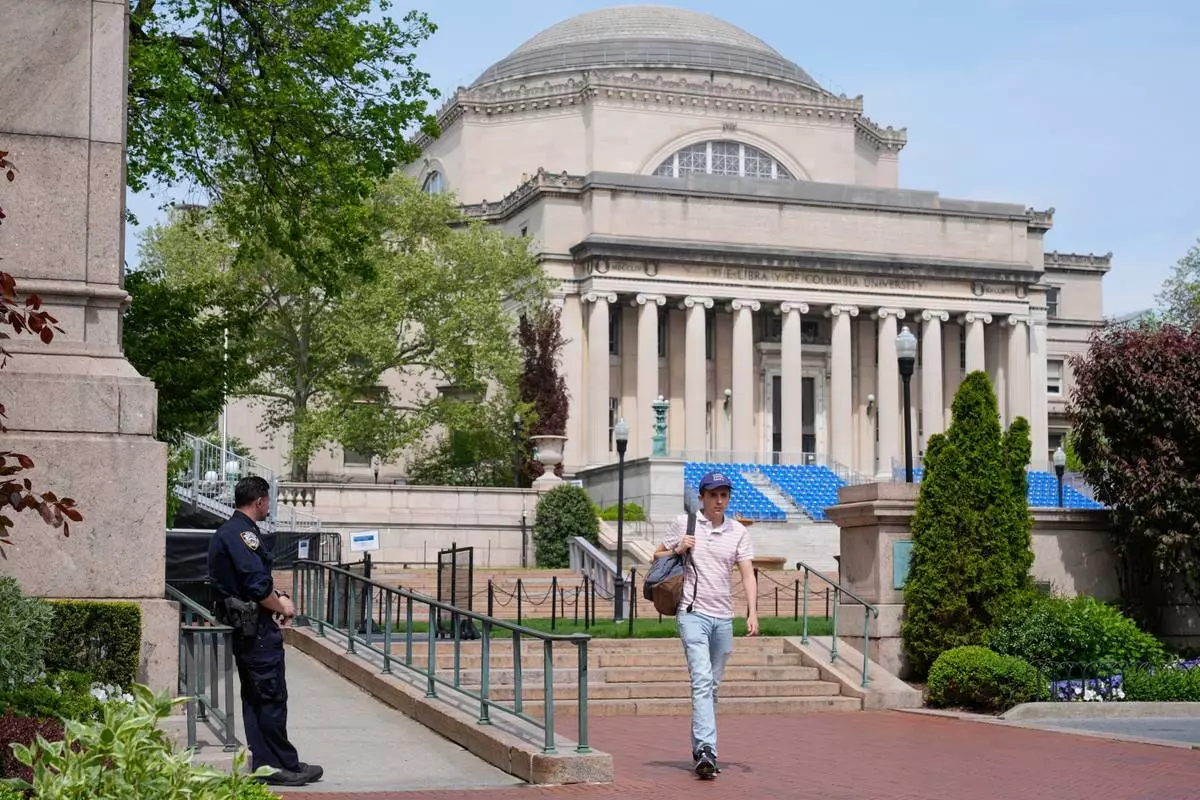
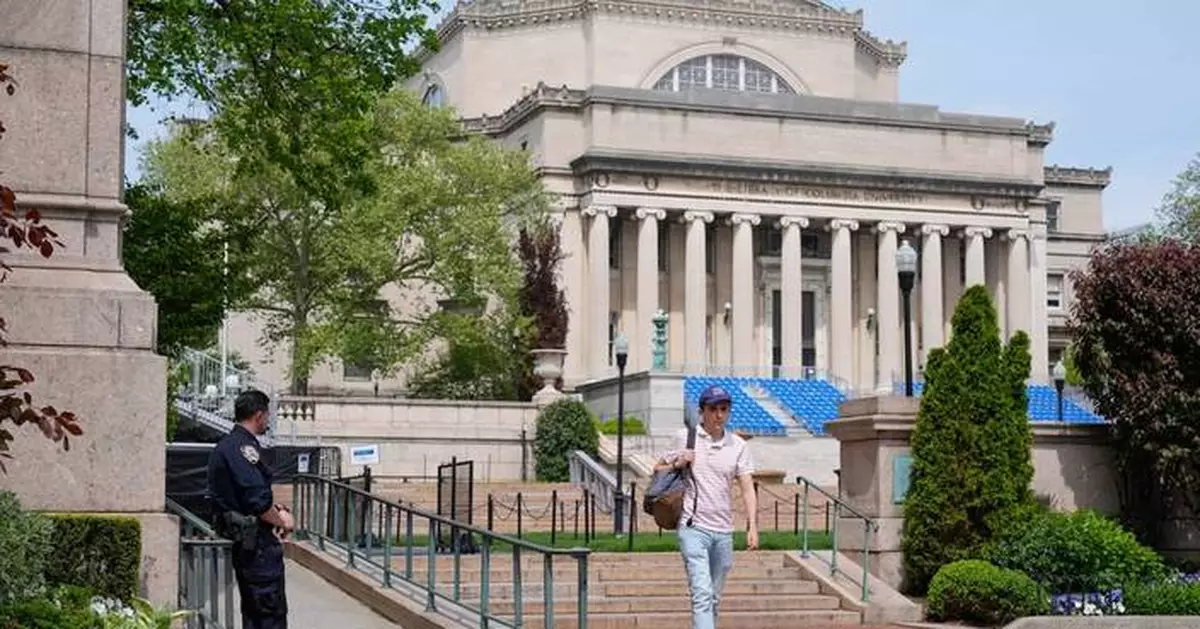
FILE - A New York City police officer keeps watch on the campus of Columbia University in New York, May 6, 2024. (AP Photo/Seth Wenig, File)
GENEVA (AP) — Iran and the United States wrapped up another round of indirect talks in Geneva on Thursday aimed at reaching a deal on Tehran's nuclear program and potentially averting another war as the U.S. gathers a massive fleet of aircraft and warships in the Middle East.
U.S. President Donald Trump wants a deal to constrain Iran’s nuclear program, and he sees an opportunity while the country is struggling at home with growing dissent following nationwide protests. Iran also hopes to avert war, but maintains it has the right to enrich uranium and does not want to discuss other issues, like its long-range missile program or support for armed groups like Hamas and Hezbollah.
Oman’s foreign minister, who is mediating the talks, said Thursday that they had ended but “will resume soon.” Badr al-Busaidi wrote on X that there had been “significant progress in the negotiation” without elaborating.
He said technical-level talks would take place next week in Vienna, home to the International Atomic Energy Agency. There was no immediate comment from U.S. or Iranian officials.
If America attacks, Iran has said U.S. military bases in the region would be considered legitimate targets, putting at risk tens of thousands of American service members. Iran has also threatened to attack Israel, meaning a regional war again could erupt across the Middle East.
“There would be no victory for anybody — it would be a devastating war,” Iranian Foreign Minister Abbas Araghchi told India Today in an interview filmed Wednesday just before he flew to Geneva.
“Since the Americans' bases are scattered through different places in the region, then unfortunately perhaps the whole region would be engaged and be involved, so it is a very terrible scenario.”
Ali Vaez, an Iran expert with the International Crisis Group, said it was a good sign that the Americans did not walk away immediately when Iran presented its latest proposal on Thursday.
“There might still not be a breakthrough at the end of this day, but the very fact that the U.S. team is returning shows that there is enough common ground between the two sides," he said.
The two sides held multiple rounds of talks last year that collapsed when Israel launched a 12-day war against Iran in June and the U.S. carried out heavy strikes on its nuclear sites, leaving much of Iran's nuclear program in ruins even as the full extent of the damage remains unclear.
Araghchi is representing Iran at the talks. Steve Witkoff, a billionaire real estate developer and friend of Trump who serves as a special Mideast envoy, is heading up the U.S. delegation with Trump's son-in-law Jared Kushner. The talks are again being mediated by Oman, an Arab Gulf country that's long served as an interlocutor between Iran and the West.
The two sides adjourned after around three hours of talks. Convoys carrying diplomats from both sides could be seen returning to the Omani diplomatic residence hours later, apparently to resume the negotiations.
“We’ve been exchanging creative and positive ideas in Geneva today,” said Oman’s Foreign Minister Badr al-Busaidi, who mediated. “We hope to make more progress.”
Iranian Foreign Ministry spokesperson Esmail Baghaei said diplomats held “very intensive” negotiations, meeting with the Omani envoy and the head of the International Atomic Energy Agency, the United Nations' nuclear watchdog.
He said the Iranians felt there were “constructive proposals” offered on both nuclear issues and sanctions relief.
Trump wants Iran to completely halt its enrichment of uranium and roll back both its long-range missile program and its support for regional armed groups. Iran says it will only discuss nuclear issues, and maintains its atomic program is for entirely peaceful purposes.
U.S. Secretary of State Marco Rubio told reporters Wednesday that Iran is “always trying to rebuild elements” of its nuclear program. He said that Tehran is not enriching uranium right now, “but they’re trying to get to the point where they ultimately can.”
Iran has said it hasn't enriched since June, but it has blocked IAEA inspectors from visiting the sites America bombed. Satellite photos analyzed by The Associated Press have shown activity at two of those sites, suggesting Iran is trying to assess and potentially recover material there.
The West and the IAEA say Iran had a nuclear weapons program until 2003. After Trump scrapped the 2015 nuclear agreement, Iran ramped up its enrichment of uranium to 60% purity — a short, technical step away from weapons-grade levels of 90%.
U.S. intelligence agencies assess that Iran has yet to restart a weapons program, but has “undertaken activities that better position it to produce a nuclear device, if it chooses to do so.” Some Iranian officials have spoken openly about the country's readiness to produce a bomb if that decision is taken.
If the talks fail, uncertainty hangs over the timing of any possible U.S. attack.
If the aim of potential military action is to pressure Iran to make concessions in nuclear negotiations, it’s not clear whether limited strikes would work. If the goal is to remove Iran’s leaders, that will likely commit the U.S. to a larger, longer military campaign. There has been no public sign of planning for what would come next, including the potential for chaos in Iran.
There is also uncertainty about what any military action could mean for the wider region. Tehran could retaliate against the American-allied nations of the Persian Gulf or Israel. Oil prices have risen in recent days in part due to those concerns, with benchmark Brent crude now around $70 a barrel. Iran in the last round of talks said it briefly halted traffic in the Strait of Hormuz, the narrow mouth of the Persian Gulf through which a fifth of all traded oil passes.
Satellite photos shot Tuesday and Wednesday by Planet Labs PBC and analyzed by the AP appeared to show that American vessels typically docked in Bahrain, the home of the U.S. Navy’s 5th Fleet, were all out at sea. The 5th Fleet referred questions to the U.S. military’s Central Command, which declined to comment. Before Iran’s attack on a U.S. base in Qatar during the closing days of the war last June, the 5th Fleet similarly scattered its ships at sea to protect against a potential attack.
Gambrell reported from Dubai, United Arab Emirates, and Melanie Lidman from Jerusalem. Associated Press reporters Will Weissert in Washington and Jamey Keaten in Geneva contributed to this report.
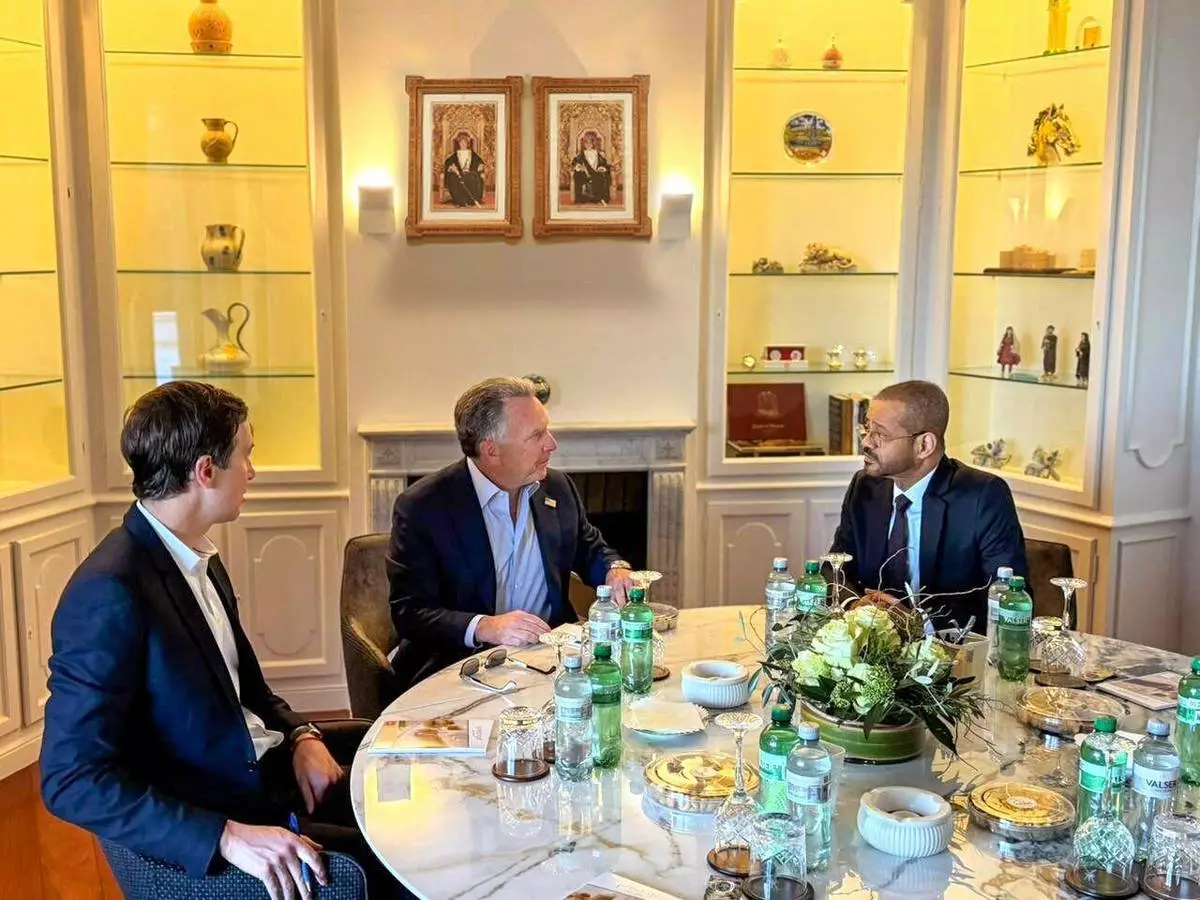
Oman's Minister of Foreign Affairs Sayyid Badr bin Hamad Al Busaidi, right, holds a meeting with White House special envoy Steve Witkoff, centre, and Jared Kushner, as part of the ongoing Iranian-American negotiations, in Geneva, Switzerland, Thursday Feb. 26, 2026. (Foreign Ministry of Oman via AP)
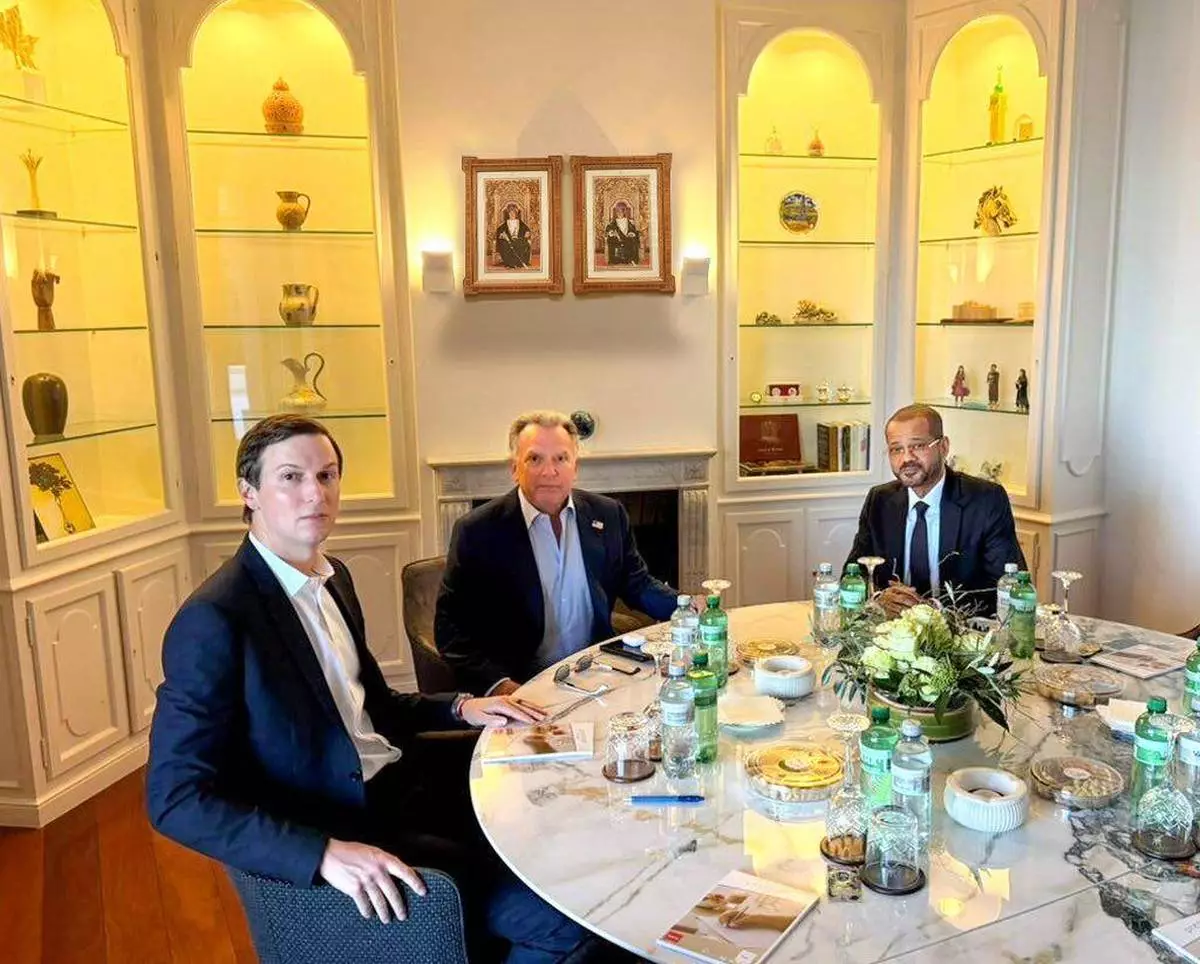
Oman's Minister of Foreign Affairs Sayyid Badr bin Hamad Al Busaidi, right, holds a meeting with White House special envoy Steve Witkoff, centre, and Jared Kushner, as part of the ongoing Iranian-American negotiations, in Geneva, Switzerland, Thursday Feb. 26, 2026. (Foreign Ministry of Oman via AP)
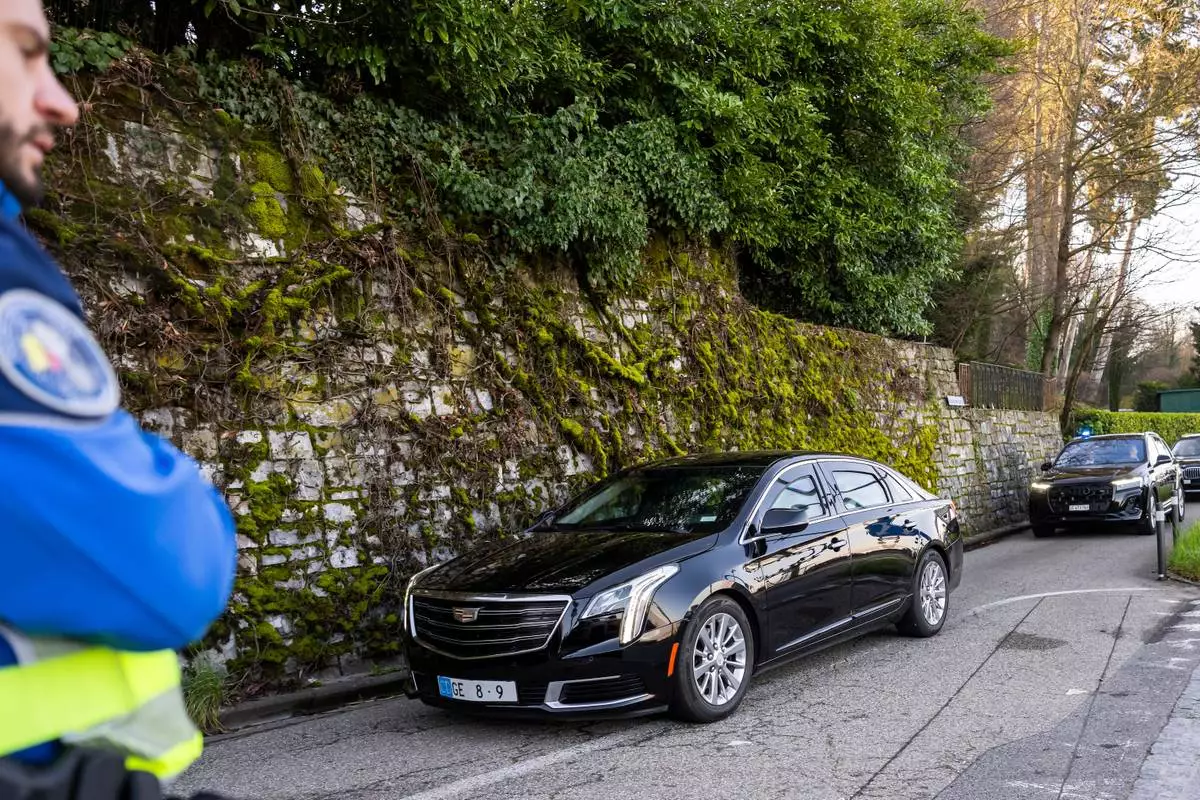
The U.S. delegation arrives at the Oman ambassador's residency, where the indirect nuclear talks between the United States and Iran are taking place in Geneva, Switzerland, Thursday, Feb. 26, 2026. (Martial Trezzini/Keystone via AP)
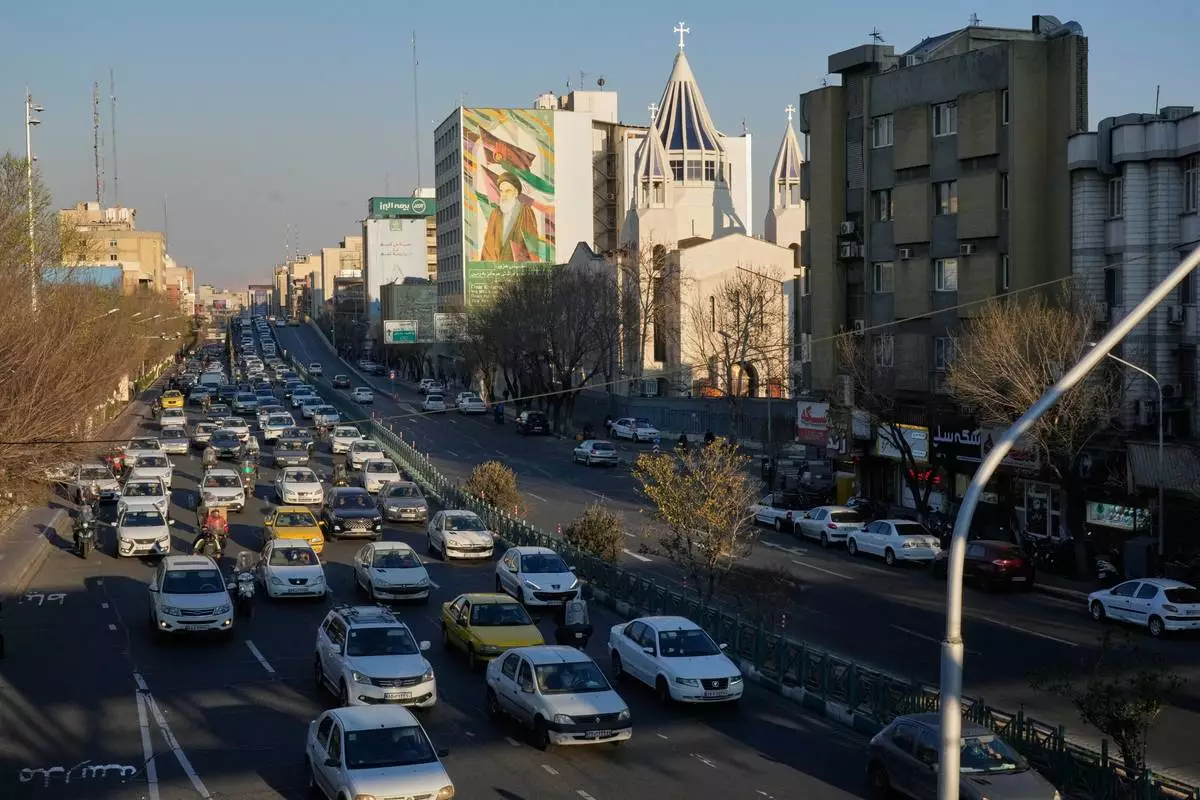
Vehicles drive past the Saint Sarkis church and a painting of the late Iranian revolutionary founder Ayatollah Khomeini in downtown Tehran, Iran, Wednesday, Feb. 25, 2026. (AP Photo/Vahid Salemi)
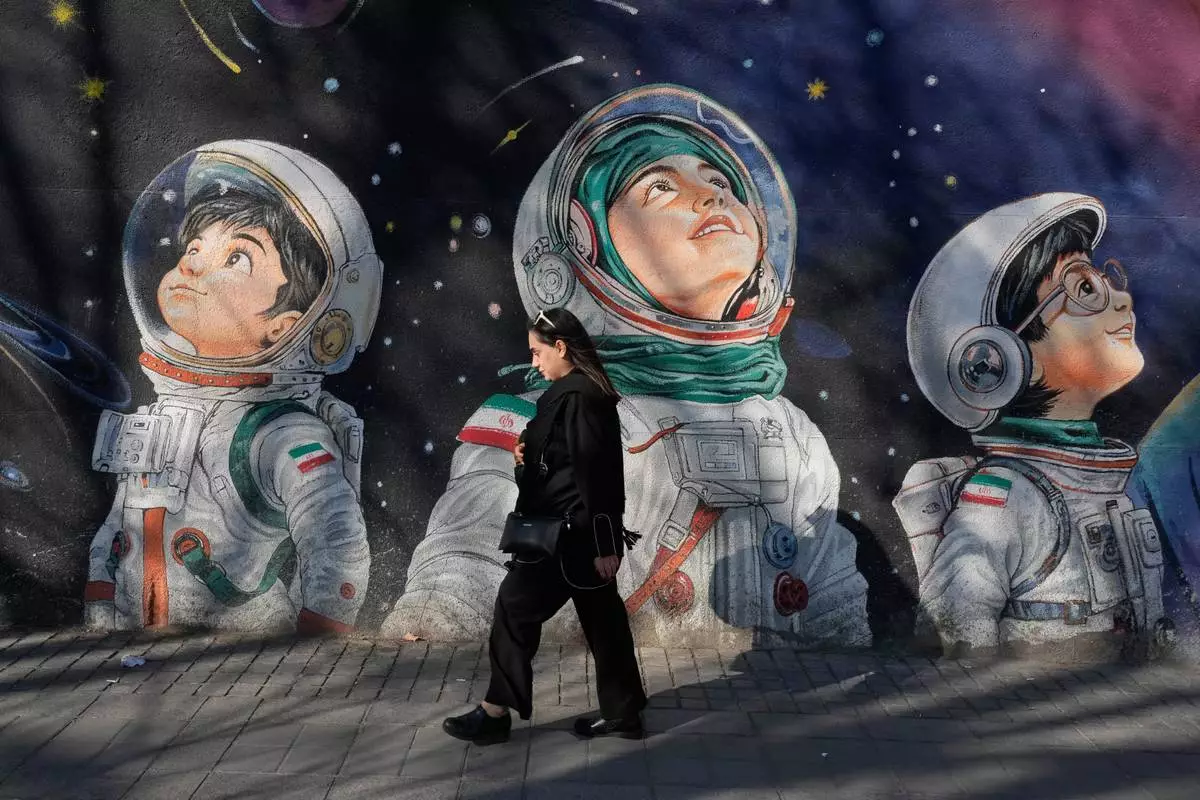
A woman walks past a painting on the wall of a girls school at Enqelab-e-Eslami, or Islamic Revolution, street in downtown Tehran, Iran, Wednesday, Feb. 25, 2026. (AP Photo/Vahid Salemi)
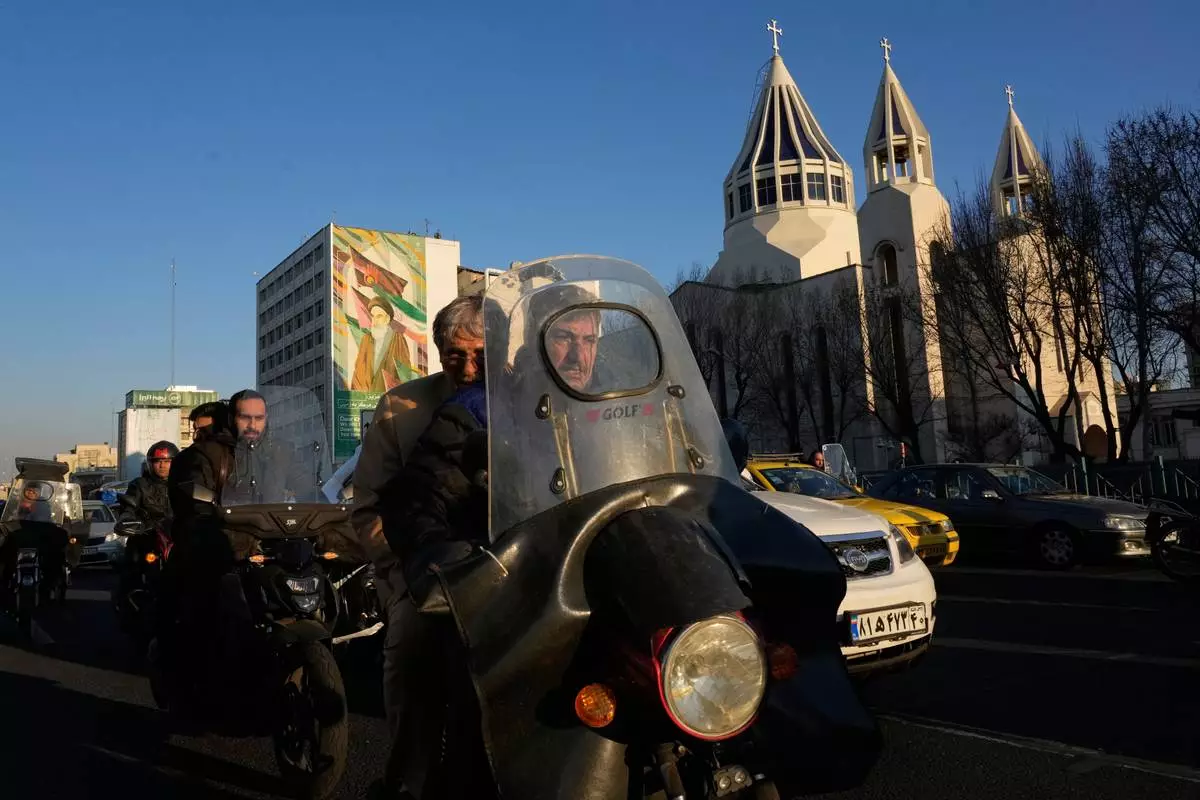
Commuters drive past Saint Sarkis church and a mural of the late Iranian revolutionary founder Ayatollah Khomeini in downtown Tehran, Iran, Wednesday, Feb. 25, 2026. (AP Photo/Vahid Salemi)