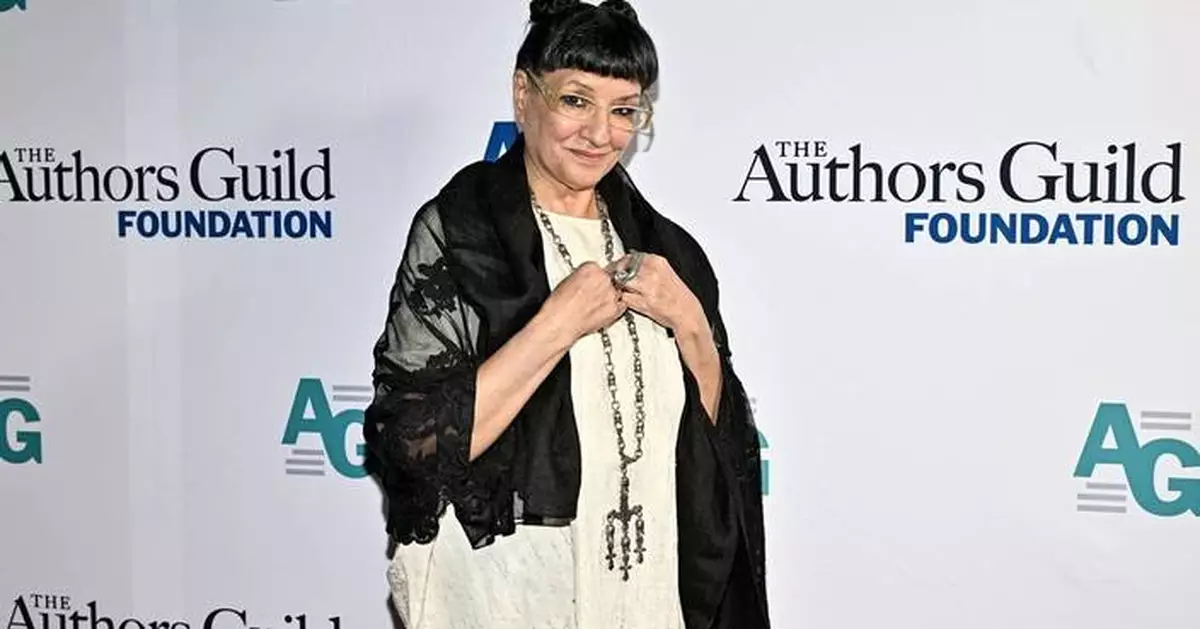
NEW YORK (AP) — Sandra Cisneros, one of this year's inductees into the American Academy of Arts and Letters, admits she's been wanting to join for a long time.
“I felt like I was waiting for someone to ask me to dance. I felt like a literary wallflower, because I never got invited,” says Cisneros, whose books include such favorites as “The House on Mango Street” and “Woman Hollering Creek and Other Stories.”
“There are some clubs I don't care to be a part of, but this one I wanted to be in,” she added, noting that such friends as the poet Joy Harjo were already in.
Cisneros is among 11 new core members voted in this year, the academy announced Thursday. Others include travel writer Pico Iyer, poets Marie Howe and Carl Phillips, fiction writer Rick Moody and the current U.S. poet laureate, Arthur Sze, who joins such predecessors as Harjo, Billy Collins and Tracy K. Smith.
Abstract painter Joan Snyder is among the visual artists who will be inducted this spring, along with painter-printmaker Elizabeth Peyton, architect-educator Mónica Ponce de León, artist-filmmaker Alfredo Jaar and photographer Stephen Shore.
“Whether through the built environment, the lens of a camera, the stroke of a brush, or lines of a poetry or prose, these new members have raised attention to an art form,” Academy President Kwame Anthony Appiah said in a statement. “They show what it means to look closely at history, at power, at intimacy, at place. Their work enlarges the cultural record, and we are proud to count them among us.”
The academy also added three artists to its honorary membership, which includes Meryl Streep and Bob Dylan among other U.S. and foreign artists: Russian author-critic Maria Stepanova and Argentine fiction writer Luisa Valenzuela, both prominent critics of their governments, and the painter Marlene Dumas, a native of South Africa who now lives in the Netherlands.
New members will be inducted during a May ceremony at the academy's beaux arts complex in Upper Manhattan. Author Zadie Smith will deliver the keynote speech — the Blashfield Address.
An honor society founded in 1898, the academy is divided into categories for literature, music, art and architecture. It has a core membership of 300, with new members elected by current members to replace vacancies created after one has died (There were no vacancies in music over the past year). Others in the academy range from authors Robert Caro and Louise Erdrich to musicians John Adams and Wynton Marsalis to artists Jasper Johns and Maya Lin.
An academy spokesperson declined to say who nominated Cisneros, citing the organization's policy of confidentiality.
During her interview, Cisneros referred to the recent death of Oscar winner Robert Duvall. She remembered meeting him in the 1990s at an event at the University of North Texas that included tango dancing, a longtime passion of Duvall's. At one point, he invited her to dance. She declined.
“I was too flummoxed to accept,” she says. “People ask me if I regret not agreeing to dance with Duvall. I didn't dance with him, but I don't have any regrets. I was just happy to be asked.”
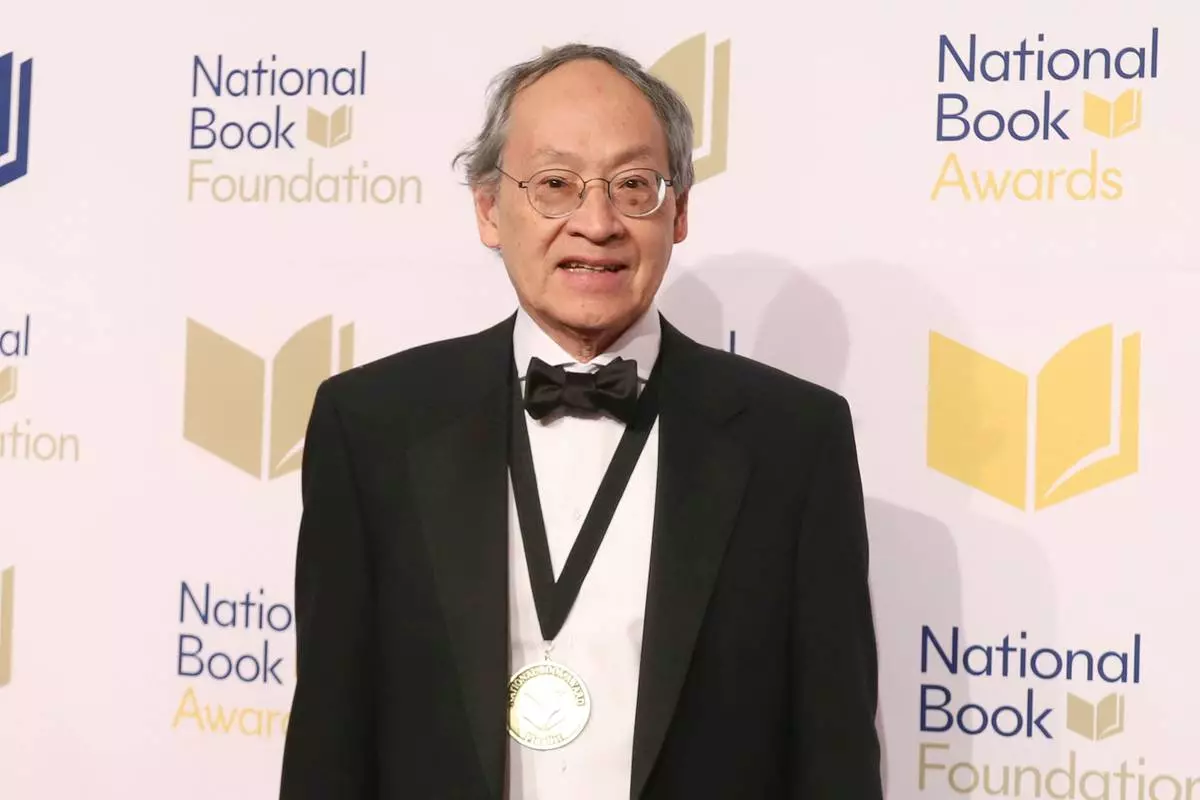
FILE - Arthur Sze attends the 70th National Book Awards ceremony on Nov. 20, 2019, in New York. (Photo by Greg Allen/Invision/AP, File)
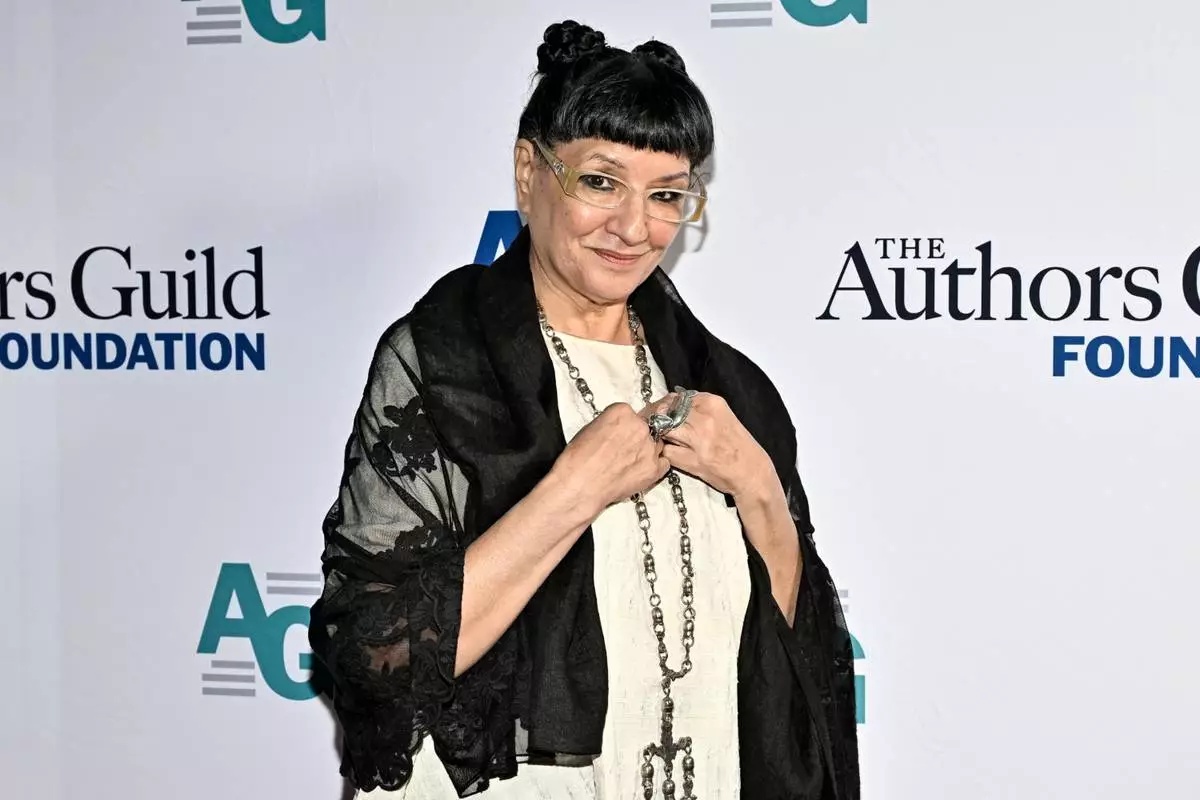
FILE - Honoree Sandra Cisneros appears at the Authors Guild Foundation Dinner in New York on April 7, 2025. (Photo by Evan Agostini/Invision/AP, File)
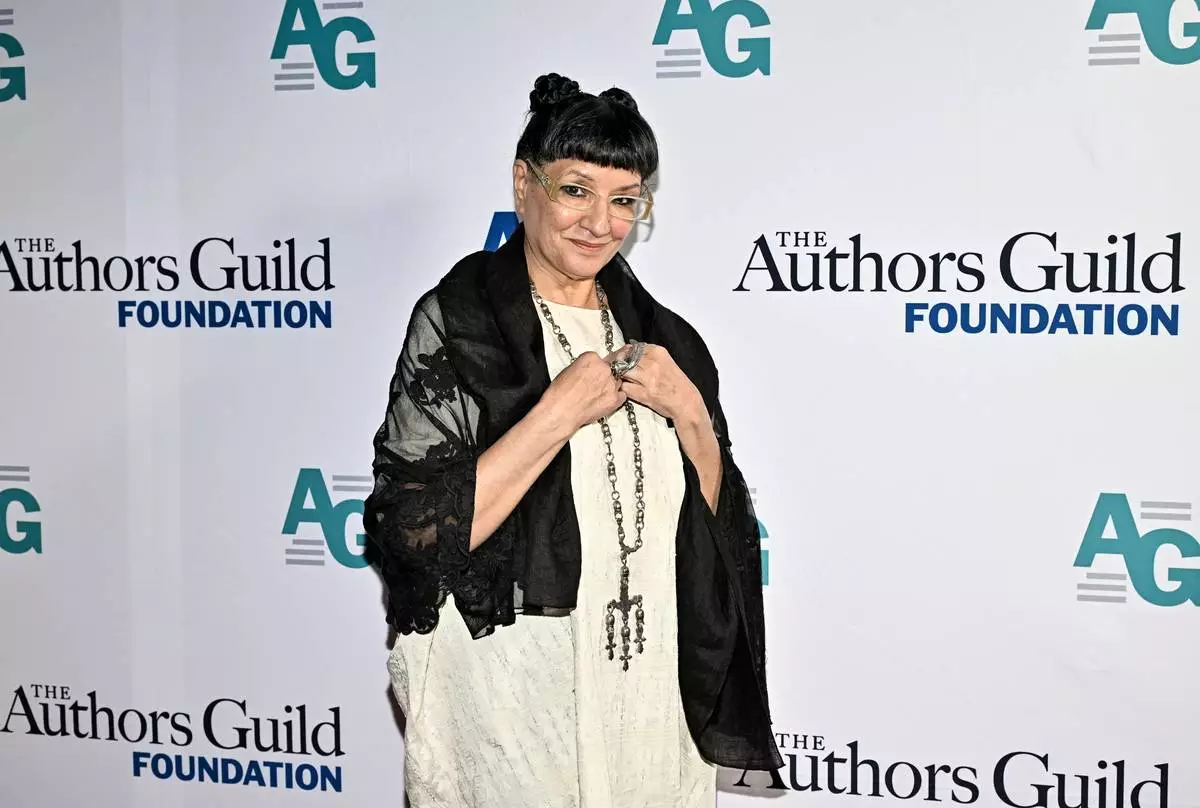
FILE - Sandra Cisneros attends the Authors Guild Foundation Dinner at Gotham Hall on Monday, April 7, 2025, in New York. (Photo by Evan Agostini/Invision/AP, File)
GENEVA (AP) — Iran and the United States were held another round of indirect talks in Geneva on Thursday to try to reach a deal on Tehran's nuclear program and potentially avert another war as the U.S. gathers a massive fleet of aircraft and warships in the Middle East.
U.S. President Donald Trump wants a deal to constrain Iran’s nuclear program, and he sees an opportunity while the country is struggling at home with growing dissent following nationwide protests. Iran also hopes to avert war, but maintains it has the right to enrich uranium and does not want to discuss other issues, like its long-range missile program or support for armed groups like Hamas and Hezbollah.
The U.S. delegation to the talks was seen leaving the Omani diplomatic residence where they were held after several hours of talks throughout the day. Iran’s state-run IRNA news agency reported that the talks had finished for Thursday night. It wasn’t immediately clear if they would continue into Friday.
Iran’s state-run IRNA news agency reported that the talks had finished for Thursday night. It wasn’t immediately clear if they would continue into Friday.
If America attacks, Iran has said U.S. military bases in the region would be considered legitimate targets, putting at risk tens of thousands of American service members. Iran has also threatened to attack Israel, meaning a regional war again could erupt across the Middle East.
“There would be no victory for anybody — it would be a devastating war,” Iranian Foreign Minister Abbas Araghchi told India Today in an interview filmed Wednesday just before he flew to Geneva.
“Since the Americans' bases are scattered through different places in the region, then unfortunately perhaps the whole region would be engaged and be involved, so it is a very terrible scenario.”
Ali Vaez, an Iran expert with the International Crisis Group, said it was a good sign that the Americans did not walk away immediately when Iran presented its latest proposal on Thursday.
“There might still not be a breakthrough at the end of this day, but the very fact that the U.S. team is returning shows that there is enough common ground between the two sides," he said.
The two sides held multiple rounds of talks last year that collapsed when Israel launched a 12-day war against Iran in June and the U.S. carried out heavy strikes on its nuclear sites, leaving much of Iran's nuclear program in ruins even as the full extent of the damage remains unclear.
Araghchi is representing Iran at the talks. Steve Witkoff, a billionaire real estate developer and friend of Trump who serves as a special Mideast envoy, is heading up the U.S. delegation with Trump's son-in-law Jared Kushner. The talks are again being mediated by Oman, an Arab Gulf country that's long served as an interlocutor between Iran and the West.
The two sides adjourned after around three hours of talks. Convoys carrying diplomats from both sides could be seen returning to the Omani diplomatic residence hours later, apparently to resume the negotiations.
“We’ve been exchanging creative and positive ideas in Geneva today,” said Oman’s Foreign Minister Badr al-Busaidi, who mediated. “We hope to make more progress.”
Iranian Foreign Ministry spokesperson Esmail Baghaei said diplomats held “very intensive” negotiations, meeting with the Omani envoy and the head of the International Atomic Energy Agency, the United Nations' nuclear watchdog.
He said the Iranians felt there were “constructive proposals” offered on both nuclear issues and sanctions relief.
Trump wants Iran to completely halt its enrichment of uranium and roll back both its long-range missile program and its support for regional armed groups. Iran says it will only discuss nuclear issues, and maintains its atomic program is for entirely peaceful purposes.
U.S. Secretary of State Marco Rubio told reporters Wednesday that Iran is “always trying to rebuild elements” of its nuclear program. He said that Tehran is not enriching uranium right now, “but they’re trying to get to the point where they ultimately can.”
Iran has said it hasn't enriched since June, but it has blocked IAEA inspectors from visiting the sites America bombed. Satellite photos analyzed by The Associated Press have shown activity at two of those sites, suggesting Iran is trying to assess and potentially recover material there.
The West and the IAEA say Iran had a nuclear weapons program until 2003. After Trump scrapped the 2015 nuclear agreement, Iran ramped up its enrichment of uranium to 60% purity — a short, technical step away from weapons-grade levels of 90%.
U.S. intelligence agencies assess that Iran has yet to restart a weapons program, but has “undertaken activities that better position it to produce a nuclear device, if it chooses to do so.” Some Iranian officials have spoken openly about the country's readiness to produce a bomb if that decision is taken.
If the talks fail, uncertainty hangs over the timing of any possible U.S. attack.
If the aim of potential military action is to pressure Iran to make concessions in nuclear negotiations, it’s not clear whether limited strikes would work. If the goal is to remove Iran’s leaders, that will likely commit the U.S. to a larger, longer military campaign. There has been no public sign of planning for what would come next, including the potential for chaos in Iran.
There is also uncertainty about what any military action could mean for the wider region. Tehran could retaliate against the American-allied nations of the Persian Gulf or Israel. Oil prices have risen in recent days in part due to those concerns, with benchmark Brent crude now around $70 a barrel. Iran in the last round of talks said it briefly halted traffic in the Strait of Hormuz, the narrow mouth of the Persian Gulf through which a fifth of all traded oil passes.
Satellite photos shot Tuesday and Wednesday by Planet Labs PBC and analyzed by the AP appeared to show that American vessels typically docked in Bahrain, the home of the U.S. Navy’s 5th Fleet, were all out at sea. The 5th Fleet referred questions to the U.S. military’s Central Command, which declined to comment. Before Iran’s attack on a U.S. base in Qatar during the closing days of the war last June, the 5th Fleet similarly scattered its ships at sea to protect against a potential attack.
Gambrell reported from Dubai, United Arab Emirates, and Melanie Lidman from Jerusalem. Associated Press reporters Will Weissert in Washington and Jamey Keaten in Geneva contributed to this report.
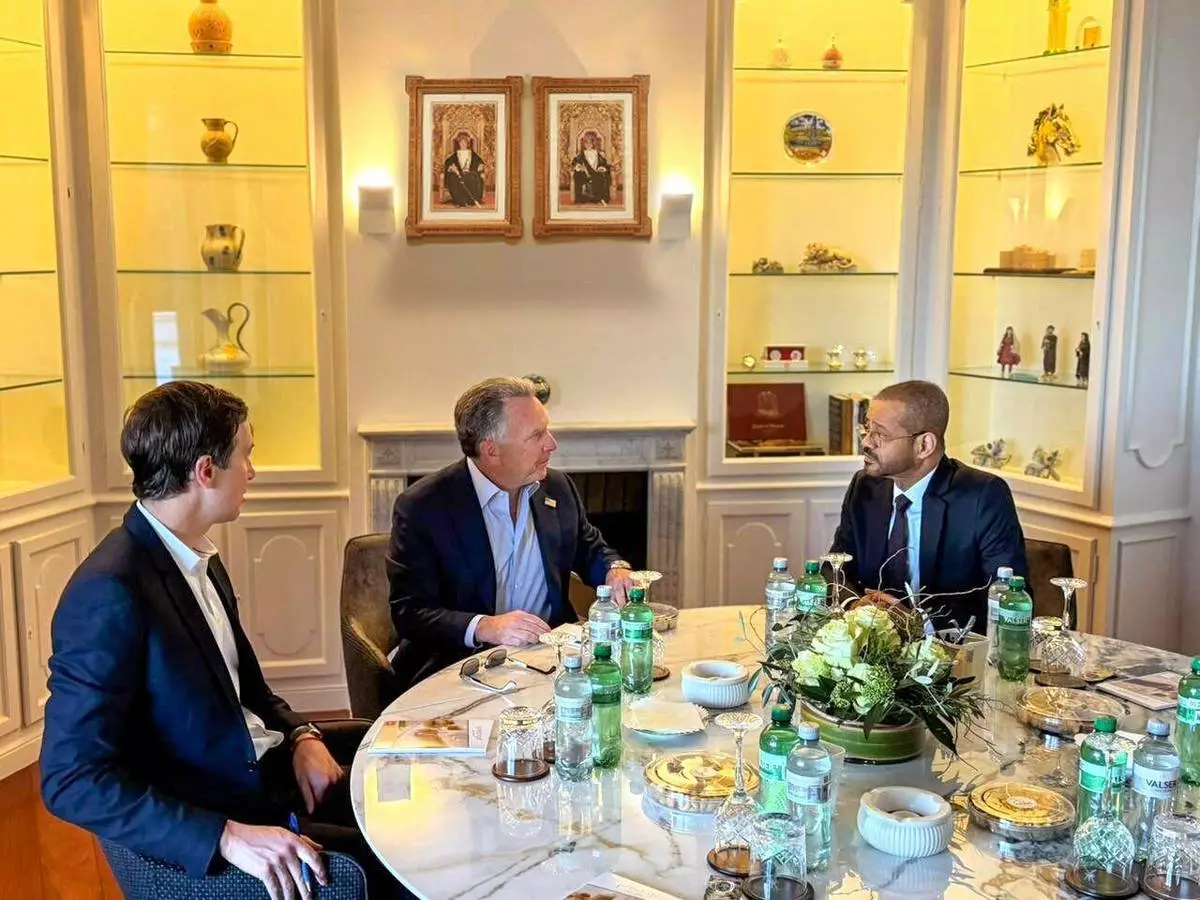
Oman's Minister of Foreign Affairs Sayyid Badr bin Hamad Al Busaidi, right, holds a meeting with White House special envoy Steve Witkoff, centre, and Jared Kushner, as part of the ongoing Iranian-American negotiations, in Geneva, Switzerland, Thursday Feb. 26, 2026. (Foreign Ministry of Oman via AP)
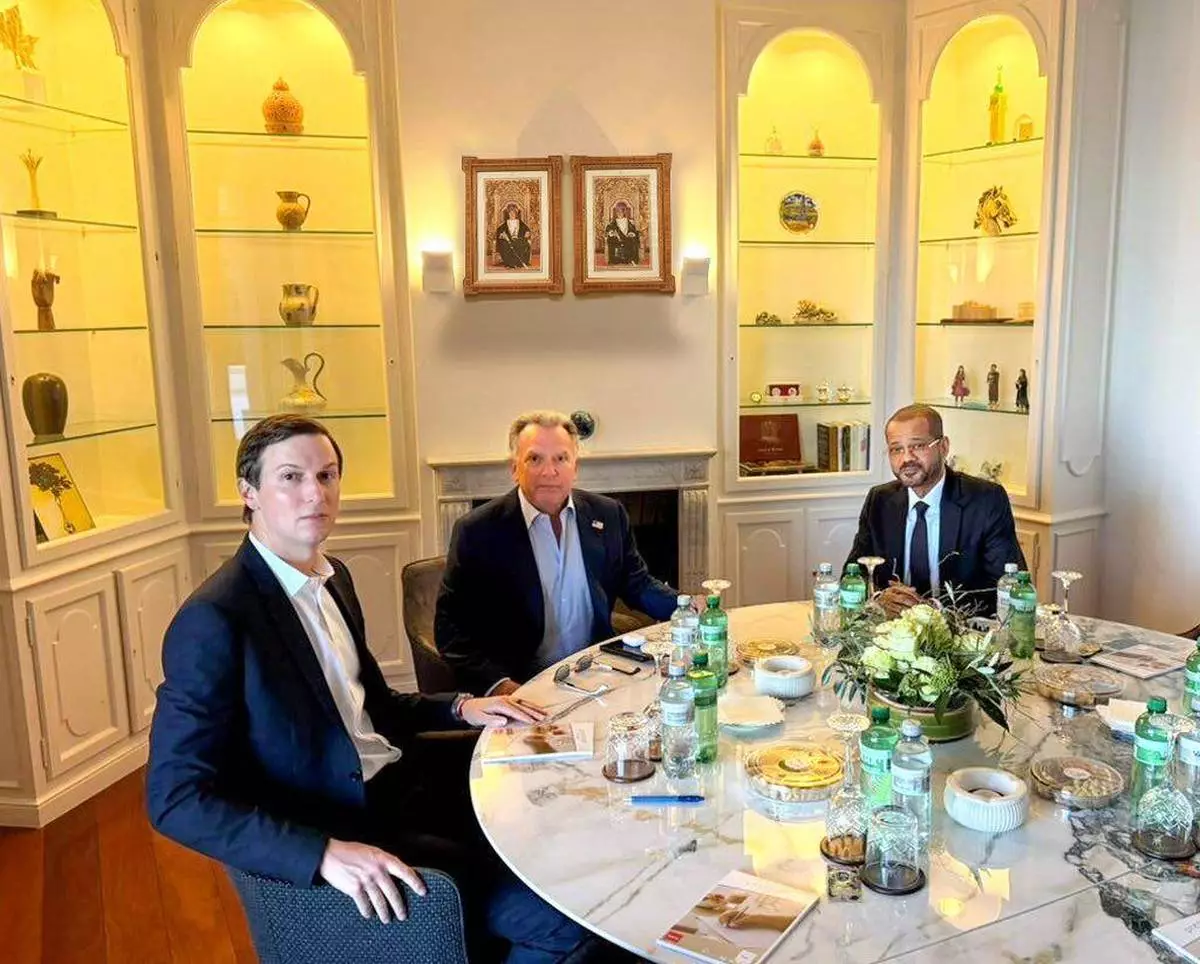
Oman's Minister of Foreign Affairs Sayyid Badr bin Hamad Al Busaidi, right, holds a meeting with White House special envoy Steve Witkoff, centre, and Jared Kushner, as part of the ongoing Iranian-American negotiations, in Geneva, Switzerland, Thursday Feb. 26, 2026. (Foreign Ministry of Oman via AP)
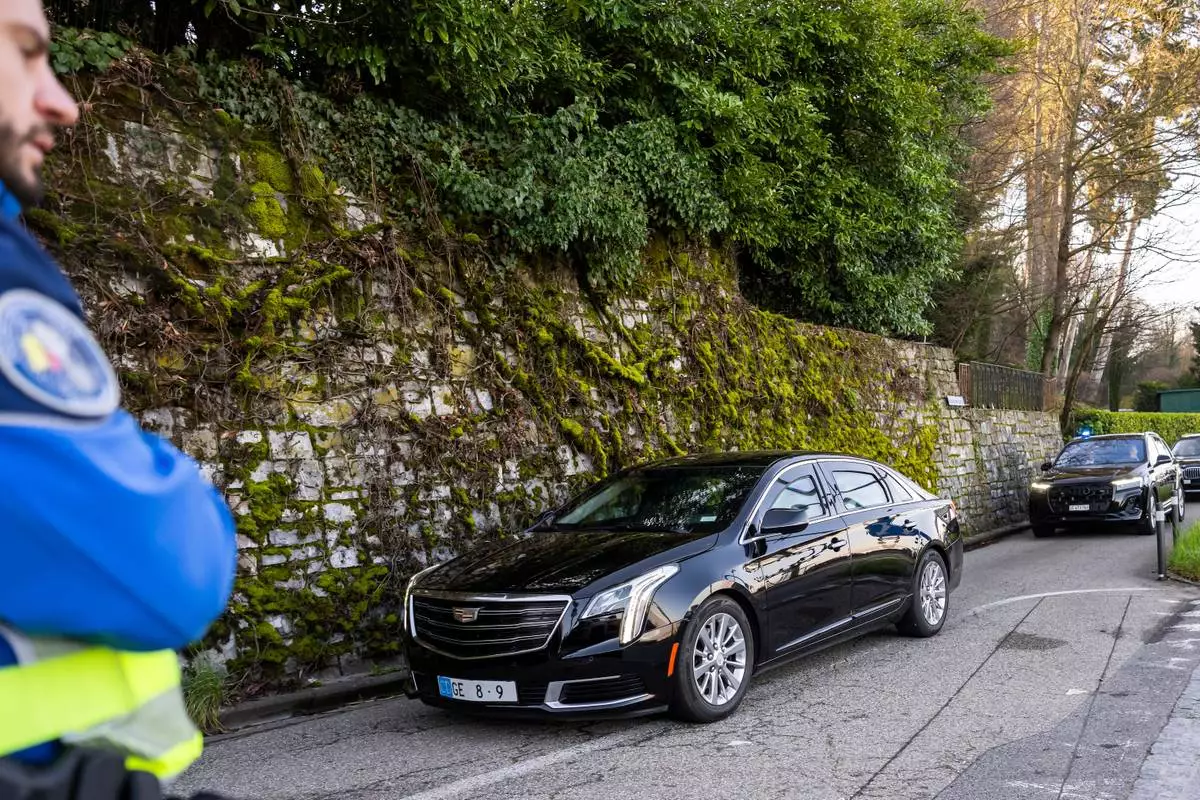
The U.S. delegation arrives at the Oman ambassador's residency, where the indirect nuclear talks between the United States and Iran are taking place in Geneva, Switzerland, Thursday, Feb. 26, 2026. (Martial Trezzini/Keystone via AP)
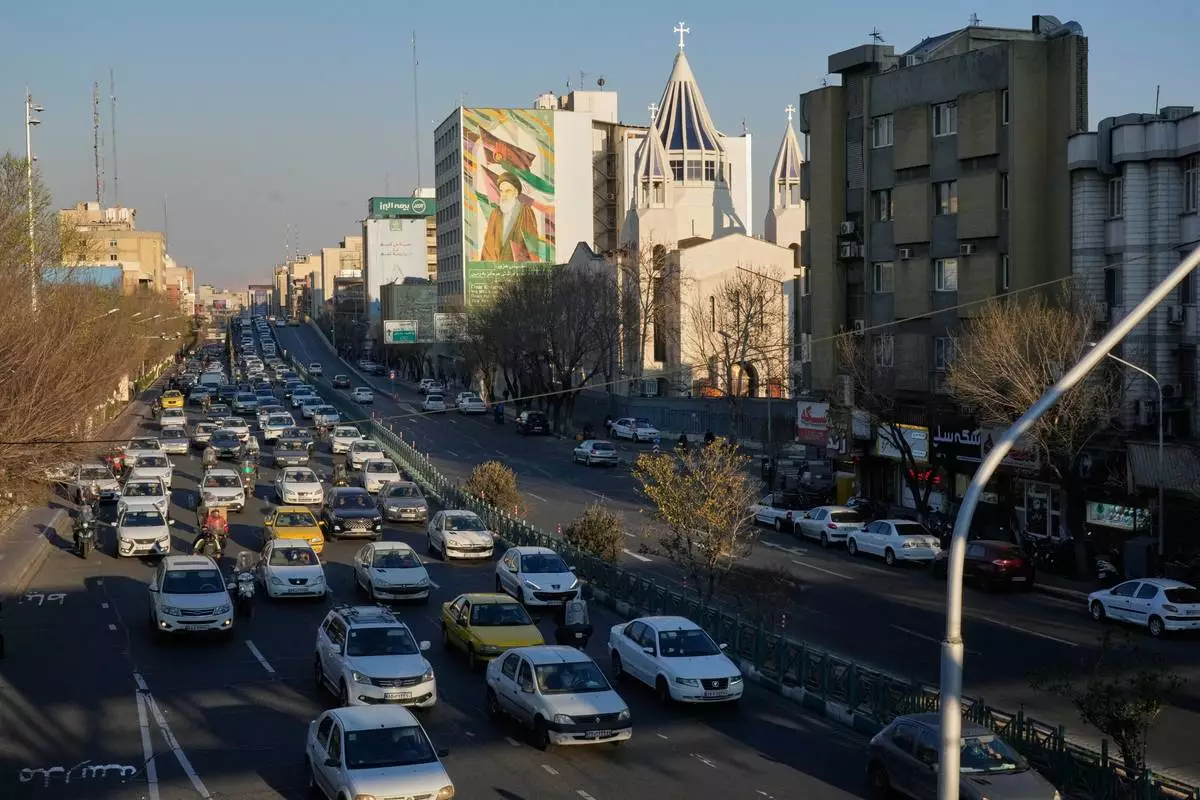
Vehicles drive past the Saint Sarkis church and a painting of the late Iranian revolutionary founder Ayatollah Khomeini in downtown Tehran, Iran, Wednesday, Feb. 25, 2026. (AP Photo/Vahid Salemi)
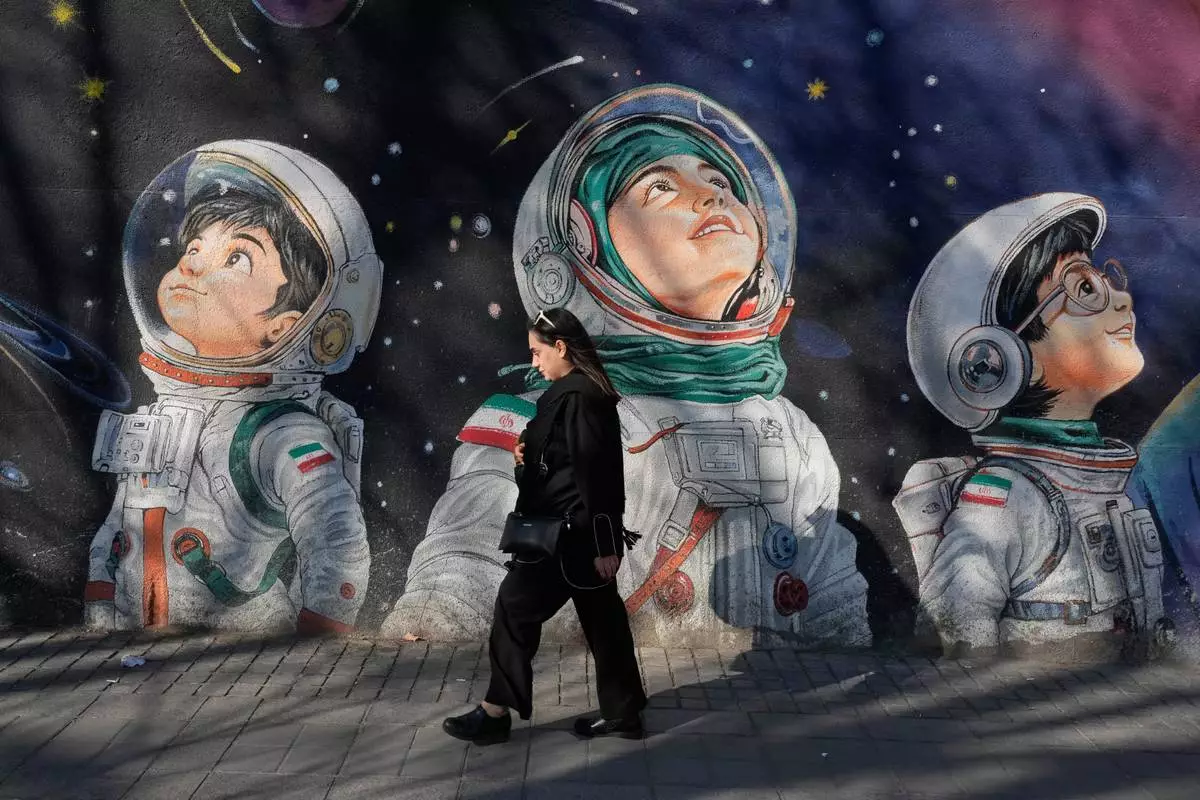
A woman walks past a painting on the wall of a girls school at Enqelab-e-Eslami, or Islamic Revolution, street in downtown Tehran, Iran, Wednesday, Feb. 25, 2026. (AP Photo/Vahid Salemi)
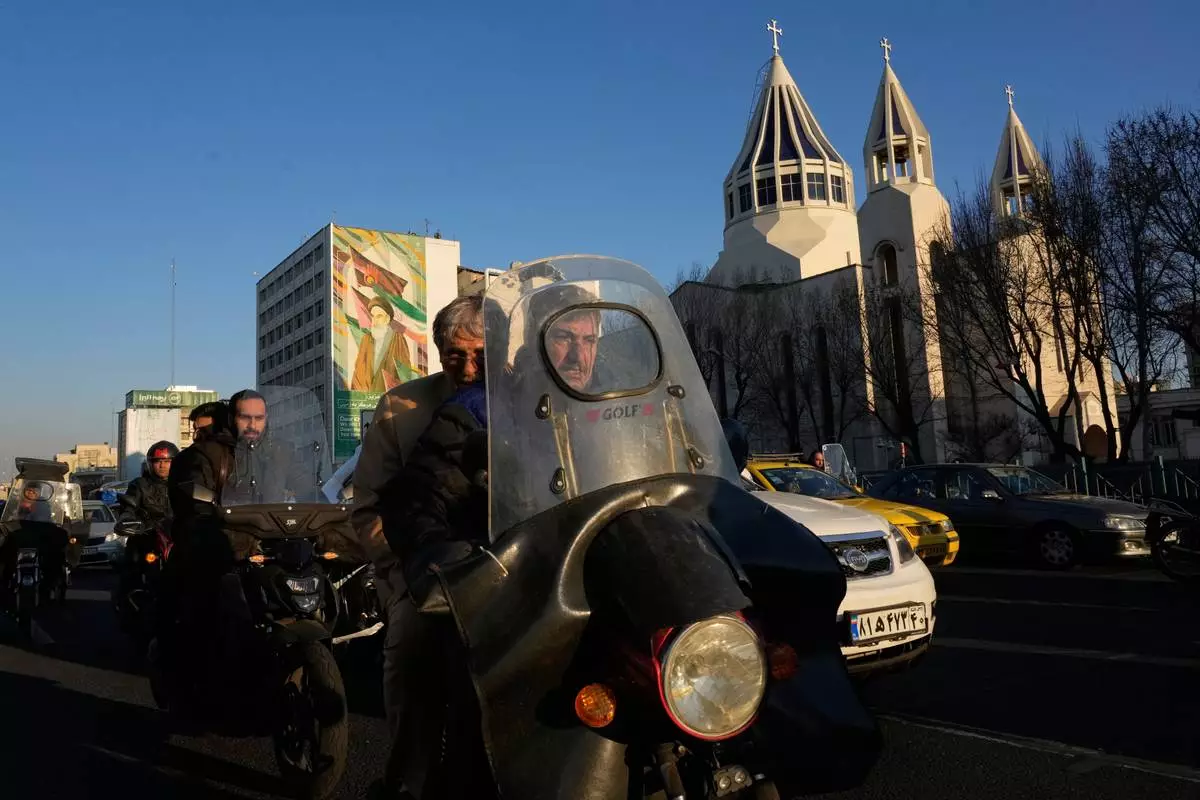
Commuters drive past Saint Sarkis church and a mural of the late Iranian revolutionary founder Ayatollah Khomeini in downtown Tehran, Iran, Wednesday, Feb. 25, 2026. (AP Photo/Vahid Salemi)