Novartis has settled a lawsuit by the estate of Henrietta Lacks that alleged the pharmaceutical giant unjustly profited off her cells, which were taken from her tumor without her knowledge in 1951 and reproduced in labs to enable major medical advancements, including the polio vaccine.
Details of the agreement, which was finalized in federal court in Maryland this month, aren't public.
The Lacks family and Swiss-based Novartis said in a joint statement that they are “pleased they were able to find a way to resolve this matter filed by Henrietta Lacks' Estate outside of court” but aren't commenting further.
It’s the second settlement in lawsuits filed by the estate that accused biomedical businesses of reaping rewards from a racist medical system that took advantage of Black patients like Lacks. The settlement ends litigation between Novartis, one of the world's largest pharmaceutical companies, and the estate of Lacks, a mother who died of cervical cancer at age 31 and was buried in an unmarked grave.
The 2024 lawsuit had sought from Novartis “the full amount of its net profits obtained by commercializing the HeLa cell line," which the complaint said had been cultivated from “stolen cells.”
Doctors at Johns Hopkins Hospital took Lacks’ cervical cells in 1951 without her knowledge, and the tissue taken from her tumor before she died became the first human cells to continuously grow and reproduce in lab dishes. HeLa cells became a cornerstone of modern medicine, enabling countless scientific and medical innovations, including the development of genetic mapping and even COVID-19 vaccines, but the Lacks family wasn't compensated along the way despite that incalculable impact on science and medicine.
Johns Hopkins said it never sold or profited from the cell lines, but many companies have patented ways of using them.
In 2023, Lacks' estate reached an undisclosed settlement with the biotechnology company Thermo Fisher Scientific Inc. Lawyers for the family argued in that case that the company continued to commercialize the results long after the origins of the HeLa cell line became well known and unjustly enriched itself off Lacks’ cells.
There are other pending lawsuits by the Lacks estate. Just over a week after the estate settled the case with Thermo Fisher Scientific, attorneys for the estate filed a lawsuit against Ultragenyx Pharmaceutical in Baltimore federal court, the same venue as the previously settled case. Litigation with Ultragenyx as well as Viatris, a pharmaceutical company, remain active.
Attorneys for the family have indicated there could be additional complaints filed.
Lacks was a poor tobacco farmer from southern Virginia who married and moved with her husband to Turner Station, a historically Black community outside Baltimore. They were raising five children when doctors discovered a tumor in Lacks’ cervix and saved a sample of her cancer cells collected during a biopsy.
While most cell samples died shortly after being removed from the body, her cells survived and thrived in laboratories. They became known as the first immortalized human cell line because scientists could cultivate them indefinitely, meaning researchers anywhere could reproduce studies using identical cells.
The remarkable science involved — and the impact on the Lacks family, some of whom had chronic illnesses and no health insurance — were documented in a bestselling book by Rebecca Skloot, “The Immortal Life of Henrietta Lacks,” which was published in 2010. Oprah Winfrey portrayed her daughter in an HBO movie about the story.
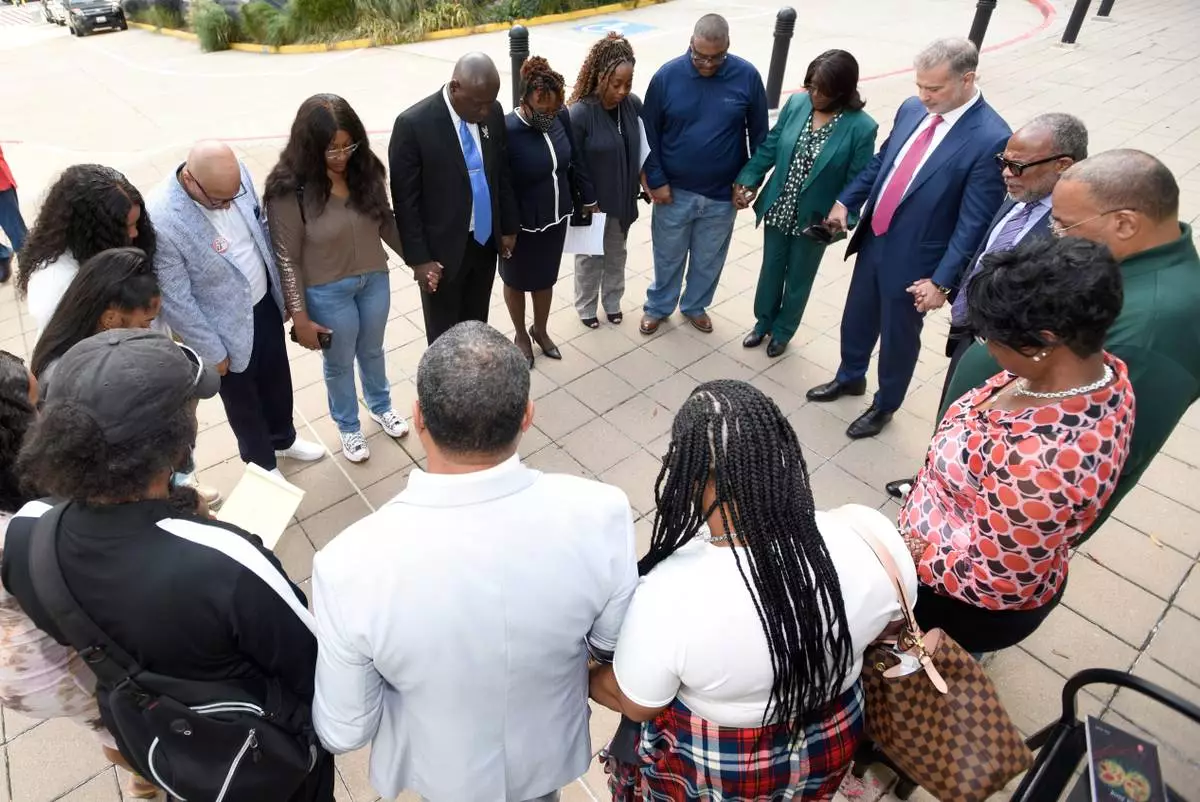
FILE - Descendants of Henrietta Lacks, whose cells, known as HeLa cells, have been used in medical research without her permission, say a prayer with attorneys outside the federal courthouse in Baltimore, Monday, Oct. 4, 2021. (AP Photo/Steve Ruark, File)
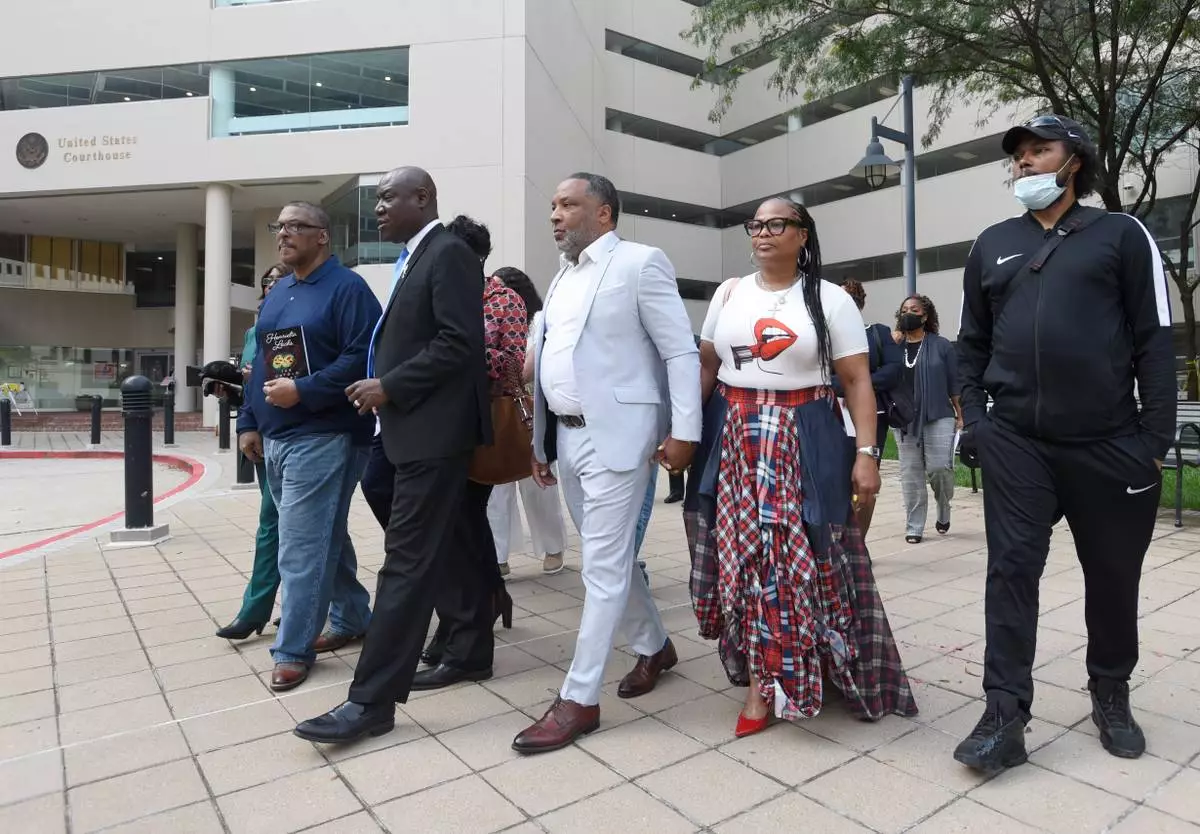
FILE - Attorney Ben Crump, second from left, walks with Ron Lacks, left, Alfred Lacks Carter, third from left, both grandsons of Henrietta Lacks, and other descendants of Lacks, outside the federal courthouse in Baltimore, Oct. 4, 2021. (AP Photo/Steve Ruark, File)

FILE - This Oct. 25, 2011 file photo shows the logo of Swiss pharmaceutical company Novartis AG on one of their buildings in Basel, Switzerland. (Georgios Kefalas/Keystone via AP, File)
JEFFERSON CITY, Mo. (AP) — U.S. Rep. Wesley Bell won Tuesday's rematch in the Missouri Democratic primary against former Rep. Cori Bush, an outspoken activist who had been part of a progressive group of House members known as the Squad.
Although democratic socialists like Bush have made gains in other places around the country this year, she fell short while running to reclaim the St. Louis-based seat that she lost two years ago.
As was the case in the last campaign, Bell was backed by the American Israel Public Affairs Committee, which lobbies for U.S. support of Israel. Bush has denounced Israel’s military action in Gaza.
But Bell said the race came down to his work in the district, not international affairs, and he pitched voters on a more pragmatic approach to Congress.
The rematch was one of several consequential primaries in the state. In western Missouri, Republicans picked state Sen. Rick Brattin to try to unseat Democratic Rep. Emanuel Cleaver in a dramatically reshaped district that is part of President Donald Trump’s attempt to retain a slim House majority in the midterms. Republicans already hold six of Missouri’s eight congressional seats and are hoping to pick up one more.
In northern Missouri, Republicans chose conservative talk radio host Chris Stigall as a potential successor to retiring Rep. Sam Graves, chair of the House Transportation and Infrastructure Committee.
Meanwhile, Missouri voters defeated a pair of unique ballot measures backed by the Republican-led Legislature. One would have required all citizen-initiated constitutional amendments to pass in each of Missouri’s eight congressional districts instead of by a simple statewide majority — a high standard used by no other state. The other would have directed lawmakers to repeal the state’s individual income tax while authorizing a state sales tax expansion.
Bell’s primary victory is likely to propel him to reelection in November in the heavily Democratic St. Louis district.
“We had Cori Bush before, and a lot of things went wrong,” said Sandra Milbrandt, 58, who voted for Bell. “Wesley Bell has been doing good. So why would we not keep him there?”
The deep-pocketed American Israel Public Affairs Committee spent millions to help oust Bush in 2024 after she criticized Israel’s response in Gaza to the 2023 Hamas attack on Israel. Bell was again supported by AIPAC this year.
Nationally, public opinions of Israel have since shifted, particularly among Democrats. A recent survey by The Associated Press-NORC Center for Public Affairs Research found that about 58% of Democrats now say the U.S. is “too supportive” of Israelis, up from 45% in an AP-NORC poll from January 2024.
Bell said he focused his campaign on what he plans to do for St. Louis.
“When we think about all that noise that was going on, I have a tremendous group of folks, and we just got to work,” Bell said during his victory speech.
Bush offered no reconciliation in defeat, instead swiping at Bell.
“It pisses me off that for the next two years this community will be represented by someone that didn’t deem you valuable enough to show up to one candidate forum where there were audience comments,” she said.
Bush and Bell both honed their leadership skills in Ferguson amid the racial unrest that followed the fatal shooting of Michael Brown by a police officer in 2014. Bell won election to the Ferguson City Council the next year, then defeated a seven-term St. Louis County prosecutor in the 2018 Democratic primary.
Bush, a protest leader, defeated longtime Rep. William Lacy Clay in the 2020 Democratic primary. She served two terms before being defeated by Bell.
Missouri was the second Republican state, after Texas, to respond to Trump’s call last year to redraw congressional districts to the GOP’s advantage ahead of the midterms. The revamped map stretches Cleaver’s previous Kansas City district eastward into rural central Missouri, giving the new 5th District a Republican tilt.
Cleaver was unopposed for the Democratic nomination. Brattin, a Marine veteran and founding member of the Missouri Freedom Caucus, a conservative faction that has challenged the legislature’s GOP leadership, won in a six-person Republican primary. Brattin had the backing of some of Missouri’s top Republicans, including Gov. Mike Kehoe, and received an endorsement from Trump on the evening before the election.
Brattin quickly turned his attention to Cleaver after Tuesday’s primary, casting Cleaver as a liberal who is out of touch with the “conservative area of our nation’s heartland” in the reshaped district.
Graves, who has represented rural northern Missouri for a quarter century, set off a political scramble when he announced in late March that he wasn’t seeking reelection. He endorsed Stigall, who once worked for Graves.
Stigall’s victory in the five-person primary gives him an edge in the November election for the sprawling 6th Congressional District that includes rural northern Missouri and part of Kansas City.
Graves has represented the district for a quarter century.
A constitutional amendment placed on the ballot by Republican state lawmakers would have made it harder for citizen-initiated amendments to win voter approval. The measure was put forward after voters narrowly passed several controversial citizen initiatives, including ones enshrining abortion rights into the state constitution, legalizing recreational marijuana, allowing sports betting and expanding Medicaid coverage to low-income adults.
None of those would have passed under the proposed requirement that citizen-initiated amendments win majority approval in every congressional district. Under Amendment 4, constitutional amendments proposed by the Legislature would have still needed just a statewide majority.
Amendment 5 would have directed the Legislature to phase out the individual income tax as state revenue grows. To spur that along, it also would have allowed lawmakers to expand the sales tax to “any goods and services,” and given them five years to determine how to do that.
The Missouri measure marks the first time since the modern income tax began over a century ago that a U.S. state legislature has asked voters whether to eliminate the tax. Alaska is the only state so far to impose a general individual income tax and then repeal it, doing so in 1980 by a legislative vote.
Massachusetts voters rejected income tax eliminations in 2008 and 2002 that were initiated by citizens, not lawmakers.
Kehoe, who backed both defeated amendments, vowed to continue working for tax cuts and “election integrity” measures to protect the constitution.
Associated Press reporter Nick Ingram contributed from St. Louis.
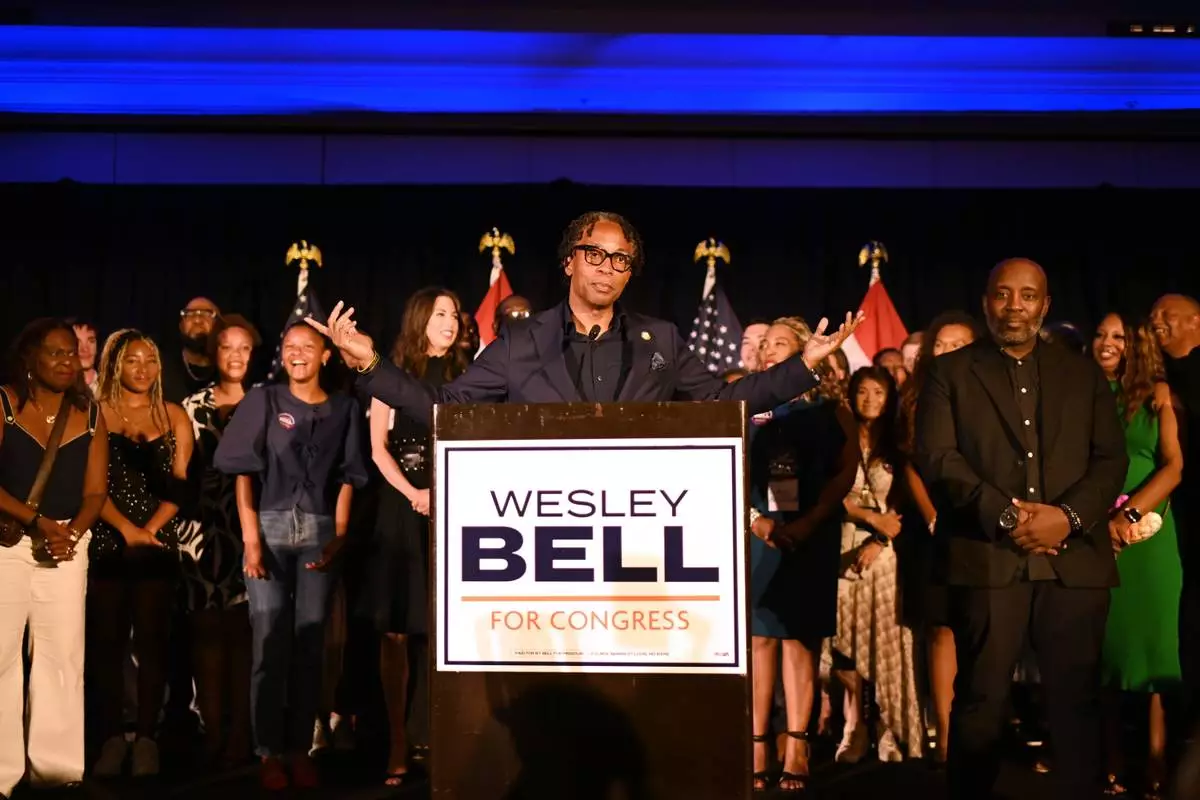
U.S. Rep. Wesley Bell, D-Mo., reacts during a primary election night watch party after winning the Democratic nomination Tuesday, Aug. 4, 2026, in St. Louis. (AP Photo/Michael Thomas)

Former U.S. Rep. Cori Bush, right, speaks during a primary election night watch party after losing the Democratic primary Tuesday, Aug. 4, 2026, in St. Louis. (AP Photo/Nick Ingram)
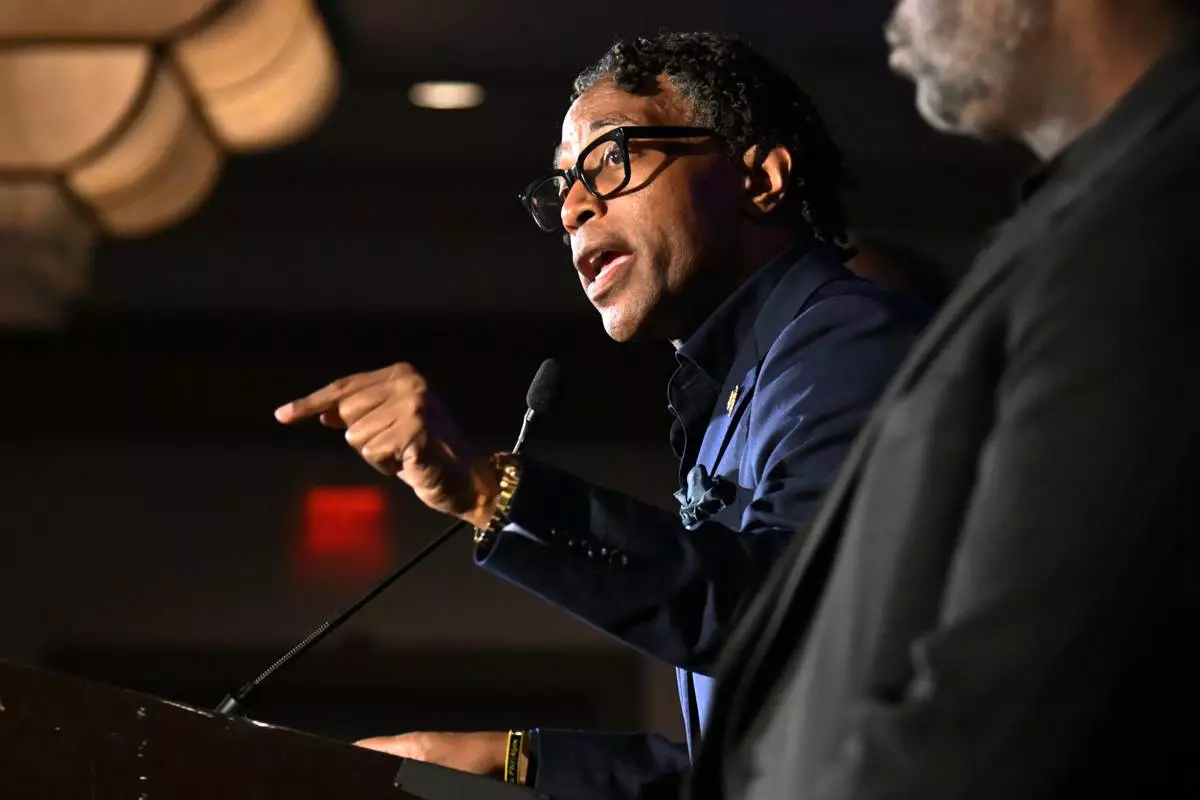
U.S. Rep. Wesley Bell, D-Mo., speaks during a primary election night watch party after winning the Democratic nomination Tuesday, Aug. 4, 2026, in St. Louis. (AP Photo/Michael Thomas)
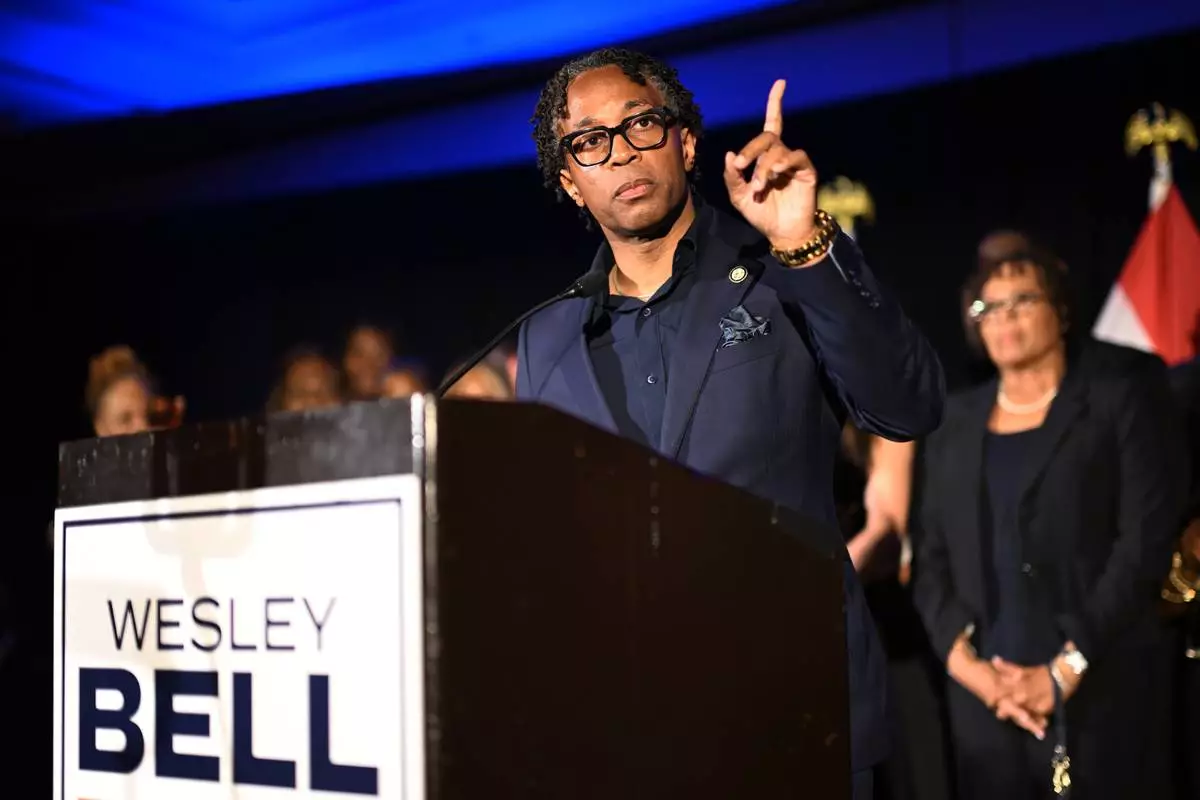
U.S. Rep. Wesley Bell, D-Mo., speaks during a primary election night watch party after winning the Democratic nomination Tuesday, Aug. 4, 2026, in St. Louis. (AP Photo/Michael Thomas)
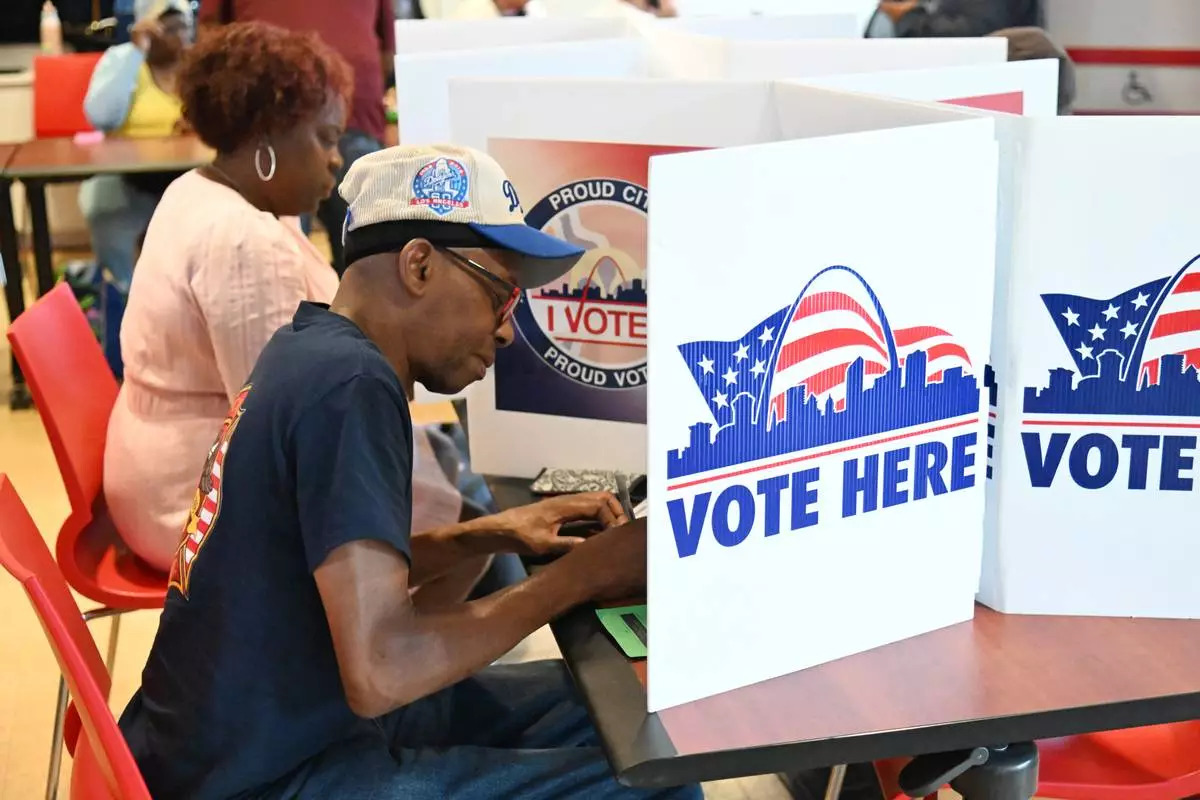
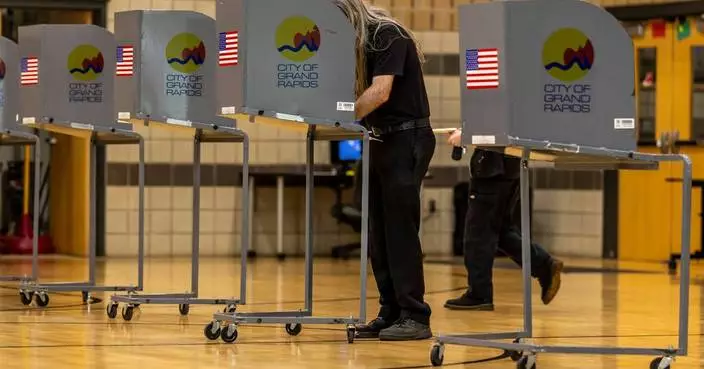
Voters cast their ballots on primary election day Tuesday, Aug. 4, 2026, in St. Louis. (AP Photo/Michael Thomas)

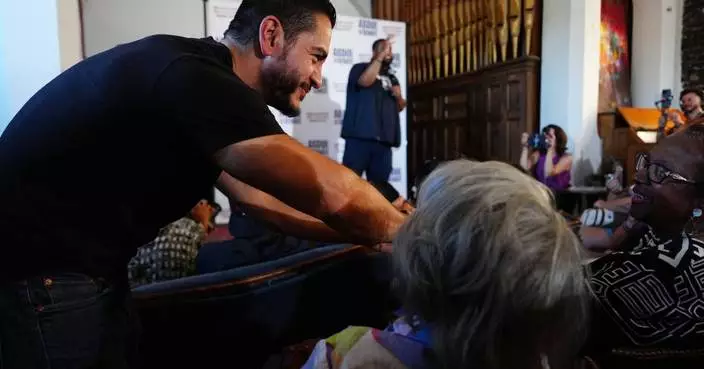
U.S. Rep. Wesley Bell, D-Mo., visits with supporters at a polling station visit on primary election day Tuesday, Aug. 4, 2026, in St. Louis. (AP Photo/Michael Thomas)
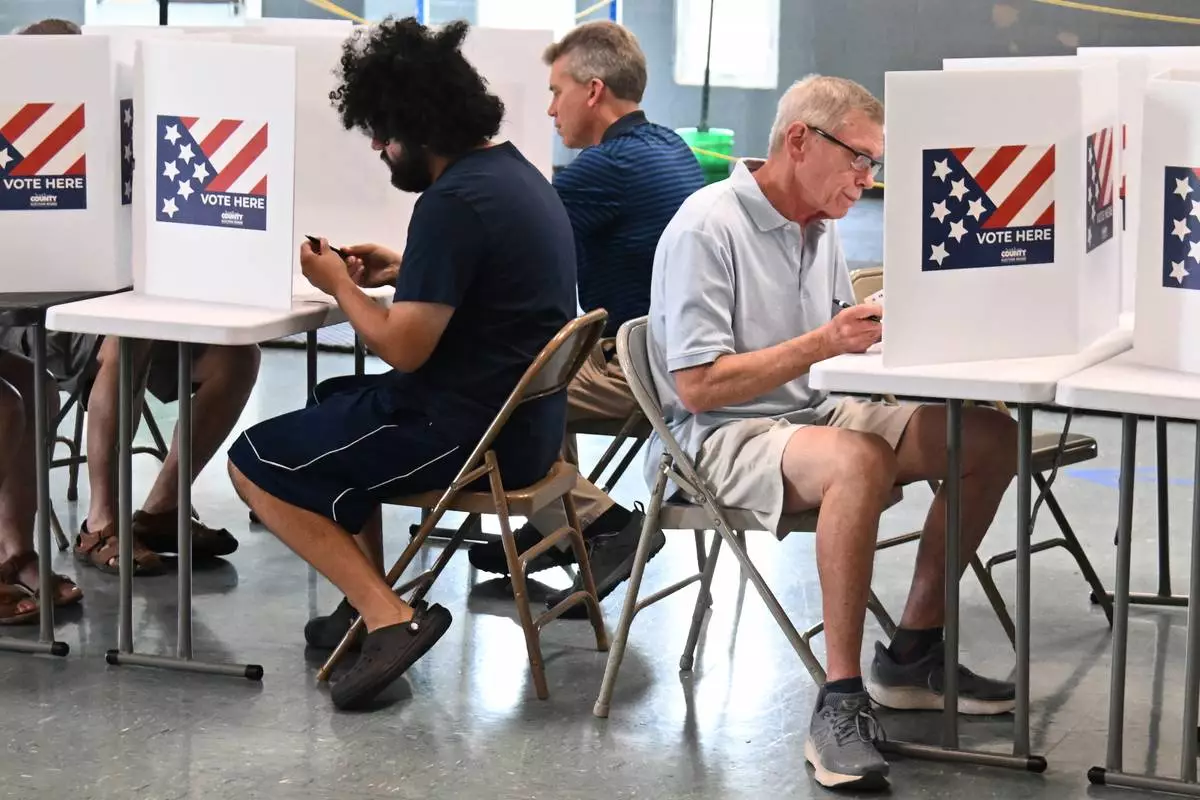
Voters cast their ballots on primary election day at Have Bible Will Travel Church on Tuesday, Aug. 4, 2026, in St. Louis. (AP Photo/Michael Thomas)
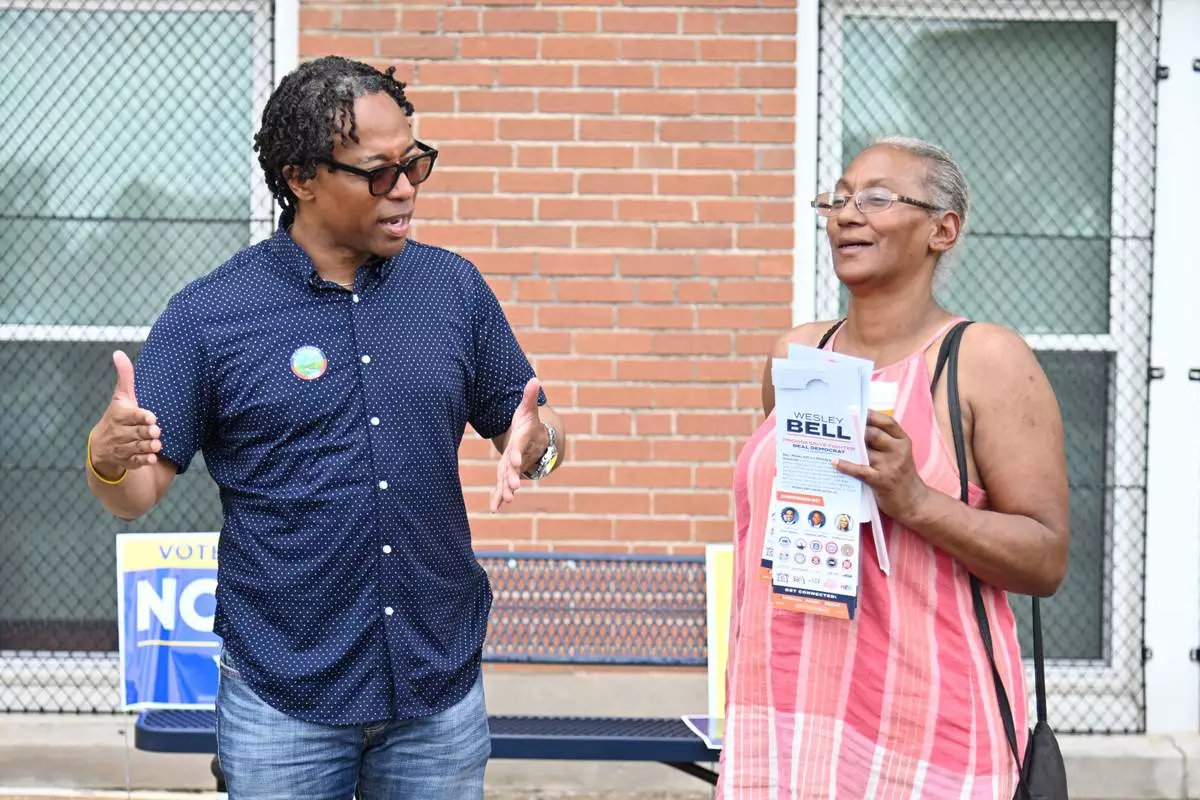
U.S. Rep. Wesley Bell, D-Mo., visits with supporters at a polling station visit on primary election day Tuesday, Aug. 4, 2026, in St. Louis. (AP Photo/Michael Thomas)
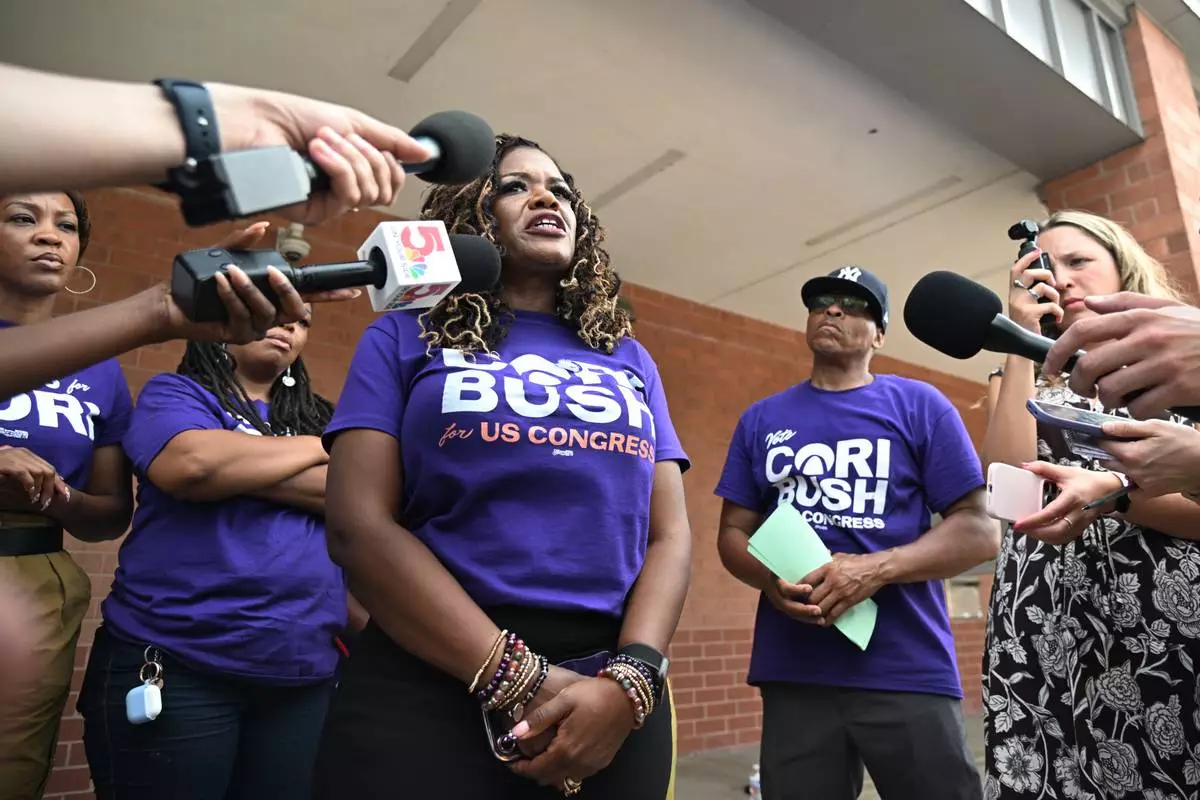
Former U.S. Rep. Cori Bush, D-Mo., speaks to media during a polling location visit on primary election day Tuesday, Aug. 4, 2026, in Normandy, Mo. (AP Photo/Michael Thomas)
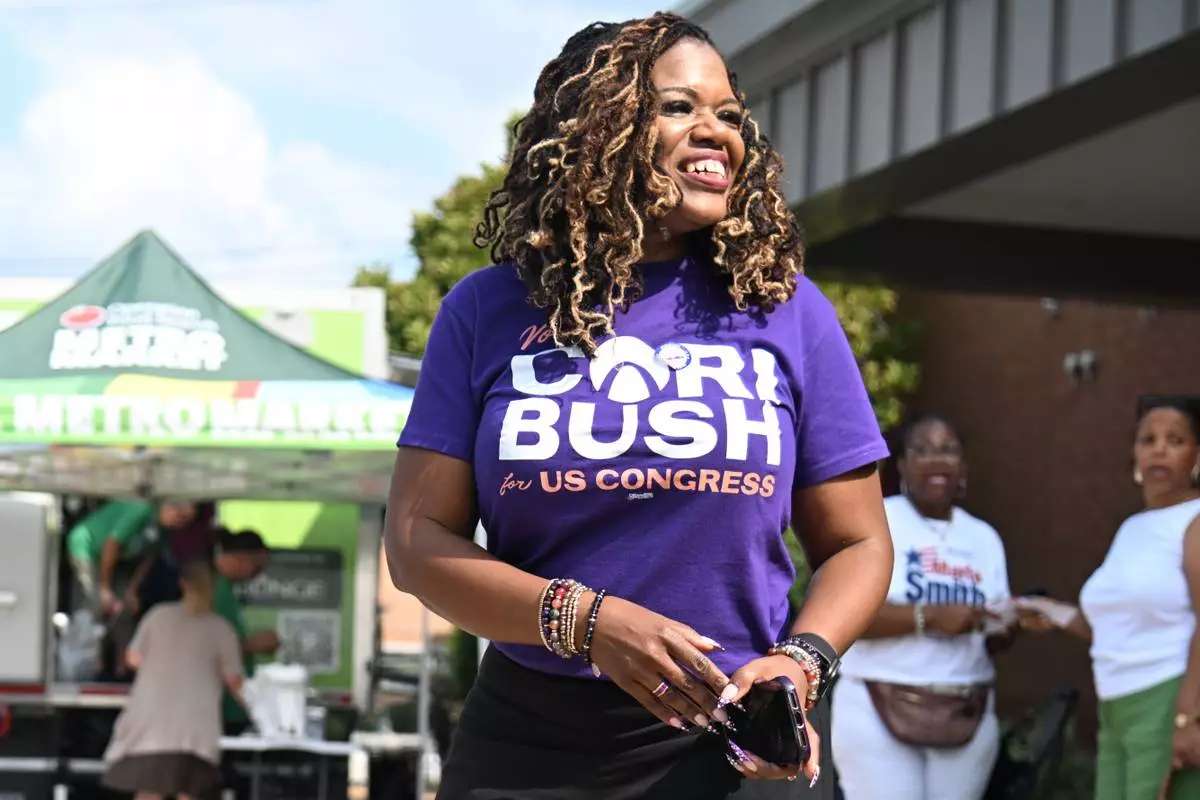
Former U.S. Rep. Cori Bush, D-Mo., greets voters during a polling location visit on primary election day Tuesday, Aug. 4, 2026, in Normandy, Mo. (AP Photo/Michael Thomas)
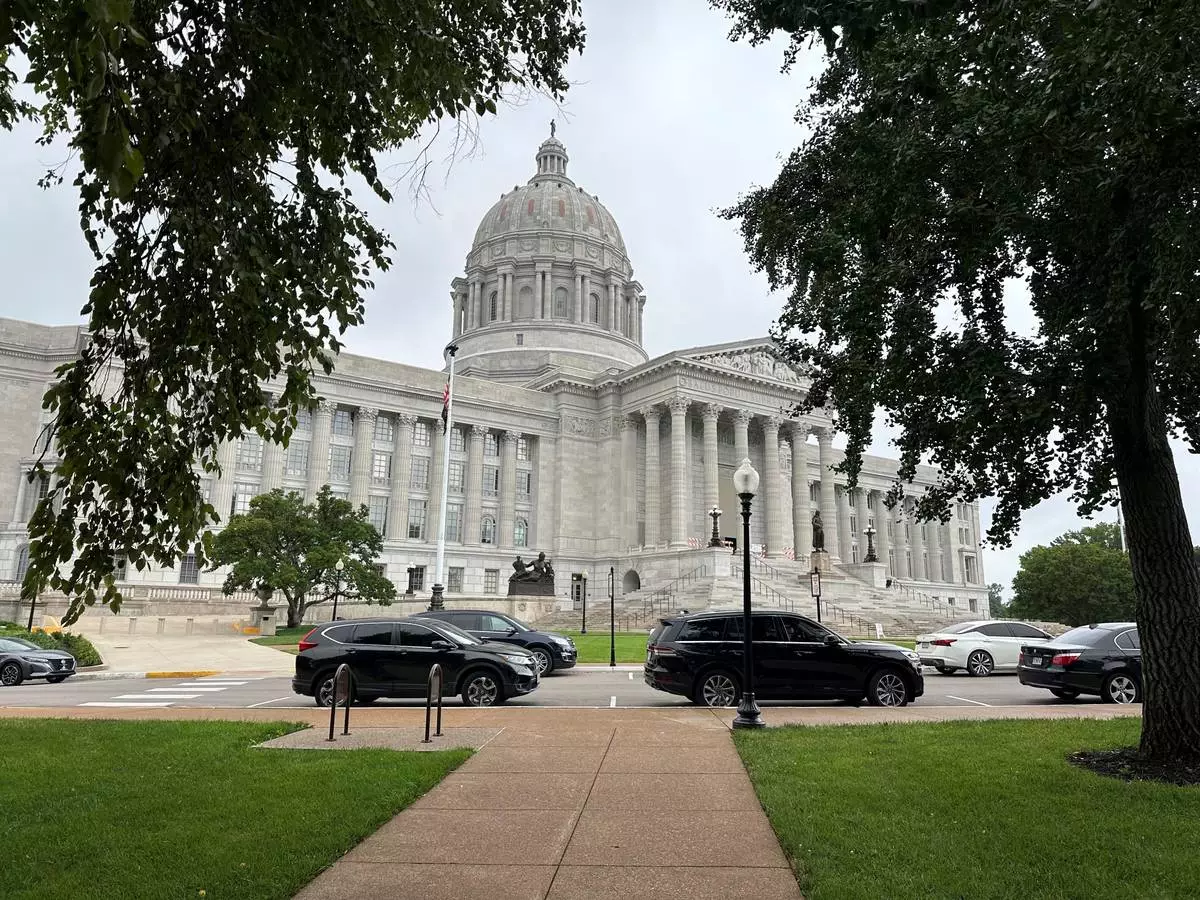
FILE - The Missouri Capitol is shown on Tuesday, Aug. 13, 2024, in Jefferson City, Mo. (AP Photo/David A. Lieb, File)
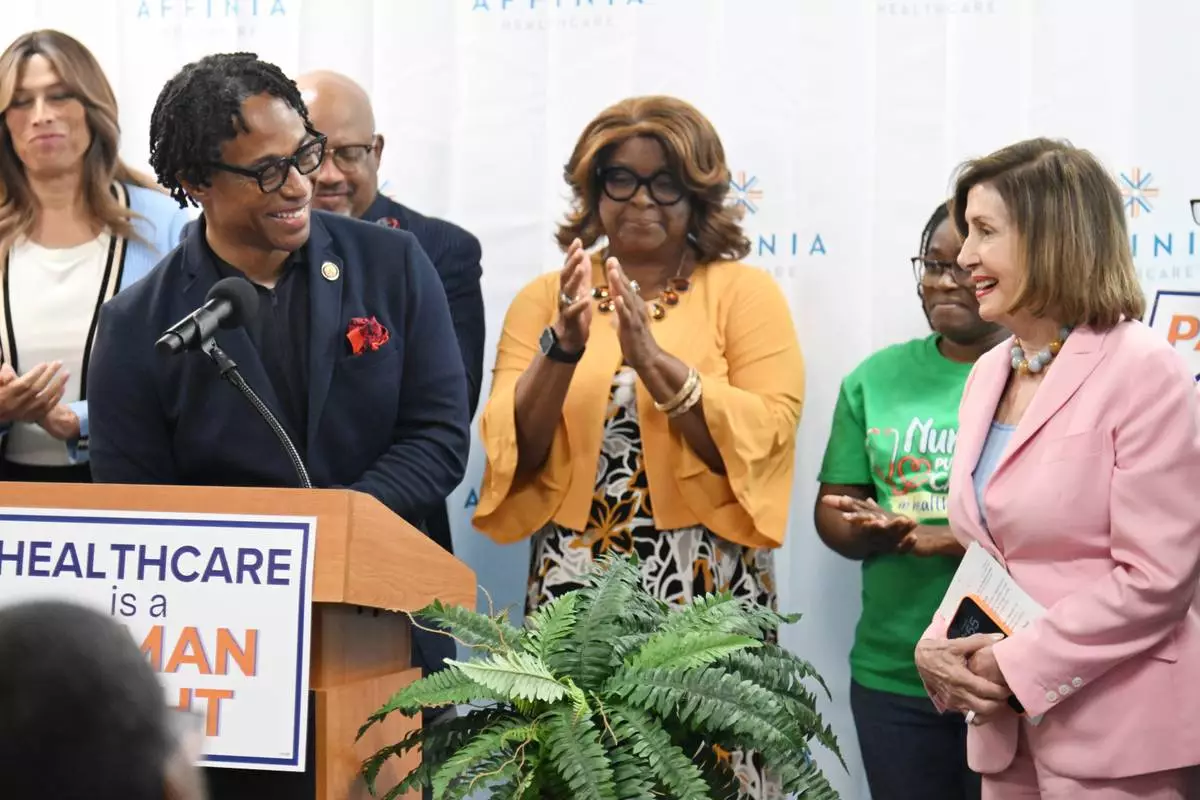
U.S. Rep. Nancy Pelosi, D-Calif., with U.S. Rep. Wesley Bell, D-Mo., at a healthcare rally hosted by Congressman Bell and Affinia Healthcare on Friday, July 24, 2026 in Ferguson, Mo. (AP Photo/Michael Thomas)
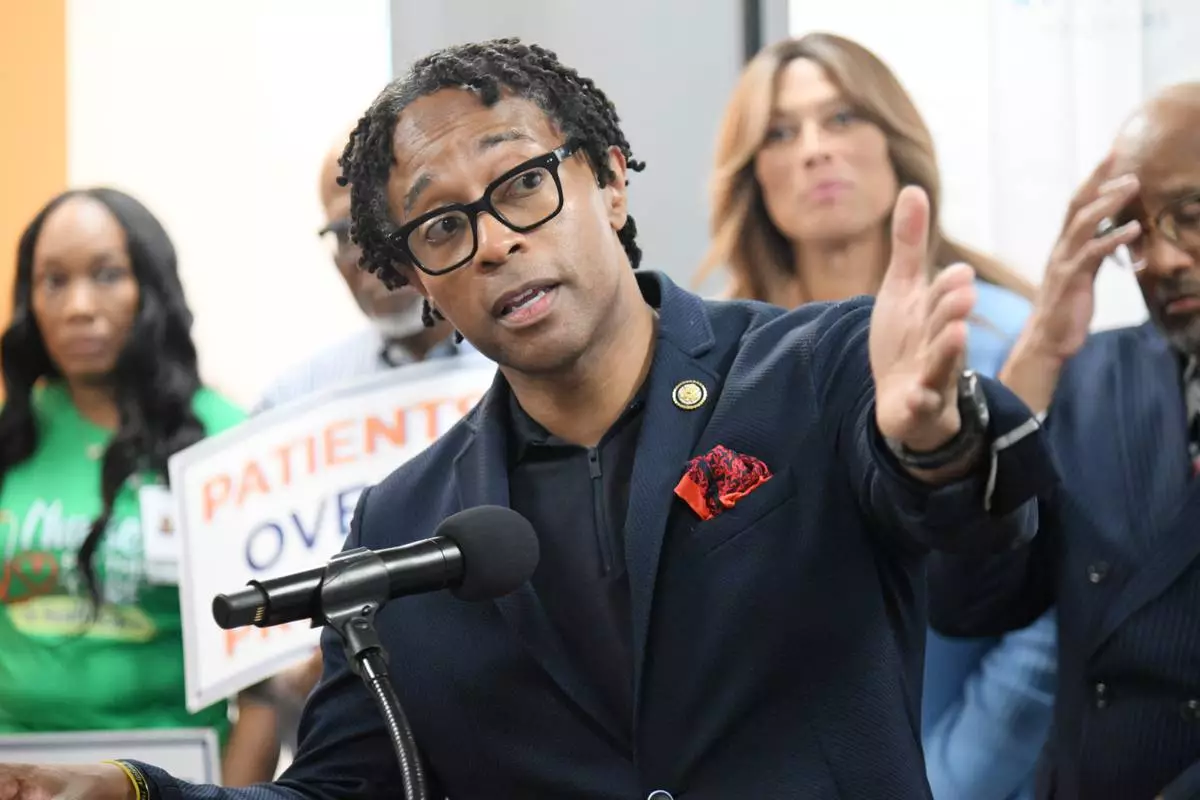
U.S. Rep. Wesley Bell, D-Mo., speaks at a healthcare rally hosted by him and Affinia Healthcare on Friday, July 24, 2026 in Ferguson, Mo. (AP Photo/Michael Thomas)