Cuba's worsening energy shortage has evolved into a systemic shock, disrupting essential public services and compounding humanitarian challenges amid the long-standing U.S. blockade, a UN coordinator warned on Thursday.
Speaking at a UN press conference, Francisco Pichon, UN resident coordinator in Cuba, said the Caribbean country is now facing more than a temporary supply crunch.
"What we see on the ground is not a temporary shortage. It is a more systematic energy shock," he said.
Pichon said that fuel shortages in the country have directly affected hospital operations, water supply systems, food distribution, and the transport of medicines.
The Cuban government has launched a 30-day emergency plan to safeguard basic services. However, the prolonged shortages would place increasing strain on healthcare, water access, food security, and social protection systems, the UN coordinator warned.
He noted that Cuba has not received new oil shipments since January. Combined with the impact of consecutive hurricanes in recent years, the country has had limited capacity to recover, further deepening the energy crisis.
UN data show that roughly 90 percent of Cuba's electricity generation relies on fossil fuels, with the current supply shortfall exceeding 30 percent. About one in ten Cubans depend on water trucks for their daily supply, and the power outages directly disrupt the county's water supply system.
To mitigate the shortage, Pichon said that the United Nations is working with Cuba to promote energy transition efforts and reduce dependence on fossil fuels.
"As the UN, one of our priorities is to accelerate the energy transition to renewable in Cuba. And I think bilateral cooperation with China, with Mexico, with many other countries prioritizes supporting Cuba to make less dependable on fossil fuels," he said.
The decades-long U.S. embargo has impoverished the Cuban population by denying the country opportunities to grow its economy and improve the livelihood of its 11 million people.
The latest oil embargo, however, has worsened the humanitarian crisis in the country, triggering widespread electricity outages and severe disruptions of essential public and social services, such as those in hospitals, schools, water supply and public sanitation sectors.
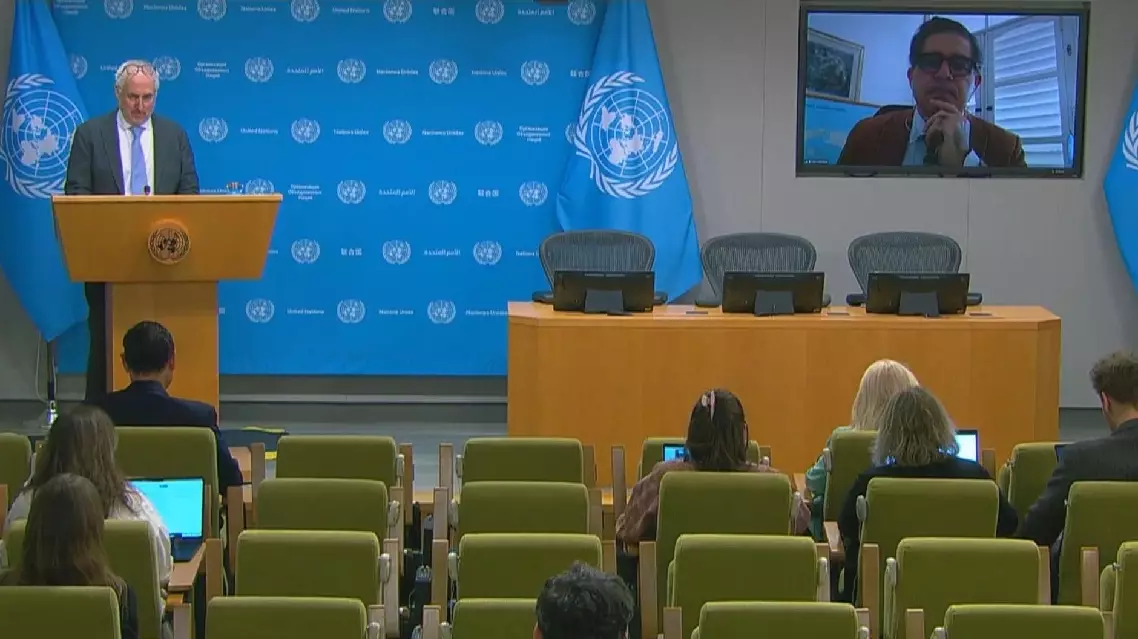
UN warns of systemic energy shock in Cuba amid long-standing US blockade