GUADALAJARA, Mexico (AP) — The faces of Mexico’s disappeared paint the streets of Mexico’s second biggest city.
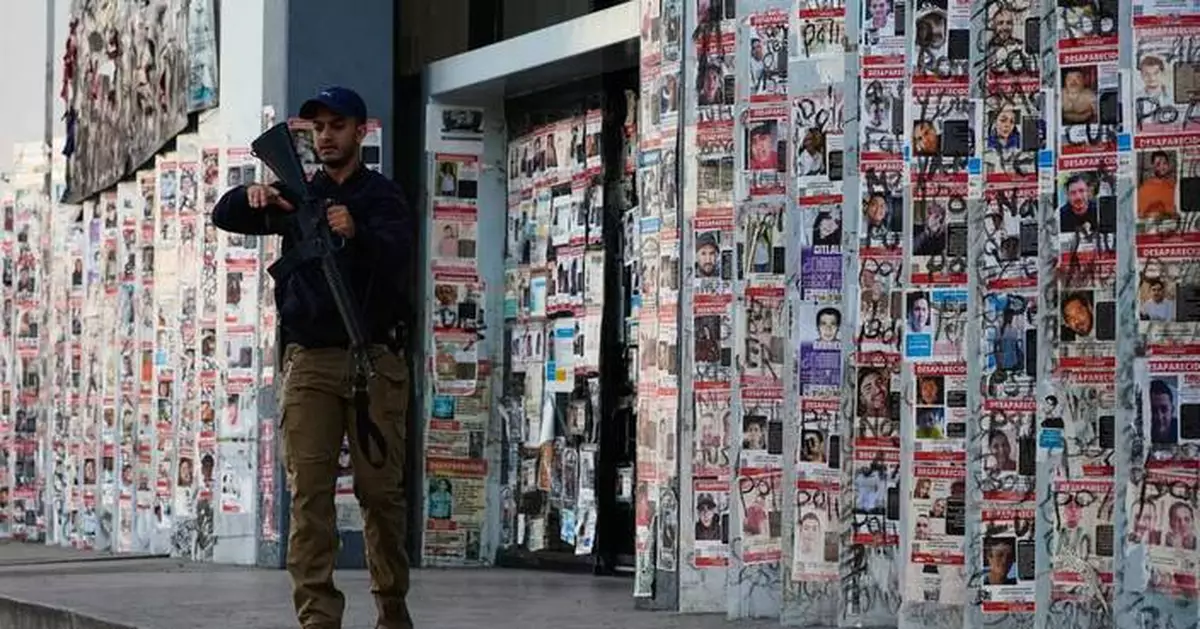
Thousands of fliers reading “We miss you,” “have you seen her?” and “we’re looking for you” line buildings, monuments, lamp posts, parking meters, tree pots and bus stops.
Click to Gallery
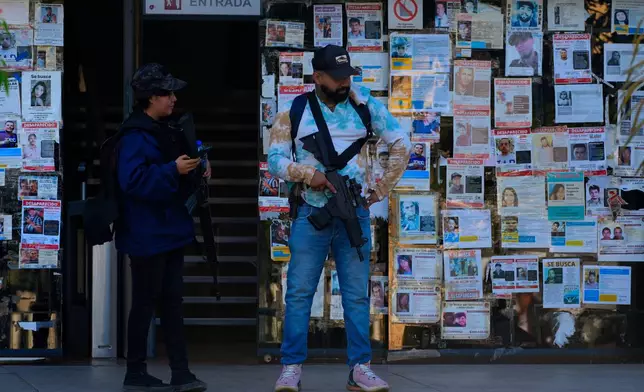
Police officers stand next to posters of missing persons in front of the Special Prosecutor's Office for Missing Persons in Guadalajara, Mexico, Wednesday, Feb. 25, 2026. (AP Photo/Marco Ugarte)
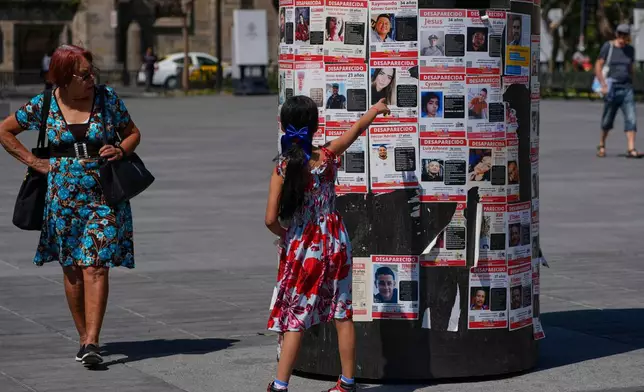
A girl points at posters bearing the faces of missing persons in Guadalajara, Mexico. Wednesday, Feb. 25, 2026. (AP Photo/Marco Ugarte)
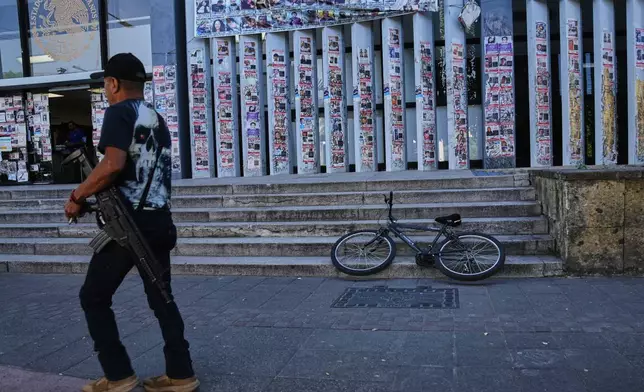
A police officer walks past posters bearing the faces of missing persons in front of the Special Prosecutor's Office for Missing Persons in Guadalajara, Mexico. Wednesday, Feb. 25, 2026. (AP Photo/Marco Ugarte)
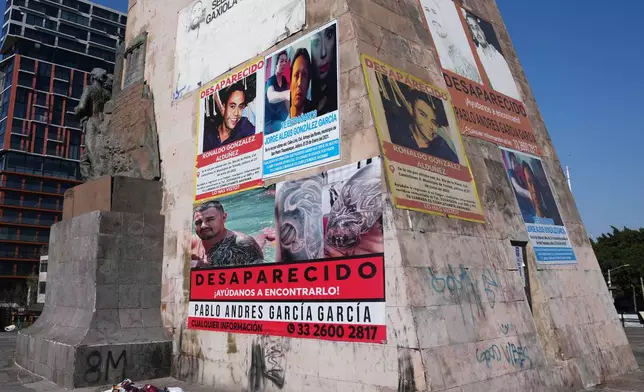
Posters bearing the faces of missing people cover the Ninos Heroes monument in Guadalajara, Mexico, Wednesday, Feb. 25, 2026. (AP Photo/Marco Ugarte)
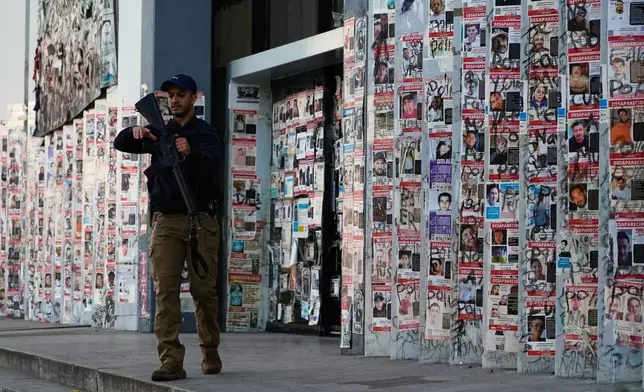
A police officer walks past posters of missing persons in front of the Special Prosecutor's Office for Missing Persons in Guadalajara, Mexico, Wednesday, Feb. 25, 2026. (AP Photo/Marco Ugarte)
Workers bustle by them in throngs in the center of Guadalajara. Men play basketball on courts surrounded by them. And a steady stream of cars pass by them every day.
The fliers are woven into daily life in the heart of Mexico’s forced disappearance crisis: the state of Jalisco.
The state, which was marked by an explosion of violence on Sunday following the killing of Mexico’s most powerful cartel leader, known as “El Mencho,” is among those with the highest number of disappeared people, with 12,500 documented cases.
Now families who hang the fliers to search for their lost loved ones say they are running up against government efforts to erase the faces in the lead up to the FIFA World Cup, where Guadalajara will be a host city in June. While clashes between cartels and Mexican forces have brought search efforts for the missing to a halt in Jalisco, a number of local lawmakers are pushing forward a proposal that would make it easier to remove the signs.
“They don’t want people coming to the World Cup, people coming from abroad, to see” the fliers, said Carmen López, a woman looking for her brother and nephew, who went missing in two separate incidents. “It’s not in their interest, because they would get their hands dirty. It makes the government look bad in front of the entire world.”
Mexico has nearly 131,000 missing people, enough to fill a small city. Forcibly disappearing people has long been a tactic by cartels to consolidate control through terror while also concealing homicide numbers. While figures date back to 1952, the majority of people have disappeared since the start of Mexico's war on drugs in 2006.
For many, the forced disappearance crisis is emblematic of the lack of justice and deep levels of corruption that permeate Mexico, especially stark in states like Jalisco.
Families like López’s often take matters into their own hands, organizing searches for dead bodies and hanging fliers in an attempt to continue their efforts and put pressure on local authorities. They often face extreme levels of violence themselves. Just Friday, prosecutors in the northern state of Sinaloa said they found the body of a woman who was part of a search collective for the missing.
“Little by little it kills a part of your soul. They don’t only disappear your loved one, but also you as a father, or as a mother along with them,” said Héctor Flores, a leader of one of Jalisco’s many search groups, Luz de Esperanza, or Light of Hope.
Flores started hanging fliers in Guadalajara after his 19-year-old son was forcibly disappeared by agents from the Jalisco state prosecutor's office. The 2021 forced disappearance was later recognized by a Mexican court, pushing Flores to form the collective of 500 families investigating disappearances of relatives.
His collective goes into the streets of Jalisco’s capital and hangs anywhere between 2,000 and 5,000 fliers every weekend. The signs show the smiling faces of everyone from teenage girls to middle-aged men, and provide identifying details like tattoos as well as the date and location of where they went missing.
Search collectives are almost constantly hanging signs because the posters are regularly taken down.
“This is an act of searching in real time, with the hope that people who see these ID cards, they can provide us with information that will help us locate our families,” Flores said. “It’s also an act of visibility.”
Families now worry they will face more hurdles in the wake of the cartel violence this week that has raised security concerns ahead of the summer's World Cup.
In December, lawmakers proposed modifications to a bill originally intended to protect the fliers from being taken down. Local politicians attempted to modify the legislation in a way families fear creates prohibited public spaces for hanging the posters.
Carmen López, Flores and other relatives say the local government is trying to whitewash the issue of the missing ahead of the global sporting event. They say it follows years of efforts by authorities to downplay the depth of Mexico’s disappearance crisis.
“We're aware that the city doesn't look beautiful because of the search IDs, but they're not trash,” said López, who wore a shirt with the faces of her two missing family members. “But what are we supposed to do? We're doing everything in our power to find them.”
The modification was pushed by state legislator Norma López, a member of President Claudia Sheinbaum's Morena party, and a number of other lawmakers.
The state lawmaker in an interview with The Associated Press on Thursday denied the accusation and said it was “bad interpretation” of the proposal by search groups, and that she wanted to defend families searching for their lost loved ones. She said one of her own relatives was also disappeared.
She said if passed, the law would allow posters to be taken down inside spaces like public universities, the state legislature, the Supreme Court, museums, churches and more without penalty. She said they were already allowed in other places.
“My proposal is not a basis for banning them,” she said. “We are all concerned about what is happening in Jalisco. The disappearances also pain me.”
Mexican authorities have been grappling with scrutiny over Guadalajara's ability to host World Cup soccer matches.
Sheinbaum has vowed this week there was “no risk” for visitors, but on Thursday the Diving World Cup set to be held in a Guadalajara suburb in March was canceled over security concerns. Earlier in the week, the Portuguese soccer federation said it was “closely monitoring the delicate situation” ahead of a friendly match against Mexico's national team in Mexico City.
Meanwhile, some search groups in Jalisco say they have had to suspend investigating potential clandestine grave sites because Mexico's federal government told them that security forces that provide protection to teams cannot help temporarily due to the violence.
Mexico's National Search Commission for the disappeared did not respond to a request for comment.
Flores' group and others have reported that they have already had to cancel search operations in grave sites around Guadalajara, leaving many feeling like justice is even further out of reach than before.
The tally of missing continues to grow hour by hour. Residents in the city passing by signs on their daily commutes don't look twice.
“Now, it’s just normal,” said Jacinto González, 47, strolling by hundreds of signs plastered on a wall Wednesday.
After a few minutes of chatting, he added casually that his sister-in-law went missing six years ago.
Associated Press journalist Alexis Triboulard contributed to this report.
Follow AP’s coverage of Latin America and the Caribbean at https://apnews.com/hub/latin-america
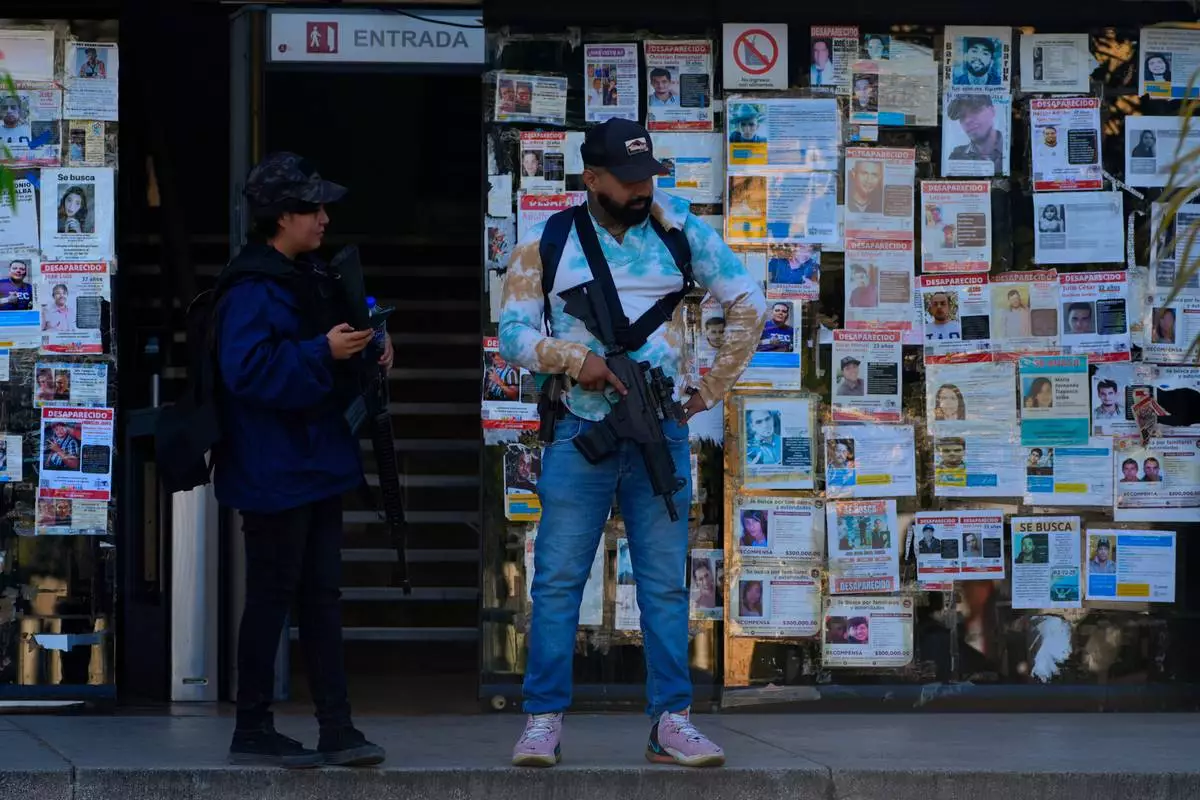
Police officers stand next to posters of missing persons in front of the Special Prosecutor's Office for Missing Persons in Guadalajara, Mexico, Wednesday, Feb. 25, 2026. (AP Photo/Marco Ugarte)
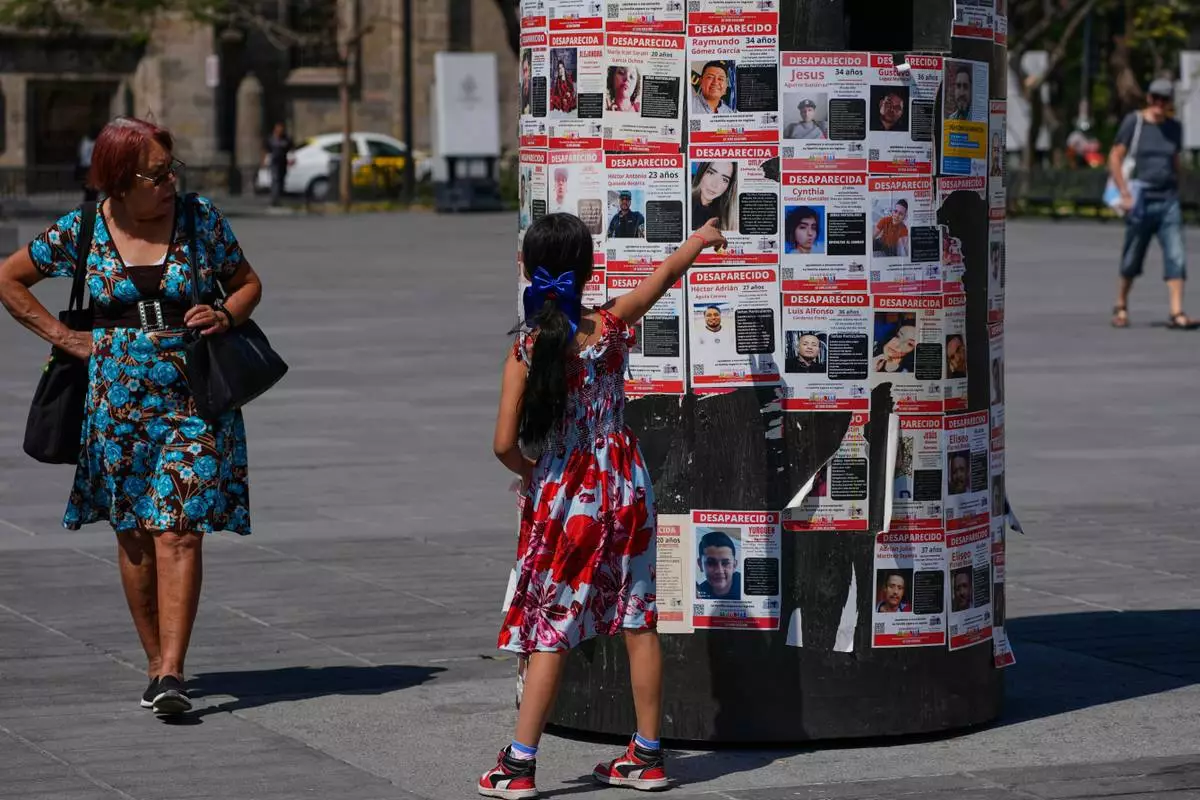
A girl points at posters bearing the faces of missing persons in Guadalajara, Mexico. Wednesday, Feb. 25, 2026. (AP Photo/Marco Ugarte)
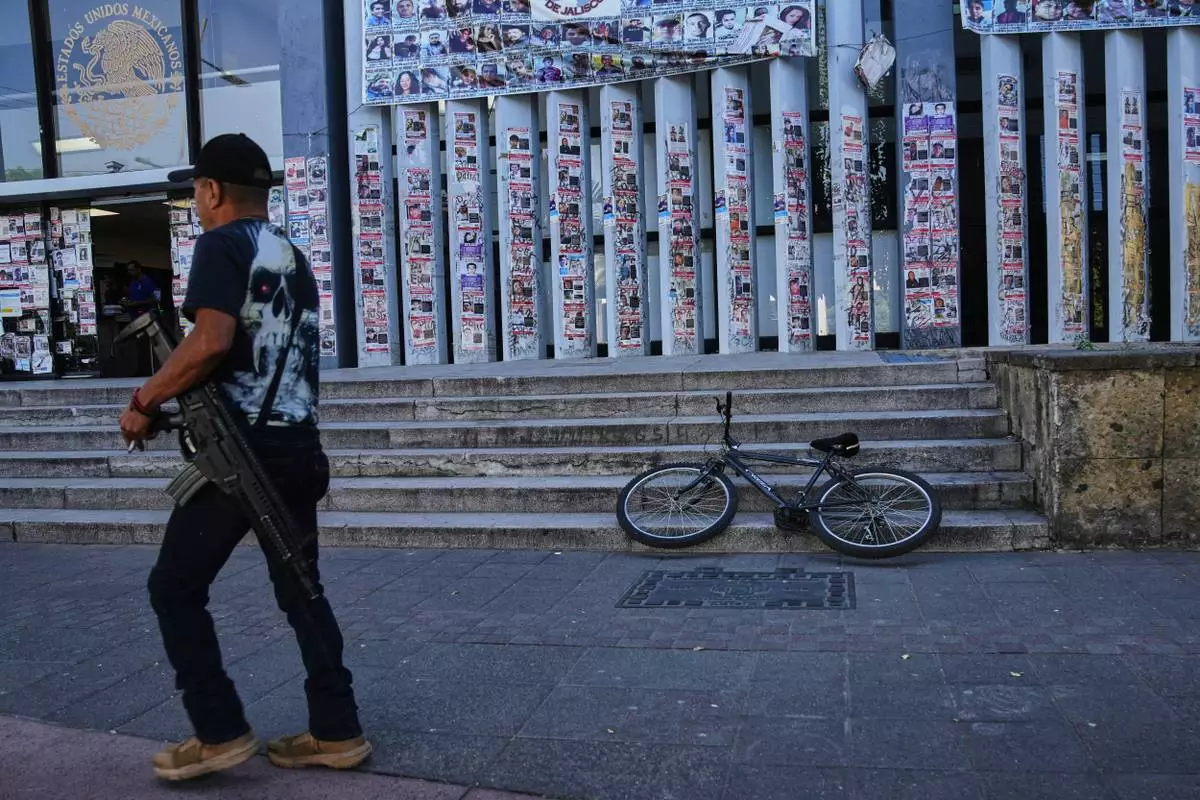
A police officer walks past posters bearing the faces of missing persons in front of the Special Prosecutor's Office for Missing Persons in Guadalajara, Mexico. Wednesday, Feb. 25, 2026. (AP Photo/Marco Ugarte)
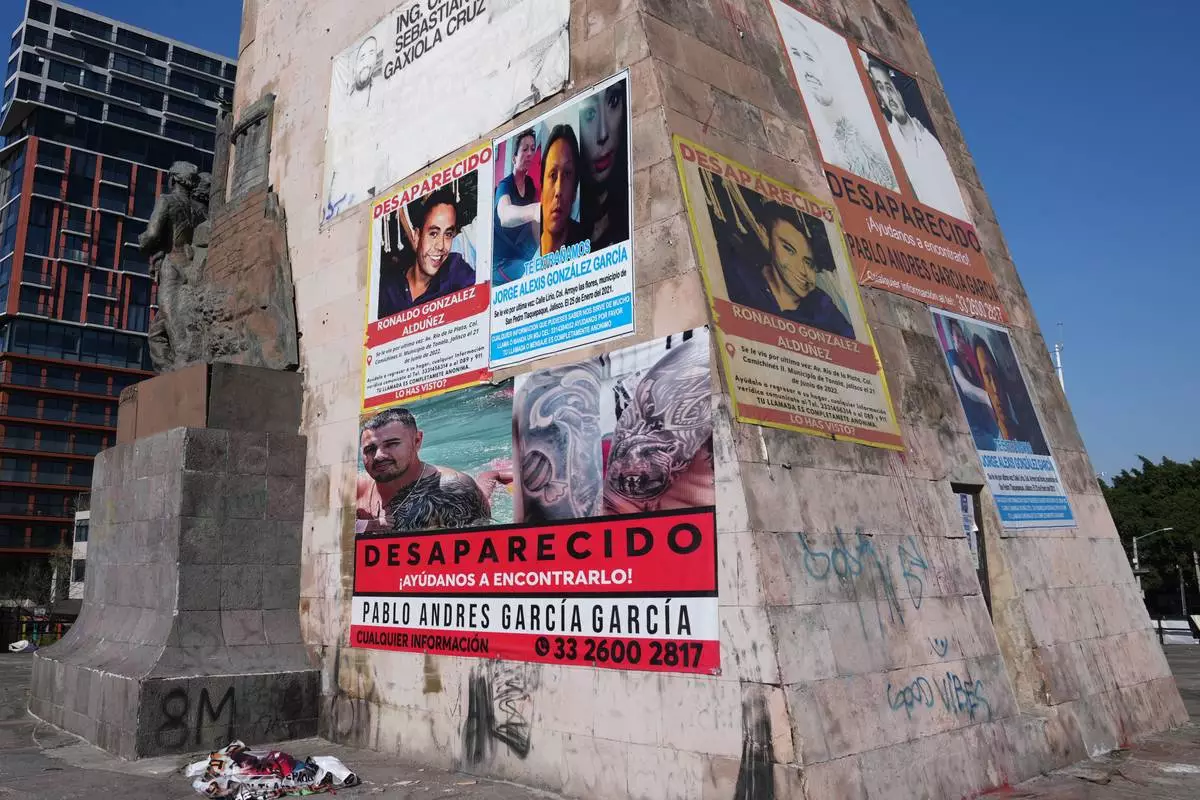
Posters bearing the faces of missing people cover the Ninos Heroes monument in Guadalajara, Mexico, Wednesday, Feb. 25, 2026. (AP Photo/Marco Ugarte)
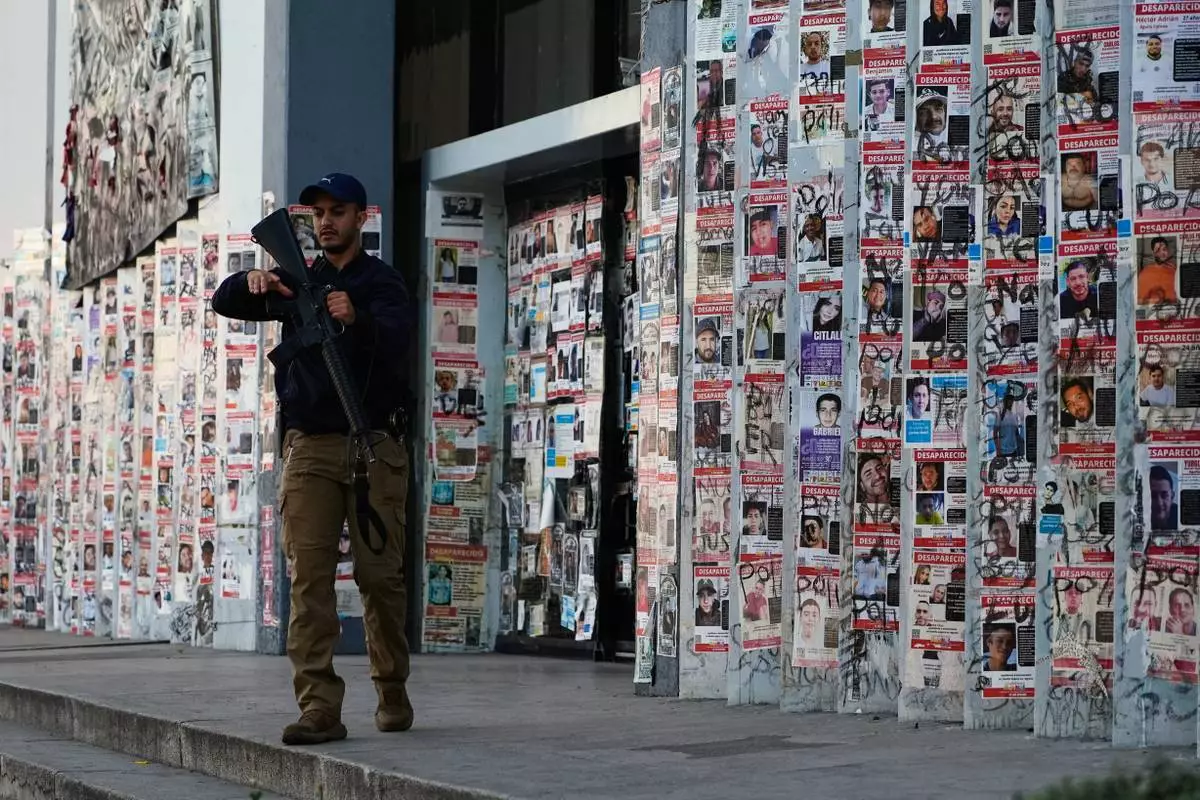
A police officer walks past posters of missing persons in front of the Special Prosecutor's Office for Missing Persons in Guadalajara, Mexico, Wednesday, Feb. 25, 2026. (AP Photo/Marco Ugarte)