PARIS (AP) — They lurk in the oceans, a last resort to pulverize attackers with nuclear fire should France’s commander in chief ever make that terrible call.
French President Emmanuel Macron, the person with the power to unleash France’s nuclear arsenal, will on Monday update French thinking on the potential use of warheads carried on submarines and planes, if it ever came to that. This in the context of concerns in Europe that Russian war-making could spread beyond Ukraine, and uncertainty about U.S. President Donald Trump ’s steadfastness as an ally.
For decades, Europe has lived under a protective umbrella of U.S. nuclear weapons, stationed on the continent since the mid-1950s to deter the former Soviet Union and now Russia. Lately, however, some European politicians and defense analysts are questioning whether Washington can still be relied upon to use such force if needed.
As the only nuclear-armed member of the 27-nation European Union, the questions are particularly pertinent for France.
Possible revisions to France’s nuclear deterrence policy, sure to be carefully calibrated and scrutinized by allies and potential enemies alike, could be among the most consequential decisions that Macron makes in his remaining 14 months as president, before elections to choose his successor in 2027.
That Macron feels a need to bare France’s nuclear teeth, in what will be the commander in chief’s second keynote speech laying out the country’s deterrence posture since his election in 2017, speaks to his concerns, voiced multiple times, about geopolitical and defense-technology shifts that threaten the security of France and its allies.
Those voicing doubts about Washington's reliability include Rasmus Jarlov, chair of the Danish parliament’s Defense Committee.
“If things got really serious, I very much doubt that Trump would risk American cities to protect European cities,” he said in an interview with The Associated Press. “We don’t know but it seems very risky to rely on the American protection.”
He and others are turning to France for reassurance. In the longer term, Jarlov argues that other European nations also need to arm themselves with nuclear weapons — an almost unfathomable prospect when U.S. protection seemed absolute in European minds.
“The Nordic countries have the capacity. We have uranium, we have nuclear scientists. We can develop nuclear weapons,” he said. “Realistically, it will take a lot of time. So in the short term, we are looking to France.”
The world has changed dramatically since Macron’s first policy-making nuclear speech in 2020, with new uncertainties shoving old certainties aside.
The full-scale Russian invasion of Ukraine, now entering its fifth year, brought war to the EU’s door and repeated threats of possible nuclear use from Russian President Vladimir Putin.
China is expanding its nuclear arsenal. So, too, is North Korea’s nuclear-armed military. In October, Trump spoke about U.S. intentions to resume nuclear tests for the first time since 1992, although U.S. Energy Secretary Chris Wright later said that such tests would not include nuclear explosions.
Russia revised its deterrence policy in 2024, lowering its bar for possible retaliation with nuclear weapons. The United Kingdom has announced plans to buy nuclear-capable U.S.-made F-35A fighter jets, restoring a capacity to deliver nuclear airstrikes that it phased out in the 1990s, leaving it with just submarine-based nuclear missiles.
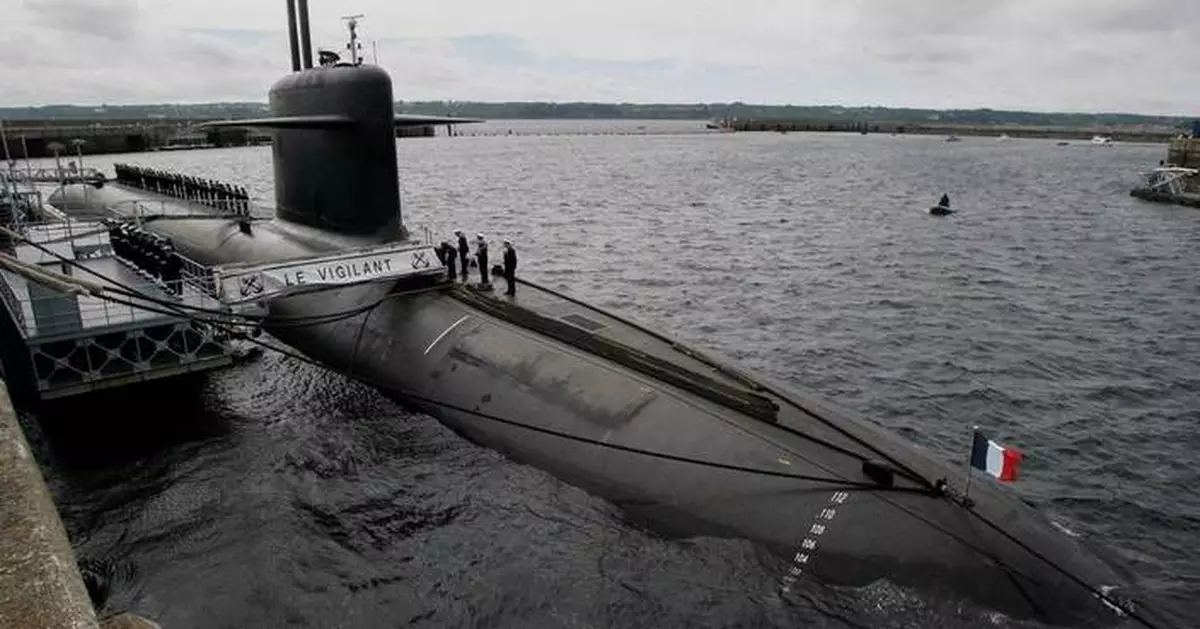
The chosen site for Macron’s speech on Monday — the Île Longue base for France’s four nuclear-armed submarines — will drive home that French presidents also have nuclear muscle at their disposal in an increasingly unstable world. They each can carry 16 M51 intercontinental ballistic missiles armed with multiple warheads.
“There are high expectations from the allies and partners, and maybe also the adversaries, about how the French nuclear doctrine could evolve,” said Héloïse Fayet, a nuclear deterrence specialist at the French Institute of International Relations, a Paris think tank.
Speaking in an AP interview, Fayet said she’s hoping for “real changes.”
“Maybe something about a greater and a clearer French commitment to the protection of allies, thanks to the French nuclear weapons,” she said.
Macron said in 2020 that France has fewer than 300 warheads — a number that has remained stable since former President Nicolas Sarkozy announced a modest reduction to that level in 2008.
Macron said the force is sufficient to inflict “absolutely unacceptable damage” on the “political, economic, military nerve centers” of any country that threatens the “vital interests” of France, “whatever they may be.”
Nuclear specialists will be watching for any hint from Macron that he no longer considers the French stockpile to be sufficient and that it might need to grow.
The language of deterrence is generally shrouded by deliberate ambiguity, to keep potential enemies guessing about the red lines that could trigger a nuclear response. Officials from Macron’s office, speaking on condition of anonymity to discuss the nuclear policy changes that Macron might make, were extremely guarded in their wording, not least because deterrence is a strictly presidential prerogative.
“There will no doubt be some shifts, fairly substantial developments,” one of the officials said.
Again with careful wording, Macron in 2020 said the “vital interests” that France could defend with nuclear force don’t end at its borders but also have “a European dimension.”
Some European nations have taken up an offer Macron made then to discuss France’s nuclear deterrence and even associate European partners in French nuclear exercises.
German Chancellor Friedrich Merz says he’s had “initial talks” with Macron about nuclear deterrence and has publicly theorized about German Air Force planes possibly being used to carry French nuclear bombs.
European nations engaging with France are seeking “a second life insurance” against any possibility of U.S. nuclear protection being withdrawn, says Etienne Marcuz, a French nuclear defense specialist at the Paris-based Foundation for Strategic Research think tank.
“The United States are unpredictable — have become unpredictable — because of the Trump 2 administration,” he said. “That has legitimately raised the question of whether the United States would truly be prepared to protect Europe, and above all, whether they would be willing to deploy their nuclear forces in defense of Europe.”
Associated Press writers Sylvie Corbet in Paris and Kirsten Grieshaber in Berlin contributed.
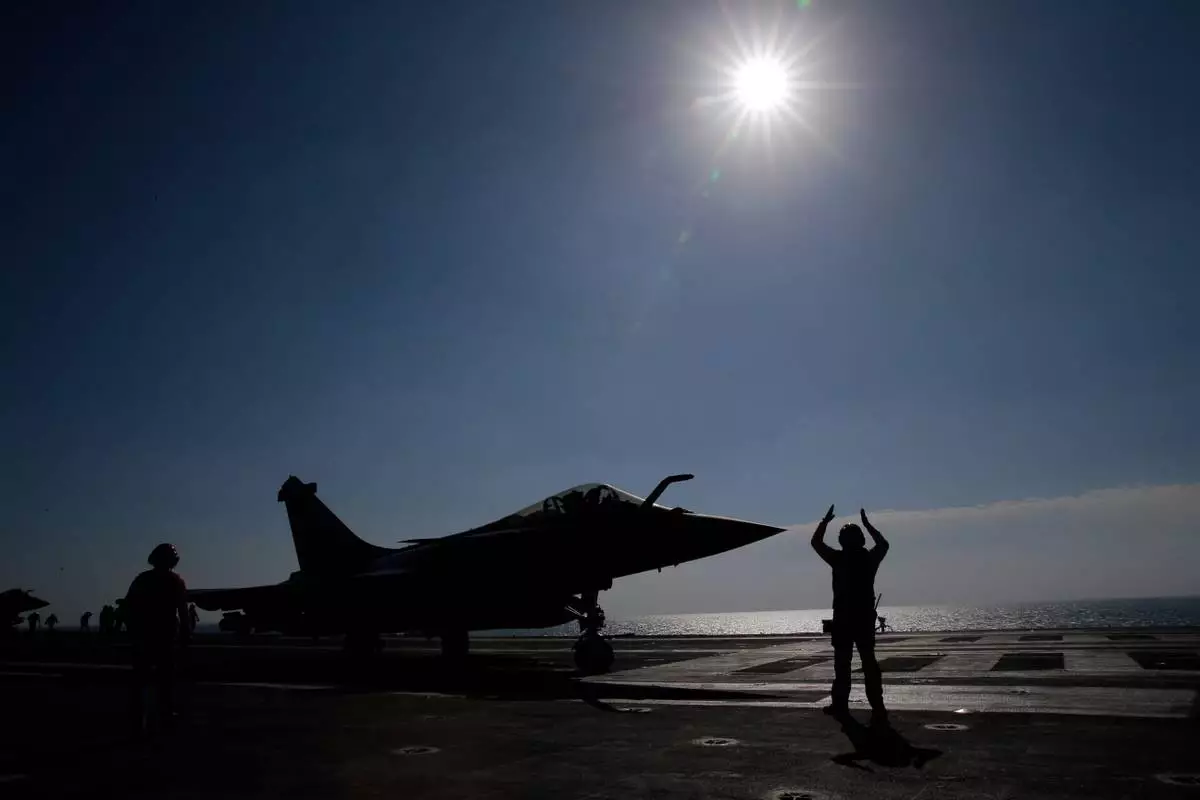
FILE - A Rafale M single seater fighter jet is catapulted on France's flagship Charles de Gaulle aircraft carrier in the Persian Gulf, Jan. 12, 2016. (AP Photo/Christophe Ena, File)
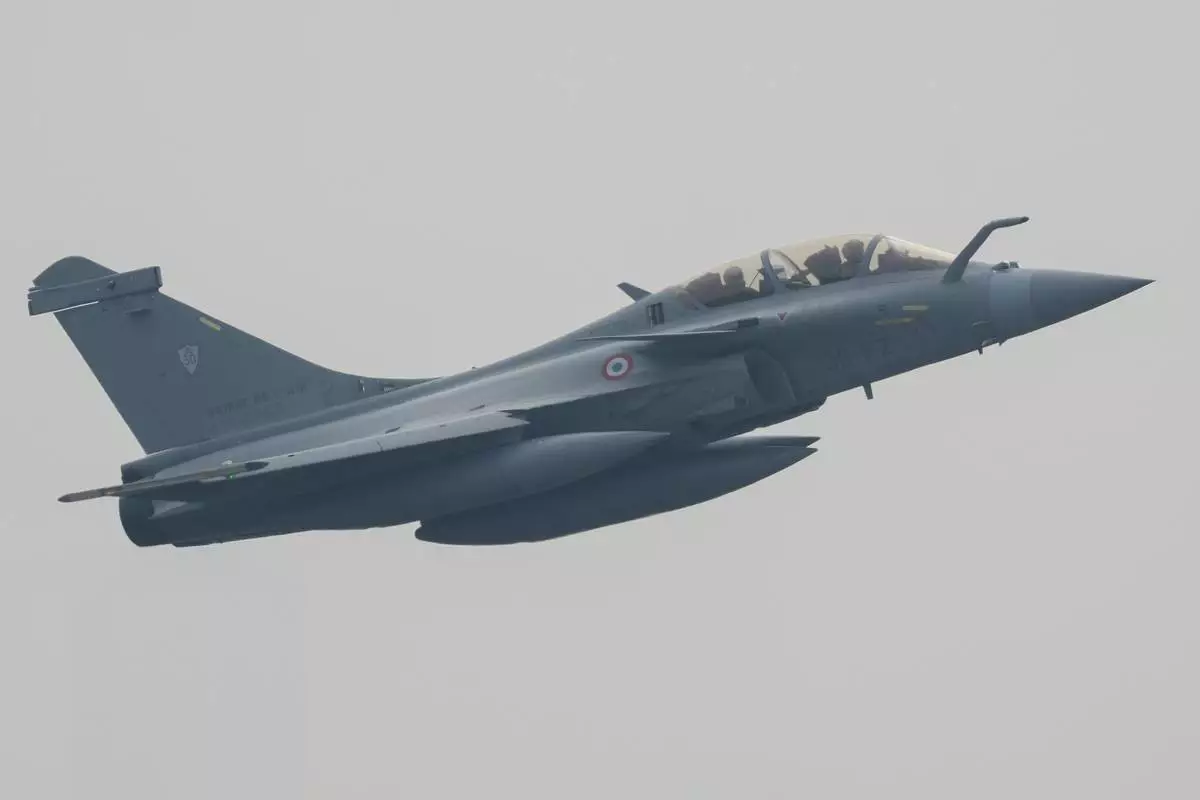
FILE - France's Rafale B twin-seat multirole fighter performs during the Pegase 2024 mission at Halim Perdanakusuma airport in Jakarta, Indonesia, Wednesday, July 24, 2024. (AP Photo/Tatan Syuflana, File)
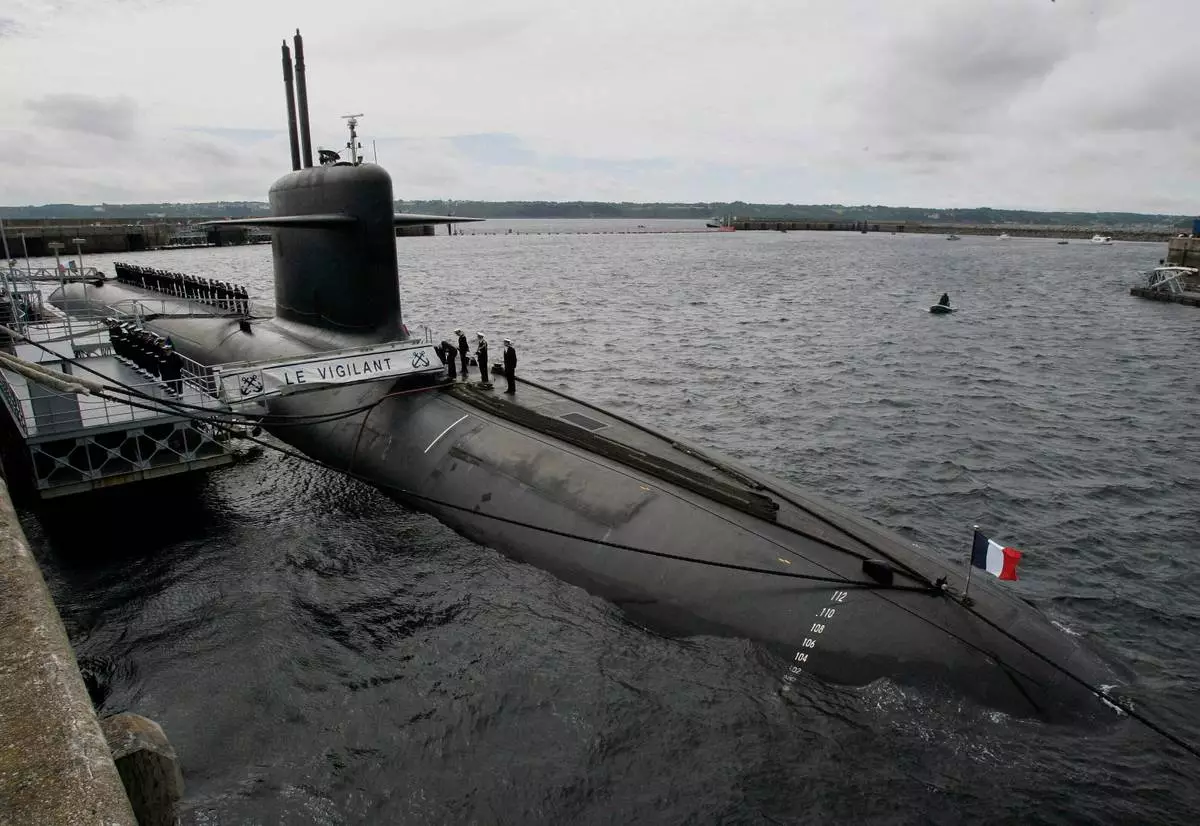
FILE - French Marine officers wait atop "Le Vigilant" nuclear submarine at L'Ile Longue military base, near Brest, Brittany, July 13, 2007. (AP Photo/Francois Mori, Pool, File)
ISLAMABAD (AP) — Pakistan and Afghanistan exchanged cross-border attacks overnight in a dramatic escalation of tensions that led Pakistan’s defense minister to say on Friday that the two countries are in a state of “open war.”
Afghanistan launched an attack on Pakistan late Thursday, saying it was in retaliation for deadly Pakistani airstrikes on Afghan border areas Sunday. Pakistan then carried out airstrikes in Kabul and two other Afghan provinces early Friday, saying it targeted military installations.
Tensions have been high for months. Border clashes in October killed dozens of soldiers, civilians and suspected militants. Pakistan accuses Afghanistan’s Taliban government of harboring militant groups that stage attacks against it and also of allying with its archrival India.
A Qatari-mediated ceasefire ended the intense fighting in October, but several rounds of peace talks in Turkey in November failed to produce a lasting agreement. The two sides have occasionally traded fire since then.
Qatar once again appears to be mediating. Its minister of state, Mohammed bin Abdulaziz al-Khulaifi, spoke Friday with the foreign ministers of Afghanistan and Pakistan in an effort to de-escalate tensions, Qatar's Ministry of Foreign Affairs posted on X.
Afghanistan's attacks against Pakistani military targets was meant as "a message that our hands can reach their throats and that we will respond to every evil act of Pakistan,” Afghan government spokesman Zabiullah Mujahid said. “Pakistan has never sought to resolve problems through dialogue,” Mujahid said.
After the Afghan strikes, Pakistan's Defense Minister Khawaja Mohammad Asif posted on X: “Our patience has now run out. Now it is open war between us.”
Asif said Pakistan had hoped for peace in Afghanistan after the withdrawal of NATO forces in 2021 and expected the Taliban, which seized power in the country, to focus on the welfare of the Afghan people and regional stability.
Instead, he said the Taliban had turned Afghanistan “into a colony of India” — a reference to recently improving ties between India and Afghanistan, including offers of enhanced bilateral trade. Pakistan and neighboring India, both nuclear armed powers, have periodically engaged in wars, clashes and skirmishes since gaining independence from British colonial rule in 1947.
Asif also accused Afghanistan of “exporting terrorism,” an allegation Pakistan frequently levies at its neighbor as militant violence in the country surges. Specifically, Pakistan accuses Afghanistan of supporting the Pakistani Taliban, or TTP, as well as outlawed Baloch separatist groups.
Pakistan accuses the TTP, which is separate from but closely allied with Afghanistan’s Taliban, of operating from inside Afghanistan. Both the group and Kabul deny that charge.
“Pakistan’s internal conflict is a purely domestic issue and is not a new one,” Mujahid said Friday, noting the TTP had been active for nearly two decades.
Pakistan has also frequently accused neighboring India of backing the outlawed Baloch Liberation Army and the Pakistani Taliban, allegations New Delhi denies.
Afghanistan said its attack Thursday was in retaliation for deadly Pakistani airstrikes on Afghan border areas Sunday.
The governments have issued sharply differing casualty claims.
Pakistan's army spokesperson Lt. Gen. Ahmed Sharif Chaudhry said Pakistani air and ground operations killed at least 274 members of Afghan forces and affiliated militants and wounded more than 400, while 12 Pakistani soldiers were killed and 27 others were wounded. One Pakistani soldier was missing in action.
Mujahid rejected the claims of the high number of Afghan casualties as “false.” He said 55 Pakistani soldiers were killed with the bodies of 23 of them taken to Afghanistan. He also said “many” Pakistani soldiers were captured. Thirteen Afghan soldiers had been killed, he said, and another 22 wounded, while 13 civilians were also wounded. A religious school in Paktika province was bombed on Friday morning, he added, saying information on potential casualties there was not yet available.
The claims of either side could not be independently verified.
Pakistan’s air force carried out airstrikes Friday night targeting military installations in Afghanistan’s Laghman province, two senior Pakistani security officials said. They said an arms depot and two key military installations were destroyed. The officials spoke on condition of anonymity as they were not authorized to speak to the media on the record.
Pakistan's Information Minister Attaullah Tarar said Pakistan’s anti-drone systems shot down several small drones over the northwestern cities of Abbottabad, Swabi, and Nowshera Friday. He said they appeared to be part of a failed attack by the Pakistani Taliban, and there were no casualties. Tarar claimed the drone attacks “once again exposed direct linkages between the Afghan Taliban regime and terrorism in Pakistan.”
Turkey's Foreign Minister Hakan Fidan held separate phone calls with his Pakistani, Afghan, Qatari and Saudi counterparts on Friday to discuss the conflict, a Turkish official said, without providing details on the talks. The official spoke on condition of anonymity in line with government policy.
In October, Turkey, Qatar and Saudi Arabia had facilitated talks between the sides.
On Friday, Mujahid said Afghanistan had “always emphasized a peaceful solution, and we still want to resolve the problem through dialogue.”
In a statement, U.N. Secretary-General António Guterres urged both sides to try to resolve their differences through diplomacy, and to protect civilians.
Russia called for an immediate halt to the fighting and for a diplomatic resolution to the conflict, Russian diplomat Zamir Kabulov told news agency RIA Novosti. Kabulov, who is President Vladimir Putin’s special envoy for Afghanistan, said that Moscow would consider mediating between the two countries if asked, according to RIA Novosti.
Iranian Foreign Minister Abbas Araghchi urged Pakistan and Afghanistan to resolve their differences through dialogue during the holy month of Ramadan. He also said that Tehran was ready to assist in facilitating dialogue.
Pakistani authorities said that dozens of Afghan refugees in the Torkham border area had been relocated to safer places.
Pakistan launched a sweeping crackdown in October 2023 to expel migrants without documents, urging those in the country to leave of their own accord to avoid arrest and forcibly expelling others. Iran also began a crackdown on migrants at around the same time.
Since then, millions have crossed the border into Afghanistan, including people who were born in Pakistan decades ago and had built lives and created businesses there.
In 2025, 2.9 million people returned to Afghanistan, the U.N. refugee agency has said, with nearly 80,000 having returned so far this year.
Abdul Qahar Afghan reported from Kabul, Afghanistan. Associated Press writers Riaz Khan and Rasool Dawar in Peshawar, Pakistan, Eduardo Castillo in Beijing, Elena Becatoros in Athens, Greece, and Suzan Fraser in Ankara, Turkey, also contributed to this story.
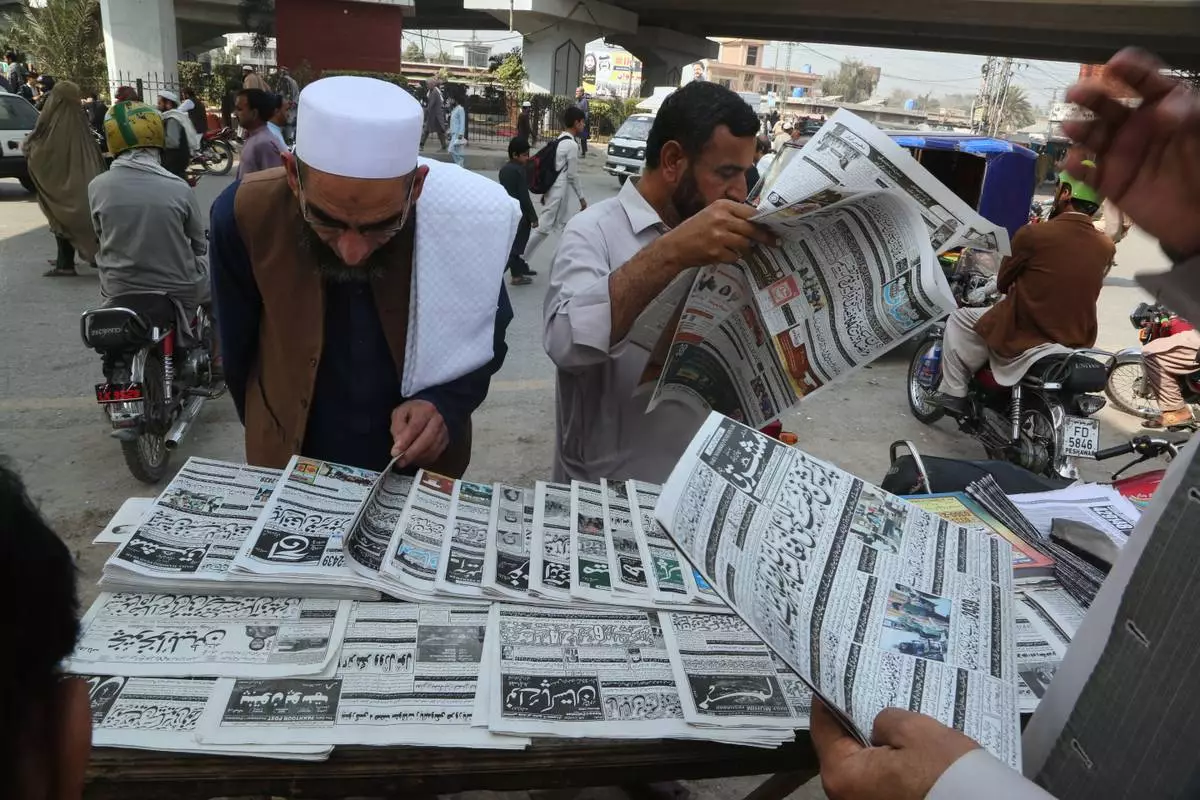
People read morning newspapers covering headline story about overnight cross border fighting between Pakistan and Afghan forces, at a stall in Peshawar, Pakistan, Friday, Feb. 27, 2026. (AP Photo/Muhammad Sajjad)
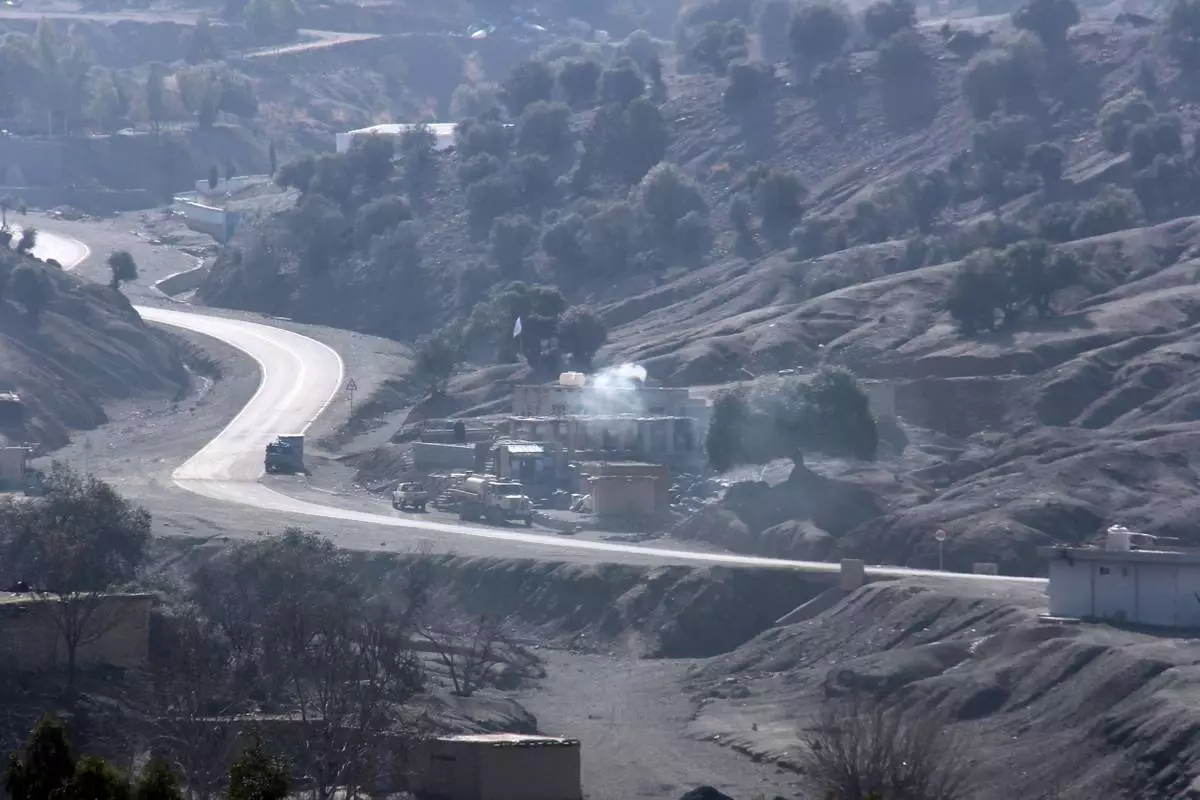
Smoke rises after an explosion at a border post on the Afghan side of the Ghulam Khan crossing with Pakistan in Khost province, Afghanistan, Friday, Feb. 27, 2026. (AP Photo/Saifullah Zahir)
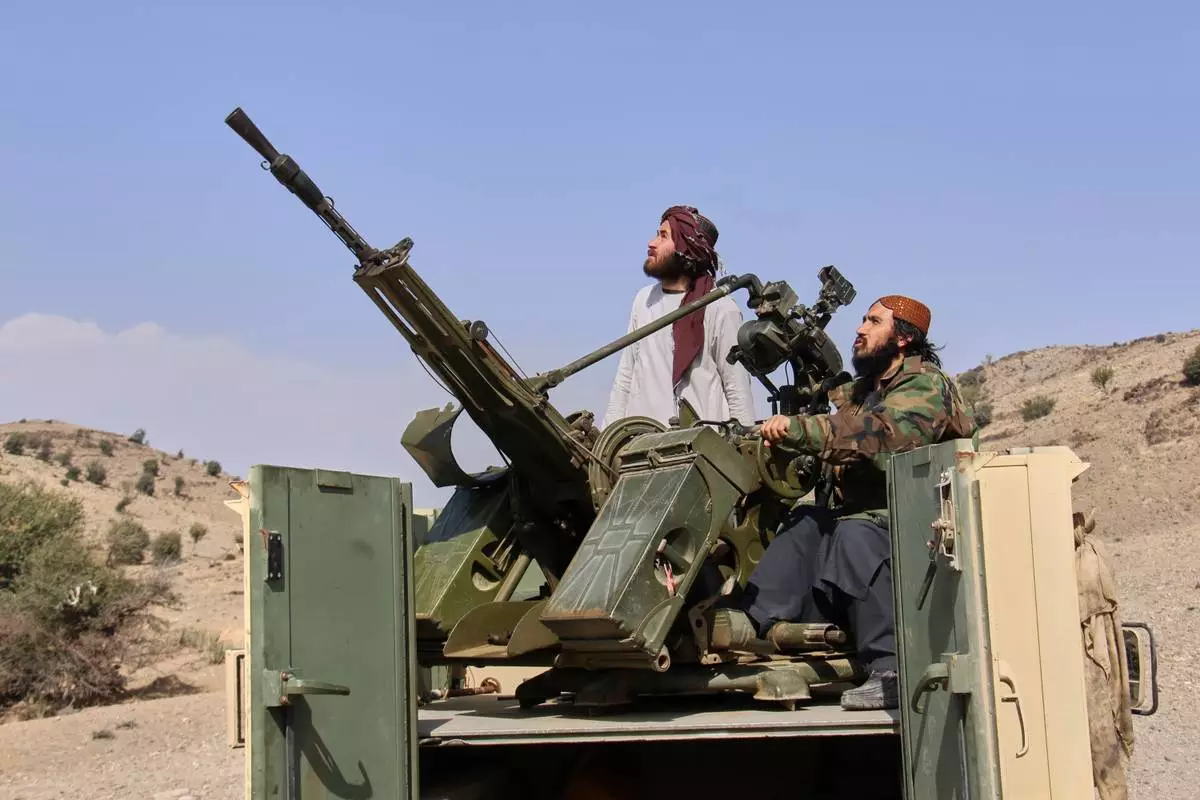
Taliban fighters look up while manning an armed pickup truck at the Afghan side of the Ghulam Khan crossing with Pakistan in Khost province, Afghanistan, Friday, Feb. 27, 2026. (AP Photo/Saifullah Zahir)
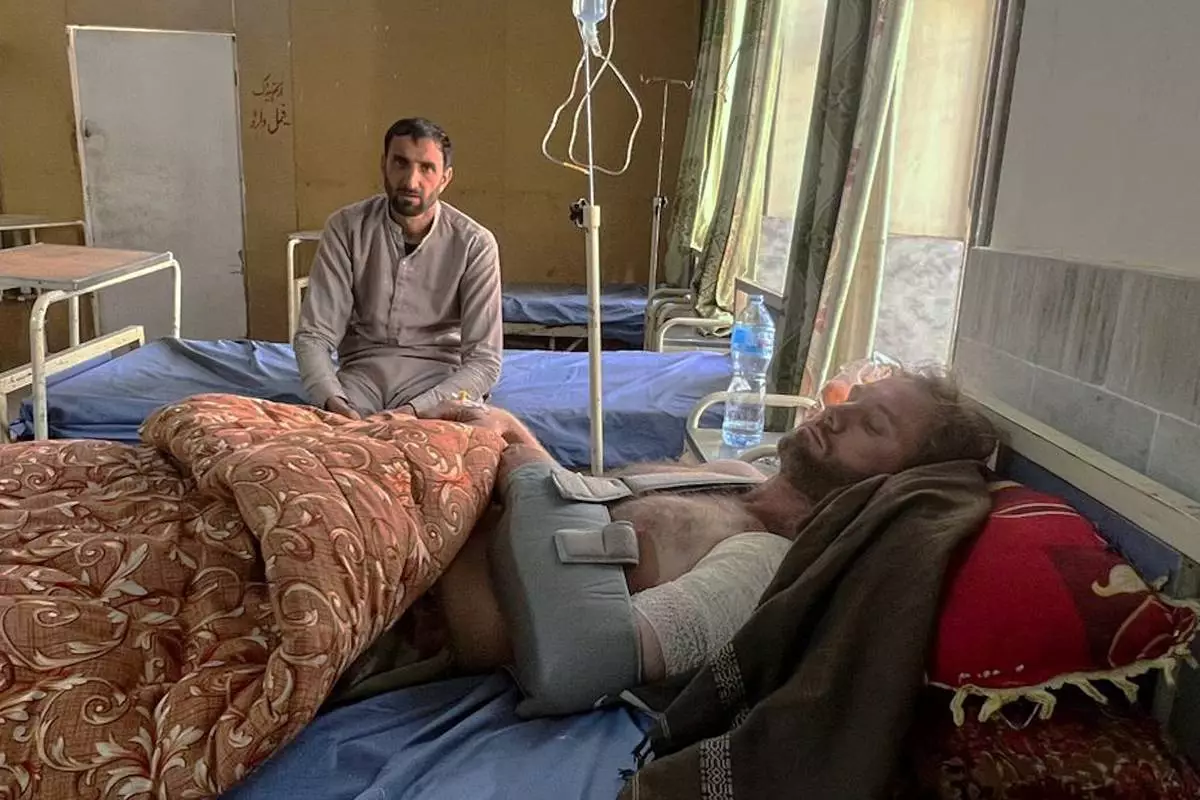
A man, who was injured in the overnight cross border fighting between Pakistan and Afghan forces, receives treatment at a hospital in Khar, in Bajaur, a district of Pakistan's Khyber Pakhtunkhwa province bordering with Afghanistan, Friday, Feb. 27, 2026. (AP Photo/Anwarullah Khan)
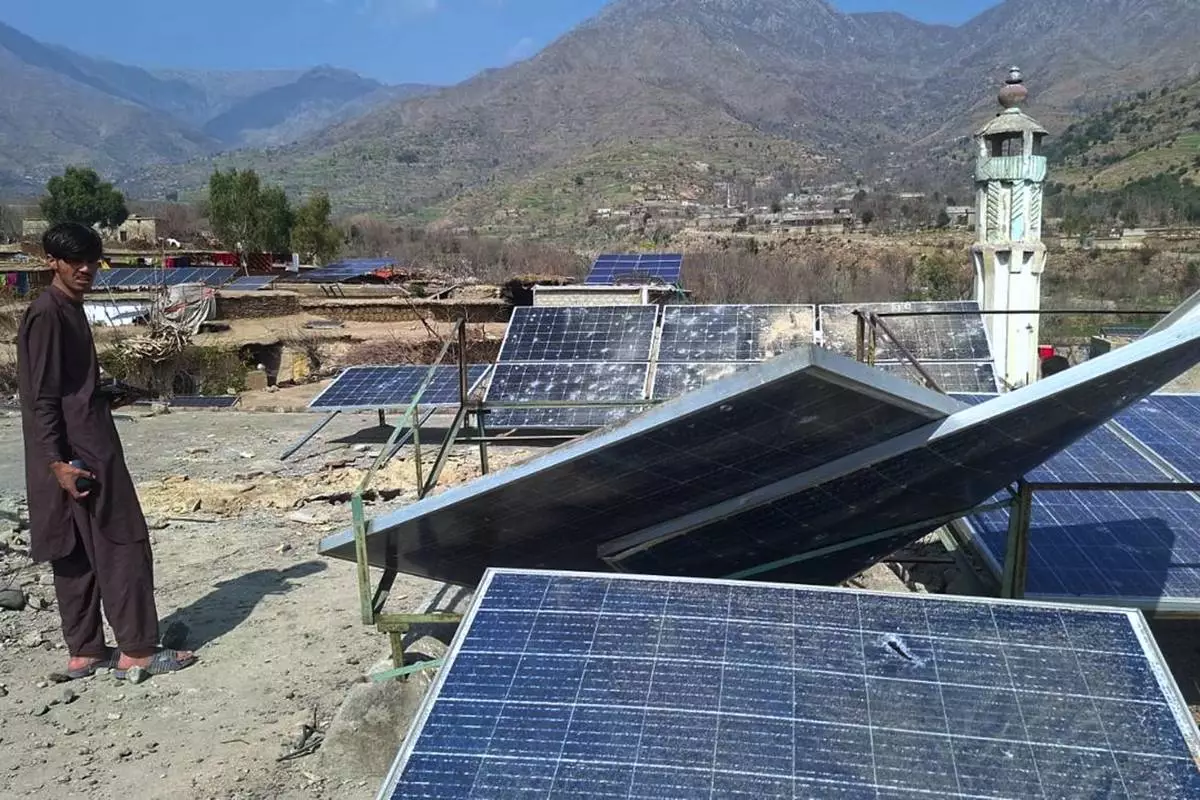
A villager looks at damaged solar plates and a portion following overnight cross border fighting between Pakistan and Afghan forces, at a village in Bajaur, a district of Pakistan's Khyber Pakhtunkhwa province bordering with Afghanistan, Friday, Feb. 27, 2026. (AP Photo)
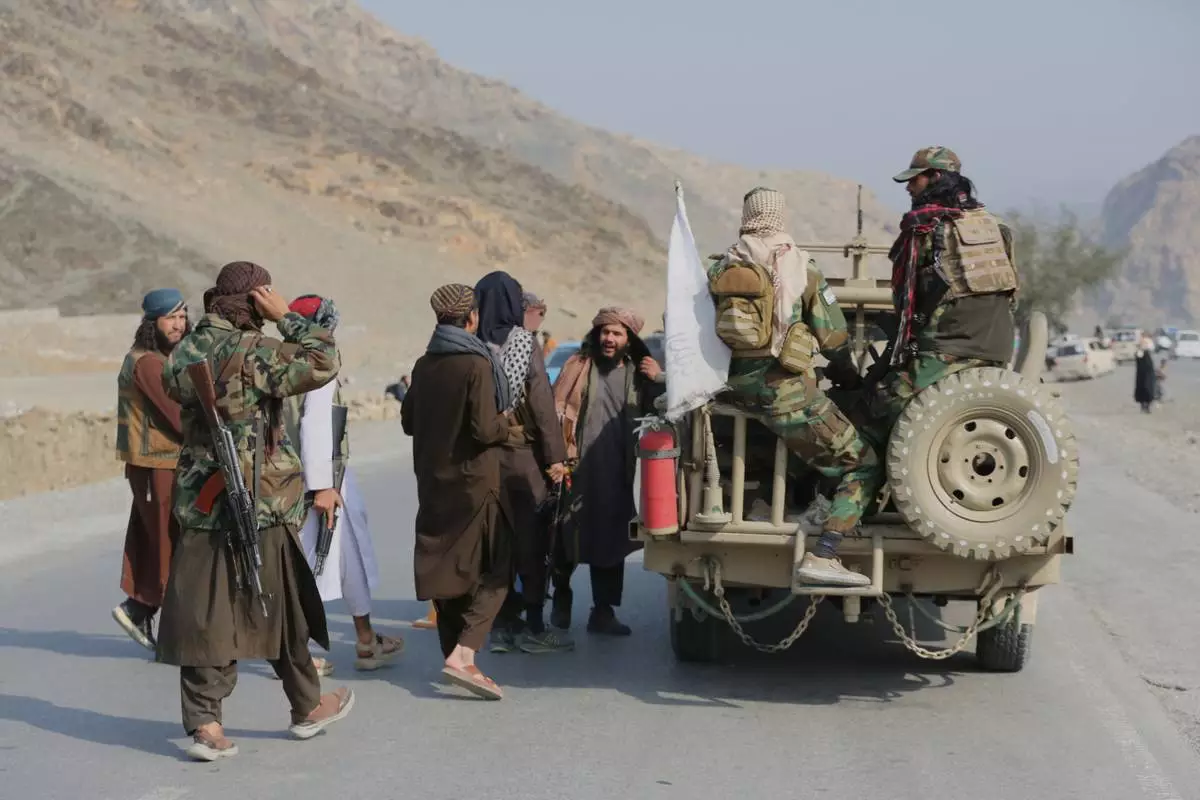
Afghan Taliban soldiers gather on the Afghan side of the Torkham border crossing with Pakistan in Torkham, Afghanistan, Friday, Feb. 27, 2026. (AP Photo/Wahidullah Kakar)
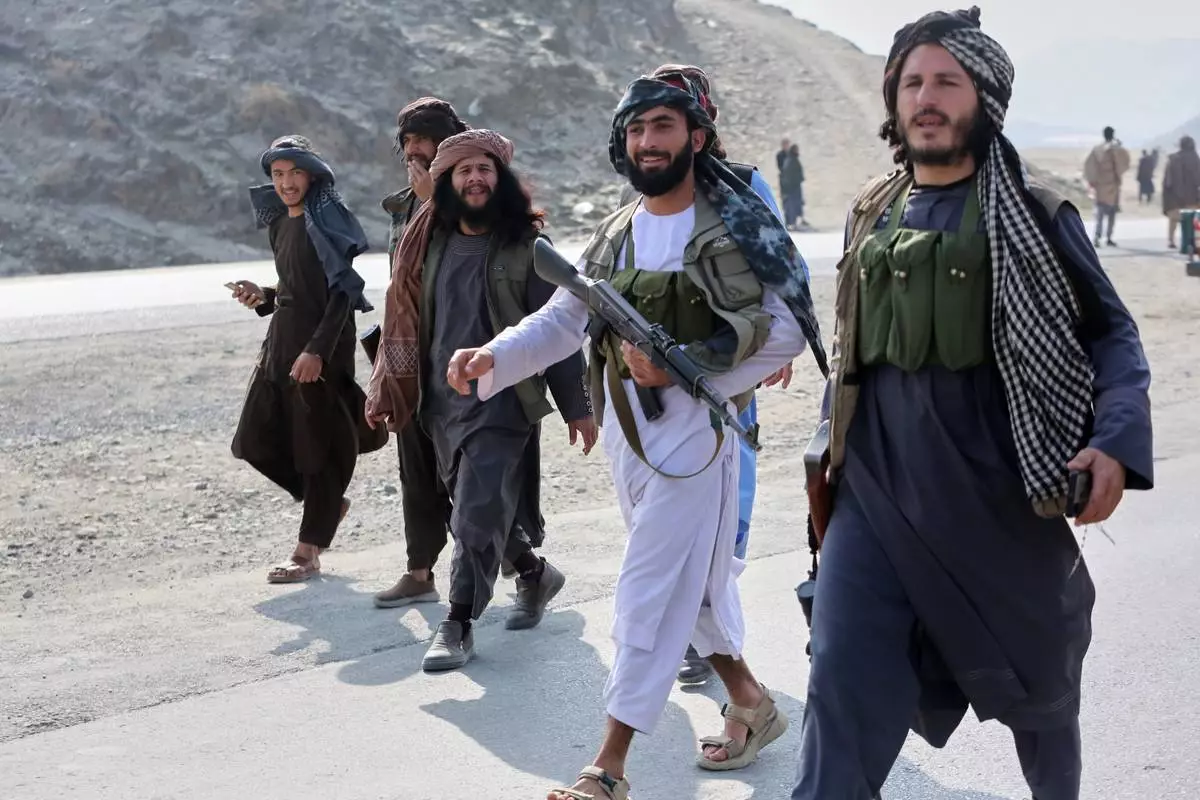
Afghan Taliban soldiers walk along the main road on the Afghan side of the Torkham border crossing with Pakistan in Torkham, Afghanistan, Friday, Feb. 27, 2026. (AP Photo/Wahidullah Kakar)
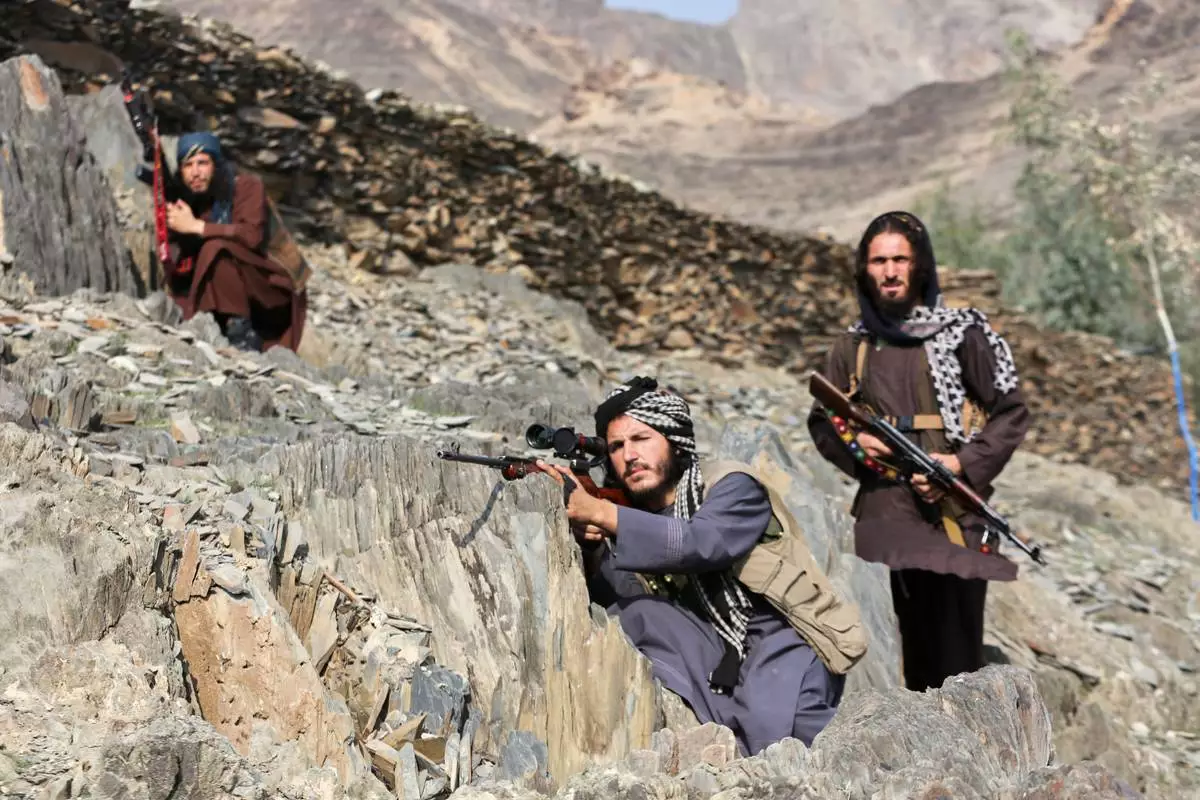
Afghan Taliban soldiers look toward the Pakistani side, with one peering through the sight of his rifle, on the Afghan side of the Torkham border crossing with Pakistan in Torkham, Afghanistan, Friday, Feb. 27, 2026. (AP Photo/Wahidullah Kakar)
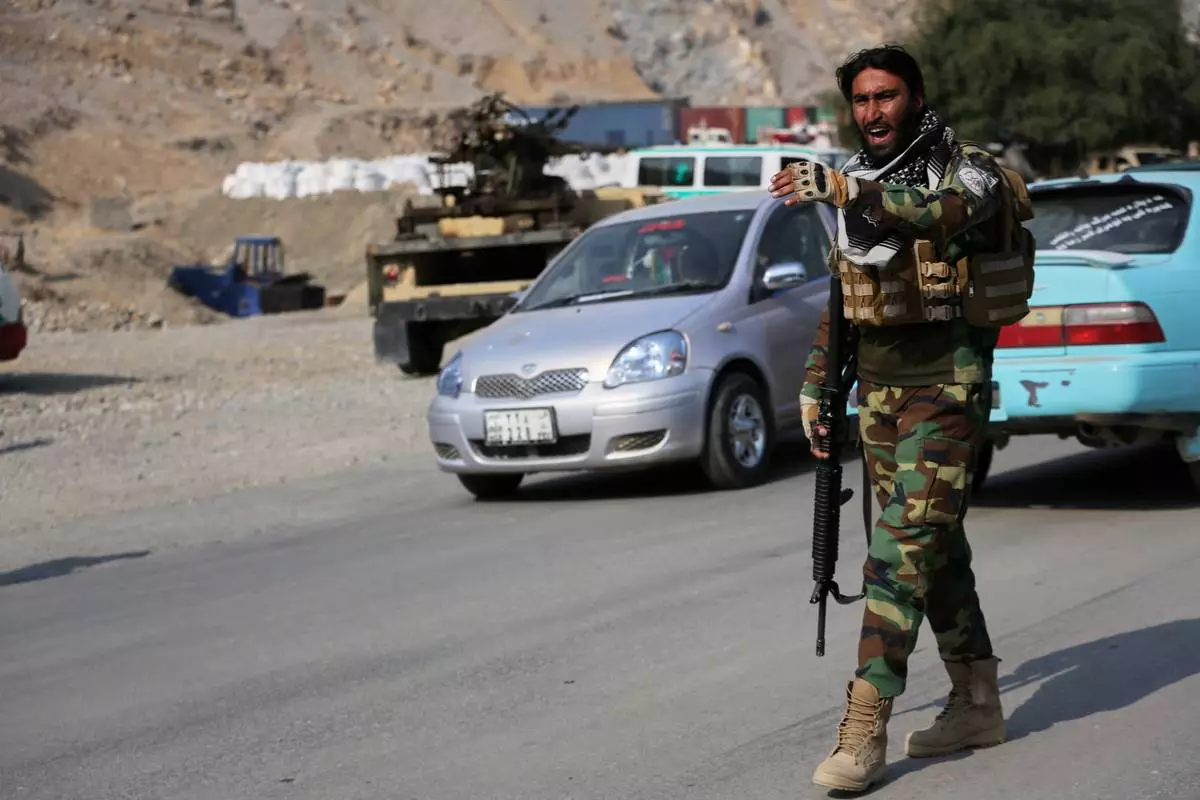
An Afghan Taliban soldier gives instructions to drivers on the Afghan side of the Torkham border crossing with Pakistan in Torkham, Afghanistan, Friday, Feb. 27, 2026. (AP Photo/Wahidullah Kakar)
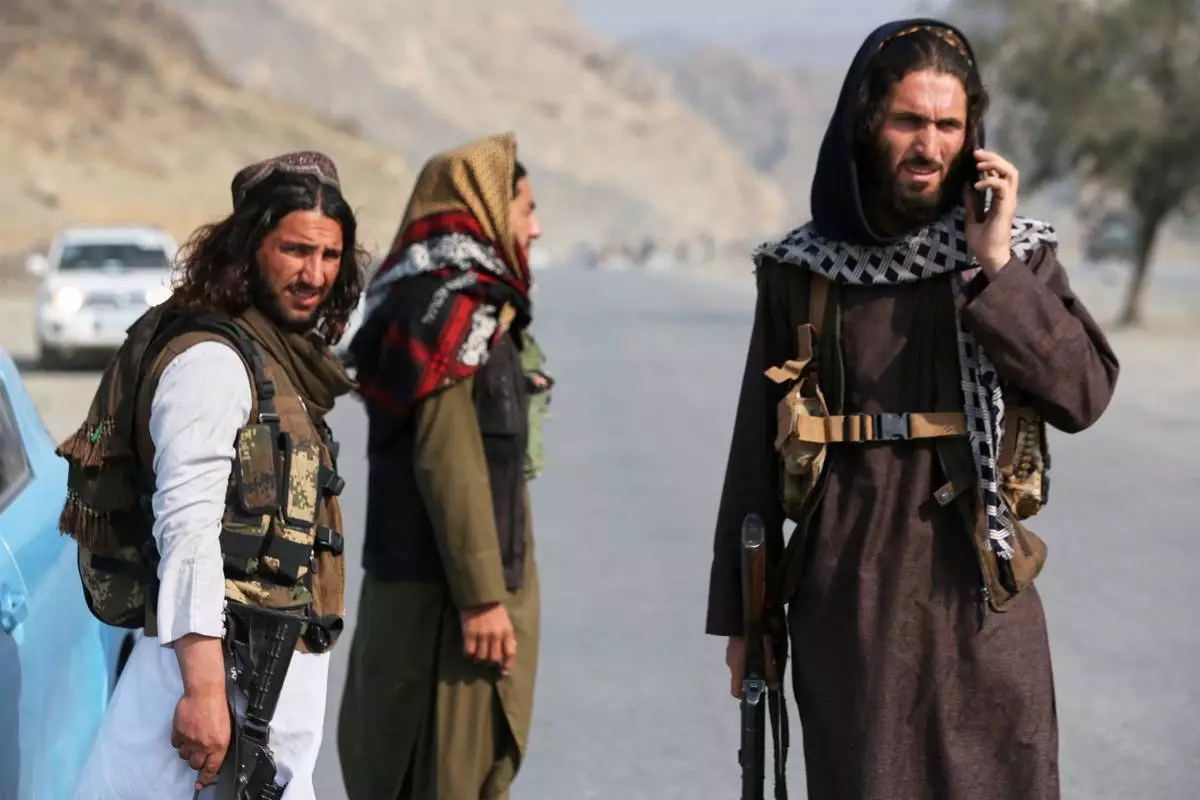
Afghan Taliban soldiers stand on the Afghan side of the Torkham border crossing with Pakistan in Torkham, Afghanistan, Friday, Feb. 27, 2026. (AP Photo/Wahidullah Kakar)