COLOMBO, Sri Lanka (AP) — New Zealand failed to clinch a Twenty20 World Cup semifinals place when it lost to England by four wickets on Friday, leaving Pakistan a last chance to qualify.
New Zealand looked set to join England in the semifinals when it reduced England to 117-6 in the 17th over in pursuit of 160. But big hits by Will Jacks and Rehan Ahmed got England over the finish line with three balls remaining in a thriller.
Click to Gallery
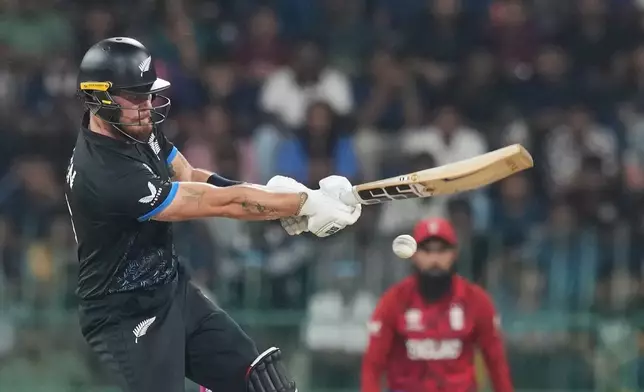
New Zealand's Finn Allen plays a shot during the T20 World Cup cricket match between England and New Zealand in Colombo, Sri Lanka, Friday, Feb. 27, 2026. (AP Photo/Eranga Jayawardena)
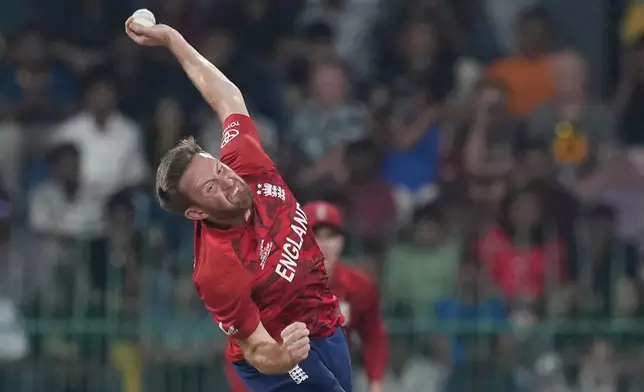
England's Liam Dawson bowls a delivery during the T20 World Cup cricket match between England and New Zealand in Colombo, Sri Lanka, Friday, Feb. 27, 2026. (AP Photo/Eranga Jayawardena)
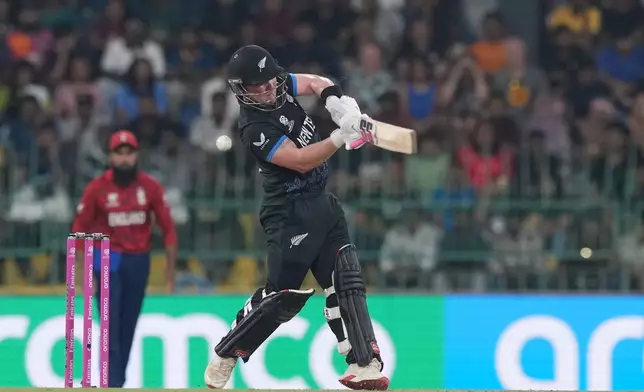
New Zealand's Tim Seifert plays a shot during the T20 World Cup cricket match between England and New Zealand in Colombo, Sri Lanka, Friday, Feb. 27, 2026. (AP Photo/Eranga Jayawardena)
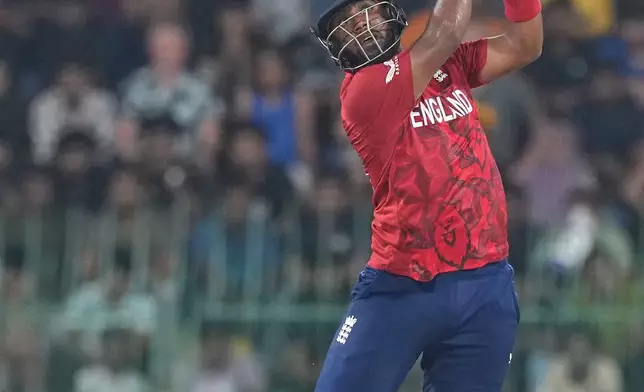
England's Rehan Ahmed hits a six during the T20 World Cup cricket match between England and New Zealand in Colombo, Sri Lanka, Friday, Feb. 27, 2026. (AP Photo/Eranga Jayawardena)
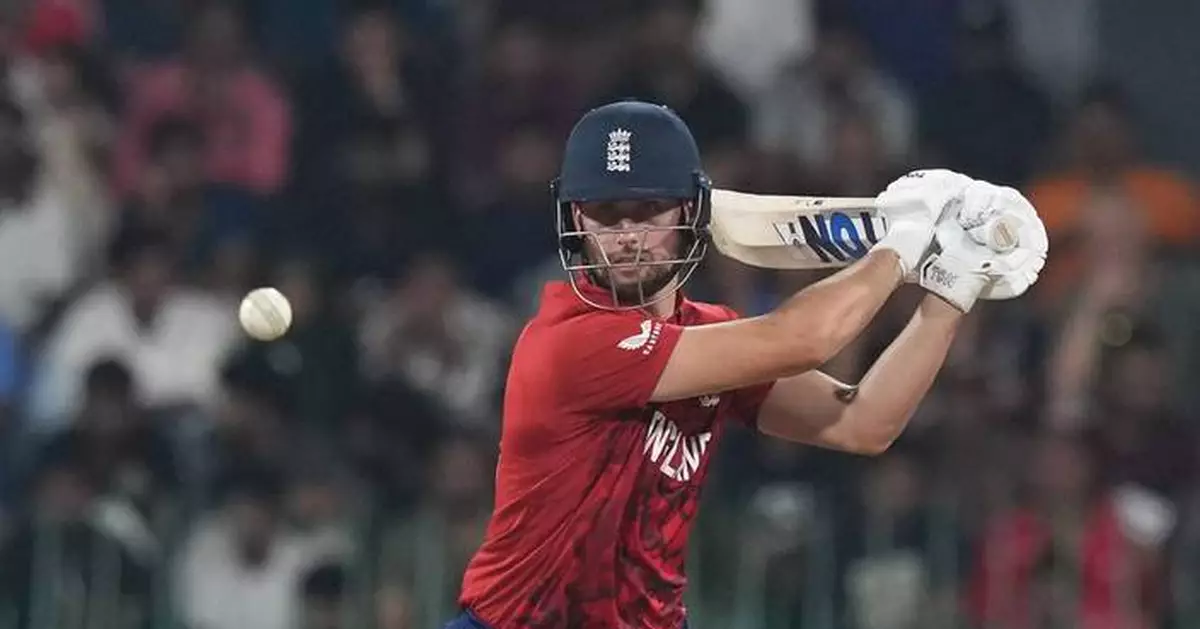
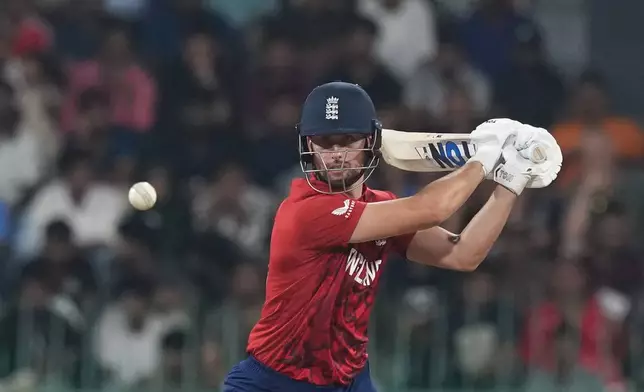
England's Will Jacks plays a shot during the T20 World Cup cricket match between England and New Zealand in Colombo, Sri Lanka, Friday, Feb. 27, 2026. (AP Photo/Eranga Jayawardena)
“Would have made our lives easier if we won,” New Zealand captain Mitch Santner said. “We played a pretty good game. Credit to England. Jacks and Rehan with the finishing touches, it was a good bit of batting.”
The odds still favor New Zealand going through from the Super Eights but Pakistan has a last-ditch chance on Saturday against Sri Lanka in Pallekele.
Pakistan has to beat Sri Lanka by 64 runs or chase down the tournament co-host in 13.1 overs.
England had already qualified but completed the Super Eights three-for-three unbeaten.
That record was in jeopardy for much of the chase.
Phil Salt was out in the first over and fellow opener Jos Buttler for a two-ball duck in the second over. Buttler has only 62 runs in seven matches and his 10th career duck set the all-time record for England in T20s.
“He's played 150 games for England,” captain Harry Brook said of Buttler, “and people need to take a little step back. He's probably the best white-ball player to play the game. He's in a rut but it's exciting to know what he could produce in the next few games.”
Brook and Jacob Bethel were gone inside nine overs then Tom Banton and Sam Curran struggled to share 42 runs in 35 balls. England was left needing 43 runs off 19 deliveries with four wickets on a used pitch that was turning.
Ahmed replaced Jamie Overton because of the pitch and took 2-28, and he made his bat also count.
He sent the second ball he faced over the long-on fence as he and Jacks turned the game with 22 runs in the 18th over bowled by Glenn Phillips. They plundered 16 runs from the 19th bowled by Santner and cruised home.
Jacks was unbeaten on 32 including a six and four boundaries. Ahmed faced seven deliveries for 19 which included two sixes and a boundary.
“Having gone out on a knife edge I'm over the moon," Jacks said after his fourth player of the match award in the tournament. “Rehan played a brilliant innings. Everyone struggled to get going on that pitch and the six he hit second ball got them rattled and I fed off him.
“Feel confident right now, calm in the middle. That can be vital. We're going in the right direction, three wins in the Super Eight, we're very happy.”
Santner chose to bat first, as both teams wanted, and his team made 159-7.
Tim Seifert and Finn Allen opened with 64 in seven overs but they lost wickets frequently from then on. Phillips top-scored with 39. New Zealand scored only 24 runs in the last three overs.
Spinners Jacks, Adil Rashid and Ahmed took two wickets each.
AP cricket: https://apnews.com/hub/cricket
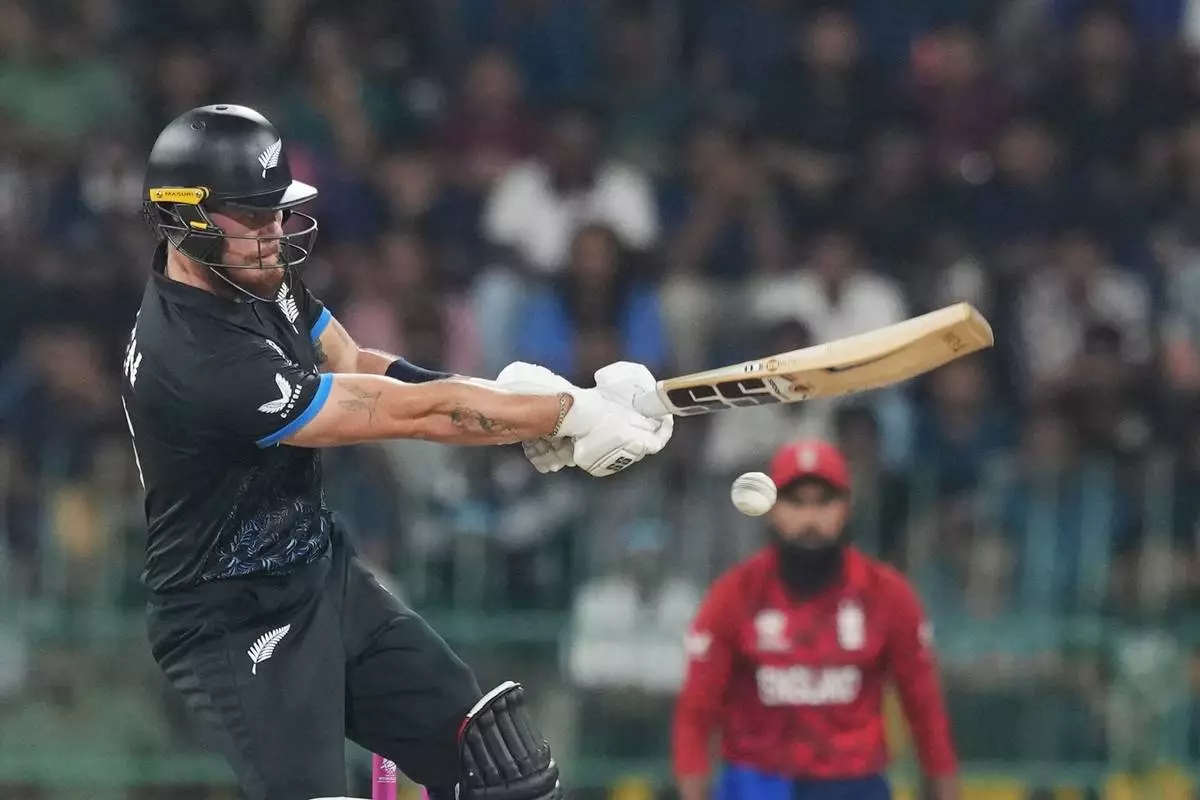
New Zealand's Finn Allen plays a shot during the T20 World Cup cricket match between England and New Zealand in Colombo, Sri Lanka, Friday, Feb. 27, 2026. (AP Photo/Eranga Jayawardena)
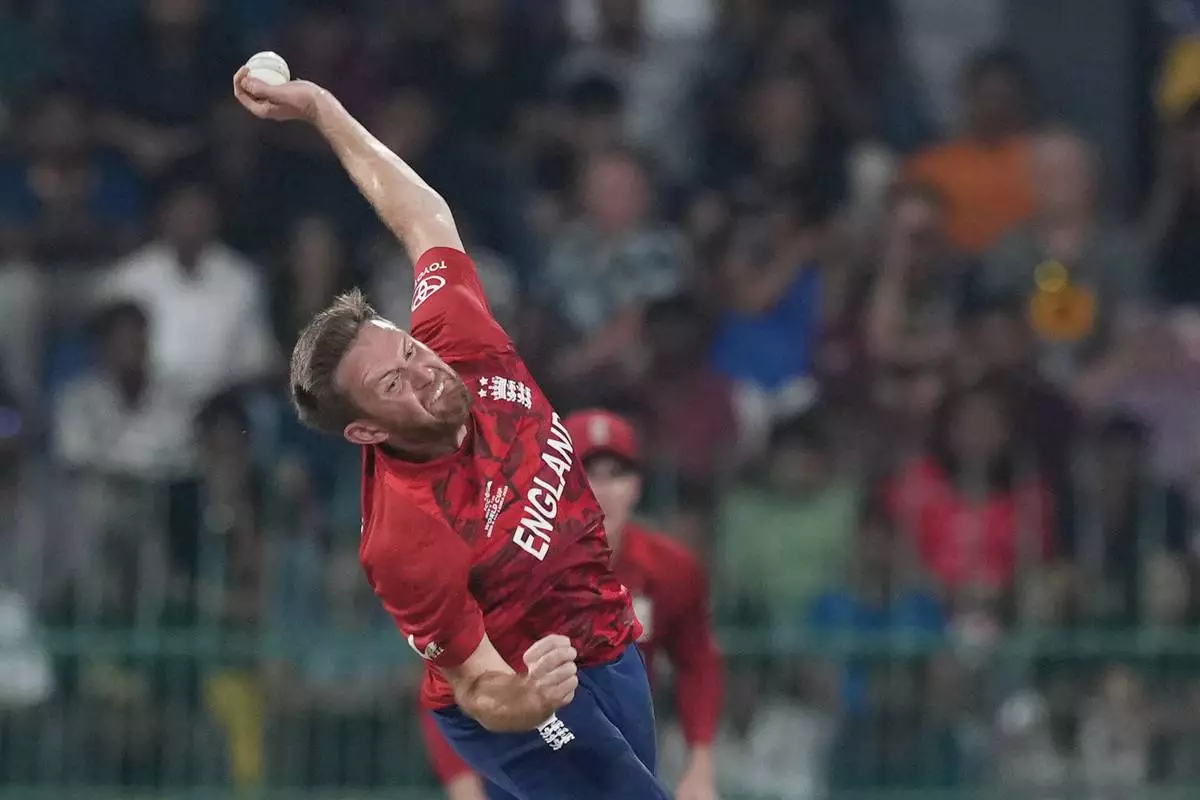
England's Liam Dawson bowls a delivery during the T20 World Cup cricket match between England and New Zealand in Colombo, Sri Lanka, Friday, Feb. 27, 2026. (AP Photo/Eranga Jayawardena)
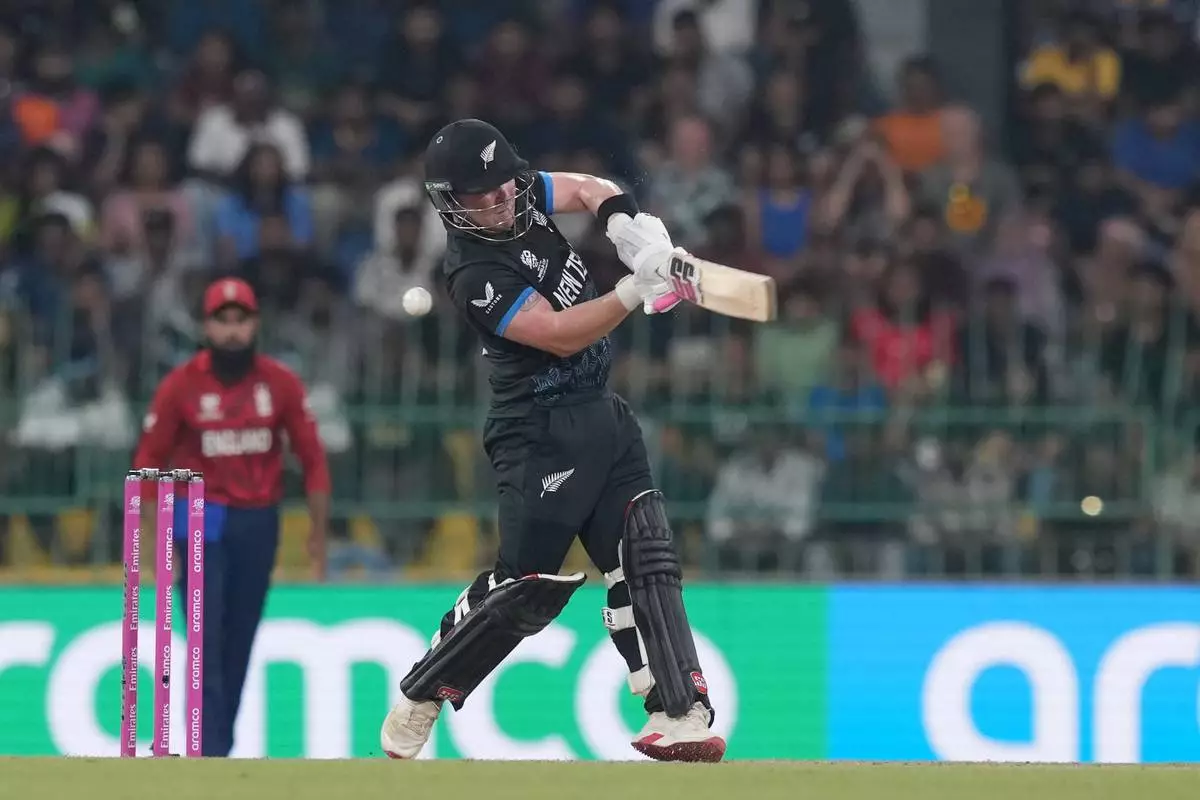
New Zealand's Tim Seifert plays a shot during the T20 World Cup cricket match between England and New Zealand in Colombo, Sri Lanka, Friday, Feb. 27, 2026. (AP Photo/Eranga Jayawardena)
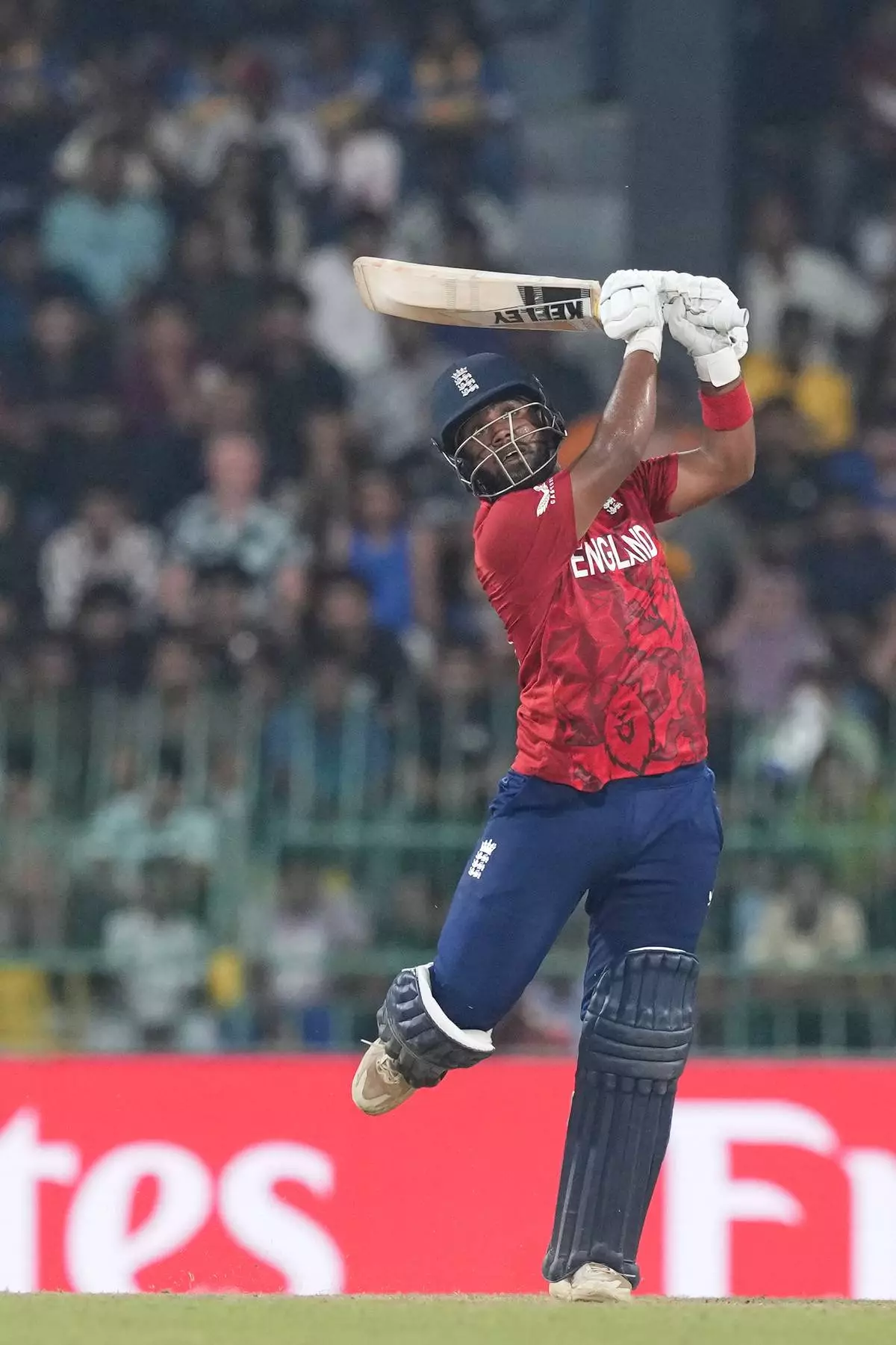
England's Rehan Ahmed hits a six during the T20 World Cup cricket match between England and New Zealand in Colombo, Sri Lanka, Friday, Feb. 27, 2026. (AP Photo/Eranga Jayawardena)
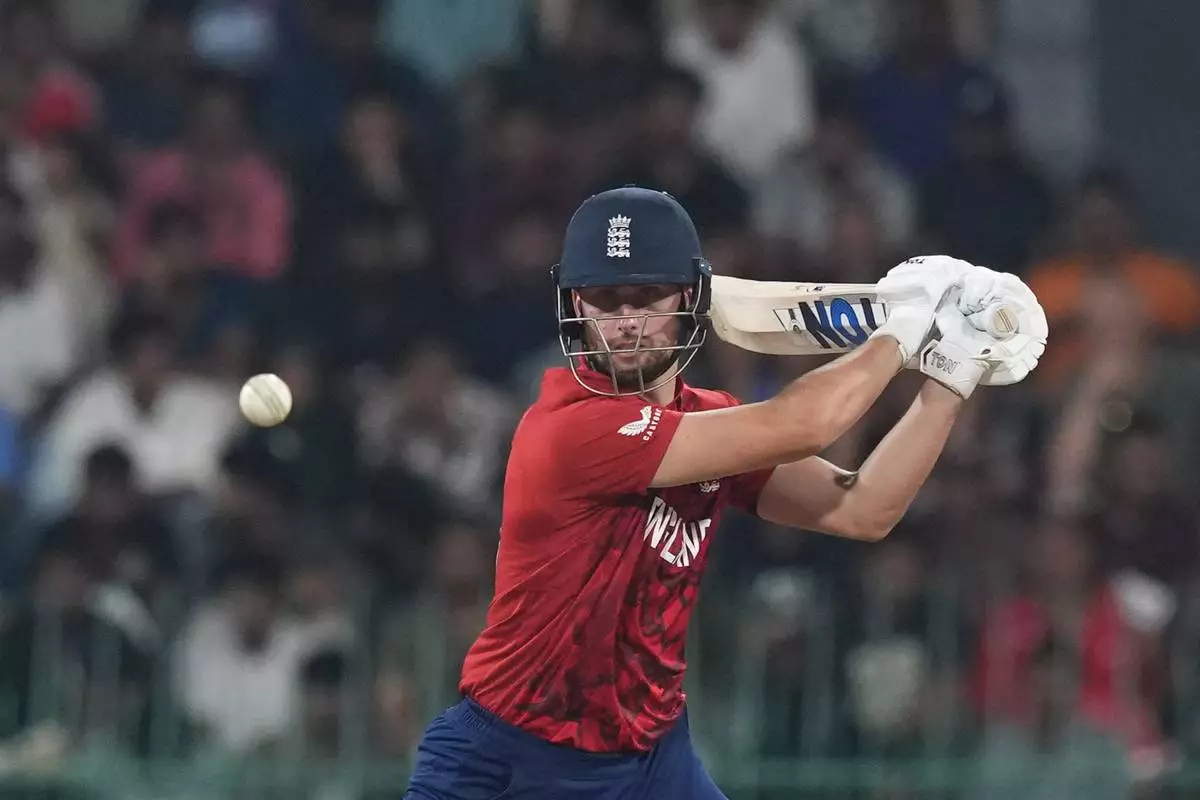
England's Will Jacks plays a shot during the T20 World Cup cricket match between England and New Zealand in Colombo, Sri Lanka, Friday, Feb. 27, 2026. (AP Photo/Eranga Jayawardena)
HELSINGBORG, Sweden (AP) — NATO allies and defense officials expressed bewilderment Friday at U.S. President Donald Trump’s announcement that he would send 5,000 U.S. troops to Poland just weeks after ordering the same number of forces pulled out of Europe.
The apparent change of mind came after weeks of statements from Trump and his administration about reducing — not increasing — the U.S. military footprint in Europe. Trump's initial order set off a flurry of action among military commanders and left allies already doubtful about America's commitment to Europe's security to ponder what forces they might have to backfill on NATO's eastern flank with Russia and Ukraine.
Earlier this month, the Trump administration said it was reducing levels in Europe by about 5,000 troops, and U.S. officials confirmed about 4,000 service members were no longer rotating into Poland from Germany. The dispatch to Germany of U.S. personnel trained to fire long-range missiles was also halted.
But in a post on Truth Social on Thursday, Trump said he would now send "an additional 5,000 Troops to Poland,” citing his strong ties with Polish President Karol Nawrocki, whom Trump endorsed in elections last year.
“It is confusing indeed, and not always easy to navigate,” Swedish Foreign Minister Maria Malmer Stenergard told reporters Friday at a meeting she was hosting of her NATO counterparts, including U.S. Secretary of State Marco Rubio.
Ministers from the Netherlands and Norway were sanguine about Trump’s latest move, as was Latvian Foreign Minister Baiba Braže, who said allies knew the U.S. troop “posture was being reconsidered, and now there is no change of posture. For now.”
U.S. defense officials also expressed confusion. “We just spent the better part of two weeks reacting to the first announcement. We don’t know what this means either,” said one of two officials who spoke on condition of anonymity to discuss sensitive military matters.
But Rubio said Washington’s allies understand that changes in the U.S. troop presence in Europe will come as the Trump administration reevaluates its force needs. “I think there’s a broad recognition that there are going to be eventually less U.S. troops in Europe than there has historically been for a variety of reasons,” he said.
The latest surprise came despite a U.S. pledge to coordinate troop deployments, including one from NATO’s top military officer, U.S. Lt. Gen. Alex Grynkewich, on Wednesday.
Trump's initial announcement that he would withdraw troops came as he fumed over remarks by German Chancellor Friedrich Merz, who said that the U.S. was being “humiliated” by the Iranian leadership and criticized what he called a lack of strategy in that war.
Trump told reporters that the U.S. would be cutting even more than 5,000 and also announced new tariffs on European cars. Germany is the continent’s biggest auto producer.
Rubio insisted that Trump’s decision “is not a punitive thing. It’s just something that’s ongoing.”
About 80,000 U.S. troops are stationed in Europe. The Pentagon is required to keep at least 76,000 troops and major equipment on the continent unless NATO allies are consulted and there is a determination that such a withdrawal is in U.S. interests.
The withdrawal of 5,000 troops might drop numbers below that limit.
But Trump's latest post suggests that troop numbers in Europe would not change. Polish Foreign Minister Radek Sikorski welcomed the decision to send more forces to his country, saying it ensures that “the presence of American troops in Poland will be maintained more or less at previous levels.”
NATO Secretary-General Mark Rutte also welcomed the move. On Thursday, before Trump took to Truth Social again, Rutte had underlined that it was important for Europe to take care of its own security. “We have a process in place. This is normal business,” he told reporters.
At NATO headquarters in Brussels, meanwhile, U.S. officials briefed the allies on the Pentagon's aims for its commitments to the NATO Force Model, which involves contingency planning for Europe’s defense in the event of serious security concerns. It was widely expected that a further reduction of U.S. forces would be coming.
Asked whether any cuts were announced, Rutte said: “I’m afraid it’s much more complicated than that.” He said the procedure “is highly classified” and declined to give details.
Rubio played down concerns about a shift in U.S. force levels in Europe, saying: "Every country has to constantly reevaluate what their needs are, what their commitments are around the world, and how to properly structure that.”
Cook reported from Brussels. Associated Press writer Emma Burrows in London contributed.
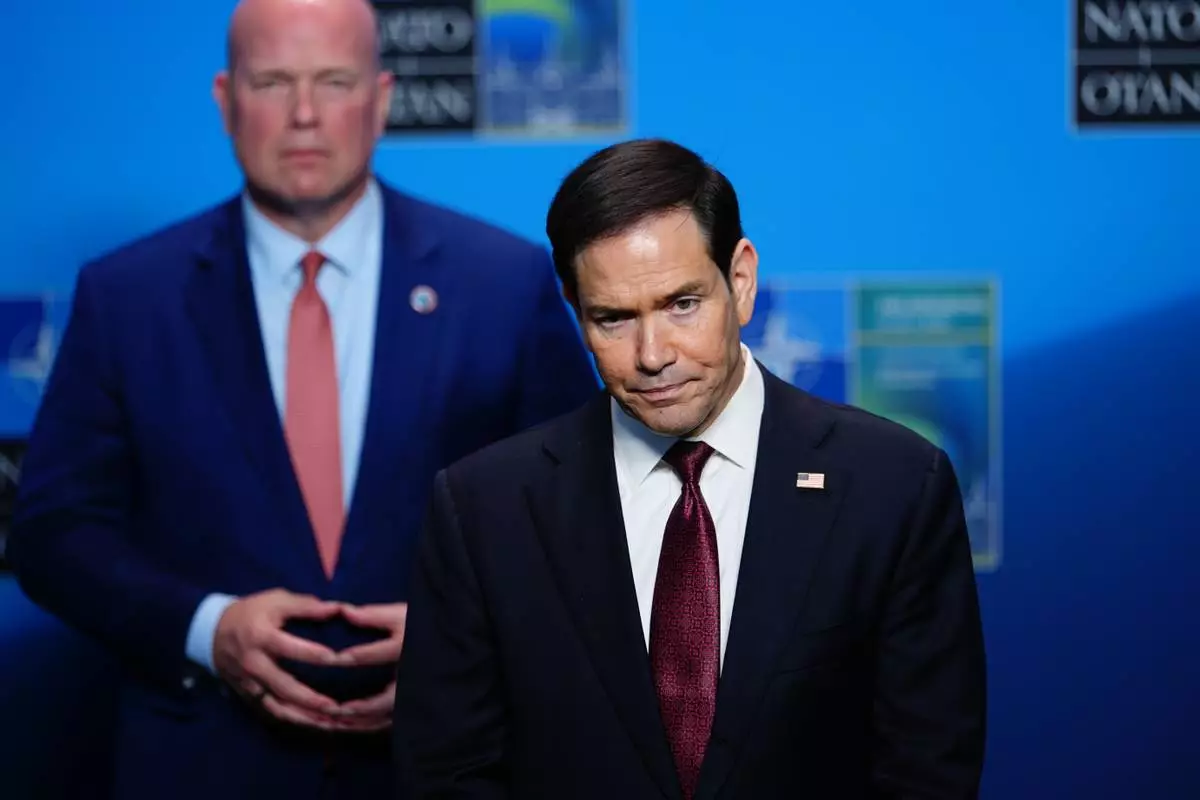
United States Secretary of State Marco Rubio speaks with journalists during a meeting of NATO foreign ministers in Helsingborg, Sweden, Friday, May 22, 2026. (AP Photo/Julia Demaree Nikhinson, Pool)
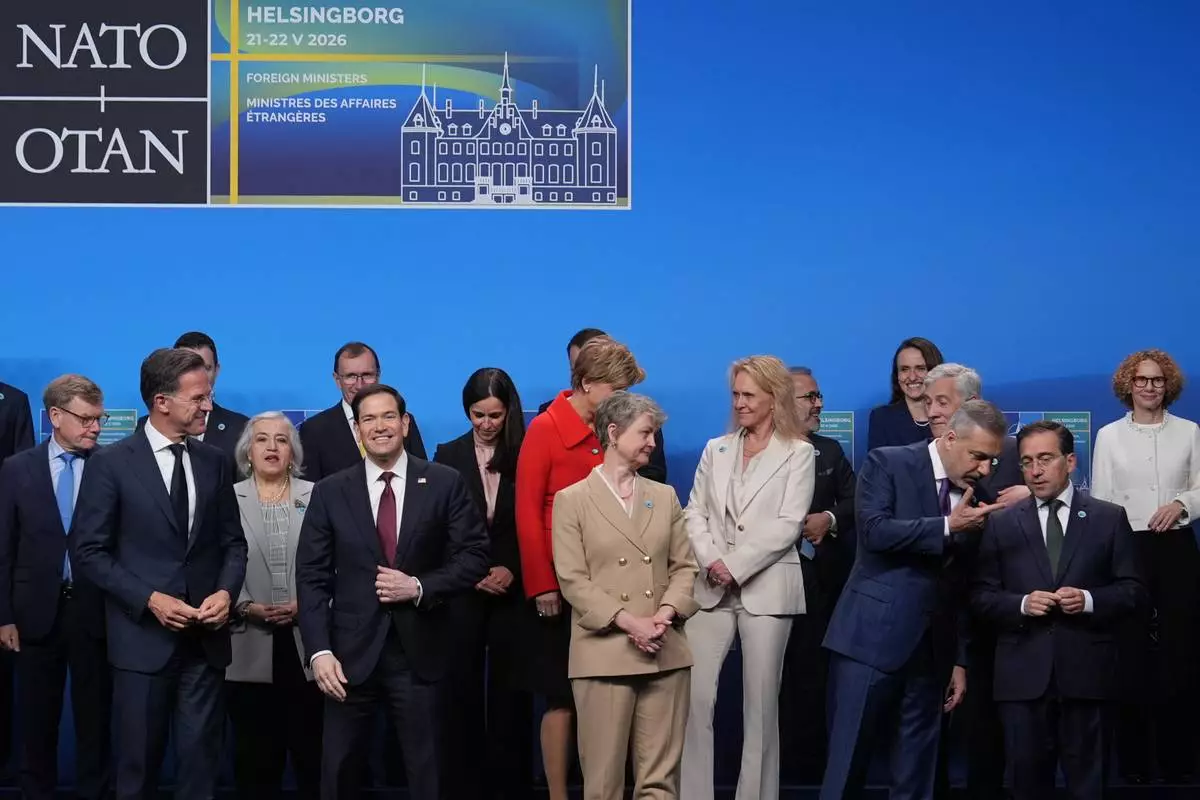
United States Secretary of State Marco Rubio, front second left, and NATO Secretary General Mark Rutte, front left, speak with each other during a group photo at a meeting of NATO foreign ministers in Helsingborg, Sweden, Friday, May 22, 2026. (AP Photo/Julia Demaree Nikhinson, Pool)
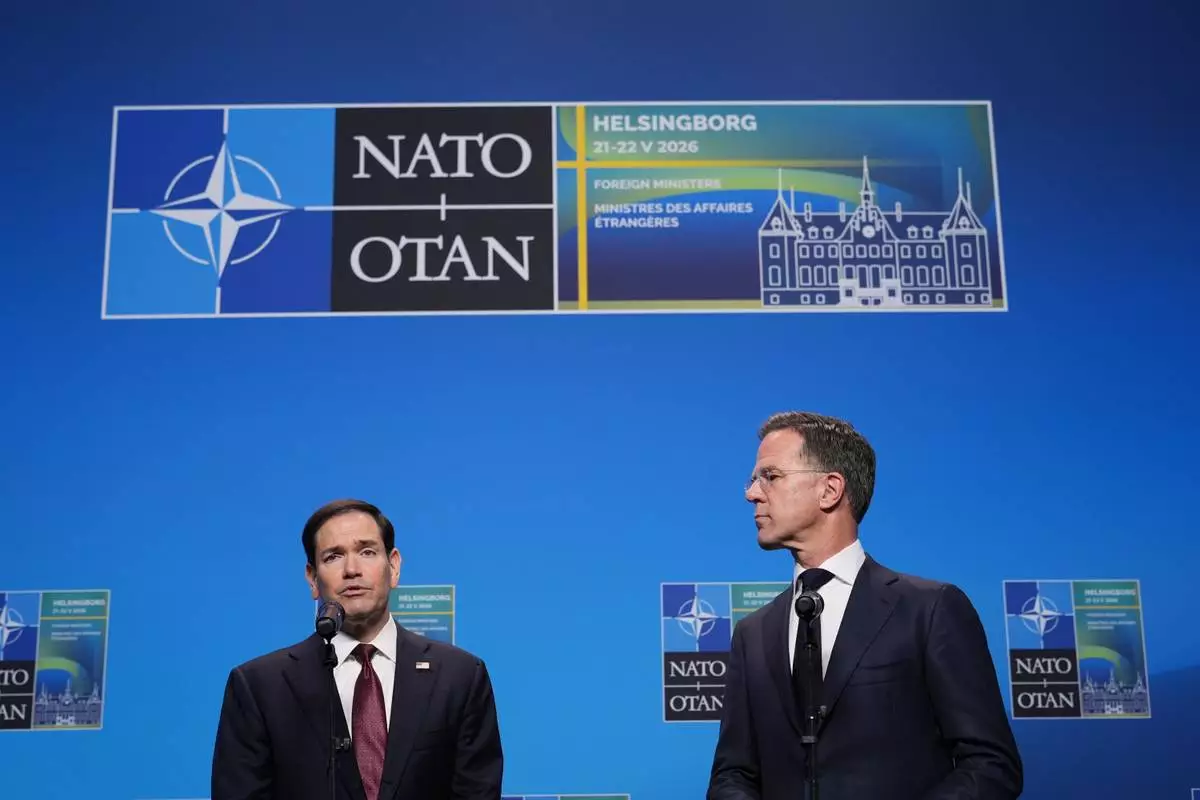
United States Secretary of State Marco Rubio, left, and NATO Secretary General Mark Rutte look at each other as they deliver a statement during a meeting of NATO foreign ministers in Helsingborg, Sweden, Friday, May 22, 2026. (AP Photo/Julia Demaree Nikhinson, Pool)
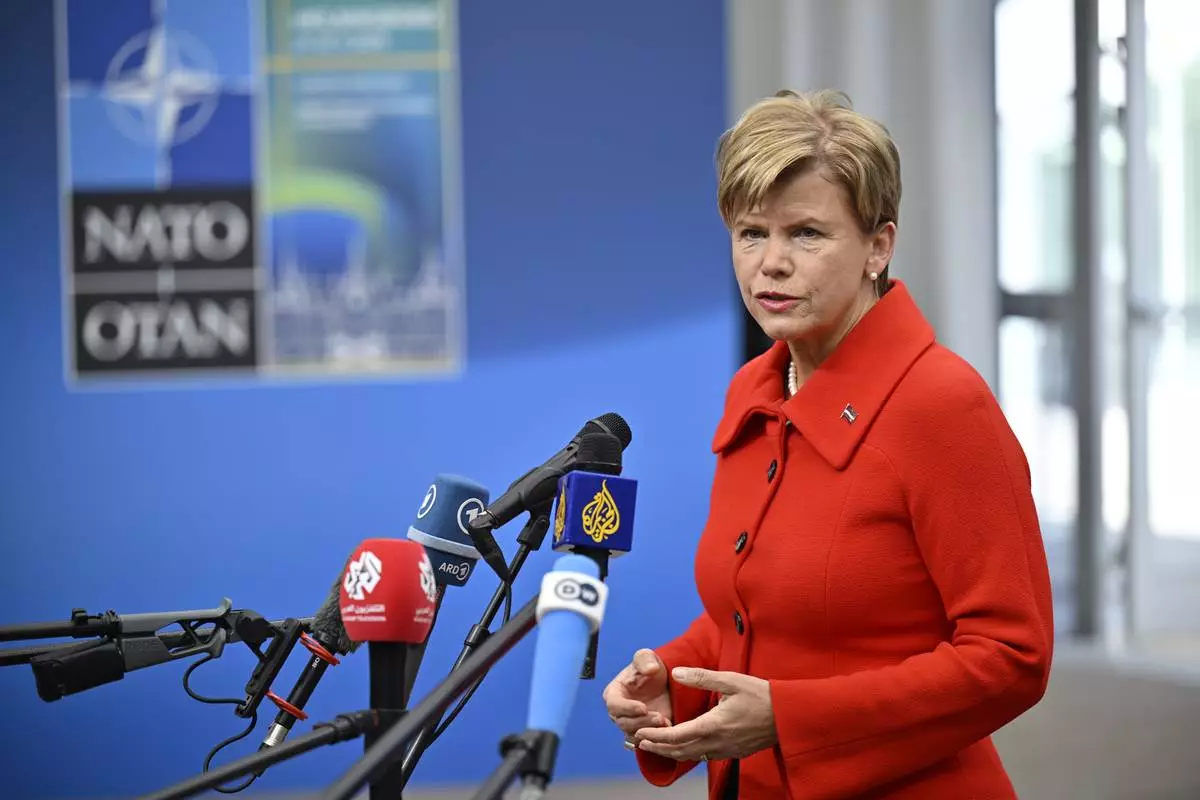
Latvian Foreign Minister Baiba Braže speaks at the doorstep of the NATO foreign ministers' meeting at Sea U in Helsingborg, Sweden, Friday, May 22, 2026. (Johan Nilsson/TT News Agency via AP)
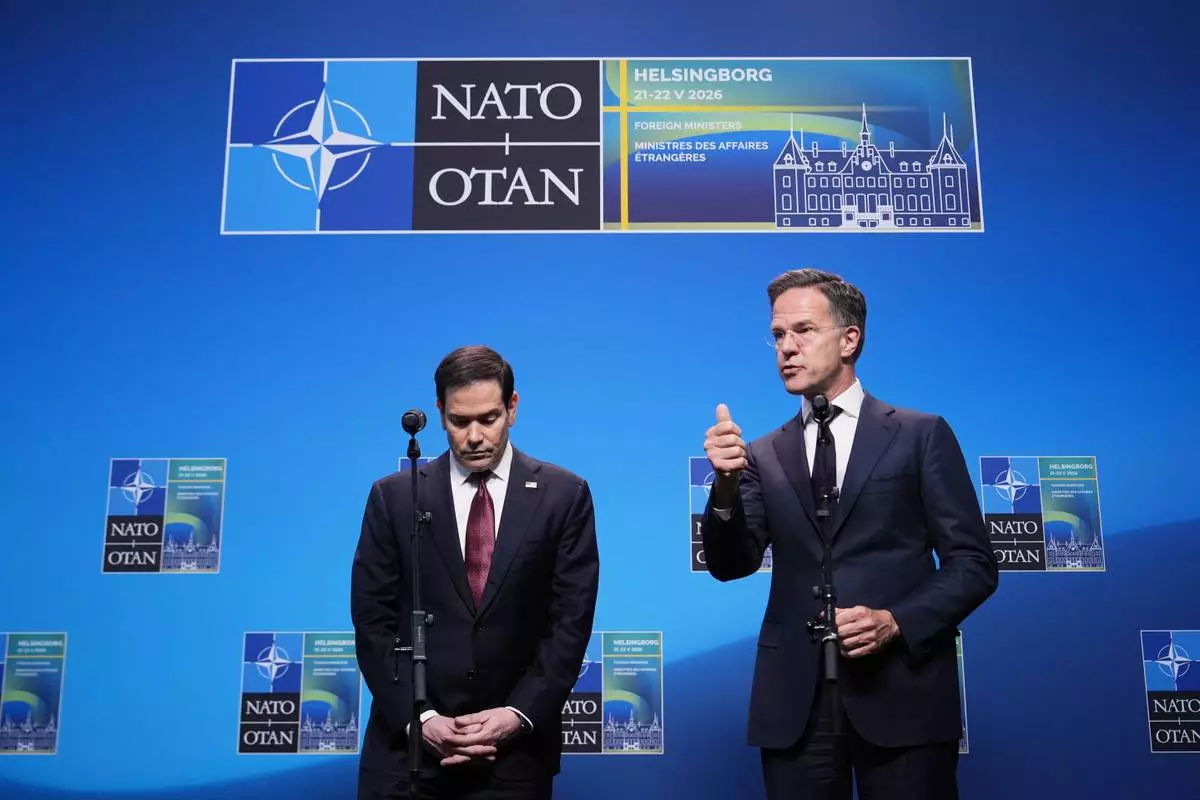
United States Secretary of State Marco Rubio, left, and NATO Secretary General Mark Rutte deliver a statement during a meeting of NATO foreign ministers in Helsingborg, Sweden, Friday, May 22, 2026. (AP Photo/Julia Demaree Nikhinson, Pool)
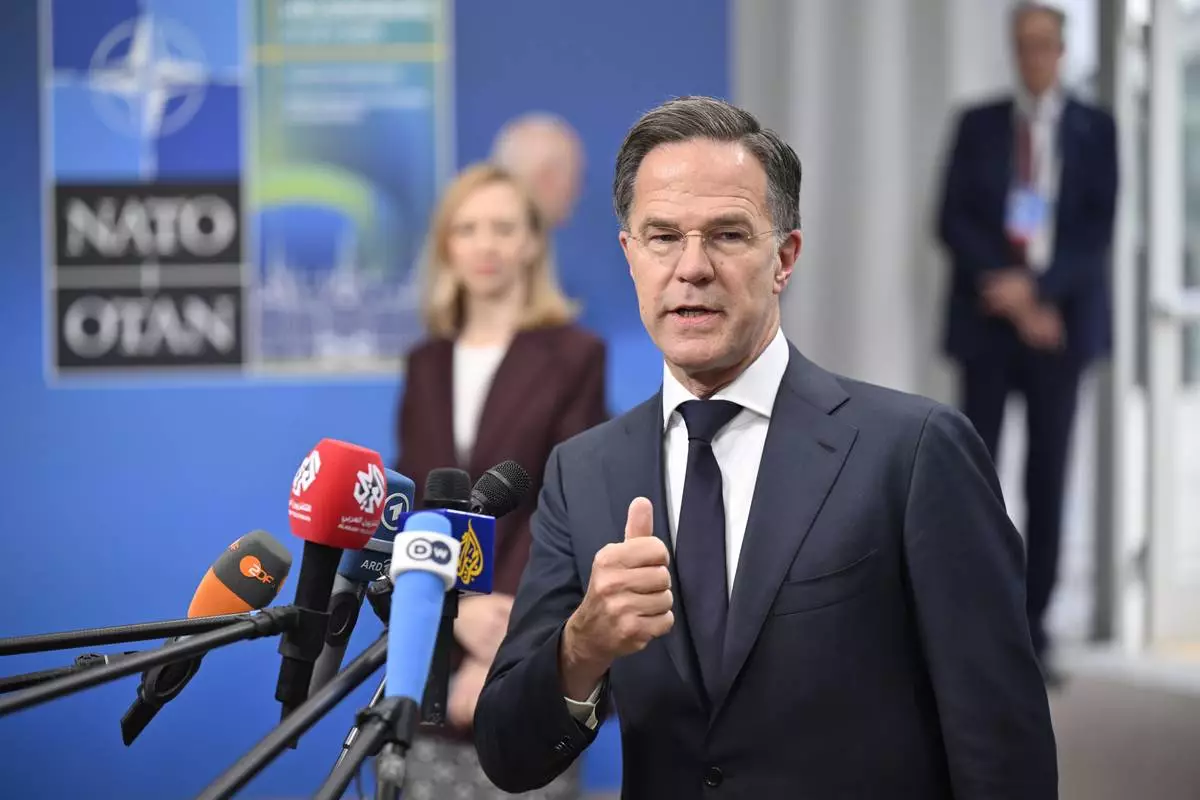
NATO Secretary General Mark Rutte speaks to media at the NATO Foreign Ministers' meeting in Helsingborg, Sweden, Friday, May 22, 2026. (Johan Nilsson/TT News Agency via AP)
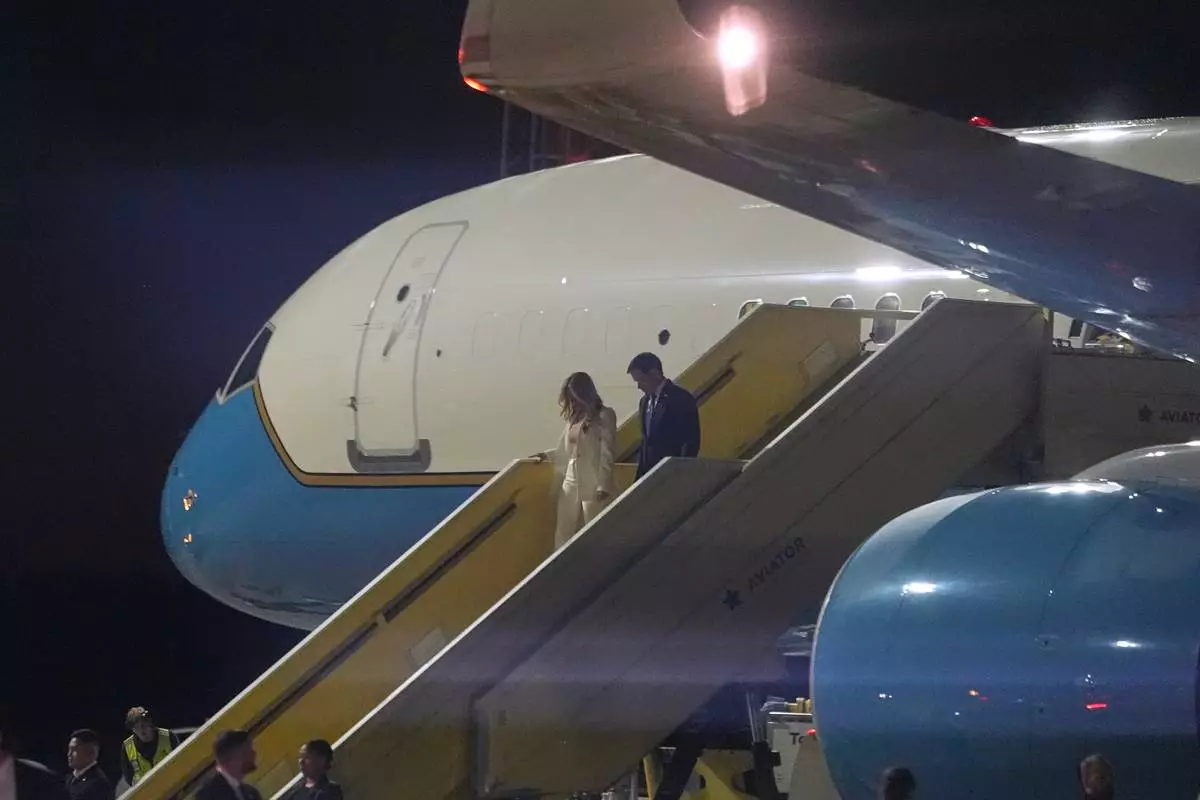
Secretary of State Marco Rubio arrives with his wife Jeanette at Malmo Airport, Friday, May 22, 2026, in Malmo-Sturup, Sweden, ahead of a NATO foreign ministers meeting. (AP Photo/Julia Demaree Nikhinson, Pool)
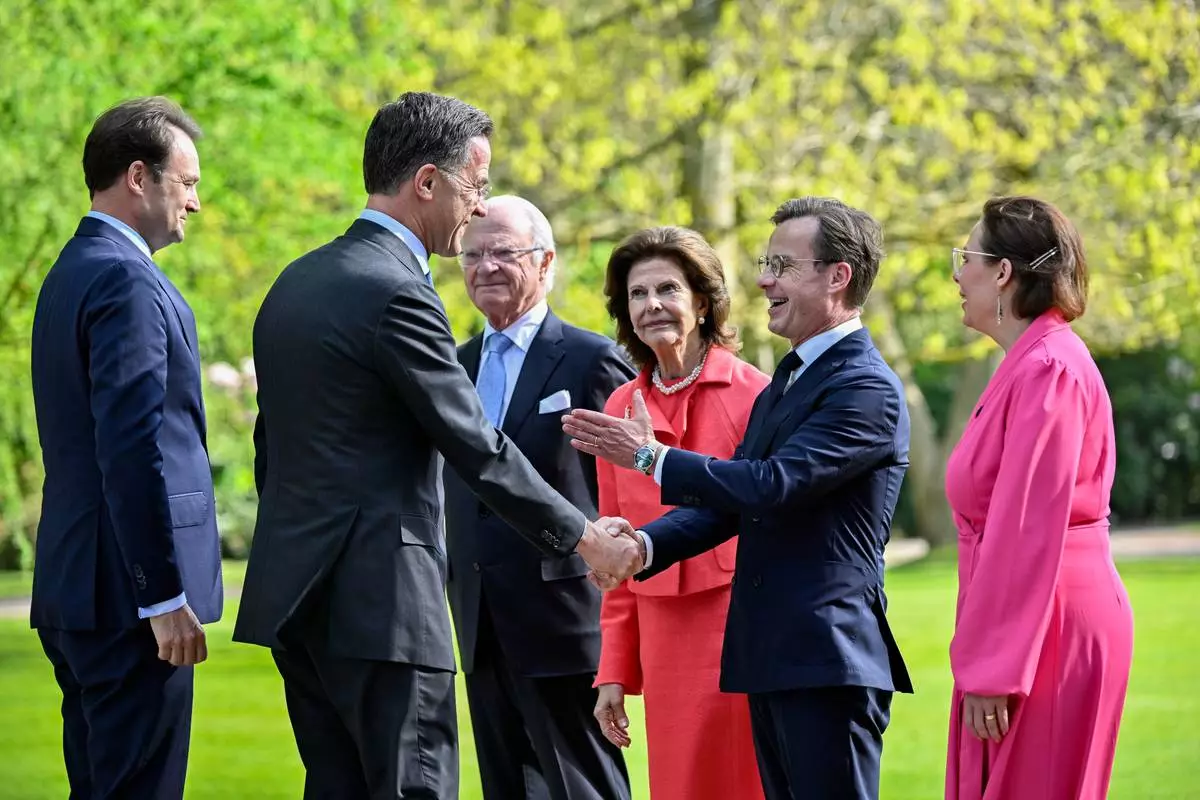
NATO Secretary General Mark Rutte, second from left, shakes hands with Prime Minister of Sweden Ulf Kristersson, as he is greeted by King Carl Gustaf of Sweden, Queen Silvia of Sweden and Minister for Foreign Affairs of Sweden Maria Malmer Stenergard, right, before a dinner at Sofiero Castle in Helsingborg, Sweden, Thursday May 21 2026. (Johan Nilsson/TT News Agency via AP)
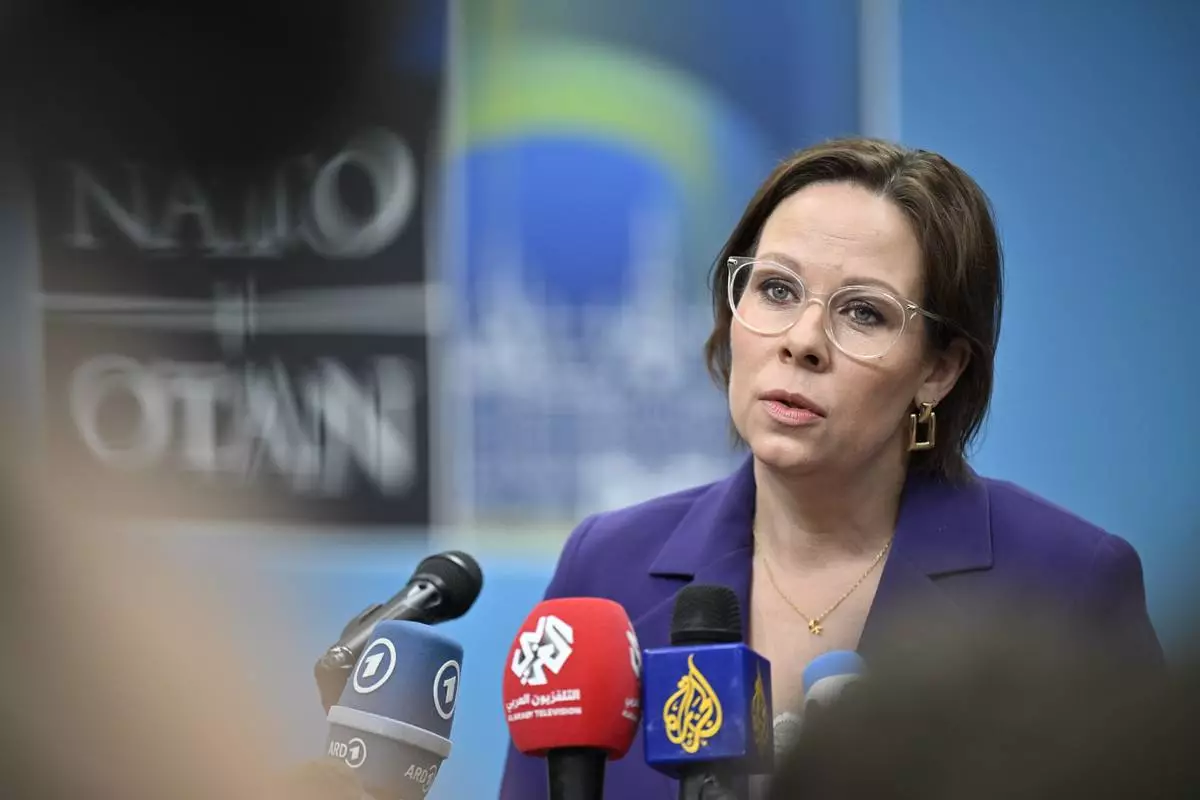
Swedish Foreign Minister Maria Malmer Stenergard speaks to media at the NATO Foreign Ministers' meeting in Helsingborg, Sweden, Friday, May 22, 2026. (Johan Nilsson/TT News Agency via AP)