Not so fast, Paramount.
After a long, tumultuous fight for Warner Bros. Discovery, the Hollywood giant has finally bested rival bidder Netflix but now faces a new challenge: Winning over regulators.
The competition concerns are big. Paramount’s buyout of Warner Bros. would reshape Hollywood and the wider media landscape in a way that Netflix never threatened to do. Netflix, which abruptly dropped out of the running this week, wanted only part of Warner. Paramount wants the entire company.
The U.S. Justice Department still needs to weigh in on the blockbuster combination that could give Paramount pricing power over movies and other offerings, potentially hurting customers. The agency and other regulators, including the Federal Trade Commission, have tripped up many seemingly done deals before by suing to demand changes or blocking mergers outright.
And even if U.S. regulators do sign off, those in individual states such as California and in other countries where Paramount and Warner operate may not, throwing up additional, possibly unsurmountable roadblocks.
Another wildcard: President Donald Trump.
Traditionally, presidents have left antitrust decision to regulators for fear of injecting partisan politics into business matters, but Trump appears willing to wade into affairs normally left to government lawyers and regulators.
A Paramount-Warner Bros. tie-up would reduce the remaining “big five” movie studios to four and make it the biggest.
Paramount's lineup includes blockbusters such as “Top Gun,” “Titanic” and “The Godfather.” The 102-year-old Warner Bros. studio has produced titles ranging from “Harry Potter” and “Superman” to “Barbie” and “One Battle After Another.”
Paramount closed its own $8 billion merger with Skydance just months ago. Warner Bros. merged with Discovery in a $43 billion deal four years ago.
The question for regulators: How big is too big?
When Netflix and Warner struck their deal, they said combining Paramount and Warner, two companies with very similar assets, posed a higher risk for job losses and other competitive concerns.
Warner's chief revenue and strategy officer Bruce Campbell told a Senate antitrust hearing that “one of the reasons that the Netflix offer appeals to us so much” was that the streaming giant didn’t have the same film studio and production infrastructure as Warner. He said a Netflix acquisition would keep those operations intact, free of any forced selling by regulators, and allow the film side of the combined companies to grow.
Now Warner must argue in favor of combining the two studios.
Then there are questions around the fate of employees.
Trade groups have warned for months that any deal could lead to big job losses — a fear heightened because of the massive debt Paramount is taking on to finance its offer.
And though some experts think layoffs are unlikely to draw antitrust scrutiny, there are related concerns. Jim Speta, a professor at Northwestern University’s Pritzker School of Law, said regulators may balk if they believe the combined company will become so big that it can decide worker pay, too.
Beyond traditional film production, a combined Paramount and Warner would also hold big power in the TV and streaming wars.
Paramount owns networks including CBS, MTV and Nickelodeon, as well as the Paramount+ streaming service. As for Warner, its counts CNN, Discovery and HBO Max among its offerings.
Paramount has argued that merging with Warner will allow it to deliver larger content libraries to its customers and compete with much bigger streaming rivals. In the U.S., according to streaming guide JustWatch, the combined company would control 20% of on-demand subscriptions — about the same share as Netflix alone holds now.
But will the merger benefit consumers? Skeptics argue a combined company would wield enough power to control prices and increase subscription requirements to watch certain titles.
Democratic Sen. Elizabeth Warren, a longtime antimonopoly hawk, called a Paramount-Warner merger “an antitrust disaster threatening higher prices and fewer choices for American families.”
The regulatory arguments will likely come down to how the market is defined and whether it is much broader than commonly thought including rivals like Google’s YouTube.
Netflix had said it competes against all manner of video libraries available online, not just streaming services, and that combining with Warner wouldn’t make it too big.
Just weeks ago, Paramount CEO David Ellison said that line of reasoning was Netflix “trying to mask its dominance.” It's possible he will now parrot Netflix's argument.
Regulators will also be asking whether putting CNN and CBS under the same roof hurts competition so essential in the news business.
Some experts don't think news will carry the same weight in the antitrust review as streaming and content library questions. But a CNN-CBS combo will probably still be discussed.
Similar to broadening the definition of the streaming market, advocates of the Paramount merger will probably point to wider media offerings beyond traditional TV news, including information-sharing on social media platforms.
The president previously suggested he would weigh in on any Warner deal before walking back those statements and maintaining that regulatory approval will be up to the Justice Department.
In Paramount’s favor is Trump’s close relationship with the billionaire Oracle founder Larry Ellison, the father of Paramount’s CEO David Ellison, a Trump donor and a heavy financial backer of Paramount’s bid to buy Warner.
And under new Skydance ownership, Paramount has made changes that Trump may like. It has taken steps to appeal to more conservative viewers in its news operations, for instance, by making Free Press founder Bari Weiss editor-in-chief of CBS News. If the company's takeover bid of Warner is successful, many expect similar shifts at CNN — something Trump is likely to welcome given his frequent criticism of its news coverage.
“The president does not like CNN, and he’s made that very clear -- and he’s even suggested that changes to CNN might be relevant to review of the merger,” said Northwestern's Speta.
Then again, Trump is unpredictable and could still wreck the deal.
Despite the new CBS management, and the $16 million Paramount paid Trump to settle a lawsuit over a CBS's “60 Minutes” program he thought unfair, the president has continued to lash out at Paramount over editorial decisions on the show.

FILE - The Paramount Pictures water tower is seen in Los Angeles, Dec. 18, 2025, with the Hollywood sign in the distance. (AP Photo/Jae C. Hong, File)
TEL AVIV, Israel (AP) — U.S. President Donald Trump said Friday he's “not happy” with the latest talks over Iran's nuclear program but indicated he would give negotiators more time to reach a deal to avert another war in the Middle East.
He spoke a day after U.S. envoys held another inconclusive round of indirect talks with Iran in Geneva. As American forces gather in the region, Trump has threatened military action if Iran does not agree to a far-reaching deal on its nuclear program, while Iran insists it has the right to enrich uranium for peaceful purposes and denies seeking a nuclear weapon.
“I’m not happy with the fact that they’re not willing to give us what we have to have. I’m not thrilled with that. We’ll see what happens. We’re talking later,” Trump told reporters as he left the White House on Friday. “We’re not exactly happy with the way they’re negotiating. They cannot have nuclear weapons."
Trump was asked about the risks of the U.S. getting involved in a drawn-out conflict if it strikes Iran.
“I guess you could say there’s always a risk,” Trump replied. “You know, when there’s war, there’s a risk of anything, both good and bad.”
Later Friday as he visited Texas, Trump sounded more pessimistic, telling reporters that Iranian negotiators "don’t want to quite go far enough. It’s too bad.”
He reiterated that he did not want to see Iran be allowed to enrich any amount of uranium and said the oil-rich nation should not need to enrich uranium for an energy program.
When asked by a reporter how close he was to making a decision on whether to launch a military strike, he said, “I’d rather not tell you.”
U.S. Secretary of State Marco Rubio plans to make a quick trip to Israel early next week, the State Department said. The U.S. Embassy in Israel had earlier urged staff who want to leave to depart, joining other nations in encouraging people to leave the region and signaling that U.S. military action might be imminent.
The announcement of Rubio's visit, and Trump's latest remarks, could indicate a longer timeline for any potential strike.
The State Department said Rubio would visit Israel on Monday and Tuesday to “discuss a range of regional priorities including Iran, Lebanon, and ongoing efforts to implement President Trump’s 20-Point Peace Plan for Gaza.” It offered no other details.
Israeli Prime Minister Benjamin Netanyahu has long urged tougher U.S. action against Iran, and has warned that Israel will respond to any Iranian attack.
A confidential report from the U.N. nuclear watchdog meanwhile confirmed that Iran has not offered inspectors access to sensitive nuclear sites since they were heavily bombed during the 12-day war launched by Israel last June. As a result, it said it could not confirm Iran's claims that it stopped uranium enrichment after the U.S. and Israeli strikes.
The report was circulated to member countries and seen by The Associated Press.
The announcement of Rubio's visit came just hours after the U.S. Embassy in Jerusalem implemented “authorized departure” status for nonessential personnel and family members, which means that eligible staffers can leave the country voluntarily at government expense.
In an email, U.S. Ambassador Mike Huckabee urged staff considering departure to do so quickly, advising them to focus on getting any flight out of Israel and to then make their way to Washington.
“Those wishing to take AD should do so TODAY,” Huckabee wrote, using an acronym for “authorized departure.”
“While there may be outbound flights over the coming days, there may not be,” he added. The email was recounted to The Associated Press by someone involved with the U.S. mission who wasn't authorized to share details.
On a town-hall meeting Friday after the email was sent, Huckabee told staff that he was encouraging airlines to keep flying.
Iran and the United States on Thursday walked away from another round of nuclear negotiations in Geneva without a deal. Technical discussions are scheduled to take place in Vienna next week.
Iranian Foreign Minister Abbas Araghchi on Thursday said “what needs to happen has been clearly spelled out from our side,” without offering specifics. Iran has long demanded relief from heavy international sanctions in return for taking steps to limit but not end its nuclear program.
Oman’s Foreign Minister Badr al-Busaidi, who has been mediating the talks, met Friday with U.S. Vice President JD Vance to discuss the negotiations.
“I am grateful for their engagement and look forward to further and decisive progress in the coming days,” al-Busaidi posted on X. “Peace is within our reach.”
Rafael Grossi, head of the International Atomic Energy Agency, meanwhile met with Christopher Yeaw, a U.S. arms control official. Grossi posted on X that the two men had a “timely exchange on current non-proliferation issues, including in Iran and other areas of common interest.”
The U.N. chief urged Iran and the U.S. “to focus on the diplomatic track.”
“We’re seeing both positive messages coming out of the diplomatic tracks, which we’re continuing to encourage,” U.N. Secretary-General António Guterres said, according to his spokesperson Stéphane Dujarric.
“We’re also seeing very worrying military movements throughout the region, which is extremely concerning as well.”
The U.S. has gathered a massive fleet of aircraft and warships in the Middle East, with one aircraft carrier already in place and another heading to the region. Iran says it will respond to any U.S. attack by targeting American forces in the region, potentially including those stationed in U.S. bases in allied Arab countries.
Airlines such as Netherlands-based KLM have already announced plans to suspend flights out of Tel Aviv's Ben-Gurion International Airport, and other embassies have also made plans for authorized departures from Israel and neighboring countries.
Britain’s Foreign Office said that “due to the security situation, U.K. staff have been temporarily withdrawn from Iran.” It said the embassy was operating remotely.
In Israel, the U.K. said Friday it moved some diplomatic staff and their families from Tel Aviv to another, unspecified location in Israel “as a precautionary measure.” In an update to its travel advice, the Foreign Office advises against “all but essential travel” to Israel.
British Prime Minister Keir Starmer said Thursday the U.K. was focused on “supporting the political process” between Washington and Tehran.
Germany‘s Foreign Ministry meanwhile advised urgently against travel to Israel.
Australia on Wednesday “directed the departure of all dependents of Australian officials posted to Israel in response to the deteriorating security situation in the Middle East.” China, India and several European countries with missions in Iran have advised citizens to avoid travel to the country.
China's Foreign Ministry also advised its citizens already in Iran to leave, according to a statement reported by Chinese state media.
Price and Lee reported from Washington. Associated Press writers Sam Metz in Ramallah, West Bank, Seung Min Kim in Washington, Stephanie Liechtenstein in Vienna, Farnoush Amiri at the United Nations, Kareem Chehayeb in Beirut and Pangiotis Pylas in London contributed to this report.
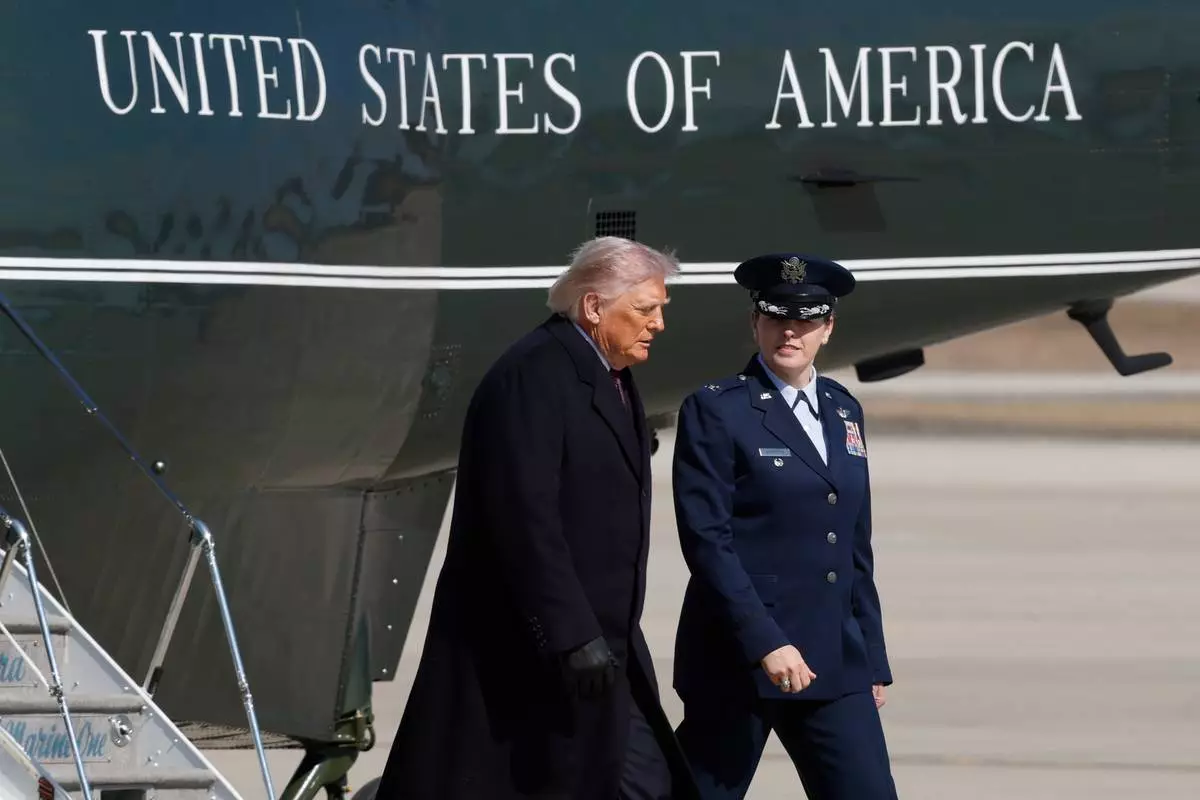
President Donald Trump, left, is greeted by Air Force 89th Air Wing Deputy Commander Melissa Dombrock, right, after exiting Marine One before boarding Air Force One, Friday, Feb. 27, 2025, at Joint Base Andrews, Md. (AP Photo/Luis M. Alvarez)
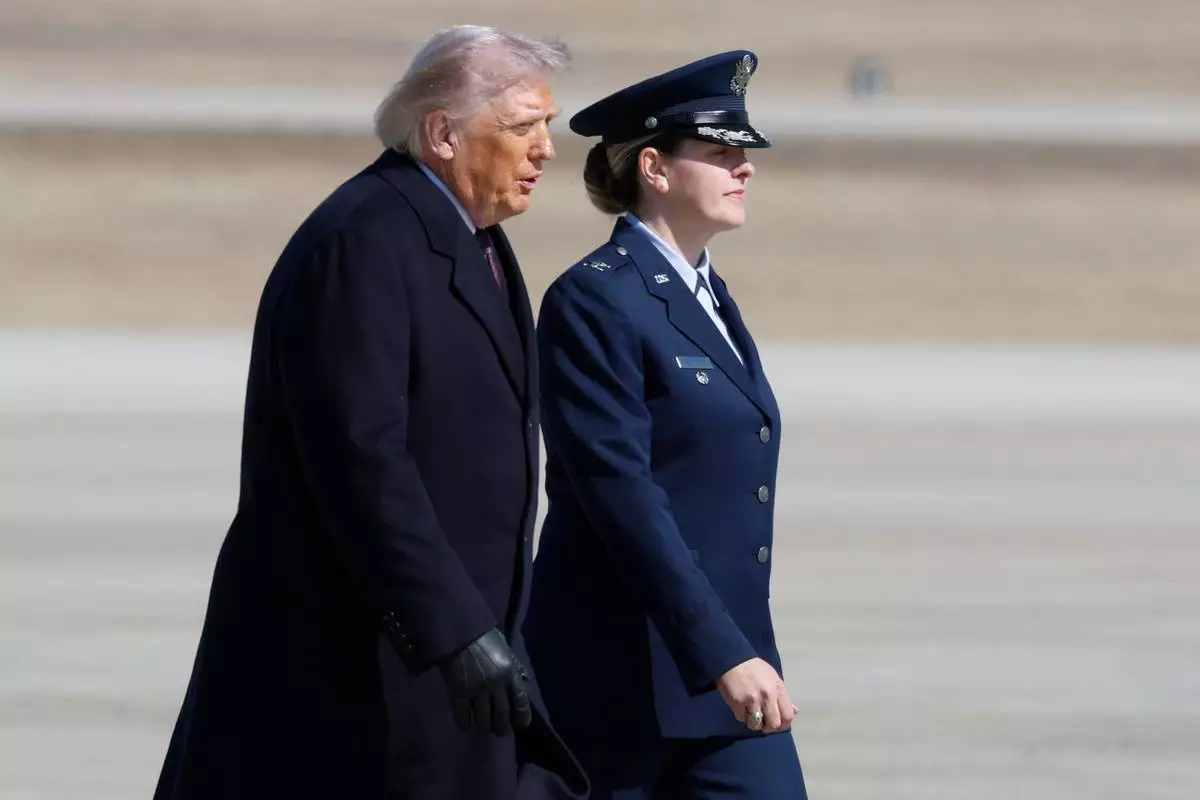
President Donald Trump, left, is escorted by Air Force 89th Air Wing Deputy Commander Melissa Dombrock, right, before boarding Air Force One, Friday, Feb. 27, 2025, at Joint Base Andrews, Md. (AP Photo/Luis M. Alvarez)
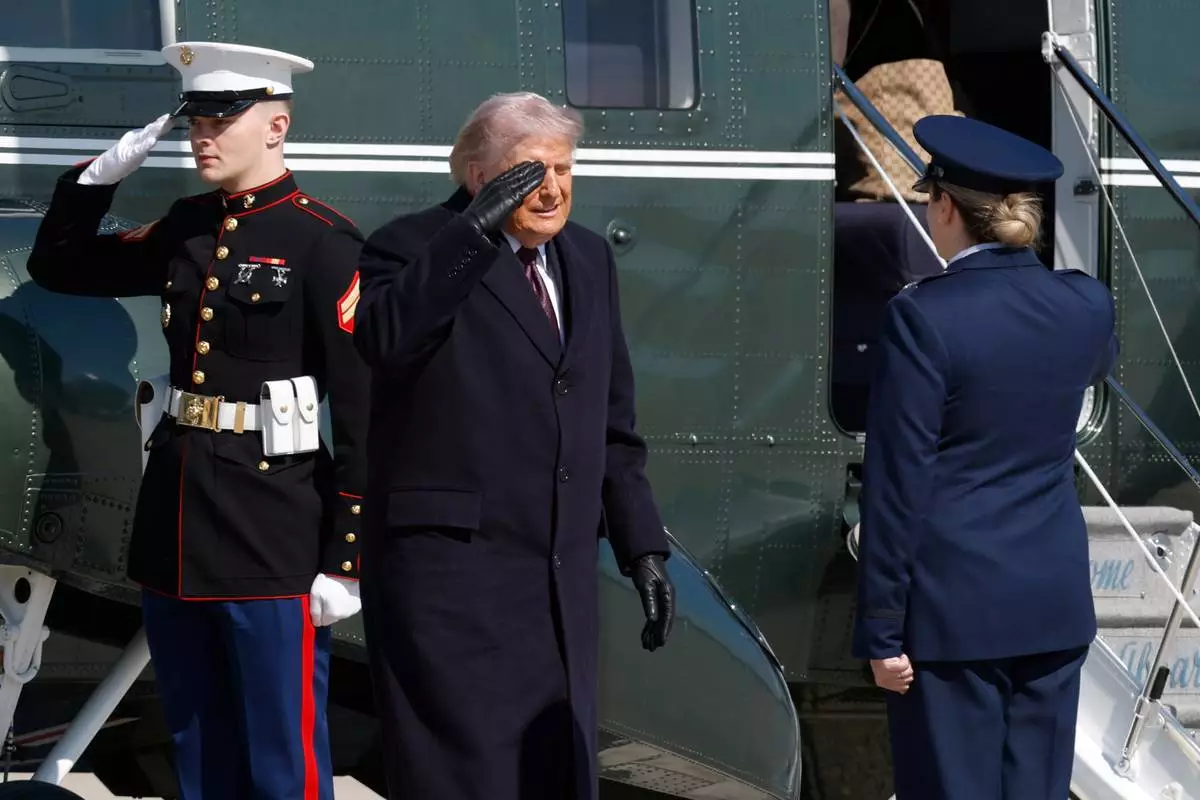
President Donald Trump, center, is greeted by Air Force 89th Air Wing Deputy Commander Melissa Dombrock, right, as he exits Marine One before boarding Air Force One, Friday, Feb. 27, 2025, at Joint Base Andrews, Md. (AP Photo/Luis M. Alvarez)
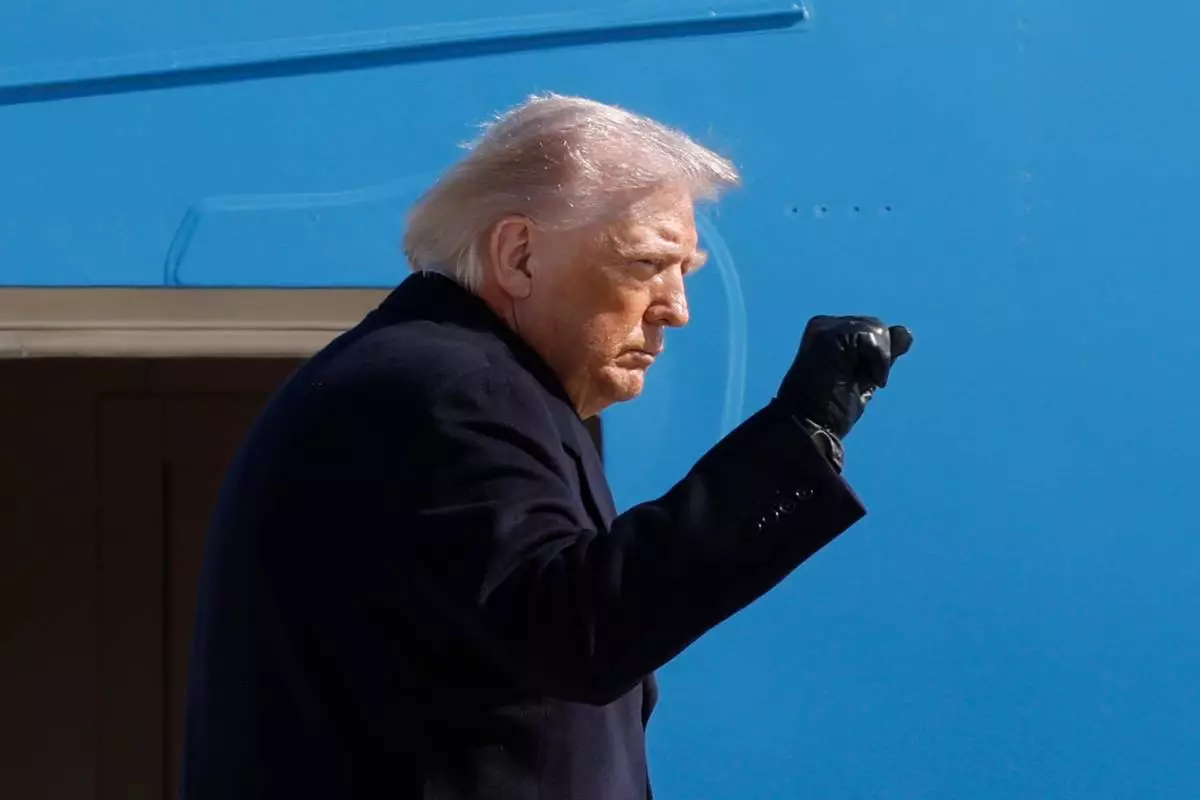
President Donald Trump gestures from the stairs of Air Force One upon his arrival at Joint Base Andrews, Md., Friday, Feb. 27, 2025. (AP Photo/Luis M. Alvarez)
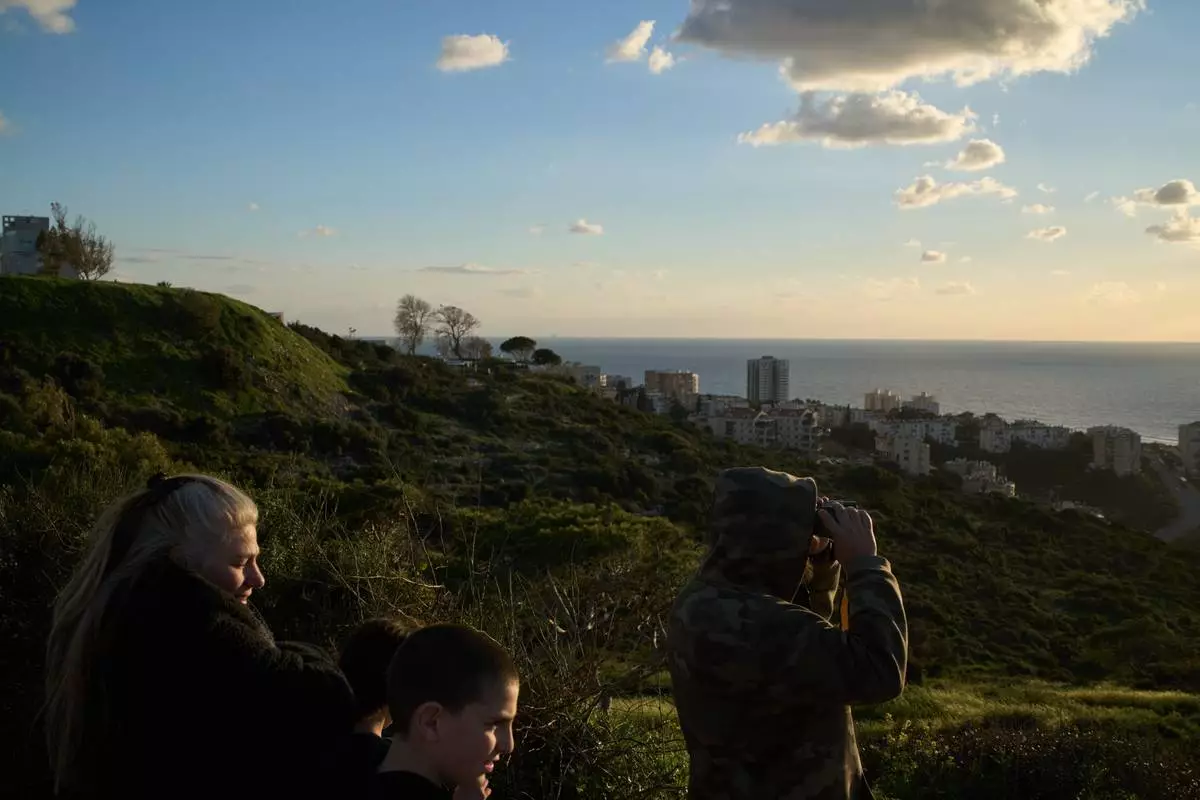
From a lookout, a man uses a binocular looking for the possible arrival of the US Navy's aircraft carrier USS Gerald R. Ford in the Mediterranean Sea near the coast of Haifa, northern Israel, Friday, Feb. 27, 2026. (AP Photo/Leo Correa)

People gather at a lookout to look for the possible arrival of the US Navy's aircraft carrier USS Gerald R. Ford in the Mediterranean Sea near the coast of Haifa, northern Israel, Friday, Feb. 27, 2026. (AP Photo/Leo Correa)
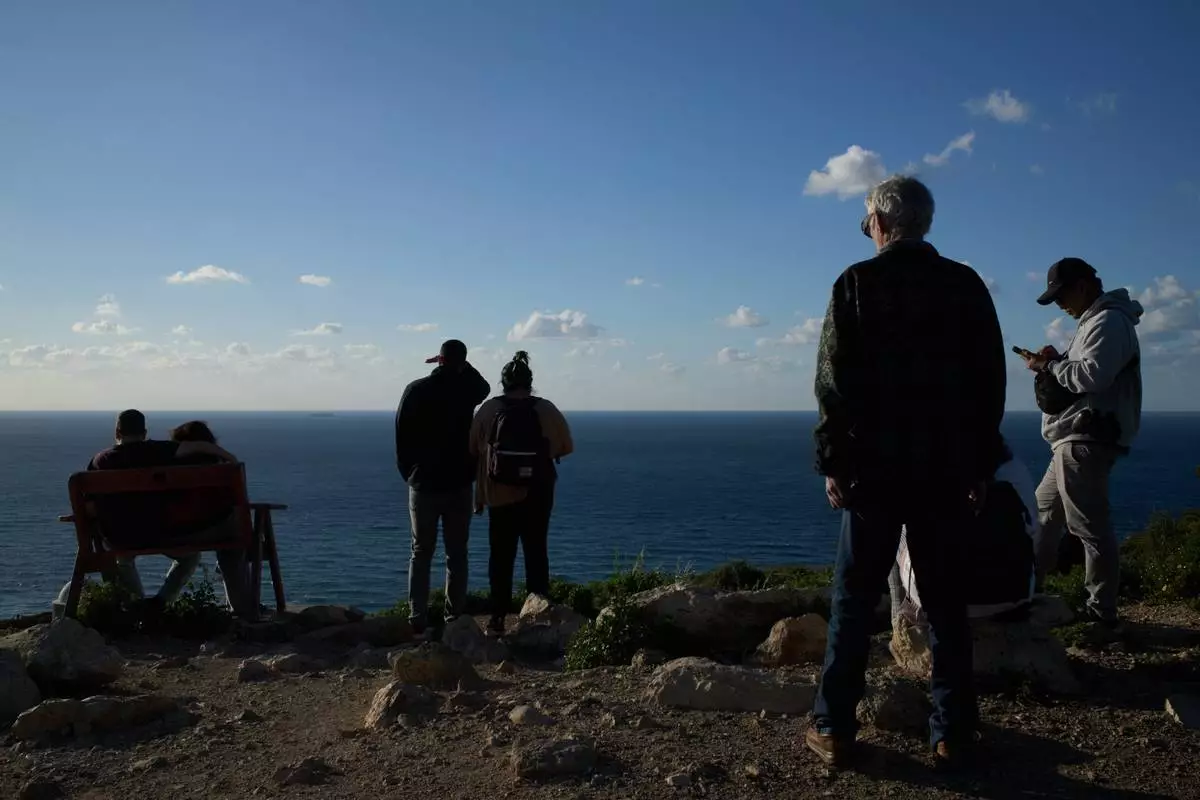
People gather at a lookout to look for the possible arrival of the US Navy's aircraft carrier USS Gerald R. Ford in the Mediterranean Sea near the coast of Haifa, northern Israel, Friday, Feb. 27, 2026. (AP Photo/Leo Correa)
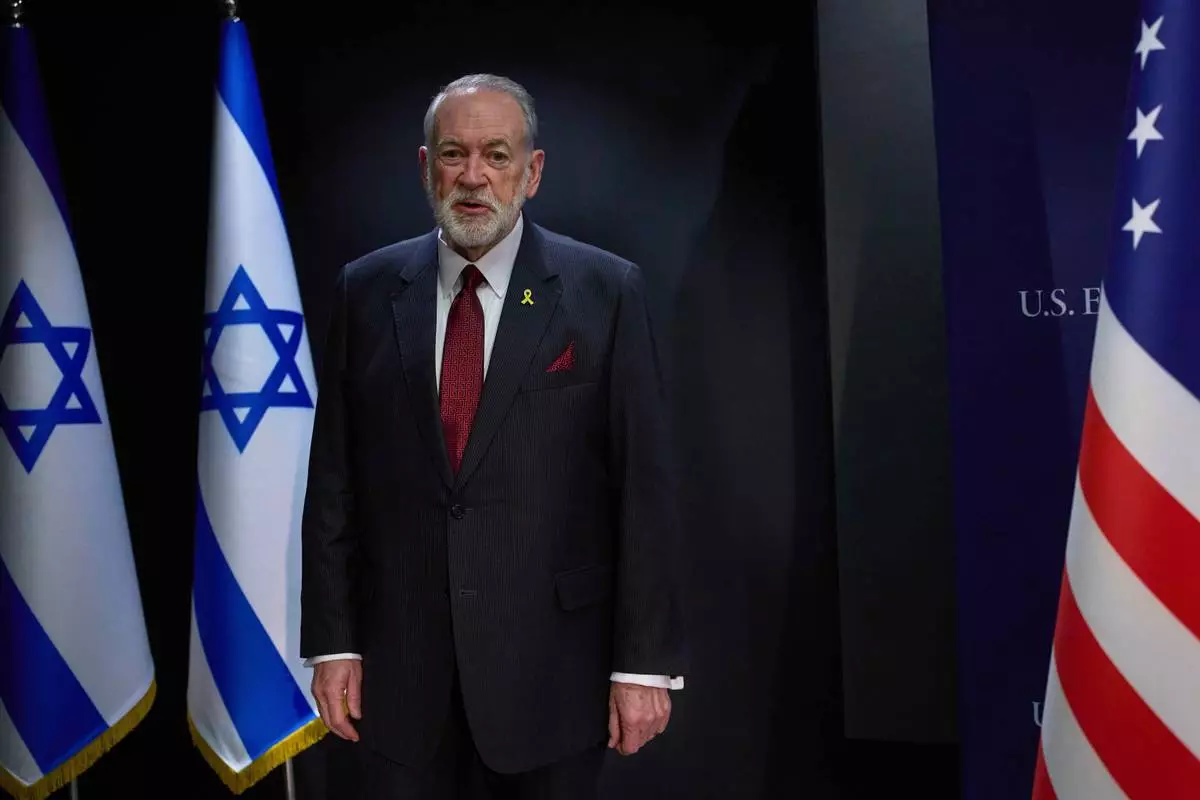
FILE - U.S. Ambassador to Israel Mike Huckabee poses for a photo during an interview in Jerusalem, Wednesday, Aug. 20, 2025. (AP Photo/Ohad Zwigenberg, File)