NEW YORK (AP) — The WNBA players' union sent a counterproposal to the league Friday night for a new collective bargaining agreement that included some concessions on revenue sharing and housing — two key areas on which the sides differ — according to a person familiar with the negotiations.
The person spoke to The Associated Press on condition of anonymity because of the sensitive nature of the negotiations.
The union's proposal came a week after it received one from the league. The WNBA told the union Monday during a virtual negotiating session that it needs to get a deal in place by March 10 to start the season on time, another person familiar with the discussions told the AP. That person spoke on condition of anonymity Monday because of the sensitive nature of the negotiations.
In the new proposal, the union is asking for 26% of the gross revenue — revenue before expenses — with the salary cap for teams around $9.5 million in the first year. That number is unchanged from the union's previous offer. The revenue sharing is down from 27.5% from the union's proposal from 10 days ago.
The WNBA had offered more than 70% of net revenue in its last proposal. That would be their take of the profits after expenses are paid. Those expenses would include upgraded facilities, charter flights, five-star hotels, medical services, security and arenas.
The union also tweaked its housing offer. The union is still asking teams to provide housing for all players in the first few years of the deal, but in the latter part of the CBA teams wouldn't have to provide housing for players making at least 75% of the maximum salary.
The league had offered that its teams would pay for all housing this season. Then franchises would pay for housing for players on minimum salary contracts as well as rookies in their first season, the person said.
They’d also pay for the housing of the two developmental players that teams would be allowed to have.
Front Office Sports was the first to report the counterproposal.
If a labor deal is agreed to by March 10, it probably would be signed by the end of the month. Under that timeline, the expansion draft for new franchises in Portland and Toronto would be held sometime between April 1-6, according to a timetable obtained by the AP.
Free agent qualifying offers, including franchise player tags, would be sent out April 7-8. Teams would then have three days to negotiate with the more than 80% of players who are free agents. The signing period would take place from April 12-18.
Training camps would open the next day and the season would be able to start on May 8.
The league and the players have been unable to reach a new collective bargaining agreement since the union opted out of the previous deal, which expired last year.
AP WNBA: https://apnews.com/hub/wnba

FILE - The WNBA logo is seen near a hoop before an WNBA basketball game at Mohegan Sun Arena, May 14, 2019, in Uncasville, Conn. (AP Photo/Jessica Hill, File)
WASHINGTON (AP) — The Trump administration on Friday ordered all U.S. agencies to stop using Anthropic’s artificial intelligence technology and imposed other major penalties, escalating an unusually public clash between the government and the company over AI safety.
President Donald Trump, Defense Secretary Pete Hegseth and other officials took to social media to chastise Anthropic for failing to allow the military unrestricted use of its AI technology by a Friday deadline, accusing it of endangering national security after CEO Dario Amodei refused to back down over concerns the company's products could be used in ways that would violate its safeguards.
“We don’t need it, we don’t want it, and will not do business with them again!” Trump said on social media.
Hegseth also deemed the company a “supply chain risk,” a designation typically stamped on foreign adversaries that could derail the company’s critical partnerships with other businesses.
In a statement issued Friday evening, Anthropic said it would challenge what it called an unprecedented and legally unsound action “never before publicly applied to an American company.”
Anthropic had said it sought narrow assurances from the Pentagon that its AI chatbot Claude would not be used for mass surveillance of Americans or in fully autonomous weapons. The Pentagon said it was not interested in such uses and would only deploy the technology in legal ways, but it also insisted on access without any limitations.
“No amount of intimidation or punishment from the Department of War will change our position on mass domestic surveillance or fully autonomous weapons,” the company said. “We will challenge any supply chain risk designation in court.”
The government’s effort to assert dominance over the internal decision-making of the company comes amid a wider clash over AI’s role in national security and concerns about how increasingly capable machines could be used in high-stakes situations involving lethal force, sensitive information or government surveillance.
Hours after its competitor was punished, OpenAI CEO Sam Altman announced that his company struck a deal with the Pentagon to supply its AI to classified military networks, potentially filling a gap created by Anthropic’s ouster.
But Altman said in the Friday night social media post that the same red lines that were the sticking point in Anthropic’s dispute with the Pentagon are now enshrined in OpenAI’s new partnership.
“Two of our most important safety principles are prohibitions on domestic mass surveillance and human responsibility for the use of force, including for autonomous weapon systems,” Altman wrote, adding that the Defense Department “agrees with these principles, reflects them in law and policy, and we put them into our agreement.”
Altman also said he hopes the Pentagon will “offer these same terms to all AI companies” as a way to “de-escalate away from legal and governmental actions and toward reasonable agreements.”
Trump said Anthropic made a mistake trying to strong-arm the Pentagon. He wrote on Truth Social that most agencies must immediately stop using Anthropic's AI but gave the Pentagon a six-month period to phase out the technology that is already embedded in military platforms.
“The United States of America will never allow a radical left, woke company to dictate how our great military fights and wins wars!” he wrote in all caps.
After months of private talks exploded into public debate this week, Anthropic said Thursday that the government's new contract language would allow “safeguards to be disregarded at will.” Amodei said his company “cannot in good conscience accede” to the demands.
Anthropic can afford to lose the contract. But the government's actions posed broader risks at the peak of the company’s meteoric rise from a little-known computer science research lab in San Francisco to one of the world’s most valuable startups.
The president’s decision was preceded by hours of top Trump appointees from the Pentagon and the State Department taking to social media to criticize Anthropic, but their complaints posed contradictions.
Top Pentagon spokesman Sean Parnell said Thursday that Anthropic’s unwillingness to go along with the military’s demands was “jeopardizing critical military operations and potentially putting our warfighters at risk.” Hegseth said Friday that the Pentagon “must have full, unrestricted access to Anthropic’s models for every LAWFUL purpose in defense of the Republic.”
Trump’s social media post also mandated the company “better get their act together, and be helpful” during a six-month phase-out period or there would be “major civil and criminal consequences to follow.”
However, Hegseth’s choice to designate Anthropic a supply chain risk uses an administrative tool that has been designed for companies owned by U.S. adversaries to prevent them from selling products that are harmful to American interests.
Virginia Sen. Mark Warner, the top Democrat on the Senate Intelligence Committee, noted that this dynamic, “combined with inflammatory rhetoric attacking that company, raises serious concerns about whether national security decisions are being driven by careful analysis or political considerations.”
The dispute stunned AI developers in Silicon Valley, where venture capitalists, prominent AI scientists and a large number of workers from Anthropic’s top rivals — OpenAI and Google — voiced support for Amodei’s stand in open letters and other forums.
The move is likely to benefit Elon Musk’s competing chatbot, Grok, which the Pentagon plans to give access to classified military networks, and could serve as a warning to Google. that has a still-evolving contract to supply their AI tools to the military.
Musk sided with Trump’s administration, saying on his social media platform X that “Anthropic hates Western Civilization.”
Retired Air Force Gen. Jack Shanahan, a former leader of the Pentagon’s AI initiatives, wrote on social media this week that “painting a bullseye on Anthropic garners spicy headlines, but everyone loses in the end.”
Shanahan said Claude is already being widely used across the government, including in classified settings, and Anthropic’s red lines were “reasonable.” He said the AI large language models that power chatbots like Claude, Grok and ChatGPT are also “not ready for prime time in national security settings,” particularly not for fully autonomous weapons.
Anthropic is “not trying to play cute here,” he wrote Thursday on LinkedIn. “You won’t find a system with wider & deeper reach across the military.”
O'Brien reported from Providence, Rhode Island.
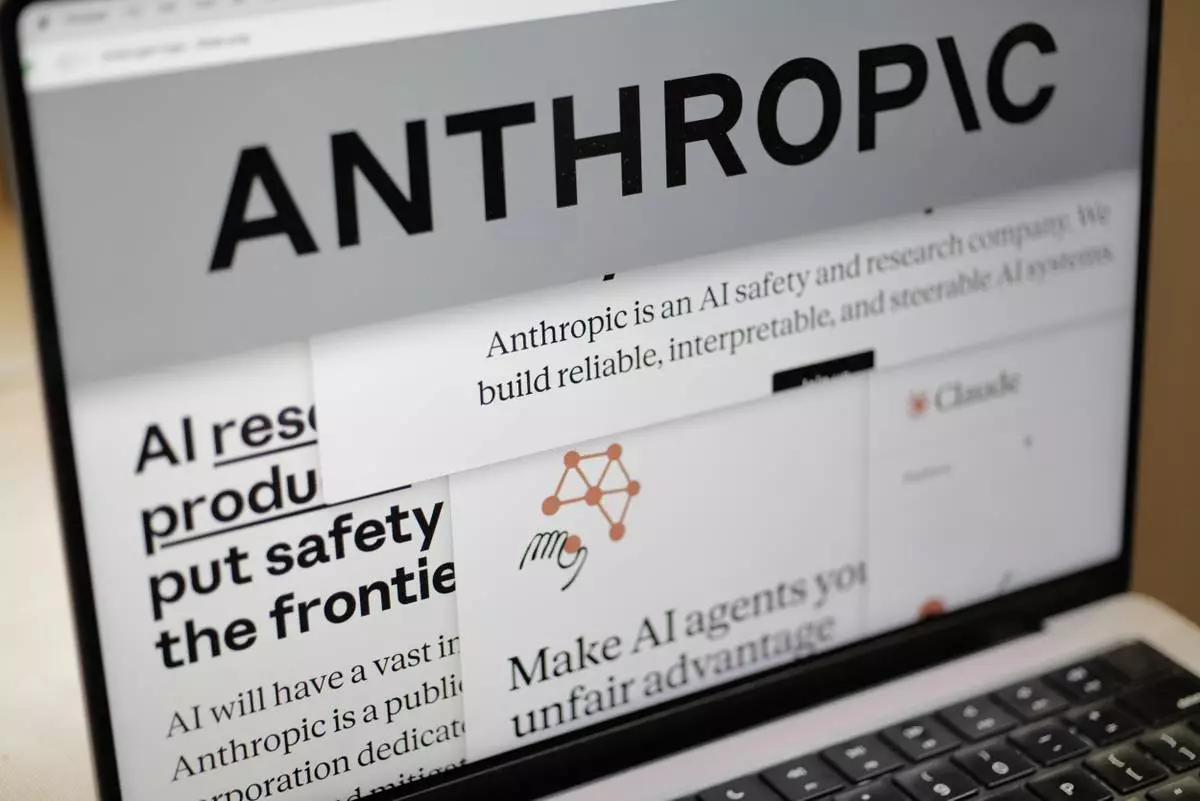
Pages from the Anthropic website and the company's logo are displayed on a computer screen in New York on Thursday, Feb. 26, 2026. (AP Photo/Patrick Sison)
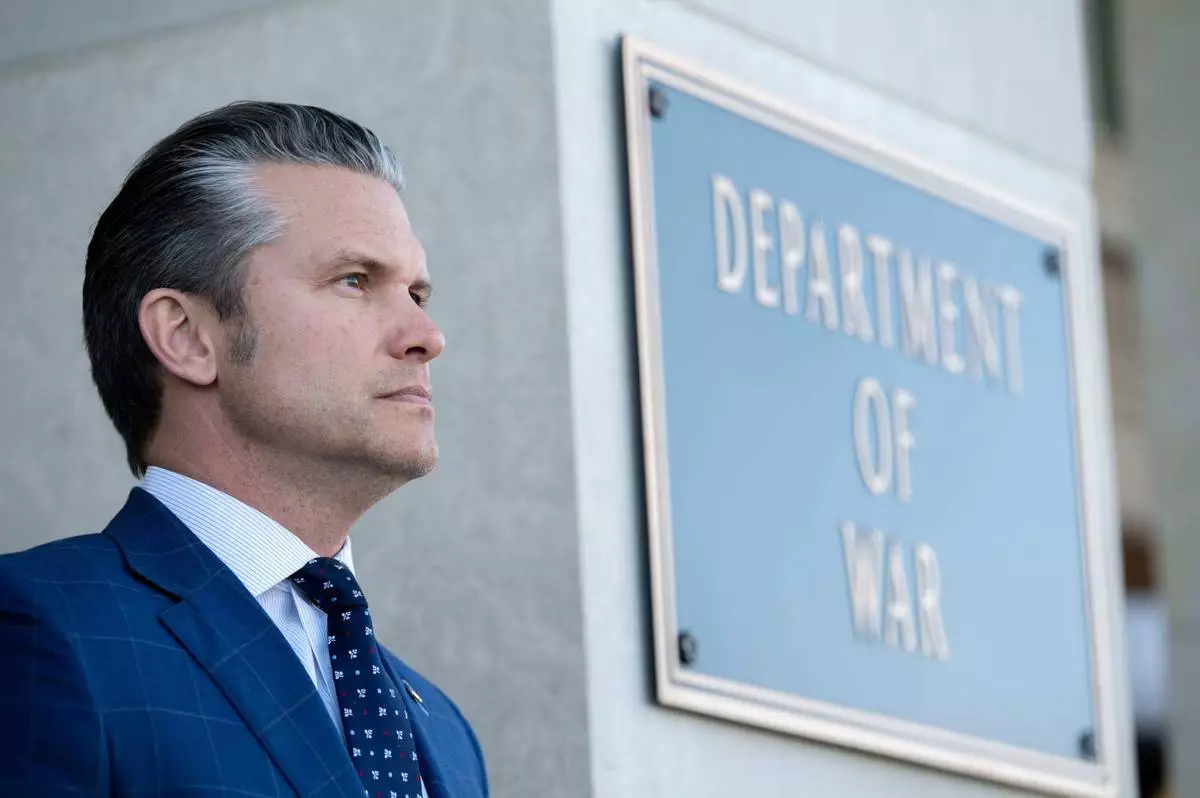
FILE - Defense Secretary Pete Hegseth stands outside the Pentagon during a welcome ceremony for the Japanese defense minister at the Pentagon in Washington, Jan. 15, 2026. (AP Photo/Kevin Wolf, File)
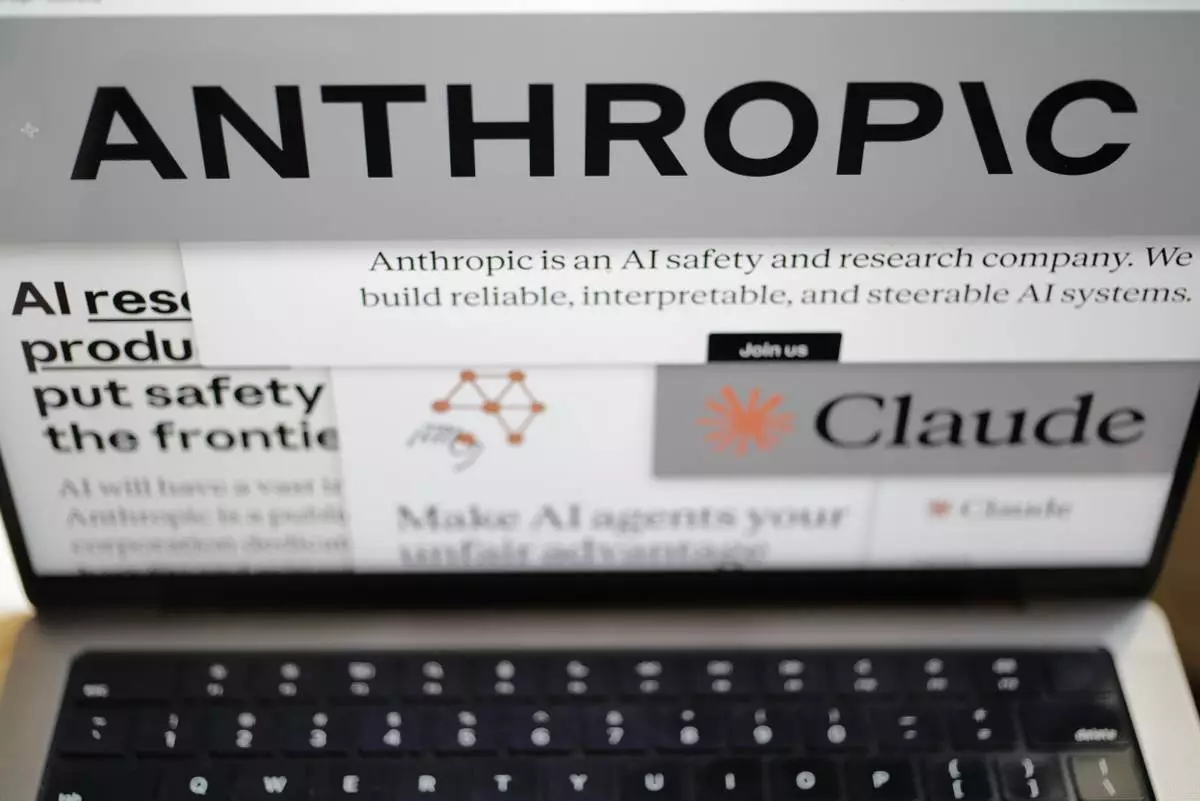
Pages from the Anthropic website and the company's logos are displayed on a computer screen in New York on Thursday, Feb. 26, 2026. (AP Photo/Patrick Sison)