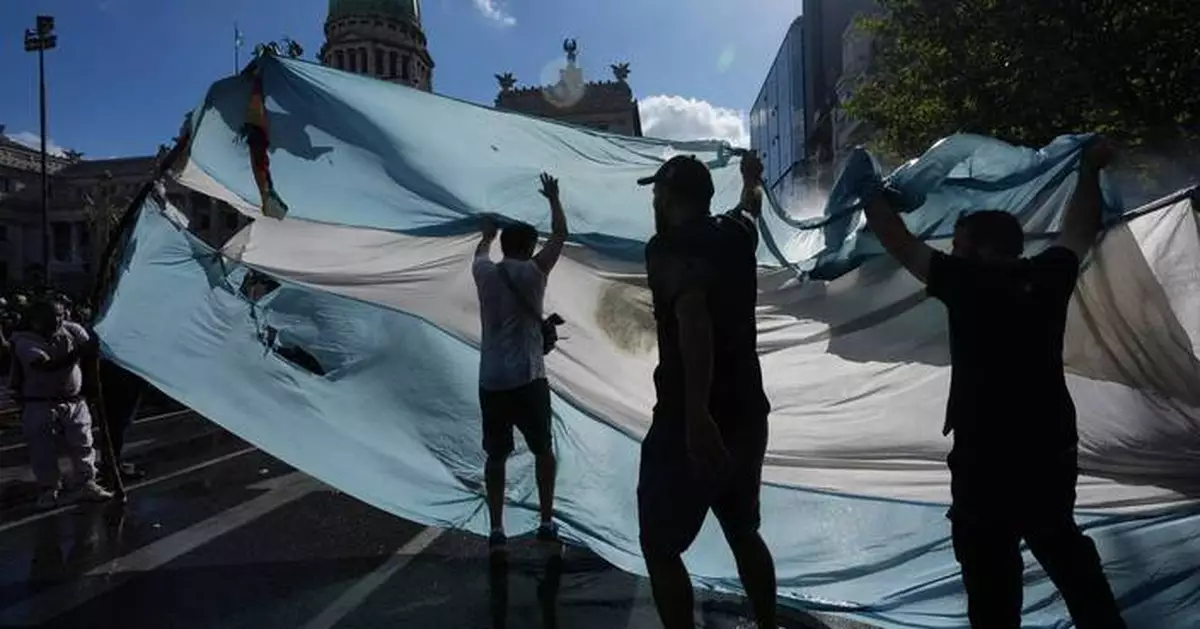
BUENOS AIRES (AP) — A coalition of labor unions, opposition parties and left-wing organizations marched through downtown Buenos Aires on Friday, in protest of President Javier Milei's sweeping labor overhaul to be debated in the Senate in the coming hours.
The bill, which grants employers greater flexibility in matters of hiring, firing, severance and collective bargaining, has drawn fierce opposition from labor unions and their Peronist allies, who argue it would roll back measures that protect workers from abuse and Argentina's notoriously frequent economic shocks.
Click to Gallery
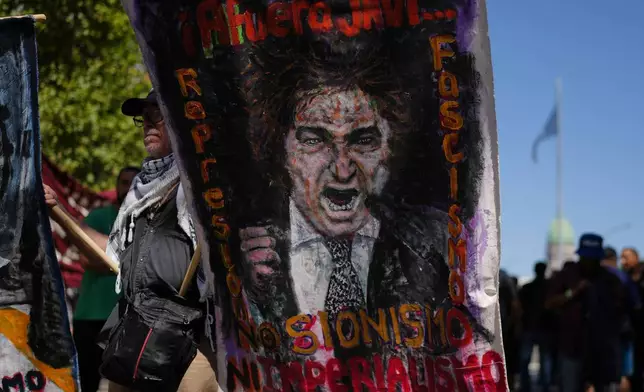
A protester holds a banner depicting Argentine President Javier Milei during a protest against a labor reform bill proposed by Milei's government in Buenos Aires, Argentina, Friday, Feb. 27, 2026. (AP Photo/Natacha Pisarenko)
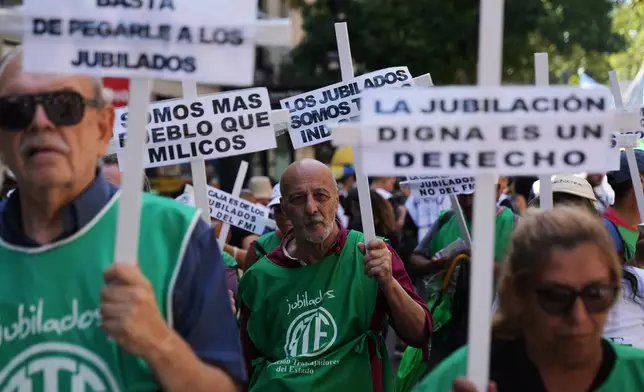
Demonstrators rally outside Congress with signs in defense of retired people during a protest against a labor reform bill proposed by President Javier Milei's government in Buenos Aires, Argentina, Friday, Feb. 27, 2026. (AP Photo/Rodrigo Abd)

Argentine Vice President and Senate President Victoria Villarruel presides over debate on a bill that would lower the age of criminal responsibility from 16 to 14, before discussing a labor reform bill proposed by President Javier Milei's government, at Congress in Buenos Aires, Argentina, Friday, Feb. 27, 2026. (AP Photo/Natacha Pisarenko)
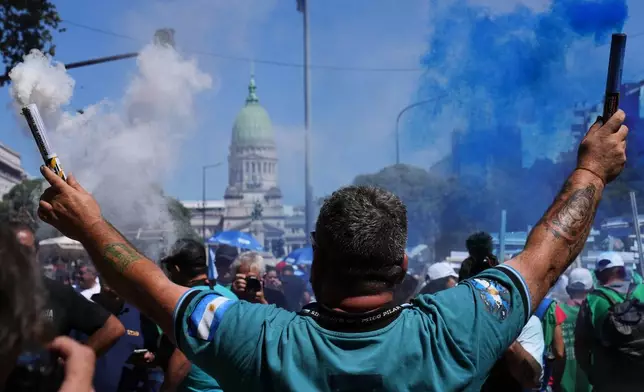
Demonstrators rally outside Congress as they protest against a labor reform bill proposed by President Javier Milei's government in Buenos Aires, Argentina, Friday, Feb. 27, 2026. (AP Photo/Rodrigo Abd)
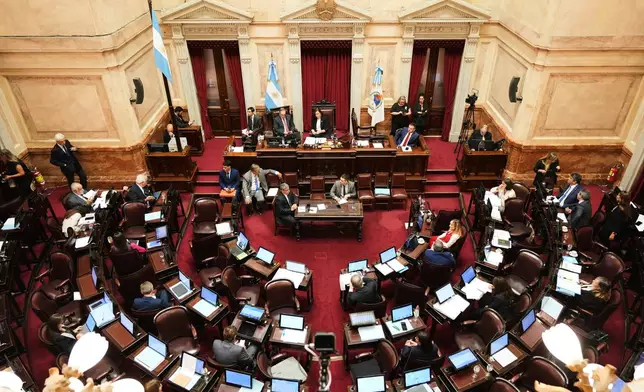
Senators debate a bill that would lower the age of criminal responsibility from 16 to 14, before discussing a labor reform bill proposed by President Javier Milei's government, at Congress in Buenos Aires, Argentina, Friday, Feb. 27, 2026. (AP Photo/Natacha Pisarenko)
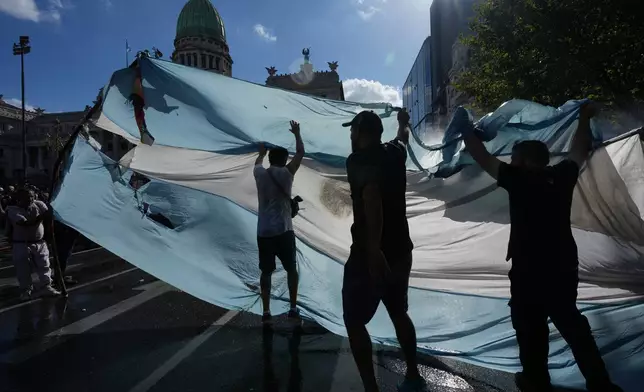
Protesters rally during a march by trade unions and opposition groups against a labor reform bill proposed by President Javier Milei's government in Buenos Aires, Argentina, Thursday, Feb. 19, 2026. (AP Photo/Rodrigo Abd)
Supported by allies of the ruling La Libertad Avanza party, the initiative’s approval would provide Milei with a major legislative victory. He could then showcase these profound economic reforms during his Sunday address at the opening of the ordinary sessions of Congress.
The legislation won initial support from the Senate last week, but must be sent back to senators for a final vote before becoming law. That’s because the government was forced to amend a clause that halves salaries for workers on leave because of injury or illness unrelated to work, after an outcry from opposition lawmakers.
The Senate on Friday may either accept the amendment — marking the final passage of the law — or insist on the original text to reinstate the article. The former outcome is widely anticipated.
The legislative process has been fraught with tension between the governing party and the opposition. The friction boiled over last week during the bill's debate in the lower house of Congress, as the General Confederation of Labor — Argentina’s largest trade union group — launched a 24-hour nationwide strike, while demonstrators from various leftist groups clashed with police outside Congress.
Milei considers the changes to Argentina’s half-century-old labor code crucial to his efforts to lure foreign investment, increase productivity and boost job creation in a country where about two in five workers are employed off the books.
Unions argue that the law will weaken the workers’ protections that have defined Argentina since the rise of Peronism, the country’s dominant populist political movement, in the 1940s.
Roughly 40% of Argentina’s 13 million registered workers belong to labor unions, according to union estimates, and many are closely allied with Peronism.
Follow AP’s coverage of Latin America and the Caribbean at https://apnews.com/hub/latin-america
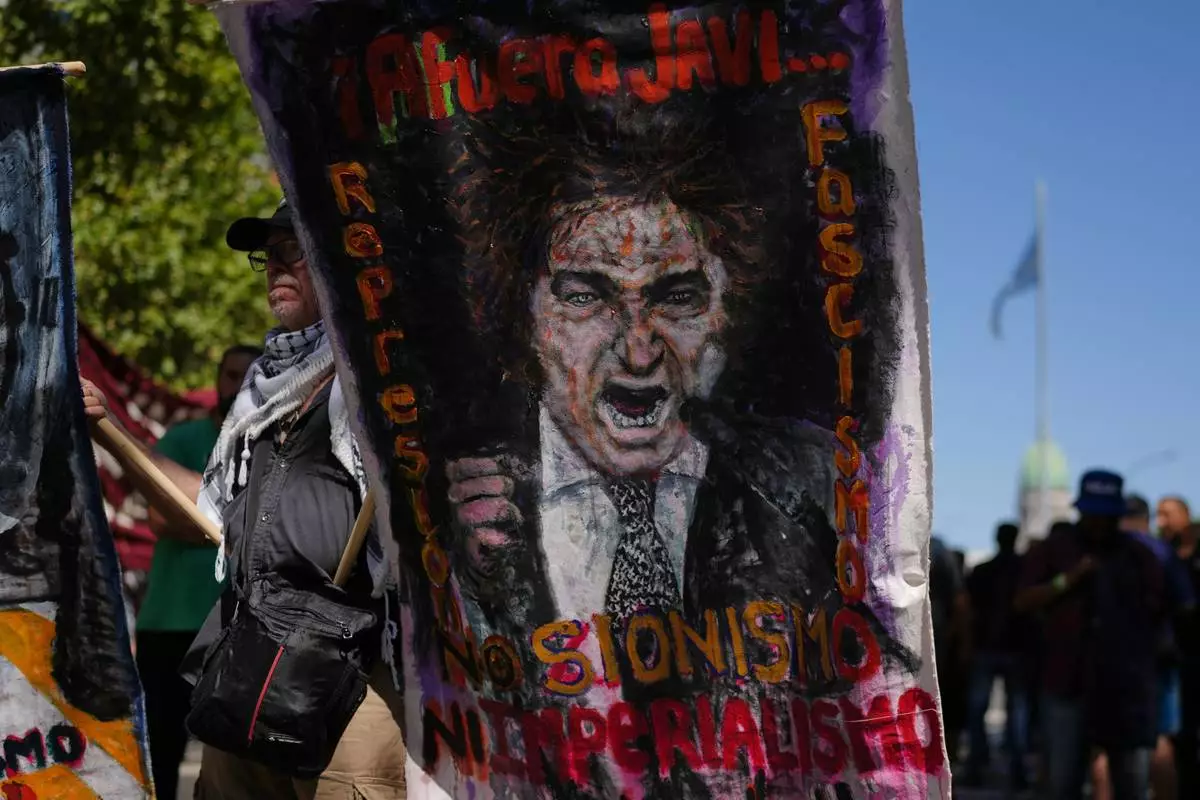
A protester holds a banner depicting Argentine President Javier Milei during a protest against a labor reform bill proposed by Milei's government in Buenos Aires, Argentina, Friday, Feb. 27, 2026. (AP Photo/Natacha Pisarenko)
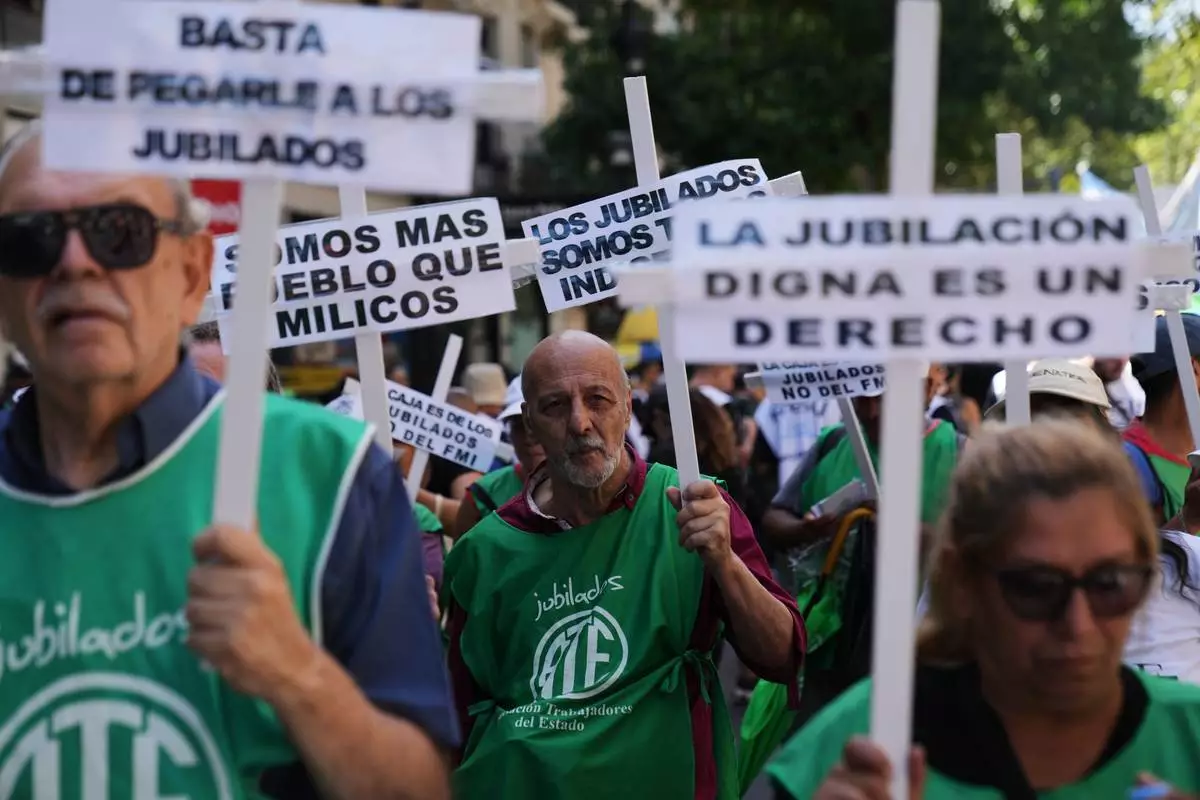
Demonstrators rally outside Congress with signs in defense of retired people during a protest against a labor reform bill proposed by President Javier Milei's government in Buenos Aires, Argentina, Friday, Feb. 27, 2026. (AP Photo/Rodrigo Abd)
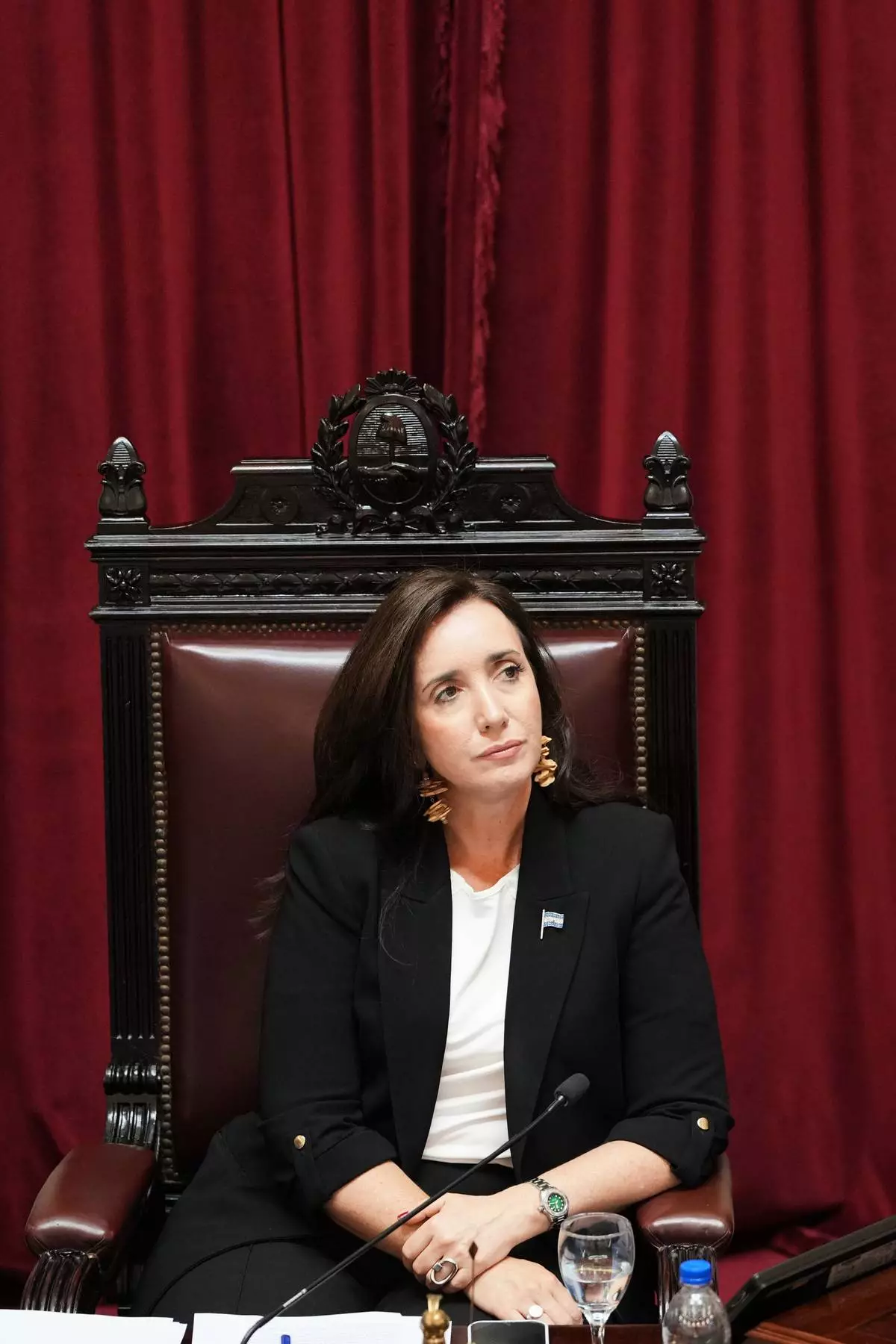
Argentine Vice President and Senate President Victoria Villarruel presides over debate on a bill that would lower the age of criminal responsibility from 16 to 14, before discussing a labor reform bill proposed by President Javier Milei's government, at Congress in Buenos Aires, Argentina, Friday, Feb. 27, 2026. (AP Photo/Natacha Pisarenko)
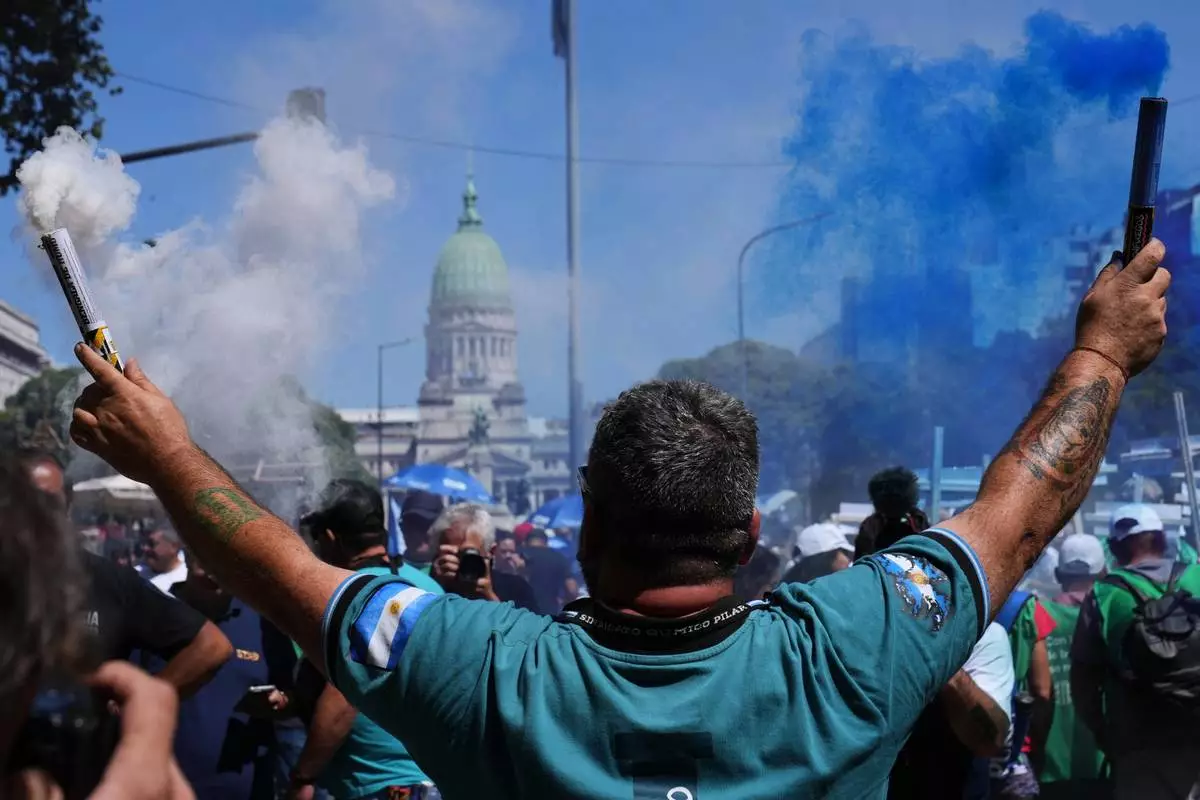
Demonstrators rally outside Congress as they protest against a labor reform bill proposed by President Javier Milei's government in Buenos Aires, Argentina, Friday, Feb. 27, 2026. (AP Photo/Rodrigo Abd)
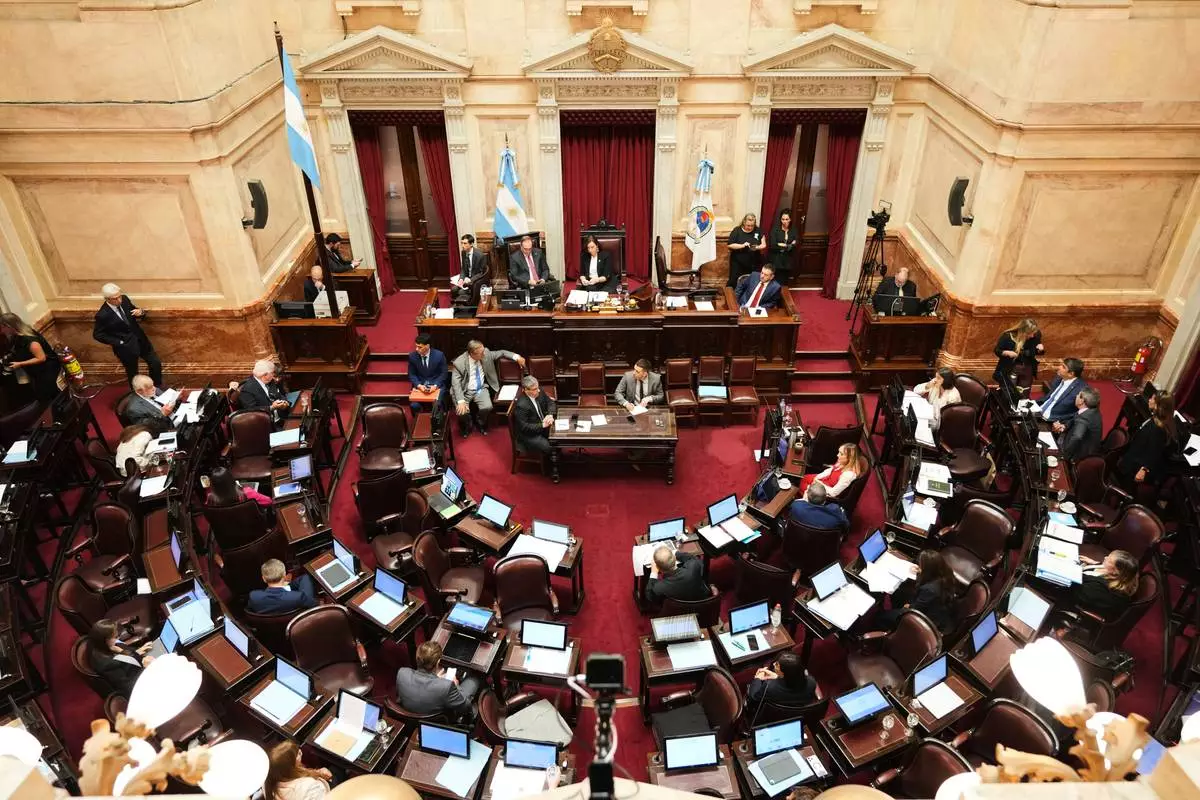
Senators debate a bill that would lower the age of criminal responsibility from 16 to 14, before discussing a labor reform bill proposed by President Javier Milei's government, at Congress in Buenos Aires, Argentina, Friday, Feb. 27, 2026. (AP Photo/Natacha Pisarenko)
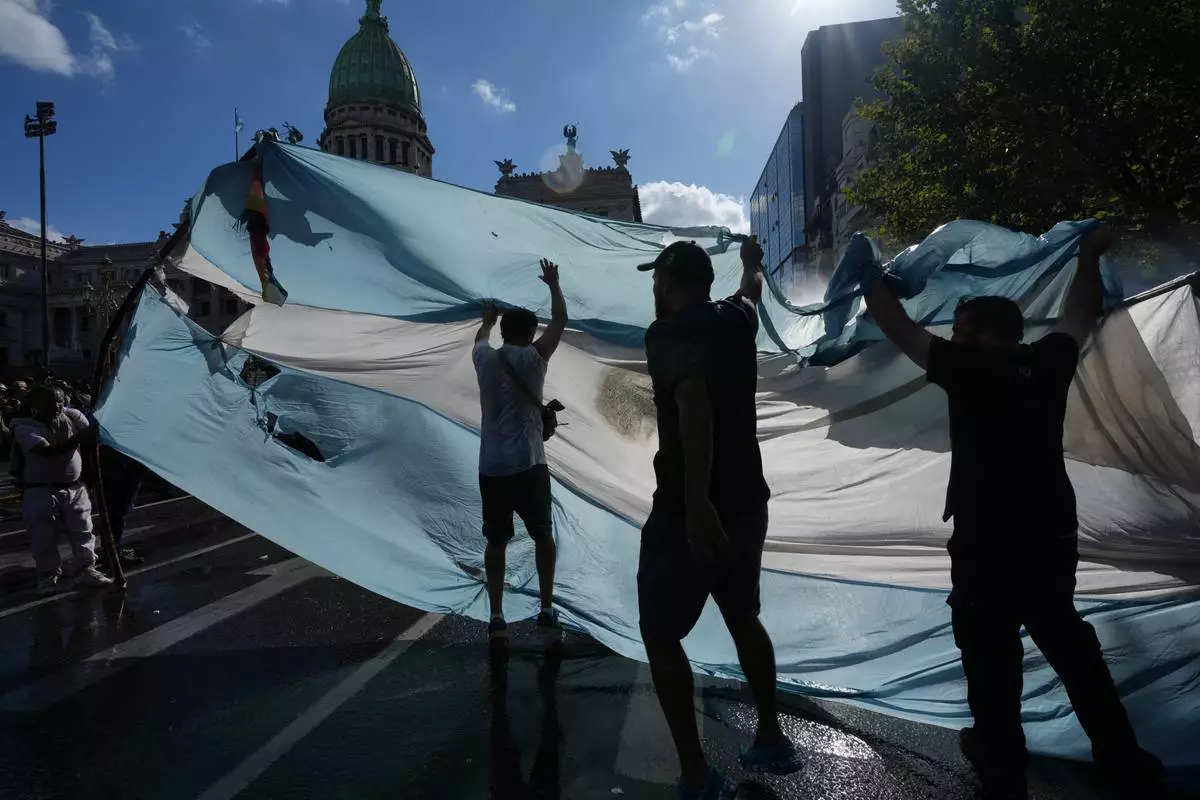
Protesters rally during a march by trade unions and opposition groups against a labor reform bill proposed by President Javier Milei's government in Buenos Aires, Argentina, Thursday, Feb. 19, 2026. (AP Photo/Rodrigo Abd)