ACCRA, Ghana (AP) — At least 55 Ghanaians have died fighting for Russia in Ukraine, Ghana’s foreign minister said Friday, one of the highest death tolls from among several African countries whose citizens are fighting in the war.
Foreign Affairs Minister Samuel Okudzeto Ablakwa said 272 Ghanaians have been lured into the battle since 2022, with two of them captured as prisoners of war, citing information from Ukrainian officials.
“Ukrainian authorities revealed that from their credible intelligence gathering (that) they have documented 1,780 Africans from 36 countries who have been lured by criminal trafficking networks to join the war against Ukraine,” said Ablakwa, who is on a trip to Ukraine.
Ghana adds to a growing list of African nations who have expressed concern about their citizens fighting in the war, many recruited through dubious strategies such as lucrative jobs or skills training.
An intelligence report last week said that 1,000 Kenyans were recruited to fight for Russia after being misled with false promises of jobs. Dozens have either been hospitalized or are missing, the Kenyan government has said.
Two Nigerians were killed at the end of last year fighting for Russia, Ukraine’s intelligence agency said this month.
A group of 11 South African nationals who were allegedly lured into fighting for Russia arrived at Durban airport on Wednesday.
In South Africa, Duduzile Zuma-Sambudla, a daughter of former South African President Jacob Zuma, is being investigated by police for alleged involvement in luring more than a dozen South African men to Russia.
“As a responsible government, we cannot turn a blind eye to these heartbreaking statistics,” Ablakwa said. “This is not our war and we cannot allow our youth to become human shields for others.”
The minister said Ghana’s government would intensify public education and work to “track and dismantle all dark web illegal recruitment schemes” operating in the country. He added that the two captured Ghanaians had warned young people against being tempted by financial incentives to join the conflict.
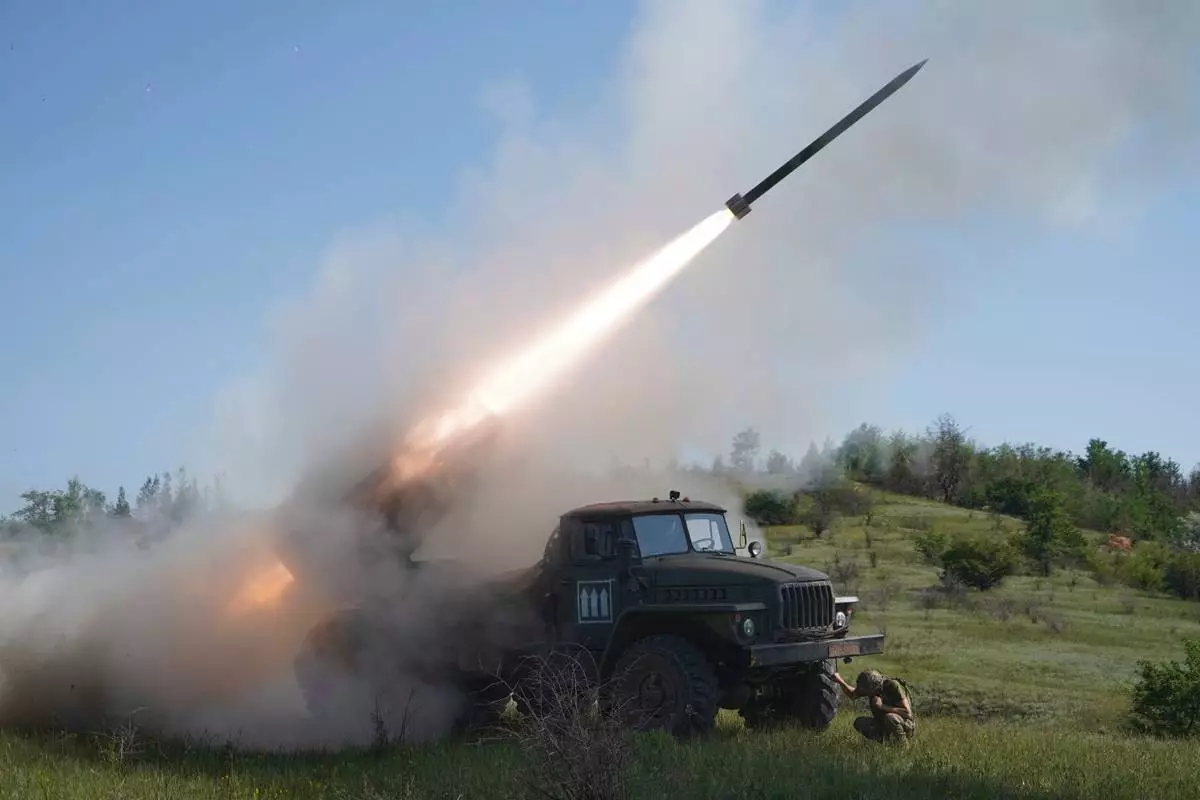
FILE - Ukrainian servicemen fire a Grad multiple rocket launcher towards Russian positions at the frontline in Donetsk region, Ukraine, on June 3, 2025. (AP Photo/Andrii Marienko, File)

NASA said Friday it’s adding an extra moon mission by Artemis astronauts before attempting a high-risk lunar landing with a crew.
The shake-up in the flight lineup and push for a faster pace came just two days after NASA’s new moon rocket returned to its hangar for more repairs and a safety panel warned the space agency to scale back its overly ambitious goals for humanity’s first lunar landing in more than half a century.
Artemis II — a lunar fly-around by four astronauts — is off until at least April because of rocket problems.
The follow-up mission — Artemis III — had been targeting a landing near the moon’s south pole by another pair of astronauts a year or two later. But with long gaps between flights and concern growing over the readiness of a lunar lander and moonwalking suits, NASA’s new administrator Jared Isaacman announced that mission would instead focus on launching a lunar lander into orbit around Earth for docking practice by Orion capsule astronauts in 2027.
The new plan calls for a moon landing — potentially even two moon landings — by astronauts in 2028.
“This is going to be our pathway back to the moon," Isaacman said.
The first Artemis test flight was plagued by hydrogen fuel leaks and helium flow problems before liftoff without a crew in 2022, the same things that struck the Space Launch System rocket on the pad at NASA's Kennedy Space Center earlier this month.
Isaacman stressed that “it should be incredibly obvious” that three years between flights is unacceptable and that he’d like to get it down to one year or even less.
During NASA’s storied Apollo program, he said, astronauts’ first flight to the moon was followed by two more missions before Neil Armstrong and Buzz Aldrin landed on the moon. What's more, he said, the Apollo moonshots followed one another in quick succession, just as the earlier Projects Mercury and Gemini had rapid flight rates, sometimes coming just a few months apart.
“No one here at NASA forgot their history books,” Issacman said. “We shouldn’t be comfortable with the current cadence. We should be getting back to basics and doing what we know works.”
To pick up the pace and reduce risk, NASA will standardize Space Launch System moon rockets moving forward, Isaacman said.
The Aerospace Safety Advisory Panel recommended this week that NASA revise its objectives for Artemis III “given the demanding mission goals.” It’s urgent the space agency do that, the panel said, if the United States hopes to safely return astronauts to the moon. Isaacman said the revised Artemis flight plan addresses the panel's concerns and is supported by industry and the Trump administration.
The Associated Press Health and Science Department receives support from the Howard Hughes Medical Institute’s Department of Science Education and the Robert Wood Johnson Foundation. The AP is solely responsible for all content.
NASA's Artemis II SLS (Space Launch System) moon rocket with the Orion spacecraft slowly rolls back towards the Vehicle Assembly Building at the Kennedy Space Center, Wednesday, Feb. 25, 2026, in Cape Canaveral, Fla. (AP Photo/John Raoux)