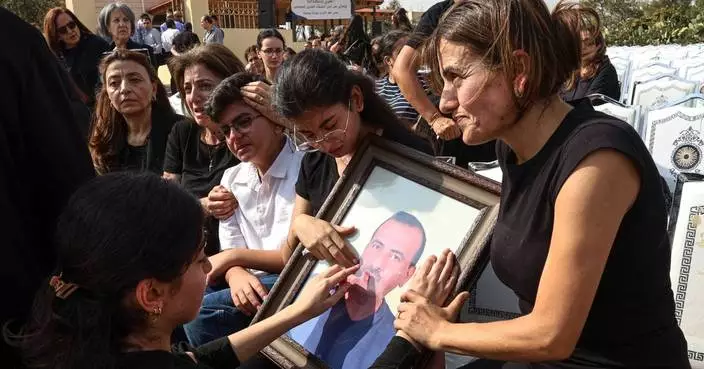
LOS ANGELES (AP) — Singer D4vd has been arrested on suspicion of killing a 14-year-old girl whose decomposed body was found seven months ago in his apparently abandoned Tesla, authorities said Thursday, while his lawyers declared his innocence.
Los Angeles police said in a brief statement that homicide detectives arrested the 21-year-old Houston-born alt-pop singer, whose legal name is David Burke, on suspicion of murder in the investigation of the killing of Celeste Rivas Hernandez.
Defense attorneys Blair Berk, Marilyn Bednarski and Regina Peter responded in an email: “Let us be clear — the actual evidence in this case will show that David Burke did not murder Celeste Rivas Hernandez and he was not the cause of her death.”
Police said investigators would present a case to prosecutors at the Los Angeles County District Attorneys Office on Monday. The office said in its own statement that it is aware of the arrest and its Major Crimes Division will review the case to determine whether there is enough evidence to file charges.
The defense lawyers added, “There has been no indictment returned by any grand jury in this case and no criminal complaint filed. David has only been detained under suspicion. We will vigorously defend David’s innocence.”
It was their first public statement on the case. Authorities did not publicly name Burke as a suspect until his arrest. He was being held in jail without bail.
The singer had been under investigation by an LA County grand jury looking into the death of Rivas Hernandez. The probe was officially secret, but its existence — and the designation of D4vd as its target — was revealed on Feb. 25 when his mother, father and brother filed an objection in a Texas court to subpoenas demanding they testify.
The long-dead body of Rivas Hernandez was found in a Tesla towed from the Hollywood Hills on Sept. 8, a day after she would have turned 15. She was a 13-year-old seventh grader when her family reported her missing in 2024 from her hometown of Lake Elsinore, about 70 miles (112 kilometers) southeast of Los Angeles. Authorities give her age as 14 when she was killed in court documents.
The 2023 Tesla Model Y was registered in the singer's name at the Texas address of his subpoenaed family members, according to court filings from prosecutors. It had been towed from an upscale neighborhood in the Hollywood Hills where it had been sitting, seemingly abandoned.
Police investigators searching the Tesla in a tow yard found a cadaver bag “covered with insects and a strong odor of decay,” court documents said, and “detectives partially unzipped the bag and observed a decomposed head and torso.”
Investigators from the Los Angeles County Medical Examiner’s Office removed the bag and “discovered the arms and legs had been severed from the body,” according to court documents. A second black bag was found under the first, and dismembered body parts were inside it. No cause of death has been publicly revealed.
D4vd, pronounced “David,” gained popularity among Generation Z fans for his blend of indie rock, R&B and lo-fi pop. He went viral on TikTok in 2022 with the hit “Romantic Homicide,” which peaked at No. 4 on Billboard’s Hot Rock & Alternative Songs chart. He then signed with Darkroom and Interscope Records and released his debut EP “Petals to Thorns” and a follow-up, “The Lost Petals,” in 2023.
When the body was discovered, D4vd had been on tour in support of his first full-length album, “Withered.” Later, the last two North American shows, in San Francisco and Los Angeles, along with a scheduled performance at LA’s Grammy Museum, were canceled, as was the European tour that was to have begun in Norway.
This story has been corrected to show that D4vd is 21, not 20 years old.

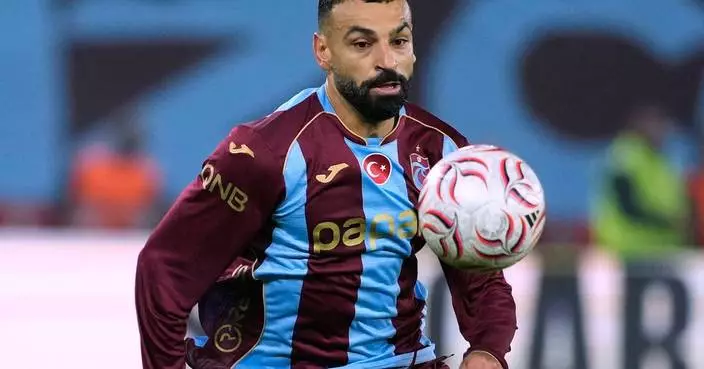
FILE - American singer-songwriter, David Anthony Burke, aka D4vd, performs on the Casino stage during the 58th Montreux Jazz Festival (MJF), in Montreux, Switzerland, July 19, 2024. (Cyril Zingaro/Keystone via AP, File)
Israelis will vote Tuesday in the first national elections since Hamas' Oct. 7, 2023, attack in what is widely seen as a referendum on Prime Minister Benjamin Netanyahu's leadership.
The deadliest day in Israel's history features prominently in the campaign, but not in the way many outsiders might expect.
There's been almost no debate over Israel's wartime conduct in Gaza — which led to an international arrest warrant against Netanyahu — its occupation of much of southern Lebanon and parts of Syria, or its two wars launched against Iran, all of which have broad support.
Instead, candidates have focused on Netanyahu's leadership and moral character; his role in the security breakdown on Oct. 7; his efforts to exempt ultra-Orthodox Jews from military service and a 2023 judicial overhaul seen by critics as an assault on Israel's democratic institutions.
Both of the main electoral blocs are dominated by parties that support Jewish settlement in the occupied West Bank and oppose the establishment of a Palestinian state, and no major candidate is advocating a return to the long-moribund peace process.
Here's a closer look.
People heading to the polls will pass the faces of fallen soldiers peering from stickers on train station walls and faded yellow ribbons honoring the hostages, the last of whom were returned in a ceasefire deal last year.
Around 68% of Jewish Israelis say their attitudes toward Oct. 7 are a central factor in deciding which party to support, according to the Israel Democracy Institute, a Jerusalem think tank. Among the Arab minority, just 32% said it factored prominently, with most citing crime as the main issue.
Netanyahu, Israel’s longest-serving prime minister, has sought to shift blame for the failures surrounding Oct. 7 to security officials while touting Israel’s military achievements against Hamas in Gaza, Hezbollah in Lebanon and their patron, Iran.
Critics accuse him of evading responsibility by blocking an official inquiry into the attack, of not reaching a deal to bring back the hostages sooner, and of failing to win a decisive victory against any of Israel's foes.
Netanyahu's governing coalitions have long relied on ultra-Orthodox parties that demand exemptions from military conscription for young men engaged in religious studies. That policy has infuriated Israel's secular majority as reservists have been repeatedly called up in the various wars.
Military service is mandatory for most Jewish men and women, and about a quarter of Jewish voters polled by the Israel Democracy Institute ranked the issue as a key factor in deciding which party to support.
The country is struggling with a shortage of soldiers. Each year, around 13,000 ultra-Orthodox men reach the conscription age of 18, but fewer than 10% enlist.
“We have this notion that military service is a kind of permit to citizenship,” said Tamar Hermann, an expert on Israeli public opinion with the Israel Democracy Institute. It makes you a “legitimate part” of Israeli Jewish society, she added.
Netanyahu’s chief rival, Gadi Eisenkot, has vowed to end the de facto exemptions. The former military chief and political centrist lost his son and two nephews to combat in Gaza.
Yohanan Plesner, president of the Israel Democracy Institute, said the military exemptions were “probably the number one issue” for the anti-Netanyahu coalition.
Netanyahu’s plan to overhaul the judiciary and weaken the Supreme Court sparked mass protests in Israel in 2023, leaving the country fiercely polarized when Hamas attacked.
Netanyahu portrayed it as an attempt to curb the authority of unelected judges, while critics viewed it as a power grab by a prime minister who has been indicted on corruption allegations.
After the Oct. 7 attack, the public focus shifted to Gaza, and many who had mobilized against the judicial changes redirected their efforts to demand a deal to release the hostages.
Only 18% of Jewish Israelis said the judicial overhaul was a main factor in deciding which party to support, according to the Israel Democracy Institute. “There’s some public fatigue,” Hermann said.
On the left, judicial changes raised greater concern, with 22.5% of voters saying the issue will influence their decision at the ballot box. Among centrist and right-wing voters, it did not rank among the top four issues.
Last year, Israel’s parliament passed a law giving the government a larger role in appointing judges. But it won’t take effect until the next legislature is sworn in, and the anti-Netanyahu bloc has vowed to repeal it.
Israelis vote for parties, not specific candidates, and no single party is expected to win anywhere close to a 61-seat majority in parliament, known as the Knesset. Whoever can cobble together a majority coalition will become the next prime minister.
If no one is able to, Netanyahu's government will continue to serve as caretaker until another round of elections in the coming months.
More than a quarter of Jewish Israelis view the head of the party as a key factor in deciding how to vote, according to the Israel Democracy Institute.
Netanyahu's supporters see him as a veteran statesman who has gone toe-to-toe with U.S. presidents and other world leaders, resisting pressure to end the war in Gaza or make other concessions that could harm Israel's security. His opponents think he's a crook.
Eisenkot's supporters point to his long military service and his personal losses in the ongoing wars. The son of Moroccan Jewish immigrants would also be the first Israeli prime minister of non-European descent, though he has not made that a central part of his campaign.
Israel isn't immune from the affordability concerns that have roiled elections worldwide in recent years.
The cost of living has soared, and is higher than in many wealthy European countries like Austria, Denmark and Sweden, according to research by Sarit Menahem-Carmi of the Aaron Institute for Economic Policy at Reichman University.
Netanyahu says his policies have unleashed growth and contributed to the rise of a world-class tech sector, while opponents say many Israelis have been left behind.
Among Jewish Israelis, 38% said the economy and cost of living are the most important or second most important issue in the election, a stance that rose to 46% among Arabs, the Israel Democracy Institute found.
But you wouldn’t know it from the campaign.
None of the main candidates has made the economy a central issue or drawn attention to the costs of the various wars. Joseph Zeira, an economics professor at Hebrew University in Jerusalem, said the high levels of military spending cannot be ignored.
“The cost of the conflict is tremendous,” Zeira said.
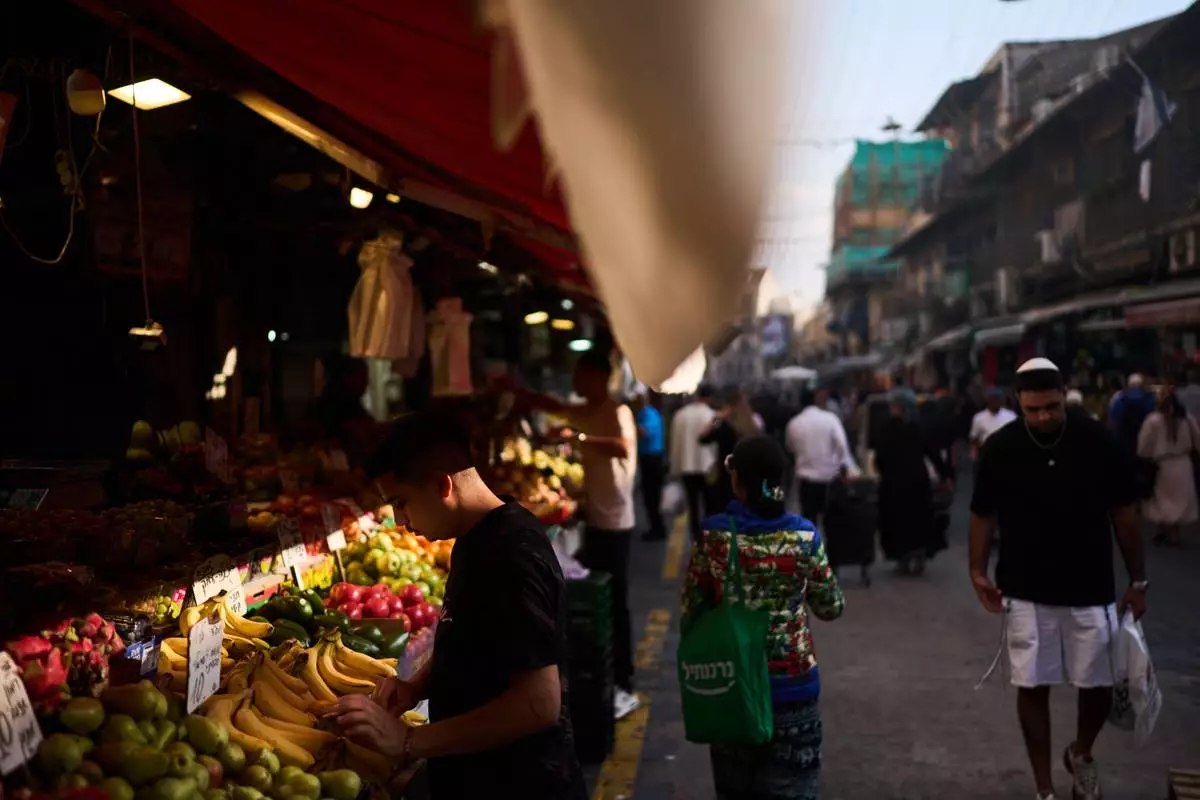
A worker arranges a display of fruits at the Mahane Yehuda market, Wednesday, Oct. 21, 2026, in Jerusalem. (AP Photo/David Goldman)
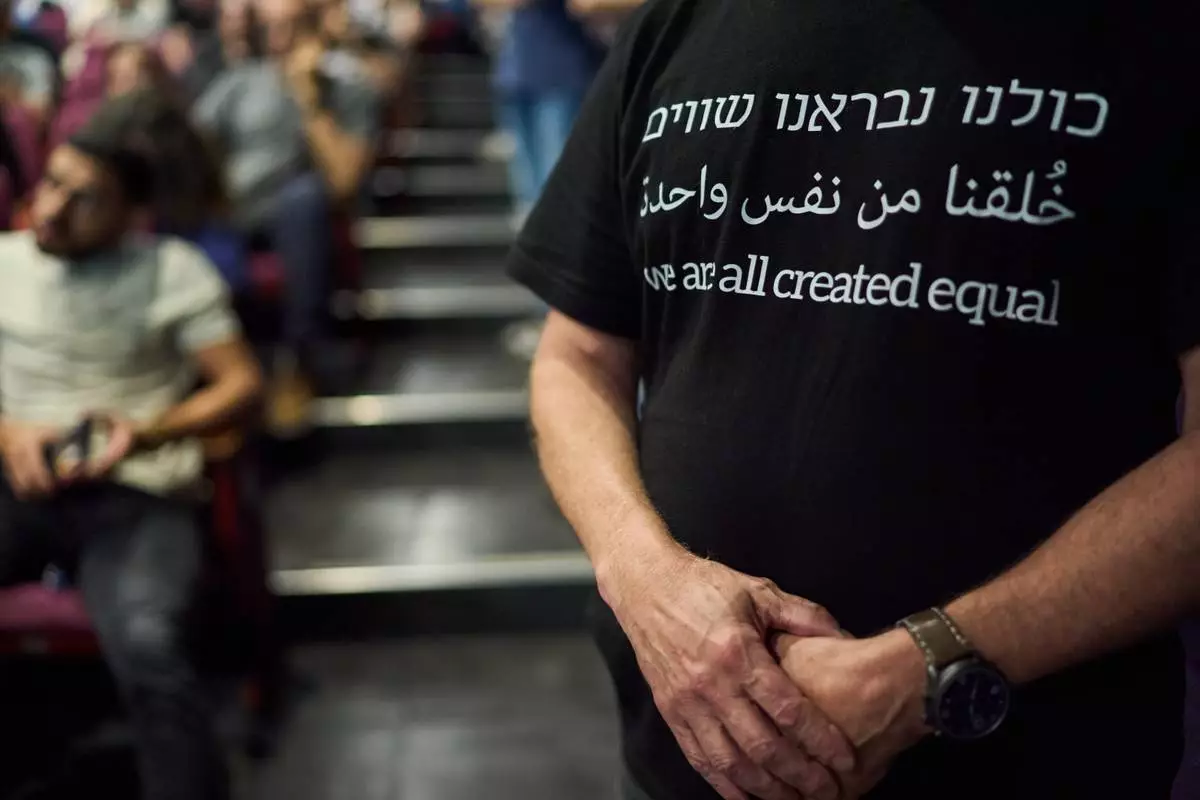
Oded Eisenberg wears a shirt that reads, in Hebrew, Arabic and English, "We are all created equal," while attending a Ra'am party campaign event in Tel Aviv, Israel, ahead of the country's general election, Friday, Oct. 23, 2026. (AP Photo/David Goldman)
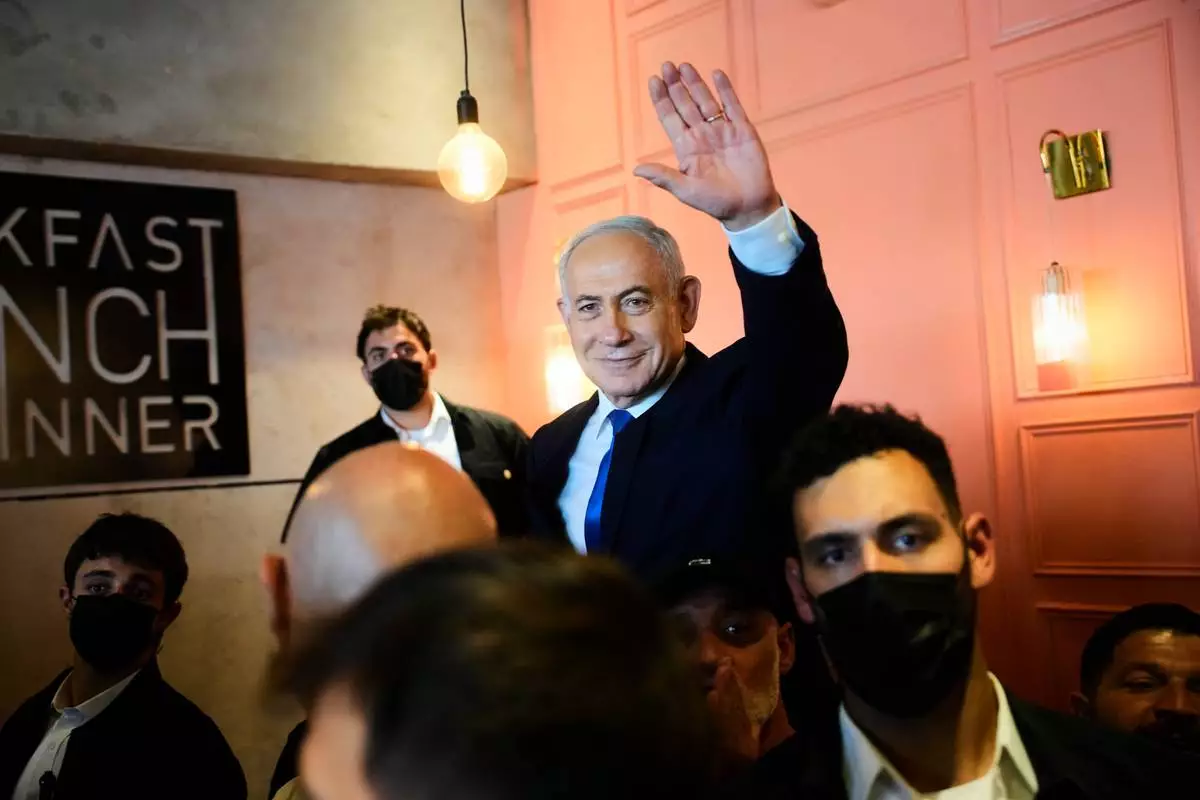
Israeli Prime Minister Benjamin Netanyahu, leader of the Likud party, waves to supporters during an election campaign in Dimona, southern Israel, Wednesday, Oct. 21, 2026. (AP Photo/Ohad Zwigenberg)
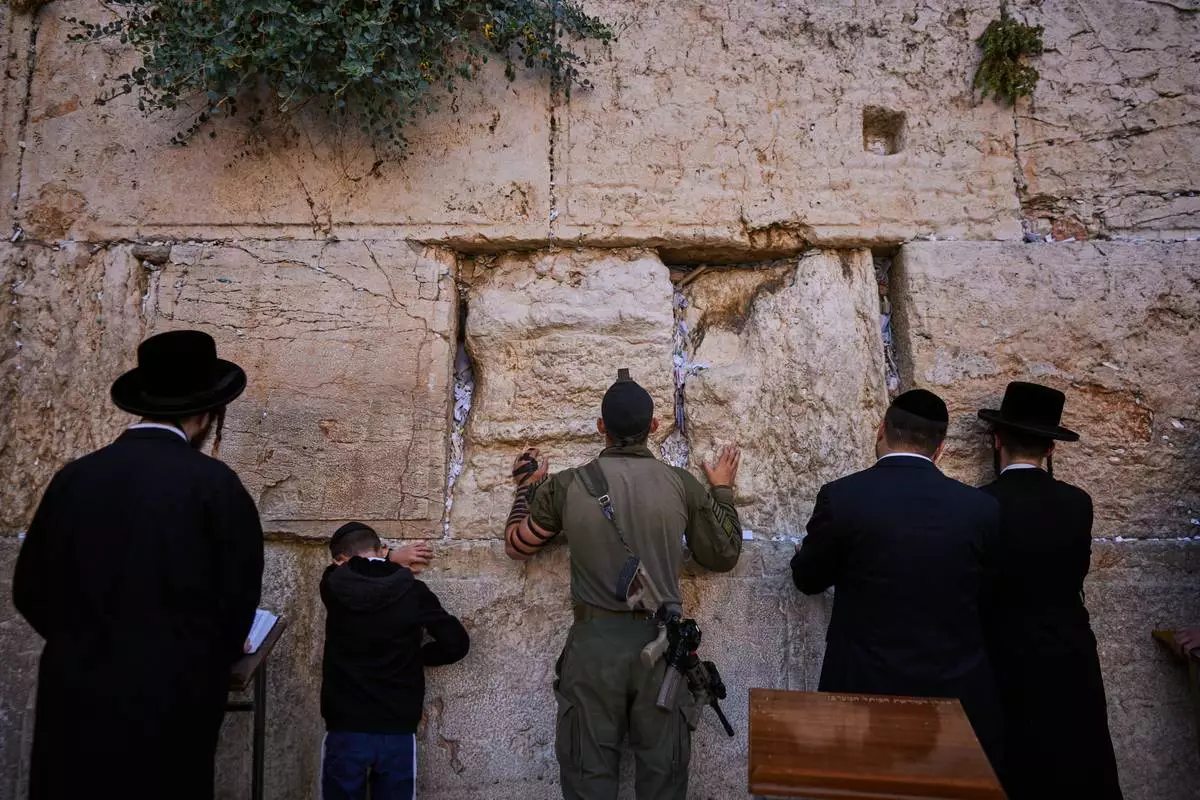
Ultra-Orthodox Jewish worshippers pray beside a soldier from the Haredi Hashmonaim Brigade at the Western Wall in Jerusalem's Old City, Thursday, Aug. 6, 2026. (AP Photo/Ohad Zwigenberg)
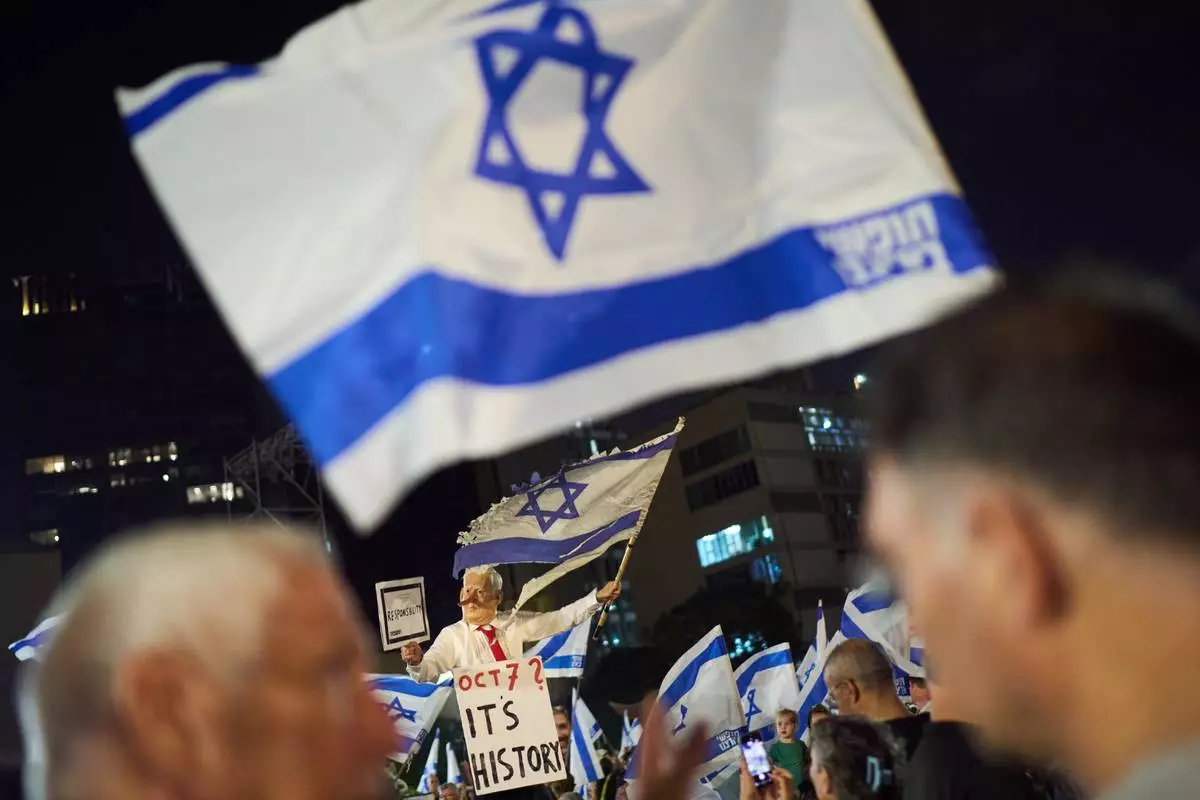
A demonstrator wearing a mask depicting Israeli Prime Minister Benjamin Netanyahu attends an anti-government protest ahead of Israel's general election, Saturday, Oct. 24, 2026, in Tel Aviv, Israel. (AP Photo/David Goldman)