NASA said Friday it's revamping its Artemis moon exploration program to make it more like the fast-paced Apollo program half a century ago, adding an extra practice flight before attempting a high-risk lunar landing with a crew in two years.
The overhaul in the flight lineup came just two days after NASA’s new moon rocket returned to its hangar for more repairs, and a safety panel warned the space agency to scale back its overly ambitious goals for humanity’s first lunar landing since 1972.
Artemis II, a lunar fly-around by four astronauts, is off until at least April because of rocket problems.
The follow-up mission, Artemis III, had been targeting a landing near the moon’s south pole by another pair of astronauts in about three years. But with long gaps between flights and concern growing over the readiness of a lunar lander and moonwalking suits, NASA’s new administrator Jared Isaacman announced that mission would instead focus on launching a lunar lander into orbit around Earth in 2027 for docking practice by astronauts flying in an Orion capsule.
The new plan calls for a moon landing — potentially even two moon landings — by astronauts in 2028.
“Everybody agrees. This is the only way forward,” Isaacman said.
The hydrogen fuel leaks and helium flow problems that struck the Space Launch System rocket on the pad at NASA's Kennedy Space Center earlier this month had also plagued the first Artemis test flight without a crew in 2022.
Another three-year gap was looming between Artemis II and the moon landing by astronauts as originally envisioned, Isaacman said.
Isaacman stressed that “it should be incredibly obvious” that three years between flights is unacceptable. He'd like to get it down to one year or even less.
Isaacman, a tech billionaire who bought his own trips to orbit and performed the world’s first private spacewalk, took the helm at NASA in December.
During NASA’s storied Apollo program, he said, astronauts’ first flight to the moon was followed by two more missions before Neil Armstrong and Buzz Aldrin landed on the moon. What's more, he added, the Apollo moonshots followed one another in quick succession, just as the earlier Projects Mercury and Gemini had rapid flight rates, sometimes coming just a few months apart.
Twenty-four Apollo astronauts flew to the moon from 1968 through 1972, with 12 of them landing.
“No one at NASA forgot their history books. They knew how to do this," Isaacman said. “Now we're putting it in action.”
To pick up the pace and reduce risk, NASA will standardize its Space Launch System rockets moving forward, Isaacman said. These are the massive rockets that will launch astronauts to the moon aboard Orion capsules. At the same time, Elon Musk's SpaceX and Jeff Bezos' Blue Origin are speeding up their work on the landers needed to get the astronauts from lunar orbit down to the surface.
Isaacman said next year will see an Orion crew rendezvousing in orbit around Earth with SpaceX's Starship, Blue Origin's Blue Moon or both landers. It's similar to the methodical approach that worked so well during Apollo in the late 1960s, he noted. Apollo 8, astronauts' first flight to the moon, was followed by two more missions before Armstrong and Aldrin aimed for the lunar surface.
“We should be getting back to basics and doing what we know works,” he said.
The Aerospace Safety Advisory Panel recommended this week that NASA revise its objectives for Artemis III “given the demanding mission goals.” It’s urgent the space agency do that, the panel said, if the United States hopes to safely return astronauts to the moon. Isaacman said the revised Artemis flight plan addresses the panel's concerns and is supported by industry and the Trump administration.
The Associated Press Health and Science Department receives support from the Howard Hughes Medical Institute’s Department of Science Education and the Robert Wood Johnson Foundation. The AP is solely responsible for all content.
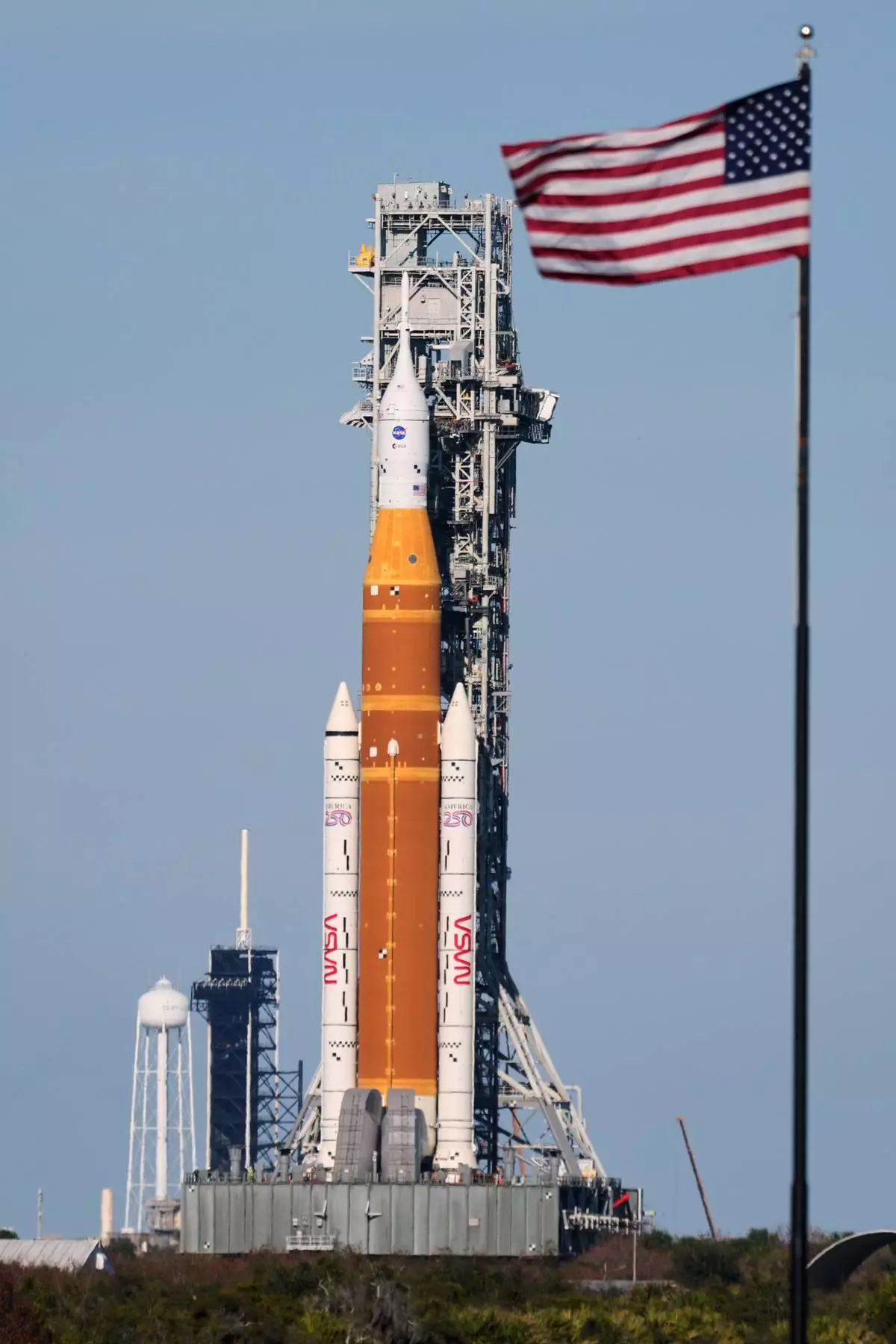
NASA's Artemis II SLS (Space Launch System) moon rocket with the Orion spacecraft slowly rolls back towards the Vehicle Assembly Building at the Kennedy Space Center, Wednesday, Feb. 25, 2026, in Cape Canaveral, Fla. (AP Photo/John Raoux)
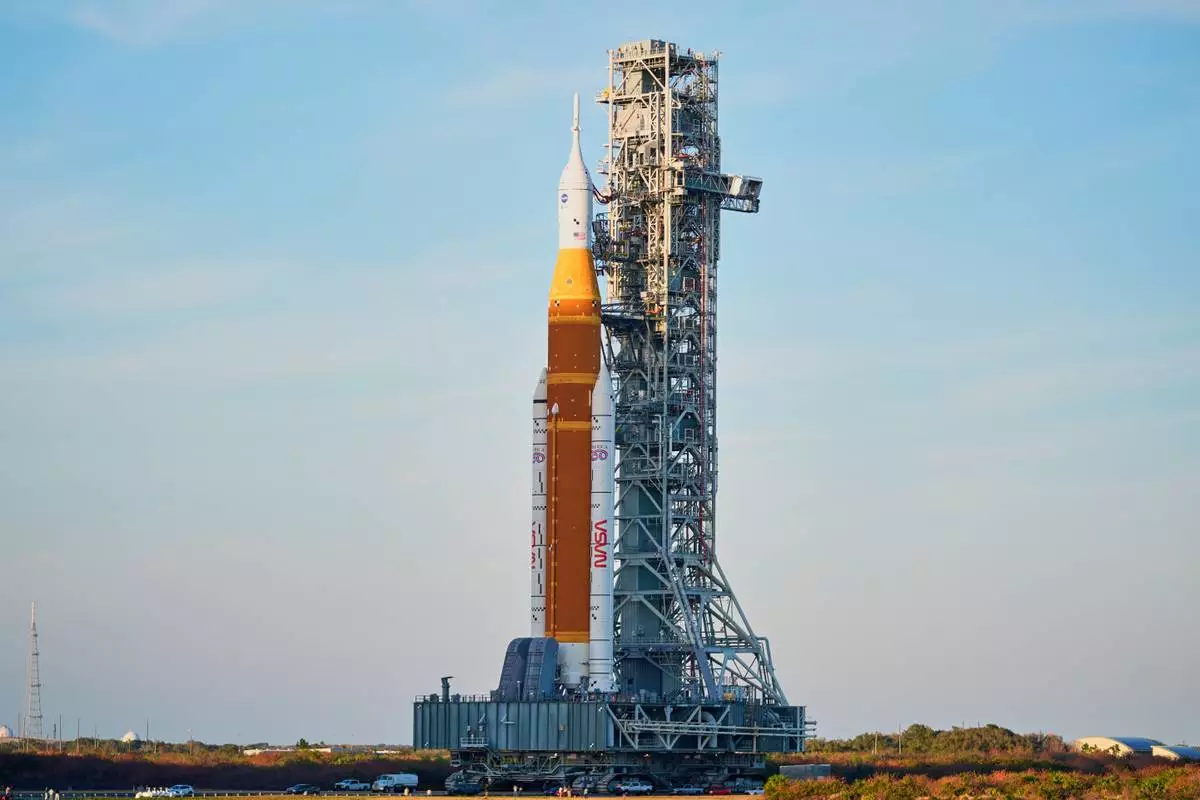
NASA's Artemis II SLS (Space Launch System) moon rocket with the Orion spacecraft slowly rolls back towards the Vehicle Assembly Building at the Kennedy Space Center, Wednesday, Feb. 25, 2026, in Cape Canaveral, Fla. (AP Photo/John Raoux)

NASA's Artemis II SLS (Space Launch System) moon rocket with the Orion spacecraft slowly rolls back towards the Vehicle Assembly Building at the Kennedy Space Center, Wednesday, Feb. 25, 2026, in Cape Canaveral, Fla. (AP Photo/John Raoux)
TEL AVIV, Israel (AP) — U.S. President Donald Trump says he's “not happy” with the way Iran talks are going but that he'll "see what happens” after additional talks that the U.S. plans to hold with the Middle Eastern country over its nuclear program.
Trump made the comments to reporters as he left the White House on Friday
“I’m not happy with the fact that they’re not willing to give us what we have to have. I’m not thrilled with that. We’ll see what happens. We’re talking later,” Trump said.
THIS IS A BREAKING NEWS UPDATE. AP’s earlier story follows below.
TEL AVIV, Israel (AP) — U.S. Secretary of State Marco Rubio will make a quick trip to Israel early next week, the State Department said, as tensions between the United States and Iran remain high after their latest nuclear talks and American forces gather in the region.
The U.S. Embassy in Israel had earlier urged staff who want to leave to depart, joining other nations in encouraging people to leave the region and signaling that U.S. military action might be imminent. The announcement of Rubio's visit could indicate a longer timeline for any potential strike.
A confidential report from the U.N. nuclear watchdog meanwhile confirmed that Iran has not offered inspectors access to sensitive nuclear sites since they were heavily bombed during the 12-day war launched by Israel last June. As a result, it said it could not confirm Iran's claims that it stopped uranium enrichment after the U.S. and Israeli strikes.
The report was circulated to member countries and seen by The Associated Press.
U.S. President Donald Trump has threatened military action if Iran does not agree to a far-reaching deal on its nuclear program. Iran insists it has the right to enrich uranium for peaceful purposes and denies seeking a nuclear weapon.
The State Department said in a statement that Rubio would visit Israel on Monday and Tuesday to “discuss a range of regional priorities including Iran, Lebanon, and ongoing efforts to implement President Trump’s 20-Point Peace Plan for Gaza.” It offered no other details.
Israeli Prime Minister Benjamin Netanyahu has long urged tougher U.S. action against Iran, and has warned that Israel will respond to any Iranian attack.
The announcement of Rubio's visit came just hours after the U.S. Embassy in Jerusalem implemented “authorized departure” status for non-essential personnel and family members, which means that eligible staffers can leave the country voluntarily at government expense.
In an email, U.S. Ambassador Mike Huckabee urged staff considering departure to do so quickly, advising them to focus initially on getting any flight out of Israel and to then make their way to Washington.
“Those wishing to take AD should do so TODAY,” Huckabee wrote, using an acronym for “authorized departure.”
“While there may be outbound flights over the coming days, there may not be,” he added, in an email that was recounted to The Associated Press by someone involved with the U.S. mission who wasn't authorized to share details.
On a town hall meeting Friday after the email was sent, Huckabee told staff that he was encouraging airlines to keep flying.
Iran and the United States on Thursday walked away from another round of nuclear negotiations in Geneva without a deal. Technical discussions are scheduled to take place in Vienna next week.
U.S. Vice President JD Vance was to meet later on Friday in Washington with Oman’s foreign minister, Badr al-Busaidi, who has been mediating the talks, according to a person with knowledge of the meeting who spoke on condition of anonymity because the meeting is private.
Earlier, al-Busaidi said that there had been significant progress made on Thursday, though officials from Iran and the United States haven’t announced steps forward.
Iranian Foreign Minister Abbas Araghchi on Thursday said “what needs to happen has been clearly spelled out from our side," without offering specifics. Iran has long demanded relief from heavy international sanctions in return for taking steps to limit but not end its nuclear program.
The U.N. chief meanwhile urged Iran and the U.S. "to focus on the diplomatic track” even as tensions rise and a potential for a U.S. strike remains very possible.
“We’re seeing both positive messages coming out of the diplomatic tracts, which we’re continuing to encourage,” U.N. Secretary-General António Guterres said, according to his spokesperson Stephane Dujarric. “We’re also seeing very worrying military movements. throughout the region, which is extremely concerning as well.”
The U.S. has gathered a massive fleet of aircraft and warships in the Middle East, with one aircraft carrier already in place and another heading to the region. Iran says it will respond to any U.S. attack by targeting American forces in the region, potentially including those stationed in U.S. bases in allied Arab countries.
Airlines such as Netherlands-based KLM have already announced plans to suspend flights out of Tel Aviv's Ben Gurion International Airport, and other embassies have also made plans for authorized departures from Israel and neighboring countries.
Britain’s Foreign Office said that “due to the security situation, U.K. staff have been temporarily withdrawn from Iran.” It said the embassy was operating remotely.
In Israel, the U.K. said Friday it moved some diplomatic staff and their families from Tel Aviv to another, unspecified location in Israel “as a precautionary measure.” In an update to its travel advice, the Foreign Office added that the country’s embassy in Tel Aviv is operating as normal but that the situation “could escalate quickly and poses significant risks.”
British Prime Minister Keir Starmer said Thursday the U.K. was focused on “supporting the political process” between Washington and Tehran.
Australia on Wednesday “directed the departure of all dependents of Australian officials posted to Israel in response to the deteriorating security situation in the Middle East.” China, India and several European countries with missions in Iran have advised citizens to avoid travel to the country.
China's Foreign Ministry also advised its citizens already in Iran to leave, according to a statement reported by Chinese state media.
Metz reported from Ramallah, West Bank and Lee from Washington. Seung Min Kim in Washington, Stephanie Liechtenstein in Vienna, Farnoush Amiri at the United Nations, Kareem Chehayeb in Beirut and Pangiotis Pylas in London contributed to this report.
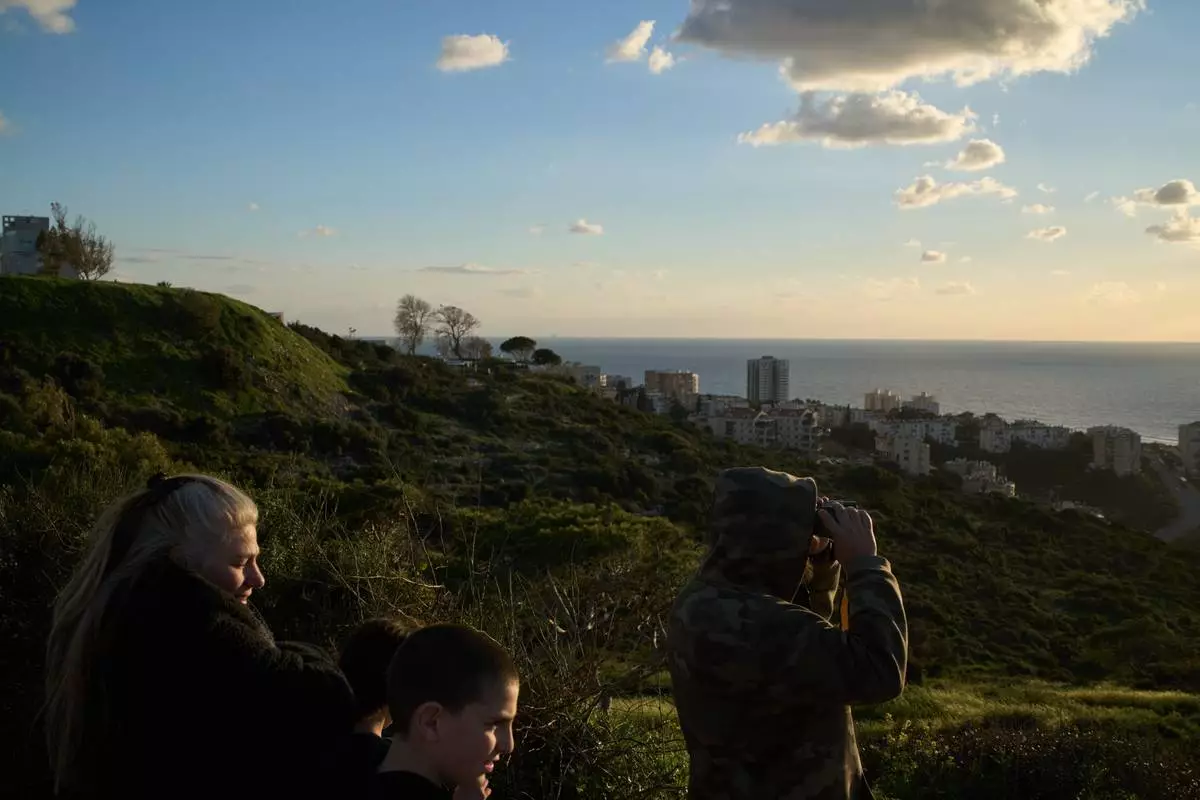
From a lookout, a man uses a binocular looking for the possible arrival of the US Navy's aircraft carrier USS Gerald R. Ford in the Mediterranean Sea near the coast of Haifa, northern Israel, Friday, Feb. 27, 2026. (AP Photo/Leo Correa)

People gather at a lookout to look for the possible arrival of the US Navy's aircraft carrier USS Gerald R. Ford in the Mediterranean Sea near the coast of Haifa, northern Israel, Friday, Feb. 27, 2026. (AP Photo/Leo Correa)
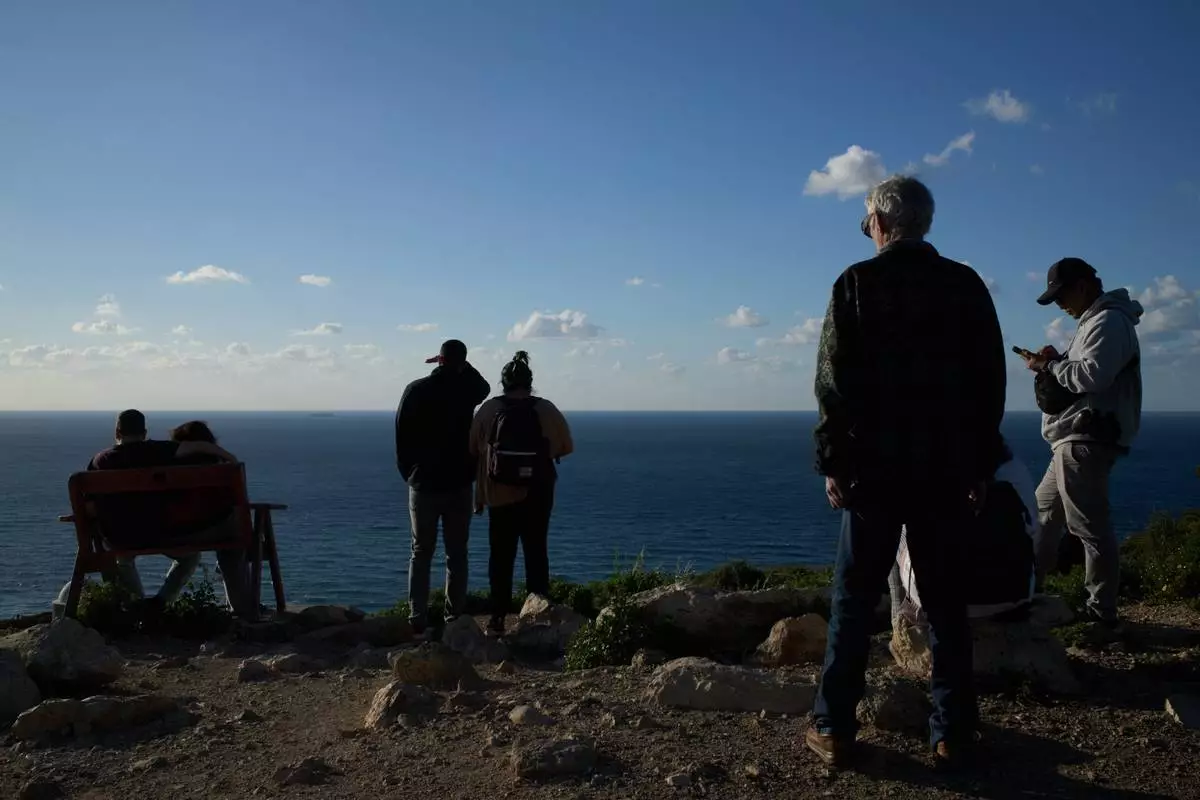
People gather at a lookout to look for the possible arrival of the US Navy's aircraft carrier USS Gerald R. Ford in the Mediterranean Sea near the coast of Haifa, northern Israel, Friday, Feb. 27, 2026. (AP Photo/Leo Correa)
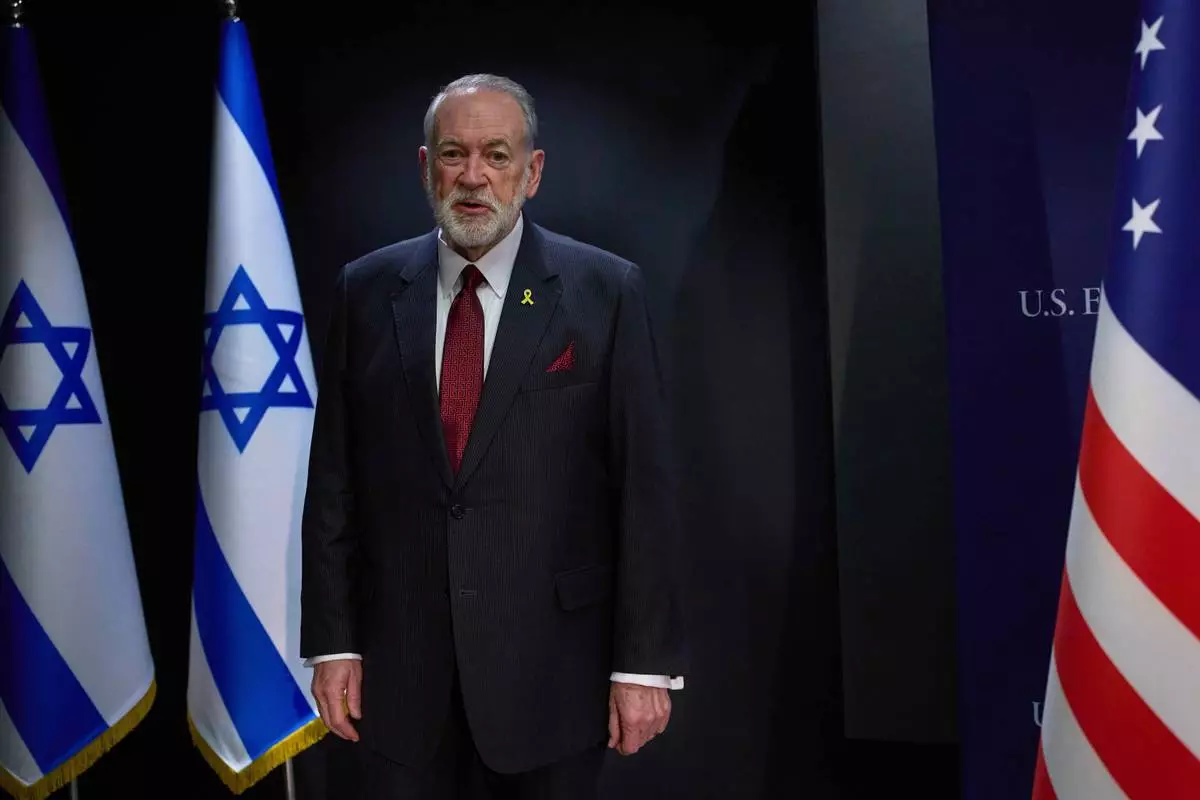
FILE - U.S. Ambassador to Israel Mike Huckabee poses for a photo during an interview in Jerusalem, Wednesday, Aug. 20, 2025. (AP Photo/Ohad Zwigenberg, File)