NEW YORK (AP) — U.S. stocks are sinking Friday as Wall Street gets back to hunting and punishing companies that could be made losers by the artificial-intelligence revolution. A surprisingly discouraging update on inflation also hurt the market.
The S&P 500 fell 0.8% and is staggering toward the finish of what would be just its second losing month in the last 10. The Dow Jones Industrial Average was down 569 points, or 1.2%, as of 9:35 a.m. Eastern time, and the Nasdaq composite was 1.2% lower.
Click to Gallery

Trader John Romolo works on the floor of the New York Stock Exchange, Friday, Feb. 20, 2026. (AP Photo/Richard Drew)
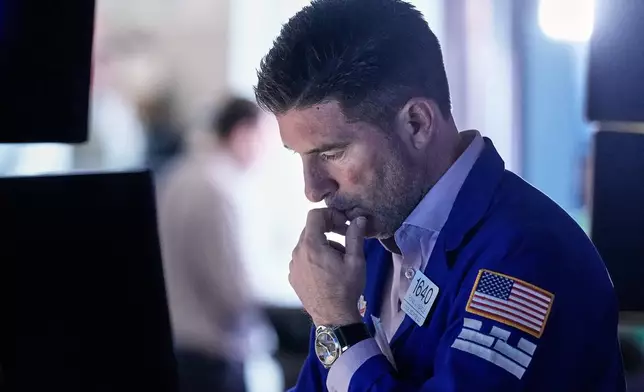
Specialist Thomas McArdle works at his post on the floor of the New York Stock Exchange, Friday, Feb. 20, 2026. (AP Photo/Richard Drew)
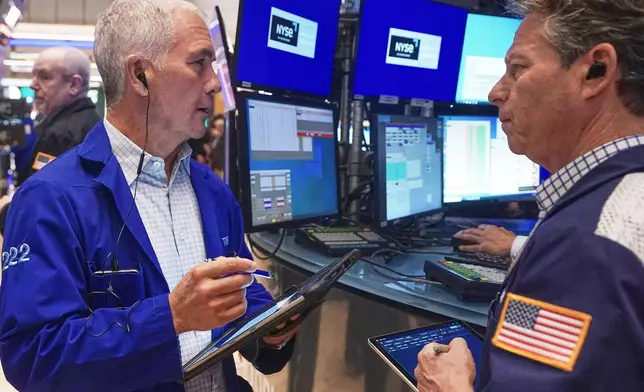
Trader Timothy Nick, left, and Robert Charmak work on the floor of the New York Stock Exchange, Friday, Feb. 20, 2026. (AP Photo/Richard Drew)
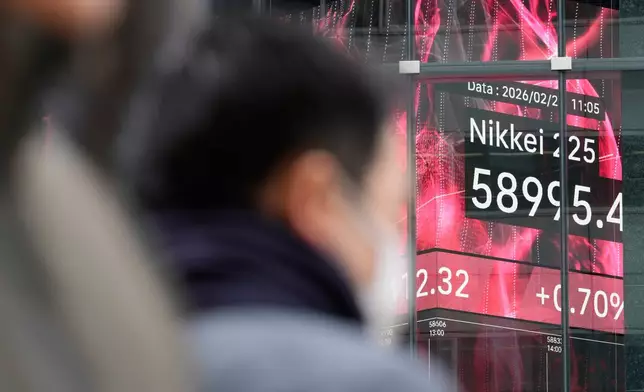
People walk near an electronic stock board showing Japan's Nikkei index at a securities firm Thursday, Feb. 26, 2026, in Tokyo. (AP Photo/Eugene Hoshiko)

A person stands as a vehicle passes by in front of an electronic stock board showing Japan's Nikkei index at a securities firm Thursday, Feb. 26, 2026, in Tokyo. (AP Photo/Eugene Hoshiko)
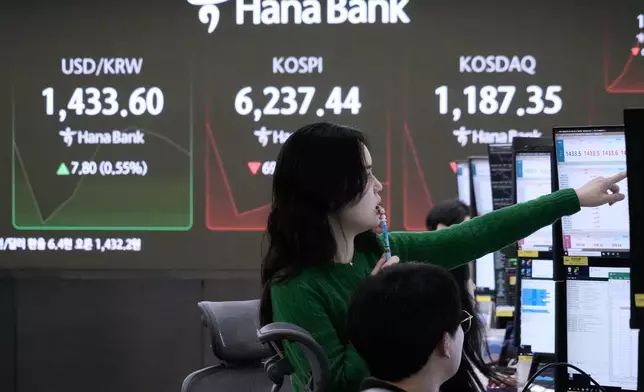
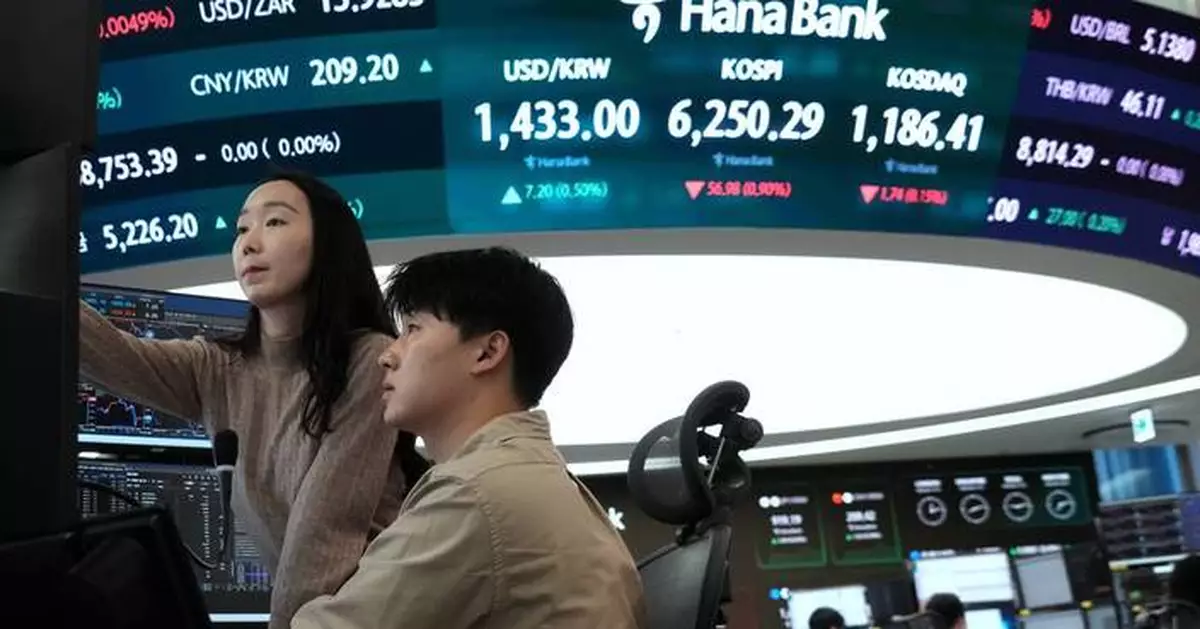
A currency trader watches a monitor near a screen showing the Korea Composite Stock Price Index (KOSPI), top center, and the foreign exchange rate between U.S. dollar and South Korean won, top left, at the foreign exchange dealing room of the Hana Bank headquarters, in Seoul, South Korea, Friday, Feb. 27, 2026. (AP Photo/Ahn Young-joon)
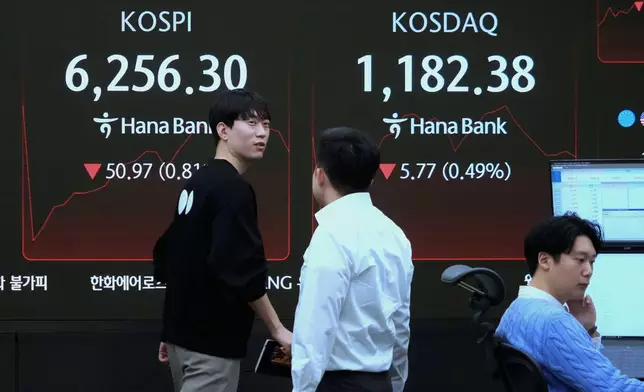
A currency trader passes by a screen showing the Korea Composite Stock Price Index (KOSPI), left, at the foreign exchange dealing room of the Hana Bank headquarters in Seoul, South Korea, Friday, Feb. 27, 2026. (AP Photo/Ahn Young-joon)
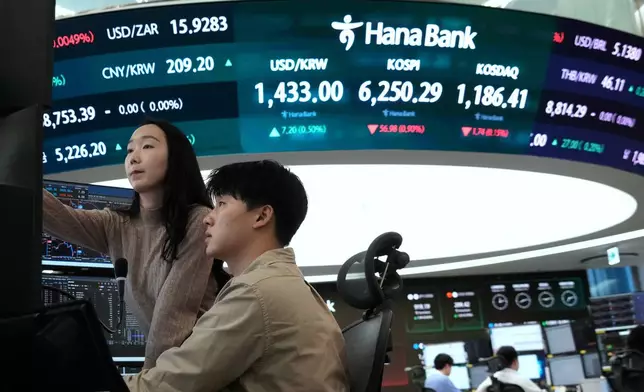
Currency traders watch monitors near a screen showing the Korea Composite Stock Price Index (KOSPI), top center, and the foreign exchange rate between U.S. dollar and South Korean won, top center left, at the foreign exchange dealing room of the Hana Bank headquarters, in Seoul, South Korea, Friday, Feb. 27, 2026. (AP Photo/Ahn Young-joon)
A report showing that inflation at the U.S. wholesale level was at 2.9% last month, much higher than the 1.6% that economists expected, upset the market. The number was so much worse than expected that it could help persuade the Federal Reserve to hold off longer on its cuts to interest rates.
Lower rates would give the economy and prices for investments a boost, but they risk worsening inflation at the same time.
The discouraging data layered more worries atop a Wall Street where investors returned to knocking down software companies and others whose businesses may end up getting supplanted by AI-powered competitors.
Block, the company behind Cash App, Square and other businesses, gave a signal of what AI could do after CEO Jack Dorsey said he was cutting its workforce by nearly half. That’s even though Block’s profit is growing and it’s sending more cash to shareholders through stock buybacks.
“Intelligence tools have changed what it means to build and run a company,” Dorsey said in a letter to shareholders while announcing Block’s latest profit results. “We’re already seeing it internally. A significantly smaller team, using the tools we’re building, can do more and do it better.”
The co-founder of Twitter also said, “I don’t think we’re early to this realization. I think most companies are late. Within the next year, I believe the majority of companies will reach the same conclusion and make similar structural changes.”
Block is cutting more than 4,000 jobs from its workforce of over 10,000. Its stock jumped nearly 20%.
Capable AI tools that can replace humans could also replace entire companies, or at least eat away at their profit margins. Fears about AI disruption have been causing sudden and swift sell-offs for stocks seen as potentially under threat, rolling through industries as seemingly disparate as trucking logistics and legal services.
Salesforce, whose platform helps customers manage their relationships with clients, fell 4.4%. It gave back its 4% gain from the day before after reporting a better profit than analysts expected.
Even the companies currently seeing their revenue and profits soar because of AI-related demand are also weakening. Nvidia fell 2.6%, a day after dropping to its worst loss since last spring, even though it reported a better profit than analysts expected and forecast more in revenue for the current quarter.
Rival chip companies fell by similar amounts, and Broadcom dropped 2.6%. Worries are hurting such companies not only about whether their stock prices following huge gains in recent years but also whether the huge spending driving their growth can continue. Can big spenders like Amazon, Alphabet and others possibly make back all their billions of dollars in AI investments through higher productivity and profits in the future?
On the winning side of Wall Street was Netflix, which jumped 8.6% after walking away from its bid to buy Warner Bros. Discovery’s studio and streaming business. That put Skydance-owned Paramount in a position to take over its Hollywood rival.
Paramount Skydance shares climbed 2.2%, while Warner Bros. Discovery fell 1.9%.
In the bond market, the yield on the 10-year Treasury was at 3.97%. It swiveled higher following the inflation report, but it’s down from its 4.02% level late Thursday.
ln stock markets abroad, indexes were mixed in Europe and Asia. South Korea’s Kospi fell 1% from its latest record, and Hong Kong’s Hang Seng rose 0.9% in two of the world’s larger moves.
In energy markets, the price for a barrel of benchmark U.S. crude oil rose 3.2% to $67.27. Worries about rising tensions between the United States and Iran over Iran’s nuclear program have been causing big swings.
The U.S. military has already gathered a massive fleet of aircraft and warships in the Middle East, and a conflict could disrupt the global flow of oil and drive prices higher.
Brent crude, the international standard, rose 3.1% to $73.04 per barrel.
AP Business Writers Matt Ott and Elaine Kurtenbach contributed.
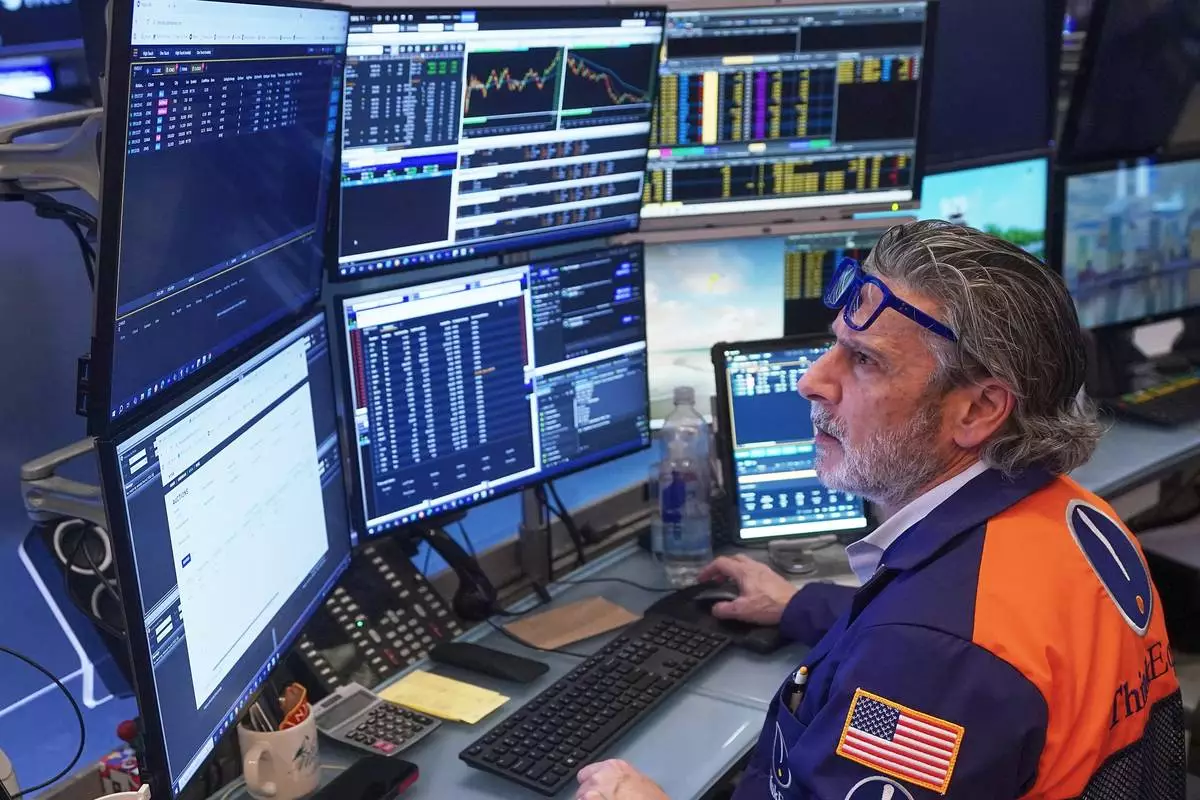
Trader John Romolo works on the floor of the New York Stock Exchange, Friday, Feb. 20, 2026. (AP Photo/Richard Drew)
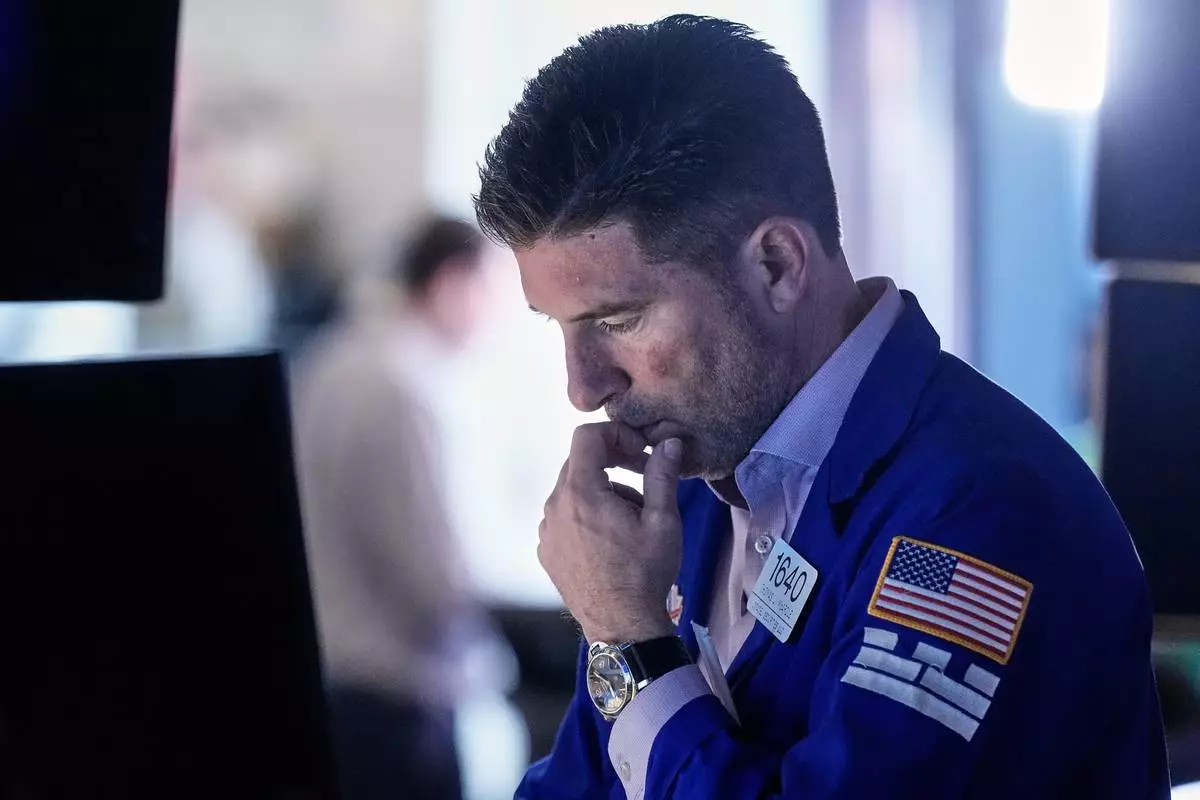
Specialist Thomas McArdle works at his post on the floor of the New York Stock Exchange, Friday, Feb. 20, 2026. (AP Photo/Richard Drew)
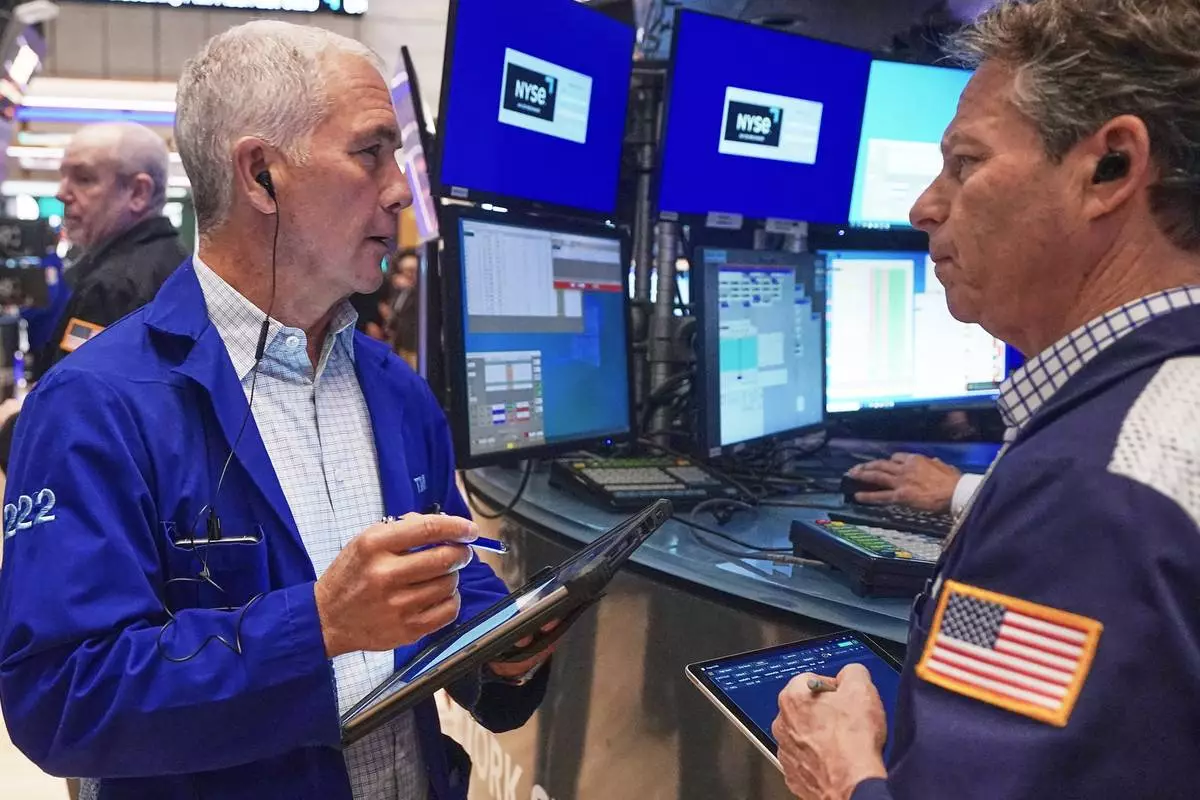
Trader Timothy Nick, left, and Robert Charmak work on the floor of the New York Stock Exchange, Friday, Feb. 20, 2026. (AP Photo/Richard Drew)
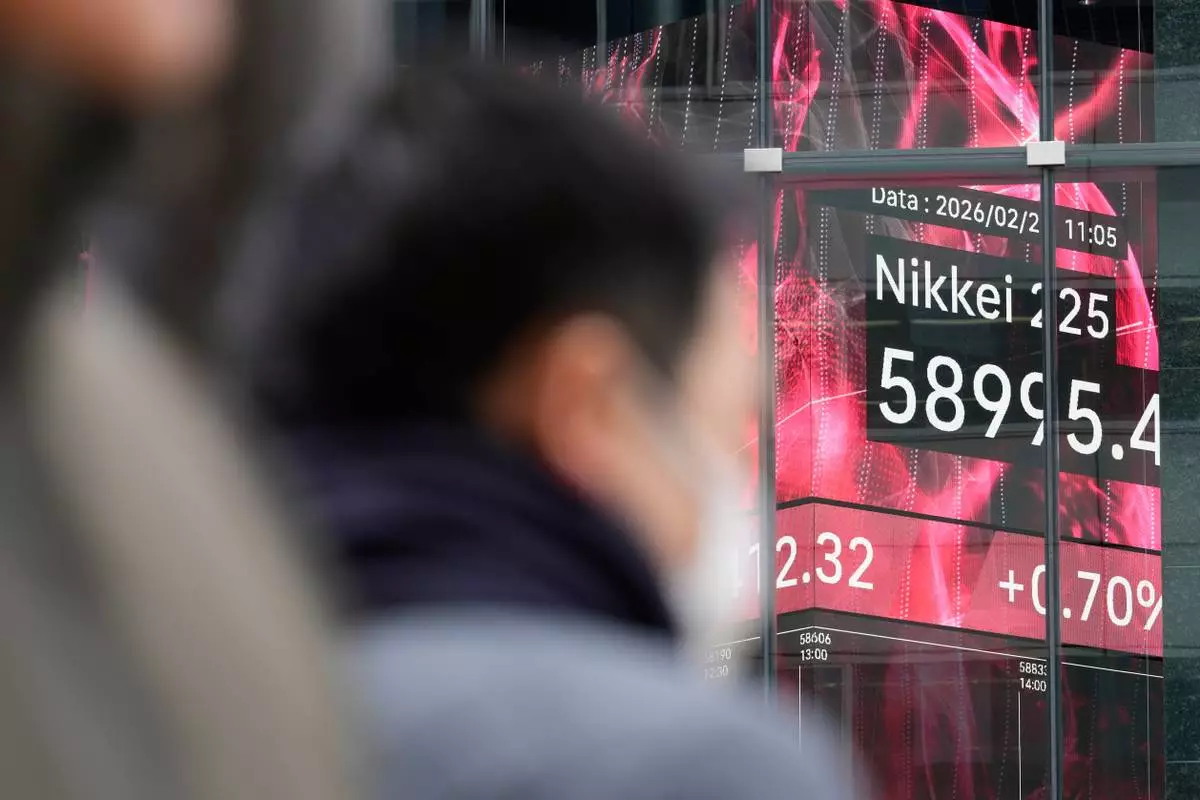
People walk near an electronic stock board showing Japan's Nikkei index at a securities firm Thursday, Feb. 26, 2026, in Tokyo. (AP Photo/Eugene Hoshiko)

A person stands as a vehicle passes by in front of an electronic stock board showing Japan's Nikkei index at a securities firm Thursday, Feb. 26, 2026, in Tokyo. (AP Photo/Eugene Hoshiko)
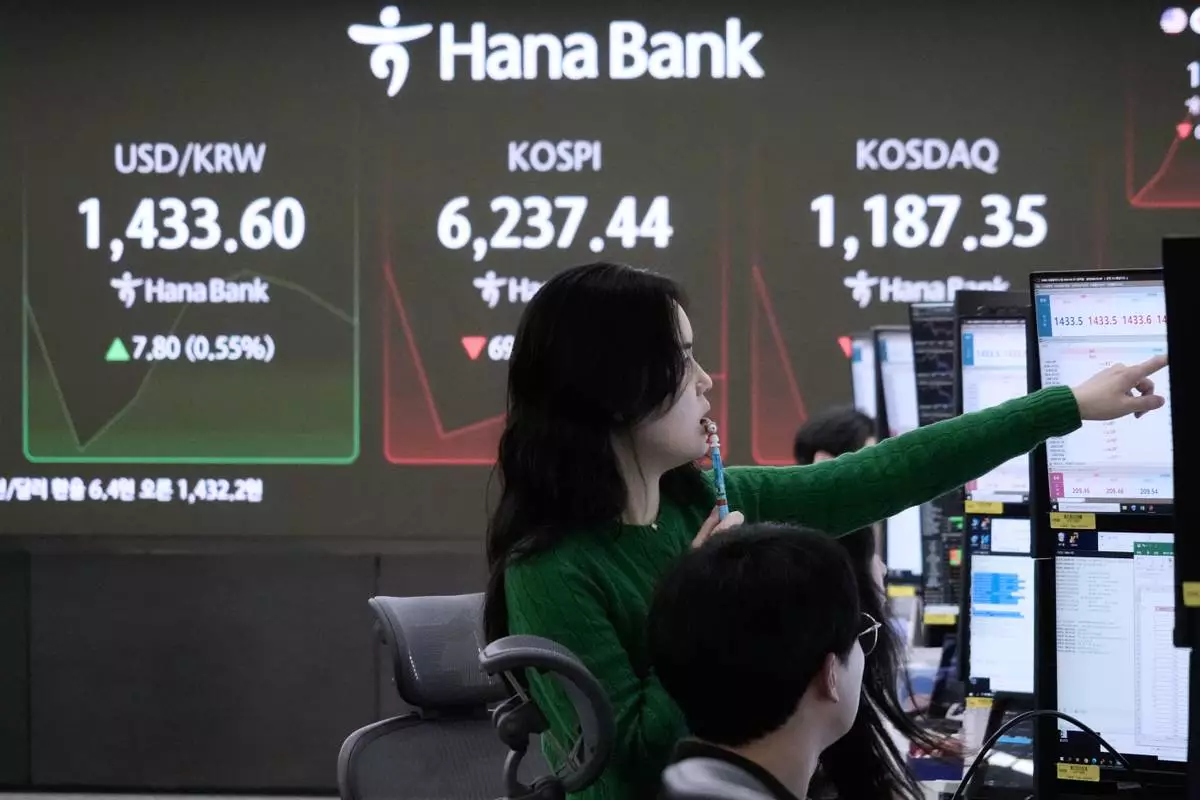
A currency trader watches a monitor near a screen showing the Korea Composite Stock Price Index (KOSPI), top center, and the foreign exchange rate between U.S. dollar and South Korean won, top left, at the foreign exchange dealing room of the Hana Bank headquarters, in Seoul, South Korea, Friday, Feb. 27, 2026. (AP Photo/Ahn Young-joon)
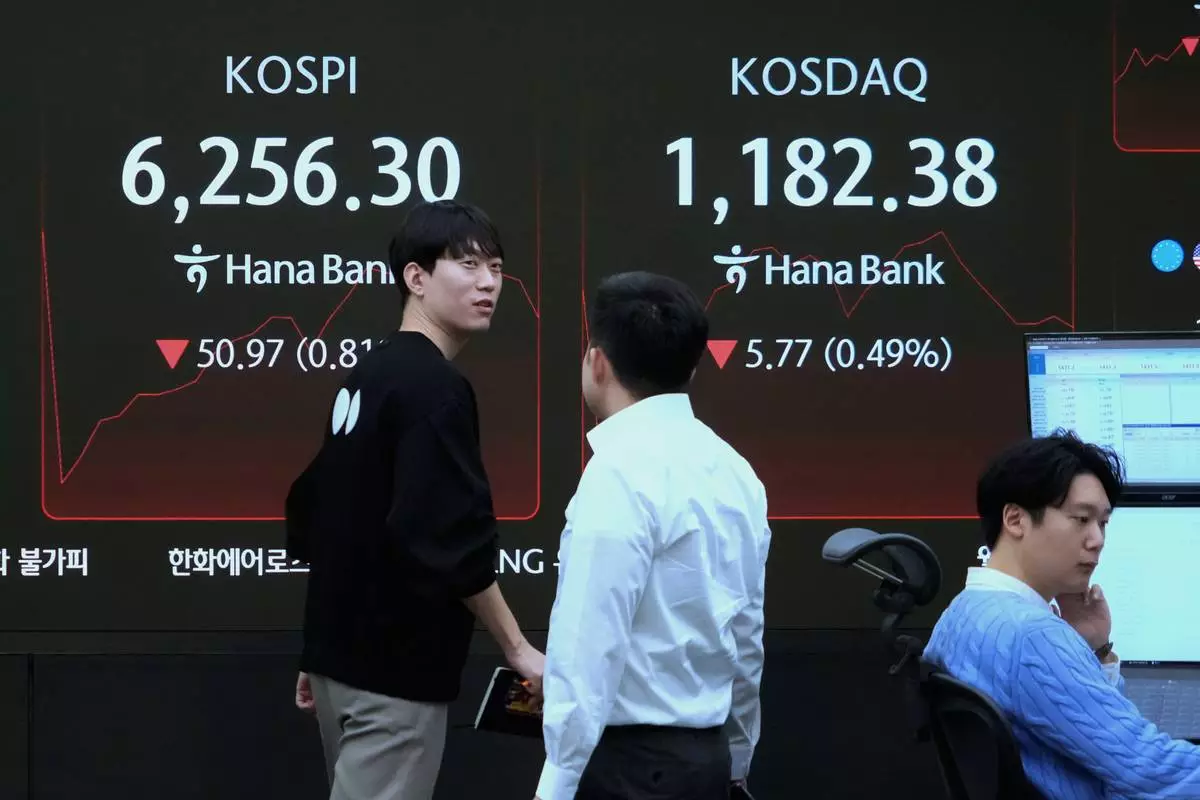
A currency trader passes by a screen showing the Korea Composite Stock Price Index (KOSPI), left, at the foreign exchange dealing room of the Hana Bank headquarters in Seoul, South Korea, Friday, Feb. 27, 2026. (AP Photo/Ahn Young-joon)
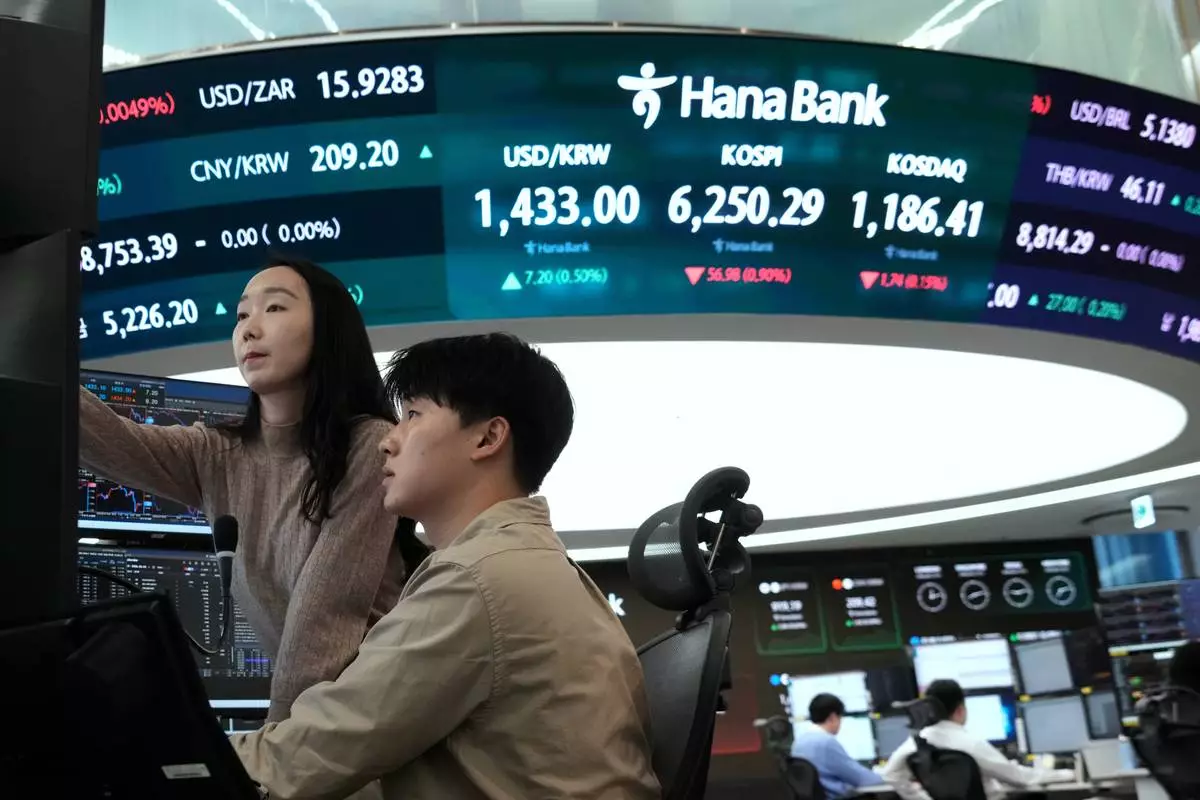
Currency traders watch monitors near a screen showing the Korea Composite Stock Price Index (KOSPI), top center, and the foreign exchange rate between U.S. dollar and South Korean won, top center left, at the foreign exchange dealing room of the Hana Bank headquarters, in Seoul, South Korea, Friday, Feb. 27, 2026. (AP Photo/Ahn Young-joon)
LONDON (AP) — An emphatic election victory for Britain’s environmentalist Green Party is a nightmare for Prime Minister Keir Starmer that raises questions about how long he will continue as leader.
Less than two years after winning power in a landslide, Starmer’s center-left Labour Party not only lost a longtime stronghold in its northern England heartlands — it came third, finishing behind both the left-leaning Greens and the hard-right party Reform U.K.
Thursday’s election in the Gorton and Denton constituency of Greater Manchester was for just one seat out of 650 in the House of Commons. But it’s a glimpse into the messy new reality of British politics, and its consequences could be far-reaching.
Here are takeaways from the election.
The result is a heavy blow to Starmer, whose leadership has staggered through a series of crises and suffered a near-death experience earlier this month.
Since being elected in July 2024, Starmer has struggled to deliver promised economic growth, repair tattered public services and ease the cost of living. His government has been sidetracked by missteps and U-turns over welfare cuts and other unpopular policies.
The next national election does not have to be held until 2029, meaning the main threat to Starmer comes from within his own party. Under British rules, the governing party can change prime minister without having to go to voters.
Three weeks ago it looked like that might happen, when indirect fallout from a trove of Jeffrey Epstein files released in the United States caused discontent to boil over.
Several Labour lawmakers and the party's leader in Scotland called for Starmer to resign, his chief of staff and communications director quit, and his premiership teetered on the brink.
Starmer vowed to stay, and got a reprieve after potential leadership rivals publicly backed him. But his already precarious position is now even shakier, and he faces peril after May 7 local and regional elections, when Labour is expected to do badly.
Jon Trickett, a Labour lawmaker on the left of the party, said Friday that Starmer should “look in the mirror and make a decision about his own personal future.”
Green Party leader Zack Polanski said the result shows that “Labour’s electoral stranglehold is over.”
For a century, U.K. national politics has been dominated by two parties: the Conservatives on the right and Labour on the left. Unlike many European countries, Britain does not have a system of proportional representation, meaning that smaller parties have struggled to break through.
But that is changing. Scotland, Wales and Northern Ireland have their own distinct parties. And new parties on both left and right are snatching an increasing share of the vote.
Reform U.K., the latest party led by anti-immigration campaigner Nigel Farage, has just eight seats in the House of Commons but has topped opinion polls for months, ahead of both Labour and the Conservatives.
The Greens, under their new leader, the “eco-populist” Polanski, have broadened their message beyond environmental concerns to focus on issues including the cost of living, legalization of drugs and support for the Palestinian cause, positioning themselves as an alternative to Labour for left-liberal voters.
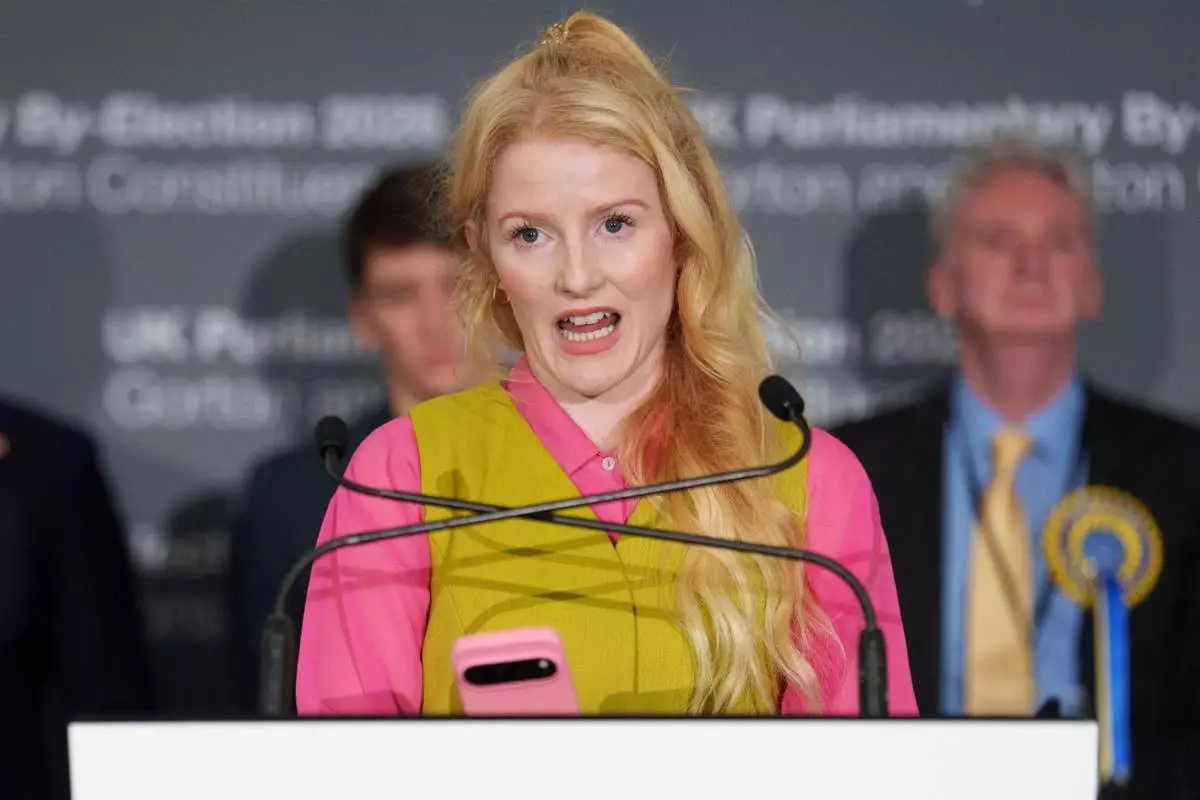
Newly elected lawmaker Hannah Spencer is a 34-year-old plumber who in her victory speech apologized to customers for having to cancel appointments so she could start her new job in Parliament.
She spoke of issues that should be Labour’s terrain: the cost of living, frayed public services and the erosion of opportunities in former industrial areas that traditionally voted Labour.
“For people here in Gorton and Denton who feel left behind and isolated: I see you and I will fight for you,” Spencer said.
The result drives home Labour’s predicament: It faces challenges from both left and right.
Thursday’s election was in a diverse area that has traditional working-class neighborhoods — once strongly Labour, now tilting toward Reform — as well as large numbers of university students and Muslim residents. Many of them feel disillusioned by Labour’s centrist shift under Starmer and the government’s perceived slowness at criticizing Israel’s conduct of the war against Hamas in Gaza — fertile ground for the Green Party.
Rob Ford, a professor of political science at the University of Manchester, said the result was “the nightmare scenario for the incumbent government.”
“They have fallen into the electoral Valley of Death,” Ford wrote on social media. “Rejected in the center. Rejected on the right. And now rejected on the left.”
In the wake of the defeat, many in Labour called for a change of direction, saying efforts to win over “Reform-curious” voters with policies aimed at curbing immigration had alienated many liberal electors.
“If the Labour Party thinks it can win an election by moving on to the territory which has been occupied by Mr. Farage and his party, they’ve made a big mistake,” Trickett told Times Radio. He said the party had made the mistake of assuming "that the progressive voters had nowhere else to go.”
The contest was tinged by the increasing bitterness and polarization in British politics. Reform leader Farage said he had contacted the election regulator and police about reports by an observer group about cases of “family voting,” when more than one person enters a voting booth. It is illegal for one person to direct another how to vote.
Farage claimed the incidents were in “predominantly Muslim areas.”
Opponents accused Reform of echoing U.S. President Donald Trump by attempting to discredit the result of a free and fair election.
Starmer has been tainted by fallout from scandals about Jeffrey Epstein, a man he never met and in whose crimes he’s not implicated.
The leadership crisis earlier this month was sparked by revelations about the relationship between sex offender Jeffrey Epstein and Peter Mandelson, the veteran Labour politician appointed by Starmer in 2024 to be U.K. ambassador to Washington.
Police are investigating emails suggesting Mandelson passed sensitive government information to Epstein a decade and a half ago. Mandelson was arrested and questioned by detectives this week before being released on bail. He does not face any allegations of sexual misconduct.
Starmer fired Mandelson in September 2025 after evidence emerged that the ambassador had maintained a friendship with Epstein after the financier’s 2008 conviction for sex offenses involving a minor. But recent revelations have stirred up Labour lawmakers’ anger at Starmer’s poor judgment in appointing Mandelson to the Washington job in the first place.
On Friday Starmer acknowledged the result was disappointing, but vowed to “keep on fighting.”
“Incumbent governments quite often get results like that mid-term, but I do understand that voters are frustrated," he said. "They’re impatient for change.”
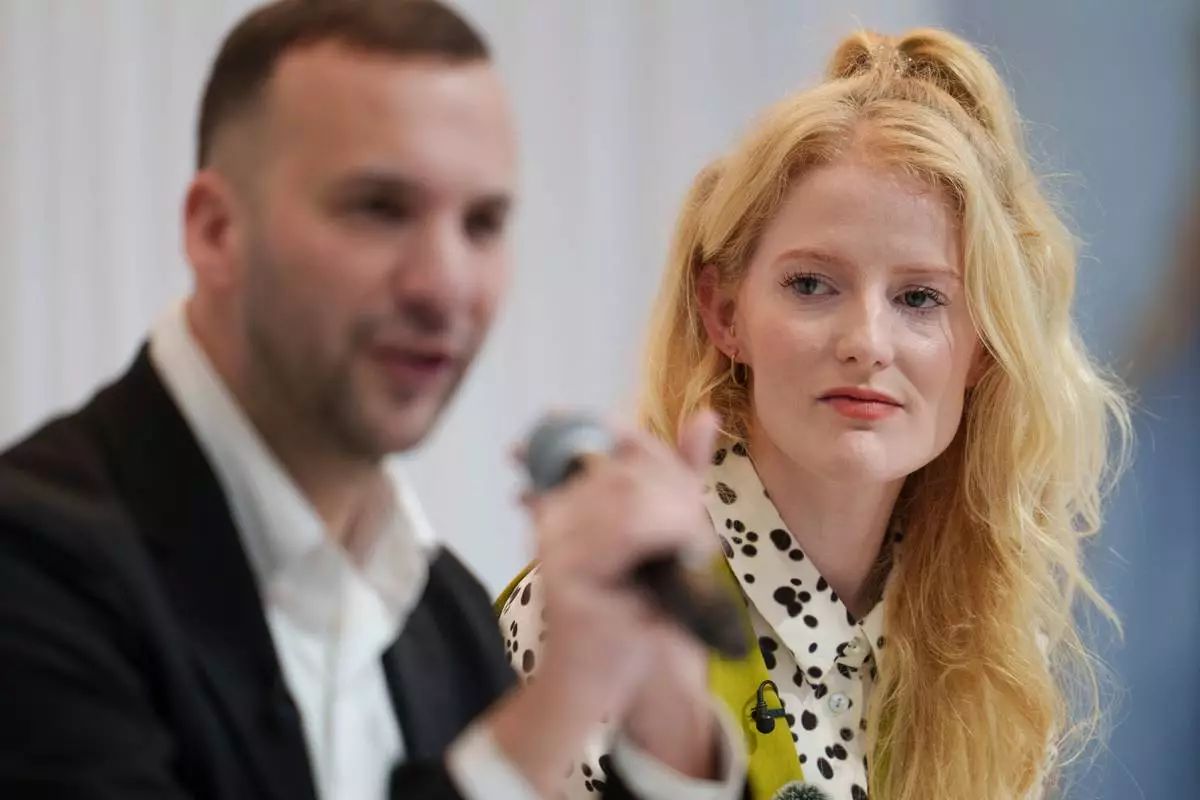
Green Party newly elected Member of Parliament Hannah Spencer looks on as party leader Zack Polanski speaks at a press conference after her win in the Gorton and Denton by-election, in Manchester, England, Friday, Feb. 27, 2026. (AP Photo/Jon Super)
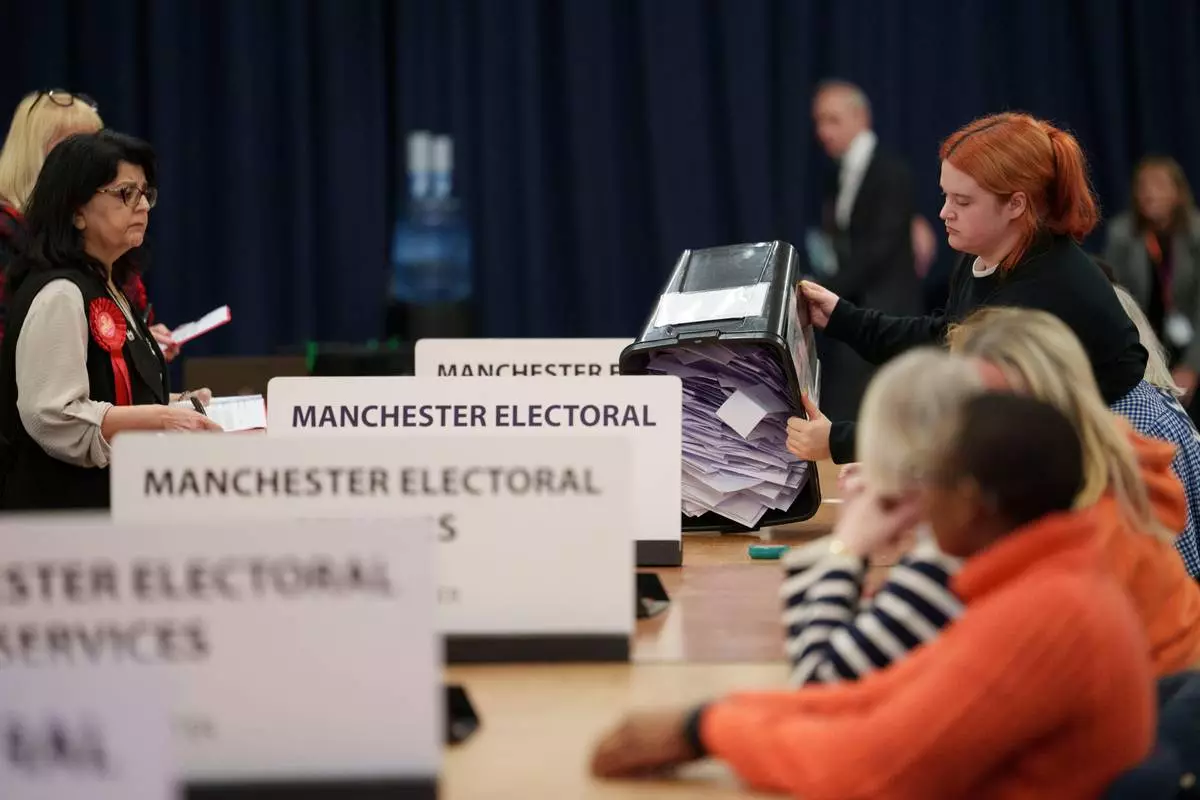
The count begins after voting ends in the Gorton and Denton by-election, Manchester, England, Thursday, Feb. 26, 2026. (AP Photo/Jon Super)
The Green Party candidate Hannah Spencer speaks after winning the Gorton and Denton by-election, Manchester, England, Friday, Feb. 27, 2026. (AP Photo/Jon Super)
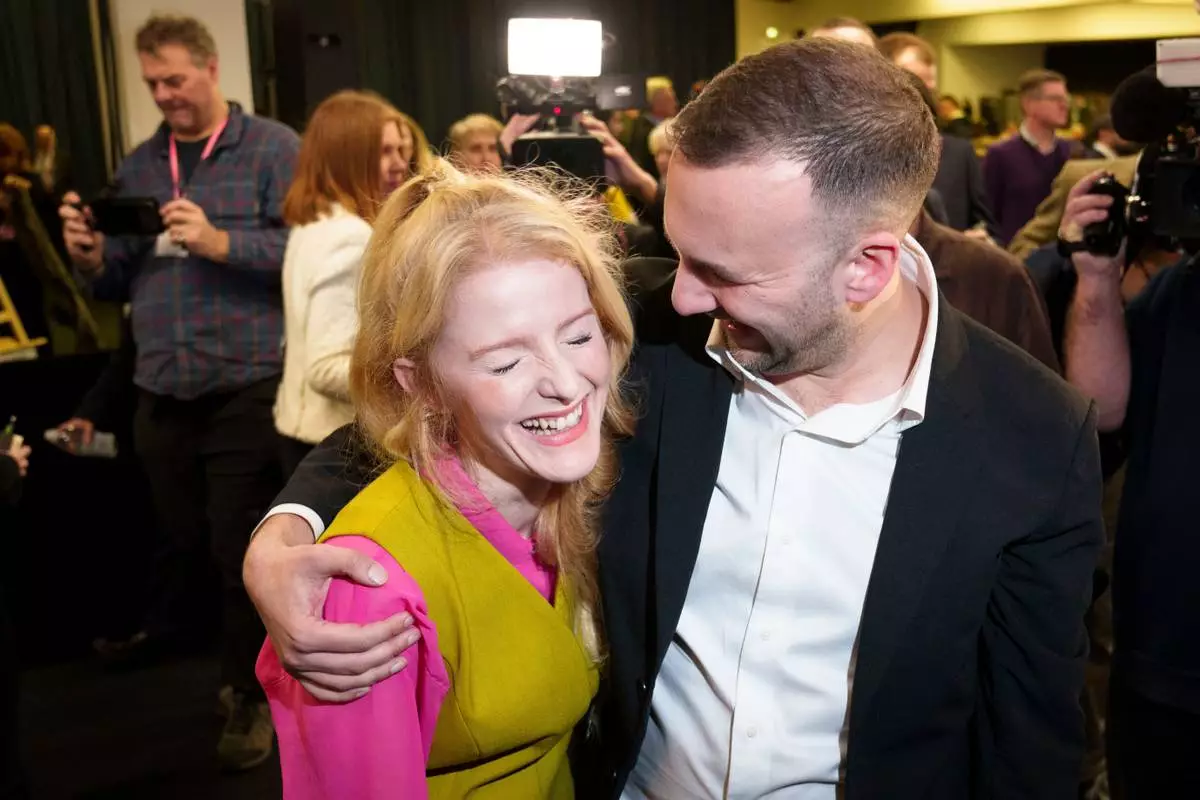
CORRECTS DATE - Greens Party candidate Hannah Spencer, left, stands with party leader Zack Polanski after winning the Gorton and Denton by-election, Manchester, England, Friday, Feb. 27, 2026. (AP Photo/Jon Super)
Britain's Prime Minister Keir Starmer meets local party members, in London, Friday, Feb. 27, 2026. (Stefan Rousseau/PA via AP)
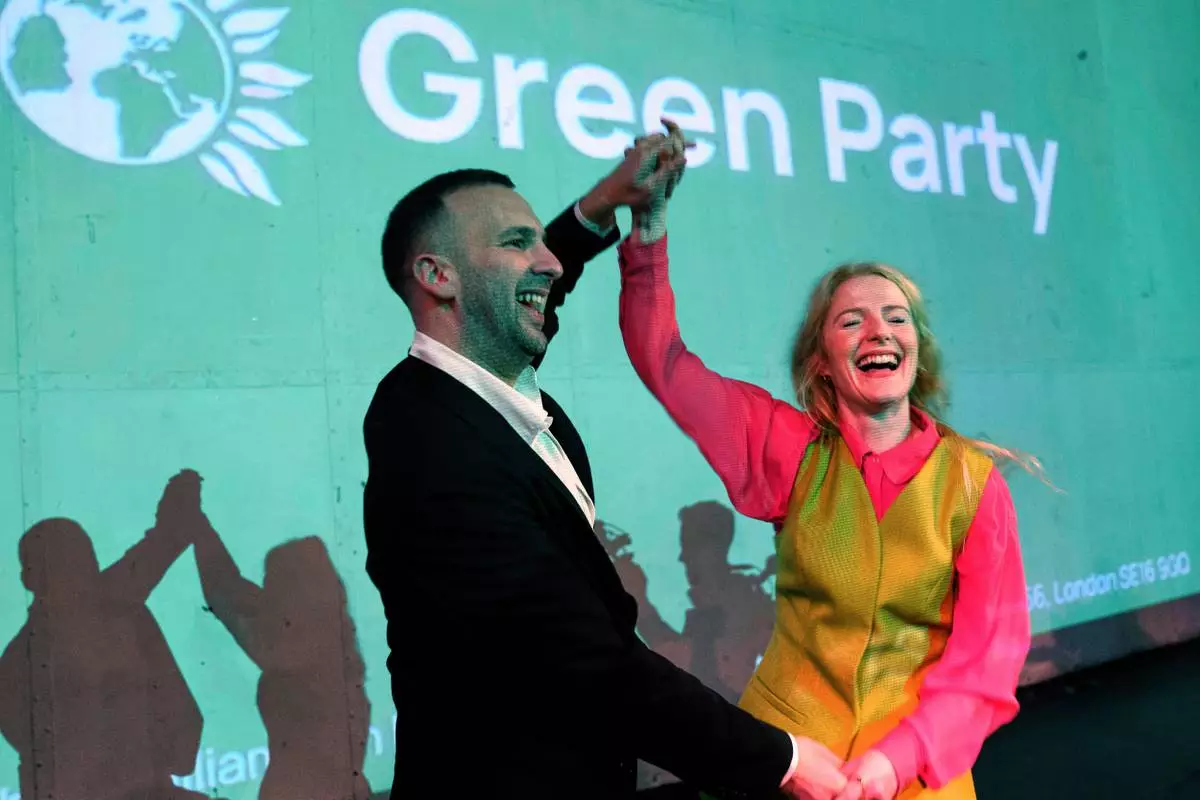
Green Party candidate Hannah Spencer, right, celebrates with party leader Zack Polanski at a volunteer thank you event after winning the Gorton and Denton by-election, Manchester, England, Friday, Feb. 27, 2026. (AP Photo/Jon Super)