NASHVILLE, Tenn. (AP) — Social media is filled with influencers rating electrolyte supplements or even telling followers how to make their own. But experts say many of the claims about the health benefits of these drinks need to be taken with a grain of salt.
Electrolytes are electrically charged substances that help regulate chemical reactions in the body. In the context of hydration, they balance fluid levels inside and outside of cells, said Julia Zumpano, a registered dietitian at the Cleveland Clinic.
Click to Gallery
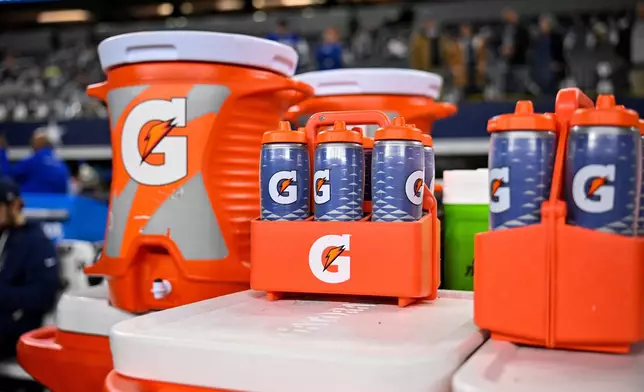
FILE - Gatorade bottles and coolers are seen on the sideline before an NFL football game between the Dallas Cowboys and the Minnesota Vikings, Dec. 14, 2025, in Arlington, Texas. (AP Photo/Jerome Miron, file)
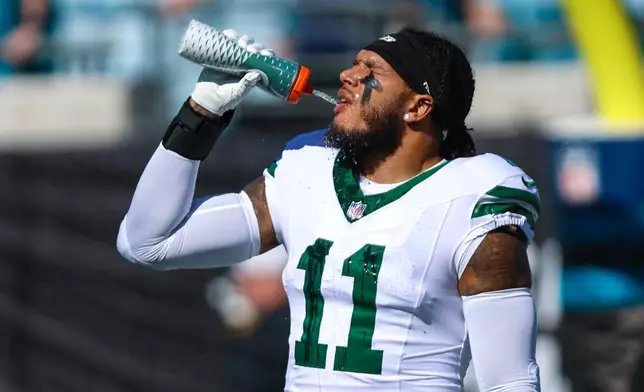
FILE - New York Jets linebacker Jermaine Johnson warms up before an NFL football game against the Jacksonville Jaguars, Dec. 14, 2025, in Jacksonville, Fla. (AP Photo/Gary McCullough)
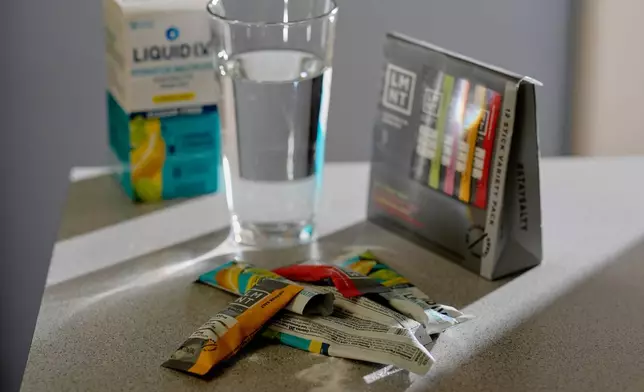
Electrolyte supplements in Nashville, Tenn., on Tuesday, Feb. 24, 2026. (AP Photo/George Walker IV)

Electrolyte supplements are poured into glass of water Tuesday, Feb. 24, 2026, in Nashville, Tenn. (AP Photo/George Walker IV)
We lose some electrolytes through sweat, primarily sodium chloride — which is what is in table salt. Drinking too much plain water when sweating very heavily can dilute the salt in your body even further, throwing things out of balance. Electrolyte drinks and powders are meant to hydrate and replace the lost salt. They often contain other electrolytes like potassium and magnesium. Many also contain some form of sugar.
In general, the kidneys in a healthy person do an excellent job of keeping our electrolytes in balance. Extras simply come out in your urine, said Vanderbilt University nephrologist Hunter Huston, who also consults for a UK-based company that provides electrolyte replacement plans for endurance athletes.
Taking "an electrolyte-enriched drink, just for health purposes, probably isn’t doing much," he said.
Today “rapid hydration” and “advanced hydration” drinks are taking off, but who actually benefits from them and when?
It was 1965 at the University of Florida and then-assistant Gators football Coach Dwayne Douglas had something on his mind. As Robert Cade, the school's first kidney researcher, later explained, Douglas asked him, “Doctor, why don’t football players wee-wee after a game?”
“That question changed our lives,” Cade said.
The obvious answer was that the football players couldn't urinate because they were losing so much fluid through sweat. Cade’s research team determined a player could lose as much as 18 pounds (8.16 kilograms) during a game. But it wasn't just water the players were losing. They were sweating away sodium and chloride and losing both plasma volume and blood volume. The losses were sapping their strength and stamina.
Cade mixed up a briny solution to replace the water and salt players were losing. Sugar would help the gut absorb the sodium. The first batch made him vomit. Some lemon juice made it taste a little better. It still wasn't delicious, but soon the team’s performance improvement could not be ignored — especially in the second half of games when the opposite team's players were starting to wilt in the Florida heat and humidity.
Cade, who died in 2007, said he never dreamed Gatorade would be purchased by regular consumers.
While it seems that everyone is drinking electrolyte supplements these days, not everyone actually needs them.
A good rule of thumb is that if you are exercising for less than two hours, plain water is probably fine, said Vanderbilt's Huston. The average healthy person can tolerate losing around 2% of their body weight in sweat before they really start to feel it, he said. “That’s increased thirst, it’s fatigue, it cramping.”
Everyone is different, though. Some people sweat very heavily or have sweat that is especially salty.
In the world of extreme sports like ultramarathons, athletes often get professional help to test how much they sweat and get a tailored nutrition plan.
“Most folks that are exercising, that are, say, doing a marathon, are gonna be way past that two hours, and it does then make sense to be thinking about, ‘What’s going to be my fluid and electrolyte replacement plan?’” Huston said.
Darren Rovell has followed the rise of sports drinks from a niche market to the mainstream. He is the author of “First in Thirst: How Gatorade Turned the Science of Sweat Into a Cultural Phenomenon” and was an investor in the sports drink Bodyarmor.
When he was a runner in high school, he said, they were given Gatorade to drink and told the reason it tasted bad was because it was good for you. “And then at some point in the nineties, it got to be sugary.” After PepsiCo purchased the brand in 2001, “that really became the first time where you see Gatorade everywhere in front of your face including in a pizza place, and it starts to be, ‘OK. Is this just a different type of soda?’"
Rovell says electrolyte brands market the idea that drinking their products will either make you an athlete or, if you already are an athlete, give you a performance edge.
“It all starts in the aspiration of being better, but you know we do have to check ourselves,” he said.
The supplements out today have an incredibly wide variety of electrolyte concentrations, said Patrick Burns, who practices emergency medicine at Stanford Health Care and occasionally runs in ultramarathons. With some having five times the sodium of others, consumers should not assume all supplements are the same.
Burns also warned that people should be careful about supplementing potassium, because it can be dangerous in large amounts.
He noted that many brands now offer zero sugar varieties, even though the glucose in sugar is what allows for rapid absorption of the sodium.
“They’re not internally consistent, at all, with what they’re trying to sell you,” he said. “For optimal absorption, you need some sugar in with your salt.”
“Electrolytes can help, especially with heavy sweating or exercise, but for most people, they’re not something you need every single day, and you definitely don’t need large amounts of it,” the Cleveland Clinic's Zumpano said.
For a healthy person who is not sweating intensely, the beverages probably won't hurt you, but they won't help you either.
“You’re getting extra sugar, and there’s no reason (for) rapid absorption of sodium because you’re not sodium depleted," said Mark Segal, a professor of nephrology at the University of Florida College of Medicine. Most people get all the salt and potassium they need from food, he said.
As far as making your own electrolyte powders, the experts said it can be done, but you have to know what you are doing. They advised against using a recipe from an influencer.
“How do you know how much you need?” Zumpano asked. “There's a large margin of error there. I'd probably just avoid it.”
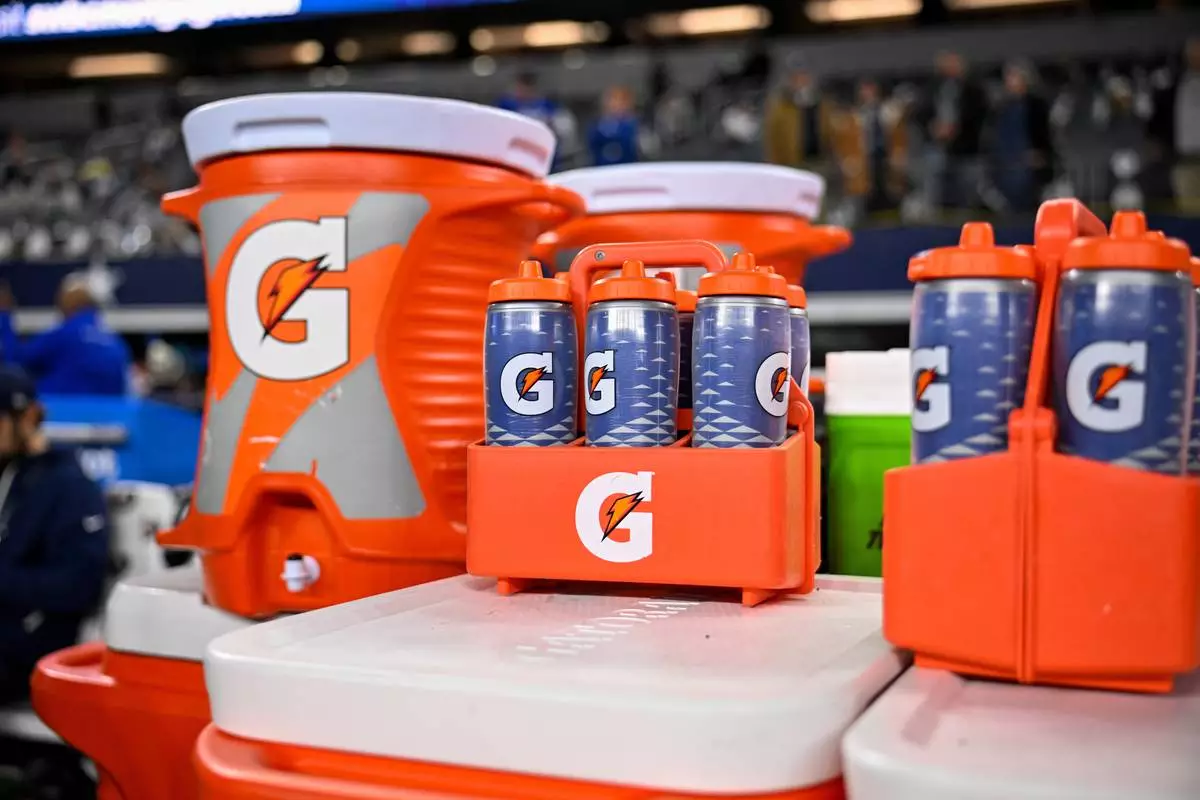
FILE - Gatorade bottles and coolers are seen on the sideline before an NFL football game between the Dallas Cowboys and the Minnesota Vikings, Dec. 14, 2025, in Arlington, Texas. (AP Photo/Jerome Miron, file)
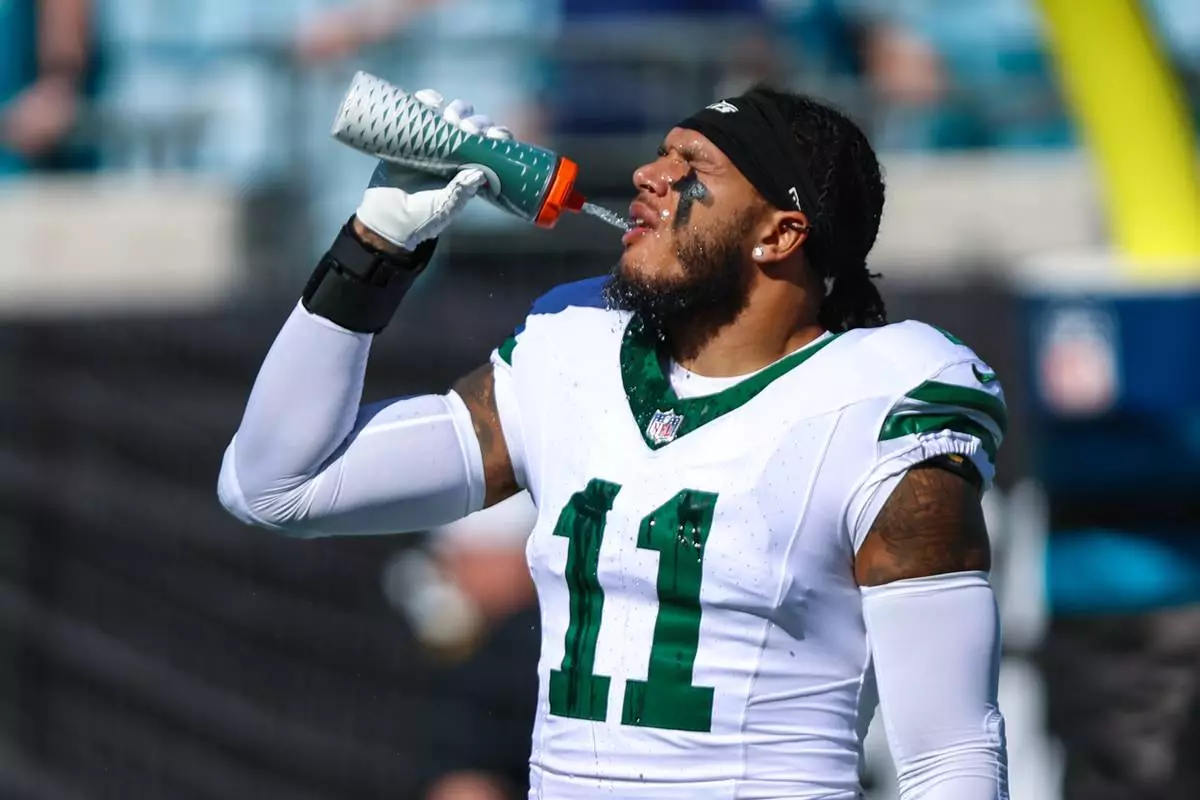
FILE - New York Jets linebacker Jermaine Johnson warms up before an NFL football game against the Jacksonville Jaguars, Dec. 14, 2025, in Jacksonville, Fla. (AP Photo/Gary McCullough)
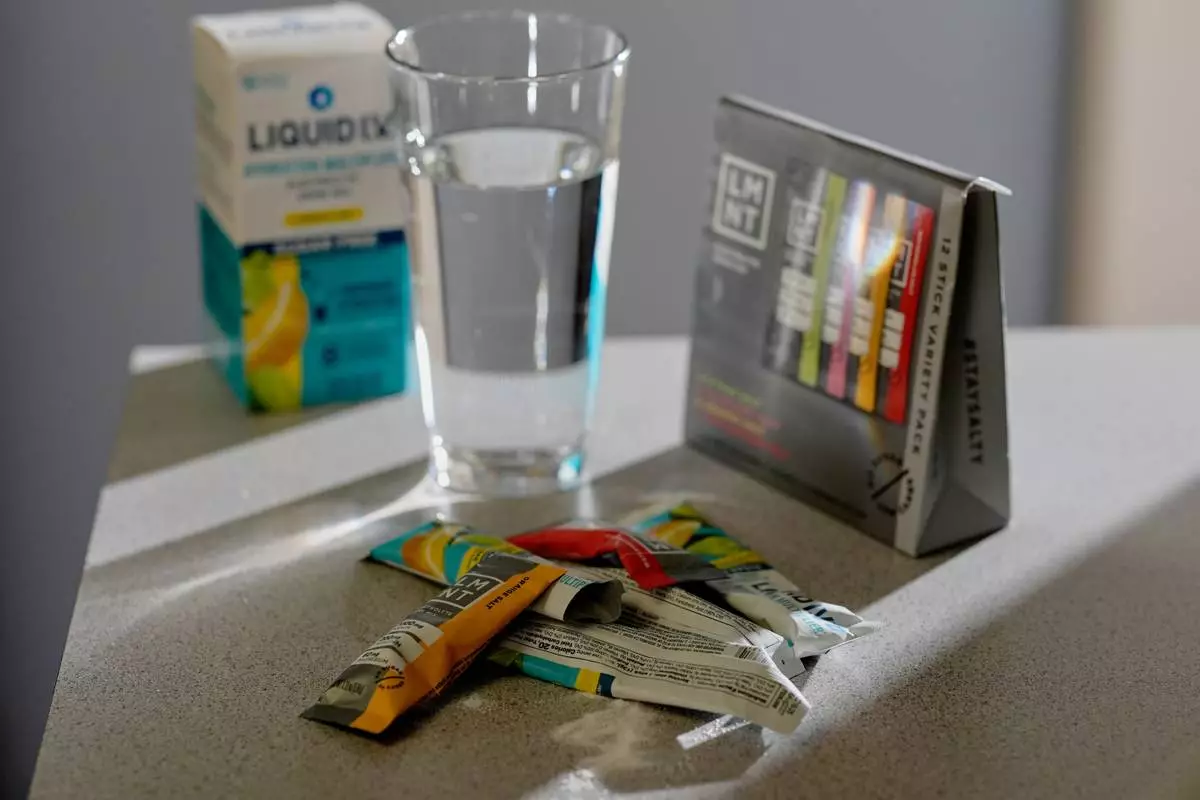
Electrolyte supplements in Nashville, Tenn., on Tuesday, Feb. 24, 2026. (AP Photo/George Walker IV)
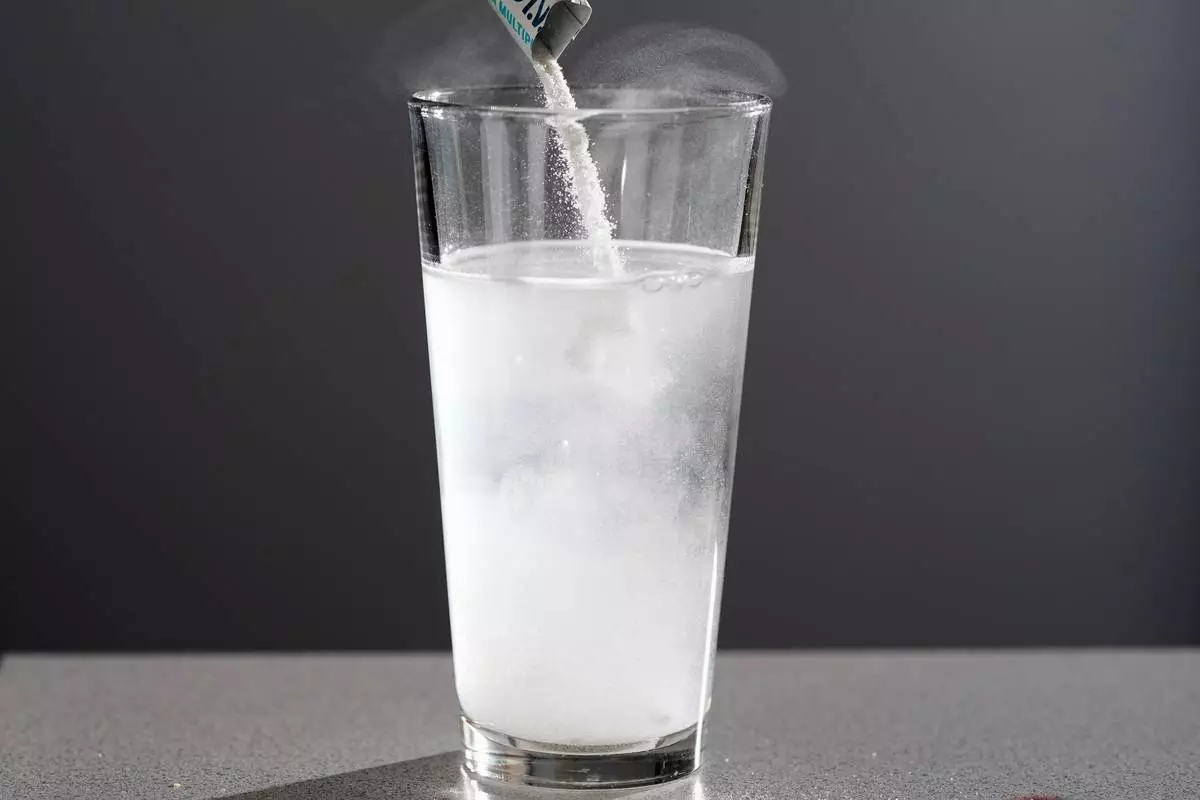
Electrolyte supplements are poured into glass of water Tuesday, Feb. 24, 2026, in Nashville, Tenn. (AP Photo/George Walker IV)
DUBAI, United Arab Emirates (AP) — The U.S. and Israel launched a major attack on Iran on Saturday, and President Donald Trump urged the Iranian public to “seize control of your destiny” by rising up against the Islamic leadership that has ruled the nation since 1979.
Iran retaliated by firing missiles and drones toward Israel and U.S. military bases in the region, and exchanges of fire continued into the evening.
Some of the first strikes on Iran appeared to hit near the offices of Supreme Leader Ayatollah Ali Khamenei. Smoke rose from the capital as part of strikes that Iranian media said occurred nationwide. It wasn’t immediately clear whether the 86-year-old leader was in his offices when the attack occurred.
Iranian Foreign Minister Abbas Araghchi told NBC News that Khamenei and President Masoud Pezeshkian are alive “as far as I know,” and called the attack “unprovoked, illegal and absolutely illegitimate.”
In a video announcing the “major combat operations," Trump told Iranians that “when we are finished, take over your government. It will be yours to take. This will be probably your only chance for generations."
Israeli Prime Minister Benjamin Netanyahu echoed that goal, called for “the brave Iranian people to take their fate into their own hands."
The strikes during the holy fasting month of Ramadan opened a stunning new chapter in U.S. intervention in Iran, and marked the second time in eight months that the Trump administration has attacked the Islamic Republic during talks over its nuclear program. Weeks earlier, a U.S. military operation captured Venezuela’s president, Nicolás Maduro.
The targets included members of Iran's leadership, according to a U.S. official and another person briefed on the attacks who spoke on condition of anonymity to discuss an ongoing operation. There was no immediate information on whether top officials were killed.
Even if Iran's top leaders are killed, regime change is not guaranteed. Neither the U.S. nor Israel have articulated a vision for what new leadership might look like.
Democrats decried that Trump had taken action without congressional authorization. White House spokesperson Karoline Leavitt said the Trump administration had briefed several Republican and Democratic leaders in Congress in advance of the attack.
The U.N. Security Council said it would meet Saturday afternoon. In a letter to the council, Araghchi said “all bases, facilities, and assets of the hostile forces in the region shall be regarded as legitimate military objectives.”
Iran also requested an urgent session of the International Atomic Energy Agency’s Board of Governors about “these threats to safeguarded nuclear facilities,” according to a letter posted by the semiofficial Tasnim news agency.
The U.N.’s nuclear watchdog said on X it was closely monitoring developments and had seen “no evidence of radiological impact.”
Tensions have soared in recent weeks as American warships moved into the region. Trump said he wanted a deal to constrain Iran’s nuclear program at a moment when the country is struggling at home with growing dissent following nationwide protests.
The immediate trigger for Saturday’s strikes appeared to be the unsuccessful latest round of nuclear talks. But they also reflected dramatic changes that have left Iran’s leadership in its weakest position since the Islamic Revolution nearly half a century ago.
Israeli and American strikes last June greatly weakened Iran’s air defenses, military leadership and nuclear program. A regionwide war, sparked by Hamas’ Oct. 7, 2023, attack on Israel, has left Iran’s network of proxies across the Middle East greatly weakened. U.S. sanctions and global isolation, meanwhile, have decimated Iran’s economy.
Iran responded to the latest strikes by launching missiles and drones targeting Israel and strikes targeting U.S. military installations in Bahrain, Kuwait and Qatar. Israel’s military said Iran fired “dozens” of missiles at Israel, with many intercepted and no serious injuries reported. Emergency responder Magen David Adom noted 89 “lightly injured” people.
At least three explosions were heard Saturday evening near the Intelligence Ministry building in northern Tehran, witnesses said, adding that air defense systems had begun operating in the area. There was no immediate statement in Iranian media, while Israel's military said it had begun a new wave of strikes against missile launchers and aerial defense systems in central Iran.
In southern Iran, at least 85 people were reported killed after a girls’ school was struck, and dozens more were wounded, the local governor told Iranian state TV.
Capt. Tim Hawkins, a spokesman for U.S. Central Command, said he was “aware of reports” that a girls' school was struck and they were looking into them.
Flights across the Middle East were disrupted, and air defense fire thudded over Dubai, the United Arab Emirates' commercial capital. Shrapnel from an Iranian missile attack on the UAE capital killed one person, state media said.
The U.S. military for weeks has amassed forces in the region, even as U.S. and Iranian envoys held talks in Switzerland and Oman.
“Active and serious negotiations have yet again been undermined,” Oman’s Foreign Minister Badr al-Busaidi, a key mediator, said on X. “Neither the interests of the United States nor the cause of global peace are well served by this."
Israel said the operation has been planned for months with the U.S. “Air Force pilots are striking hundreds of targets across Iran, at significant personal risk and in coordination with U.S. strikes,” Israeli military chief of staff Lt. Gen. Eyal Zamir said in a statement.
Targets in the Israeli campaign included Iran’s military, symbols of government and intelligence targets, according to an official briefed on the operation, who spoke on condition of anonymity to discuss nonpublic information on the attack.
Trump, in seeking to justify the military action, claimed Iran has continued to develop its nuclear program, despite asserting last year the program had been “obliterated” by an earlier round of strikes. He acknowledged Saturday that there could be American casualties, saying “that often happens in war.”
It was a notable call from a U.S. leader who swept into office on an “America First” platform and vowed to keep out of “forever wars.”
Trump’s statement listed grievances beyond the nuclear program, stretching back to the beginning of the Islamic Republic, following a revolution in 1979 that turned Iran from an American ally into a fierce foe.
The U.S. president said he was aiming to “annihilate” the Iranian navy and destroy regional proxies supported by Tehran. He called on the Iranian Revolutionary Guard to lay down arms, pledging members would be given immunity, while warning they would face “certain death” if they didn’t.
Trump had threatened military action, but held off, following Iran's recent crackdown on protests spurred by economic grievances that evolved into a nationwide, anti-government push against the ruling clerics.
The Human Rights Activists News Agency says it confirmed more than 7,000 deaths in the crackdown and is investigating thousands more. The government has acknowledged more than 3,000 killed.
Iran has said it hasn’t enriched uranium since June, but it has blocked international inspectors from visiting the sites America bombed. Satellite photos analyzed by The Associated Press have shown new activity at two of those sites, suggesting Iran is trying to assess and potentially recover material there.
Iran said it hoped to avert a war, but maintained its right to enrich uranium. Its leaders did not want to discuss other issues, such as its long-range missile program or support for armed groups like Hamas and Hezbollah.
The strikes could rattle global markets, particularly if Iran is able to make the Strait of Hormuz unsafe for commercial traffic. A third of total worldwide oil exports transported by sea passed through the strait in 2025.
Saudi Arabia said in an announcement on state-run media that Iran had targeted its capital and its eastern region in an attack that was repelled.
Kuwait’s civil aviation authority said a drone targeted the main international airport, injuring several employees. Kuwait’s health ministry said 12 people were injured in strikes. Bahrain said a missile attack targeted the U.S. Navy’s 5th Fleet headquarters in the island kingdom. Explosions could also be heard in Qatar. Jordan said it “dealt with” 49 drones and ballistic missiles.
The Iranian-backed Houthis in Yemen vowed to resume attacks on Red Sea shipping routes and on Israel, according to two senior Houthi officials who spoke on condition of anonymity because there was no official announcement.
U.S. embassies or consulates in Qatar, United Arab Emirates and Israel said staffers were told to shelter in place and recommended all Americans “do the same until further notice.”
Toropin and Madhani reported from Washington and Boak from West Palm Beach, Florida. Associated Press writers Melanie Lidman and Sam Mednick in Tel Aviv, Israel, Qassim Abdul-Zahra in Baghdad, Samy Magdy in Cairo, and Farnoush Amiri in New York contributed to this report.
This story has been corrected to show that IRNA reported 40 people were killed in the school strike, without specifying students.
A woman holds a picture of the Iranian Supreme Leader Ayatollah Ali Khamenei during a demonstration in support of the government and against U.S. and Israeli strikes in Tehran, Iran, Saturday, Feb. 28, 2026. (AP Photo/Vahid Salemi)
People rush to take shelter as warning sirens sound following missile fired towards Israel, in Tel Aviv, Israel, Saturday, Feb. 28, 2026. (AP Photo/Ohad Zwigenberg)
Civilians staying in a shelter after alarms announced that Israel had launched an attack on Iran, in Ramat Gan, Israel, Saturday, Feb. 28, 2026. (AP Photo/Oded Balilty)
People watch as smoke rises on the skyline after an explosion in Tehran, Iran, Saturday, Feb. 28, 2026.(AP Photo)
Smoke rises on the skyline after an explosion in Tehran, Iran, Saturday, Feb. 28, 2026.(AP Photo)
Smoke rises on the skyline after an explosion in Tehran, Iran, Saturday, Feb. 28, 2026.(AP Photo/Vahid Salemi)
Smoke rises on the skyline after an explosion in Tehran, Iran, Saturday, Feb. 28, 2026.(AP Photo)
Smoke rises on the skyline after an explosion in Tehran, Iran, Saturday, Feb. 28, 2026.(AP Photo/Vahid Salemi)
FILE -Israeli Defense Minister Israel Katz makes statements with his Greek counterpart Nikos Dendias after their meeting in Athens, Greece, Tuesday, Jan. 20, 2026. (AP Photo/Thanassis Stavrakis, File)