BRUSSELS (AP) — World leaders reacted warily to U.S. and Israeli strikes on Iran on Saturday that triggered concerns of a broader conflict.
European leaders held emergency meetings and took measures to protect their citizens in the Middle East, with key leaders calling for a negotiated settlement between Iran and the U.S. Australia and Canada were more open in their support for the strikes, while Russia and China responded with criticism.
Britain, France and Germany called for a resumption of U.S.-Iran nuclear negotiations and condemned Iranian attacks on countries in the region. They did not directly comment on the U.S. and Israeli strikes on Iran.
British Prime Minister Keir Starmer, French President Emmanuel Macron and German Chancellor Friedrich Merz said in a statement their countries didn’t take part in the strikes on Iran but are in close contact with the U.S., Israel and partners in the region.
The three countries have led efforts to reach a negotiated solution over Iran’s nuclear program.
“We condemn Iranian attacks on countries in the region in the strongest terms. Iran must refrain from indiscriminate military strikes. We call for a resumption of negotiations and urge the Iranian leadership to seek a negotiated solution. Ultimately, the Iranian people must be allowed to determine their future,” they said.
The strikes on Iran create a dilemma for Washington's allies. While European leaders firmly oppose Iran’s nuclear program and crackdowns by its hard-line theocracy, they are loath to embrace unilateral military action by President Donald Trump that could breach international law and unleash a broader conflict.
Trump’s strikes on Iran last June, and the arrest of Venezuela’s Nicolas Maduro last month, caused a similar quandary.
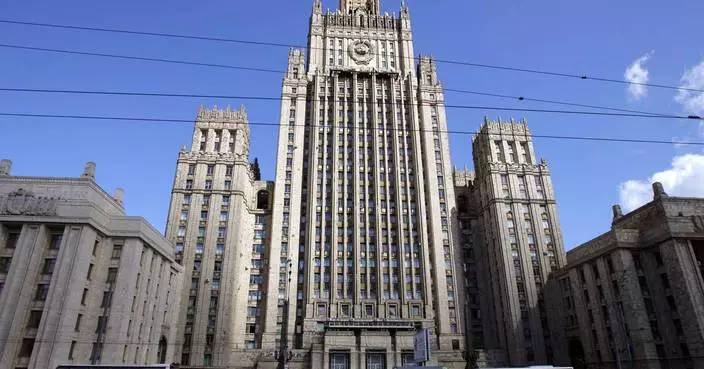
Russia’s Foreign Ministry called the strikes “a pre-planned and unprovoked act of armed aggression against a sovereign and independent U.N. member state.” The ministry accused Washington and Tel Aviv of “hiding behind” concerns about Iran’s nuclear program while actually pursuing regime change.
China’s government said it was “highly concerned” about the U.S. and Israeli strikes on Iran and called for an immediate halt to the military action and a return to negotiations. “Iran’s sovereignty, security and territorial integrity should be respected,” a Chinese Foreign Ministry statement said.
It was unclear whether U.S. allies were given any advance warning of the attacks. The German government said it was only given notice Saturday morning. France’s junior defense minister said France knew something would happen, but didn’t know when.
Earlier on Saturday, French President Emmanuel Macron called for an emergency U.N. Security Council meeting in response to the strikes in Iran.
“The outbreak of war among the United States, Israel and Iran has serious consequences for peace and international security,″ Macron said earlier on Saturday.
British Prime Minister Keir Starmer chaired a meeting of the government’s emergency committee on Saturday morning. “We do not want to see further escalation into a wider regional conflict,” a U.K. government spokesperson said.
The German government’s crisis management team also was also due to meet on Saturday.
“NATO is closely following developments in Iran and the region,” NATO spokesperson Allison Hart said.
Australian Prime Minister Anthony Albanese said his country supports the U.S. in its effort to stop Iran from obtaining an atomic bomb. He described Iran’s current leadership as a destabilizing force and noted two attacks on Australian soil that were blamed on Tehran.
Australia in August cut off diplomatic relations with Iran and expelled its ambassador after accusing it of orchestrating two antisemitic attacks in the country.
Canada too, despite recent tensions with the U.S., expressed its support for the military action. “The Islamic Republic of Iran is the principal source of instability and terror throughout the Middle East,” Prime Minister Mark Carney said.
Responding to the attack, the European Union’s top diplomat Kaja Kallas called the conflict in the Middle East “perilous” and said she was working with Israeli and Arab officials to pursue a negotiated peace.
EU leaders issued a joint statement Saturday calling for restraint and engaging in regional diplomacy in hopes of “ensuring nuclear safety.”
“We call on all parties to exercise maximum restraint, to protect civilians, and to fully respect international law,” said European Commission President Ursula von der Leyen and European Council President António Costa.
Norwegian Foreign Minister Espen Barth Eide told Norwegian broadcaster NRK that he was concerned the failure of negotiations between the U.S. and Iran meant a “new, extensive war in the Middle East” would happen.
The Nobel Peace Prize-winning International Campaign to Abolish Nuclear Weapons condemned the U.S. and Israeli strikes on Iran in harsher words.
“These attacks are totally irresponsible and risk provoking further escalation as well as increasing the danger of nuclear proliferation and the use of nuclear weapons,” said its executive director, Melissa Parke.
Malaysian Prime Minister Anwar Ibrahim condemned Israeli strikes on Iran and accompanying U.S. military action, warning that the escalating conflict has pushed the Middle East to the “edge of catastrophe.”
Pakistan’s Foreign Minister Ishaq Dar on Saturday condemned what he described as “unwarranted attacks” on Iran during a phone call with his Iranian counterpart Abbas Araghchi.
Ciobanu reported from Warsaw. Associated Press writers Angela Charlton in Paris, Paolo Santalucia in Rome, Suman Naishadham in Madrid, Elise Morton and Krutika Pathi in London, Jamey Keaton in Geneva, Eileen Ng in Kuala Lumpur, Fatma Khaled in Cairo, Ken Moritsugu in Beijing and Adam Schreck in Bangkok contributed to this report.
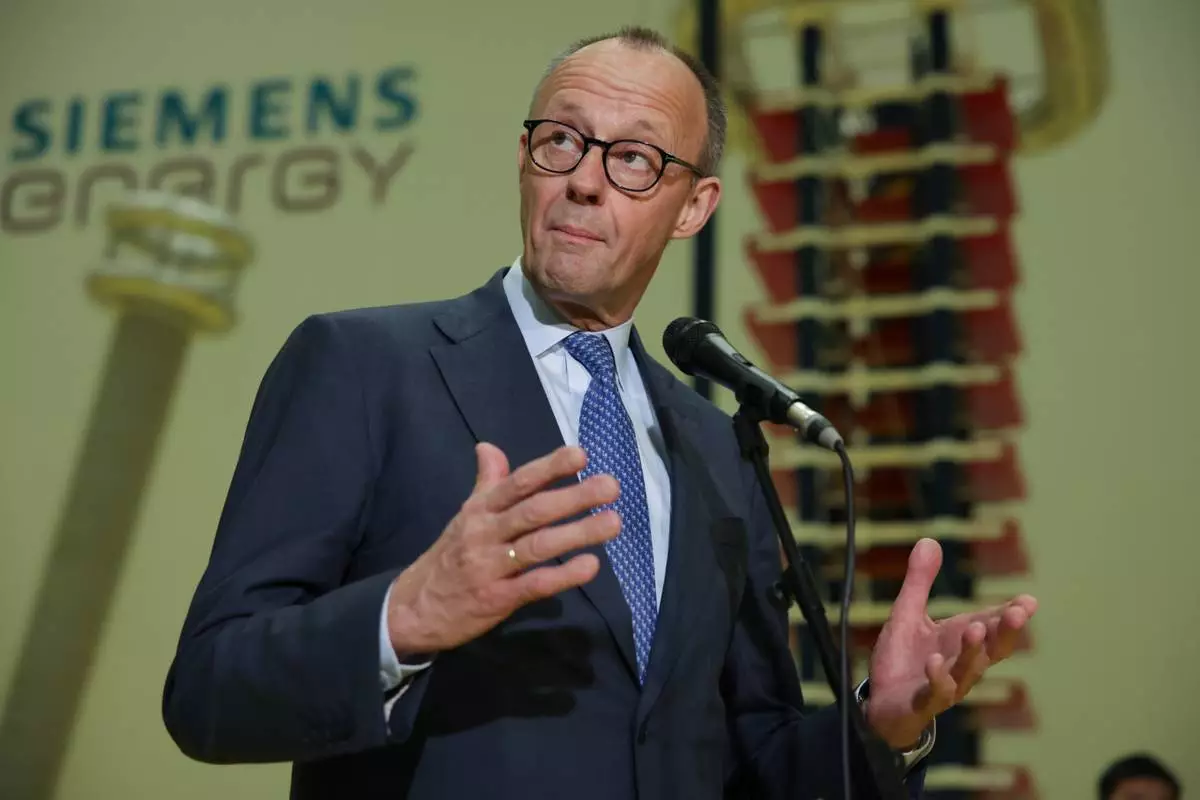
German Chancellor Friedrich Merz speaks before media members as he visits facilities of Siemens Energy during his official visit, in Hangzhou, China, Thursday, Feb. 26, 2026. (Andres Martinez Casares/Pool Photo via AP)

British Prime Minister Sir Keir Starmer speaks with students and staff, during a visit to the Walbottle Academy Campus in Newcastle-upon-Tyne, England, Thursday, Feb. 26, 2026. (Scott Heppell/PA via AP)

EU High Representative Kaja Kallas visits the coast guard ship KV Bjornoya, in Tromso, Norway, Tuesday Feb. 3, 2026. (Rune Stoltz Bertinussen/NTB Scanpix via AP)
DUBAI, United Arab Emirates (AP) — The U.S. and Israel launched a major attack on Iran on Saturday, and President Donald Trump called on the Iranian public to “seize control of your destiny” by rising up against the Islamic leadership that has ruled the nation since 1979. Iran retaliated by firing missiles and drones toward Israel and U.S. military bases in the region.
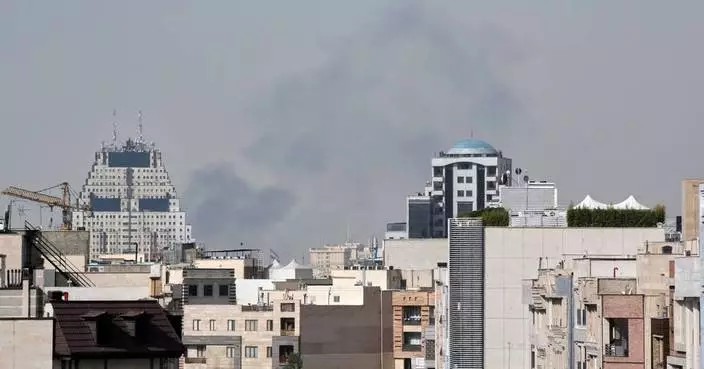
Some of the first strikes on Iran appeared to hit areas around the offices of Supreme Leader Ayatollah Ali Khamenei. Smoke could be seen rising from the capital as part of strikes that Iranian media said occurred nationwide. It wasn’t immediately clear whether the 86-year-old leader was in his offices when the attack occurred.
Iranian Foreign Minister Abbas Araghchi told NBC News that Khamenei and President Masoud Pezeshkian are alive “as far as I know,” and called the attack “unprovoked, illegal and absolutely illegitimate.”
In a video announcing the “major combat operations," Trump told Iranians that “when we are finished, take over your government. It will be yours to take. This will be probably your only chance for generations."
Israeli Prime Minister Benjamin Netanyahu echoed that goal, saying, “Our joint operation will create the conditions for the brave Iranian people to take their fate into their own hands."
The strikes during the holy fasting month of Ramadan opened a stunning new chapter in U.S. intervention in Iran and marked the second time in eight months that the Trump administration has used military force against the Islamic Republic. They also came weeks after a U.S. military operation that captured Venezuela’s president, Nicolás Maduro.
The targets included members of Iran's leadership, according to a U.S. official and another person briefed on the attacks who spoke on condition of anonymity to discuss an ongoing operation. There was no immediate information on whether top officials had been killed.
Even if Iran's top leaders were to be killed, regime change is not guaranteed and neither the U.S. nor Israel have articulated a vision for what new leadership would look like.
Democrats decried that Trump had taken action without congressional authorization. Rep. Hakeem Jeffries, the top House Democrat, said that though Iran is a “bad actor,” the president must nonetheless “seek authorization for the preemptive use of military force that constitutes an act of war.”
The U.N. Security Council said it would meet Saturday afternoon. In a letter to the council, Araghchi said Iran will retaliate by all means necessary and “all bases, facilities, and assets of the hostile forces in the region shall be regarded as legitimate military objectives.”
Tensions have soared in recent weeks as American warships moved into the region. Trump said he wanted a deal to constrain Iran’s nuclear program at a moment when the country is struggling at home with growing dissent following nationwide protests.
The immediate trigger for Saturday’s strikes appears to be the unsuccessful latest round of nuclear talks. But they also reflect the dramatic changes across the region that have left Iran’s leadership in its weakest position since the Islamic Revolution nearly half a century ago.
Israeli and American strikes last June greatly weakened Iran’s air defenses, military leadership and nuclear program. A regionwide war, sparked by Hamas’ Oct. 7, 2023, attack on Israel, has left Iran’s network of proxies across the Middle East greatly weakened. U.S. sanctions and global isolation, meanwhile, have decimated Iran’s economy.
Iran responded to the latest strikes as it had been threatening to do for months, including by launching missiles and drones targeting Israel as well as strikes targeting U.S. military installations in Bahrain, Kuwait and Qatar. “The time has come to defend the homeland and confront the enemy's military assault,” Iran’s Foreign Ministry said in a statement on X.
At least 57 people were reported killed at a girls’ school in southern Iran in the Israeli-U.S. strikes, and dozens others were wounded, according to Iran’s state-run IRNA news agency. The White House and the Israeli military did not immediately respond to a request for comment.
Flights across the Middle East were disrupted and air defense fire thudded over Dubai, the commercial capital of the United Arab Emirates. Shrapnel from an Iranian missile attack on the capital of the UAE killed one person, state media said.
The U.S. military has for weeks amassed forces in the region, even as U.S. and Iranian envoys held talks in Switzerland and Oman aimed at finding a diplomatic solution.
“Active and serious negotiations have yet again been undermined,” Oman’s Foreign Minister Badr al-Busaidi said on X. Al-Busaidi, a key mediator in the talks, traveled to Washington on Friday to meet with Vice President JD Vance.
“Neither the interests of the United States nor the cause of global peace are well served by this," al-Busaidi said. "And I pray for the innocents who will suffer. I urge the United States not to get sucked in further.”
Israel said the operation has been planned for months with the U.S.
Trump, in seeking to justify the military action, claimed Iran has continued to develop its nuclear program despite asserting last year the program had been “obliterated” by an earlier round of strikes. He acknowledged Saturday that there could be American casualties, saying “that often happens in war.”
It was a notable call from a U.S. leader who swept into office on an “America First” platform and vowed to keep out of “forever wars” that had bogged down his recent predecessors.
Trump’s statement listed grievances beyond the nuclear program, stretching back to the beginning of the Islamic Republic following a revolution in 1979 that turned Iran from an American ally in the Middle East into a fierce foe.
The U.S. president said he was aiming to “annihilate” the Iranian navy and destroy regional proxies supported by Tehran.
He also called on the Iranian Revolutionary Guard to lay down arms, pledging members would be given immunity, while warning they would face “certain death” if they didn’t.
Trump had threatened military action, but held off, following Iran's recent crackdown on protests spurred by economic grievances. The protests evolved into a nationwide, anti-government push against the ruling clerics.
The Human Rights Activists News Agency says it confirmed more than 7,000 deaths in the crackdown and that it is investigating thousands more. The government has acknowledged more than 3,000 killed, though it has undercounted or not reported fatalities from past unrest.
Iran has said it hasn’t enriched since June, but it has blocked international inspectors from visiting the sites America bombed during a 12-day war then. Satellite photos analyzed by The Associated Press have shown new activity at two of those sites, suggesting Iran is trying to assess and potentially recover material there.
Iran currently has a self-imposed limit on its ballistic missile program, limiting their range to 2,000 kilometers (1,240 miles). That puts all the Mideast and some of Eastern Europe in their range.
Iran said it hoped to avert a war, but maintained its right to enrich uranium. Its leaders did not want to discuss other issues, such as its long-range missile program or support for armed groups like Hamas and Hezbollah.
The strikes could rattle global markets, particularly if Iran is able to make the Strait of Hormuz unsafe for commercial traffic. A third of total worldwide oil exports transported by sea passed through the strait in 2025..
Iranian media reported strikes nationwide. Roads to Khamenei's compound in downtown Tehran had been shut down by authorities as other blasts rang out across the capital.
Khamenei has not made a public appearance in recent days and wasn't immediately seen after. During the 12-day war in June, he was believed to have been taken to a secure location away from his Tehran compound.
Targets in the Israeli campaign included Iran’s military, symbols of government and intelligence targets, according to an official briefed on the operation, who spoke on condition of anonymity to discuss nonpublic information on the attack.
Hours after the strikes, Iran’s paramilitary Revolutionary Guard said it launched a “first wave” of drones and missiles targeting Israel. There was no immediate word on any damage or casualties.
Saudi Arabia said in an announcement on state-run media that Iran had targeted its capital and its eastern region in an attack that was repelled.
Bahrain said a missile attack targeted the U.S. Navy’s 5th Fleet headquarters in the island kingdom. Witnesses heard sirens and explosions in Kuwait, home to U.S. Army Central. Explosions could also be heard in Qatar.
The Iranian-backed Houthis in Yemen vowed to resume attacks on Red Sea shipping routes and on Israel, according to two senior Houthi officials who poke on condition of anonymity because there was no official announcement.
U.S. embassies or consulates in Qatar, United Arab Emirates and Israel posted on social media that they told staffers to shelter in place and recommended all Americans “do the same until further notice.”
Toropin and Madhani reported from Washington and Boak from West Palm Beach, Florida. Associated Press writers Melanie Lidman and Sam Mednick in Tel Aviv, Israel, Qassim Abdul-Zahra in Baghdad, Samy Magdy in Cairo, and Farnoush Amiri in New York contributed to this report.
This story has been corrected to show that IRNA reported 40 people were killed in the school strike, without specifying students.
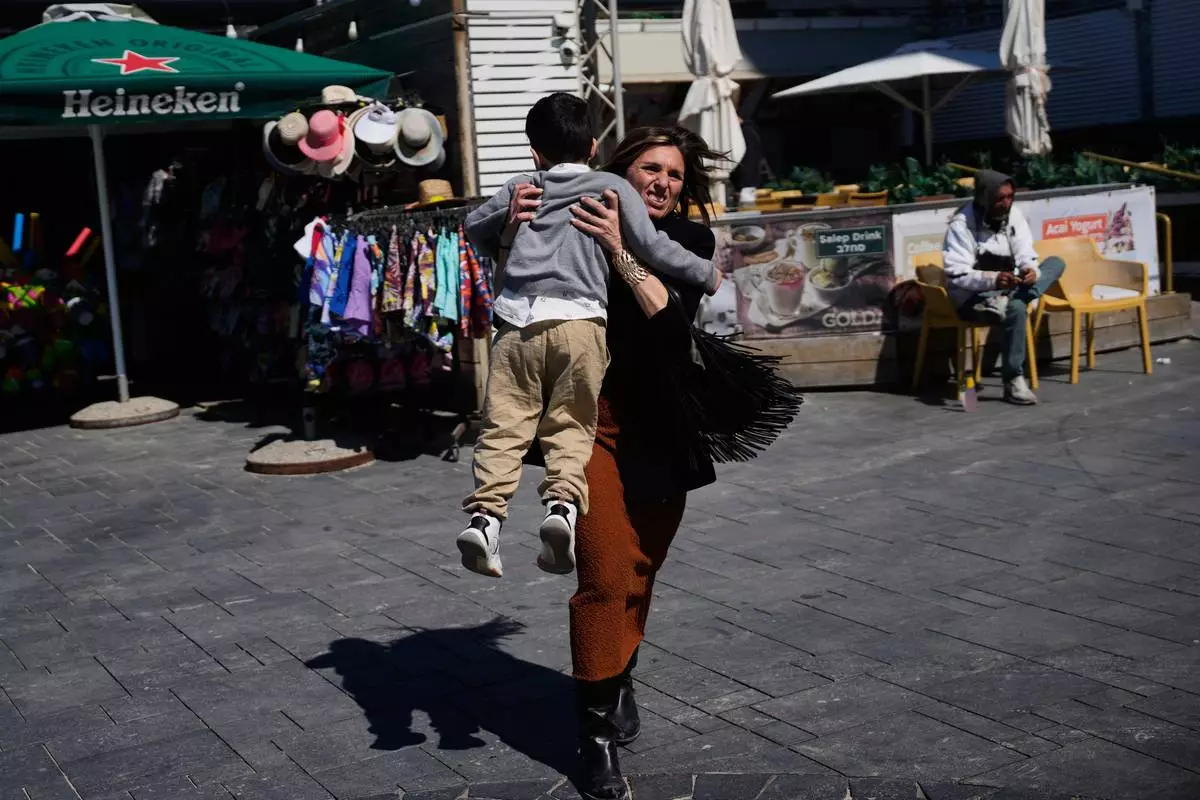
People rush to take shelter as warning sirens sound following missile fired towards Israel, in Tel Aviv, Israel, Saturday, Feb. 28, 2026. (AP Photo/Ohad Zwigenberg)
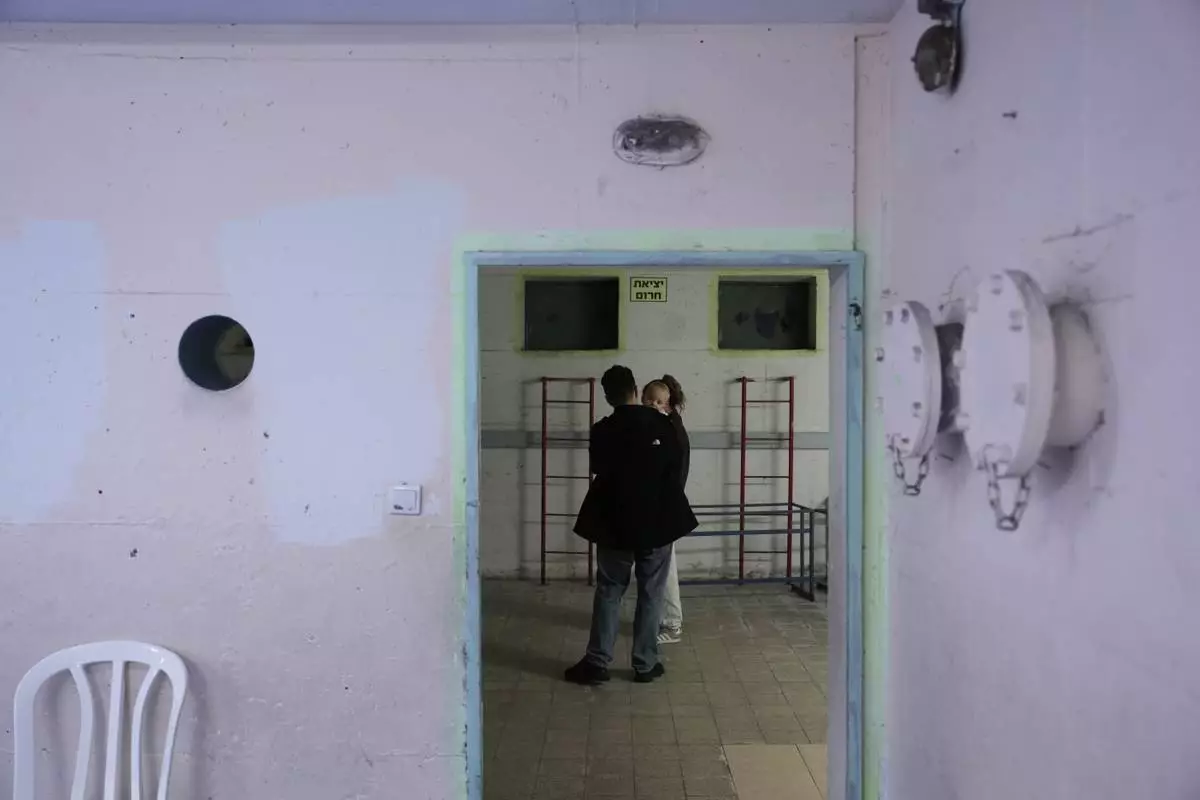
Civilians staying in a shelter after alarms announced that Israel had launched an attack on Iran, in Ramat Gan, Israel, Saturday, Feb. 28, 2026. (AP Photo/Oded Balilty)
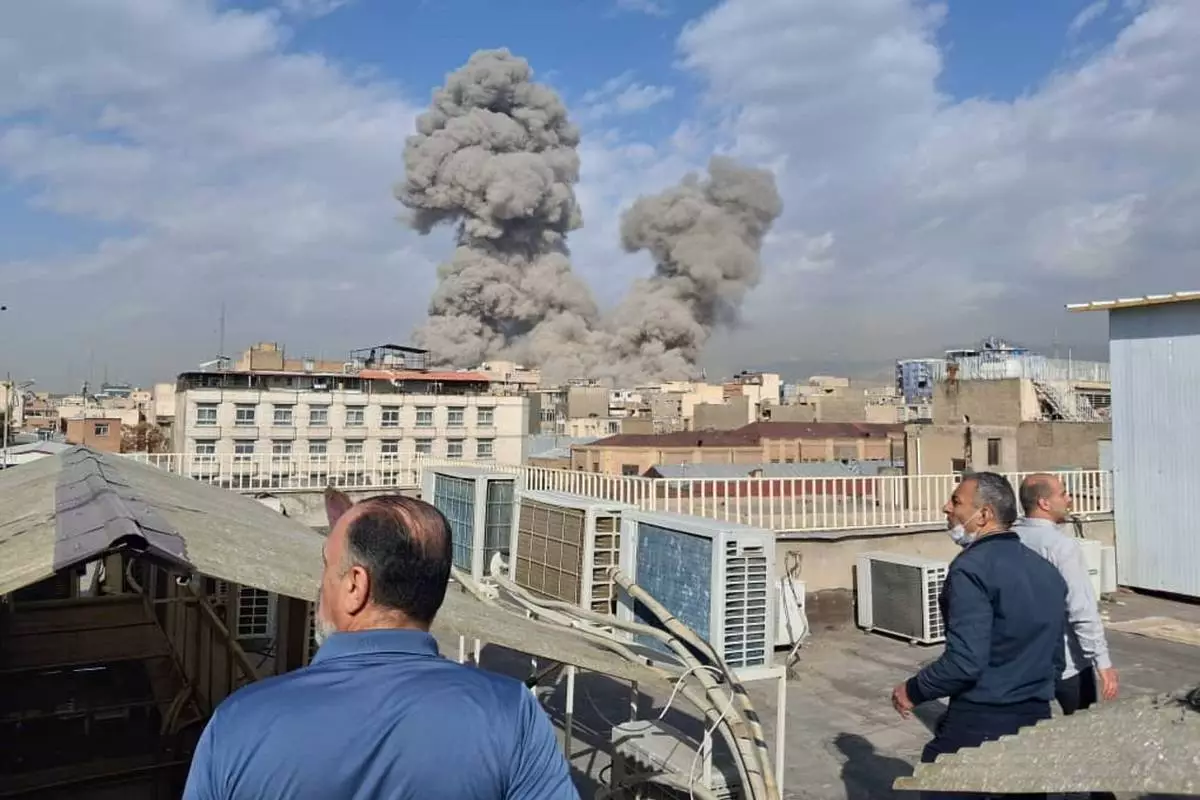
People watch as smoke rises on the skyline after an explosion in Tehran, Iran, Saturday, Feb. 28, 2026.(AP Photo)
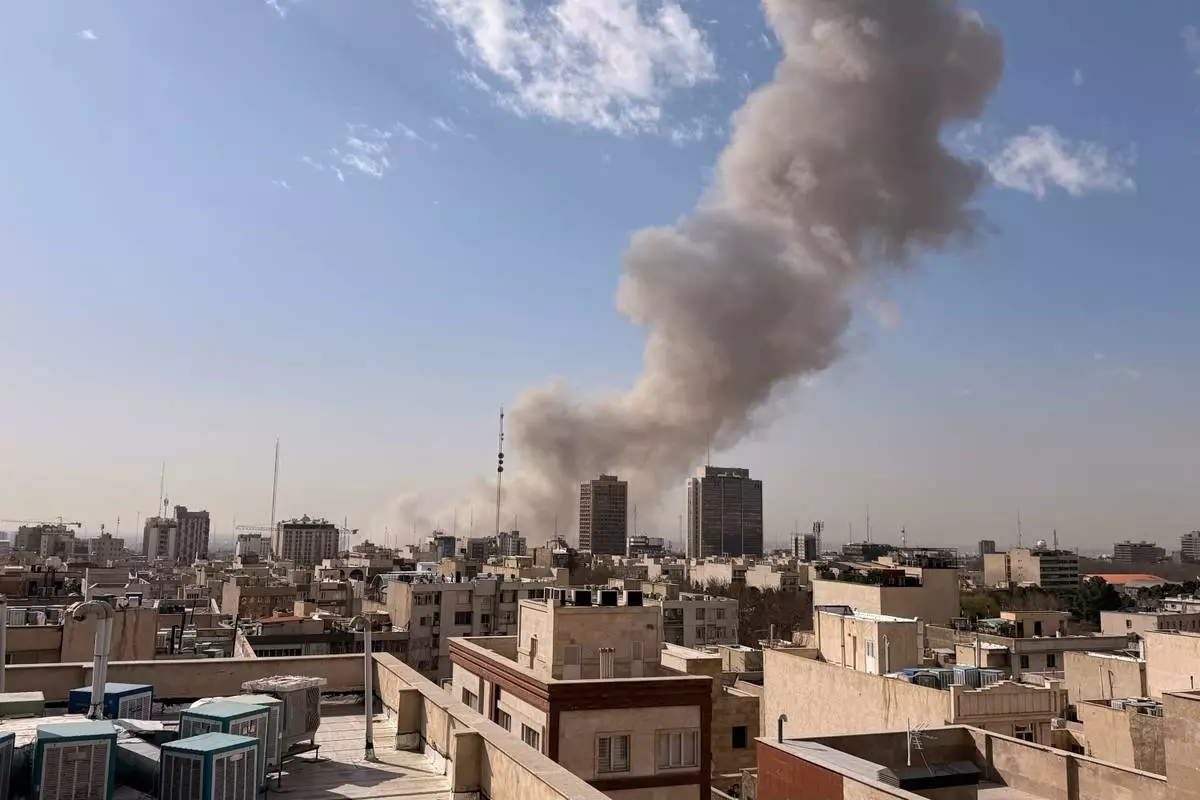
Smoke rises on the skyline after an explosion in Tehran, Iran, Saturday, Feb. 28, 2026.(AP Photo)
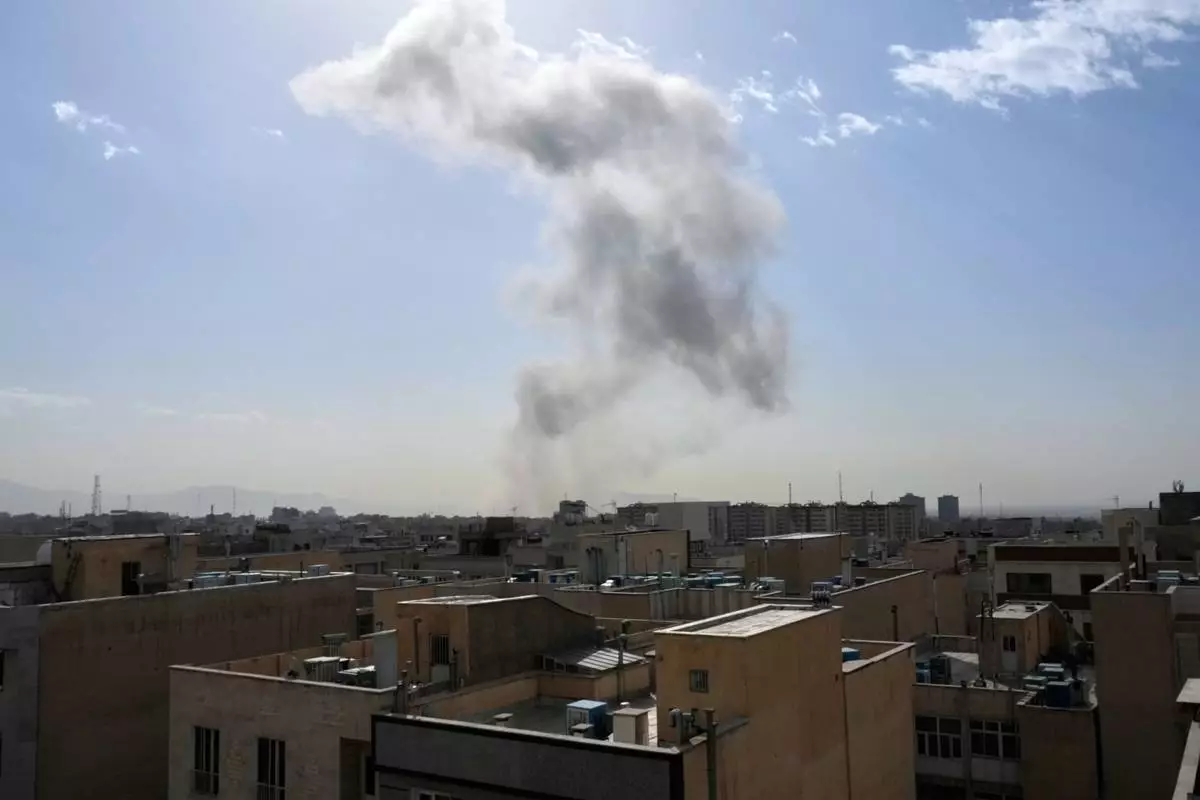
Smoke rises on the skyline after an explosion in Tehran, Iran, Saturday, Feb. 28, 2026.(AP Photo/Vahid Salemi)
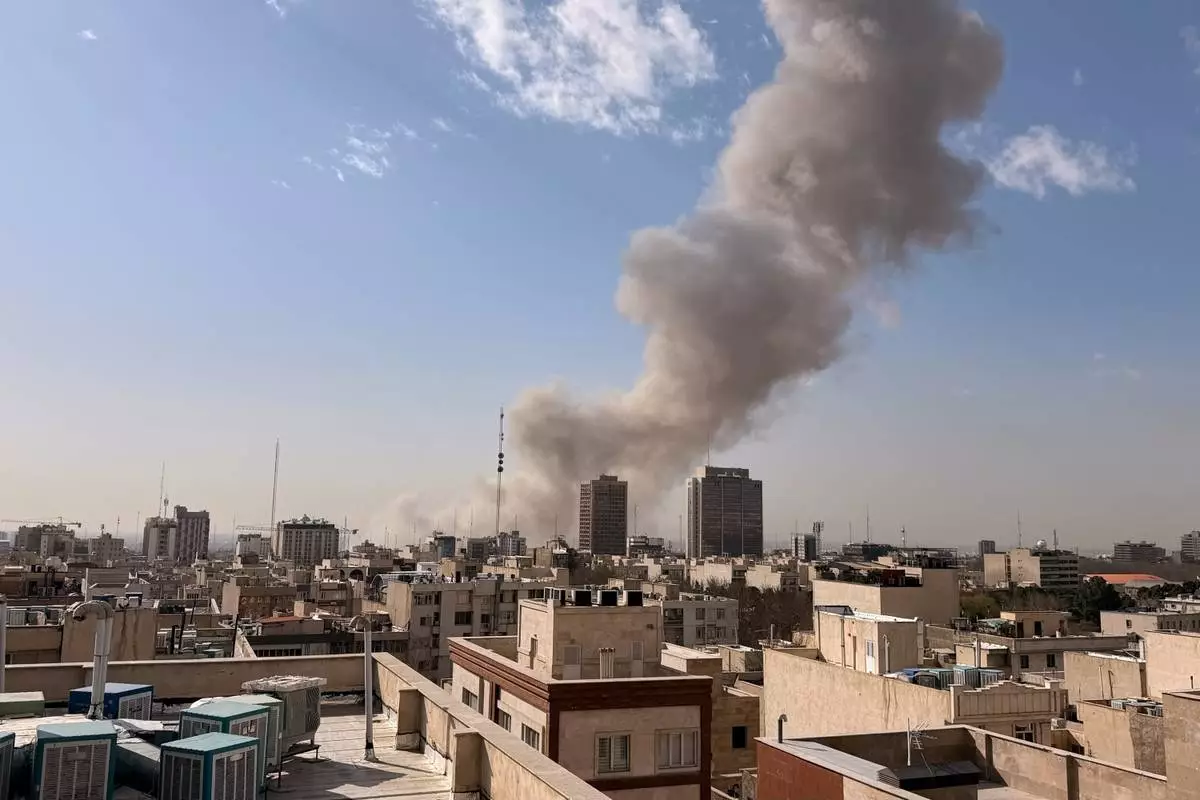
Smoke rises on the skyline after an explosion in Tehran, Iran, Saturday, Feb. 28, 2026.(AP Photo)
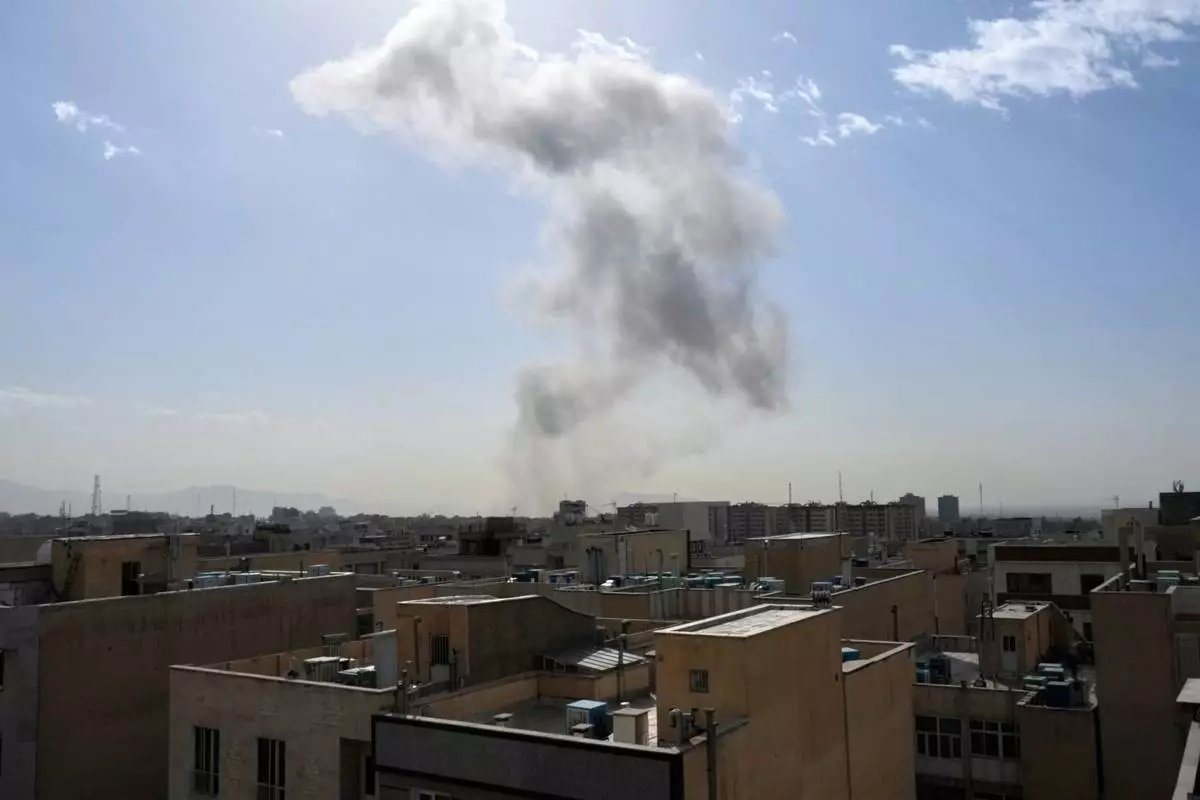
Smoke rises on the skyline after an explosion in Tehran, Iran, Saturday, Feb. 28, 2026.(AP Photo/Vahid Salemi)
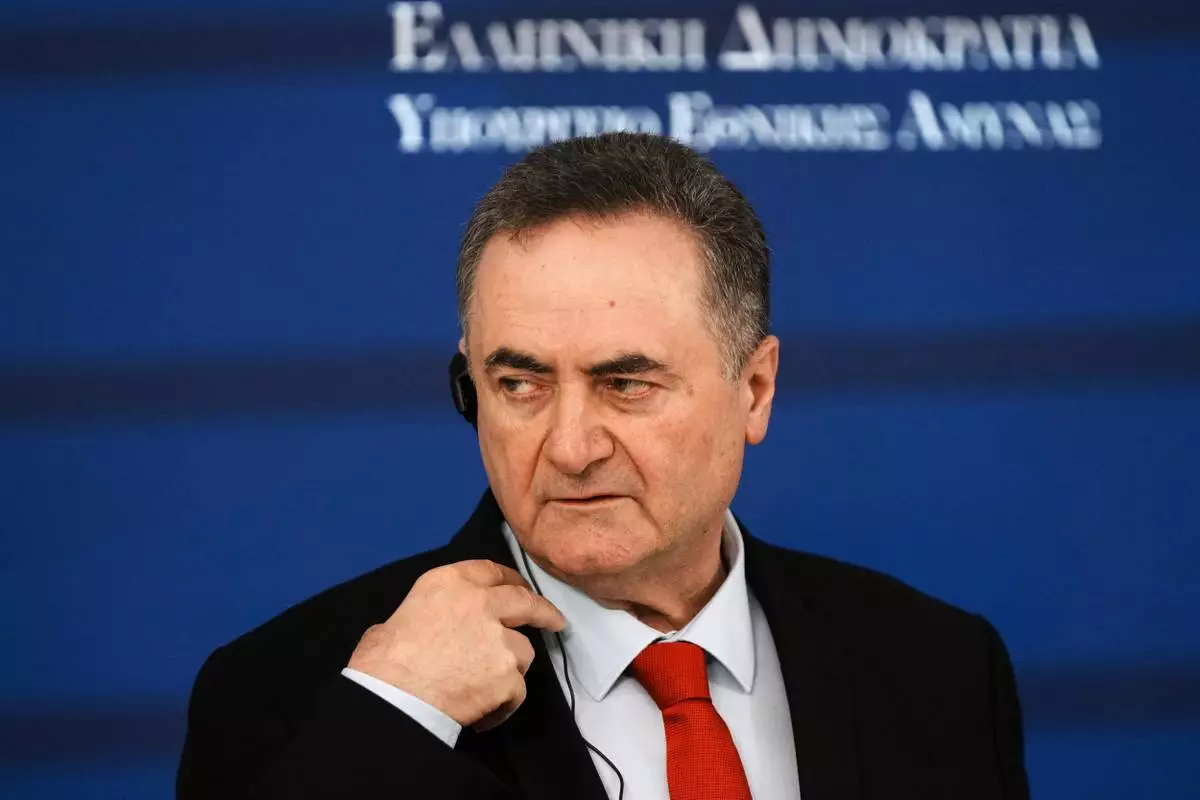
FILE -Israeli Defense Minister Israel Katz makes statements with his Greek counterpart Nikos Dendias after their meeting in Athens, Greece, Tuesday, Jan. 20, 2026. (AP Photo/Thanassis Stavrakis, File)