Russia on Saturday condemned the U.S.-Israeli strikes on Iran as “a preplanned and unprovoked act of armed aggression against a sovereign and independent U.N. member state,” demanding an immediate halt to the military campaign and a return to diplomacy.
In a statement posted to Telegram, the Foreign Ministry accused Washington and Tel Aviv of “hiding behind” concerns about Iran’s nuclear program while actually pursuing regime change.
It warned the attacks risked triggering a “humanitarian, economic and possibly radiological catastrophe” in the region and accused the U.S. and Israel of “plunging the Middle East into an abyss of uncontrolled escalation.”
The ministry also said Russian Foreign Minister Sergey Lavrov spoke phone with Iranian Foreign Minister Abbas Araghchi.
Araghchi briefed Lavrov on Iran’s attempts to repel the attacks and said Iran would seek to convene an urgent U.N. Security Council session, it said. Lavrov reiterated Russia’s condemnation of the U.S.-Israeli strikes and Moscow’s readiness to help broker peace.
Kremlin spokesman Dmitry Peskov said Russian President Vladimir Putin discussed the situation in Iran with Russia's Security Council via videoconference, but did not give details.
In the Foreign Ministry statement, Moscow called the bombing of nuclear facilities under International Atomic Energy Agency safeguards “unacceptable” and said it stood ready to help broker a peaceful resolution, while placing full responsibility for the escalation on the United States and Israel.
"Responsibility for the negative consequences of this manmade crisis, including an unpredictable chain reaction and spiraling violence, lies entirely with them," the statement said.
Russia's Foreign Ministry also condemned what it called “the serial nature of destabilizing attacks carried out by the U.S. administration," accusing the U.S. of attacking "the international legal pillars of the world order."
Russia has maintained a delicate balancing act in the Middle East for decades, trying to navigate its warm relations with Israel even as it has developed strong economic and military ties with Iran.
Iranian forces and Russian sailors conducted annual drills in the Gulf of Oman and the Indian Ocean last week aimed at “upgrading operational coordination as well as exchange of military experiences,” Iran’s state-run IRNA news agency reported.
Putin and his Iranian counterpart, Masoud Pezeshkian, signed a broad cooperation pact in January last year as their countries deepened their partnership in the face of stinging Western sanctions.
The West alleges that in 2022, Russia and Iran signed a $1.7 billion deal for Shahed drones after Putin sent troops into Ukraine, and the U.S. also believes Iran has transferred short-range ballistic missiles, but neither Moscow nor Tehran ever acknowledged the actions.
Ukrainian President Volodymyr Zelenskyy voiced support for the strikes on Iran, calling it "an accomplice of Putin” for supplying Moscow with Shahed drones and the technology to produce them and other weapons during its four-year war against Ukraine.
Russia and Iran also pooled their efforts to shore up Bashar Assad’s government during Syria’s civil war, but failed to prevent his downfall after a lightning offensive by the opposition. Assad and his family fled to Russia.
Though Russia’s Foreign Ministry was quick to condemn the attacks, the Kremlin will likely carefully assess its response following a recent warming of ties between Moscow and Washington.
Putin has praised U.S. President Donald Trump’s efforts to mediate an end to the conflict in Ukraine, and Moscow and Washington have discussed ways to revive their economic ties.
Some observers in Moscow argue that the focus on the confrontation between Israel and Iran could distract global attention from the war in Ukraine and play into Russia’s hands by potentially weakening Western support for Kyiv.
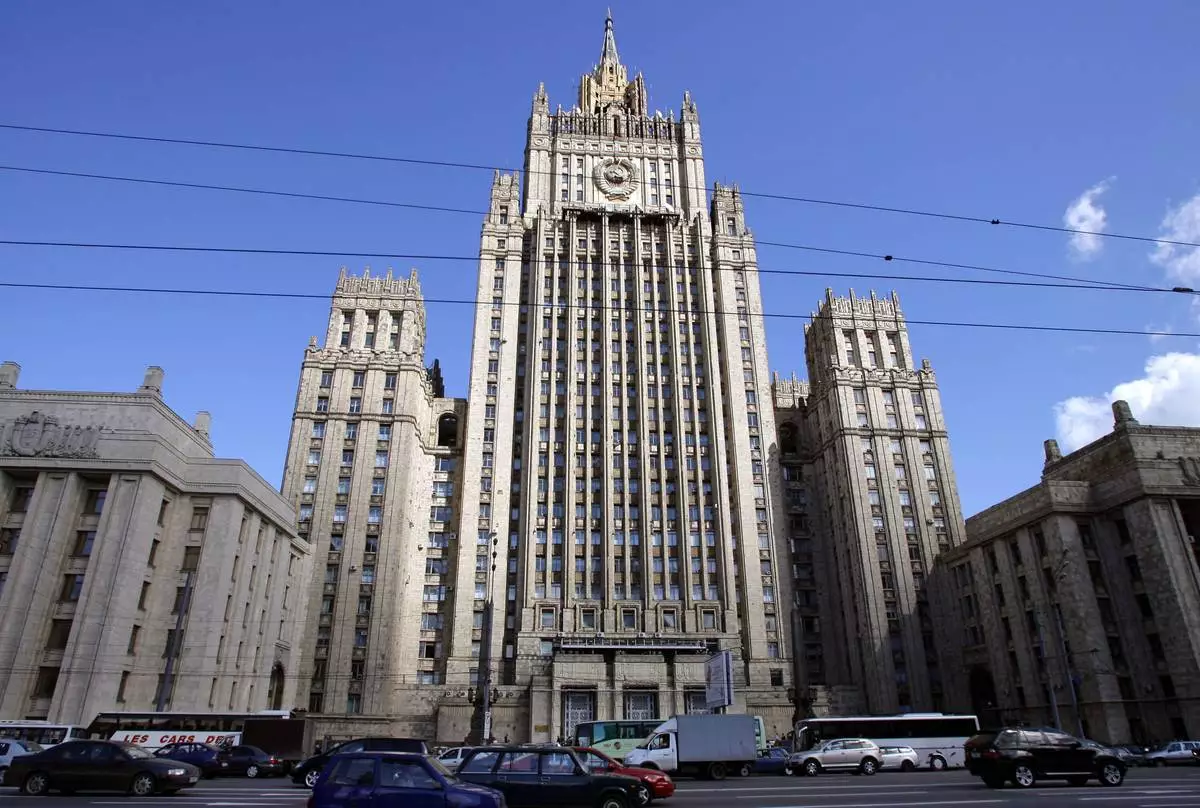
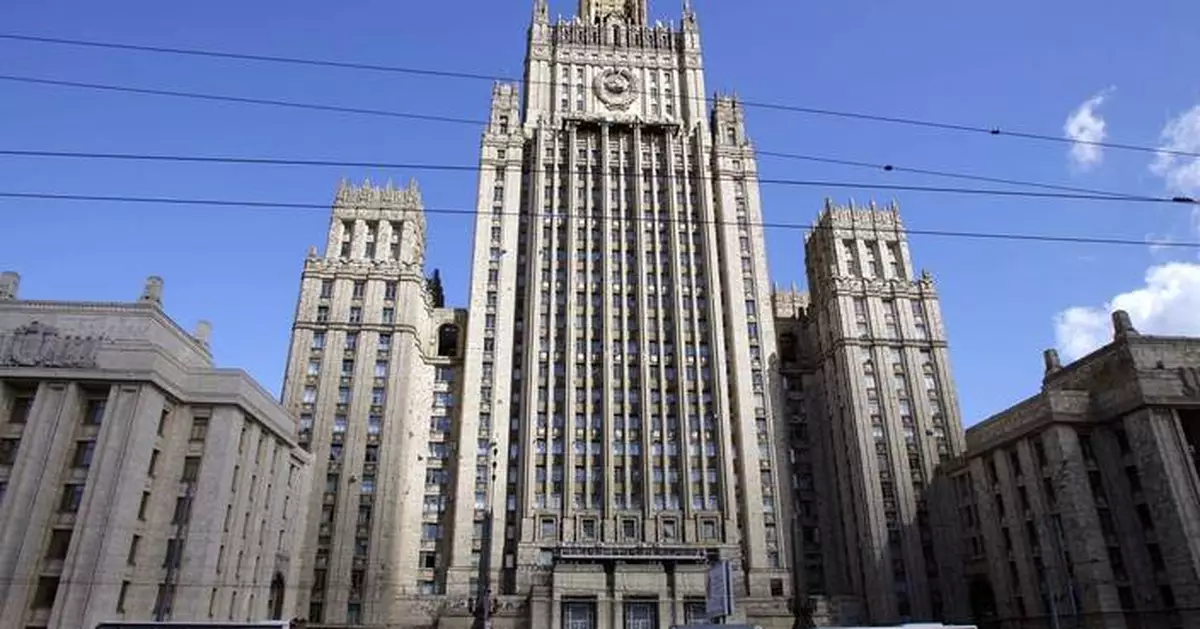
FILE -The main building of Russia's Foreign Ministry dominates the skyline in downtown Moscow, Aug. 16, 2006, with a Soviet Union state emblem on the facade. (AP Photo/Mikhail Metzel, File)
The United States and Israel launched an attack Saturday on Iran, with the first apparent strike happening near the offices of Supreme Leader Ayatollah Ali Khamenei.
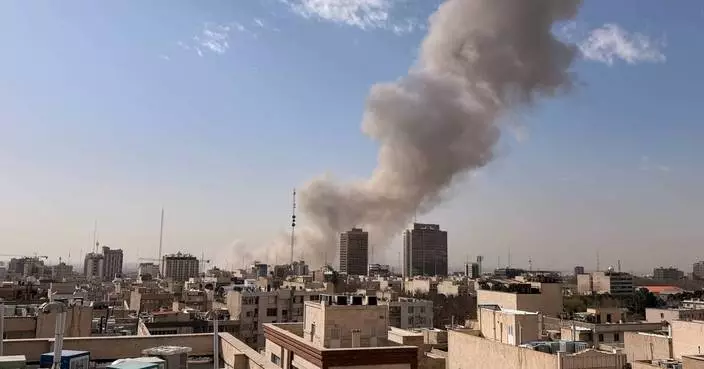
Iranian media reported strikes nationwide, and smoke could be seen rising from the capital.
President Donald Trump said in a video posted on social media that the U.S. had begun “major combat operations in Iran.” He claimed Iran has continued to develop its nuclear program and plans to develop missiles to reach U.S.
Here's the latest:
Oman’s top diplomat has urged the U.S. “not to get sucked in further” to a conflict with Iran. Foreign Minister Badr Albusaidi posted his comments on X hours after Israel and the U.S. launched joint strikes on Iran.
“I urge the United States not to get sucked in further. This is not your war,” he wrote.
Albusaidi was the key mediator in talks over Iran’s nuclear program seeking to avoid a U.S. attack. He said in an interview with CBS News that negotiations over a deal had made “substantial progress” in the last round talks in Geneva.
Iran’s state news agency IRNA has reported that authorities turned a major highway connecting Iran’s capital with the country’s north into a one-way route to accommodate traffic leaving Tehran.
The agency reported heavy traffic heading north out of the capital.
Iran’s top national security body had earlier told residents they should consider leaving Tehran for their safety.
Canadian Prime Minister Mark Carney says he supports the United States acting to prevent Iran from obtaining a nuclear weapon and to prevent its government from further threatening international peace and security.
He says Canada is clear in its position that “the Islamic Republic of Iran is the principal source of instability and terror throughout the Middle East.” Carney is also urging Canadians in Iran to shelter in place.
The U.S. and Israel’s attack on Iran is disrupting flights across the Middle East and beyond. Israel, the United Arab Emirates and Qatar closed their airspace on Saturday. Airspace in southern Syria was also closed.
Some planes that were en route to cities like Tel Aviv and Dubai were diverted or returned to where they took off from.
The situation is changing quickly and airlines urged passengers to check their flight status online before heading to the airport. Many major airlines are canceling flights to and from parts of the region through Sunday or early next week.
Dubai’s airport operator said flights have been halted indefinitely at Dubai International Airport, the world’s busiest airport for international flights, and the Dubai World Central — Al Maktoum International Airport on the Gulf city’s outskirts.
Two people familiar with the operation, including a U.S. official and a person briefed on the attacks, said the targets of the Israeli strikes included members of Iran’s leadership. There was no word on whether the attacks had been successful. They spoke on condition of anonymity because they were discussing classified information on an ongoing operation.
Both Israel and the U.S. are striking military targets in Iran.
By Sam Mednick
Russia’s Foreign Ministry on Saturday condemned the U.S.-Israeli strikes on Iran as “a preplanned and unprovoked act of armed aggression against a sovereign and independent U.N. member state.”
It demanded an immediate halt to the military campaign and a return to diplomacy.
In a statement posted to Telegram, the ministry accused Washington and Tel Aviv of “hiding behind” concerns about Iran’s nuclear program while actually pursuing regime change.
It warned the attacks risked triggering a “humanitarian, economic and possibly radiological catastrophe” in the region and accused the U.S. and Israel of “plunging the Middle East into an abyss of uncontrolled escalation.”
British Prime Minister Keir Starmer chaired a meeting of the government’s emergency committee on Saturday morning and planned to hold calls with allies in the coming hours.
“We do not want to see further escalation into a wider regional conflict,” a U.K. government spokesperson said, reiterating Britain’s support for a negotiated solution to Iran’s nuclear ambitions.
Britain was not involved in the U.S.-Israeli strikes.
The U.K.’s Foreign Office also updated its travel advice to warn against all travel to Israel and Palestine, and urged British nationals in other Middle Eastern countries to “immediately shelter in place.”
In northern Tehran, supermarkets are seeing a surge of customers seeking bread and bottled water. However, supply has been limited, and some of the items most in demand — including bread, eggs, bottled water and milk — are currently unavailable in certain stores.
Long queues have also been observed at gas stations across the city.
State television showed footage from one of Tehran’s highways, Soleimani highway, where extremely heavy traffic was visible on west-to-east routes.
By Amir Vahdat in Tehran.
Pakistan’s Foreign Minister Ishaq Dar on Saturday condemned what he described as “unwarranted attacks” on Iran during a phone call with his Iranian counterpart Abbas Araghchi, Pakistan's Foreign Ministry said in a statement.
It said Dar called for” an immediate halt to escalation through urgent resumption of diplomacy to achieve a peaceful, negotiated resolution to the crisis.”
Kuwait’s national news agency says the Gulf country’s air defenses successfully repelled what it called a “heinous Iranian attack” earlier in the day.
Quoting a statement from the Ministry of Foreign Affairs, the KUNA news agency said Kuwait maintains its right to defend itself.
Smoke rose from a U.S. base near the airport in Irbil, the regional capital of Iraq’s semiautonomous northern Kurdish region Saturday and an Associated Press journalist in the area heard explosions. Local media reported that missiles were shot down. There was no immediate statement from Iraqi officials or from the U.S.
Iran-backed Iraqi militias had previously threatened to strike targets in the Kurdish region in case of an attack on Iran. Earlier Saturday, a drone strike targeted a headquarters of the Iran-allied Kataib Hezbollah militia southwest of Baghdad, killing two.
European Union leaders issued a joint statement Saturday calling for restraint and engaging in regional diplomacy in hopes of “ensuring nuclear safety.”
“Ensuring nuclear safety and preventing any actions that could further escalate tensions or undermine the global non-proliferation regime is of critical importance,” said European Commission President Ursula von der Leyen and European Council President António Costa. “We call on all parties to exercise maximum restraint, to protect civilians, and to fully respect international law."
Both said that the EU has pushed to resolve critical issues through diplomacy but also has in place “extensive sanctions in response to the actions of Iran’s murderous regime and the Revolutionary Guards.”
They said Brussels was working with the EU’s 27 member nations to support the bloc's citizens in the Middle East.
Saudi Arabia strongly condemned the Iranian assaults on the United Arab Emirates, Bahrain, Qatar, Kuwait and Jordan as a breach of their sovereignty.
The Kingdom confirmed that it fully stands by those countries and warned of the “dire consequences of continued breach of sovereignty and violating international principles."
Saudi Arabia also called on the international community to take measures to confront the Iranian assaults that are “undermining” the stability and security of the region.
Strikes on Saturday are targeting a growing list of cities and sites across Iran, according to Iranian state media. Direct strikes on the capital, Tehran, earlier sent plumes of smokes above its skyline, with reports of explosions in or near the major cities of Isfahan, Shiraz and Tabriz.
Blasts were also reported in several western towns as well as around Persian Gulf port cities that are critical to Iran’s major oil trade, including Asaluyeh.
France, whose military has bases and a regular presence in the Mideast, has called on French citizens in the region to exercise extreme caution.
"A military escalation is underway ... It’s not the time for negotiations. We are in a situation of war," junior Defense Minister Alice Rufo told France-2 television Saturday, comparing the situation to the 12-day war in June.
“Our priority is the protection of our citizens and protection of our forces in the region,” she said.
Asked if French forces were involved in the U.S. and Israeli strikes or targeted in retaliatory strikes, French military spokesperson Col. Guillaume Vernet said: “The French armed forces continuously adapt their posture to threats and implement measures to ensure the surveillance and protection of military installations where French soldiers are deployed.”
He would not elaborate.
“Our military presence guarantees France’s independent assessment of the situation,” he told the AP.
Israel’s President Isaac Herzog has welcomed the joint U.S.-Israeli operation against Iran.
Herzog says he hopes the operation “will bring a historic change and a better future for the whole Middle East and the entire world.”
Iran's Supreme Leader Ayatollah Ali Khamenei did not made a public appearance in the days before the attack and hasn’t been immediately seen after. During the 12-day war in June, he was believed to have been taken to a secure location away from his Tehran compound.
Qatar’s Defense Ministry says the military has successfully repelled the second wave of Iranian attacks that targeted several parts of the nation.
The Qatari Foreign Ministry condemned the attacks, calling them a “flagrant violation” of its sovereignty. It added that Qatar has been always among the sides calling for a dialogue with Iran.
The Foreign Ministry said that the targeting of Qatar by a neighbor “cannot be accepted under any justification or pretext” as the gas-rich Gulf nation has always distanced itself from regional conflicts.
A person briefed on the military plans says Saturday’s operation was planned by the U.S. and Israel for months and closely coordinated.
The person says the attacks are expected to continue for several days.
They spoke on condition of anonymity because they were not authorized to discuss the matter with the media.
By Sam Mednick in Tel Aviv.
Iran on Saturday said Israeli-U.S. airstrikes in southern Iran killed five students at a girls’ school, the first confirmed fatalities in the operation.
The state-run IRNA news agency reported the strike happened in Minab in Iran’s Hormozgan province. Iran’s paramilitary Revolutionary Guard has a base in the city.
Neither the U.S. nor Israel has offered any details on the campaign so far.
Israel’s national rescue service MADA said one man was lightly wounded from an impact in northern Israel.
Fire and rescue services said an apartment on the 20th floor of an apartment building suffered a direct hit. It was not clear if it was struck by a missile or debris from an interception.
Iran’s paramilitary Revolutionary Guard says that in its retaliation against Israel and U.S. attacks on Iran, the military struck several facilities in the region.
The Revolutionary Guard said in a statement that in the first phase of retaliation, named “Truthful Promise 4,” Iran’s military struck the command of the U.S. 5th Fleet in Bahrain as well as U.S. bases in Qatar and the United Arab Emirates, and military targets in Israel.
There have been no reports of damage in these areas apart from one death in the United Arab Emirates.
The Guard said Iranian attacks with missiles and drones are continuing and more information will be released later.
Bahrain’s ambassador in the U.S. says attacks occurred against “sites within the Kingdom,” without giving further details. Writing on X, Abdalla Al-Khalifa said the attacks were a “blatant violation of sovereignty.”
Iran has apparently attacked the U.S. 5th Fleet in Bahrain in response to U.S.-Israeli attacks in Tehran. The Bahraini diplomat said that Bahrain “reserves the right to respond” to attack on its territory.
Shrapnel from an Iranian missile attack on the capital of the United Arab Emirates killed one person Saturday, authorities in Dubai said.
The state-run WAM news agency reported the fatality, the first known in the Iranian counterattack after the United States and Israel launched a major airstrike campaign targeting Iran.
Within hours of the joint U.S. and Israeli strike in Iran, Ali Vaez, who directs the Iran Project at the Crisis Group think tank, warned that the war could likely escalate.
Vaez on social media stressed that Iran had been preparing for the conflict and that wider war could break out across the Middle East.
He also stressed that the war could lead to higher energy costs, which would undercut one of Trump’s domestic political messages that gasoline prices have been lower since his return to the White House.
“Iran sits along the Strait of Hormuz, through which roughly a fifth of the world’s oil supply passes,” Vaez posted. “Even limited disruption could spike energy prices, fuel inflation, and rattle global markets.”
The European Union’s top diplomat called the conflict in the Middle East “perilous” and said she was working with Israel and Arab officials to pursue a negotiated peace.
“Iran’s regime has killed thousands. Its ballistic missile and nuclear programmes, along with support for terror groups, pose a serious threat to global security,” said Kaja Kallas, foreign policy chief of the 27-nation bloc, in a post on social media.
She said the EU was evacuating some staff in the region and keeping in place a maritime mission in the Red Sea.
The EU recently put fresh sanctions on Iran and leading figures, prompting retaliatory sanctions by Tehran.
The U.S. Navy’s 5th Fleet command that host nation Bahrain said was targeted by a missile attack is responsible for securing the shipping lanes around the oil-rich Middle East.
Those waters include the Persian Gulf, the Red Sea and parts of the Indian Ocean. The region contains three key chokepoints: the Suez Canal and the Bab al-Mandeb on either end of the Red Sea, and the Strait of Hormuz between Iran and Oman.
Iran has repeatedly threatened to shut the strait if attacked. Iranian-allied Houthi rebels in Yemen have said they will resume attacks on shipping routes and on Israel.
The extent of the damage on the 5th Fleet headquarters wasn’t immediately clear. The base is located just to the southeast of central Manama, the island nation’s capital.
A drone strike Saturday hit a headquarters of the Iran-backed Kataib Hezbollah militia in Iraq, in the Jurf al-Sakhar area southwest of Baghdad, killing at least two people and wounding four others, two militia officials said. They spoke on condition of anonymity because they were not authorized to comment publicly.
There was not immediate comment from the U.S. or Israel.
Prior to Saturday’s strikes on Iran, the group had threatened to join the fray should Iran be attacked.
Meanwhile, Iraqi Foreign Minister Fuad Hussein said in a statement that he received a call from his Iranian counterpart, Abbas Araghchi, in while Araghchi said Iran would target U.S. bases in the region out of self-defense.
“He clarified that these attacks were not targeting the countries involved, but were limited to military sites,” the statement said. It added that Hussein urged deescalation.
———
By Qassim Abdul-Zahra in Baghdad.
In a briefing with reporters, an IDF official said Israel has identified “a sharp acceleration” in Iran’s missile program.
The official says Iran was beginning to make dozens of ballistic missiles a month. He also said there had been no significant hits in Israel. He spoke just before noon, roughly four hours after the operation began.
By Melanie Lidman in Tel Aviv.
Iran’s Supreme National Security Council confirmed its armed forces had “commenced a decisive response to these hostile acts.”
In a statement, it warned the Iranian people to travel to areas not included in the zones being targeted and said the government had made “prior arrangements” to ensure the supply of basic necessities.
Schools and universities were ordered to close while the statement said banks would continue to operate.
The German government was informed in advance this morning about Israel’s military strikes on Iran, a spokesman said on Saturday.
Germany is in close consultation with its European partners, the spokesman said. Its crisis management team will meet at noon to discuss Iran.
The government urged German citizens in Iran, Israel, and the wider region to register on the official system for citizens abroad and follow the instructions of the local authorities for their own protection.
The foreign ministry said it was in “close and constant” contact with the embassies in Iran and Israel, as well as other missions in the region.
Two officials with different Iran-backed militias in Iraq told The Associated Press that a meeting took place two months ago between Iranian officials and allied Iraqi militias to make plans for a response in case Iran was attacked, including distributing tasks among the Iraqi armed groups.
The officials spoke on condition of anonymity because they were not authorized to comment publicly.
One of the officials said it was decided that the response would target U.S. forces and interests in Iraq’s semi-autonomous northern Kurdish region and in neighboring Jordan.
U.S. troops have vacated bases where they were previously stationed in Iraq in areas under the control of the central government in Baghdad. This followed an agreement to end the military mission in Iraq of an American-led coalition fighting the Islamic State, but U.S. forces remain in the Kurdish region.
One of the most prominent Iraqi militias, Kataib Hezbollah, on Thursday issued a public statement urging its fighters to “be prepared to engage in a war of attrition that may be prolonged and exceed the expectations of the U.S. administration.”
It also issued a warning to the Kurdish regional government in Iraq “against collaborating with hostile foreign forces” that “could threaten its security and future.”
By Qassim Abdul-Aahra in Baghdad.
Israeli media showed images of damage to an apartment building in northern Israel, reportedly from impact with parts of an interceptor.
Israeli police said shrapnel fell in multiple sites. Rescue services said there were no known injuries from the missile barrages launched on all parts of the country.
The Israeli military issued a warning for the immediate evacuation of areas near weapons production and military facilities in Iran.
“Your presence in these locations puts your lives at risk,” the military said on its Persian-language X account.
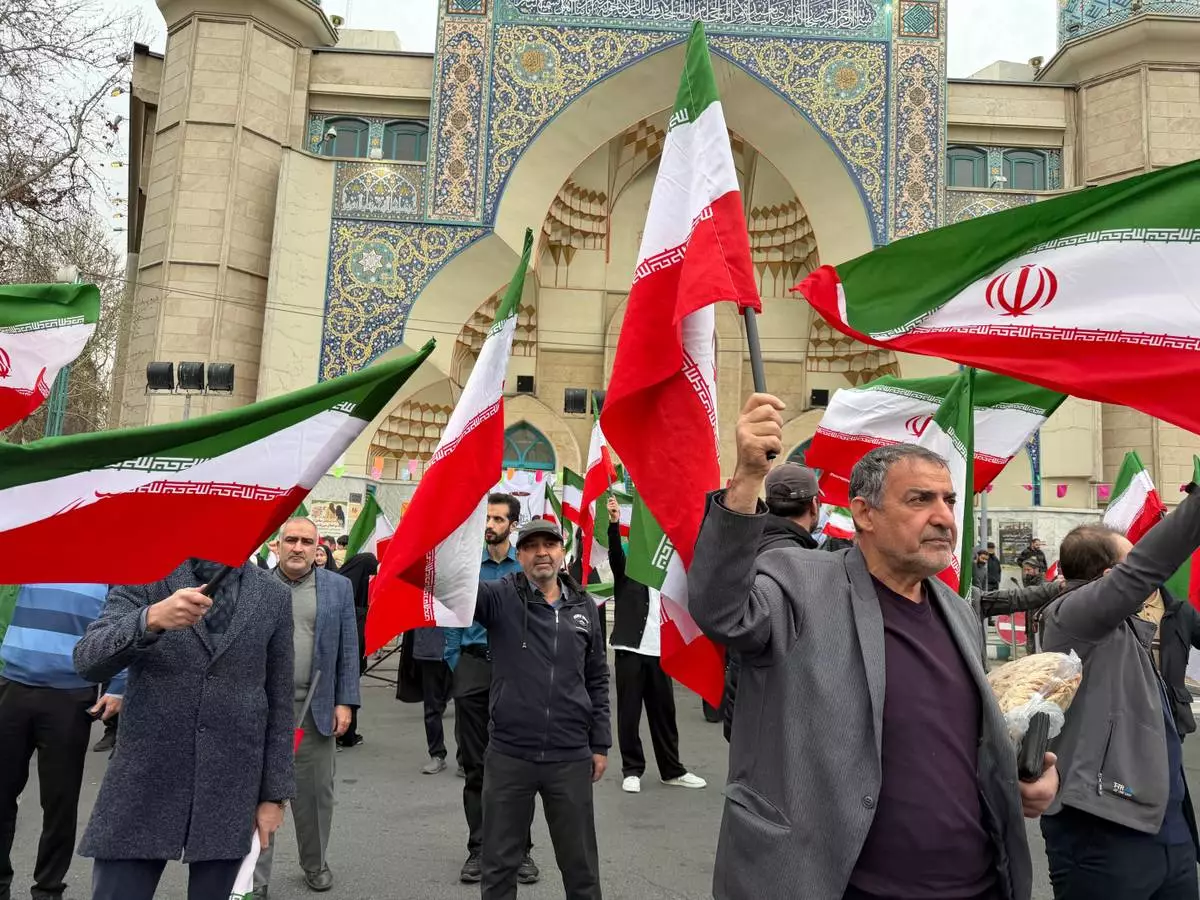
A group of men wave Iranian flags as they attend a demonstration in support of the government and against U.S. and Israeli strikes in Tehran, Iran, Saturday, Feb. 28, 2026. (AP Photo/Vahid Salemi)
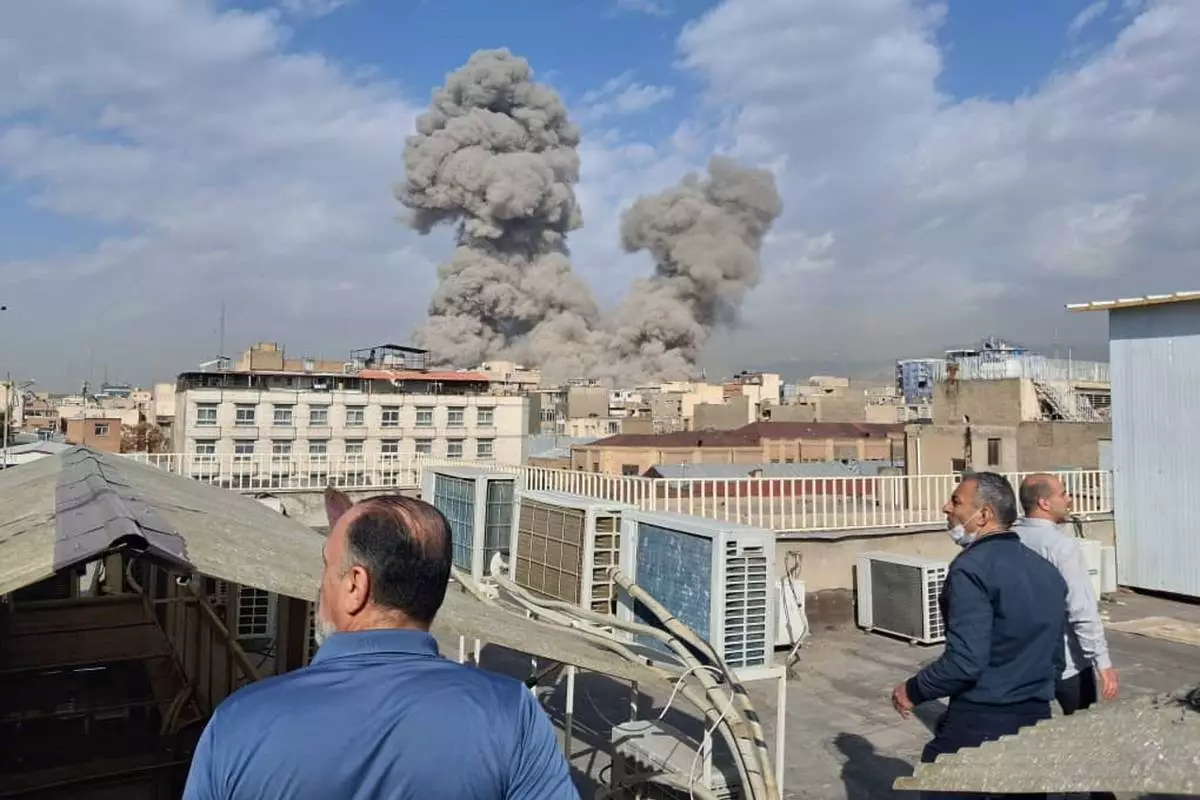
People watch as smoke rises on the skyline after an explosion in Tehran, Iran, Saturday, Feb. 28, 2026.(AP Photo)
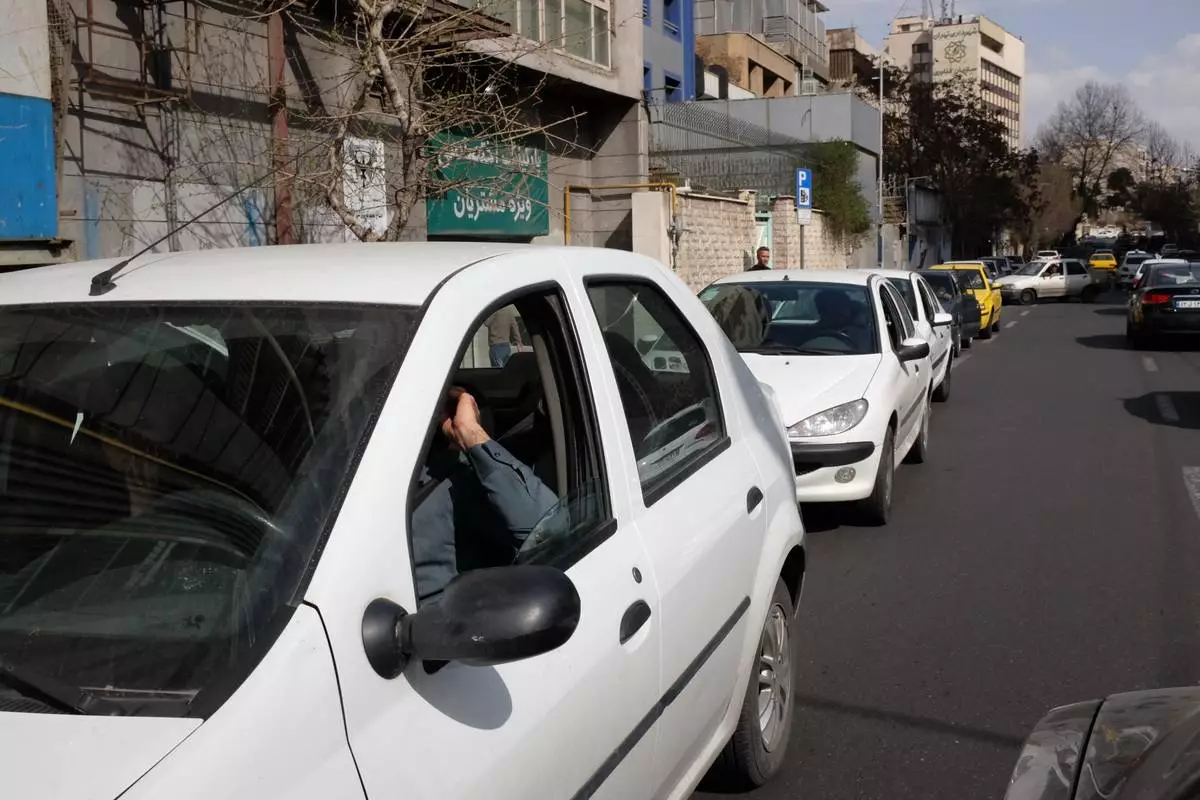
Vehicles queue outside a gas station following Israeli strikes in the city, in Tehran, Iran, Saturday, Feb. 28, 2026. (AP Photo/Vahid Salemi)
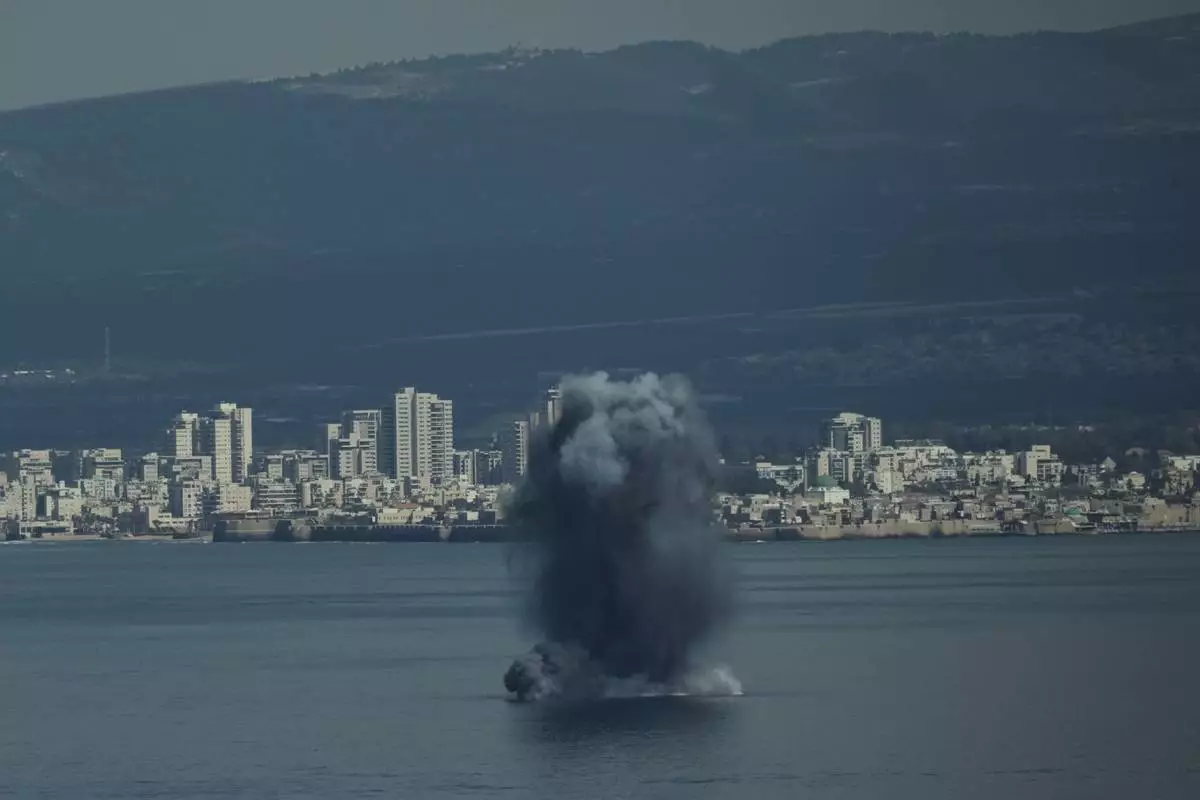
An incoming projectile explodes over the water as Israel issues a nationwide alert following its strikes on Iran, in Haifa Bay, northern Israel, Saturday, Feb. 28, 2026. (AP Photo/Leo Correa)
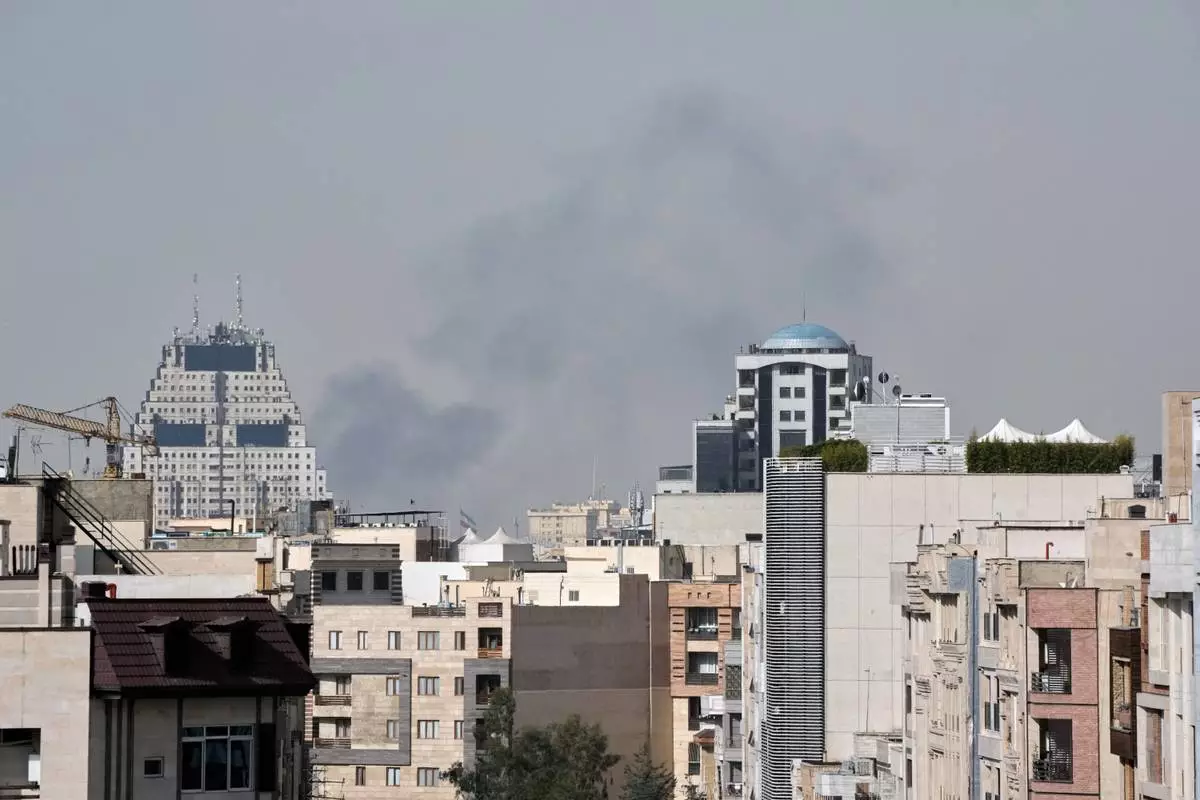
Smoke rises on the skyline after an explosion in Tehran, Iran, Saturday, Feb. 28, 2026.(AP Photo/Vahid Salemi)