A deputy to the National People's Congress (NPC) has devoted much energy to engaging with workers in new forms of employment, including couriers and food delivery riders, to understand their concerns, and is set to put forward motions based on his findings to the fourth annual session of the 14th NPC scheduled for March in Beijing.
In recent years, the rapid growth of the platform economy has spawned numerous new forms of employment in China. The number of workers in these emerging sectors, such as couriers and food delivery riders, has continued to expand, and the issue of safeguarding their rights and interests has garnered increasing attention.
Li Feng, an NPC deputy, is a migrant worker who moved from rural Zhejiang Province in east China to Shanghai for employment.
He has been honored as an outstanding individual among Shanghai's migrant workers.
Through extensive research and by soliciting opinions from multiple sources, he has put forward his own suggestions on safeguarding the rights and interests of workers in new forms of employment.
According to the relevant regulations, platforms must sign labor contracts with food delivery riders and couriers if their relationship meets the criteria for employment.
Even if the relationship does not fully meet the criteria, written agreements must be signed and workers must be included in the occupational injury insurance system.
However, Li discovered numerous problems in actual implementation of the regulations during his research.
Currently, the food delivery and courier industries primarily apply two labor employment models: outsourcing and crowdsourcing.
In the outsourcing model, platforms subcontract stations to outsourcing companies that hire workers. However, workers often sign only one agreement with the outsourcing company, and these agreements are usually non-standard.
The crowdsourcing model involves platform companies assigning tasks to non-specific workers on a voluntary basis. These workers who accept orders are not company employees and do not enjoy company benefits.
With insights from grassroots investigations, Li visited the Shanghai First Intermediate People's Court. Judges there explained that the complex employment structures of platforms make it difficult to identify the actual employers, determine legal relationships, and protect workers' rights and interests.
The judges told Li that the absence of clear labor relationships leaves workers in new employment forms vulnerable to inadequate social security coverage, susceptible to violations of rights such as fair compensation, and faces greater challenges in seeking redress.
"Some small-scale or underqualified outsourcing companies engage in low-price competition to capture market share. After winning bids, they would maintain profits by cutting labor costs, ultimately harming workers' rights and interests," Li said.
However, compared to previous years, significant progress has been made in safeguarding the rights and interests of workers in new employment forms.
During the 14th Five-Year Plan period (2021-2025), Shanghai piloted occupational injury insurance for workers in new employment forms. By the end of January 2026, over 1.92 million individuals had been covered by this program.
Currently, some platform companies are experimenting with formal labor contracts, establishing employment relationships, and enrolling workers in employee social insurance. Other platforms are trialling subsidies for self-insured individuals.
"Next, we will gradually address funding issues. (Some platforms) have begun pilot programs where they subsidize half the insurance costs for freelancers who have been registered on the platforms on a long-term basis, and who are active on the platforms," said Wang Yang, director of the Labor Relations Division of the Shanghai Municipal Human Resources and Social Security Bureau.
Li said that given the sheer number of workers in new employment forms, achieving comprehensive social security coverage in one go is challenging. To protect workers' rights and interests, efforts should be focused on strengthening contract governance from the source and improving management mechanisms.
"I propose strengthening collaborative management mechanisms by requiring enterprises that undertake local outsourcing projects with workforce scales meeting certain thresholds to regularly report employee numbers and work locations to competent human resources departments. This would promote data sharing among labor inspection, market regulation, and tax authorities to establish an outsourcing workforce database, forming a synergistic regulatory force to gradually optimize the employment environment," he said.
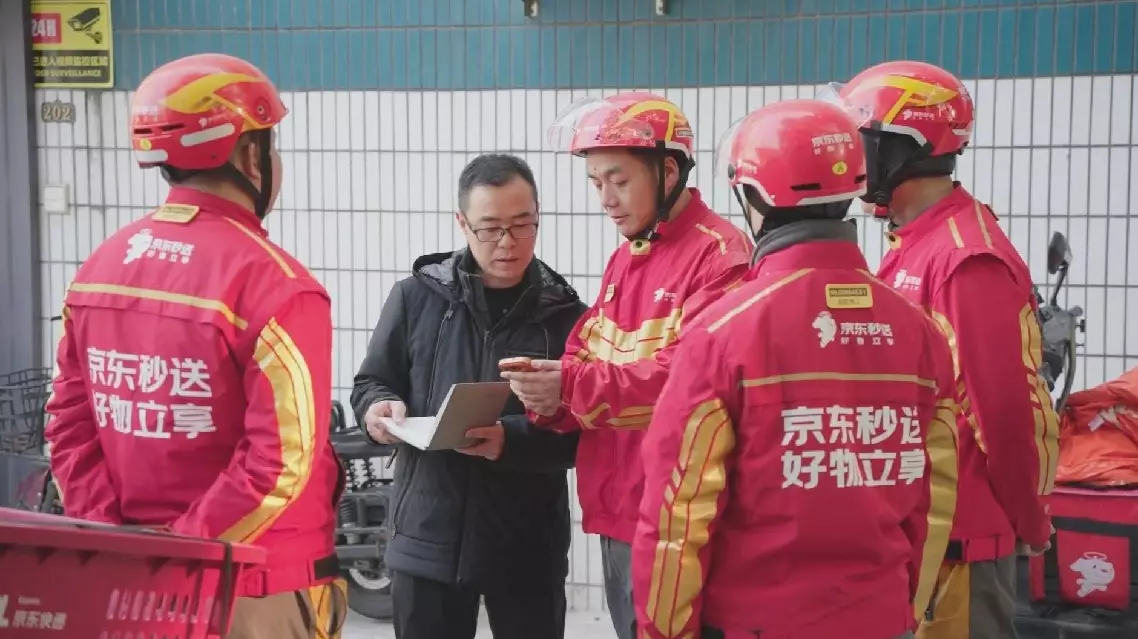
NPC deputy focuses on safeguarding rights, interests of workers in new employment forms