Residents in need of healthcare are being deprived of government subsidies after U.S. President Donald Trump signed into law the One Big Beautiful Bill Act (OBBBA), which orders cuts of nearly 1 trillion U.S. dollars to Medicaid over the next decade, forcing over 11 million people off affordable medical insurance.
Medicaid provides health insurance to low-income populations in the U.S., a country with some of the highest healthcare costs in the world. A November 2025 Gallup poll shows that nearly half of U.S. adults (47 percent) are worried they won't be able to afford necessary healthcare in the coming year, the highest level of concern recorded since the organization began tracking the measure in 2021.
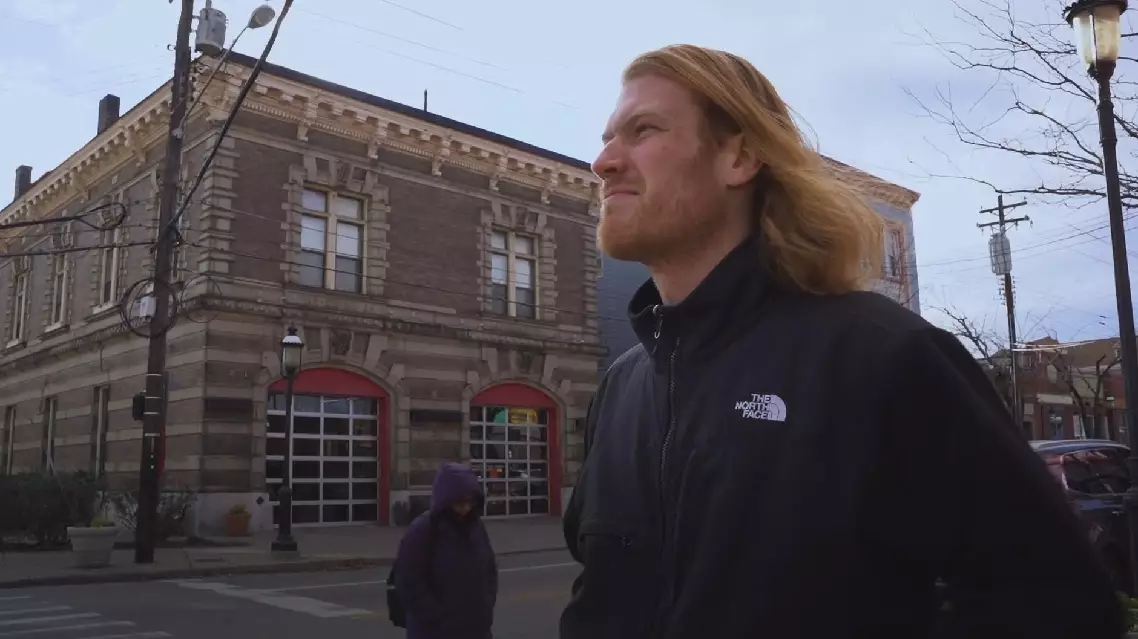
U.S. youth Marvel has been suffering from Lyme disease since high school, a condition that affects his immune system.
"I currently have Lyme disease in remission, and the basic effect of that is that I have to be constantly aware of my own health and it prevents my body from naturally healing from other sicknesses to a significant degree," he introduced.
Unable to afford expensive commercial insurance, Marvel has been applying for Medicaid, but the new act has blocked him from coverage, leaving him, as he described, "basically without any tool to manage my own health."
"And I am uninsured. At this point, becoming insured is out of the realm of my financial possibilities and I'm trying to get covered under Medicaid at the moment. In order to qualify for Medicaid, you have to make less than about 15,000 U.S. dollars a year, which is basically the amount of rent for a year at most places in the city. So basically it's not feasible. As an uninsured person I'm constantly hyper aware of my own health problems," he said.
The government has also shown considerable uncertainty regarding health insurance subsidy policies, as he said he has received conflicting answers after filing inquiries with the local health department.
"To try and get subsidized health insurance, I went to the county office. Health and Human Services ended up filling out a lot of paperwork and then was told I would receive contact from them. And I was contacted several times with misleading information,[with] some saying I'll get health insurance, on one specific day, others saying I did not qualify for that health insurance, and [still] others saying I'll get it on another day. I'm still working with that online and in person, and it would just be nice if I can have one place to go to or just have some more concrete clarification as to what I'm eligible for," he said.
U.S. patient left without government support after Big, Beautiful Act cuts Medicaid