TEL AVIV, Israel (AP) — Constant missile salvos from Iran sent people in central Israel in and out of shelters throughout the day on Saturday after the U.S. and Israel launched a major attack on Iran.
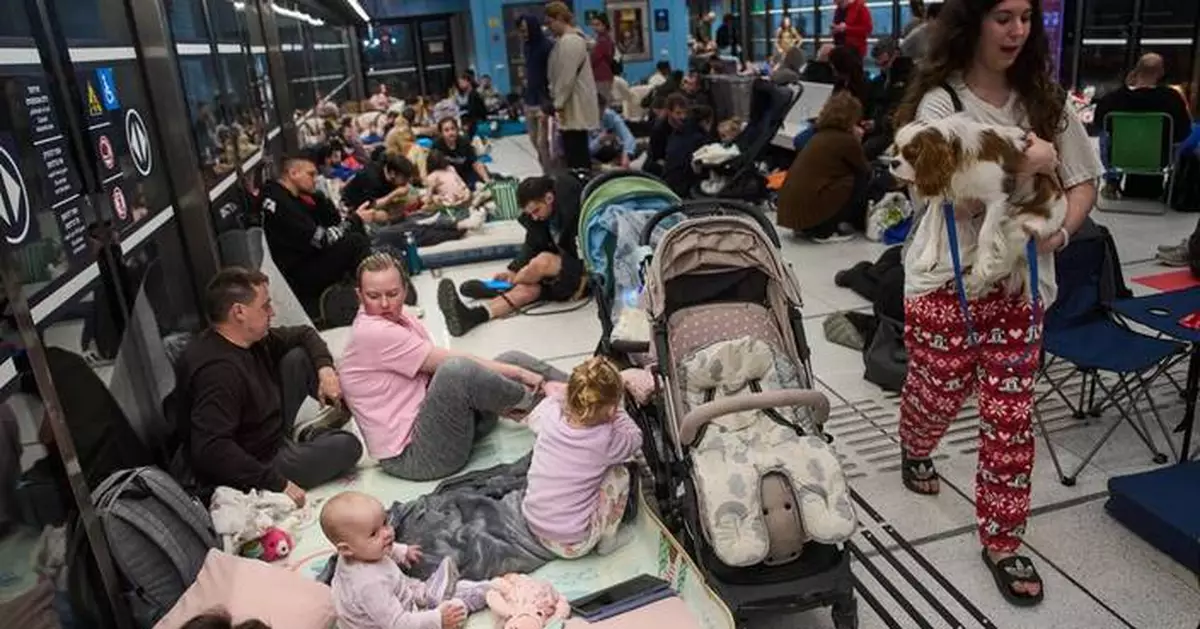
Many apartments in poorer areas are not equipped with adequate shelters. In Jaffa, a mixed Arab-Jewish neighborhood of Tel Aviv, more than 100 people, including Muslim families with young children, religious Jews from a nearby seminary and at least a dozen dogs crammed into the public shelter underneath a park.
Some groups splayed out on mattresses they brought into the shelter and played cards, others shared snacks, while observant Muslims were fasting for the holy month of Ramadan. Many stared at their phones, swiping through updates as siren after siren sounded in the neighborhood. As the sun set, Muslims were forced to have their iftar meal, breaking the daily fast at sundown, in bomb shelters.
“Of course we expected it, even though we didn’t want it to happen,” said Idit Cohen, who lives near the park. She noted, however, that it was one of the times when you could see the community come together.
Her son received an emergency summons for reserve military duty, and a stranger in the shelter volunteered to drive him to the base, even though he was a religious Jew who generally does not drive on Saturdays, the Jewish sabbath.
“I want it to end as soon as possible, it’s a nightmare, people are more and more frustrated and tired,” Cohen said. “We see families with babies and young kids here, but there are elderly people that aren’t able to keep running here all day.”
For the past 2 1/2 years, Israelis have become familiar with the routine after fighting with Hamas in the Gaza Strip, Hezbollah in Lebanon, Houthi rebels in Yemen and a 12-day war last June against Iran.
Igor Libenson, a construction worker and father of two sons, said his family was mostly tired from the constant moving back and forth. “The kids aren’t scared, we were here also in June in the same situation,” said Libenson, whose sons are 4 and 7 years old.
Some of the religious Jews sang psalms with their arms slung around each others' shoulders.
“We look at this in the long term. We suffer today but we do hope that it will resolve the problems of tomorrow," said Maya Tutian, a resident of Tel Aviv, who was in a public shelter in the northern part of the city. "The Iranian regime is not just a threat of us, people who live here in Tel Aviv, but for the entire world.”
During last year's war with Iran, some people without access to shelters in their homes took to sleeping in Tel Aviv’s underground light rail stations and underground mall parking lots.
While new buildings in Israel are required to have reinforced safe rooms meant to withstand rockets, Iran is firing much stronger ballistic missiles. And shelter access is severely lacking in poorer neighborhoods and towns, especially in Arab areas and in rural parts of the country.
More than two thirds of Israel’s Bedouin minority have no access to shelters, according to the Negev Coexistence Forum, a local advocacy group. Last summer, many Bedouin families resorted to building DIY shelters out of available material: buried steel containers, buried trucks, repurposed construction debris.
Iran began striking shortly after a joint attack by Israel and the U.S. early Saturday. By nightfall, the Israeli army said dozens of missiles had been launched at Israel.
Israeli police and emergency services said several people were lightly wounded in missile strikes, while the military intercepted many of the incoming missiles.
Israel issued a nationwide warning and put the country on high alert, canceling school and most gatherings across the country.
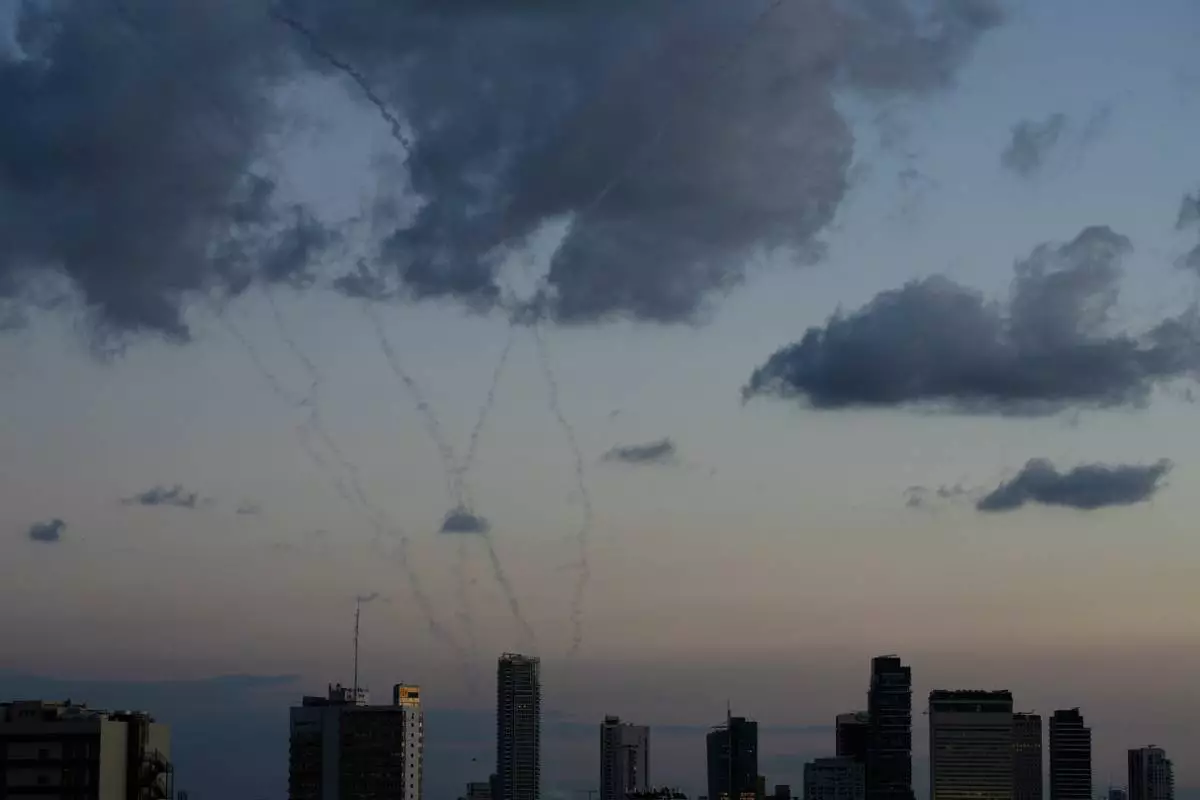
Traces of an air defense missile interception is seen over Tel Aviv, Israel, Saturday, Feb. 28, 2026. (AP Photo/Ohad Zwigenberg)
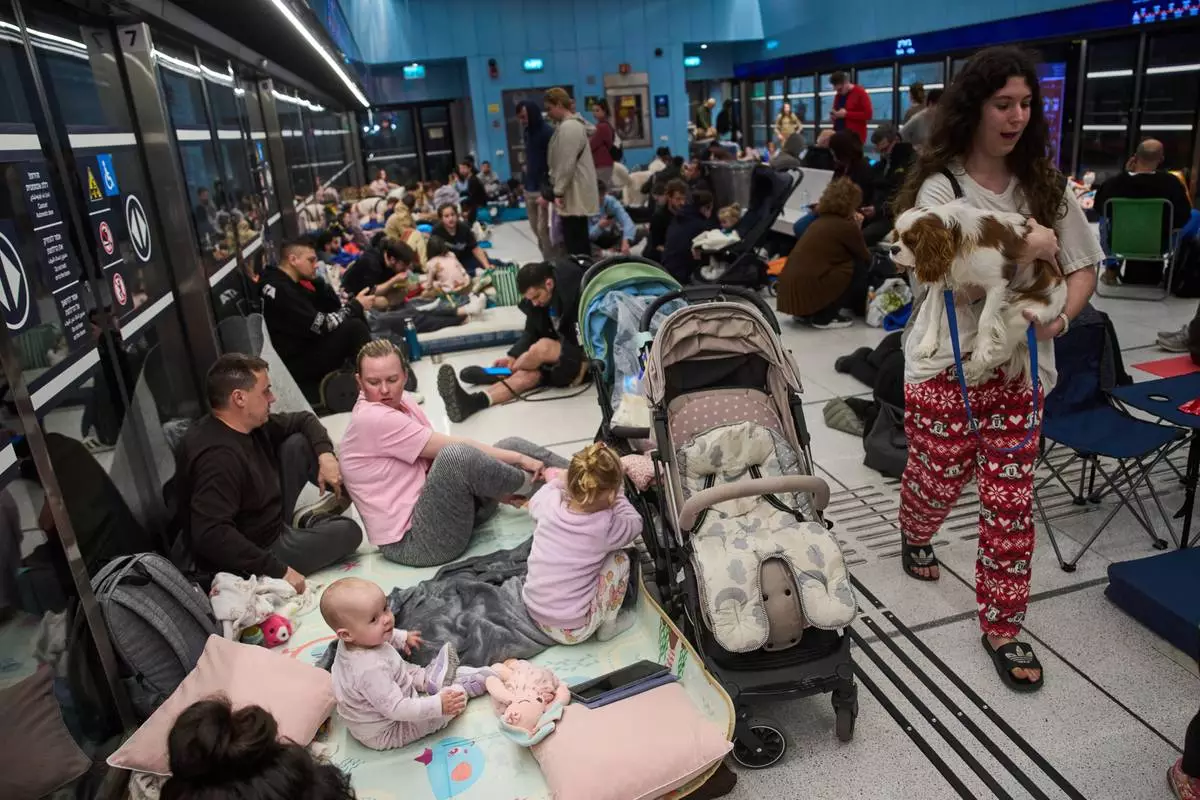
People take shelter in an underground metro station as air raid sirens warn of incoming strikes by Iran, in Ramat Gan, Israel, Saturday, Feb. 28, 2026. (AP Photo/Oded Balilty)
DUBAI, United Arab Emirates (AP) — The U.S. and Israel launched a major attack on Iran on Saturday, and President Donald Trump urged the Iranian public to “seize control of your destiny” by rising up against the Islamic leadership that has ruled the nation since 1979. Iran retaliated by firing missiles and drones toward Israel and U.S. military bases in the region.
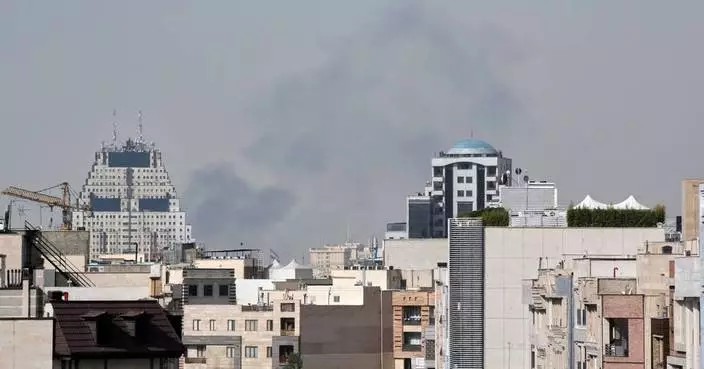
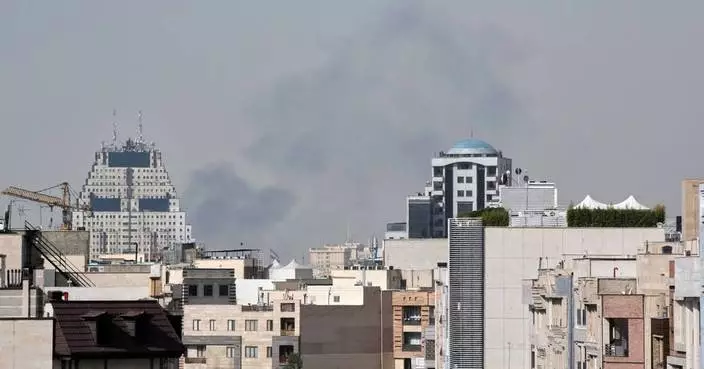
Some of the first strikes on Iran appeared to hit near the offices of Supreme Leader Ayatollah Ali Khamenei. Smoke rose from the capital as part of strikes that Iranian media said occurred nationwide. It wasn’t immediately clear whether the 86-year-old leader was in his offices when the attack occurred.
Iranian Foreign Minister Abbas Araghchi told NBC News that Khamenei and President Masoud Pezeshkian are alive “as far as I know,” and called the attack “unprovoked, illegal and absolutely illegitimate.”
In a video announcing the “major combat operations," Trump told Iranians that “when we are finished, take over your government. It will be yours to take. This will be probably your only chance for generations."
Israeli Prime Minister Benjamin Netanyahu echoed that goal, called for “the brave Iranian people to take their fate into their own hands."
The strikes during the holy fasting month of Ramadan opened a stunning new chapter in U.S. intervention in Iran, and marked the second time in eight months that the Trump administration has attacked the Islamic Republic during talks over its nuclear program. Weeks earlier, a U.S. military operation captured Venezuela’s president, Nicolás Maduro.
The targets included members of Iran's leadership, according to a U.S. official and another person briefed on the attacks who spoke on condition of anonymity to discuss an ongoing operation. There was no immediate information on whether top officials were killed.
Even if Iran's top leaders are killed, regime change is not guaranteed. Neither the U.S. nor Israel have articulated a vision for what new leadership might look like.
Democrats decried that Trump had taken action without congressional authorization. White House spokesperson Karoline Leavitt said the Trump administration had briefed several Republican and Democratic leaders in Congress in advance of the attack.
The U.N. Security Council said it would meet Saturday afternoon. In a letter to the council, Araghchi said “all bases, facilities, and assets of the hostile forces in the region shall be regarded as legitimate military objectives.”
Iran also requested an urgent session of the International Atomic Energy Agency’s Board of Governors about “these threats to safeguarded nuclear facilities,” according to a letter posted by the semiofficial Tasnim news agency.
The U.N.’s nuclear watchdog said on X it was closely monitoring developments and had seen “no evidence of radiological impact.”
Tensions have soared in recent weeks as American warships moved into the region. Trump said he wanted a deal to constrain Iran’s nuclear program at a moment when the country is struggling at home with growing dissent following nationwide protests.
The immediate trigger for Saturday’s strikes appeared to be the unsuccessful latest round of nuclear talks. But they also reflected dramatic changes that have left Iran’s leadership in its weakest position since the Islamic Revolution nearly half a century ago.
Israeli and American strikes last June greatly weakened Iran’s air defenses, military leadership and nuclear program. A regionwide war, sparked by Hamas’ Oct. 7, 2023, attack on Israel, has left Iran’s network of proxies across the Middle East greatly weakened. U.S. sanctions and global isolation, meanwhile, have decimated Iran’s economy.
Iran responded to the latest strikes by launching missiles and drones targeting Israel and strikes targeting U.S. military installations in Bahrain, Kuwait and Qatar.
Israel’s military said Iran fired “dozens” of missiles at Israel, with many intercepted and no serious injuries reported. Barrages continued after sundown.
In southern Iran, at least 57 people were reported killed after a girls’ school was struck, and dozens more were wounded, according to Iran’s state-run IRNA news agency. The White House and Israel's military did not immediately respond to a request for comment.
Flights across the Middle East were disrupted and air defense fire thudded over Dubai, the United Arab Emirates' commercial capital. Shrapnel from an Iranian missile attack on the UAE capital killed one person, state media said.
The U.S. military has for weeks amassed forces in the region, even as U.S. and Iranian envoys held talks in Switzerland and Oman.
“Active and serious negotiations have yet again been undermined,” Oman’s Foreign Minister Badr al-Busaidi, key mediator, said on X. “Neither the interests of the United States nor the cause of global peace are well served by this," he said.
Israel said the operation has been planned for months with the U.S. “Air Force pilots are striking hundreds of targets across Iran, at significant personal risk and in coordination with U.S. strikes,” Israeli military chief of staff Lt. Gen. Eyal Zamir said in a statement.
Targets in the Israeli campaign included Iran’s military, symbols of government and intelligence targets, according to an official briefed on the operation, who spoke on condition of anonymity to discuss nonpublic information on the attack.
Trump, in seeking to justify the military action, claimed Iran has continued to develop its nuclear program, despite asserting last year the program had been “obliterated” by an earlier round of strikes. He acknowledged Saturday that there could be American casualties, saying “that often happens in war.”
It was a notable call from a U.S. leader who swept into office on an “America First” platform and vowed to keep out of “forever wars.”
Trump’s statement listed grievances beyond the nuclear program, stretching back to the beginning of the Islamic Republic, following a revolution in 1979 that turned Iran from an American ally into a fierce foe.
The U.S. president said he was aiming to “annihilate” the Iranian navy and destroy regional proxies supported by Tehran. He called on the Iranian Revolutionary Guard to lay down arms, pledging members would be given immunity, while warning they would face “certain death” if they didn’t.
Trump had threatened military action, but held off, following Iran's recent crackdown on protests spurred by economic grievances that evolved into a nationwide, anti-government push against the ruling clerics.
The Human Rights Activists News Agency says it confirmed more than 7,000 deaths in the crackdown and is investigating thousands more. The government has acknowledged more than 3,000 killed.
Iran has said it hasn’t enriched uranium since June, but it has blocked international inspectors from visiting the sites America bombed. Satellite photos analyzed by The Associated Press have shown new activity at two of those sites, suggesting Iran is trying to assess and potentially recover material there.
Iran said it hoped to avert a war, but maintained its right to enrich uranium. Its leaders did not want to discuss other issues, such as its long-range missile program or support for armed groups like Hamas and Hezbollah.
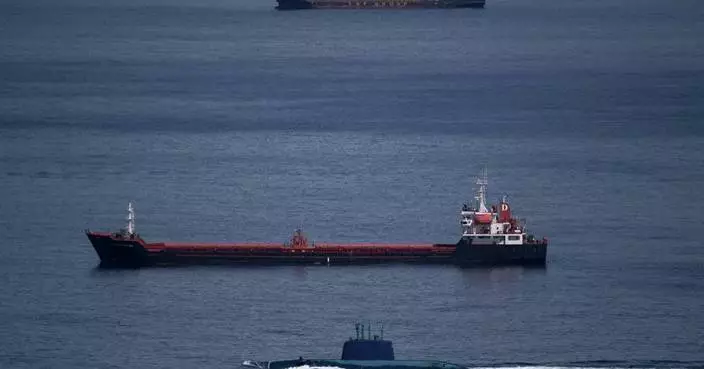
The strikes could rattle global markets, particularly if Iran is able to make the Strait of Hormuz unsafe for commercial traffic. A third of total worldwide oil exports transported by sea passed through the strait in 2025.
Saudi Arabia said in an announcement on state-run media that Iran had targeted its capital and its eastern region in an attack that was repelled.
Kuwait’s civil aviation authority said a drone targeted the main international airport, injuring several employees. Bahrain said a missile attack targeted the U.S. Navy’s 5th Fleet headquarters in the island kingdom. Explosions could also be heard in Qatar. Jordan said it “dealt with” 49 drones and ballistic missiles.
The Iranian-backed Houthis in Yemen vowed to resume attacks on Red Sea shipping routes and on Israel, according to two senior Houthi officials who spoke on condition of anonymity because there was no official announcement.
U.S. embassies or consulates in Qatar, United Arab Emirates and Israel said staffers were told to shelter in place and recommended all Americans “do the same until further notice.”
Toropin and Madhani reported from Washington and Boak from West Palm Beach, Florida. Associated Press writers Melanie Lidman and Sam Mednick in Tel Aviv, Israel, Qassim Abdul-Zahra in Baghdad, Samy Magdy in Cairo, and Farnoush Amiri in New York contributed to this report.
This story has been corrected to show that IRNA reported 40 people were killed in the school strike, without specifying students.
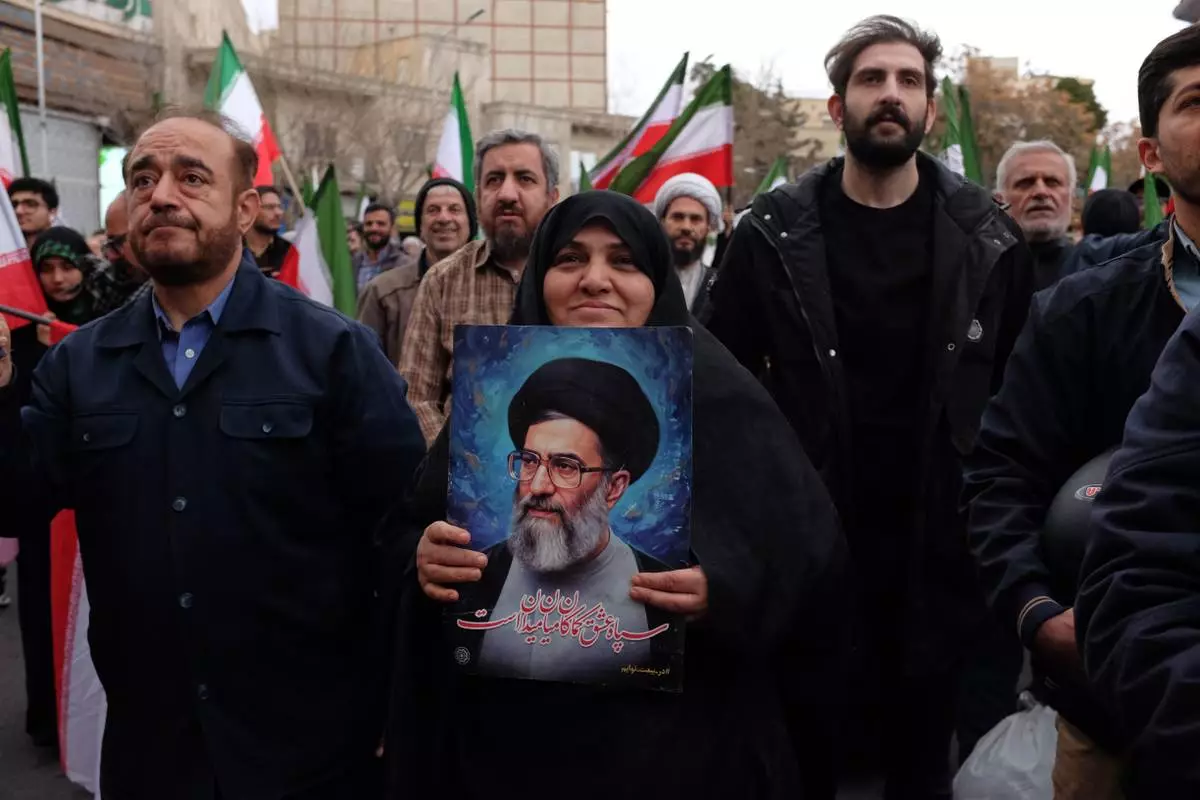
A woman holds a picture of the Iranian Supreme Leader Ayatollah Ali Khamenei during a demonstration in support of the government and against U.S. and Israeli strikes in Tehran, Iran, Saturday, Feb. 28, 2026. (AP Photo/Vahid Salemi)
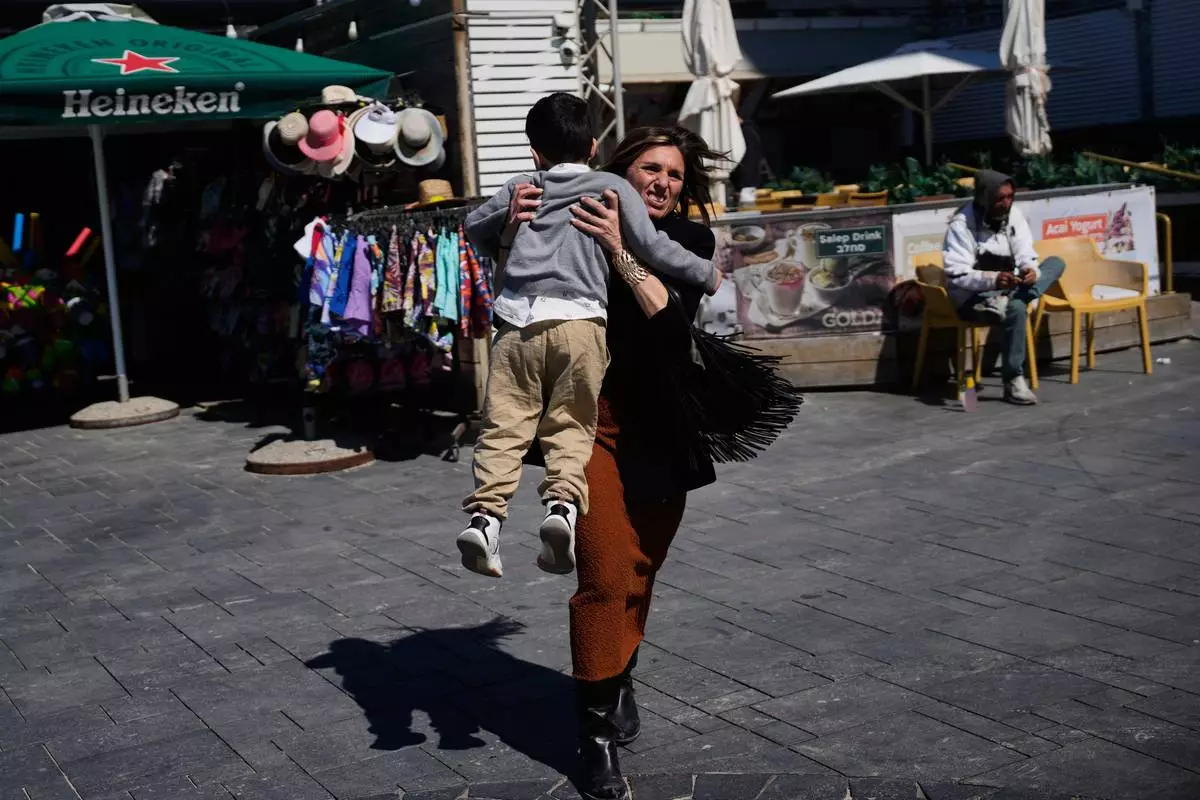
People rush to take shelter as warning sirens sound following missile fired towards Israel, in Tel Aviv, Israel, Saturday, Feb. 28, 2026. (AP Photo/Ohad Zwigenberg)
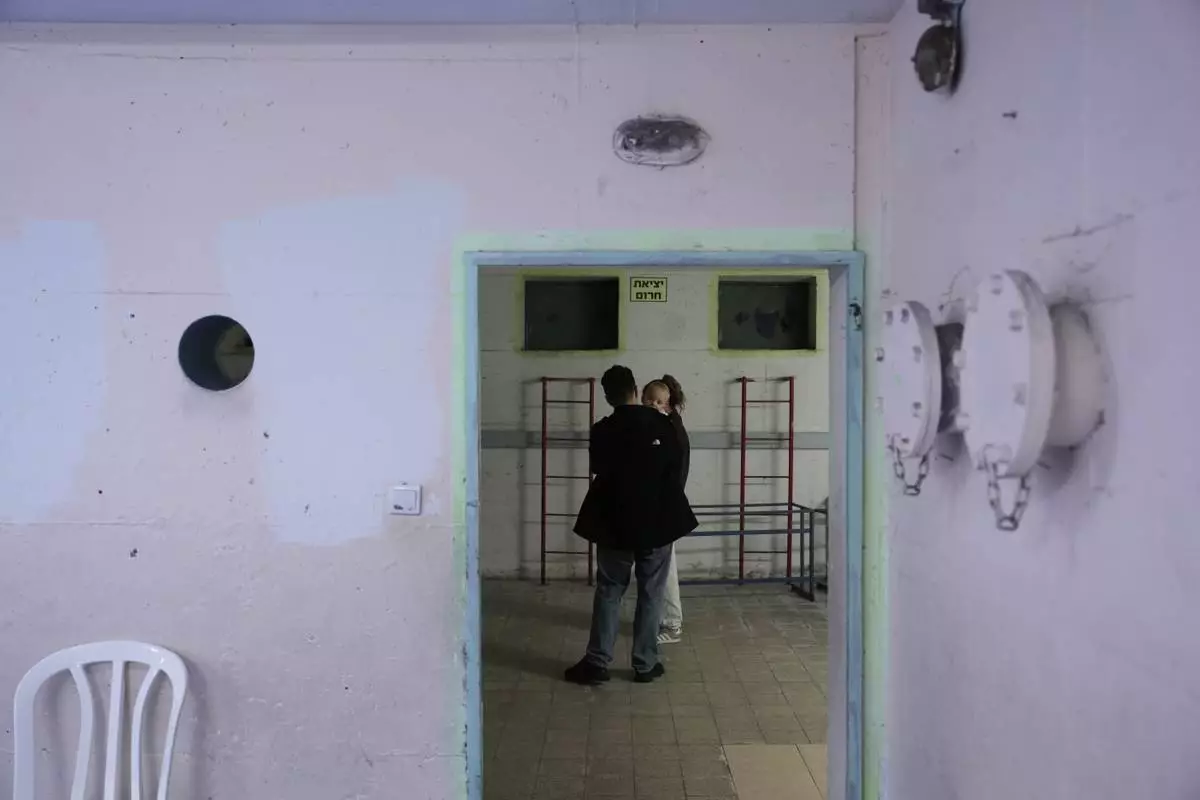
Civilians staying in a shelter after alarms announced that Israel had launched an attack on Iran, in Ramat Gan, Israel, Saturday, Feb. 28, 2026. (AP Photo/Oded Balilty)
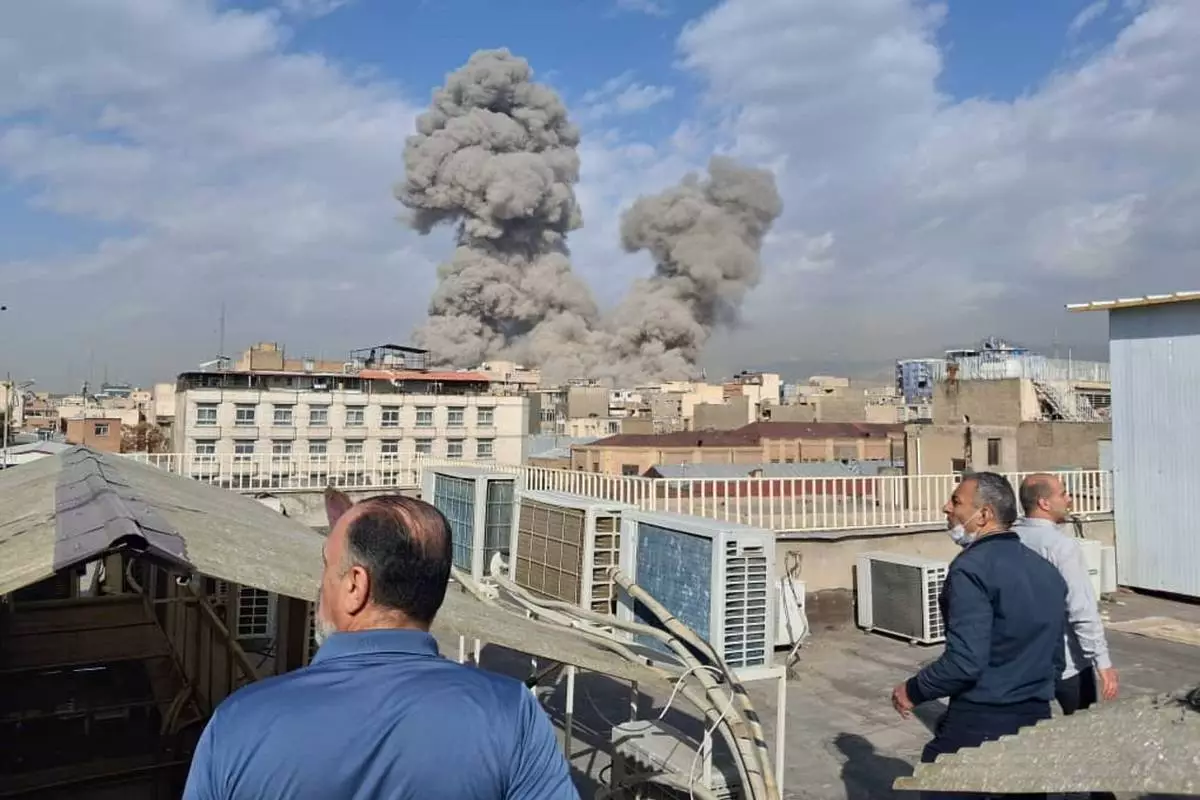
People watch as smoke rises on the skyline after an explosion in Tehran, Iran, Saturday, Feb. 28, 2026.(AP Photo)
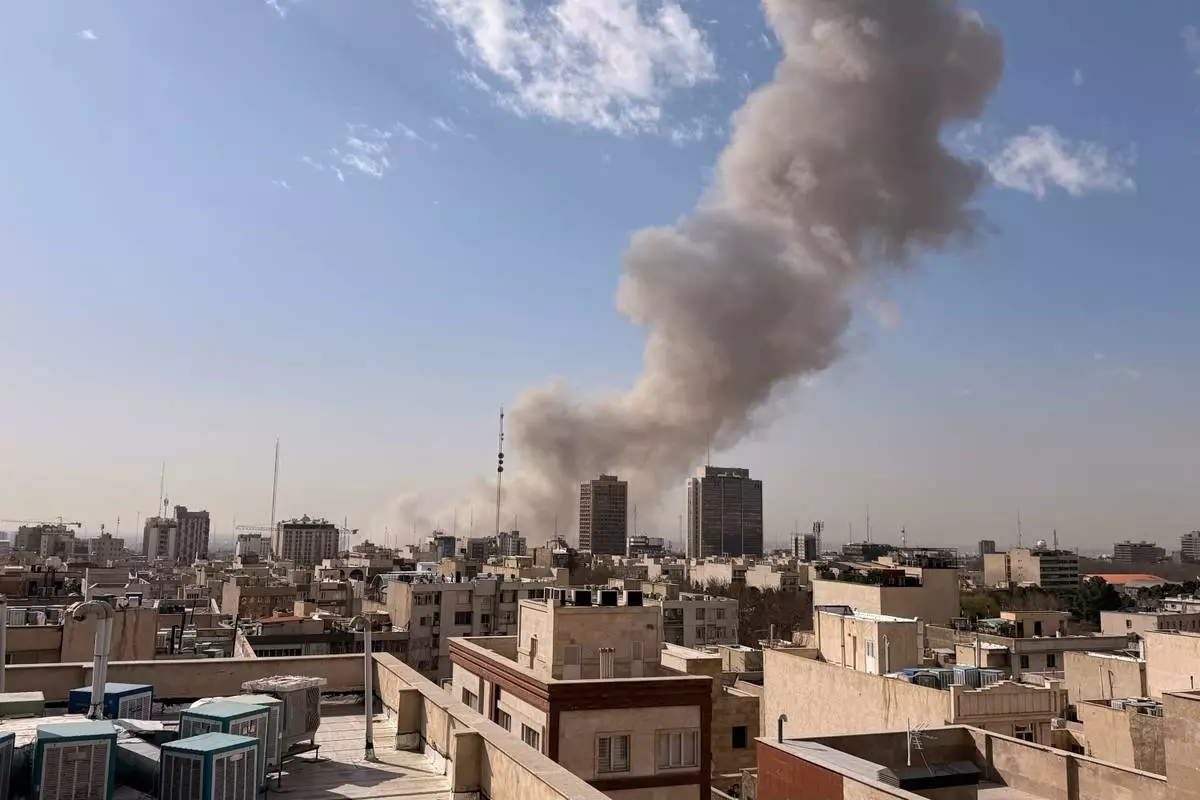
Smoke rises on the skyline after an explosion in Tehran, Iran, Saturday, Feb. 28, 2026.(AP Photo)
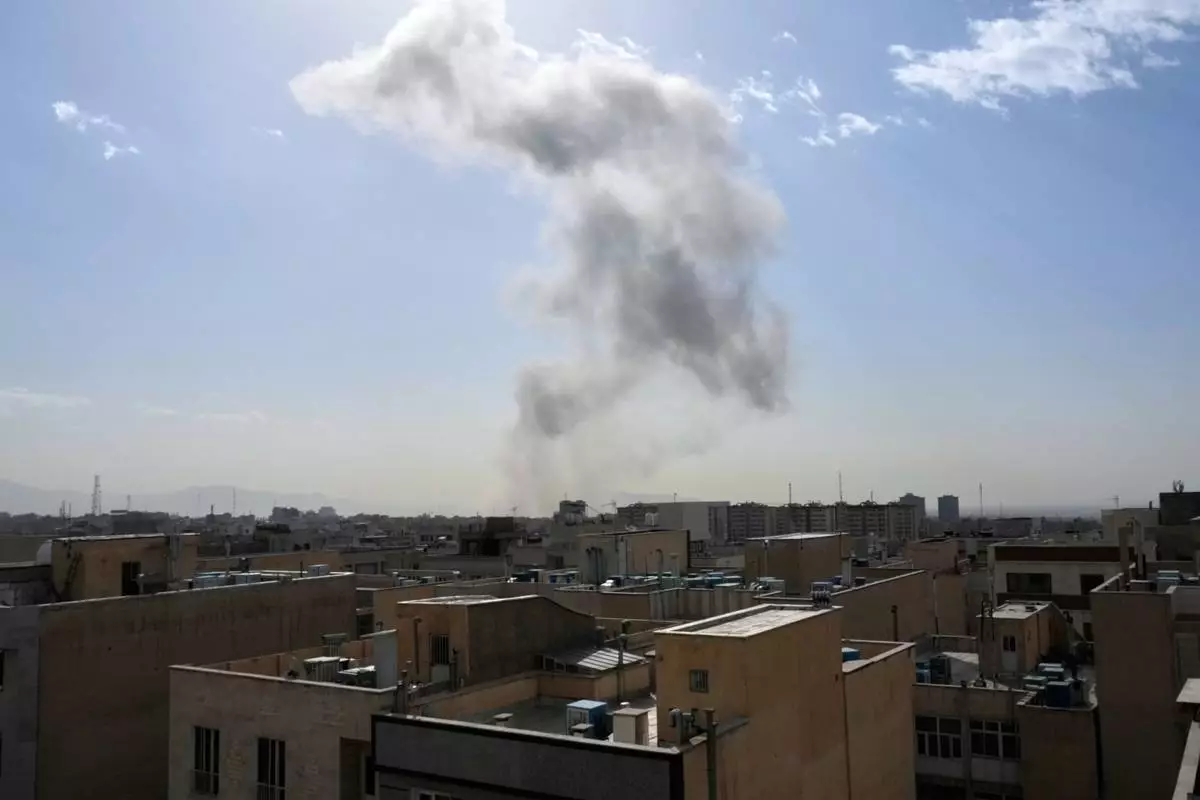
Smoke rises on the skyline after an explosion in Tehran, Iran, Saturday, Feb. 28, 2026.(AP Photo/Vahid Salemi)
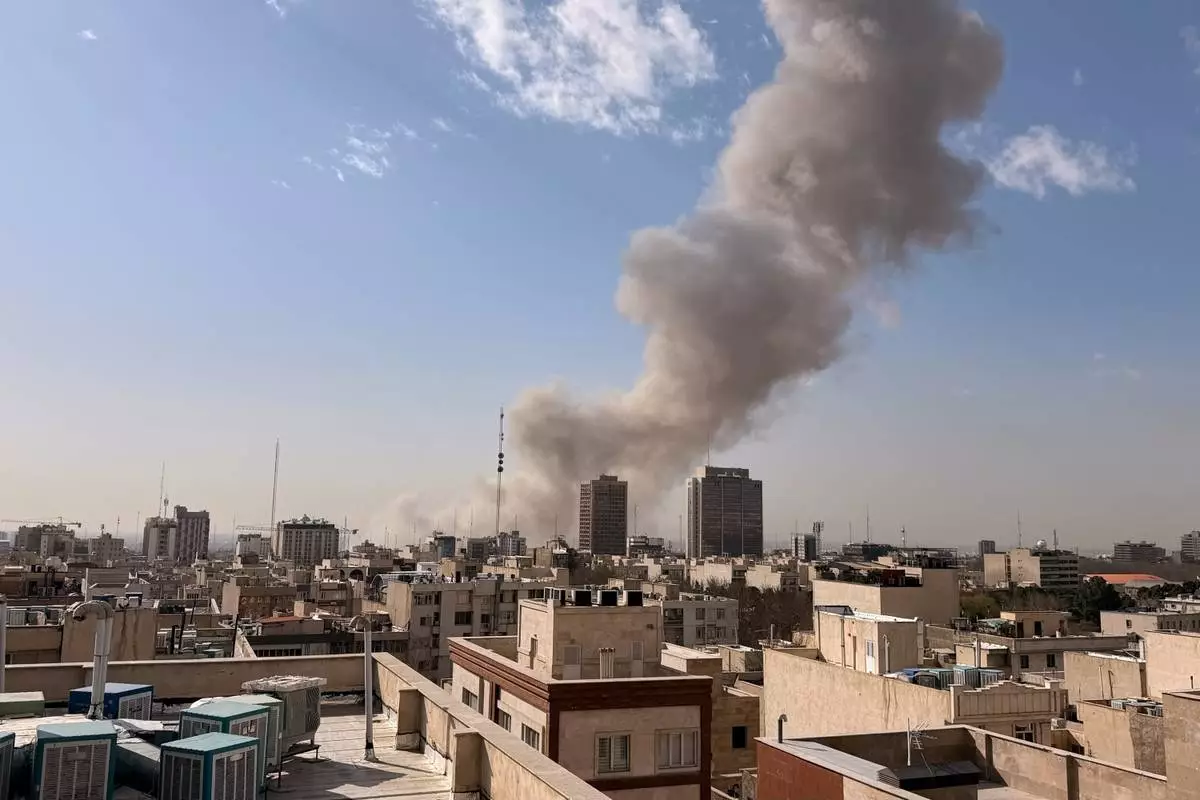
Smoke rises on the skyline after an explosion in Tehran, Iran, Saturday, Feb. 28, 2026.(AP Photo)
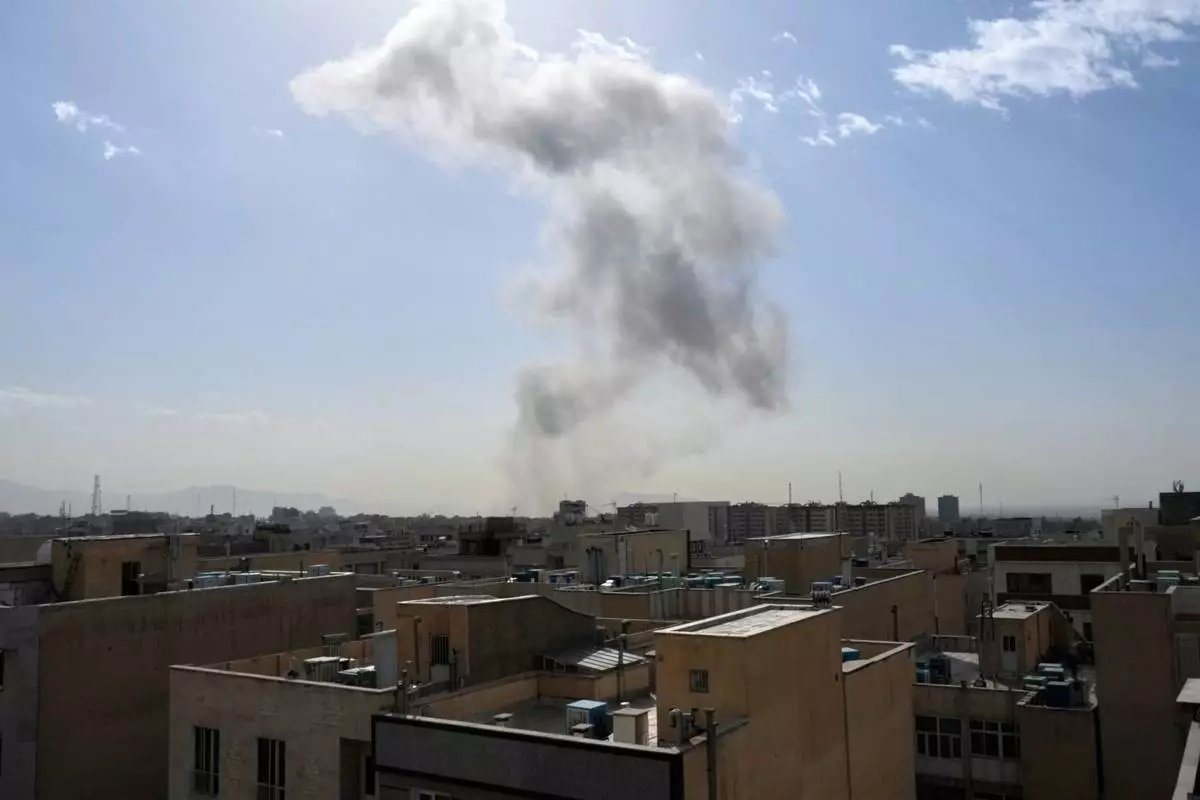
Smoke rises on the skyline after an explosion in Tehran, Iran, Saturday, Feb. 28, 2026.(AP Photo/Vahid Salemi)

FILE -Israeli Defense Minister Israel Katz makes statements with his Greek counterpart Nikos Dendias after their meeting in Athens, Greece, Tuesday, Jan. 20, 2026. (AP Photo/Thanassis Stavrakis, File)