The U.S. and Israel attacked Iran on Saturday in what President Donald Trump said was a massive operation to destroy the country’s military capabilities and eliminate the threat of it creating a nuclear weapon.
Iran’s Foreign Ministry said it would defend its homeland and its Revolutionary Guard said it launched counterattacks, firing drones and missiles at Israel and strikes aimed at U.S. military installations in Bahrain, Kuwait and Qatar.
Click to Gallery
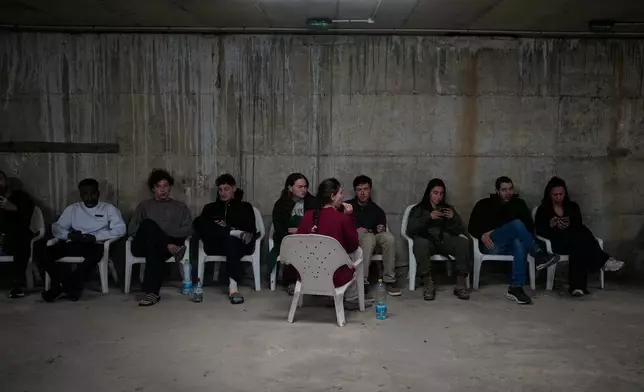
People sits in a shelter after warning sirens sound following Israeli strikes on Iran, in Tel Aviv, Israel, Saturday, Feb. 28, 2026. (AP Photo/Ohad Zwigenberg)
Vehicles drive along a highway following Israeli and U.S. strikes in Tehran, Iran, Saturday, Feb. 28, 2026. (AP Photo/Vahid Salemi)
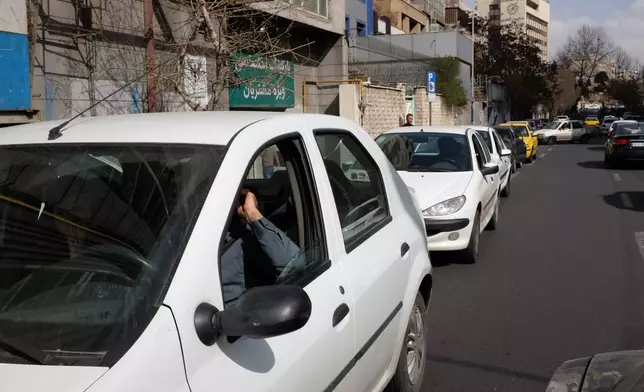
Vehicles queue outside a gas station following Israeli strikes in the city, in Tehran, Iran, Saturday, Feb. 28, 2026. (AP Photo/Vahid Salemi)
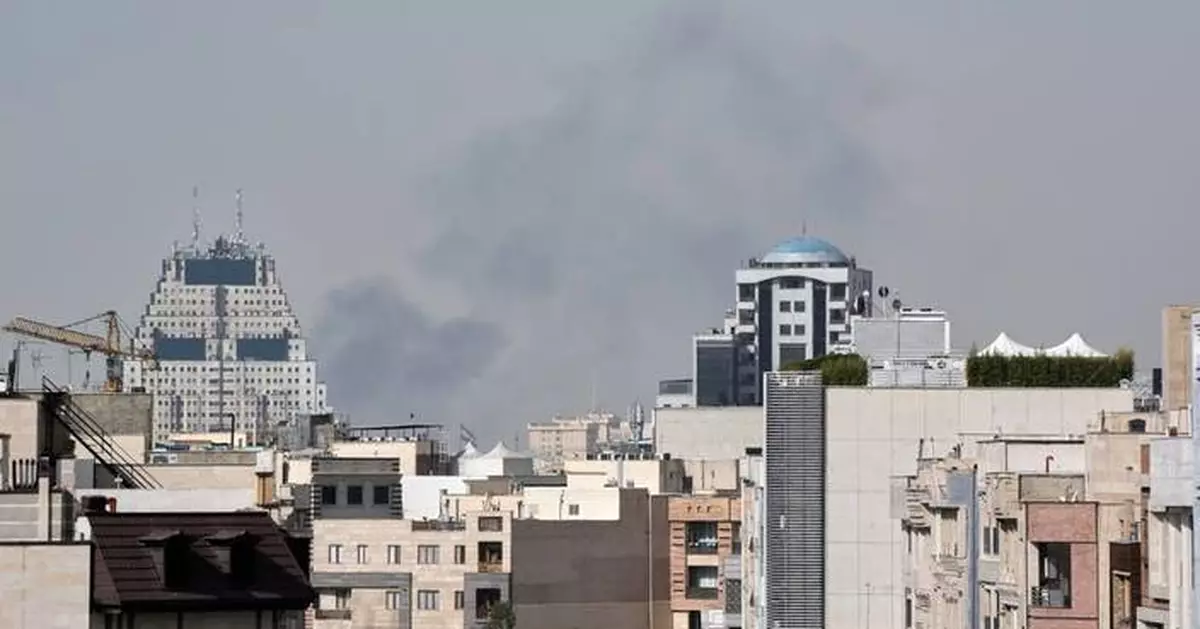
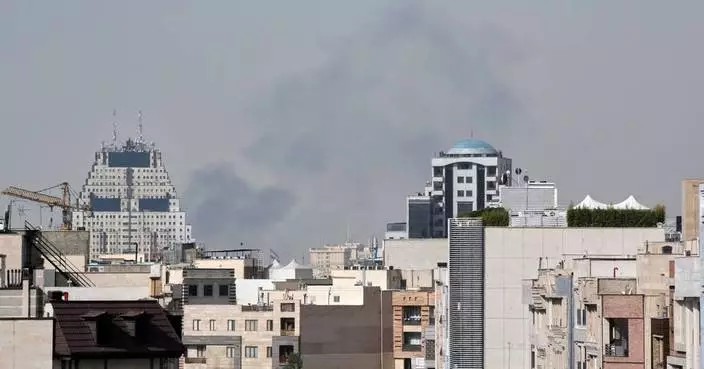
Smoke rises on the skyline after an explosion in Tehran, Iran, Saturday, Feb. 28, 2026.(AP Photo/Vahid Salemi)
The strikes came after Trump has pressured Tehran for a deal to constrain its nuclear program, building up a fleet of American warships in the region as the country struggles with growing dissent following nationwide protests.
At least 40 people were reported killed at girls’ school in southern Iran in the Israeli-U.S. strikes, according to Iran’s state-run IRNA news agency. Shrapnel from an Iranian missile attack on the capital of the United Arab Emirates killed one person, state media said.
Israel announced it had launched an attack on Iran shortly after explosions were heard in Tehran on Saturday morning. One of the first strikes hit near the offices of Supreme Leader Ayatollah Ali Khamenei. It wasn't immediately clear where Khamenei was at the time; he hasn't been seen for days.
Israeli Defense Minister Israel Katz described the attack as being done “to remove threats.” Iran’s military, symbols of government and intelligence sites were targeted, according to an official briefed on the operation, who spoke on condition of anonymity to discuss nonpublic information.
Sirens wailed across Israel to warn the public about possible incoming missile strikes.
Bahrain said a missile attack targeted the U.S. Navy’s 5th Fleet headquarters in the island kingdom. Witnesses heard sirens and explosions in Kuwait, home to U.S. Army Central. Explosions could be also be heard in Qatar, where Al Udeid Air Base hosts thousands of service members.
Iraq and the United Arab Emirates closed their airspace, and sirens sounded in Jordan.
An apartment building in northern Israel was damaged and shrapnel fell in multiple sites, according to media and police. But Lt. Col. Nadav Shoshani said there had been no significant hits in Israel and rescue services said there were no injuries reported from missile barrages across the country.
Iranian-backed Houthis in Yemen, meanwhile, have vowed to resume attacks on Red Sea shipping routes and on Israel, according to two senior Houthi officials who spoke on condition of anonymity because there was no official announcement from leadership.
It took over an hour for Trump to make an official announcement on the U.S. involvement in what he termed “major combat operations.”
In an 8-minute video on social media, Trump indicated the U.S. was striking for reasons far beyond the nuclear program, listing grievances stretching back to the beginning of the Islamic Republic following a revolution in 1979 that turned Iran from one of America’s closest allies in the Middle East into a fierce foe.
Trump told Iranians to take cover but urged them to later rise up and topple the Islamic leadership.
“When we are finished, take over your government,” Trump said. “It will be yours to take. This will be probably your only chance for generations.”
The attacks came a day after Trump voiced frustration over lack of progress in negotiations to stop Iran’s ability to develop nuclear weapons.
Israel said it had worked with the U.S. for months to plan the attacks.
Before U.S.-Iran negotiations were underway in Geneva, the U.S. had assembled a vast fleet of fighter jets and warships in the region to try to pressure Iran into a deal over its nuclear program.
The aircraft carrier USS Abraham Lincoln and three guided-missile destroyers arrived in January to bolster the number of warships in the region. The world’s largest aircraft carrier, the USS Gerald R. Ford, and four accompanying destroyers later were dispatched from the Caribbean to head to the Middle East and are now in the Mediterranean.
The fleet has added more than 10,000 U.S. troops to the region.
The fighting disrupted air travel in the region.
Israel and the United Arab Emirates, home to both the long-haul carriers Emirates and Etihad, closed their airspace Saturday. Qatar Airways Group said it has temporarily canceled flights to and from Doha because Qatari airspace also was closed.
Planes en route to Israel were rerouted to other airports.
Virgin Atlantic canceled its flight from London's Heathrow Airport to Dubai and said it would avoid flying over Iraq, meaning flights to and from India, the Maldives, Dubai and Riyadh could take slightly longer. Virgin Atlantic said all flights would carry appropriate fuel in case they need to reroute on short notice.
Turkish Airlines said on X that flights to Lebanon, Syria, Iraq, Iran and Jordan will be suspended until Monday and flights to Qatar, Kuwait, Bahrain, the United Arab Emirates and Oman would be suspended on Saturday.
Dutch airline KLM previously said it was suspending Tel Aviv flights starting Sunday.
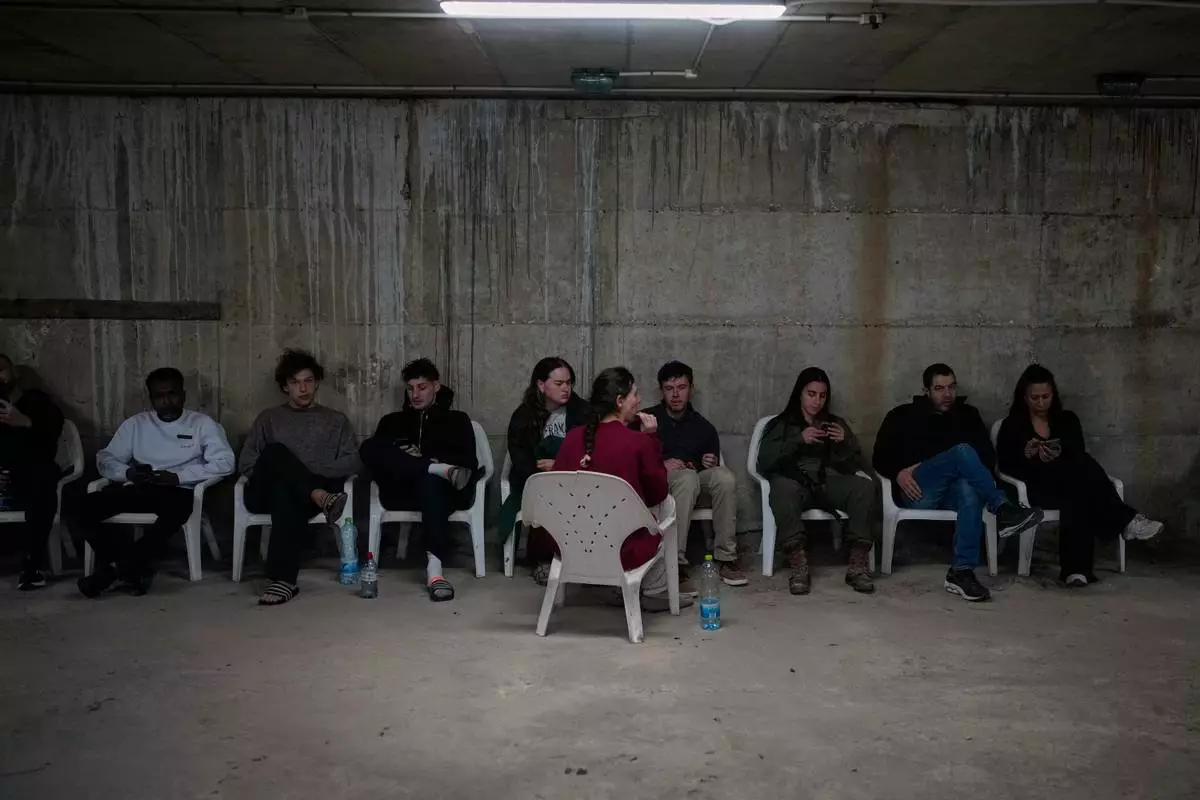
People sits in a shelter after warning sirens sound following Israeli strikes on Iran, in Tel Aviv, Israel, Saturday, Feb. 28, 2026. (AP Photo/Ohad Zwigenberg)
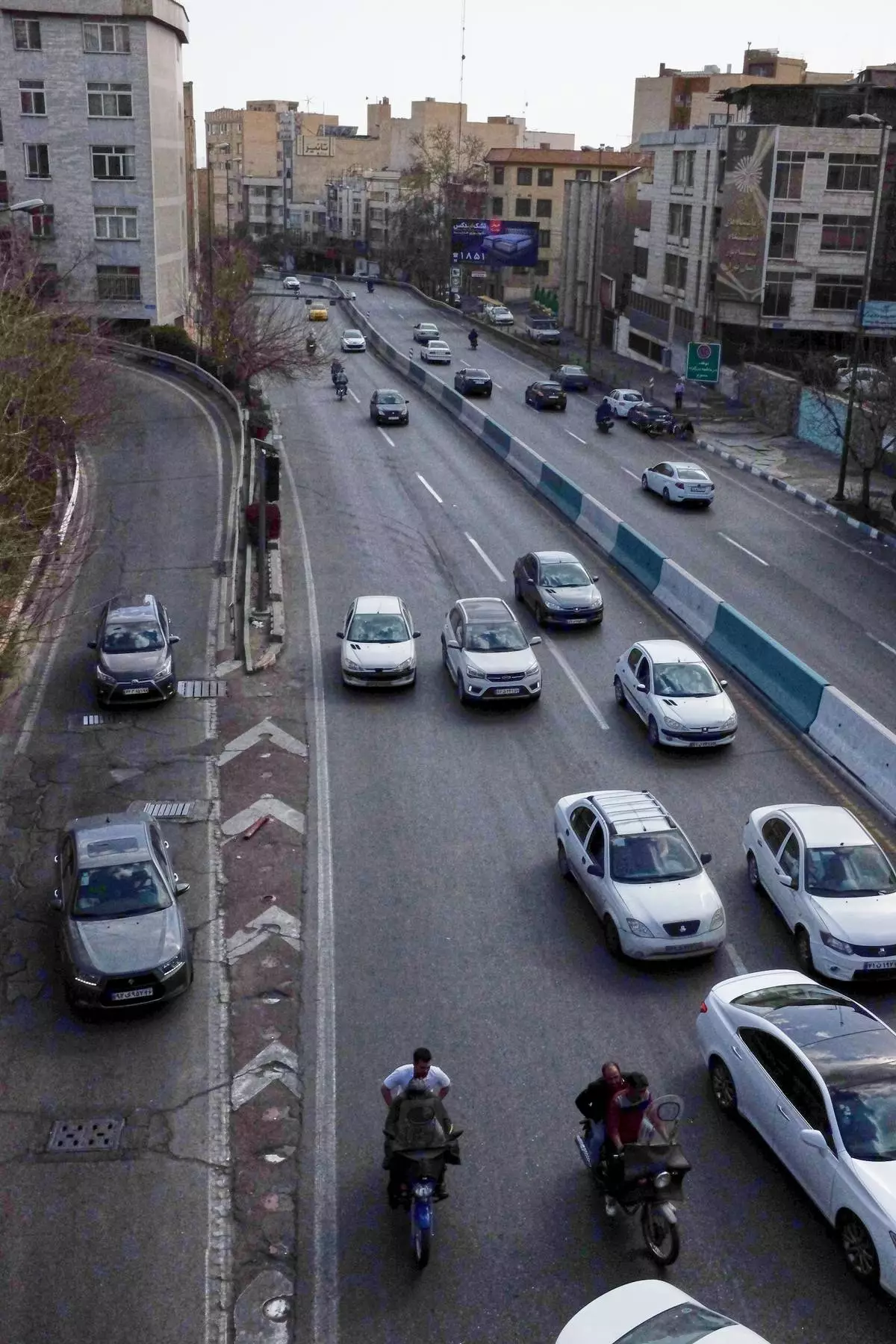
Vehicles drive along a highway following Israeli and U.S. strikes in Tehran, Iran, Saturday, Feb. 28, 2026. (AP Photo/Vahid Salemi)
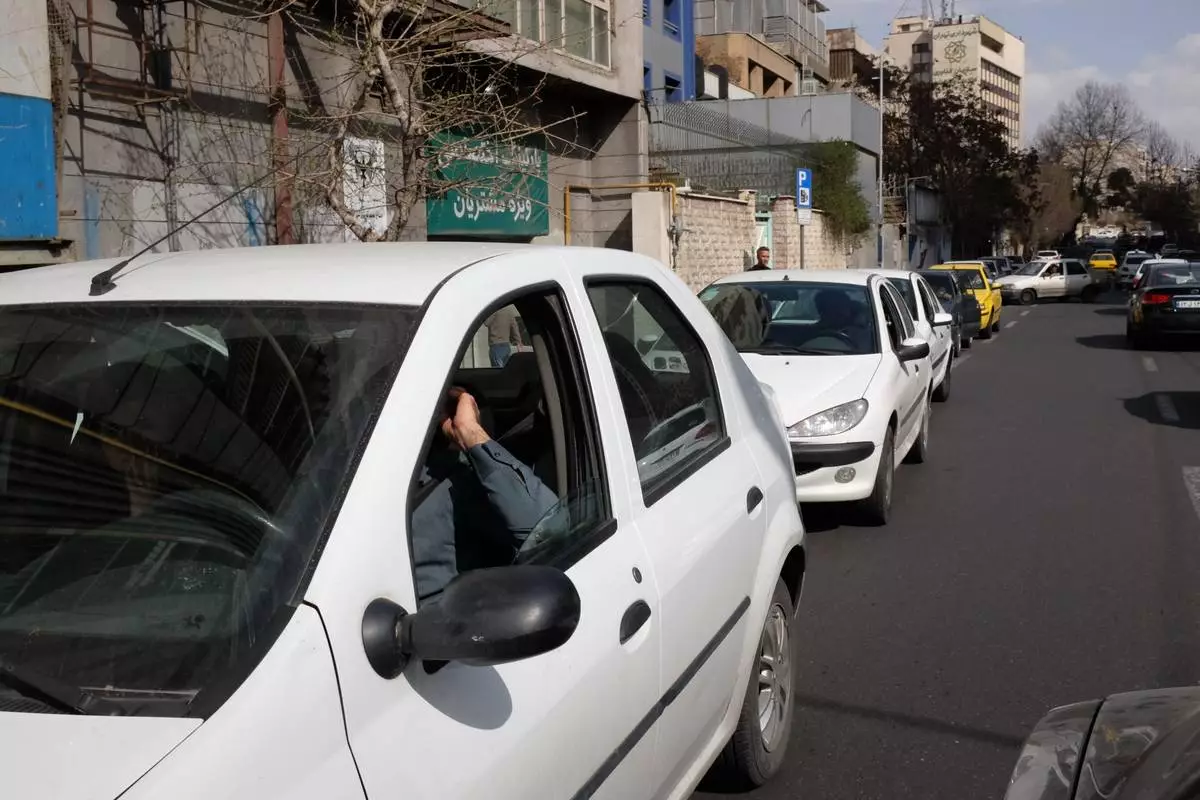
Vehicles queue outside a gas station following Israeli strikes in the city, in Tehran, Iran, Saturday, Feb. 28, 2026. (AP Photo/Vahid Salemi)
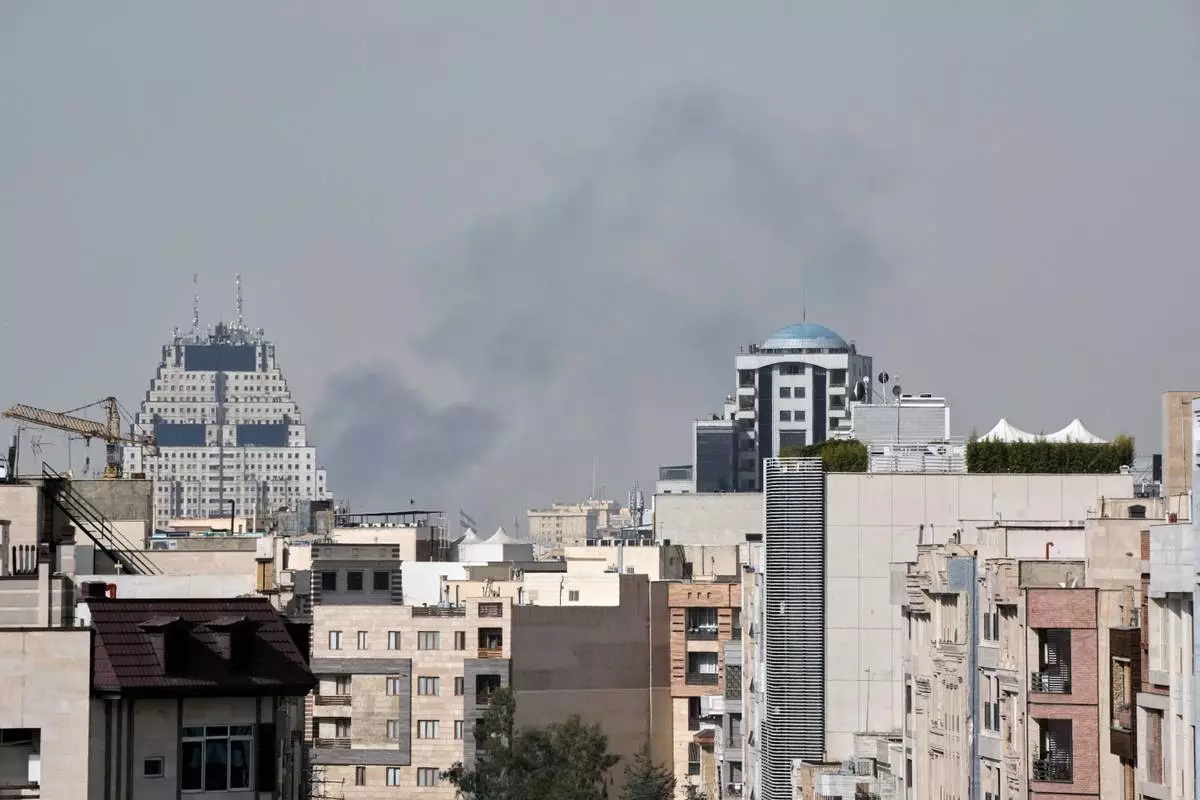
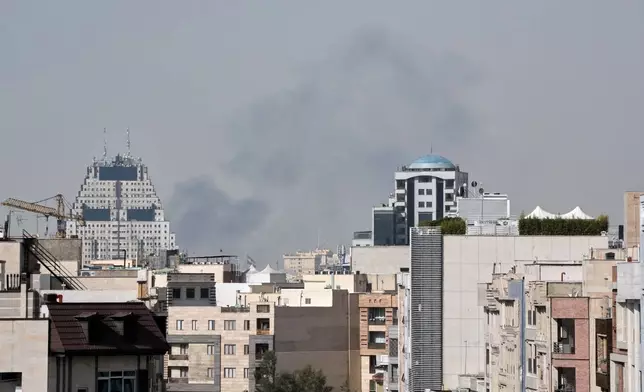
Smoke rises on the skyline after an explosion in Tehran, Iran, Saturday, Feb. 28, 2026.(AP Photo/Vahid Salemi)
ISLAMABAD (AP) — Pakistan’s military, backed by artillery and air power, struck more military installations deep inside Afghanistan overnight and into early Saturday, after Pakistan said it was in “open war” with its eastern neighbor.
Pakistan claimed more than 300 Afghan forces had been killed since fighting erupted Thursday night during a broad Afghan cross-border attack into Pakistan. Afghanistan rejected the figures as false. The casualty figures provided by either side could not be independently confirmed.
The fighting was in response to Pakistani airstrikes in Afghanistan last Sunday. Pakistan said it was targeting the outlawed Pakistani Taliban, or TTP. The group is separate but closely allied with Afghanistan’s ruling Taliban. Afghanistan, however, said only civilians were killed in Sunday's airstrike.
After the Afghan attack, Pakistani Defense Minister Khawaja Mohammad Asif declared Friday: “Our patience has now run out. Now it is open war between us.”
Pakistani Information Minister Attaullah Tarar said Saturday that more than 331 Afghan forces had been killed and over 500 others wounded during the ongoing military strikes in Afghanistan. Pakistan destroyed 102 Afghan posts, captured 22 others and destroyed 163 tanks and armored vehicles at 37 locations, he said.
The Afghan government's deputy spokesman, Hamdullah Fitrat, said the claim of hundreds of Afghan forces killed and wounded “is untrue and we reject it.” He accused Pakistan of targeting civilian areas in the provinces of Paktika, Khost, Kunar, Nangarhar and Kandahar, as well as refugee camps in Torkham and Kandahar. Fitrat said 52 people had been killed, most of them women and children, and 66 others wounded.
Meanwhile, the United Nations wrote on X that major cities in Afghanistan were reportedly bombed by the Pakistani military on Friday, marking a new escalation and raising fears for civilians already struggling under the harsh rule of the Taliban authorities.
On Friday, Afghan government spokesman Zabiullah Mujahid said 13 Afghan forces were killed and 22 wounded. He also said 55 Pakistani soldiers were killed. Pakistan put its own military figures at 12 killed, 27 wounded and one soldier missing in action.
Pakistan’s state-run media reported the country’s air force carried out strikes targeting key military installations in various areas of eastern Afghanistan.
According to Pakistani authorities, hundreds of residents living near the northwestern Torkham border crossing had fled. In recent days, Pakistan has also deported dozens of Afghan refugees to Torkham.
Ejaz Ul Haq, an Afghan refugee stranded near the Torkham border with his family, said he could not return to Afghanistan because of the fighting. Many others were struggling to obtain food during the fasting month of Ramadan, he said.
Afghanistan's Defense Ministry on Saturday said Afghanistan attacked Pakistani military bases in Miranshah and Spin Wam overnight, destroying military installations and causing heavy casualties in response to the ongoing airstrikes by Pakistan.
In eastern Afghanistan, the Department of Information and Culture accused Pakistan of targeting civilian areas, destroying homes and killing at least 11 people. There was no immediate response from Pakistan, which has said it is targeting only military installations.
Mullah Taj Mohammad Naqshbandi, a commissioner on the Afghan side of the Torkham border, said in a statement Saturday that the “brave forces of the Islamic Emirate destroyed the Pakistani military regime’s commissariat, military units, and three important security towers.”
On Friday, the Afghan government said 55 Pakistani soldiers were killed during its strikes and Afghan losses were far lower than Pakistan claimed.
Mujahid, the Afghan government spokesman, said Friday that the country's attacks on Pakistani military targets were meant as “a message that our hands can reach their throats and that we will respond to every evil act of Pakistan.” He added that “Pakistan has never sought to resolve problems through dialogue.”
Pakistan has frequently accused Kabul of sheltering the TTP, allegations the group and Afghanistan’s Taliban government deny.
Pakistan’s army spokesman Lt. Gen. Ahmed Sharif Chaudhry said Friday the Afghan government had to choose “TTP or Pakistan.”
Tensions have been high since October, when dozens of soldiers, civilians and suspected militants were killed in border clashes. A Qatari-mediated ceasefire ended the intense fighting that month, but several rounds of peace talks in Turkey in November failed to produce a lasting agreement. The two sides have occasionally traded fire since then, though the ceasefire had largely held until last week, when Pakistan struck what it described as TTP hideouts.
Since then, Turkey, Saudi Arabia, Qatar, China and several other countries are again attempting to defuse tensions by offering mediation.
Qatar’s minister of state, Mohammed bin Abdulaziz Al-Khulaifi, spoke Friday with the foreign ministers of Afghanistan and Pakistan in an effort to de-escalate tensions, Qatar’s Foreign Ministry said in a post on X.
Abdul Qahar Afghan reported from Kabul, Afghanistan. Associated Press writers Riaz Khan and Rasool Dawar in Peshawar, Pakistan, contributed to this report.
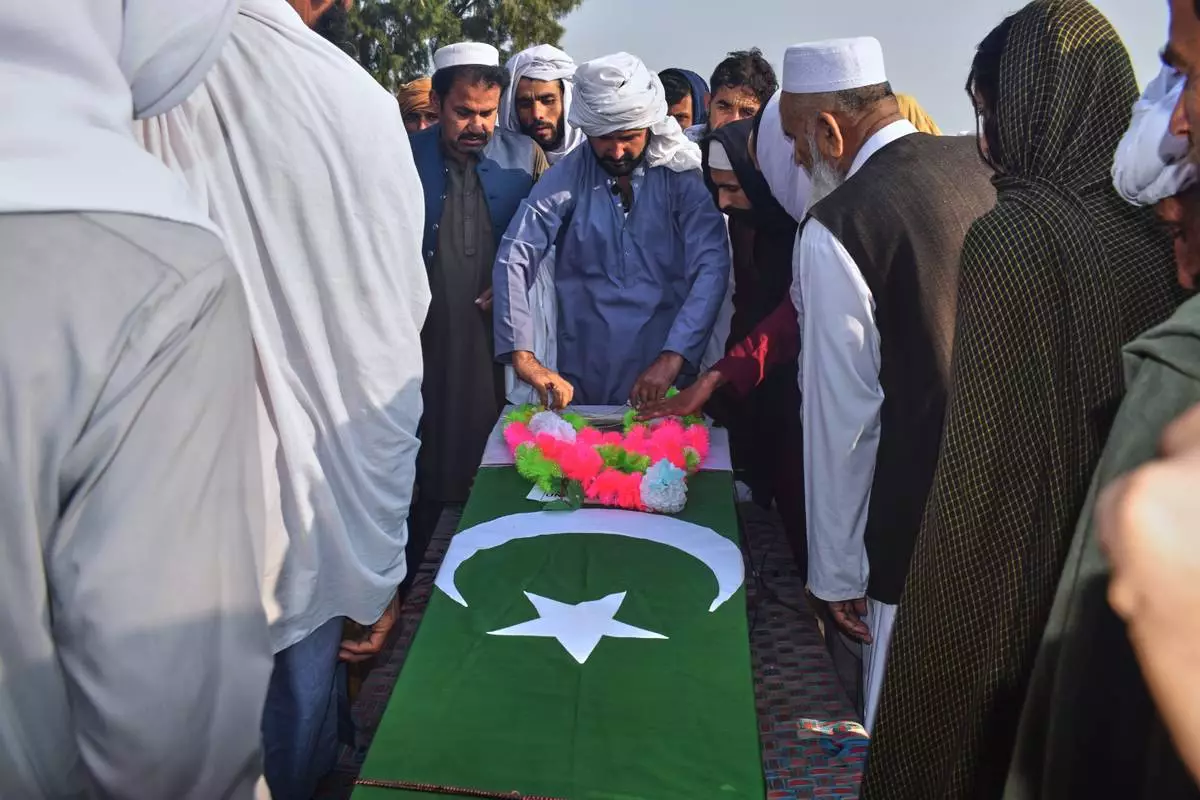
People gather around the coffin of an army soldier, killed in the cross-border clashes of Pakistan and Afghan forces, during a funeral prayer in a village in Lakki Marwat, a district of Pakistan's Khyber Pakhtunkhwa province, Saturday, Feb. 28, 2026. (AP Photo/G.A. Marwat)
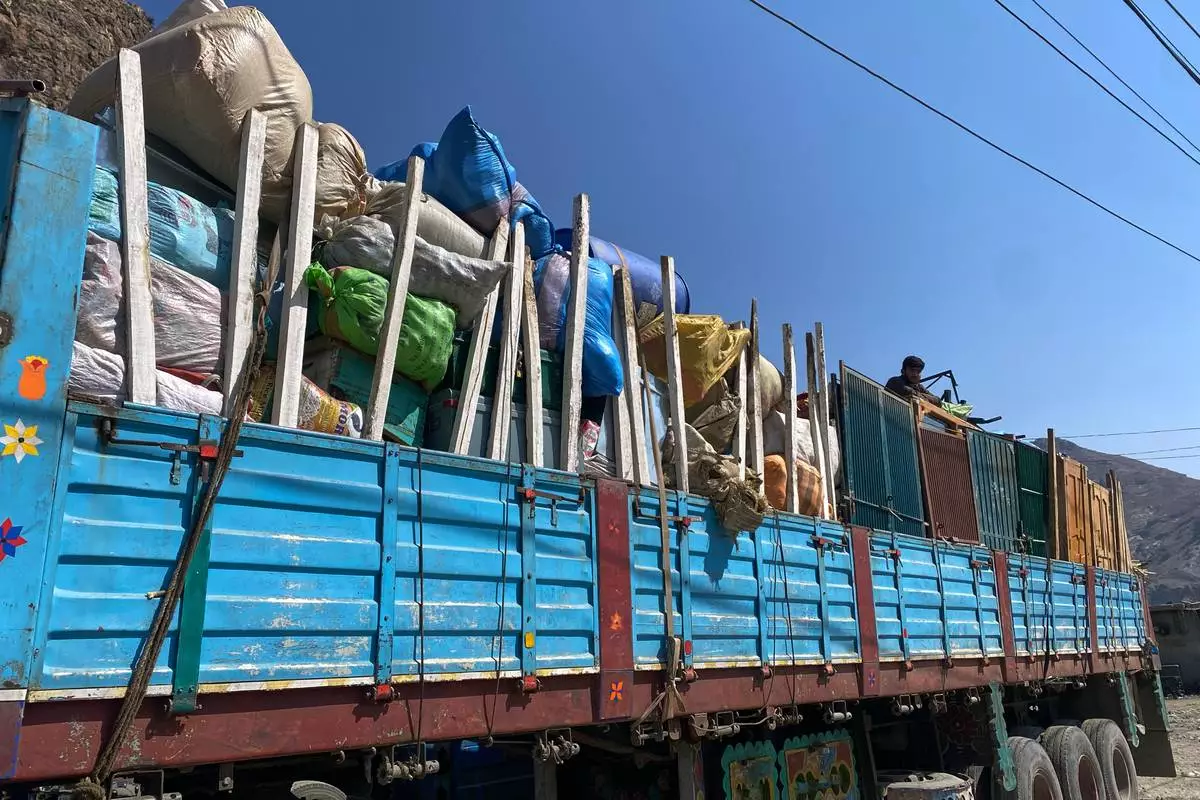
Trucks carrying Afghan refugees and their belongings are parked along roadside in a safer place following cross-border clashes between Pakistan and Afghan forces, at near Torkham border crossing point, Pakistan, Saturday, Feb. 28, 2026. (AP Photo/Maaz Awan)
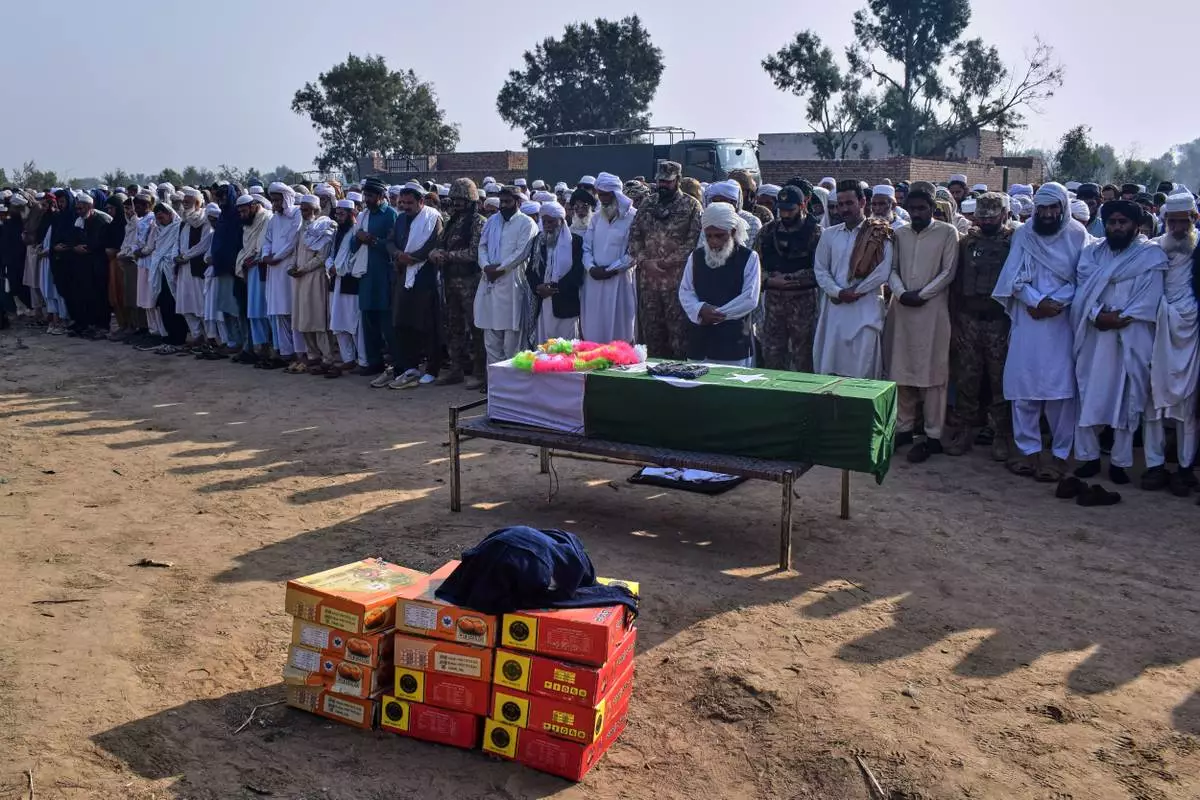
People attend funeral prayer of an army soldier, killed in the cross-border clashes of Pakistan and Afghan forces, at a village in Lakki Marwat, a district of Pakistan's Khyber Pakhtunkhwa province, Saturday, Feb. 28, 2026. (AP Photo/G.A. Marwat)
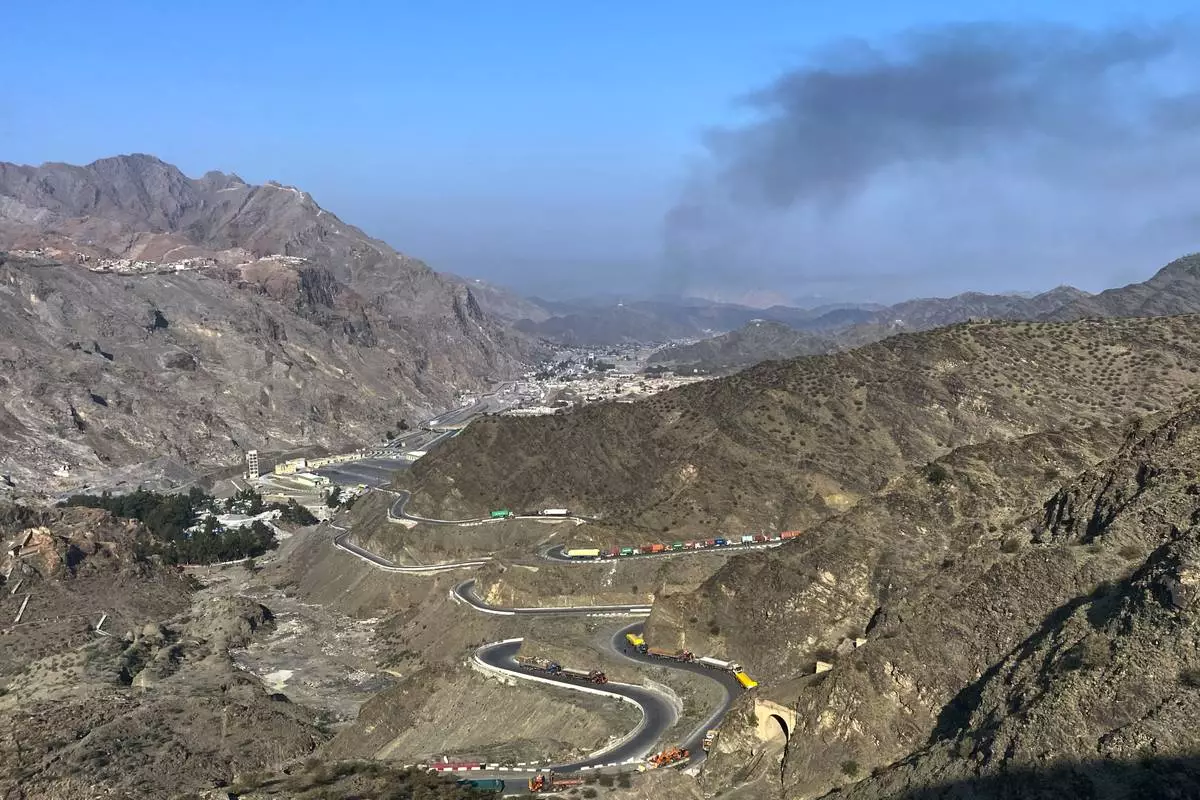
Smoke emits from Afghan side as trucks are parked along roadside following cross-border clashes between Pakistan and Afghan forces, at near Torkham border crossing point, Pakistan, Saturday, Feb. 28, 2026. (AP Photo/Maaz Awan)
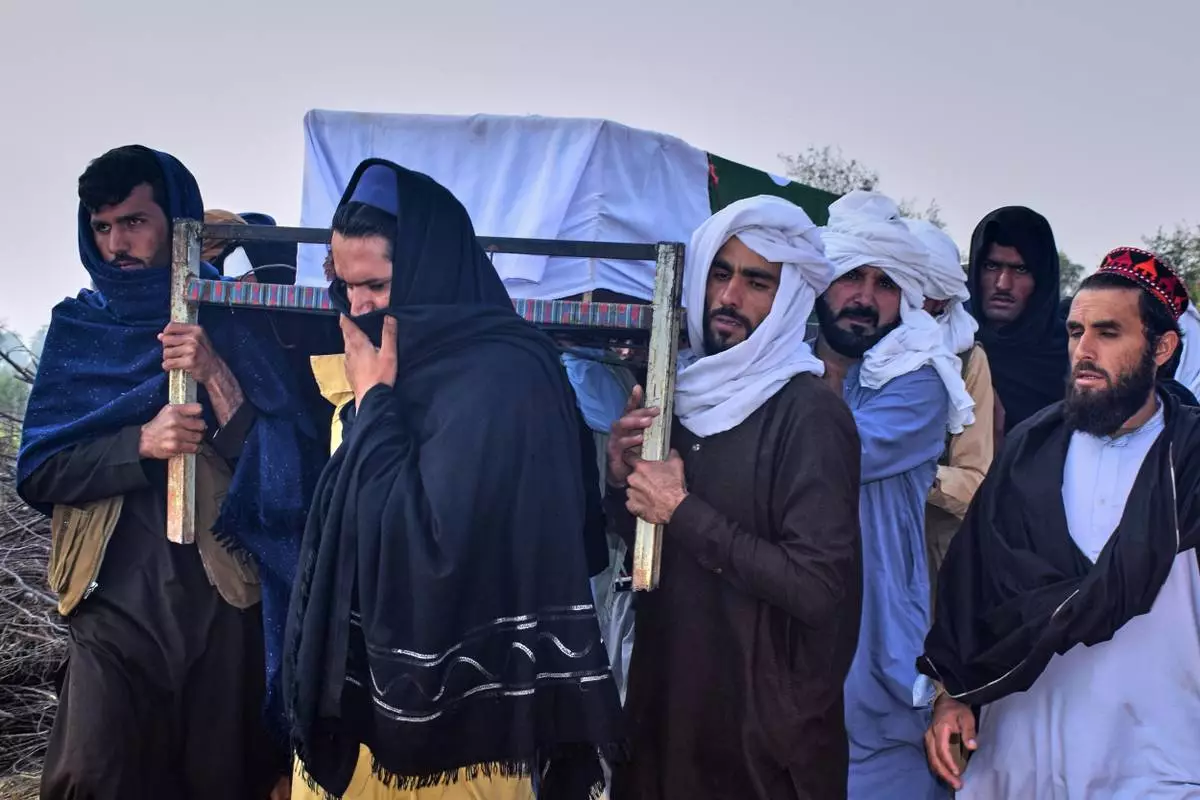
People carry the coffin of an army soldier, killed in the cross-border clashes of Pakistan and Afghan forces, for his funeral prayer at a village in Lakki Marwat, a district of Pakistan's Khyber Pakhtunkhwa province, Saturday, Feb. 28, 2026. (AP Photo/G.A. Marwat)