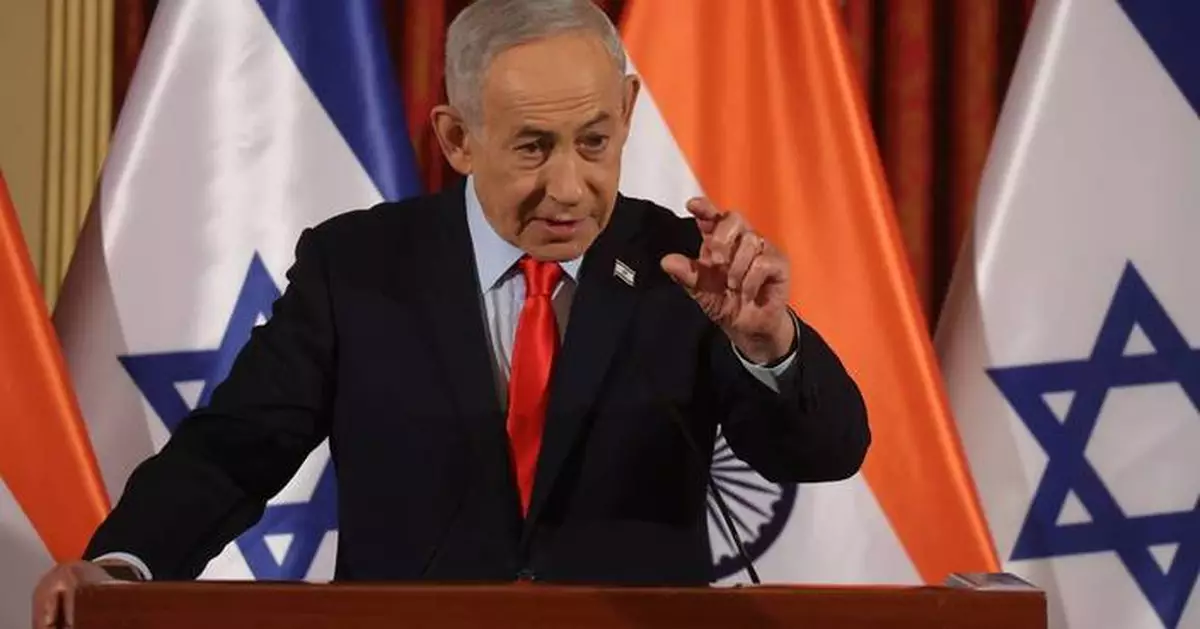
Israeli Prime Minister Benjamin Netanyahu said in a recorded message released Saturday morning that the attacks will let Iranians “take their fate into their own hands” and that Israel plans the current operation to be “much more powerful” than the bruising 12-day war Israel launched against Iran in June.
He spoke in Hebrew. Here’s an English-language transcript of Netanyahu’s address:
My brothers and sisters, citizens of Israel. A short while ago, Israel and the United States embarked on a joint campaign, Operation Lion’s Roar. The aim of the operation is to put an end to the threat from the Ayatollah regime in Iran. At this time, the IDF is striking targets of the oppressive regime, facilities of the Revolutionary Guards and the Basij, and together with the United States military, ballistic missile sites that threaten both Israel and U.S. forces. This operation will continue as long as necessary. For 47 years, the evil regime in Iran has called for death to Israel, death to America.
It trampled on the citizens of its country, it instilled fear in the peoples of the region, it spread a vast network of terror across the entire world, it invested enormous resources to develop atomic bombs and tens of thousands of missiles intended, as it defined it, to erase Israel from the map of the world. It also armed the terrorist proxies around us in Gaza, Lebanon, Syria, Iraq, Yemen, Judea and Samaria, and it shed our blood.
But if anyone needed further proof of the murderous nature of the Ayatollah regime, they received it last month. Because we all saw how this tyrannical regime in Tehran carried out an unprecedented mass slaughter of its own citizens in Iran. It cold-bloodedly murdered thousands of children, adults and the elderly. Tens of thousands were arrested, tortured and humiliated. And why? Just because they sought lives of freedom and dignity.
In the Revival War and Operation Rising Lion our heroic soldiers struck a decisive blow against the Ayatollah regime and its proxies. But the wounded predator has not ceased its attempts to recover, for the same purpose, to destroy us.
In recent months, the tyrants in Iran have been plotting to rebuild their nuclear and missile capabilities and to bury them underground, where we cannot reach them. If we do not stop them now, they will become invulnerable. To this end, their representatives in negotiations are trying to buy time, attempting to gain time in fruitless and deceitful negotiations with our American friends. But the tyrants in Iran have made a grave mistake because the United States is not buying their lies, and we will not sit idly by while the shadow of destruction looms over us.
Therefore, we have launched Operation Lion’s Roar, an operation far more powerful than Operation Rising Lion, which was already very powerful. We are doing this in full cooperation with our friends in the United States under the courageous leadership of President Trump. Together with the United States, we will strike hard at the terror regime and create conditions that will allow the brave Iranian people to cast off the yoke of this murderous regime.
During Operation Rising Lion, I was often asked whether the overthrow of the regime was the goal of the operation, in addition to removing the nuclear and missile threat. I replied that this was not the goal, but it could certainly be the outcome. And indeed, this is exactly what began to happen, with millions of Iranians taking to the streets. And now, now they are given the opportunity to take control of their own destiny. Citizens of Israel, as in Operation Rising Lion so too in Operation Lion’s Roar, we all need patience and resilience. Because there will be costs, and perhaps even heavy costs. But I know the wonderful forces that lie within our people, the wonderful forces that lie within you, citizens of Israel. Since the Revival War began, we have stood together, and today too we will stand together in bravery, in brotherhood, in mutual responsibility. I ask all of you to strictly follow the instructions of the Home Front Command, because you already know, these instructions save lives.
Challenging days lie ahead for us. Every military action involves risk. But the risk of not acting is immeasurably greater, because if we do not act, we will face a nuclear Iran, an Iran with tens of thousands of ballistic missiles, an Iran that will work to destroy us and be immune to our counteractions. As a people who desire life, we have no choice but to engage in this campaign. However, this time, we are doing it with the immense combined power of the State of Israel and the United States of America.
From here, I wish to address the citizens of Iran. You, the citizens of Iran, and the Iranian army, the Artesh. You are not our enemies and we are not your enemies. We have a common enemy, the murderous regime of the Ayatollahs that has taken over you through the oppressive forces of the Revolutionary Guards and the Basij. They are the ones who have degraded your wonderful country, brought it to the lowest point, and they are the ones who slaughtered you en masse.
Therefore, in full coordination with my friend, the President of the United States, I say to you, anyone who lays down their weapon, including among the regime forces, will ensure their safety and secure their future. The Iranian people in all their diversity —Persians, Kurds, Azeris, Balochs, Abkhazians, and all other citizens of this wonderful nation — this is your opportunity to establish a new and free Iran. Take your destiny into your own hands. Hold your head high, look to the skies, our forces are there, the pilots of the free world, all coming to your aid. Help has arrived. And I believe the day is not far when Israel and a free Iran will join hands for the sake of security and peace, for the sake of progress and prosperity.
Citizens of Israel, I wish to express my deepest gratitude to the President of the United States, Donald Trump, to the American people, and to the American military. President Trump is not only one of Israel’s greatest friends in the White House of all time, but he is also a determined leader of the free world. He looks to future generations, decides what is good for America, and then acts with responsibility and courage. Together, we bring great light to all who are rooted in the aspiration for human freedom.
On behalf of the citizens of Israel, I salute the commanders and soldiers of the IDF, our Air Force, the Intelligence Directorate, the Mossad, the women and men of the security forces, and the women and men of the rescue forces. I salute them for their courage and the strength of their actions. And I tell you, an entire nation stands behind you, an entire nation prays for your success.
My brothers and sisters, in two days we will celebrate the holiday of Purim. 2,500 years ago, in ancient Persia, an enemy rose against us with the exact same goal of completely destroying our people. But Mordechai the Jew and Queen Esther, with their courage and resourcefulness, saved our people. In those days of Purim, the lot was cast, and the wicked Haman fell along with it. Even today on the holiday of Purim, the lot was cast, and the end of the evil regime will also come. The prophet Amos says, “The lion has roared, who will not fear?” In Operation Lion’s Roar, we roar, Do not fear Israel, for are you not a young lion? We will stand as one person with one heart, and with God’s help, we will ensure the eternity of Israel.
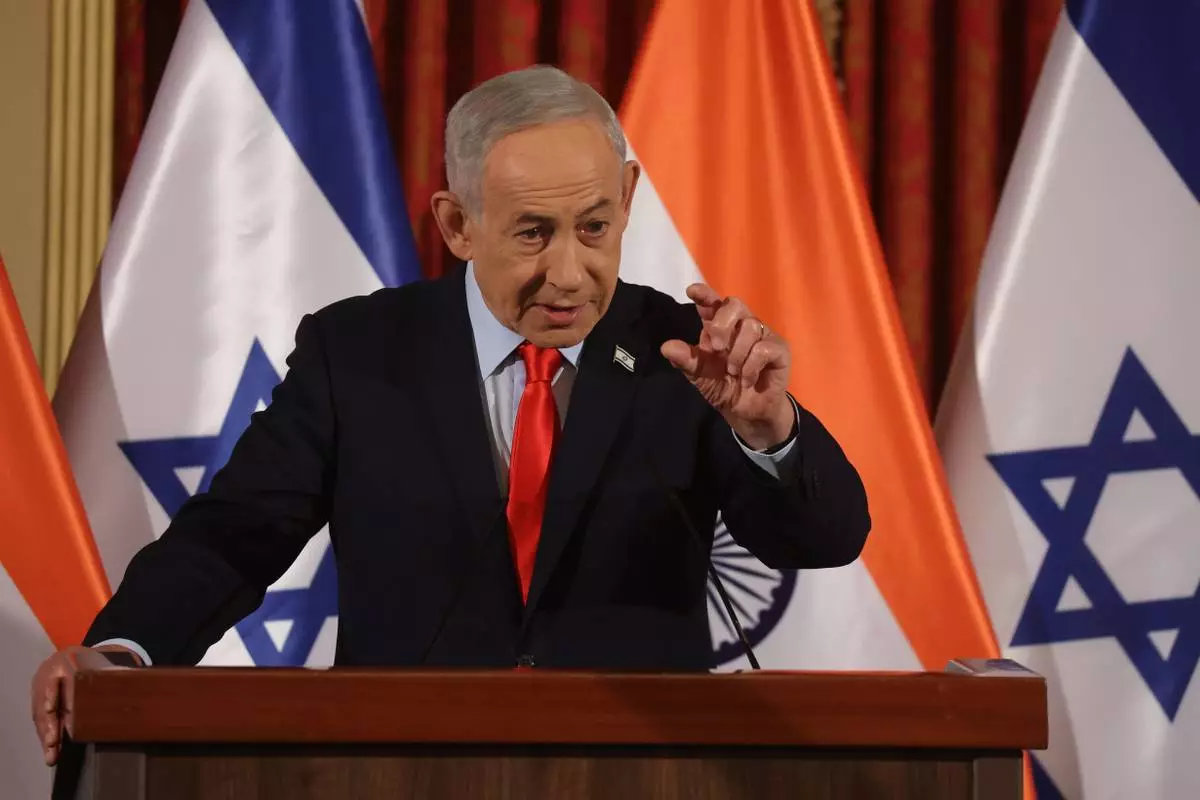
Israel's Prime Minister Benjamin Netanyahu speaks during a press conference with his Indian counterpart Narendra Modi, in Jerusalem, Thursday, Feb. 26, 2026. (Gil Cohen Magen/Pool Photo via AP)
The United States and Israel launched an attack Saturday on Iran, with the first apparent strike happening near the offices of Supreme Leader Ayatollah Ali Khamenei.
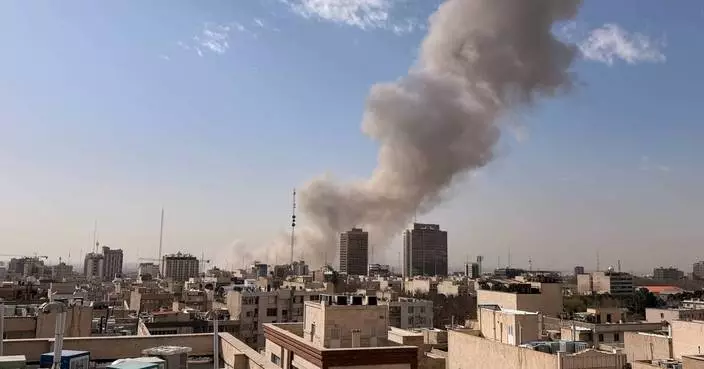
Iranian media reported strikes nationwide, and smoke could be seen rising from the capital.
President Donald Trump said in a video posted on social media that the U.S. had begun “major combat operations in Iran.” He claimed Iran has continued to develop its nuclear program and plans to develop missiles to reach U.S.
Here's the latest:
In northern Tehran, supermarkets are seeing a surge of customers seeking bread and bottled water. However, supply has been limited, and some of the items most in demand — including bread, eggs, bottled water and milk — are currently unavailable in certain stores.
Long queues have also been observed at gas stations across the city.
State television showed footage from one of Tehran’s highways, Soleimani highway, where extremely heavy traffic was visible on west-to-east routes.
By Amir Vahdat in Tehran.
Pakistan’s Foreign Minister Ishaq Dar on Saturday condemned what he described as “unwarranted attacks” on Iran during a phone call with his Iranian counterpart Abbas Araghchi, Pakistan's Foreign Ministry said in a statement.
It said Dar called for” an immediate halt to escalation through urgent resumption of diplomacy to achieve a peaceful, negotiated resolution to the crisis.”
Kuwait’s national news agency says the Gulf country’s air defenses successfully repelled what it called a “heinous Iranian attack” earlier in the day.
Quoting a statement from the Ministry of Foreign Affairs, the KUNA news agency said Kuwait maintains its right to defend itself.
Kuwait Airways meanwhile says it is temporarily suspending flights in and out of the country.
Smoke rose from a U.S. base near the airport in Irbil, the regional capital of Iraq’s semiautonomous northern Kurdish region Saturday and an Associated Press journalist in the area heard explosions. Local media reported that missiles were shot down. There was no immediate statement from Iraqi officials or from the U.S.
Iran-backed Iraqi militias had previously threatened to strike targets in the Kurdish region in case of an attack on Iran. Earlier Saturday, a drone strike targeted a headquarters of the Iran-allied Kataib Hezbollah militia southwest of Baghdad, killing two.
European Union leaders issued a joint statement Saturday calling for restraint and engaging in regional diplomacy in hopes of “ensuring nuclear safety.”
“Ensuring nuclear safety and preventing any actions that could further escalate tensions or undermine the global non-proliferation regime is of critical importance,” said European Commission President Ursula von der Leyen and European Council President António Costa. “We call on all parties to exercise maximum restraint, to protect civilians, and to fully respect international law."
Both said that the EU has pushed to resolve critical issues through diplomacy but also has in place “extensive sanctions in response to the actions of Iran’s murderous regime and the Revolutionary Guards.”
They said Brussels was working with the EU’s 27 member nations to support the bloc's citizens in the Middle East.
Saudi Arabia strongly condemned the Iranian assaults on the United Arab Emirates, Bahrain, Qatar, Kuwait and Jordan as a breach of their sovereignty.
The Kingdom confirmed that it fully stands by those countries and warned of the “dire consequences of continued breach of sovereignty and violating international principles."
Saudi Arabia also called on the international community to take measures to confront the Iranian assaults that are “undermining” the stability and security of the region.
Strikes on Saturday are targeting a growing list of cities and sites across Iran, according to Iranian state media. Direct strikes on the capital, Tehran, earlier sent plumes of smokes above its skyline, with reports of explosions in or near the major cities of Isfahan, Shiraz and Tabriz.
Blasts were also reported in several western towns as well as around Persian Gulf port cities that are critical to Iran’s major oil trade, including Asaluyeh.
France, whose military has bases and a regular presence in the Mideast, has called on French citizens in the region to exercise extreme caution.
"A military escalation is underway ... It’s not the time for negotiations. We are in a situation of war," junior Defense Minister Alice Rufo told France-2 television Saturday, comparing the situation to the 12-day war in June.
“Our priority is the protection of our citizens and protection of our forces in the region,” she said.
Asked if French forces were involved in the U.S. and Israeli strikes or targeted in retaliatory strikes, French military spokesperson Col. Guillaume Vernet said: “The French armed forces continuously adapt their posture to threats and implement measures to ensure the surveillance and protection of military installations where French soldiers are deployed.”
He would not elaborate.
“Our military presence guarantees France’s independent assessment of the situation,” he told the AP.
Israel’s President Isaac Herzog has welcomed the joint U.S.-Israeli operation against Iran.
Herzog says he hopes the operation “will bring a historic change and a better future for the whole Middle East and the entire world.”
Iran's Supreme Leader Ayatollah Ali Khamenei did not made a public appearance in the days before the attack and hasn’t been immediately seen after. During the 12-day war in June, he was believed to have been taken to a secure location away from his Tehran compound.
Qatar’s Defense Ministry says the military has successfully repelled the second wave of Iranian attacks that targeted several parts of the nation.
The Qatari Foreign Ministry condemned the attacks, calling them a “flagrant violation” of its sovereignty. It added that Qatar has been always among the sides calling for a dialogue with Iran.
The Foreign Ministry said that the targeting of Qatar by a neighbor “cannot be accepted under any justification or pretext” as the gas-rich Gulf nation has always distanced itself from regional conflicts.
Syria’s civil aviation authority announced the closure of airspace in southern Syria Saturday, while a number of airlines, including Lufthansa, Air France, Transavia, Qatar Airways, and Pegasus canceled all flights to Lebanon.
Emirates, one of the world’s biggest long-haul airlines, says several of its flights have been affected by the airspace closure in the United Arab Emirates.
The carrier is based at Dubai International Airport, the busiest hub for international travel. It says it is working with local officials and adjusting its operations, and it urged passengers to check their flight status online.
Emirates transported 53.7 million passengers during its last fiscal year. Many of those passengers, like those of fellow regional carriers Qatar Airways and Abu Dhabi-based Etihad Airways, were transiting the region for destinations elsewhere.
A person briefed on the military plans says Saturday’s operation was planned by the U.S. and Israel for months and closely coordinated.
The person says the attacks are expected to continue for several days.
They spoke on condition of anonymity because they were not authorized to discuss the matter with the media.
By Sam Mednick in Tel Aviv.
Iran on Saturday said Israeli-U.S. airstrikes in southern Iran killed five students at a girls’ school, the first confirmed fatalities in the operation.
The state-run IRNA news agency reported the strike happened in Minab in Iran’s Hormozgan province. Iran’s paramilitary Revolutionary Guard has a base in the city.
Neither the U.S. nor Israel has offered any details on the campaign so far.
Israel’s national rescue service MADA said one man was lightly wounded from an impact in northern Israel.
Fire and rescue services said an apartment on the 20th floor of an apartment building suffered a direct hit. It was not clear if it was struck by a missile or debris from an interception.
Iran’s paramilitary Revolutionary Guard says that in its retaliation against Israel and U.S. attacks on Iran, the military struck several facilities in the region.
The Revolutionary Guard said in a statement that in the first phase of retaliation, named “Truthful Promise 4,” Iran’s military struck the command of the U.S. 5th Fleet in Bahrain as well as U.S. bases in Qatar and the United Arab Emirates, and military targets in Israel.
There have been no reports of damage in these areas apart from one death in the United Arab Emirates.
The Guard said Iranian attacks with missiles and drones are continuing and more information will be released later.
Bahrain’s ambassador in the U.S. says attacks occurred against “sites within the Kingdom,” without giving further details. Writing on X, Abdalla Al-Khalifa said the attacks were a “blatant violation of sovereignty.”
Iran has apparently attacked the U.S. 5th Fleet in Bahrain in response to U.S.-Israeli attacks in Tehran. The Bahraini diplomat said that Bahrain “reserves the right to respond” to attack on its territory.
Qatar Airways says it is temporarily suspending flights at its Doha hub because of the closure of the Gulf nation’s airspace.
The airline says it is working with local authorities to support passengers affected by the stoppage, and that it expects delays once flights eventually resume. It did not predict when that might be.
Government-owned Qatar Airways is one of the Middle East’s largest airlines, funneling tens of millions of mostly long-haul passengers through Qatar to destinations on six continents.
Shrapnel from an Iranian missile attack on the capital of the United Arab Emirates killed one person Saturday, authorities in Dubai said.
The state-run WAM news agency reported the fatality, the first known in the Iranian counterattack after the United States and Israel launched a major airstrike campaign targeting Iran.
Within hours of the joint U.S. and Israeli strike in Iran, Ali Vaez, who directs the Iran Project at the Crisis Group think tank, warned that the war could likely escalate.
Vaez on social media stressed that Iran had been preparing for the conflict and that wider war could break out across the Middle East.
He also stressed that the war could lead to higher energy costs, which would undercut one of Trump’s domestic political messages that gasoline prices have been lower since his return to the White House.
“Iran sits along the Strait of Hormuz, through which roughly a fifth of the world’s oil supply passes,” Vaez posted. “Even limited disruption could spike energy prices, fuel inflation, and rattle global markets.”
The European Union’s top diplomat called the conflict in the Middle East “perilous” and said she was working with Israel and Arab officials to pursue a negotiated peace.
“Iran’s regime has killed thousands. Its ballistic missile and nuclear programmes, along with support for terror groups, pose a serious threat to global security,” said Kaja Kallas, foreign policy chief of the 27-nation bloc, in a post on social media.
She said the EU was evacuating some staff in the region and keeping in place a maritime mission in the Red Sea.
The EU recently put fresh sanctions on Iran and leading figures, prompting retaliatory sanctions by Tehran.
Turkish Airlines says it is suspending flights to multiple Middle Eastern countries. Flights to Lebanon, Syria, Iraq, Iran and Jordan will be suspended till March 2, an official said on X.
Meanwhile flights to Qatar, Kuwait, Bahrain, UAE and Oman will suspended till Feb. 28. Further cancellations may be announced, the official said.
The U.S. Navy’s 5th Fleet command that host nation Bahrain said was targeted by a missile attack is responsible for securing the shipping lanes around the oil-rich Middle East.
Those waters include the Persian Gulf, the Red Sea and parts of the Indian Ocean. The region contains three key chokepoints: the Suez Canal and the Bab al-Mandeb on either end of the Red Sea, and the Strait of Hormuz between Iran and Oman.
Iran has repeatedly threatened to shut the strait if attacked. Iranian-allied Houthi rebels in Yemen have said they will resume attacks on shipping routes and on Israel.
The extent of the damage on the 5th Fleet headquarters wasn’t immediately clear. The base is located just to the southeast of central Manama, the island nation’s capital.
A drone strike Saturday hit a headquarters of the Iran-backed Kataib Hezbollah militia in Iraq, in the Jurf al-Sakhar area southwest of Baghdad, killing at least two people and wounding four others, two militia officials said. They spoke on condition of anonymity because they were not authorized to comment publicly.
There was not immediate comment from the U.S. or Israel.
Prior to Saturday’s strikes on Iran, the group had threatened to join the fray should Iran be attacked.
Meanwhile, Iraqi Foreign Minister Fuad Hussein said in a statement that he received a call from his Iranian counterpart, Abbas Araghchi, in while Araghchi said Iran would target U.S. bases in the region out of self-defense.
“He clarified that these attacks were not targeting the countries involved, but were limited to military sites,” the statement said. It added that Hussein urged deescalation.
———
By Qassim Abdul-Zahra in Baghdad.
In a briefing with reporters, an IDF official said Israel has identified “a sharp acceleration” in Iran’s missile program.
The official says Iran was beginning to make dozens of ballistic missiles a month. He also said there had been no significant hits in Israel. He spoke just before noon, roughly four hours after the operation began.
By Melanie Lidman in Tel Aviv.
Iran’s Supreme National Security Council confirmed its armed forces had “commenced a decisive response to these hostile acts.”
In a statement, it warned the Iranian people to travel to areas not included in the zones being targeted and said the government had made “prior arrangements” to ensure the supply of basic necessities.
Schools and universities were ordered to close while the statement said banks would continue to operate.
The German government was informed in advance this morning about Israel’s military strikes on Iran, a spokesman said on Saturday.
Germany is in close consultation with its European partners, the spokesman said. Its crisis management team will meet at noon to discuss Iran.
The government urged German citizens in Iran, Israel, and the wider region to register on the official system for citizens abroad and follow the instructions of the local authorities for their own protection.
The foreign ministry said it was in “close and constant” contact with the embassies in Iran and Israel, as well as other missions in the region.
Two officials with different Iran-backed militias in Iraq told The Associated Press that a meeting took place two months ago between Iranian officials and allied Iraqi militias to make plans for a response in case Iran was attacked, including distributing tasks among the Iraqi armed groups.
The officials spoke on condition of anonymity because they were not authorized to comment publicly.
One of the officials said it was decided that the response would target U.S. forces and interests in Iraq’s semi-autonomous northern Kurdish region and in neighboring Jordan.
U.S. troops have vacated bases where they were previously stationed in Iraq in areas under the control of the central government in Baghdad. This followed an agreement to end the military mission in Iraq of an American-led coalition fighting the Islamic State, but U.S. forces remain in the Kurdish region.
One of the most prominent Iraqi militias, Kataib Hezbollah, on Thursday issued a public statement urging its fighters to “be prepared to engage in a war of attrition that may be prolonged and exceed the expectations of the U.S. administration.”
It also issued a warning to the Kurdish regional government in Iraq “against collaborating with hostile foreign forces” that “could threaten its security and future.”
By Qassim Abdul-Aahra in Baghdad.
Israeli media showed images of damage to an apartment building in northern Israel, reportedly from impact with parts of an interceptor.
Israeli police said shrapnel fell in multiple sites. Rescue services said there were no known injuries from the missile barrages launched on all parts of the country.
The Israeli military issued a warning for the immediate evacuation of areas near weapons production and military facilities in Iran.
“Your presence in these locations puts your lives at risk,” the military said on its Persian-language X account.
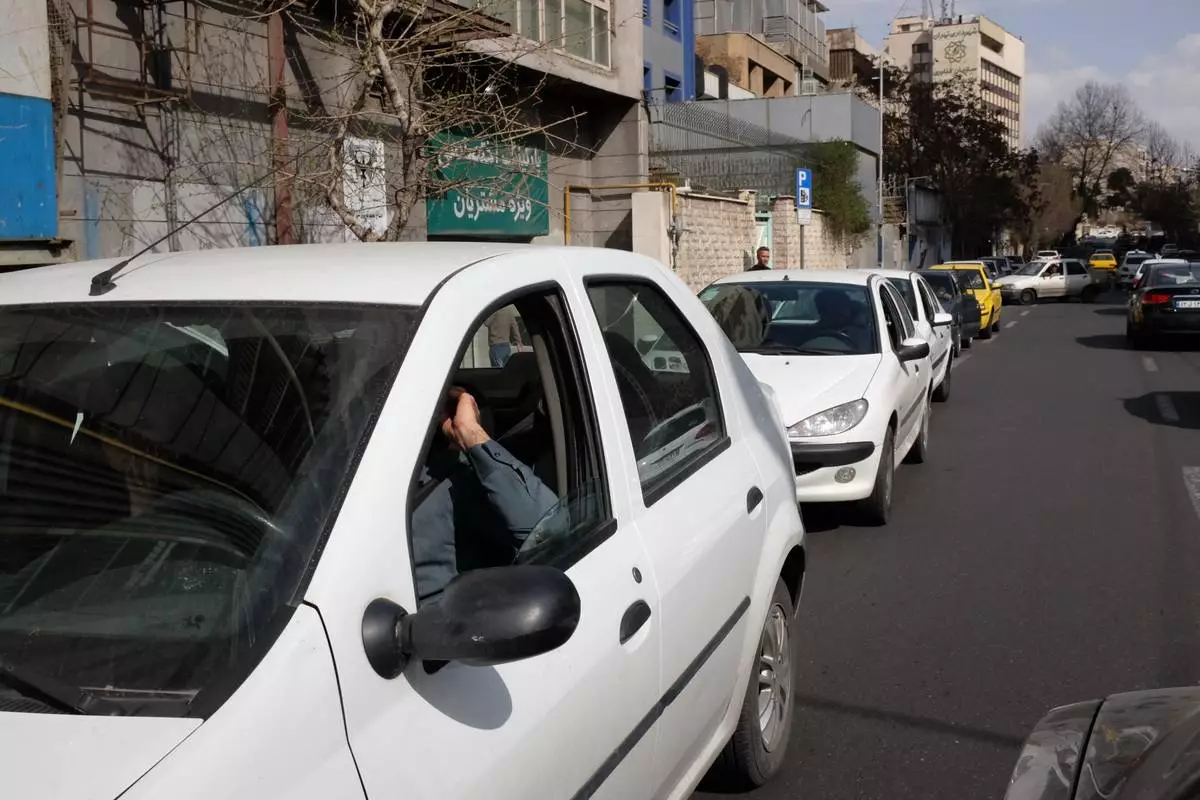
Vehicles queue outside a gas station following Israeli strikes in the city, in Tehran, Iran, Saturday, Feb. 28, 2026. (AP Photo/Vahid Salemi)
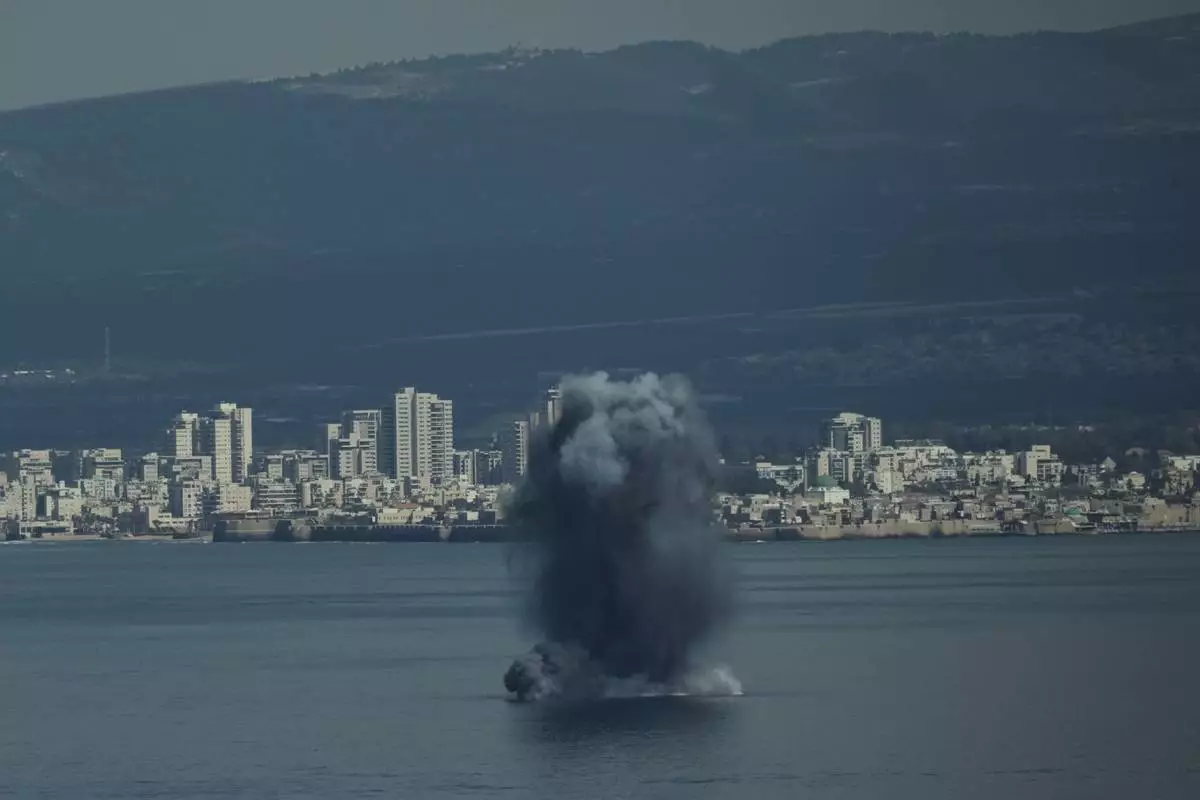
An incoming projectile explodes over the water as Israel issues a nationwide alert following its strikes on Iran, in Haifa Bay, northern Israel, Saturday, Feb. 28, 2026. (AP Photo/Leo Correa)
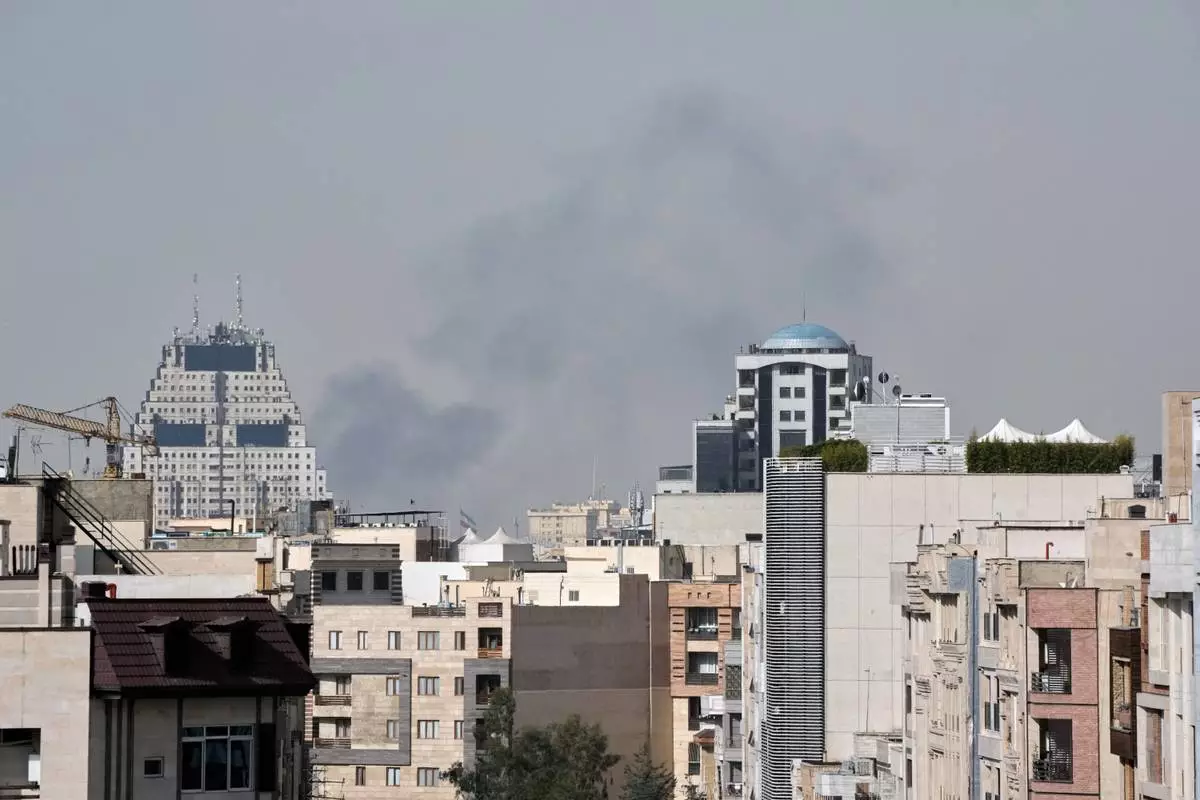
Smoke rises on the skyline after an explosion in Tehran, Iran, Saturday, Feb. 28, 2026.(AP Photo/Vahid Salemi)