WASHINGTON (AP) — President Donald Trump, whose fierce denunciation of military adventurism abroad fueled his unlikely rise to the top of the Republican Party, risks becoming ensnared by that very type of conflict.
The U.S. and Israeli attack on Iran Saturday cemented Trump's decade-long transformation from a candidate who in 2016 called the Iraq War a “big, fat mistake" to a president warning Americans to prepare for potential casualties overseas and encouraging Iranians to “seize control of your destiny.” The strikes were also at odds with Trump's warnings during the 2024 campaign that his Democratic rival, Kamala Harris, was surrounded by “war hawks” eager to send troops overseas.
Trump justified the action as necessary to prevent Iran from obtaining nuclear weapons or developing missiles capable of reaching the US, less than a year after he said airstrikes “obliterated” their capability. US intelligence has also said Iran's weapons capability was substantially degraded.
For Trump, memories of the false pretenses underlying the Iraq War could lead to pressure to prove his assertion that Iran's weapons production posed an imminent threat to Americans. And for Republicans already facing a challenging election year weighed down by economic anxiety, the shift could force a reassessment of how the attacks fit into the “America First,” isolationist-leaning movement the party has embraced during the Trump era.
While Trump might benefit from an early rally-around-the-flag effect, that could be hard to sustain for weeks and months, if not longer, a far different scenario from the swift effort to remove Nicolás Maduro from power earlier this year in Venezuela.
Success on day one is one thing. The days after are inherently unpredictable.
“The question is whether Iran’s goal is simply to outlast America and whether Trump has strategic attention deficit disorder, which will allow the Iranians to rise from the ashes and claim victory,” said Michael Rubin, a historian at the American Enterprise Institute who worked as a staff adviser on Iran and Iraq at the Pentagon from 2002 to 2004.
Many Republicans were quick to line up behind the president, including Texas Sen. John Cornyn and state attorney general Ken Paxton, who are fighting a competitive Senate primary election on Tuesday.
“Hopefully lives will not be lost needlessly, but this always entails risk,” Cornyn said Saturday at a campaign stop near Houston. "But we know that Iran will not stop unless the United States and our allies stop them.”
Others, like Sen. Todd Young of Indiana, praised the military and were critical of Iran while noting that Americans will have questions that “must be answered.”
And there was outright opposition from some who have long criticized overseas entanglements, including Sen. Rand Paul, the Republican of Kentucky, who lamented the start of “another preemptive war.” Former Rep. Marjorie Taylor Greene, the Georgia Republican who was once a close Trump ally, rejected the president's warning of Iran's nuclear capabilities.
“It’s always a lie and it’s always America Last,” she wrote online. “But it feels like the worst betrayal this time because it comes from the very man and the admin who we all believed was different.”
The administration did little in advance to prepare Americans for such a dramatic action.
Vice President JD Vance told The Washington Post this week there was “no chance” that the U.S. would become involved in a drawn-out war as it did in Iraq. During his State of the Union speech on Tuesday, Trump dedicated just a few lines to Iran, arguing the country and its proxies have “spread nothing but terrorism, death and hate."
That stands in stark contrast to the lengthy runup to the Iraq War.
President George W. Bush, for example, named Iraq as a member of the so-called axis of evil in January 2002. Then-Secretary of State Colin Powell delivered a now-infamous speech to the United Nations in February 2003, making the case for war based on the inaccurate assertion that Iraq possessed weapons of mass destruction. The invasion, which ultimately dominated Bush's second term, didn't begin until March 2003.
“We just have to be honest that there is a sense that this was not sold to the American public sufficiently,” Andrew Kolvet said Saturday on “The Charlie Kirk Show,” an online program founded by the late conservative activist who was close to Trump. “Perhaps there will be an opportunity on the backend of this.”
Kolvet was willing, however, to give Trump leeway, noting these are the types of challenging decisions presidents are entrusted with.
“President Trump has earned a big, long leash,” he said. “Not an unlimited one. But a very long one to make tough decisions.”
Polling suggests that many Americans share Trump's concerns about Iran's nuclear capabilities, even if they're less confident in the president's response. About half of U.S. adults were “extremely” or “very” concerned that Iran’s nuclear program poses a direct threat to the U.S., according to a poll this month from The Associated Press-NORC Center for Public Affairs Research.
Most Americans, 61%, said Iran is an “enemy” of the U.S., which is up slightly from a Pearson Institute/AP-NORC poll conducted in September 2023. But their confidence in the president’s judgment when it comes to relationships with adversaries and the use of military force abroad is low, the new poll shows, with only about 3 in 10 Americans saying they have “a great deal” or “quite a bit” of trust in Trump.
Democrats sense a political opening on the issue. In Maine, Gov. Janet Mills and Graham Platner are competing for the Democratic nomination to challenge incumbent Sen. Susan Collins in the fall. They both issued statements on Saturday pressing Collins, the only Republican on the ballot this year in a state won by Harris, to step up her oversight of the administration.
Collins was one of three Senate Republicans who backed an unsuccessful push last month for a war powers resolution that would have limited Trump's ability to conduct further attacks on Venezuela. Democrats said Saturday they would quickly seek a vote on a similar proposal for Iran.
“If we’ve started a war where we begin to lose American lives, that starts changing the political calculus,” said Republican strategist Ron Bonjean.
But he noted that Democrats have vulnerabilities of their own, particularly if there's a domestic terror attack while the Department of Homeland Security is closed as they demand changes to how immigration operations are conducted.
For now, Trump isn't offering much of a detailed strategy on what comes next. In a social media post Saturday evening, he said bombings could continue “as long as necessary.”
Associated Press writer Sean Murphy in Oklahoma City contributed to this report.
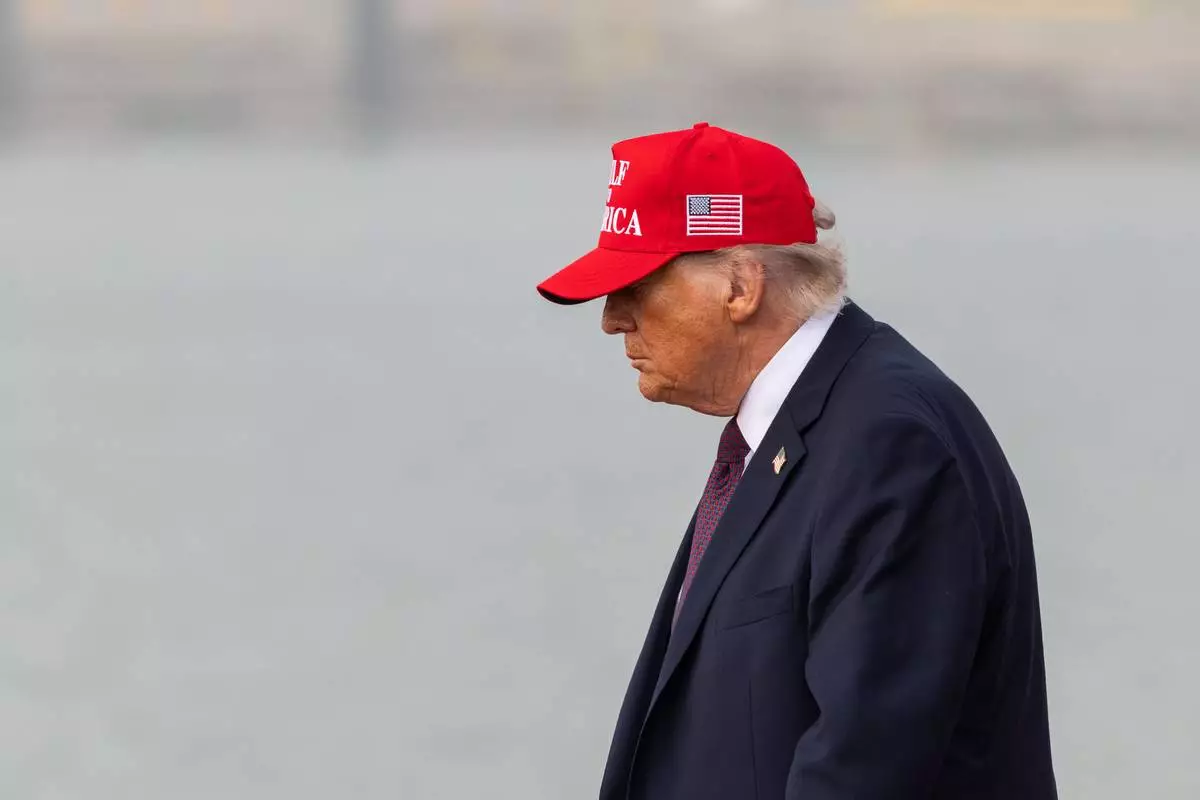
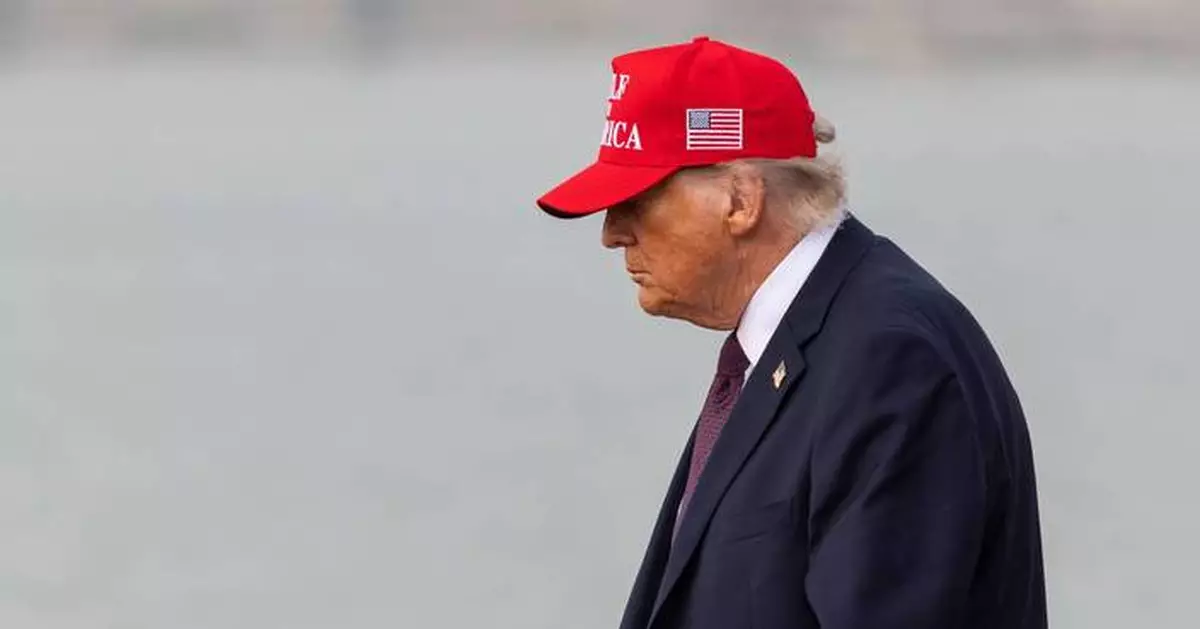
President Donald Trump leaves the stage after speaking at the Port of Corpus Christi in Corpus Christi, Texas, Friday, Feb. 27, 2026. (AP Photo/Michael Gonzalez)
DUBAI, United Arab Emirates (AP) — A major attack launched by Israel and the United States killed Iran's Supreme Leader Ayatollah Ali Khamenei, President Donald Trump announced Saturday, confirming an assassination that he said gave Iranians their “greatest chance” to “take back the country” but that also put the future of the Islamic Republic in doubt and raised the risk of regional instability.
The strikes opened a stunning new chapter in U.S. intervention in Iran, marking the second time in eight months that the Trump administration had attacked the country during talks over its nuclear program. The reported killing of Khameini after decades in power appeared certain to create a significant leadership vacuum given the absence of a known successor and because the Supreme Leader had final say on all major policies. He led Iran’s clerical establishment and its paramilitary Revolutionary Guard – the two main centers of power in the governing theocracy.
In a nationally televised address, Israeli Prime Minister Benjamin Netanyahu said there were “growing signs” that the 86-year-old Khamenei had been killed when Israel struck his compound early Saturday. Shortly after the address, two Israeli officials said Israel had confirmed his death. The officials both spoke on condition of anonymity pending a formal announcement and gave no further details.
As reports trickled out about the death, eyewitnesses in Tehran told AP some residents were rejoicing, blowing whistles and letting out ululations.
The joint U.S.-Israel operation, which officials say was planned for months, took place Saturday during the Muslim holy fasting month of Ramadan and at the start of the Iranian work week.
As the attack on Iran got underway, Trump urged the Iranian public to “seize control of your destiny” by rising up against the Islamic leadership. In a video announcing the “major combat operations,” Trump told Iranians that “when we are finished, take over your government. It will be yours to take. This will be probably your only chance for generations.”
An Iranian diplomat told the United Nations Security Council that hundreds of civilians were killed and wounded in the strikes.
Iranian state media, citing the Red Crescent, on Saturday evening said at least 201 people had been killed and more than 700 wounded. Iran retaliated by firing missiles and drones toward Israel and U.S. military bases in the region, and exchanges of fire continued into the night.
About 12 hours after the attacks began, the U.S. military reported no U.S. casualties and minimal damage at U.S. bases despite “hundreds of Iranian missile and drone attacks.” It said targets in Iran included Revolutionary Guard command facilities, air defense capabilities, missile and drone launch sites, and military airfields.
Various members of Iran’s leadership were targeted in the attack. Israel said it killed the commander of the Iranian Revolutionary Guard Corps and the country’s defense minister. The Israeli military also said its strikes killed the secretary of the Iranian Security Council, a close adviser to Khamenei.
Some of the first strikes on Iran appeared to hit near the offices of Khamenei, the second leader of the Islamic Republic who succeeded Ayatollah Ruhollah Khomeini, the leader of the 1979 Islamic Revolution. Before Israeli officials confirmed the death, Iranian Foreign Minister Abbas Araghchi told NBC News that Khamenei and President Masoud Pezeshkian were alive “as far as I know.” He called the attack “unprovoked, illegal and absolutely illegitimate.”
Democrats decried that Trump had taken action without congressional authorization. White House spokesperson Karoline Leavitt said the administration had briefed several Republican and Democratic leaders in Congress in advance.
Tensions have soared in recent weeks as American warships moved into the region. Trump said he wanted a deal to constrain Iran’s nuclear program, as the country struggles with growing dissent following nationwide protests.
The trigger for Saturday’s strikes appeared to be the unsuccessful latest round of nuclear talks on Thursday. They also reflected dramatic changes that have left Iran’s leadership in its weakest position since the Islamic Revolution nearly half a century ago.
Though Trump had pronounced the Iranian nuclear program obliterated in strikes last year, the country was rebuilding infrastructure that it had lost, and intelligence showed that Iran had developed the capability to produce its own high-quality centrifuges, an important step in developing the highly enriched uranium needed for weapons. That’s according to a senior U.S. official who spoke to reporters on condition of anonymity to discuss Trump’s decision-making process.
Israeli and American strikes last June greatly weakened Iran’s air defenses, military leadership and nuclear program. A regionwide conflict sparked by Hamas’ Oct. 7, 2023, attack on Israel has left Iran’s network of proxies across the Middle East greatly weakened. U.S. sanctions and global isolation have decimated Iran’s economy.
Iran responded to the latest strikes by launching missiles and drones targeting Israel and strikes targeting U.S. military installations in Bahrain, Kuwait and Qatar. Israel’s military said Iran fired “dozens” of missiles at Israel, with many intercepted. Emergency responder Magen David Adom noted 89 “lightly injured” people.
At least three explosions were heard Saturday evening near the Intelligence Ministry building in northern Tehran, witnesses said, adding that air defense systems had begun operating there. Israel’s military said it had begun new strikes against missile launchers and aerial defense systems in central Iran.
In southern Iran, at least 85 people were reported killed when a girls’ school was struck, and dozens more were wounded, the local governor told Iranian state TV.
Capt. Tim Hawkins, a U.S. Central Command spokesperson, said he was “aware of reports” that a girls’ school was struck and that officials were looking into them.
Iran’s state news agency IRNA said at least 15 people were killed in the southwest, quoting the governor of Lamerd, Ali Alizadeh, as saying a sports hall, two residential areas and a hall near a school were hit.
Flights across the Middle East were disrupted, and air defense fire thudded over Dubai, the United Arab Emirates’ commercial capital. Shrapnel from an Iranian missile attack on the UAE capital killed one person, state media said.
Israel said the operation has been planned for months with the United States. Air Force pilots were striking “hundreds of targets across Iran,” Israeli military chief of staff Lt. Gen. Eyal Zamir said in a statement.
Targets in the Israeli campaign included Iran’s military, symbols of government and intelligence targets, according to an official briefed on the operation, who spoke on condition of anonymity to discuss nonpublic information on the attack.
Secretary of State Marco Rubio canceled his trip to Israel planned for early next week following the strikes, a State Department official said.
Trump, in seeking to justify the military action, claimed Iran has continued to develop its nuclear program, despite asserting last year the program had been “obliterated” by an earlier round of strikes.
He acknowledged Saturday that there could be American casualties, saying “that often happens in war.” It was a notable statement from a U.S. leader who swept into office on an “America First” platform and vowed to keep out of “forever wars.”
Trump also said he was aiming to “annihilate” the Iranian navy and destroy regional proxies supported by Tehran. He called on the paramilitary Iranian Revolutionary Guard to lay down arms, saying members would be given immunity or face “certain death” if they didn’t.
Iran had said it hoped to avert a war, but maintained its right to enrich uranium. It did not want to discuss other issues such as its long-range missile program or support for armed groups like Hamas and Hezbollah.
Iran has said it hasn’t enriched since June, but it has blocked international inspectors from visiting the sites the U.S. bombed. Satellite photos analyzed by The Associated Press have shown new activity at two of those sites, suggesting Iran is trying to assess and potentially recover material.
Trump had threatened military action but held off following Iran’s recent crackdown on protests spurred by economic grievances that evolved into a nationwide push against the ruling clerics.
The Human Rights Activists News Agency says it confirmed more than 7,000 deaths in the crackdown and is investigating thousands more. The government has acknowledged more than 3,000 killed.
The strikes could rattle global markets, particularly if Iran makes the Strait of Hormuz unsafe for commercial traffic. A third of worldwide oil exports transported by sea passed through the strait in 2025.
Saudi Arabia said Iran had targeted its capital and eastern region in an attack that was repelled. Bahrain said a missile attack targeted the U.S. Navy’s 5th Fleet headquarters in the island kingdom, and three buildings were damaged in the capital, Manama, and Muharraq city by drone strikes and debris from an intercepted missile.
Kuwait’s civil aviation authority said a drone targeted the main international airport, injuring several employees. Kuwait’s state-run news agency said three troops were injured by shrapnel from strikes that hit Ali Al-Salem air base. Explosions could also be heard in Qatar. Jordan said it “dealt with” 49 drones and ballistic missiles.
Lidman reported from in Tel Aviv. Boak reported from West Palm Beach, Fla. Tucker reported from Washington. Associated Press reporters Joe Federman in Jerusalem, Aamer Madhani and Konstantin Toropin in Washington, Sam Mednick in Tel Aviv, Farnoush Amiri in New York and AP journalists around the world contributed to this report.
This story has been corrected to show that IRNA reported 40 people were killed in the school strike, without specifying students.
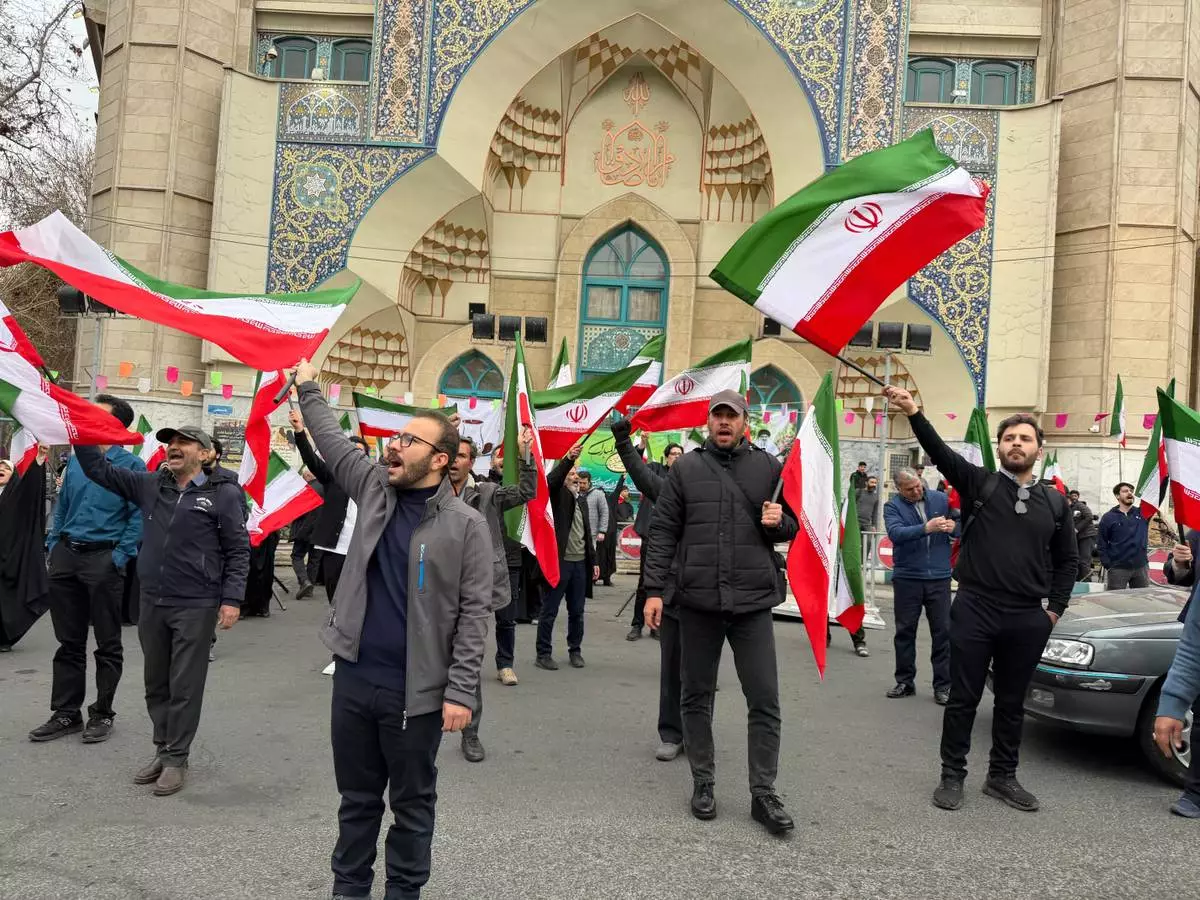
A group of men wave Iranian flags as they attend a demonstration in support of the government and against U.S. and Israeli strikes in Tehran, Iran, Saturday, Feb. 28, 2026. (AP Photo/Vahid Salemi)
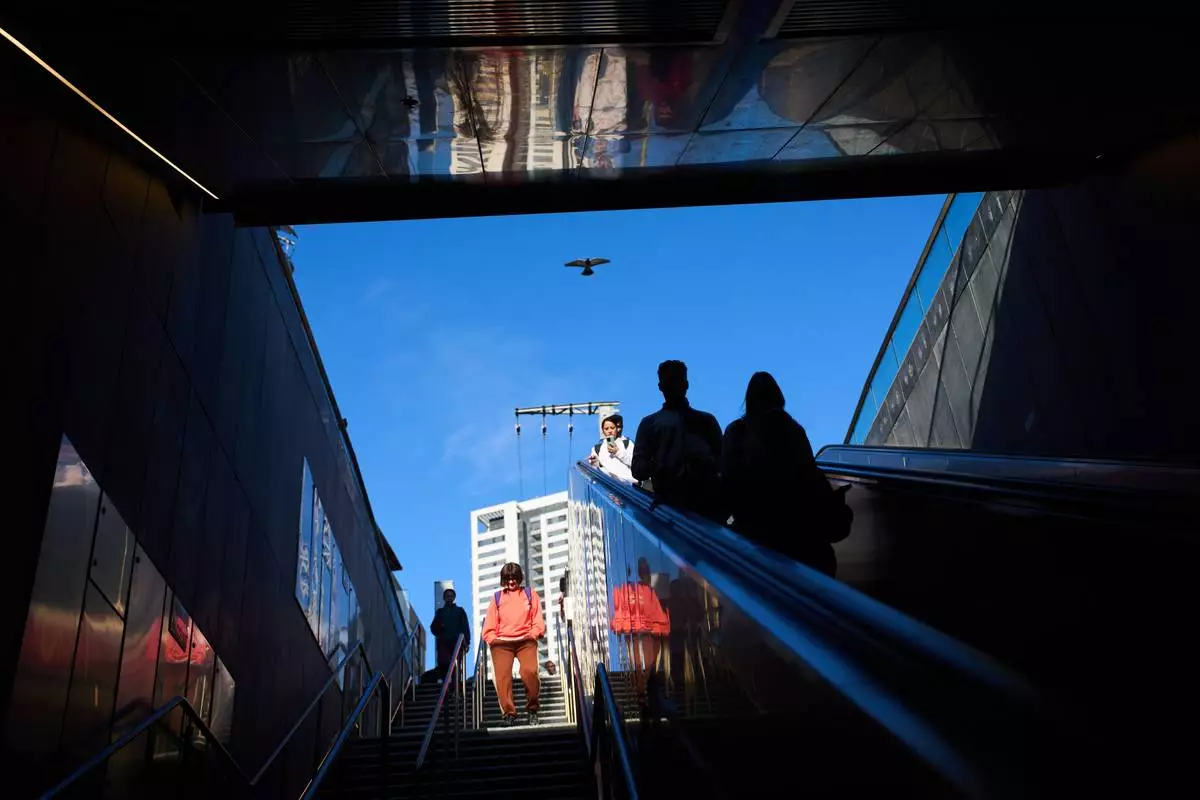
People take shelter in an underground metro station as air raid sirens warn of incoming strikes by Iran, in Ramat Gan, Israel, Saturday, Feb. 28, 2026. (AP Photo/Oded Balilty)
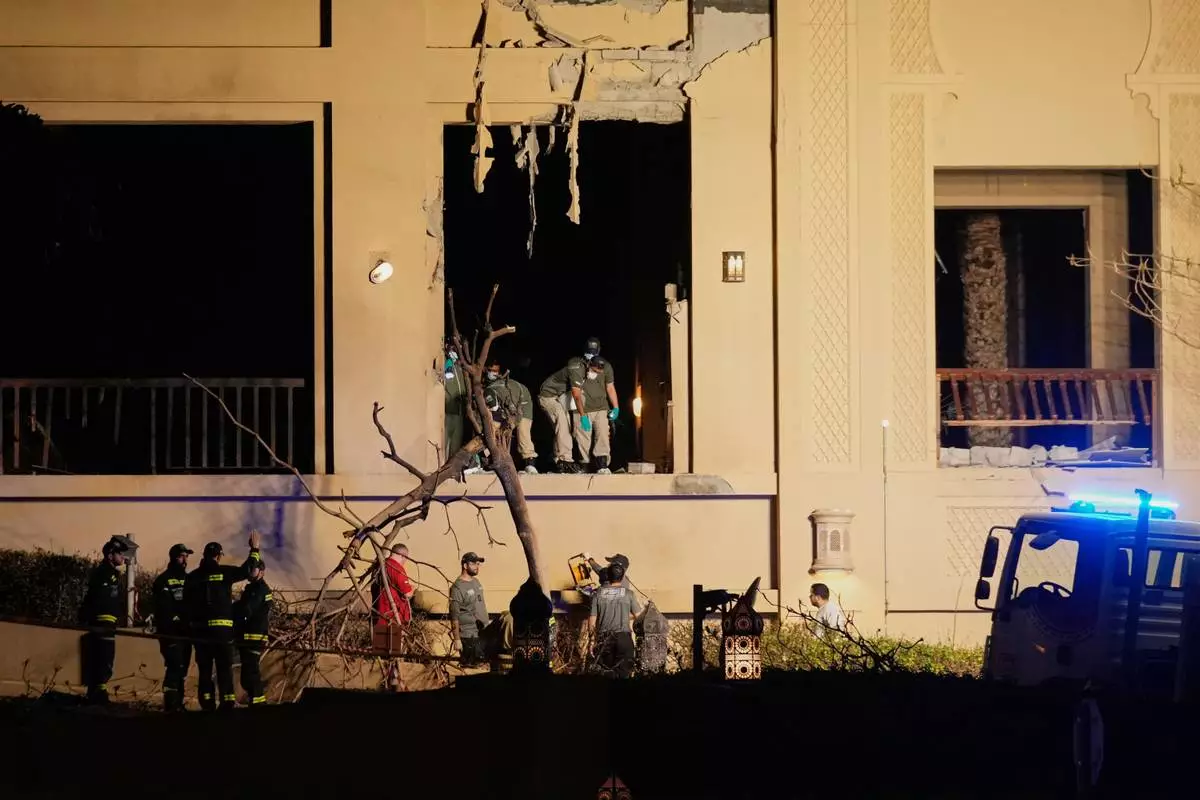
Firemen and rescue workers inspect the site of an explosion at the Fairmont The Palm Hotel in Dubai, United Arab Emirates, Saturday, Feb. 28, 2026. (AP Photo/Altaf Qadri)
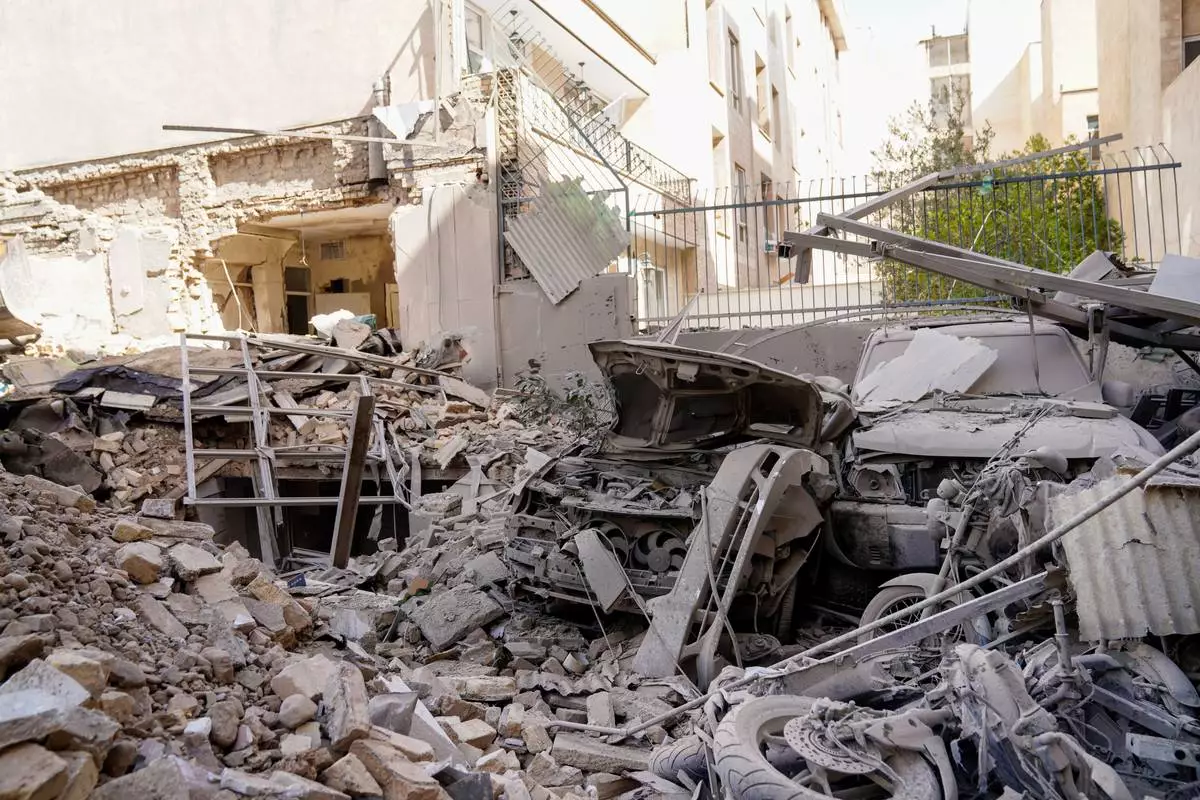
Rubble remains in the aftermath of an Israeli-U.S. strike in Tehran, Iran, Saturday, Feb. 28, 2026. (AP Photo/Amir Kholousi, ISNA)
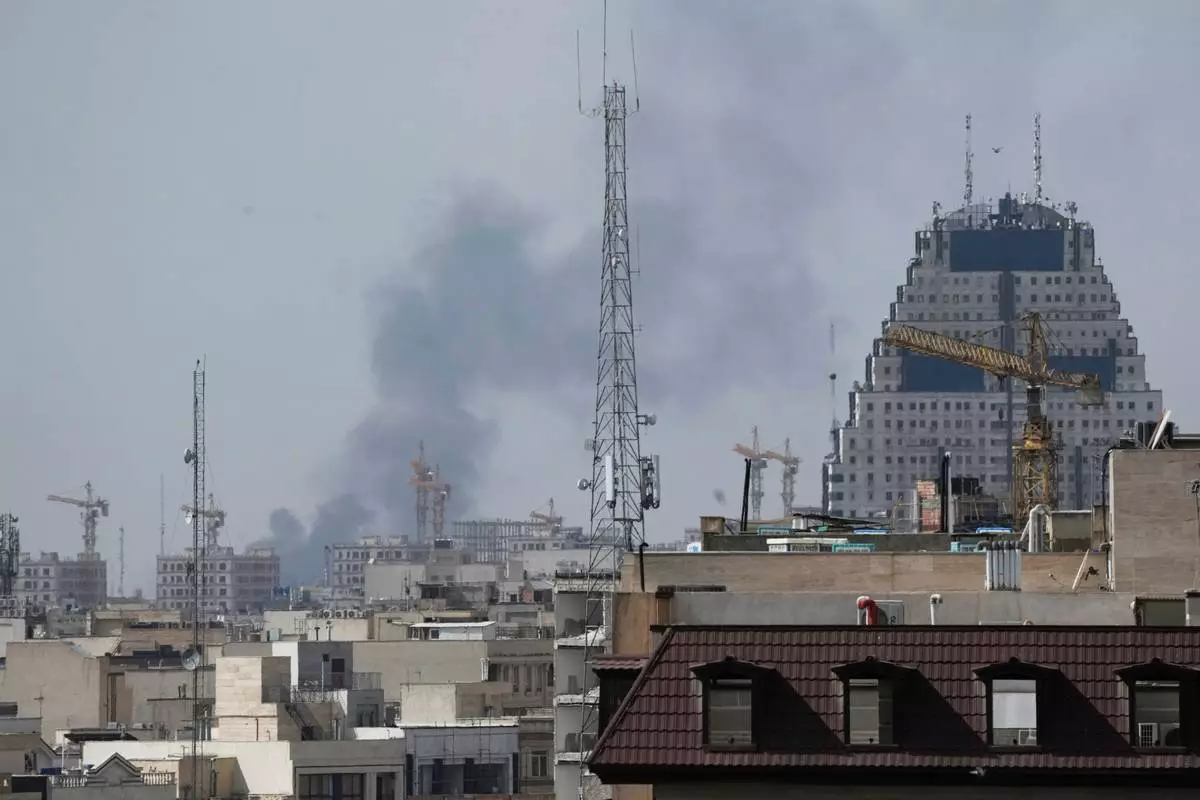
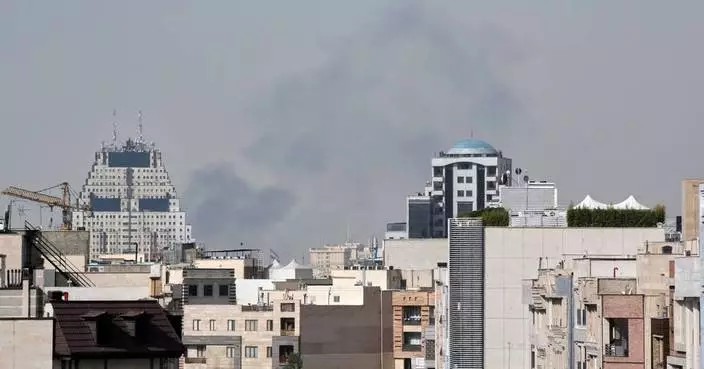
Smoke rises on the skyline after an explosion in Tehran, Iran, Saturday, Feb. 28, 2026.(AP Photo/Vahid Salemi)
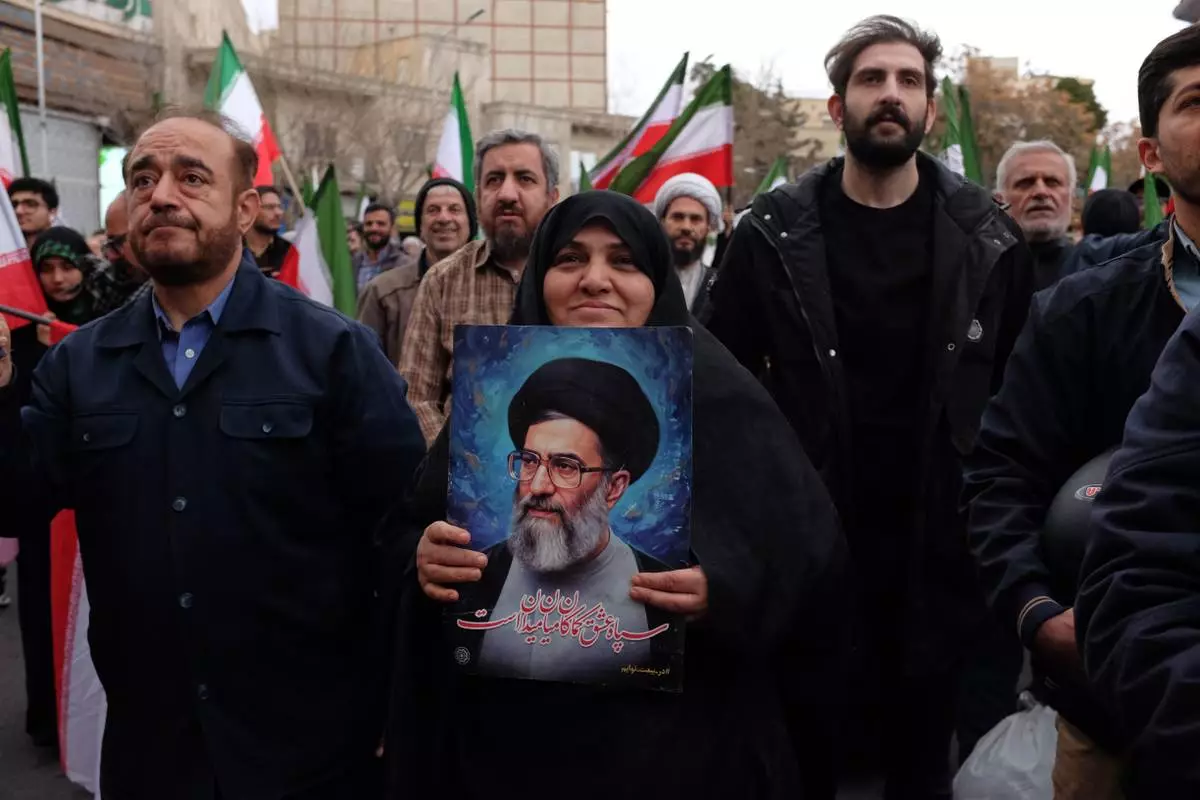
A woman holds a picture of the Iranian Supreme Leader Ayatollah Ali Khamenei during a demonstration in support of the government and against U.S. and Israeli strikes in Tehran, Iran, Saturday, Feb. 28, 2026. (AP Photo/Vahid Salemi)
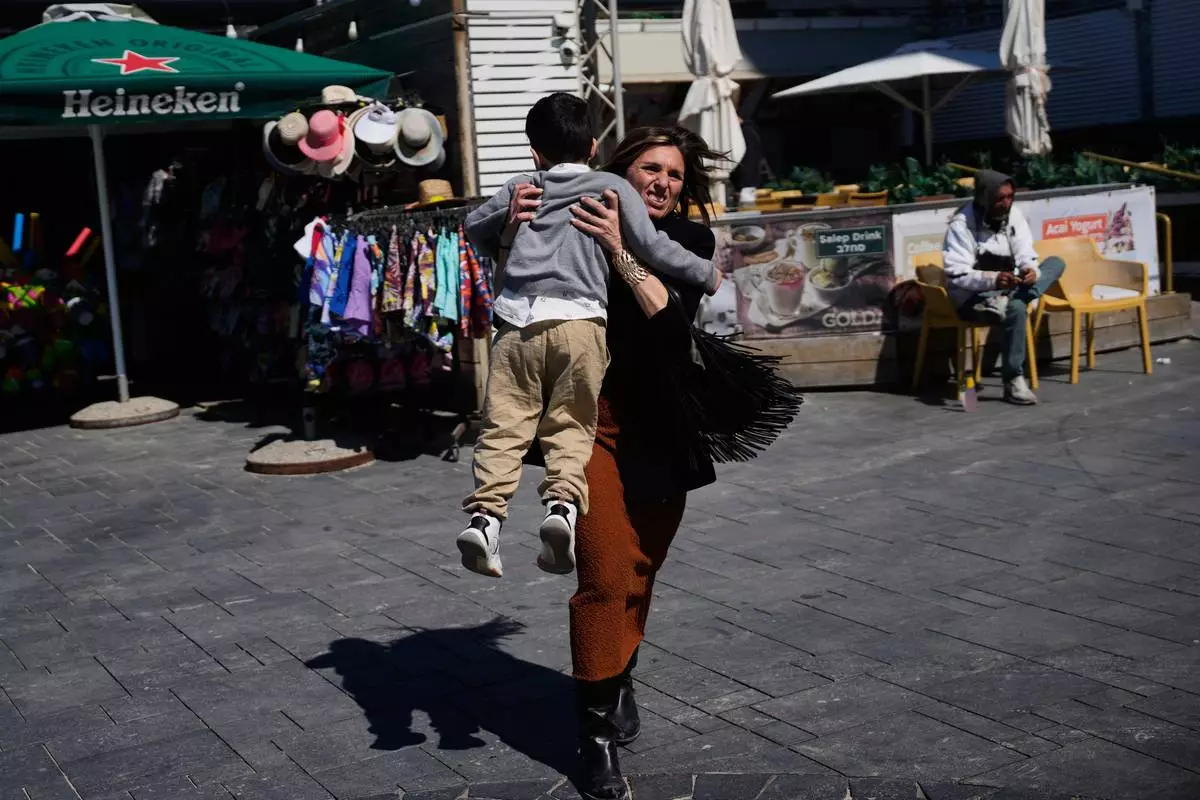
People rush to take shelter as warning sirens sound following missile fired towards Israel, in Tel Aviv, Israel, Saturday, Feb. 28, 2026. (AP Photo/Ohad Zwigenberg)
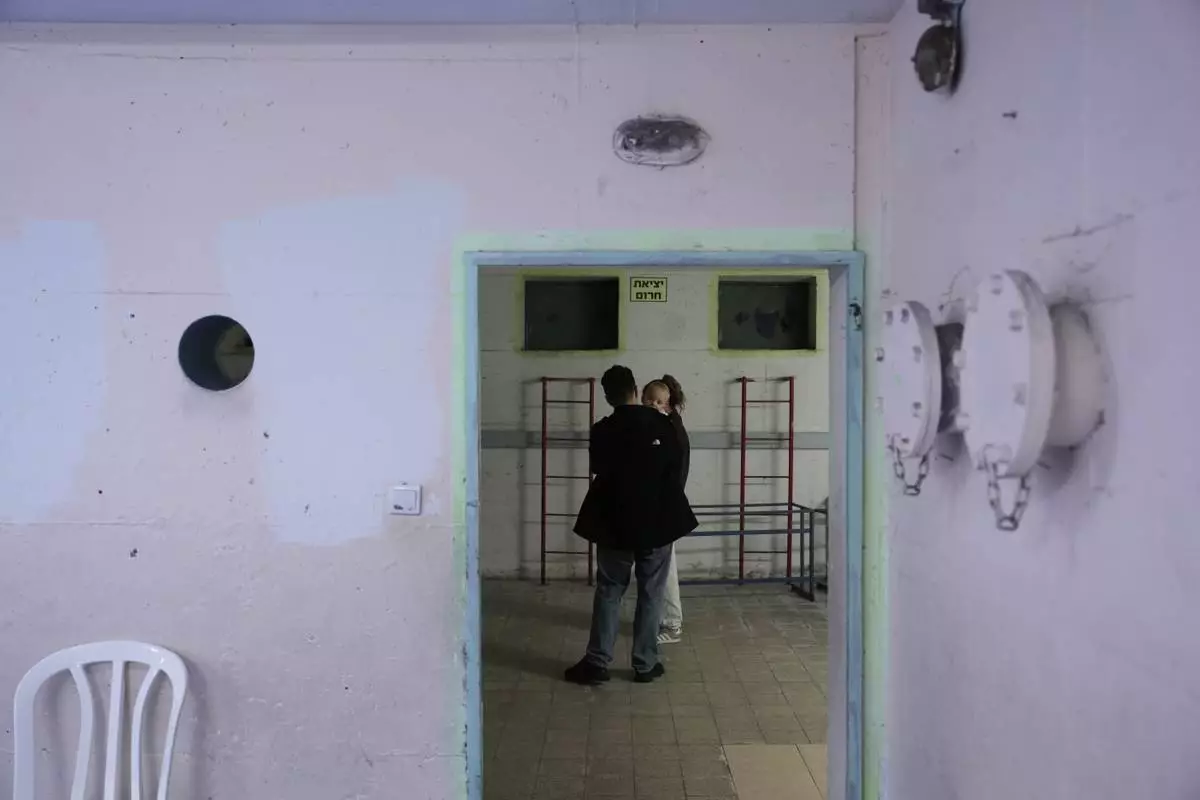
Civilians staying in a shelter after alarms announced that Israel had launched an attack on Iran, in Ramat Gan, Israel, Saturday, Feb. 28, 2026. (AP Photo/Oded Balilty)
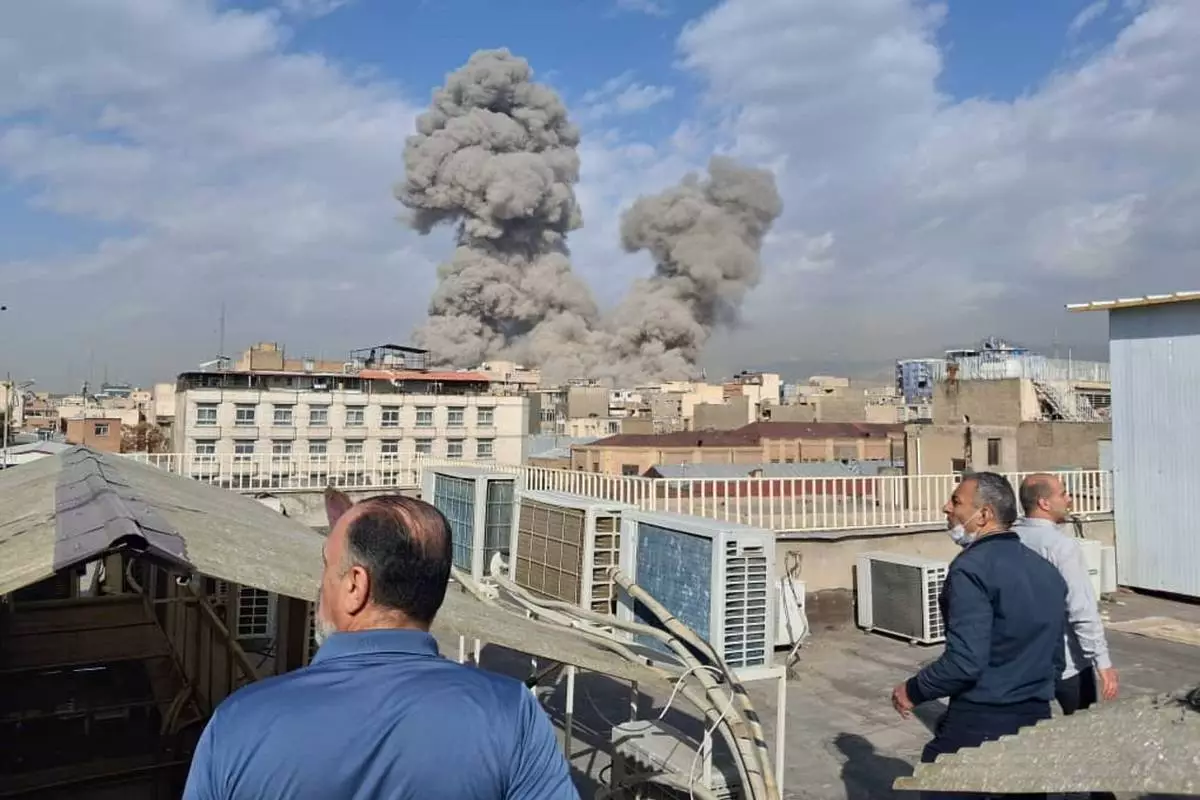
People watch as smoke rises on the skyline after an explosion in Tehran, Iran, Saturday, Feb. 28, 2026.(AP Photo)
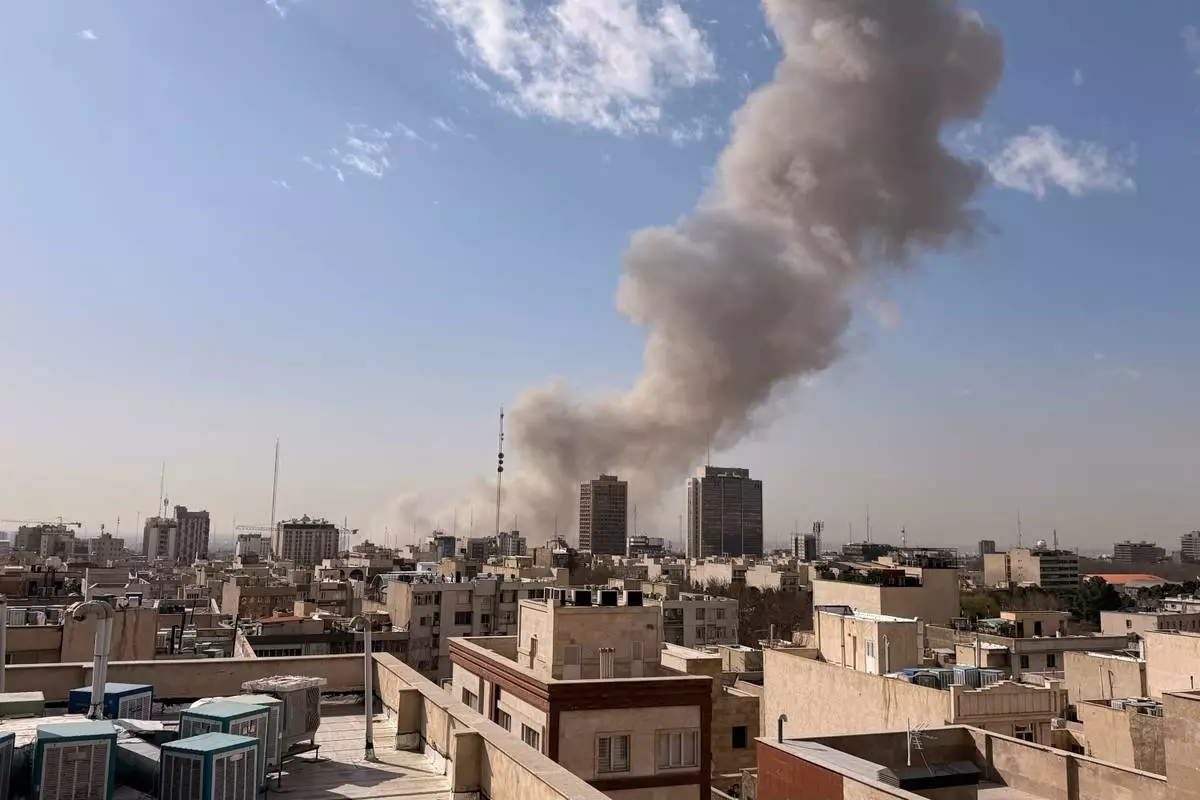
Smoke rises on the skyline after an explosion in Tehran, Iran, Saturday, Feb. 28, 2026.(AP Photo)
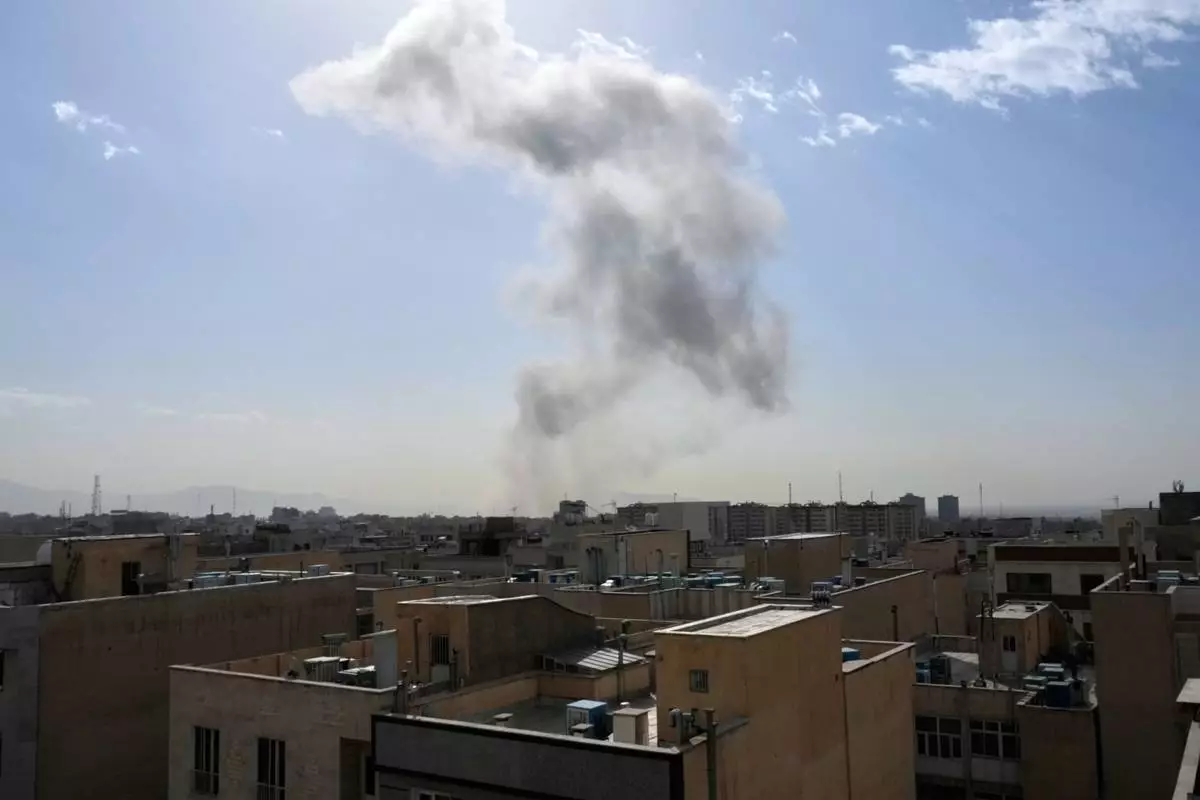
Smoke rises on the skyline after an explosion in Tehran, Iran, Saturday, Feb. 28, 2026.(AP Photo/Vahid Salemi)
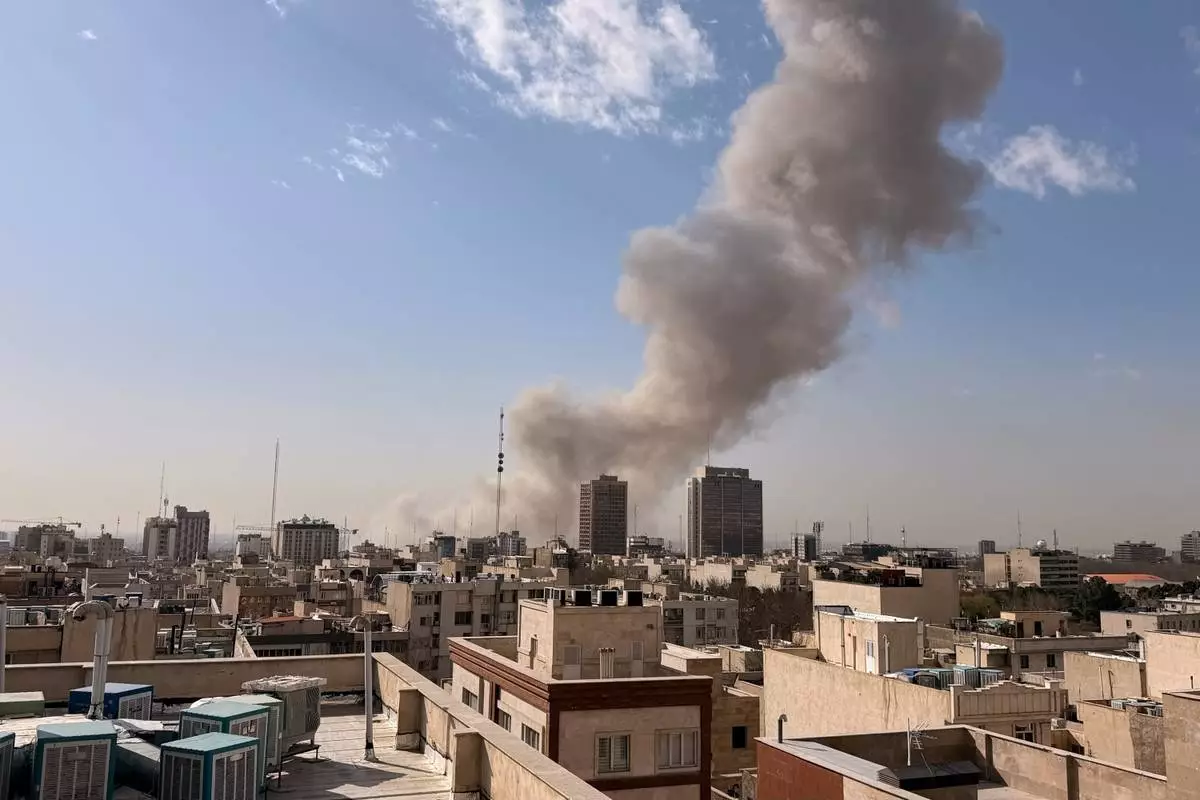
Smoke rises on the skyline after an explosion in Tehran, Iran, Saturday, Feb. 28, 2026.(AP Photo)
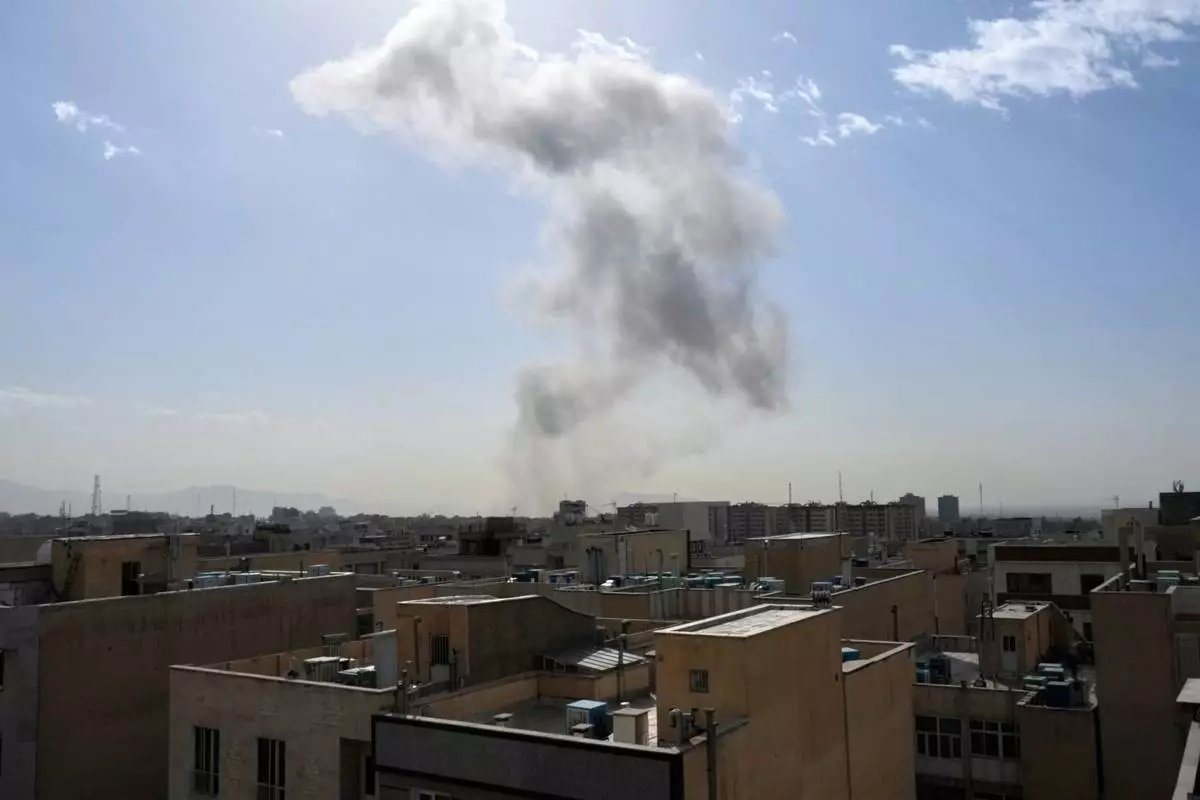
Smoke rises on the skyline after an explosion in Tehran, Iran, Saturday, Feb. 28, 2026.(AP Photo/Vahid Salemi)
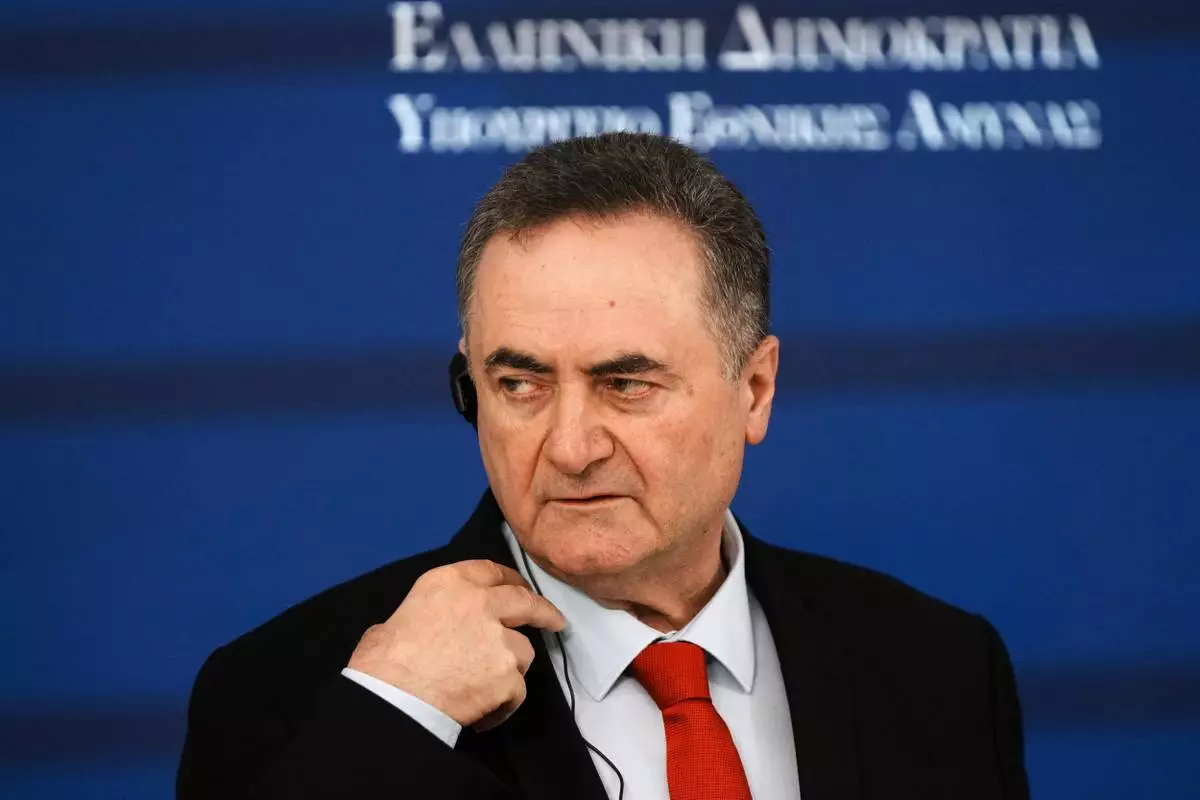
FILE -Israeli Defense Minister Israel Katz makes statements with his Greek counterpart Nikos Dendias after their meeting in Athens, Greece, Tuesday, Jan. 20, 2026. (AP Photo/Thanassis Stavrakis, File)