NEW YORK--(BUSINESS WIRE)--Mar 2, 2026--
OXIO, a leading Telecom-as-a-Service (TaaS) platform, today released its 2026 Mobile Consumer Survey, revealing a U.S. mobile market defined by active evaluation, declining switching friction and generational disruption.
This press release features multimedia. View the full release here: https://www.businesswire.com/news/home/20260301766157/en/
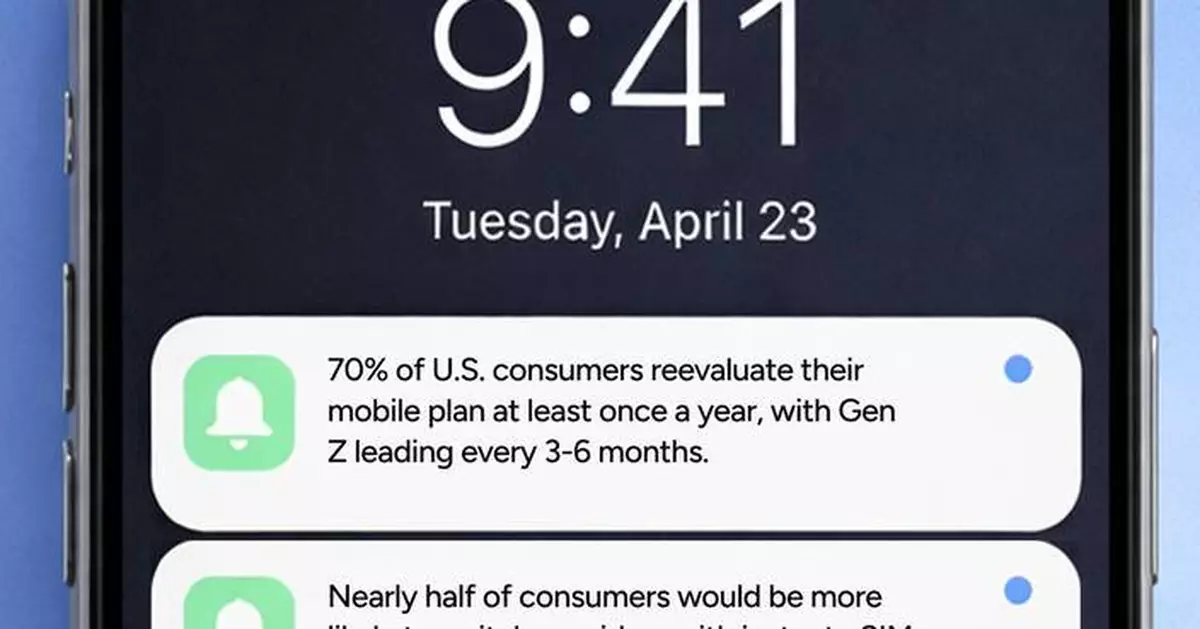
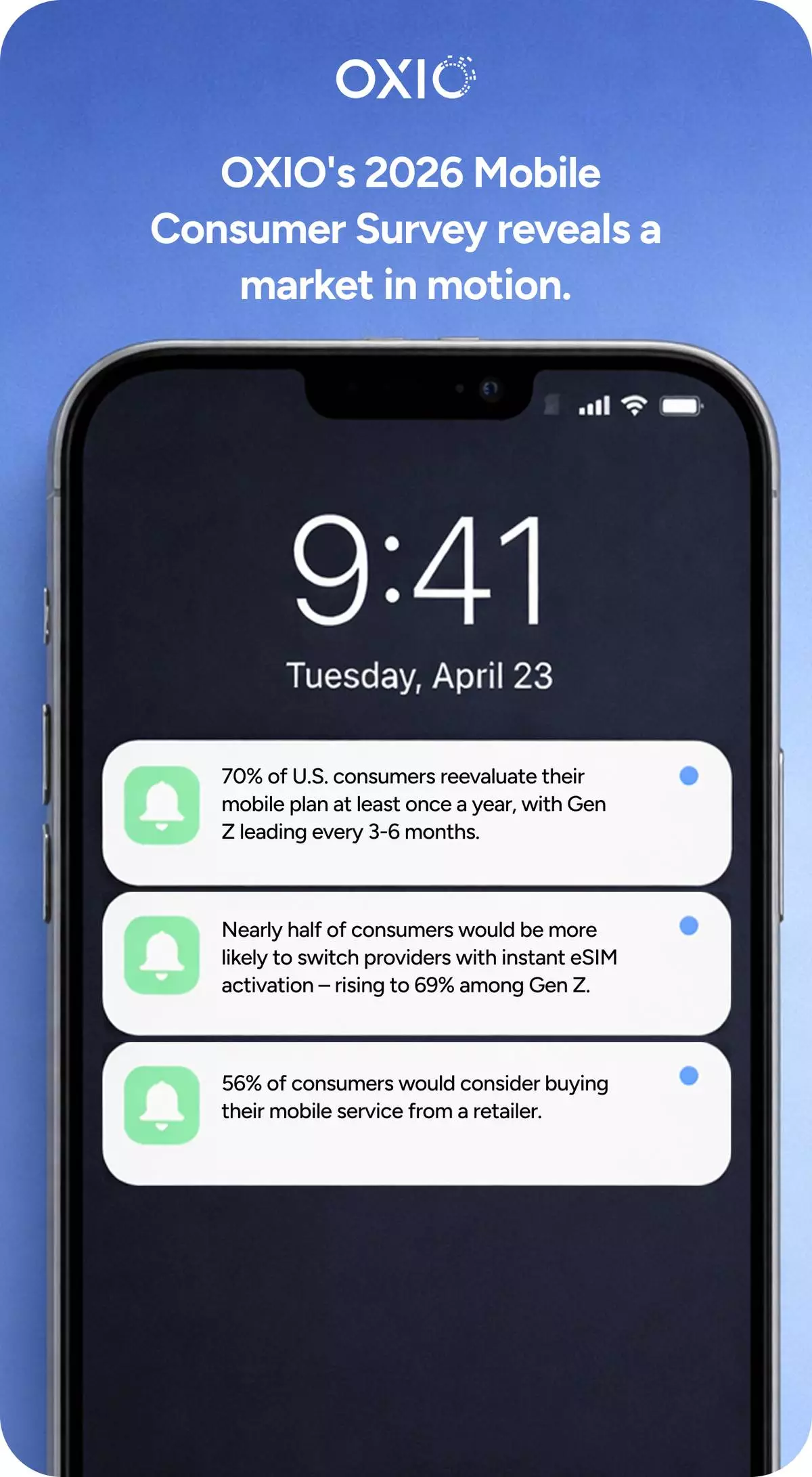
The study of more than 1,000 U.S. consumers found that 7 in 10 reassess their mobile plan at least once a year, with Gen Z reviewing options as often as every 3 to 6 months. At the same time, 56% are open to buying their mobile service from a retailer, and 90% of Gen Z say store access is important. Together, the findings point to a fundamental shift in how Americans evaluate, choose and engage with mobile providers.
“Last year, our research signaled that consumers were open to change. In 2026, that openness became action,” said Nicolas Girard, CEO of OXIO. “Consumers are not passively renewing mobile plans. They are actively evaluating them, comparing value, scrutinizing pricing, and reassessing providers more frequently. Mobile is evolving from a static utility into a dynamic service relationship, and the next era will belong to those who reduce complexity, communicate transparently, and activate seamlessly.”
Continuous Evaluation Is the New Normal
Seven in ten consumers reassess their mobile plan at least once a year, and 60% have switched providers at some point. Among Gen Z, 37% reevaluate every three to six months. Price remains the primary trigger, with 58% citing bill increases as the leading reason they reconsider their plan. In a market where pricing transparency and predictability matter deeply, even small changes prompt consumers to review their options.
Stores Still Matter
Physical store presence remains a key factor in mobile choice, with 81% of consumers saying store access is important when selecting a provider. The preference is even stronger among younger consumers: 90% of Gen Z value store access. Yet major U.S. carriers are reducing their physical footprints and shifting toward digital-first service models, creating a disconnect between consumer expectations and industry direction.
Younger Consumers are Choosing Independence Earlier
Millennials and Gen Z exit family plans between ages 19 and 22, nearly 15 years earlier than Boomers and Gen X. The driver is autonomy: 45% of Gen Z say they want to have their own plan, and 44% cite a desire for more control over features and usage.
Retailers Lead Among Non-Traditional Providers
56% of consumers say they would consider buying mobile service from a retailer, up from 50% in 2025. Digital-only mobile brands gained traction, at 38%, with interest particularly among Gen X, Millennials and Gen Z. Meanwhile, the share of consumers selecting “none of the above” dropped from 31% to 19%, signaling growing comfort with alternative providers.
eSIM Is Accelerating Switching Behavior
44% of consumers report having used eSIM, and 85% describe the experience as positive. Adoption is highest among Millennials (57%) and Gen Z (60%). Nearly half of consumers say instant eSIM activation would make them more likely to switch providers, rising to 64% of Millennials and 69% of Gen Z, signaling that lower switching friction is reshaping mobile competition.
The full OXIO 2026 Mobile Consumer Survey, including detailed generational breakdowns and analysis of eSIM adoption, switching behavior and non-traditional provider trends, is available at https://go.oxio.com/2026-mobile-consumer-survey-report.
About OXIO
OXIO is building the global network of the future as the first Telecom-as-a-Service (TaaS) platform. Our technology-first approach to telecom unlocks innovation and possibility while delivering actionable insights for customer-obsessed companies competing in a data-driven world. OXIO is headquartered in New York and has offices in Mexico City and Montreal. For more information, visit oxio.com. To learn more about current openings, visit oxio.com/careers/.
FAQs
Why are retailers well-positioned to launch mobile services?
OXIO's 2026 U.S. Mobile Consumer Survey shows consumers use apps (27%), stores (25%), and phone support (23%) in near equal measure. 81% say store access is important when choosing a provider, including 53% of Gen Z who call it “very important”. Retailers’ existing physical footprint and digital capabilities align directly with these expectations. Openness is also high, with 75% of consumers neutral or positive toward alternative providers, and 56% saying they would consider buying their mobile service from a retailer – the highest of any alternative category. When informed that their MVNO service runs on a major carrier network, negative sentiment drops to just 13%, reinforcing that trust and infrastructure reassurance can unlock adoption.
When do consumers leave family mobile plans, and what triggers the switch?
OXIO's 2026 Mobile Consumer Survey found that Millennials and Gen Z typically leave family plans between the ages of 19 and 22, nearly 15 years earlier than Boomers and Gen X. The driver is autonomy: 45% of Gen Z cite wanting their own plan, and 44% want more control over features and usage.
Why are mobile streaming bundles losing value with consumers?
Despite years of carrier investment in entertainment partnerships, just 22% of consumers in OXIO's 2026 Mobile Consumer Survey cite bundled services like streaming as a value driver, dropping to 20% among Gen Z. In a market saturated with subscriptions, content perks appear to carry less influence in provider selection than pricing, performance, and trust.
OXIO 2026 Mobile Consumer Survey