LOS ALTOS, Calif.--(BUSINESS WIRE)--Mar 2, 2026--
Bidgely will deliver the keynote address at the upcoming IDC European Utilities Xchange, taking place March 2 - 3 in Valencia, Spain. Through a series of executive roundtables, interactive workshops and fireside chats, Bidgely will demonstrate how European energy retailers and Distribution System Operators (DSOs) can transform raw smart meter data into a definitive layer of unified intelligence for managing the complexities of growing electrification, regulatory mandates, price volatility and customer engagement.
This press release features multimedia. View the full release here: https://www.businesswire.com/news/home/20260301866482/en/
“As European energy leaders accelerate grid modernization, we are moving beyond generic horizontal AI into a new era of verticalized intelligence that transforms the grid into a dynamic engine," said Gautam Aggarwal, Chief Revenue Officer of Bidgely. "Our goal at IDC Xchange is to demonstrate how AI-based analytics empowers utilities to become trusted advisors, bridging the gap between providers and consumers, specifically as the industry embraces dynamic pricing and time-of-use tariffs.”
Bidgely-Led Speaking Sessions
The ‘Energy Advisor’ Pivot: Leading the Age of Volatility & AI
Monday, March 2, 2:35 PM
Bidgely’s VP EMEA & APAC, Nipun Jain, will explore how AI-based analytics helps manage consumer trust and the adoption of time-of-use (TOU) tariffs. By leveraging zero-hardware disaggregation to build personalized energy profiles, he will demonstrate how utilities can navigate the transition from commodity sellers to essential architects of an electrified energy lifestyle.
Aligning on the Future: UtilityAI Pro, Data Fabric and the AI-Powered Utility
Tuesday, March 3, 9:30am
Bidgely’s Chief Product Officer, Ted Nielsen, and IDC’s Head of Energy Insights Europe, Gaia Gallotti will discuss the leap from horizontal AI to UtilityAI Pro—the industry’s first vertical AI platform—that allows CXOs to eliminate technical debt, unlock 10X data granularity and transform the grid from a passive asset into a dynamic, self-optimizing engine.
To learn how Bidgely empowers energy retailers to leverage AI-driven data insights, download the playbook: Behind-the-Meter Intelligence for Clean Energy.
About Bidgely
Bidgely is the pioneer of AI-powered energy intelligence, transforming raw meter data into high-definition insights for global utilities. Serving over 50 million homes, the company’s UtilityAI™ Platform leverages 17 foundational patents to optimize grid visibility, call center operations, and personalized customer engagement. Recognized by Fast Company as a "Top 10 Most Innovative" company, Bidgely integrates precision energy analytics with horizontal AI ecosystems like Microsoft Copilot and AWS to modernize the grid with premises-level accuracy. www.bidgely.com | bidgely.com/blog

Bidgely to demonstrate how raw smart meter data can be transformed into a definitive layer of unified intelligence to manage growing grid complexities.
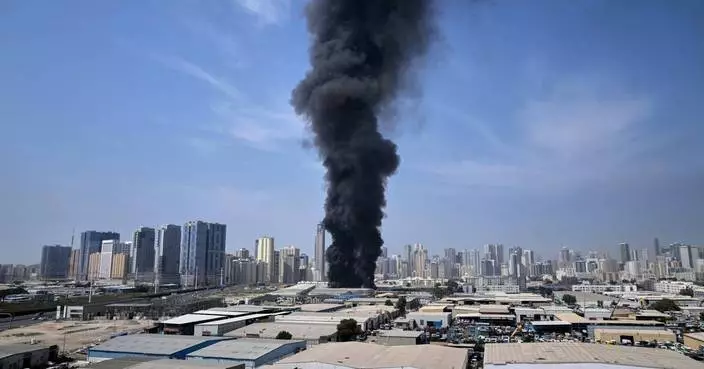
DUBAI, United Arab Emirates (AP) — A witness says he saw smoke over a Kuwait neighborhood that home to the U.S. Embassy as Americans had been urged to stay away.
Ayman Moawad, an Egyptian worker living near the U.S. Embassy in Kuwait, told The Associated Press that he saw smoke over the area on Monday. However, he didn’t know if it was specifically the embassy hit in an ongoing Iranian attack targeting the small Mideast nation.
The U.S. earlier issued an urgent warning to Americans there to take cover and remain indoors. It said: “Do not come to the Embassy,” without elaborating.
THIS IS A BREAKING NEWS UPDATE. AP’s earlier story follows below.
DUBAI, United Arab Emirates (AP) — Iran and Iranian-backed militias fired missiles at Israel and Arab states, and Israel and the United States pounded targets in Iran as the war expanded on Monday with statements of defiance and increasing casualties.
As the American and Israeli airstrikes continued, top Iranian security official Ali Larijani vowed defiantly on X that “we will not negotiate with the United States.”
In Iraq, a pro-Iranian militia claimed responsibility for a drone attack targeting U.S. troops at the Baghdad airport, the day after it said it fired at a U.S. base in the city of Irbil in the north, and Cyprus said a drone attack targeted a British base on the Mediterranean island nation.
Israel and the U.S. bombed Iranian missile sites and targeted its navy, claiming to have destroyed its headquarters and multiple warships. More than 200 people have been killed since the start of the strikes, according to Iranian leaders.
As the bombardment continued, Hezbollah said it fired missiles from Lebanon into Israel early Monday in response to the killing of Iranian Supreme Leader Ali Khamenei and “repeated Israeli aggressions.” It was the first attack the Lebanese militant group has claimed in more than a year. There were no reports of injuries or damage, and Israel said that it had intercepted one projectile while several fell in open areas.
Israel retaliated with strikes on Lebanon, killing at least 31 people and wounding 149 others, according to Lebanon's Health Ministry. About two thirds of the dead were in the country's south.
Following its initial strikes on Beirut, Israel urged civilians in nearly 50 villages in eastern and southern Lebanon to evacuate ahead of more possible attacks, sending people fleeing.
Iran has been firing missiles at Israel and Arab states in a counteroffensive since the joint America-Israeli attack Saturday that killed Khamenei and many top Iranian officials.
Gulf Arab states have warned that they could retaliate against Iran after strikes that hit key sites and killed at least five civilians, and U.S. President Donald Trump promised Washington would “avenge” the deaths of three American troops who were killed in Kuwait.
“Sadly, there will likely be more before it ends,” Trump said. “That’s the way it is.”
Trump has urged Iranians to “take over” their government and, while he has also signaled he would be open to dialogue with new leadership there following the death of Khamenei, suggested Sunday there was no end in sight to the military operations.
“Combat operations continue at this time in full-force, and they will continue until all of our objectives are achieved,” he said in a video message. “We have very strong objectives,” he added, without elaborating.
The U.S. military said B-2 stealth bombers struck Iran’s ballistic missile facilities with 2,000-pound bombs. Trump said on social media that nine Iranian warships had been sunk and that the Iranian navy’s headquarters had been “largely destroyed.”
In an indication the conflict could draw in other nations, Britain, France and Germany said they were ready to work with the U.S. to help stop Iran’s attacks, and a group of Gulf Arab countries said it reserved the right to respond to Iranian strikes.
The weekend attacks were the second combined strikes in eight months from the U.S. and Israel against Iran. In the 12-day war last June, Israeli and American strikes greatly weakened Iran’s air defenses, military leadership and nuclear program. But the killing of Khamenei, who ruled Iran for more than three decades, creates a leadership vacuum, increasing the risk of regional instability.
Rising reported from Bangkok and Abou AlJoud from Beirut.
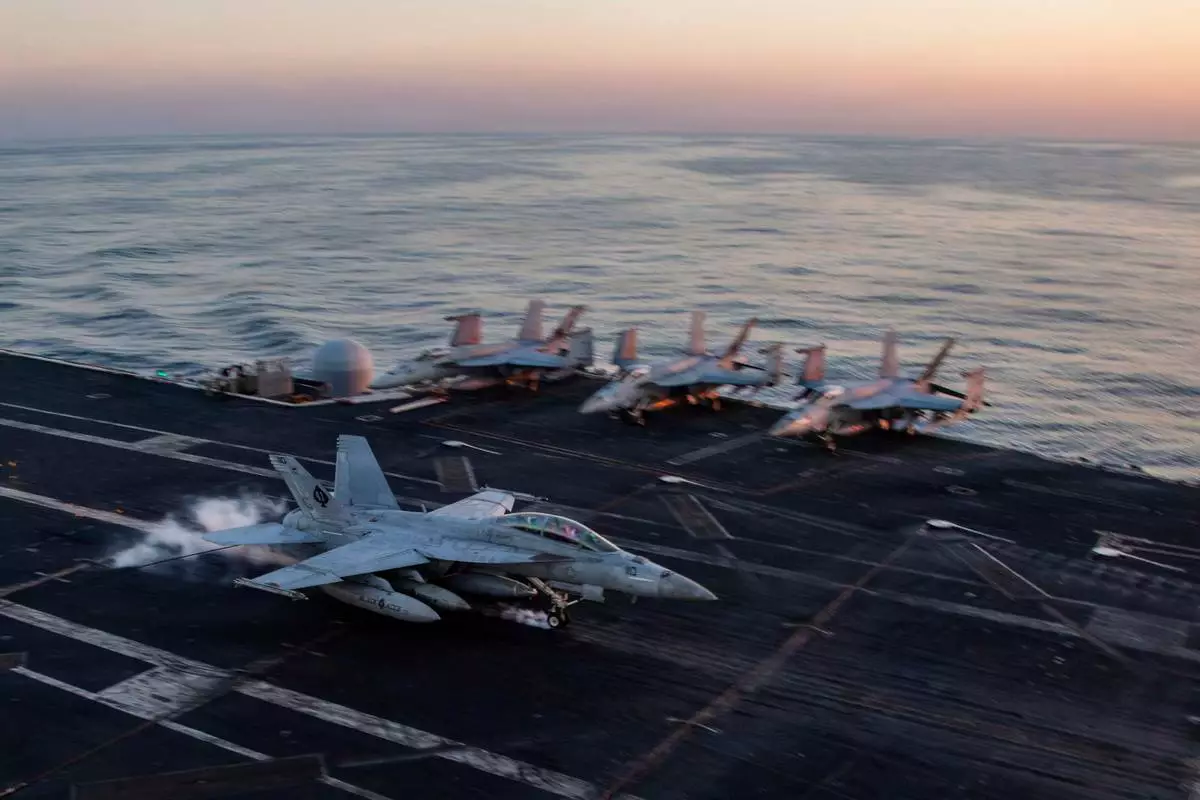
This image provided by U.S. Central Command shows a F/A-18F Super Hornet preparing to make an arrested landing on the USS Abraham Lincoln (CVN 72)) in support of Operation Epic Fury, on Saturday, Feb. 28, 2026. (U.S. Navy via AP)

In this photo taken with a slow shutter speed, a Middle East Airlines plane flies over Beirut as smoke rises from Israeli airstrikes on Dahiyeh in Beirut's southern suburbs, early Monday, March 2, 2026. (AP Photo/Hassan Ammar)
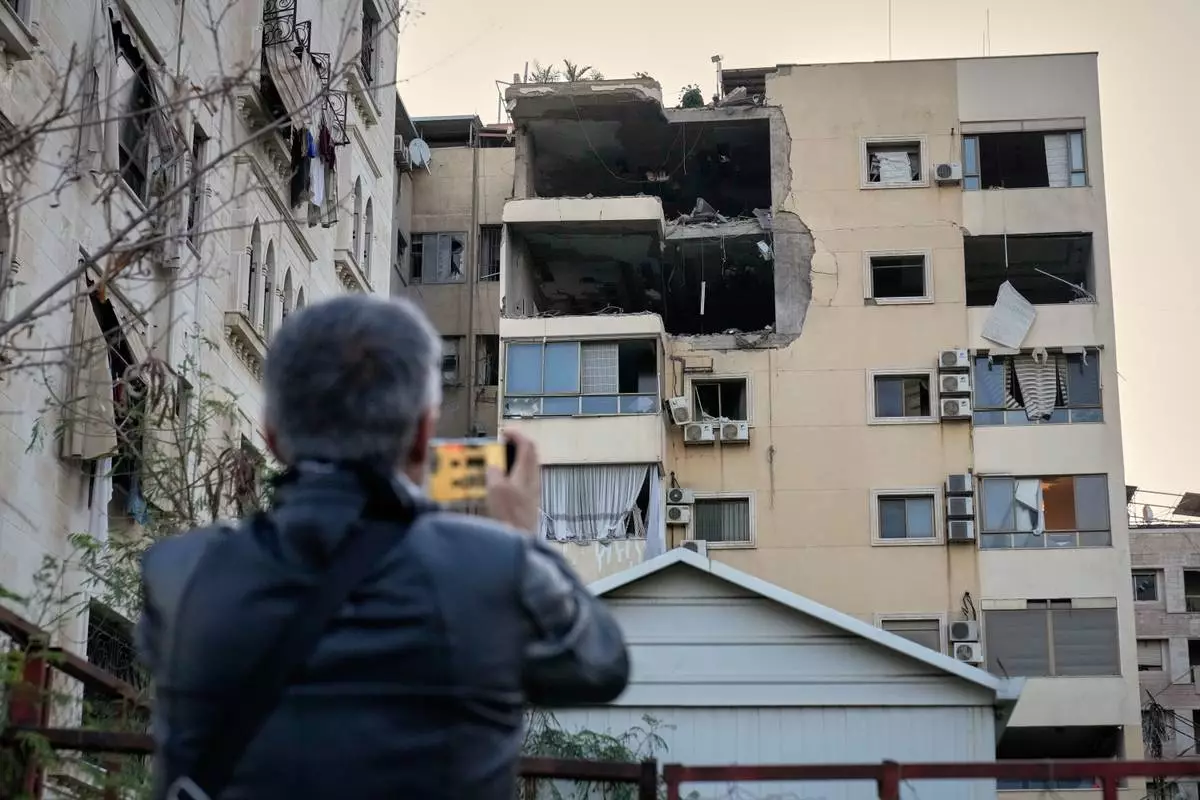
A man takes pictures of the damage in an apartment building after it was hit by an Israeli airstrike in Dahiyeh, Beirut's southern suburb, Lebanon, Monday, March 2, 2026. (AP Photo/Hussein Malla)

This image provided by U.S. Central Command shows a Navy sailor observing flight operations aboard the USS Abraham Lincoln (CVN 72)) in support of Operation Epic Fury, on Saturday, Feb. 28, 2026. (U.S. Navy via AP)
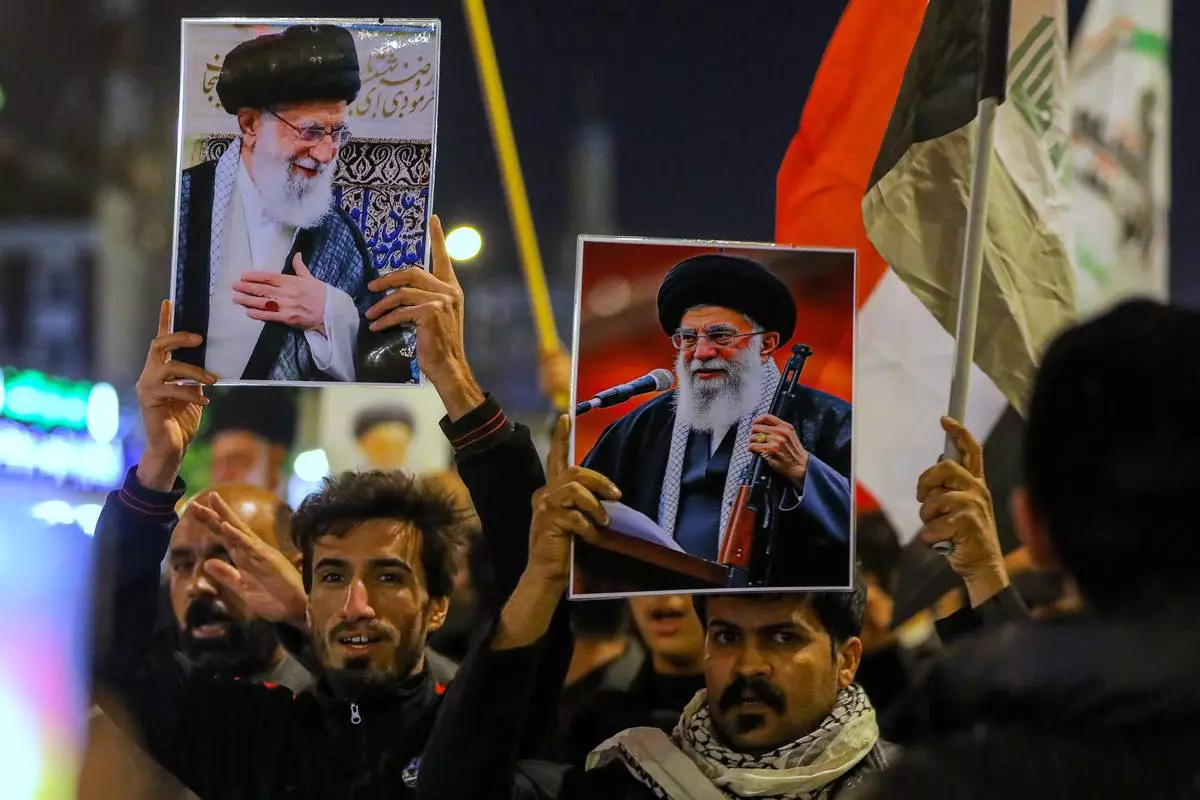
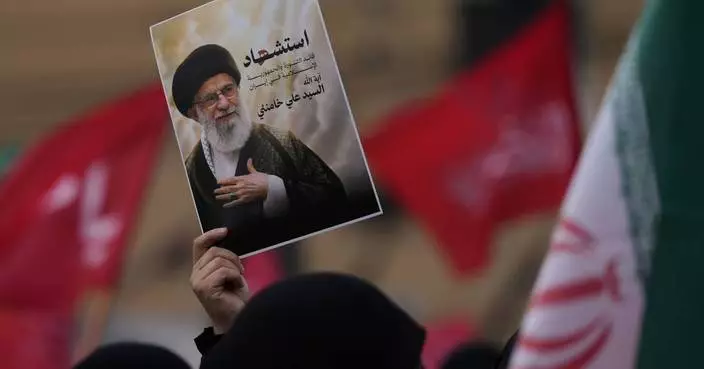
Iraqi Shiites hold pictures of Iranian Supreme Leader Ayatollah Ali Khamenei, who was killed by a U.S. airstrike in Tehran, during a symbolic funeral, in Najaf, Iraq, Sunday, March 1, 2026. (AP Photo/Anmar Khalil)