Skip to Content Facebook Feature Image

Cholera Cases Prompt Health Officials to Urge Public on Water System Safety and Precautions

HK

Cholera Cases Prompt Health Officials to Urge Public on Water System Safety and Precautions
HK

HK

Cholera Cases Prompt Health Officials to Urge Public on Water System Safety and Precautions

2026-03-02 17:30 Last Updated At:18:01

DH announces latest Legionnaires' disease case

The Centre for Health Protection (CHP) of the Department of Health (DH) today (March 2) reported the latest number of Legionnaires' disease (LD) cases, and reminded the public of the importance of using and maintaining properly designed man-made water systems, adding that susceptible groups should strictly observe relevant precautions.

From February 22 to 28, the CHP recorded one community-acquired LD case, involving a 72-year-old male patient who had underlying illnesses. He lives in Sai Kung District.

The CHP is conducting epidemiological investigations to identify the potential source of infection and high-risk exposure. An initial investigation revealed that this is a sporadic case. No epidemiological linkages have been established between this case and other confirmed cases previously recorded in Hong Kong.

As of February 28, 11 LD cases had been recorded this year. In 2025 and 2024, there were 167 and 135 LD cases respectively.

Men, people aged over 50, smokers, alcoholics and persons with weakened immunity are more susceptible to LD. Some situations may also increase the risk of infection, including poor maintenance of water systems; living in areas with old water systems, cooling towers or fountains; using electric water heaters, whirlpool spas or hot water spring spas; and recent stays in hotels or ships.

Legionellae are found in various environmental settings and grow well in warm water (20 to 45 degrees Celsius). They can be found in aqueous environments such as water tanks, hot and cold water systems, cooling towers, whirlpool spas, water fountains, humidifiers and home respiratory devices that support breathing. People may become infected when they breathe in contaminated droplets (aerosols) and mist generated by artificial water systems, or when handling garden soil, compost and potting mixes.

Immunocompromised persons should:

  • Use sterile or boiled water for drinking, tooth brushing and mouth rinsing;

  • Avoid using humidifiers, or other mist- or aerosol-generating devices; and

  • If using humidifiers, or other mist- or aerosol-generating devices, fill the water tank with only sterile or cooled freshly boiled water, and not water directly from the tap. Also, clean and maintain humidifiers/devices regularly according to manufacturers' instructions. Never leave stagnant water in a humidifier/device. Empty the water tank, wipe all surfaces dry, and change the water daily.

The public should observe the health advice below:

  • Observe personal hygiene;

  • Do not smoke and avoid alcohol consumption;

  • Strainers in water taps and shower heads should be inspected, cleaned, descaled and disinfected regularly or at a frequency recommended by the manufacturer;

  • If a fresh-water plumbing system is properly maintained, it is not necessary to install domestic water filters. Use of water filters is not encouraged as clogging occurs easily, which can promote growth of micro-organisms. In case water filters are used, the pore size should be 0.2 micrometres (µm) or less and the filter needs to be changed periodically according to the manufacturer's recommendations;

  • Drain and clean water tanks of buildings at least quarterly;

  • Drain or purge for at least one minute infrequently used water outlets (e.g. water taps, shower heads and hot water outlets) and stagnant points of the pipework weekly or before use;

  • Seek and follow doctors' professional advice regarding the use and maintenance of home respiratory devices and use only sterile water (not distilled or tap water) to clean and fill the reservoir. Clean and maintain the device regularly according to the manufacturer's instructions. After cleaning/disinfection, rinse the device with sterile water, cooled freshly boiled water or water filtered with 0.2 µm filters. Never leave stagnant water in the device. Empty the water tank, keep all surfaces dry, and change the water daily; and

  • When handling garden soil, compost and potting mixes:

  • Wear gloves and a face mask;

  • Water gardens and compost gently using low pressure;

  • Open composted potting mixes slowly and make sure the opening is directed away from the face;

  • Wet the soil to reduce dust when potting plants; and

  • Avoid working in poorly ventilated places such as enclosed greenhouses.

The public may visit the CHP's LD page, the Code of Practice for Prevention of LD and the Housekeeping Guidelines for Cold and Hot Water Systems for Building Management of the Prevention of LD Committee, and the CHP's risk-based strategy for prevention and control of LD.

Additionally, as smokers and alcoholics are more susceptible to LD, the Government urgesmembers of the public to quit smoking and avoid drinking. Members of the public may call the DH Integrated Smoking Cessation Hotline at 1833 183, which is answered by registered nurses who provide professional counselling and referral to a wide range of free smoking cessation services. The public may also visit the smoking cessation thematic website (www.livetobaccofree.hk) for more information on smoking cessation. The DH has also launched the Pilot Alcohol Cessation Counselling Service, which provides free counselling to people identified as having probable alcohol dependence, through a subvented non-governmental organisation, the Tung Wah Group of Hospitals (TWGHs). Information on the service has been uploaded to the DH's Change for Healthwebsite. Eligible persons who are interested can call the enquiry hotline of the TWGHs (2884 9876).
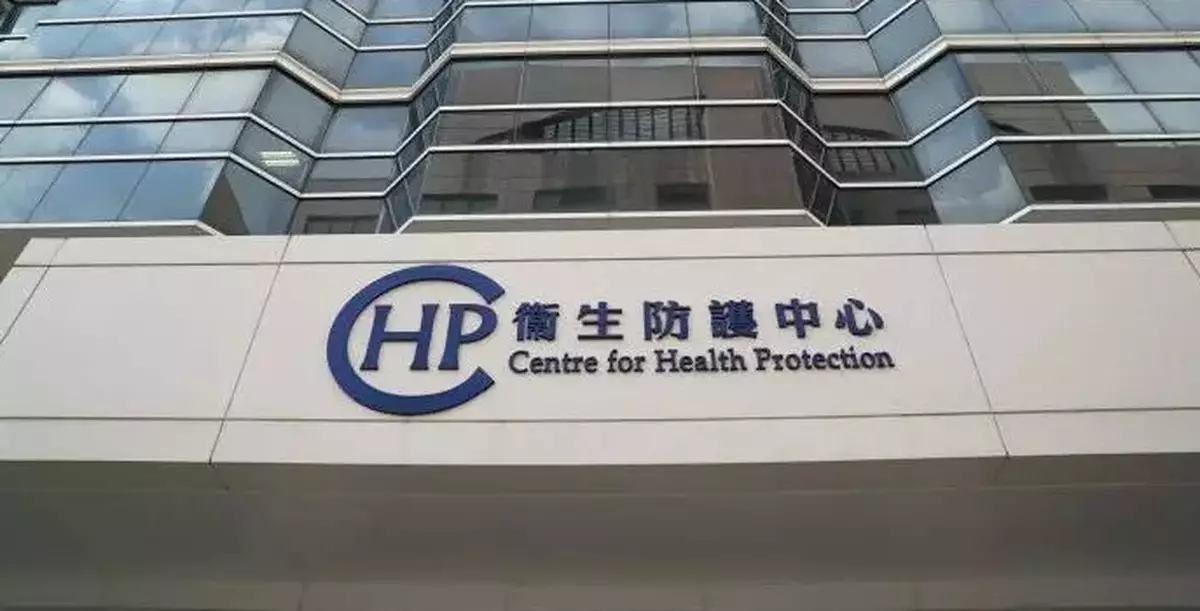
The Centre for Health Protection (CHP), Photo source: reference image


The Centre for Health Protection (CHP), Photo source: reference image

Government announces tender result for Sandy Ridge site

The Innovation, Technology and Industry Bureau (ITIB) today (March 2) announced that the Sandy Ridge Data Facility Cluster site, with a total area of over 110000 square metres (Lot No. 953 in Demarcation District No. 89 at Sandy Ridge, North District, New Territories), has been awarded to Hong Kong Range Intelligent Computing Technology Company Limited for developing into an advanced data facility cluster for data centres and related industries on a land grant for a term of 50 years. The parent companies of the successful tenderer are Hong Kong Range Intelligent Computing Technology Development Company Limited and Sengro Fusion Technology Hong Kong Limited, with the ultimate holding company being Range Intelligent Computing Technology Group Company Limited (the Group). The Group has extensive experience in developing high-tier data centres and has developed and operated high-tier data centres facilities and large-scale dataport projects in multiple cities on the Mainland.

A two-envelope approach was adopted in the tender assessment for the Sandy Ridge Data Facility Cluster site to enable a comprehensive evaluation of both non-premium and premium proposals with a view to selecting the proposal that best unleashes the site's potential. In the tender evaluation, a weighting of 70 per cent was allocated to the non-premium proposal, and 30 per cent to the premium proposal. The tender must comply with the requirements on both non-premium and premium aspects as specified in the tender documents.

The Tender Assessment Panel assessed the tender in accordance with the criteria set out in the tender documents and confirmed the successful tenderer met the requirements in both the non-premium (such as the tenderer's contribution to Hong Kong in terms of investment and industrial development) and the premium proposals. The premium proposal of the tender is $581 million, and the successful tenderer expects to commence operations within 42 months, with an estimated cumulative investment of $23.8 billion from the development to the operation in the first three years. Other key aspects of the Sandy Ridge Data Facility Cluster to be developed by the successful tenderer include:

(1) A total gross floor area of 250000 sq m, of which about 90 per cent (88 per cent) of the floor area will be dedicated to high-tier data centre use.

(2) It is estimated to generate an economic output of about $4.6billion and create around 180 skilled positions in the first three years of operation.

(3) A significant expansion of Hong Kong's digital and computing power infrastructure, with an expected provision of 180000 peta-floating point operations per second (PFLOPS) computing power by 2032, equivalent to 36 times the current computing power in Hong Kong. Enhanced computing power will accelerate the development of the artificial intelligence (AI) industry, promote scientific breakthroughs, and drive the widespread application of AI technology in industry and society.

The Hong Kong Special Administrative Region Government will closely monitor the project's progress according to the service deed to ensure that the tender commitments are delivered as scheduled and with the required quality.

Since the 2023 Policy Address announced the rezoning of the Sandy Ridge site for innovation and technology and related uses, the ITIB has been taking forward the plan of developing the Sandy Ridge site into a data facility cluster and for related industry uses. Subsequently, the ITIB and the Digital Policy Office solicited expressions of interest in 2024 for the use of the Sandy Ridge site as a data centre, and requested further information from the industry in 2025. After gaining a deep understanding of the industry's interests and considerations for the development of the site, the tender was launched in the fourth quarter of 2025, inviting the industry to lead the development and operation, provide advanced computing power facilities, and promote the development of data and AI-related industries. One tender was received in this exercise.

The Sandy Ridge Data Facility Cluster is located in the Northern Metropolis, a core area of the Hong Kong-Shenzhen Boundary Control Points Economic Belt, and is well-positioned to attract resources such as technology and talent from both Hong Kong, Shenzhen and other parts of the Guangdong-Hong Kong-Macao Greater Bay Area (GBA), facilitating the aggregation of Chinese data from around the world and the development of related industries, forming an industrial cluster effect and driving the vigorous development of data and AI industries across the GBA.

A spokesperson for the ITIB said, "The Sandy Ridge Data Facility Cluster will provide crucial support for the development of AI in Hong Kong with essential elements such as data and computing power, deepening Hong Kong's leading advantage in regional digital infrastructure and cross-boundary data flow, promoting the development of the digital economy and smart city, as well as making an active contribution to the country's high-quality development and the 'AI+' initiative."

Source: AI-found images

Source: AI-found images

Recommended Articles