Iran and Iranian-backed militias fired missiles at Israel and Arab states, apparently hitting the U.S. Embassy compound in Kuwait, while Israel and the United States pounded targets in Iran as the war expanded Monday with statements of defiance and increasing casualties.
In the chaos, the U.S. military said that Kuwait “mistakenly shot down” three American F-15E Strike Eagles during a combat mission.
At least 555 people have been killed in Iran so far by the U.S.-Israeli campaign, the Iranian Red Crescent Society said, and more than 130 cities across the country have come under attack. In Israel, 11 people have been killed, with 31 in Lebanon, according to authorities.
Iranian cleric Alireza Arafi, delivering his first public remarks since he was made a member of Iran’s temporary leadership council, said he hoped that a new supreme leader would be “quickly” appointed to replace Ali Khamenei.
Here is the latest:
Lebanon’s President Joseph Aoun said Hezbollah's rocket attack on Israel were “illegal” acts, adding that such activities give Israel a pretext to destroy the country.
The government held a five-hour Cabinet meeting to discuss the Hezbollah action that triggered massive Israeli retaliation and the displacement of tens of thousands of people.
Information Minister Paul Morcos cited Aoun as saying that what happened overnight “was not to defend Lebanon or protect the Lebanese people. What are witnessing is building collapsing on their residents as they sleep.”
Israel’s rescue services said at least 15 people were injured by Iranian missiles in the southern city of Beer Sheba.
Searches are ongoing for additional victims. Several missile barrages targeted Israel from Iran on Monday.
Long-haul carrier Etihad Airways said in an update that all flights to and from its base in the Emirati capital, Abu Dhabi, will be now suspended until 2 p.m. local time on Tuesday.
Etihad, like fellow Gulf airlines Emirates and Qatar Airways, mainly serves long-haul travelers whose plans have been disrupted by the closure of regional airspace.
The price of oil jumped as tanker disruptions near the Strait of Hormuz raise fears about supply shortages from the Persian Gulf.
U.S. oil rose to about $71.97 a barrel on Monday and Brent climbed to about $78.46. Higher prices increase the risk of costlier gasoline and pricier goods.
The U.K. maritime center also reported attacks on vessels and warned of heavy electronic interference. Oman said a drone boat hit an oil tanker and killed one mariner. Saudi media said drones hit near Ras Tanura and Saudi Arabia shut the refinery as a precaution.
Traffic through the strategic Strait of Homruz has sharply dropped following U.S.-Israel weekend strikes in Iran. MarineTraffic.com said that transit through the chokepoint has fallen by 70% since Saturday.
It said that it has noticed changes in vessels’ navigation in the past three days including “U-turns, idling, reduced speeds, and last-minute diversions.”
Iranian cleric Alireza Arafi has delivered some of his first public remarks since he was made a member of Iran’s temporary leadership council.
In remarks aired on state television, Arafi said he hoped that a new supreme leader would be “quickly” appointed. The 88-seat Assembly of Experts, a group of mostly hard-line clerics, will choose former Supreme Leader Ali Khamenei’s replacement. But no clear successor is in place.
Arafi is serving on a temporary leadership council that includes President Masoud Pezeshkian and Iran’s hard-line judiciary chief Gholamhossein Mohseni Ejei. Arafi added that state institutions were continuing to function “under these extremely difficult circumstances.”
Iran has targeted a power plant in Qatar, the country’s defense ministry said. There were no casualties.
The ministry reported that Iran launched two drone attacks, one targeting a water tank at a power plant in Mesaieed, in southern Qatar, and another targeting an energy facility operated by Qatar Energy in the industrial city of Ras Laffan.
Lebanon’s government says it considers Hezbollah’s military activities illegal and says the group should hand over its weapons. Prime Minister Nawaf Salam said only the state can decide on matters of war and peace.
The U.S. military said Monday that Kuwait “mistakenly shot down” thee American F-15E Strike Eagles during a combat mission as Iran attacked the country.
The U.S. military’s Central Command said the combat included attacks from Iranian aircraft, ballistic missiles and drones — the first time Iran’s aging combat fleet has been engaged in the war.
“The U.S. Air Force fighter jets were mistakenly shot down by Kuwaiti air defenses,” it said. “All six aircrew ejected safely, have been safely recovered, and are in stable condition. Kuwait has acknowledged this incident, and we are grateful for the efforts of the Kuwaiti defense forces and their support in this ongoing operation.”
A bomb-carrying drone boat exploded against a Marshall Islands-flagged oil tanker in the Gulf of Oman on Monday, killing one mariner on board, Oman said.
The state-run Oman News Agency said the attack occurred in the Gulf of Oman off Muscat, the sultanate’s capital. It identified the vessel as the MKD VYOM. It said the dead crew member was from India.
Iran has been threatening vessels approaching the Strait of Hormuz, the narrow mouth of the Persian Gulf.
Ali Bahreini, Iran’s ambassador to the U.N. in Geneva, said the “use of force and the deliberate killing of civilians” is a violation of the UN Charter and condemned the recent strikes by the U.S. and Israel.
“The ongoing unlawful military aggression against Iran exemplifies the dominance of raw power over the principles of human rights,” he said.
Iranian state television claimed that Iran had targeted one of the U.S. aircraft that crashed in Kuwait. It did not elaborate.
Kuwait’s Defense Ministry said earlier Monday that several U.S. warplanes crashed, and all the pilots safely bailed out and were in stable condition.
The U.S. military did not immediately respond to a request for comment.
Air defenses in the United Arab Emirates have intercepted drones over Abu Dhabi, officials said.
Debris fell on a warehouse and a commercial facility in the city’s industrial areas. There was minor damage but no injuries, according to a statement posted on X by the Abu Dhabi Media Office.
The Jordanian Civil Aviation Authority says airspace will be closed between 6 p.m. (1500 GMT) to 7 a.m. (0400 GMT) daily until further notice. It called the closure “partial and temporary.”
Displaced families from southern Lebanon and Beirut’s southern suburbs sought refuge in schools in the capital, after Israel launched its deadliest barrage of airstrikes in more than a year. It came hours after Hezbollah fired missiles across the border.
At a public school hastily converted into a temporary shelter, families arrived carrying mattresses, plastic bags and bundles of clothing. People sat on sidewalks beside their belongings, some smoking quietly as they waited for space to open inside.
Hussein Abu Ali, who fled with his wife and children, described the moment the strikes hit. “My son began shaking and crying. ... Where are you supposed to go? I stepped outside, then back in because I was afraid of shooting in the air. I gathered my children and went down to the street.”
Israeli attacks killed at least 31 people and wounding 149, according to Lebanon’s Health Ministry
Kremlin spokesman Dmitry Peskov said Monday that Russia remains “in constant contact with the Iranian leadership” while also keeping up communication with the Persian Gulf states.
Peskov said Moscow was deeply disappointed to see the U.S. and Israel attack Iran despite the progress made in the U.S.-Iranian talks.
He said Russia will continue to take part in the U.S.-mediated talks on Ukraine and praised Washington’s efforts to help negotiate an end to the conflict.
Iran’s ambassador to the U.N.’s nuclear watchdog alleged on Monday that U.S.-Israeli airstrikes targeted Iran’s Natanz nuclear enrichment site.
Israel and the U.S. have not acknowledged strikes at the site, which the United States bombed during the 12-day war between Iran and Israel in June.
Iran’s Ambassador to the International Atomic Energy Agency, Reza Najafi, told journalists he condemned what he called the “unlawful, criminal and brutal” attacks by the U.S. and Israel against Iran.
“Again they attacked Iran’s peaceful safeguarded nuclear facilities yesterday,” he said. “Their justification that Iran wants to develop nuclear weapons is simply a big lie.”
Israel’s air force carried out new airstrikes on Beirut’s southern suburbs Monday. The blasts were heard in parts of the Lebanese capital.
The strikes hit an area where the Iranian-backed Hezbollah group has a giant hall used to hold rallies. It was not immediately clear if there were casualties.
Saudi Aramco temporarily shut down its Ras Tanura oil refinery near Dammam on Monday after it was targeted by Iranian drones.
Saudi state television reported the decision, citing what it described as an “official source.” It added there were no casualties from the fire and its decision was a precautionary one.
The refinery has a capacity over half a million barrels of crude oil a day.
An Iranian university student reached by The Associated Press on Monday described a heavy security presence in the northern city of Babol and nearby towns.
Communications into Iran remain unstable with internet access mostly blocked. The student, who spoke on condition of anonymity out of security fears, said he had briefly regained an internet connection and was able to talk with friends in nearby towns where a similar security presence was reported. Babol is 136 miles (220 kilometers) north of the capital, Tehran.
The student said armed riot police were on the streets Saturday night and into the early hours of Sunday as crowds gathered to mourn the killing of Supreme Leader Ayatollah Ali Khamenei.
About 30,000 German tourists are currently stuck on cruise ships, in hotels or at closed airports in the Middle East and cannot get back home because of the conflict.
German Foreign Minister Johann Wadephul said late Sunday that a military evacuation was currently not possible because of the closed airspace.
He said that the government was looking into other options to help bring its citizens home and that everyone should follow advise by German travel agencies and local authorities.
The German Travel Association called on tourists to “remain at their booked hotels as a matter of urgency” and not “make their own way to the airport or to a neighboring country.”
The U.N. nuclear watchdog chief Rafael Mariano Grossi on Monday said that “up to now” the International Atomic Energy Agency has “no indication that any of the nuclear installations, including the Bushehr Nuclear Power Plant, the Tehran Research Reactor or other nuclear fuel cycle facilities” in Iran have been damaged or hit.
Addressing a special session of the IAEA Board of Governors in Vienna, he said that the IAEA continues to try and contact the Iranian nuclear regulatory authorities via the IAEA’s own Incident and Emergency Center “with no response so far,” given the limitations in communications caused by the conflict.
Grossi urged military restraint, warning that Iran and many other countries in the region that have been targeted militarily have “operational nuclear power plants and nuclear research reactors, as well as associated fuel storage sites,” which increases the threat to nuclear safety.
So far, he said, “no elevation of radiation levels above the usual background levels has been detected in countries bordering Iran.”
The Iranian Red Crescent Society said Monday that the U.S.-Israeli airstrike campaign targeting Iran has killed at least 555 people so far in the Islamic Republic.
The society added that 131 cities have come under attack so far in the war.
Iran’s decision to target the Saudi refinery further expands the war gripping the Middle East, directly targeting the lifeblood of the kingdom’s economy.
Already, Iran has been threatening ships in the Strait of Hormuz, the narrow mouth of the Persian Gulf through which a fifth of all oil trade passes.
Several ships have been attacked as well there.
“The attack on Saudi Arabia’s Ras Tanura refinery marks a significant escalation, with Gulf energy infrastructure now squarely in Iran’s sights,” said Torbjorn Soltvedt, an analyst at the risk intelligence company Verisk Maplecroft.
“An extended period of uncertainty lies ahead as Iran seeks to impose a heavy economic cost by putting tankers, regional energy infrastructure, trade routes and U.S. security partners in the crosshairs,” he said.
Saudi Arabia’s Ras Tanura oil refinery came under attack Monday from drones, the kingdom’s defense ministry said, with authorities downing the incoming aircraft.
A Saudi military spokesman made the announcement on the state-run Saudi Press Agency.
Online videos from the site appeared to show thick black smoke rising after the attack. Even successfully intercepted drones cause debris that can spark fires and injure those on the ground.
Ras Tanura, near Dammam, has a capacity over half a million barrels of crude oil a day.
Israel’s military has launched an offensive campaign in Lebanon that could include “many prolonged days of combat ahead,” Lt. Gen. Eyal Zamir, the military chief of staff, said on Monday morning.
Hezbollah launched several rockets and drones toward Israel overnight, and Israel responded by striking dozens of targets in Beirut and southern Lebanon, he said.
“Hezbollah will pay a very heavy price for this,” Israel’s military spokesman Brig. Gen. Effie Defrin said. He added that Israel is keeping “all options on the table” for a possible ground operation in Lebanon.
Israel has called up more than 100,000 reservists since the war with Iran began on Saturday.
Israel also recommended that residents of 53 villages in southern Lebanon evacuate, causing massive traffic jams.
Germany will not actively participate in military action against Iran but will consider defending its soldiers stationed on multinational military bases in Jordan and Iraq if they get attacked, German Foreign Minister Johann Wadephul said Monday morning.
“The federal government has no intention of participating” in the conflict, Wadephul told Deutschlandfunk public radio. "We also do not have the necessary military resources.”
Multinational bases where German troops are stations in Irbil in northern Iraq and Al-Azraq in Jordan were targeted on the weekend, the German military said.
The soldiers on site were not injured and are safe, the German news agency dpa reported.
Strikes killed three people in the western city of Sanandaj early Monday, Iran’s state-run news agency said.
IRNA said the strikes hit two residential sites without providing further details.
Several U.S. warplanes crashed Monday in Kuwait, the country’s Defense Ministry said, with all the pilots safely bailing out.
The ministry did not elaborate on what caused the crashes but it came during an intense period of Iranian fire targeting the country.
The Kuwaiti Defense Ministry said the pilots were taken to a hospital for checkups and their condition was stable.
The U.S. military’s Central Command did not immediately respond to a request for comment.
Turkey has temporarily closed its border with Iran to crossings by Iranians visiting for short trips, the Trade Ministry said, following public concerns that the tensions could trigger migration flows.
A ministry statement said that in a mutual agreement reached with Iran, Turkey is allowing its citizens and third country nationals to enter from Iran but short trips by Iranians have been temporarily suspended.
Meanwhile, commercial freight crossings between Turkey and Iran are continuing “in a controlled manner,” the ministry said.
Israel said crossings to Gaza, where much-needed humanitarian aid passes, will remain closed while the war with Iran continues.
COGAT claimed that Gaza has sufficient stockpiles of food for an “extended period” though some organizations, including the World Central Kitchen which operates soup kitchens across Gaza, have warned that they are running out of supplies.
“We need food deliveries every single day to feed hungry families who are not part of this war,” chef Jose Andres, the founder of World Central Kitchen, wrote on X.
Like some other U.S. embassies in the Middle East, the outpost in Kuwait is a large, walled compound consisting of multiple buildings and recreational facilities.
It is located near other embassies and residential areas to the south of central Kuwait City.
The ruling emir’s Bayan Palace is not far away.
In December 1983, a truck packed with explosives heavily damaged parts of the U.S. Embassy in Kuwait when it drove through a gate and detonated.
The bombing was part of a series of attacks later blamed on Iranian-backed militant groups.
Fire and smoke rose from inside the U.S. Embassy compound in Kuwait after an Iranian attack on the small Mideast nation on Monday.
The United States had earlier issued an urgent warning to Americans there to take cover and remain indoors.
It said: “Do not come to the Embassy,” without elaborating.
Iranian state media published footage showing damage at the Gandhi Hospital in Tehran.
Associated Press journalists heard several loud explosions Monday morning in Irbil, the capital city of Iraq’s semiautonomous region of Kurdistan.
The World Health Organization called for the sparing of civilians and health care facilities in the Middle East amid a regional conflict triggered by Israeli-US strikes on Iran over the weekend.
“The protection of civilians and health care must be absolute,” Hanan Balkhy, regional dietitian at WHO wrote on social media.
“All parties must … ensure medical facilities remain protected.”
Strikes across Iran continued into Monday, with one apparently taking Iranian state television off air.
Witnesses said an attack in northern Tehran’s Niavaran neighborhood struck one of the transmitters used for Iranian state TV.
Since then, its satellite signals have dropped.
State media had said hospitals and residential areas had been hit in strikes by the Americans and Israelis.
The United Arab Emirates is shutting the country’s main stock exchanges for the start of the trading week as the regional war intensifies.
The country’s Capital Market Authority said the Abu Dhabi Securities Exchange and Dubai Financial Market would be closed Monday and Tuesday.
It says it will closely monitor the regional situation and take any further steps as necessary.
Another market, the Nasdaq Dubai, also said it was halting trading both days.
Dubai is the Gulf’s main business hub, though the Emirati capital Abu Dhabi is also an important regional financial center and home to some of the world’s biggest sovereign wealth funds.
Israeli airstrikes on Lebanon after Hezbollah attacked it have killed at least 31 people, Lebanon’s Health Ministry said Monday.
The Hezbollah attack and the Israeli retaliatory strikes expand the ongoing war gripping the Mideast after the U.S. and Israel launched an airstrike campaign targeting Iran.
The Health Ministry said that the strikes also wounded 149 people.
It said about two-thirds of those killed were in southern Lebanon.
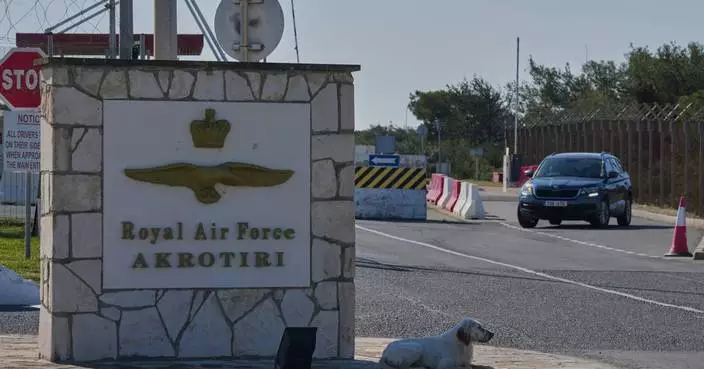
Cyprus President Nikos Christodoulides said a Shaheed-type drone caused “minor material damage” to military installations inside the U.K.’s RAF Akrotiri air base on the island’s southern coast.
Christodoulides said in a brief national address that the drone struck just past midnight Monday.
Overnight, airstrikes were reported across Iran.
Elsewhere, explosions were heard in Dubai on Monday.
In Bahrain, the Interior Ministry said sirens sounded across the country as it urged residents to “head to the nearest safe place.”
And in Kuwait, authorities said debris fell on its Ahmadi oil refinery, slightly injuring two workers there.
The state-run KUNA news agency said earlier that Kuwait’s forces had thwarted a drone attack early Monday.
A top Iranian security official on Monday said: “We will not negotiate with the United States.”
Ali Larijani made the statement on X, responding to a report from Qatar’s Al Jazeera news network.
The comment comes as an American and Israeli airstrike campaign continues to target Iran.
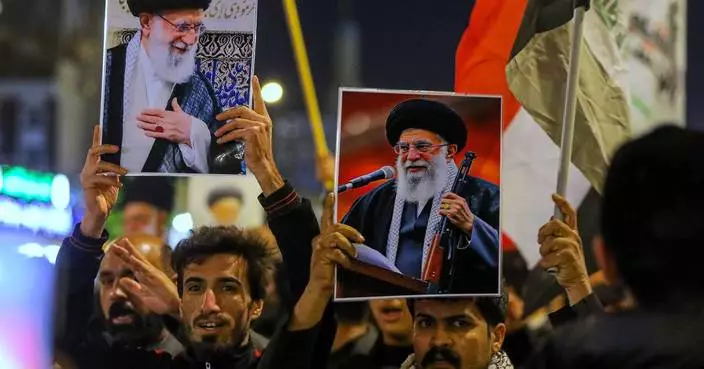
Iran and its militia allies have expanded their attacks over the killing of Supreme Leader Ayatollah Ali Khamenei.
U.S. Defense Secretary Pete Hegseth and Gen. Dan Caine, chairman of the Joint Chiefs of Staff, are planning to hold a press conference Monday morning about the military operation against Iran.
The Pentagon announced the 8 a.m. EST media briefing on social media Sunday night.
On Tuesday, Hegseth and Caine will join U.S. Secretary of State Marco Rubio and CIA Director John Ratcliffe in briefing the full membership of Congress on the strikes, the White House said.
Rubio also was slated to brief Hill leadership Monday.
Lebanon President Joseph Aoun said Hezbollah’s rocket launches from Lebanon put the country at risk.
Aoun said in a statement that the Lebanese state has been trying to "keep Lebanon away from the dangerous military confrontations taking place in the region.”
A previous version of this story included a post on fire and smoke rising from US Embassy in Kuwait that referenced a video obtained by The Associated Press; however the video was not from the same location.
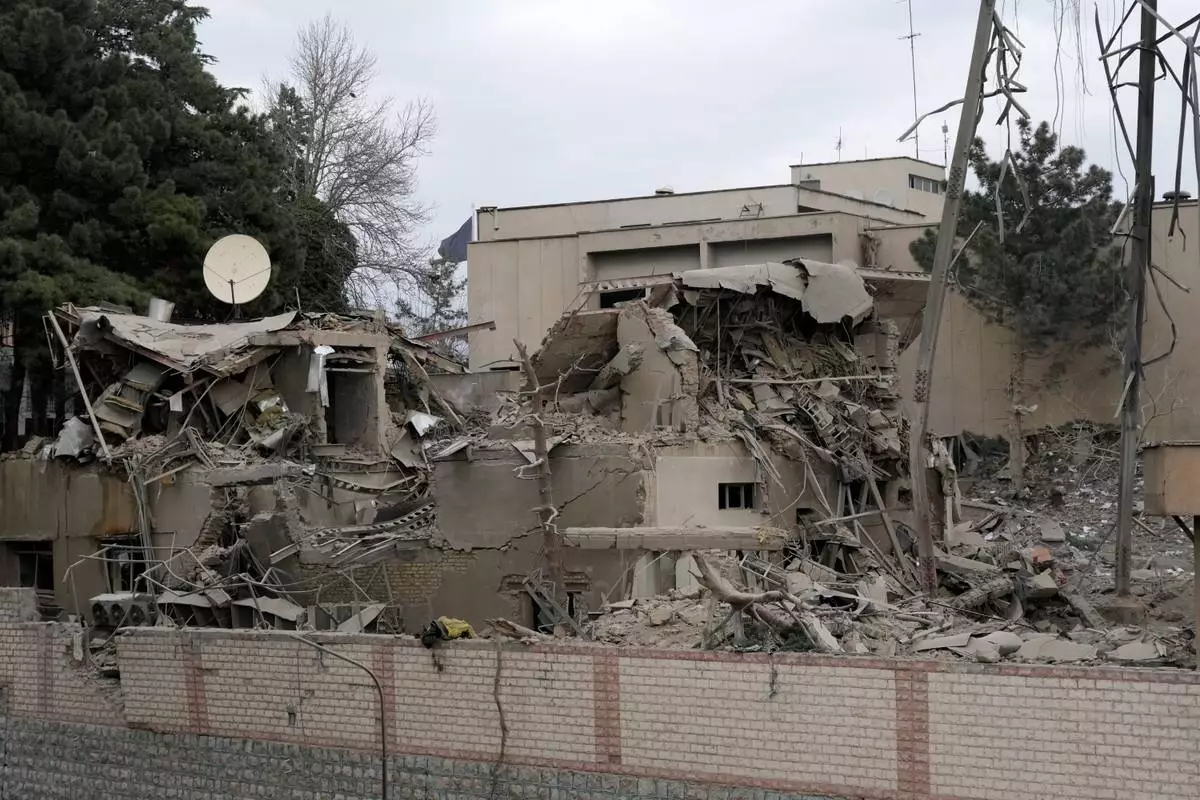
A state TV communications tower and building destroyed Sunday during a strike as part of the ongoing joint U.S.–Israeli military campaign are seen in Tehran, Iran, Tuesday, March 2, 2026. (AP Photo/Vahid Salemi)
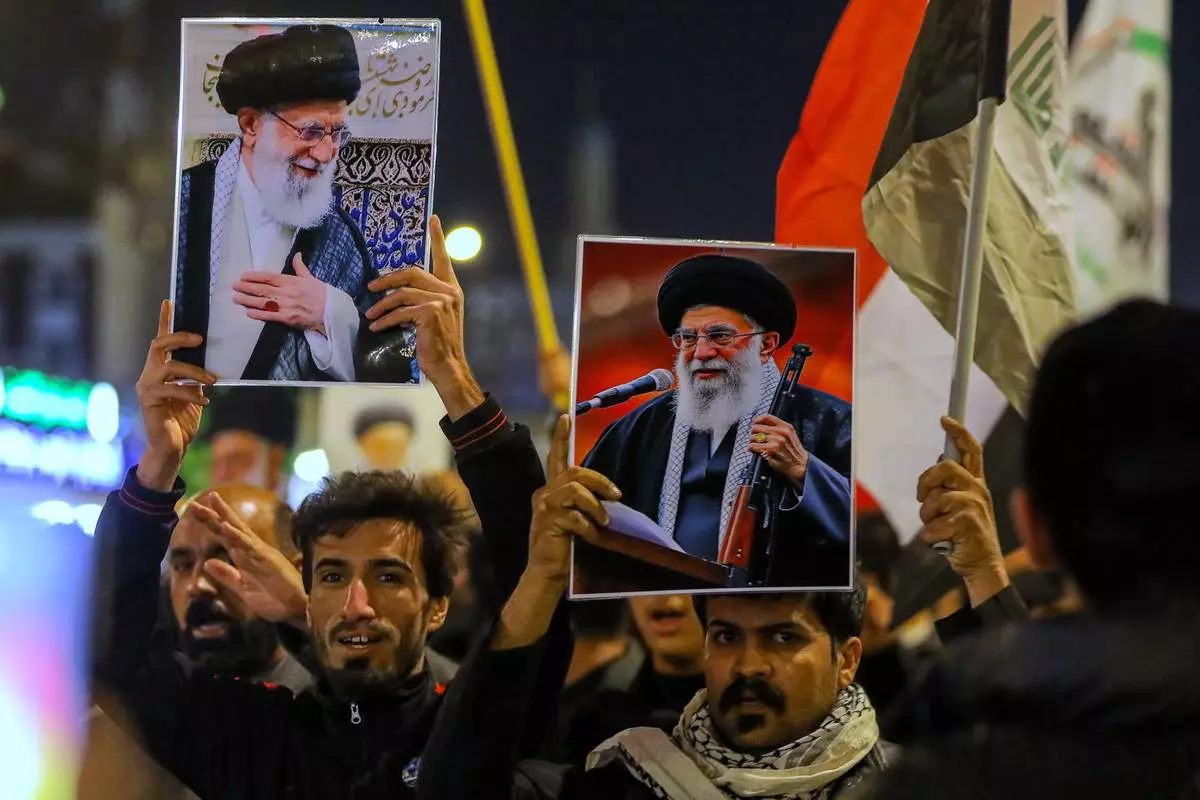
Iraqi Shiites hold pictures of Iranian Supreme Leader Ayatollah Ali Khamenei, who was killed by a U.S. airstrike in Tehran, during a symbolic funeral, in Najaf, Iraq, Sunday, March 1, 2026. (AP Photo/Anmar Khalil)
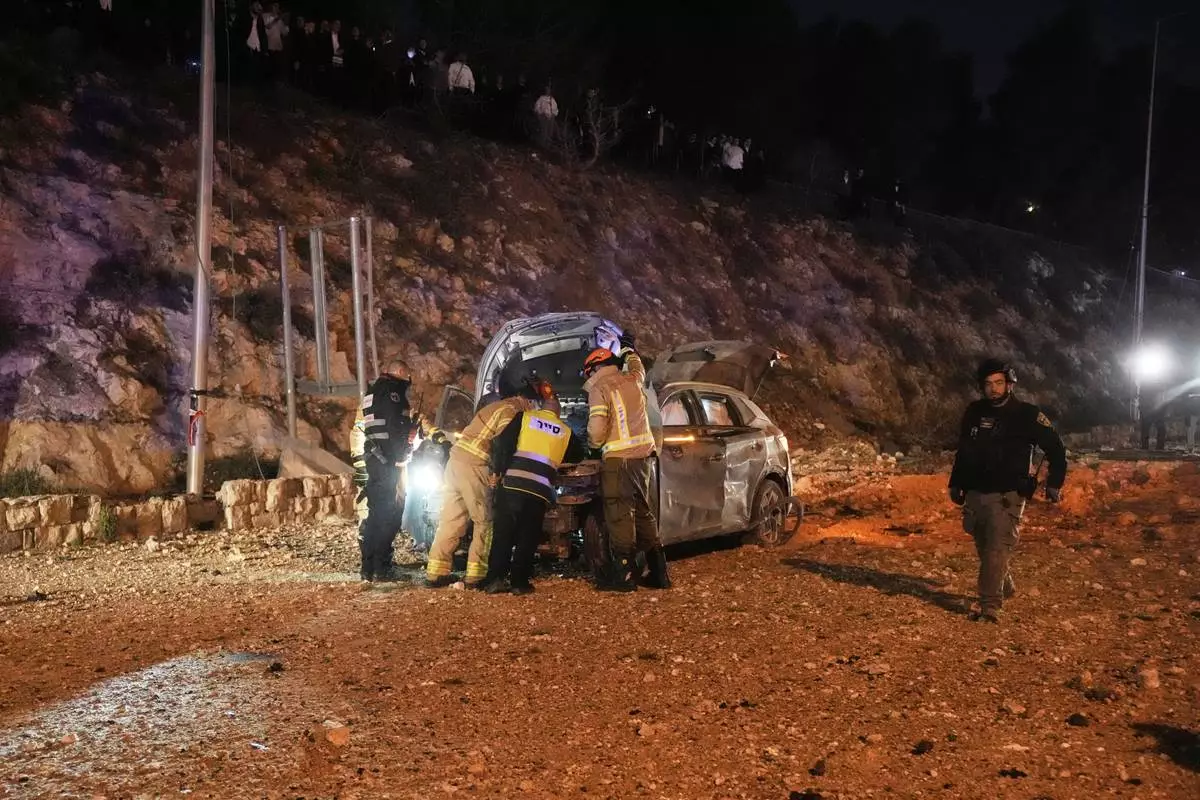
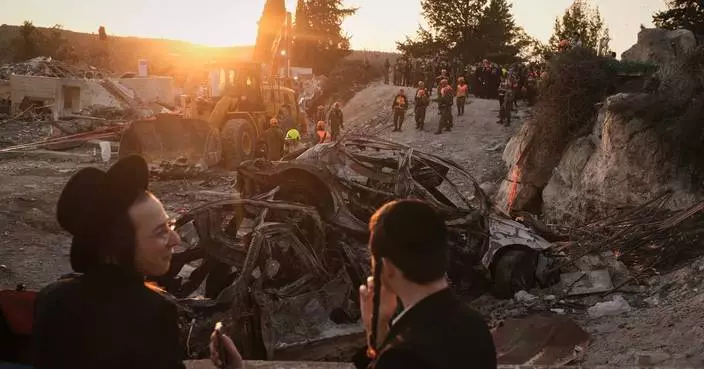
Israeli security forces inspect the scene of a direct hit on a road following an Iranian missile strike in Jerusalem, Sunday, March 1, 2026.(AP Photo/Mahmoud Illean)
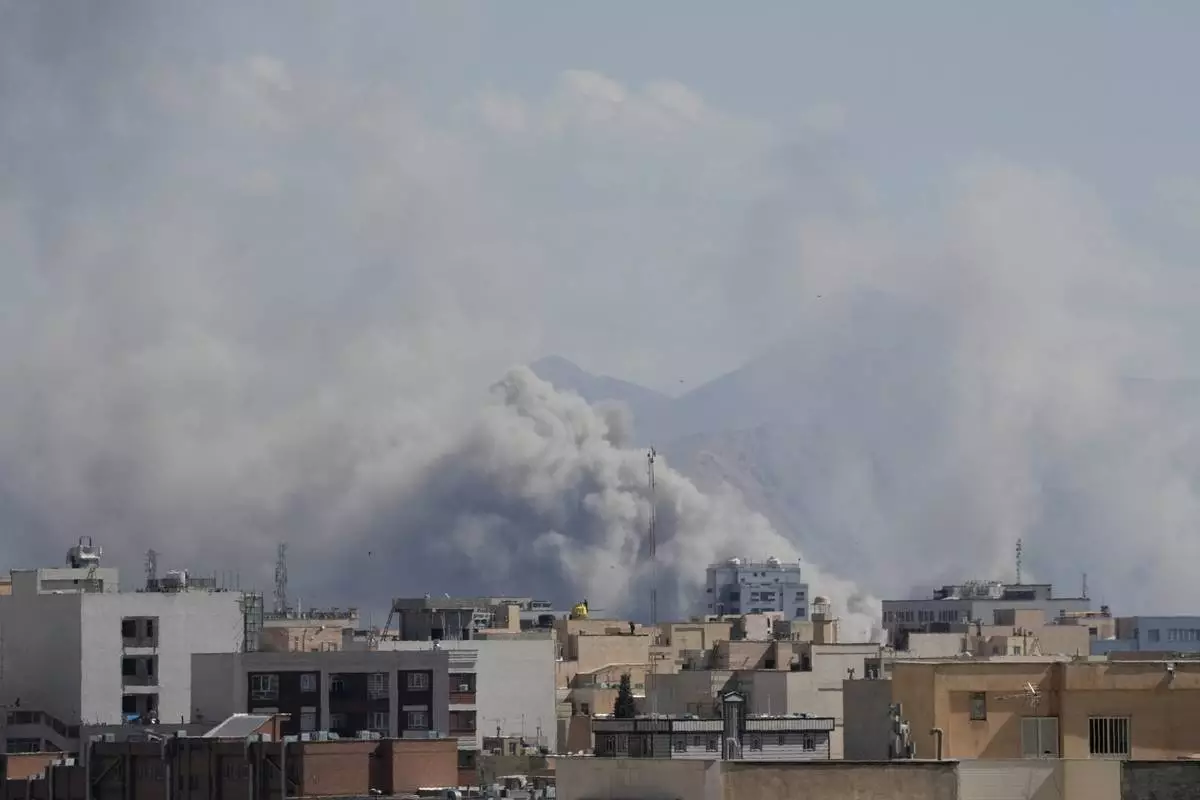
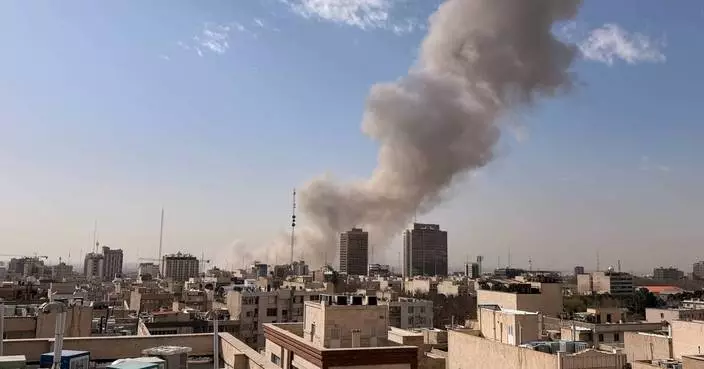
Smoke rises up after a strike in Tehran, Iran, Sunday, March 1, 2026. (AP Photo/Vahid Salemi)
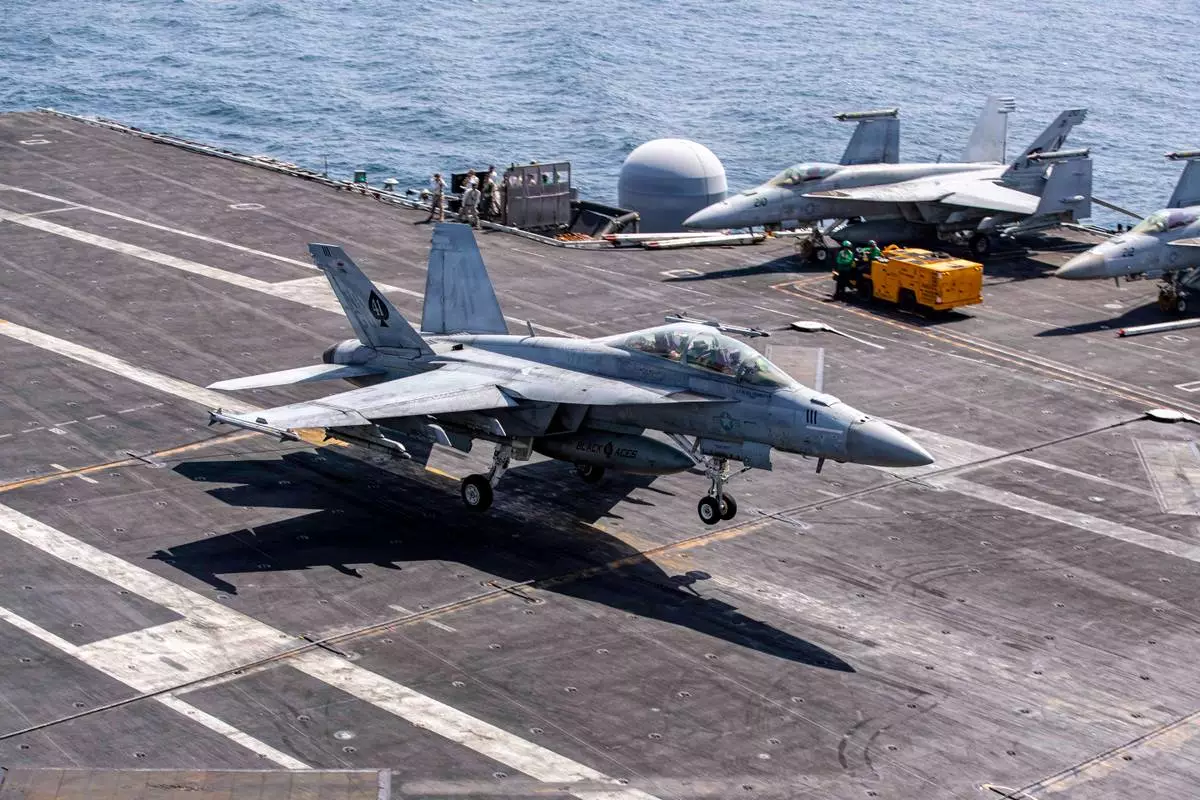
This image provided by U.S. Central Command shows a F/A-18E Super Hornet makes an arrested landing on the USS Abraham Lincoln (CVN 72) after a mission in support of Operation Epic Fury, on Saturday, Feb. 28, 2026. (U.S. Navy via AP)
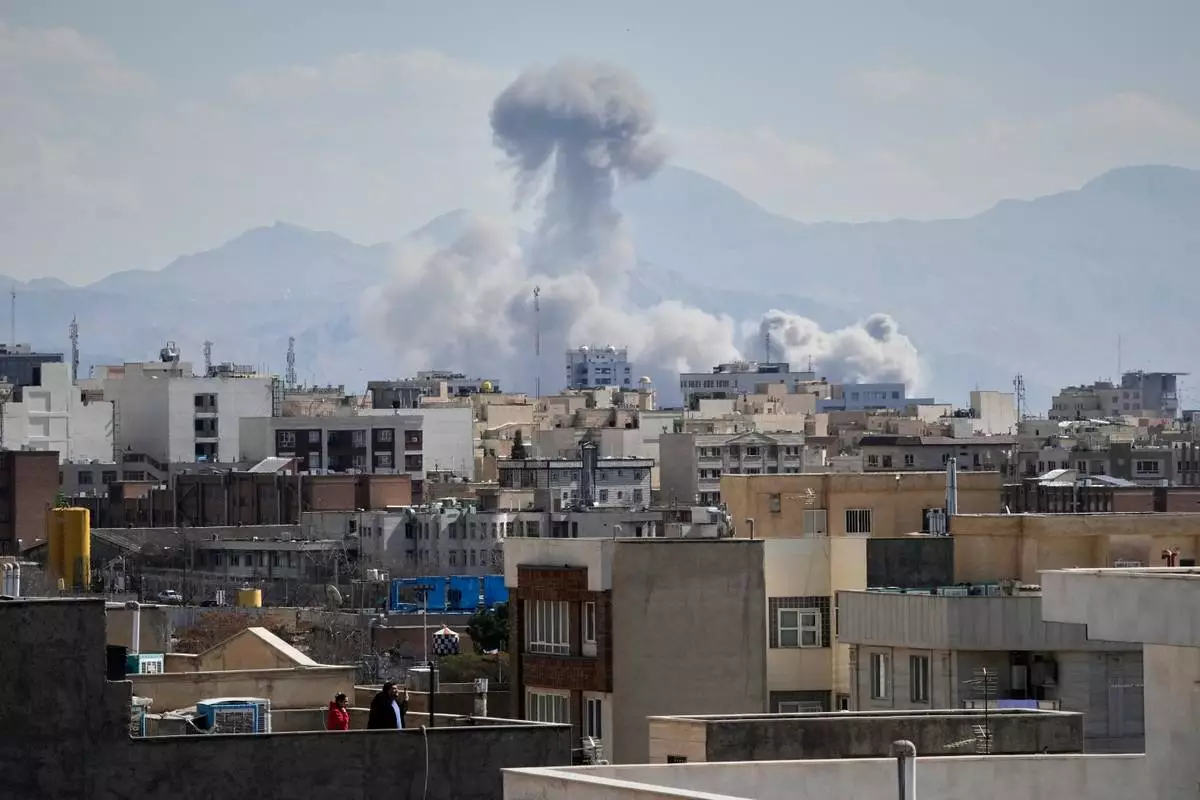
People watch from a rooftop as a plume of smoke rises after a strike in Tehran, Iran, Sunday, March 1, 2026. (AP Photo/Vahid Salemi)
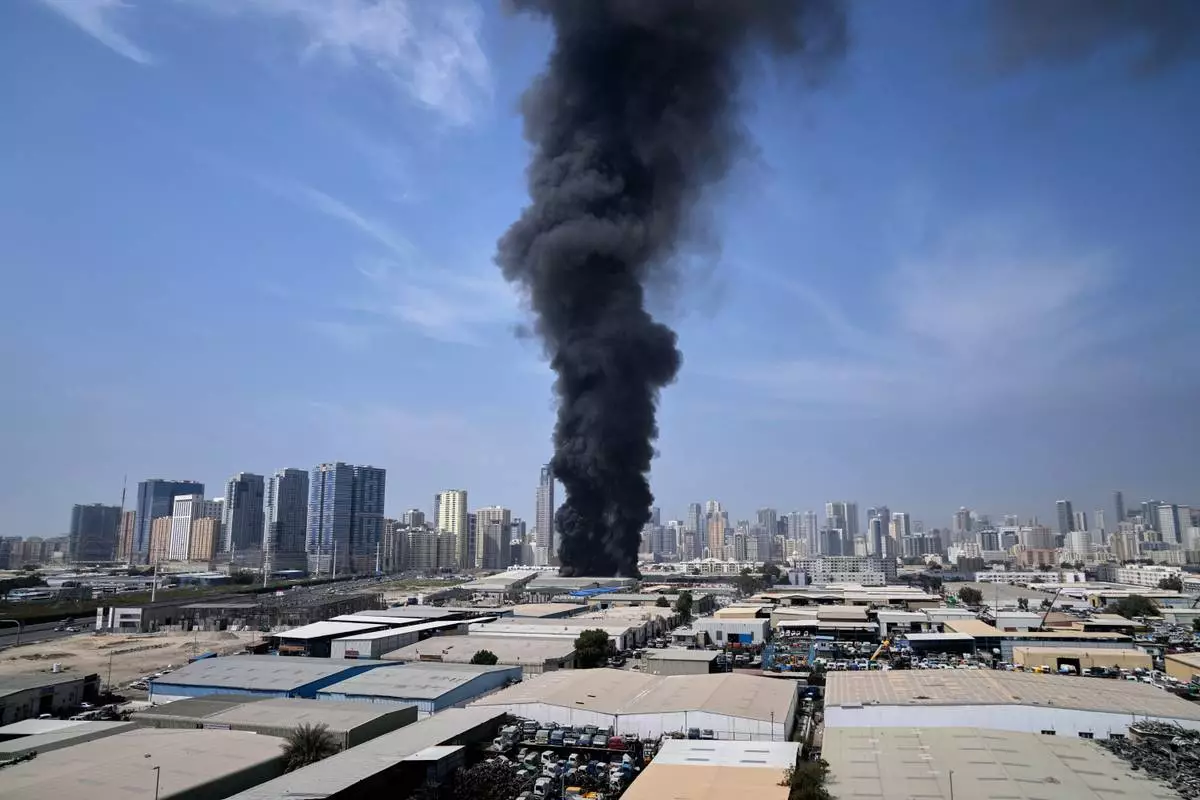
A black plume of smoke rises from a warehouse at the industrial area of Sharjah City in the United Arab Emirates following reports of Iranian strikes in Dubai, United Arab Emirates, Sunday, March 1, 2026. (AP Photo/Altaf Qadri)