The east China city of Suzhou is testing new ways to preserve and revitalize its ancient neighborhoods, balancing heritage protection with modern living needs.
Suzhou, a city with a history of 2,500 years, boasts one of the country's largest ancient towns. Chinese President Xi Jinping urged local officials to "protect, explore and utilize" the city's historic blocks during an inspection tour in 2023. That directive has guided Suzhou's renewal program launched in 2019, which emphasizes safeguarding cultural relics while improving residents' quality of life.
Block 32 once consisted of government organizations and private gardens back in the Ming and Qing Dynasties (1368-1911). They became residential communities in modern times, hosting some 2,700 people.
In one of the houses there lived seven families, around 20 people, which was once common in this neighborhood.
"We have a family here, and I lived here, and another family here. And three more families in the back," recalled 72-year-old resident Yuan Xuechun.
After centuries of wind and rain, most of the houses can hardly meet the needs of residents nowadays. In 2019, the city launched a renewal program in the area. Its guiding principles are "protection, exploration and utilization."
So far, over 800 families, comprising almost half of the residents, agreed to move to new residential buildings, but many chose to stay in this century-old neighborhood.
"During our renewal progress [process], we fully respect the public opinion. It's up to the people to decide their matters," said Yang Yue, general manager of Suzhou Historic City Group.
For those staying on, upgrades have been done to improve their living conditions, including moving unorganized wires and sewage pipes underground, setting racks for drying clothes, and 24-hour public rooms for all sorts of activities.
"Some illegal structures on the roof will be demolished, but valuable elements like the brick-carved gatehouse above will be preserved. The entire structure won't be torn down; instead, columns, windows, and doors will be restored using traditional techniques to achieve restoration as original," Yang explained how a century-old house that once housed 24 families will be renovated.
Beyond preservation, the local government has launched a city renewal partner project, encouraging social entities, such as bookstores, coffee houses and hotel groups, to further utilize the ancient heritages.
"Through all efforts, we have activated the values of the ancient block. Many young people already fell in love with the ancient town, came back to the ancient town, and revitalized the ancient town," Yang said.
China's urban renewal has entered a new phase, shifting from large-scale new construction to the improvement and upgrading of existing neighborhoods. During the 14th Five-Year Plan period for national socioeconomic development from 2021 to 2025, more than 240,000 old urban communities were renovated, benefiting 110 million people.
Authorities have pledged to further advance the effort through a more refined and meticulous approach, known as the "needlework style," an approach exemplified by the city of Suzhou.
For residents like Yuan, the changes are deeply felt.
"The living conditions have been improved. I feel living in this old town is even happier than living in the new areas," said Zha Jialin, a resident.
"I feel very happy," Yuan said.
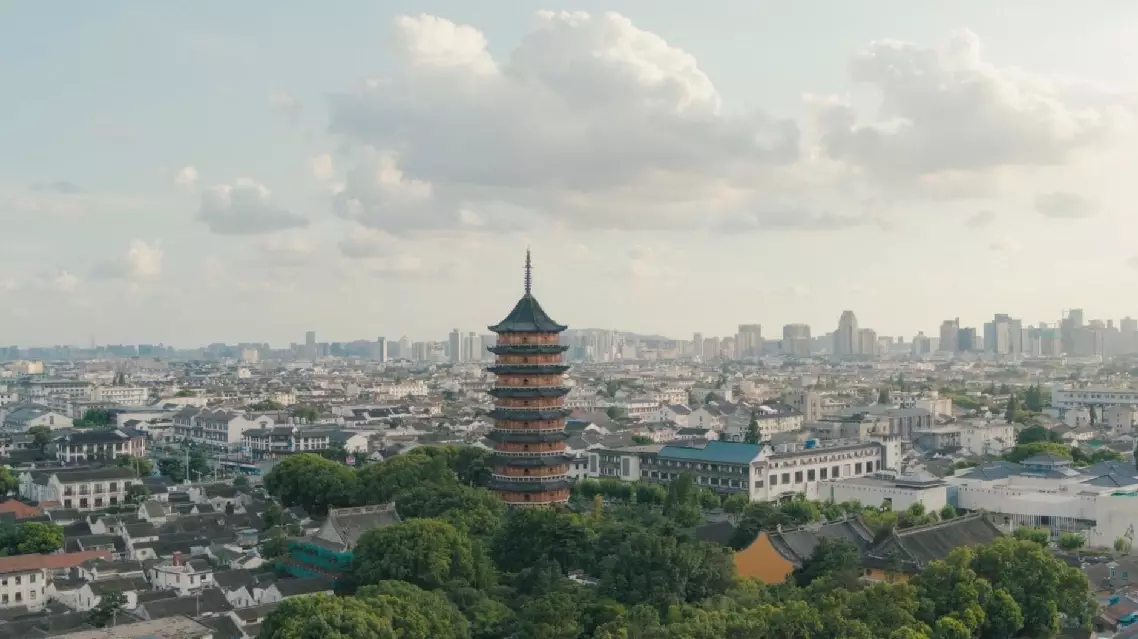
East China city Suzhou tests new model for ancient town renewal