FRANKFURT, Germany (AP) — Energy prices rose sharply Monday as disruptions to tanker traffic through the Strait of Hormuz and damage to production facilities raised uncertainty about how U.S. and Israeli attacks on Iran would affect supply to the world economy.
The biggest shock was to natural gas prices, which rose more than 40% in Europe when QatarEnergy, a major supplier, halted production of liquefied natural gas after its facilities were attacked.
“Infrastructure is at risk throughout the region, and it’s not just at risk because of deliberate attacks, but also inadvertent attacks," said Kevin Book, managing director at Clearview Energy Partners. “Shrapnel and debris from missile interceptions can fall onto facilities and disable them too, and so there are a number of challenges that come from this kind of conflict in an area with so much energy production.”
U.S. oil rose 6.3% to $71.23 per barrel, while international standard Brent was up 6.7% to settle at $77.74 per barrel.
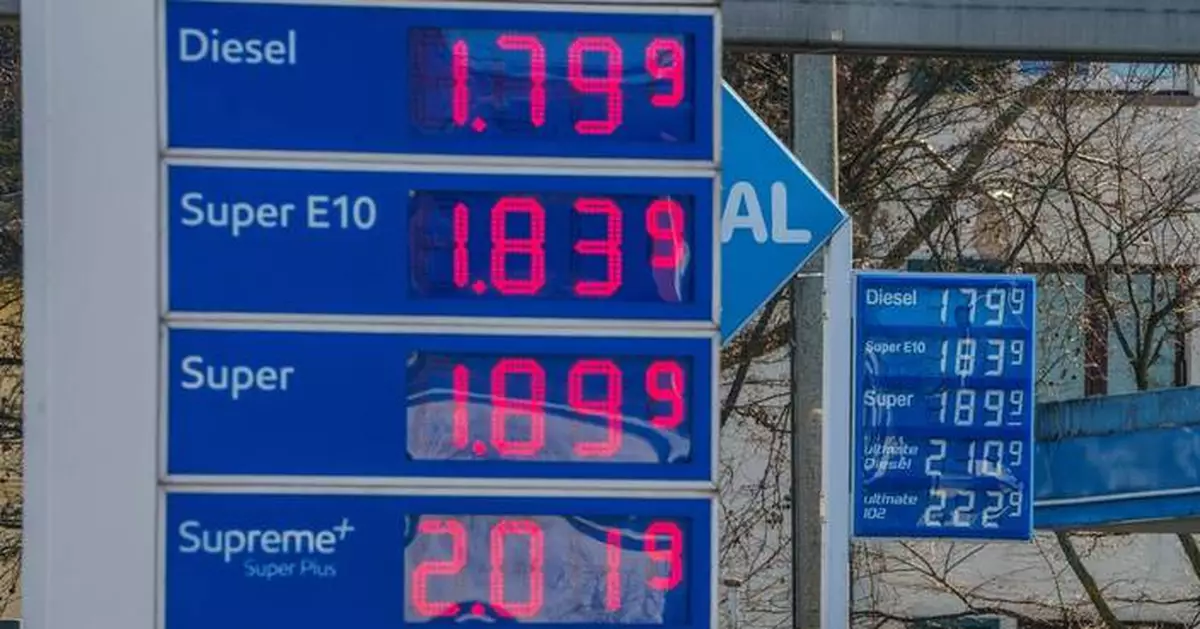
Higher oil prices raise the prospect of costlier gasoline for U.S. drivers as well as increased prices for other goods at a time when people in many countries have been stung by inflation.
A key focus was the Strait of Hormuz at the southern end of the Persian Gulf, through which 20% of the world's oil supply passes. Tanker traffic dropped sharply as satellite navigation systems were disrupted, data and analytics firm Kpler said on X. The U.K. Maritime Trade Operations Center reported attacks on several vessels in the area on either side of the strait and warned of elevated electronic interference to systems that show where ships are.
A bomb-carrying drone boat struck a Marshall Islands-flagged oil tanker in the Gulf of Oman, killing one mariner, Oman said.
Iran has been threatening vessels approaching the Strait of Hormuz and is believed to have launched multiple attacks.
That's resulting in a “de facto closure” of the strait, defined by the risk tolerance of ship operators and sea captains, with traffic slowing to a trickle, Book said. “The reality though is the insurance companies are raising prices or, in some cases, canceling policies and sea captains have risk concerns. So too do ship owners and shippers,” he added.
Saudi Arabia intercepted Iranian drones that attacked the Ras Tanura oil refinery near Dammam and the refinery was shut down as a precaution, Saudi state television reported. Market attention has focused on whether the conflict will widen to other oil-producing countries in the region.
The price of crude is the single largest factor in how much U.S. drivers pay for fuel — a highly political issue ahead of midterm Congressional elections. And higher oil prices are usually felt at the pump within a couple of weeks at most.
Gas prices are already rising ahead of the summer driving season as people travel more. The national average for a gallon (3.7 liters) of regular went up by 6 cents Monday to $2.99, according to motoring club AAA.
Crude price increases are substantially reflected in pump prices in 20 days and a $10 per barrel increase typically results in around a 25 cent rise per gallon, according to 2019 research by the Federal Reserve Bank of Dallas.
The price of crude has less impact in Europe, where taxes make up most of the price of fuel, but higher energy costs can affect prices across the economy. A sustained rise of $15 per barrel could add 0.5 percentage points to consumer prices in Europe, according to Holger Schmieding, chief economist at Berenberg bank.
There are pipelines that circumvent the strait, but they don't have enough capacity to move all the oil that passes through the waterway. Saudi Arabia, Iraq and the United Arab Emirates all depend on tankers to get the bulk of their oil to global markets.
Analysts say completely blocking the strait would hurt Iran too since all of its 1.6 million barrels per day pass through the strait. Most of that goes to China, where refineries are less concerned about U.S. sanctions that prevent Iran from selling its oil elsewhere.
“Iran has essentially two ways to close the strait. One is to harass or attack ships, and the other is to lay down mines," Book said. "And without a Navy, both of those things would be difficult. So, if the president succeeds in ‘annihilating,’ in his words, the Iranian Navy, then long-term prospects of closure should decline, and that should increase the likelihood that ships will start sailing again.”
The strait is also a key route for liquefied natural gas. European futures contracts for April delivery shot up to 45.46 euros ($53.26) on the ICE commodities exchange after QatarEnergy said it would stop its production of liquefied natural gas. The state-owned firm blamed the war for the decision.
Qatar is a major gas supplier for Europe, which relies on shipments of liquefied gas, or LNG, to replace supplies of Russian pipeline gas lost due to the invasion of Ukraine.
Monday’s price increase was within the $5-$10 per barrel range expected by analysts based simply on the fear factor associated with the outbreak of war. And some war concerns were already reflected in the price before the conflict started.
However, long-term disruption to ship traffic in the Strait of Hormuz could send prices even higher, and so could damage to oil infrastructure in other Gulf countries. Meanwhile, a shorter conflict in which disruptions are easily reversible could mean the current price spike won’t last.
On Monday, U.S. President Donald Trump said that the U.S. expected its military operations against Iran to last four to five weeks but has “ the capability to go far longer.”
“The key question for the global economy is obvious: Will the Strait of Hormuz be effectively closed for oil and gas exports for more than a few weeks?” Schmieding said. “If so, it would hurt global growth and raise global inflation noticeably. But I would expect Trump to go to great lengths to prevent a lasting surge in energy prices that could hurt him at home ahead of the U.S. midterm elections in November.”
He forecast oil prices would return to $65-$70 per barrel after a near-term spike.
Iran’s attack on the Ras Tanura refinery represents a major escalation, a Middle East analyst said, with Iran demonstrating that key Gulf energy infrastructure is within its reach, and investor sentiment likely to worsen.
Torbjorn Soltvedt, principal Middle East analyst at risk intelligence company Verisk Maplecroft, said Iran's goal is to raise the economic costs of the conflict for Gulf states like Saudi Arabia and the United Arab Emirates, hoping that these countries will pressure the U.S. and Israel to de‑escalate.
He said that the coming days and weeks will be marked by uncertainty and volatility in global markets, with oil prices likely to push past $80 per barrel.
“If we start to see additional direct attacks against energy infrastructure, not just in Saudi Arabia and Kuwait, but in other countries in the region, then that’s when the market will start to think about a push toward $90 and perhaps even beyond.”
Associated Press writers Suzan Fraser in Ankara, Turkey, and Jon Gambrell in Dubai, United Arab Emirates, contributed to this report. Bussewitz reported from New York.
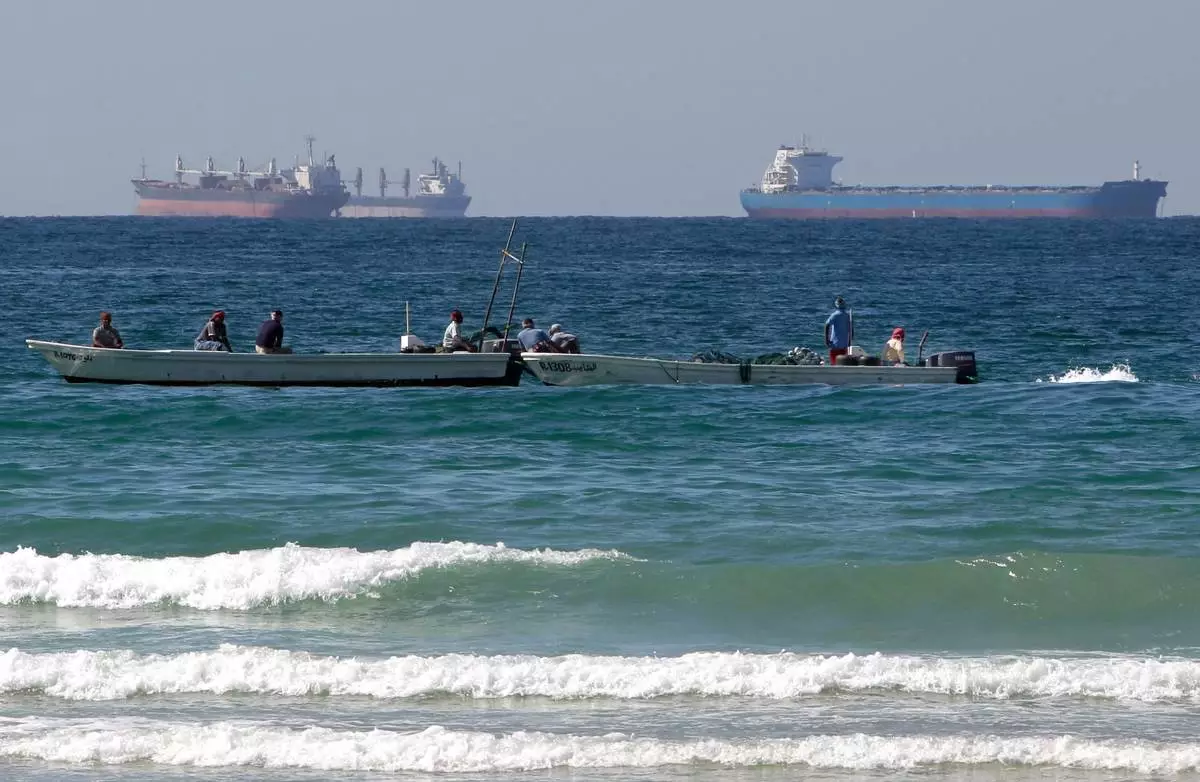
FILE - Fishermen work in front of oil tankers south of the Strait of Hormuz Jan. 19, 2012, offshore the town of Ras Al Khaimah in United Arab Emirates. (AP Photo/Kamran Jebreili, File)
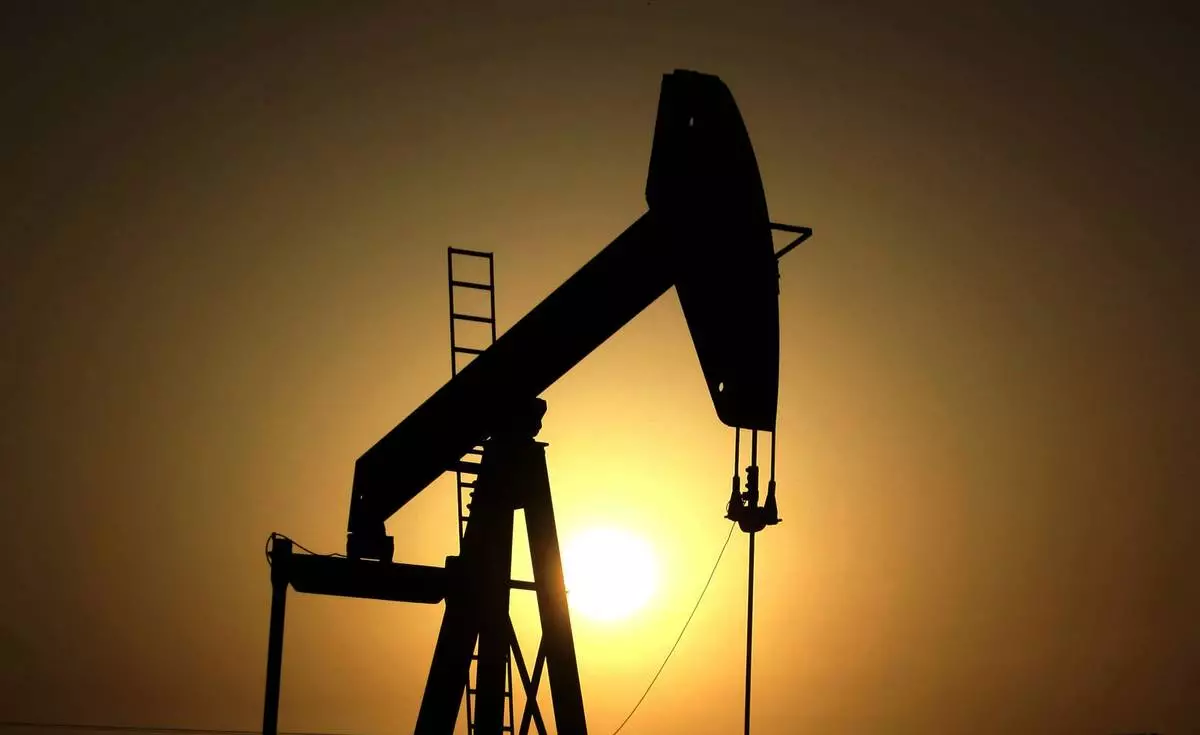
FILE- In this Wednesday, June 8, 2011 file photo, sun sets behind an oil pump in the desert oil fields of Sakhir, Bahrain. (AP Photo/Hasan Jamali, File)
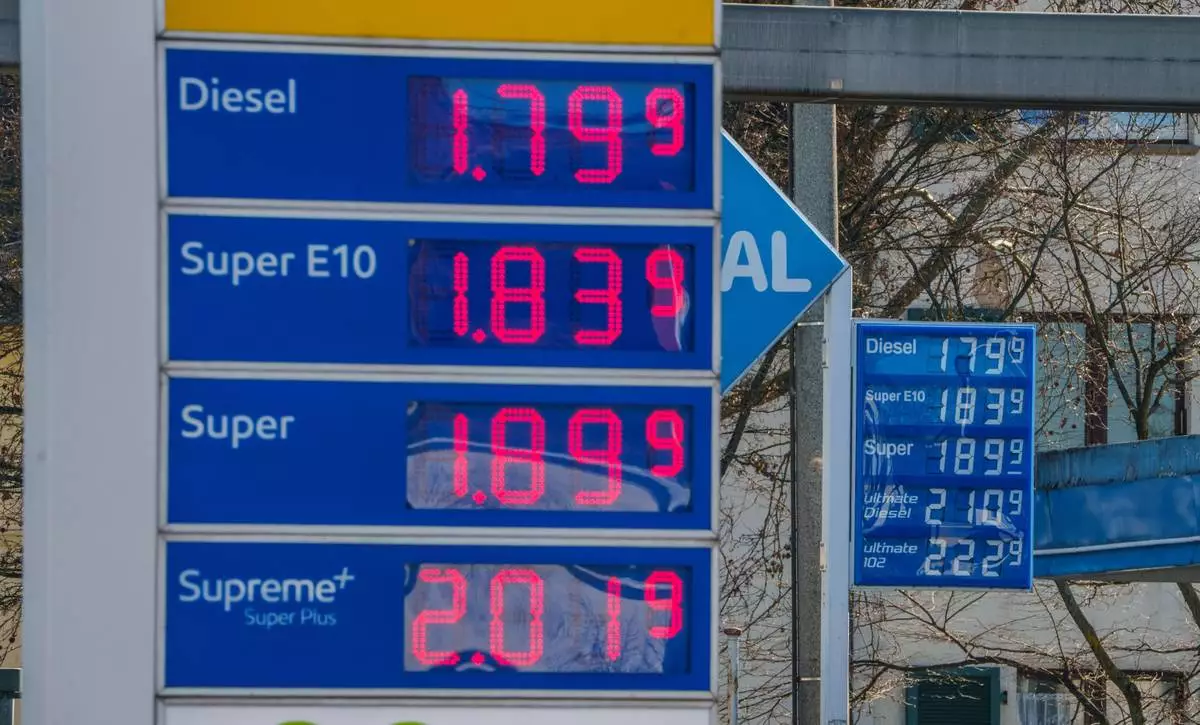
Petrol prices are displayed at a filling station in Frankfurt, Germany, Monday, March 2, 2026. (Andreas Arnold/dpa via AP)
Down 3-1 to the Boston Celtics in their Eastern Conference first-round series, the Philadelphia 76ers looked doomed.
Far from it.
For the 11th consecutive season, a road team has won a Game 7 in the NBA playoffs. Philadelphia did the honors on Saturday night, and on Sunday, the Orlando Magic and Toronto Raptors will look to join that club.
Orlando goes to Detroit, and Toronto goes to Cleveland to wrap up the first round. The winners of those games will meet Tuesday in Game 1 of an Eastern Conference semifinal series.
— Game 7, Orlando at Detroit, 3:30 p.m. EDT (ABC)
Series: Tied, 3-3.
Odds: Detroit by 8.5.
The Pistons are playing a Game 7 for the 11th time and the first since 2006. The Magic are playing their fifth Game 7, the first since 2024.
— Game 7, Toronto at Cleveland, 7:30 p.m. EDT (NBC/Peacock)
Series: Tied, 3-3.
Odds: Cleveland by 8.5.
The Raptors are in their seventh Game 7 and first since 2020. The Cavaliers are in their ninth Game 7, their first since 2024.
— Game 1, Philadelphia at New York, 8 p.m. EDT (NBC/Peacock)
Odds: New York by 7.5 points.
It's the fifth time (including the Syracuse era for the 76ers) that the teams have met in a conference semifinal series. Philadelphia won each of the previous four, going a combined 14-2 in those games.
— Game 1, Minnesota at San Antonio, 9:30 p.m. EDT (Peacock/NBCSN)
Odds: San Antonio by 13.5.
Spurs beat the Timberwolves 3-1 in the first round of the 1999 and 2001 playoffs. The teams haven't had a playoff series since, until now.
— 76ers 109, Celtics 100 to win series 4-3. Jayson Tatum didn't play.
A breakdown of this season's NBA awards:
— Twyman-Stokes Teammate of the Year: DeAndre Jordan, New Orleans.
— Hustle Award: Moussa Diabaté, Charlotte.
— Defensive Player of the Year: Victor Wembanyama, San Antonio.
— Clutch Player of the Year: Shai Gilgeous-Alexander, Oklahoma City.
— Sixth Man of the Year: Keldon Johnson, San Antonio.
— Sportsmanship Award: Derrick White, Boston.
— Most Improved Player: Nickeil Alexander-Walker, Atlanta.
— Rookie of the Year: Cooper Flagg, Dallas.
— Executive of the Year: Brad Stevens, Boston.
Among the announcements still to come:
— Most Valuable Player: Gilgeous-Alexander, Wembanyama or Denver's Nikola Jokic.
— Coach of the Year: Detroit's J.B. Bickerstaff, San Antonio's Mitch Johnson or Boston's Joe Mazzulla.
Defending champion Oklahoma City (-140) is favored to win the NBA title, oddsmakers say.
Entering Sunday, the Thunder were followed by San Antonio (+300), New York (+900), Detroit (+2000), Cleveland (+2200) and the Los Angeles Lakers (+3000). Philadelphia (+3500, from +10000 on Saturday) is next, followed by Minnesota (+15000). Orlando entered Sunday at +40000.
The Flyers are in the second round of the NHL playoffs. The 76ers are in the second round of the NBA playoffs.
This is a great thing for Philadelphia — and a bit of a scheduling headache for the Sixers' home arena.
Bruce Springsteen and the E Street Band were supposed to play there on Friday, but that night will be Game 3 of Knicks-76ers. Springsteen's concert was moved to May 30, which will become the final night of his 20-stop tour.
He also is going to play at Madison Square Garden twice in the next two weeks, but those dates — May 11 and May 16 — won't conflict with any planned Knicks home games.
— Monday and Tuesday: Conference semifinals begin.
— May 10: NBA draft lottery.
— May 10-17: NBA draft combine.
— May 17 or 19: Eastern Conference finals begin on ESPN and ABC.
— May 18 or 20: Western Conference finals begin on NBC and Peacock.
— June 3: Game 1, NBA Finals on ABC. (Other finals dates: June 5, June 8, June 10, June 13, June 16 and June 19).
— June 23: Round 1, NBA draft
— June 24: Round 2, NBA draft
"There’s two sides of every coin. When you go after greatness, you have to accept the other side of that." — Boston coach Joe Mazzulla, after the Celtics lost to Philadelphia in Game 7 of their East first-round series.
— Even with Saturday's season-ending loss, Boston won 57% of its games this season when missing 30 or more 3-pointers. The rest of the league has won in that scenario 35% of the time this season.
— Philadelphia's Kyle Lowry has been part of two Game 7 road wins in his career. Both were at Boston — the 2023 East finals with Miami, and then Saturday night's victory.
AP NBA: https://apnews.com/nba
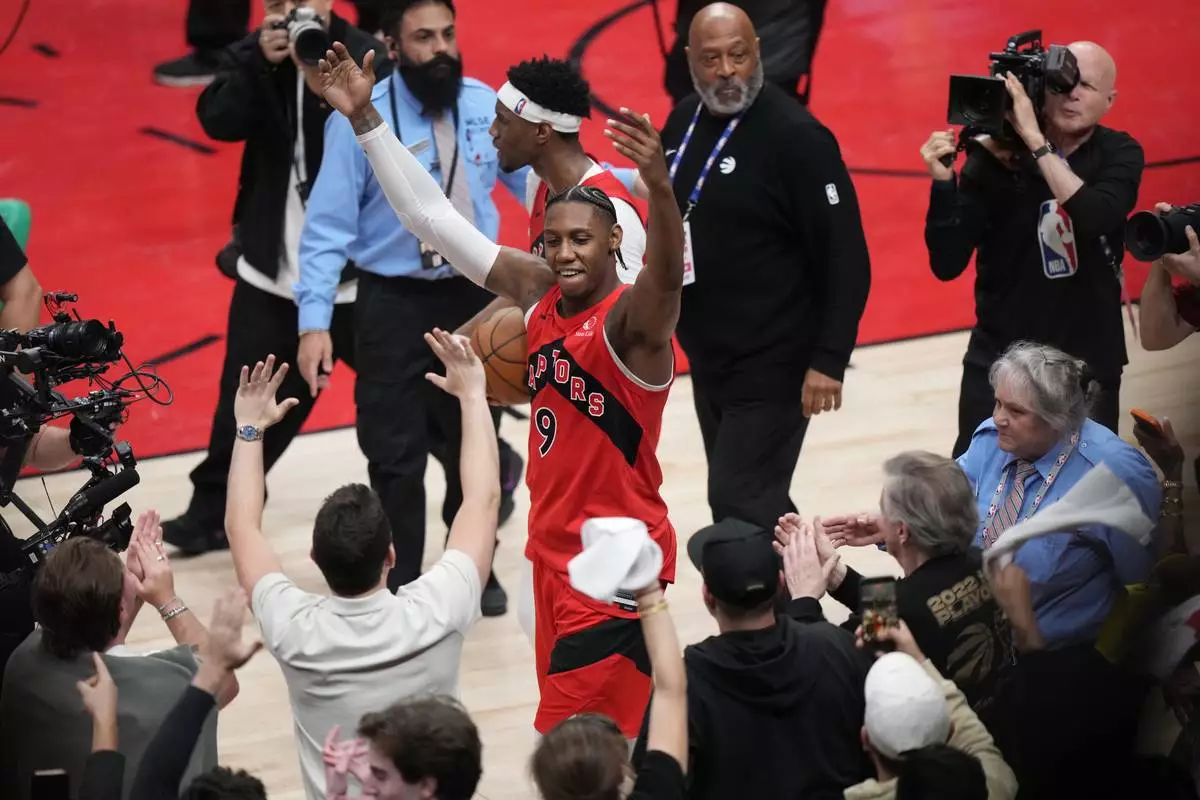
Toronto Raptors' RJ Barrett (9) celebrates with fans after a win over the Cleveland Cavaliers in Game 6 in the first round of an NBA basketball playoffs series in Toronto, Friday, May 1, 2026. (Nathan Denette/The Canadian Press via AP)
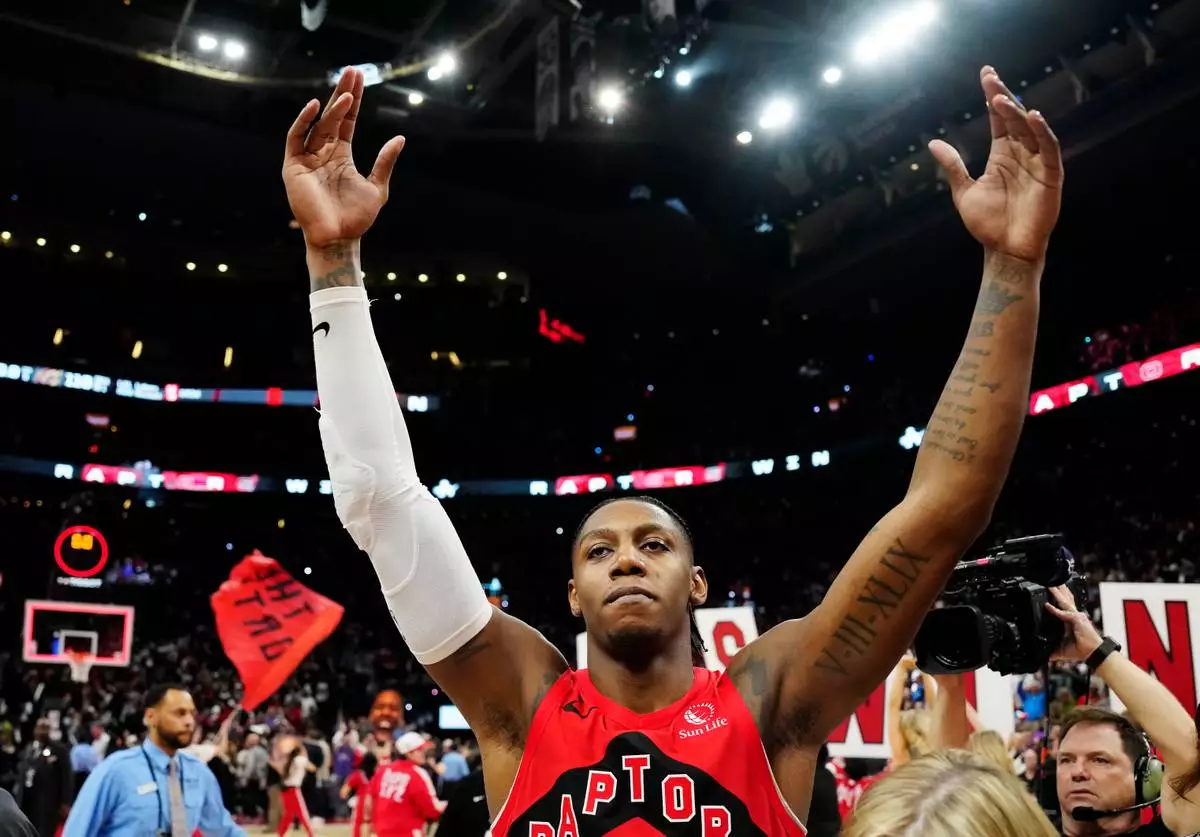
Toronto Raptors' RJ Barrett (9) celebrates after defeating the Cleveland Cavaliers in overtime of Game 6 in the first round of an NBA basketball playoffs series in Toronto on Friday, May 1, 2026. (Frank Gunn/The Canadian Press via AP)
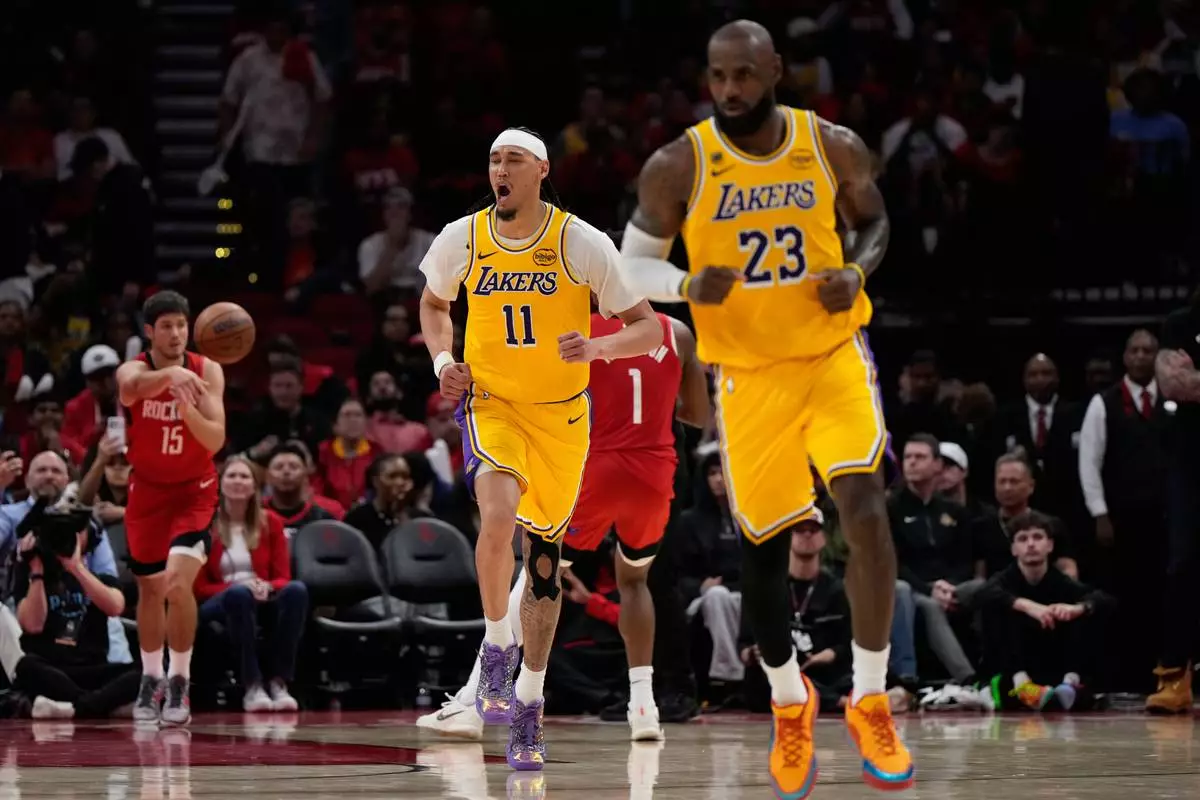
Los Angeles Lakers center Jaxson Hayes (11) celebrates during the second half of Game 6 of a first-round NBA playoffs basketball series against the Houston Rockets in Houston, Friday, May 1, 2026. (AP Photo/Ashley Landis)
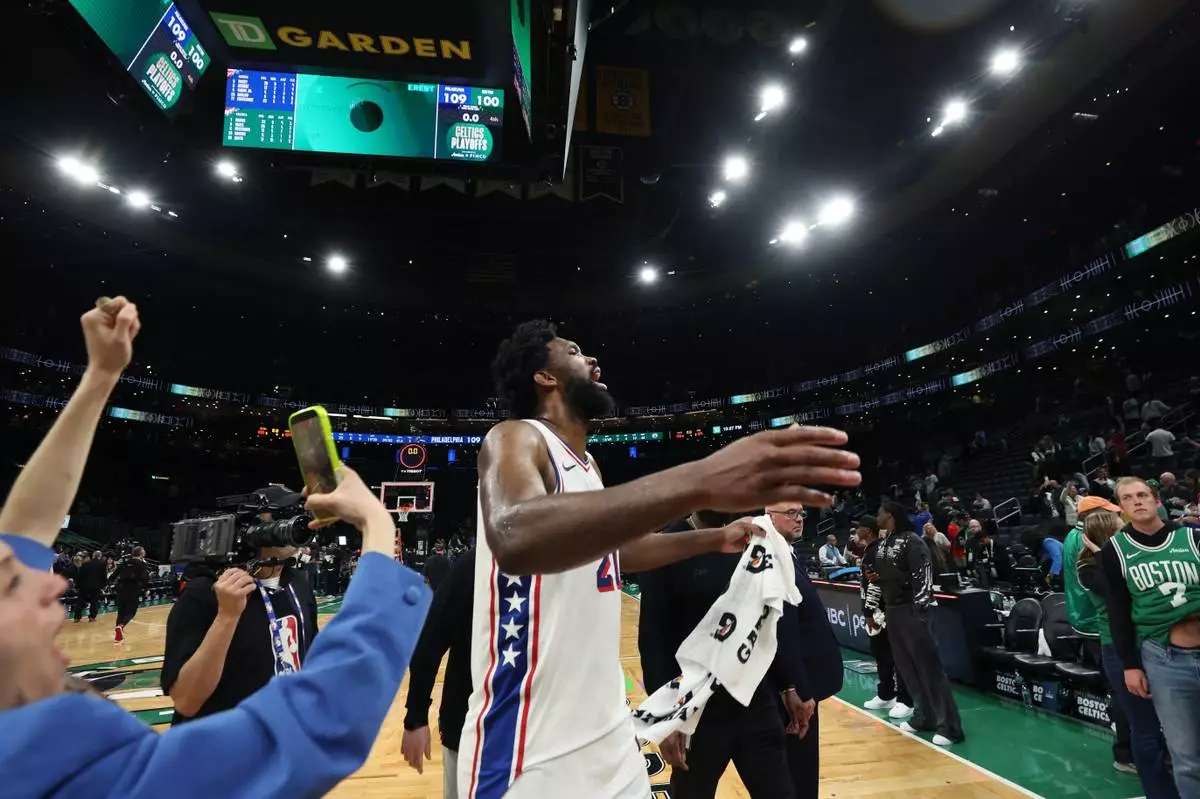
Philadelphia 76ers' Joel Embiid celebrates following his team's victory over the Boston Celtics after the Game 7 in a first-round NBA basketball playoffs series, Saturday, May 2, 2026 in Boston. (AP Photo/Jim Davis)
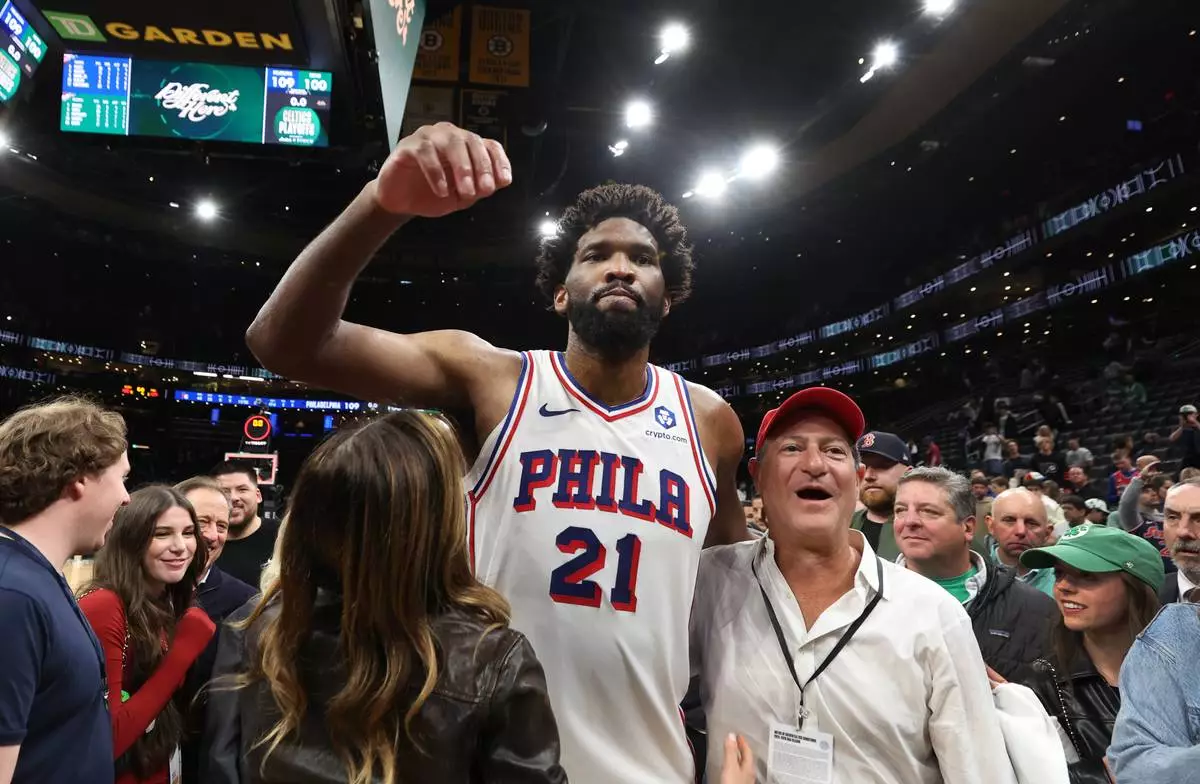
Philadelphia 76ers' Joel Embiid celebrates following his team's victory over the Boston Celtics after the Game 7 in a first-round NBA basketball playoffs series, Saturday, May 2, 2026 in Boston. (AP Photo/Jim Davis)
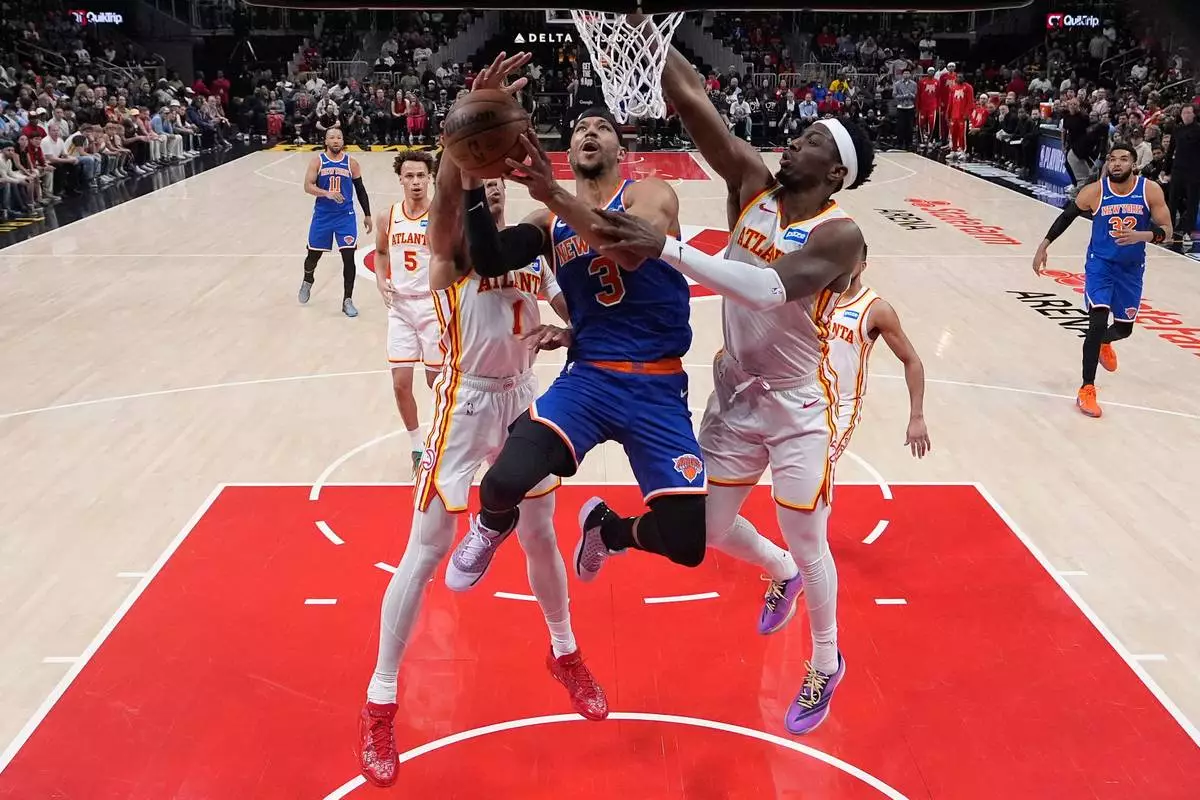
New York Knicks guard Josh Hart (3) shoots during Game 6 in a first-round NBA basketball playoffs series Thursday, April 30, 2026, in Atlanta. (AP Photo/Brynn Anderson)
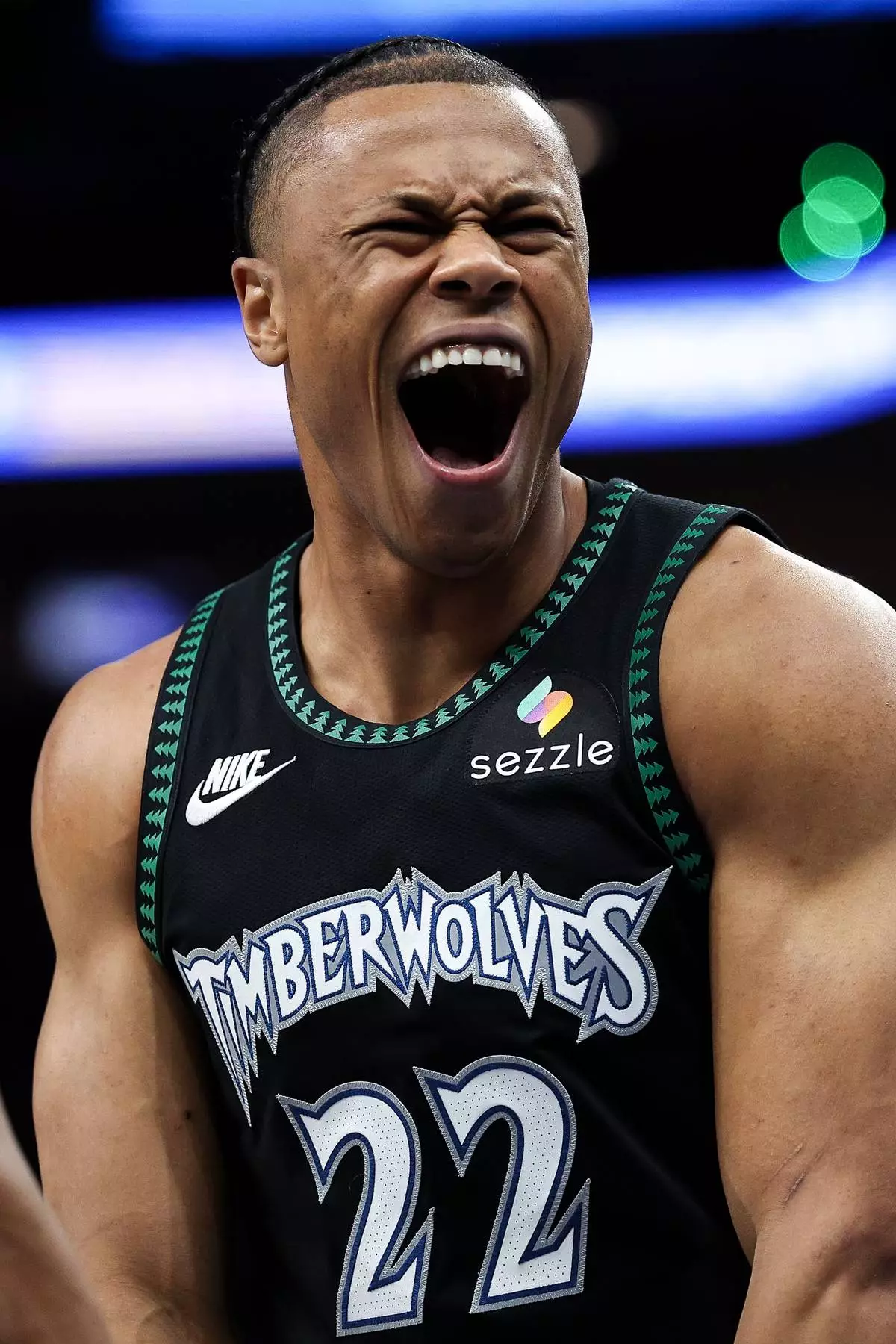
Minnesota Timberwolves guard Jaylen Clark (22) celebrates a basket against the Denver Nuggets during the second half of Game 6 of a first-round NBA basketball playoffs series, Thursday, April 30, 2026, in Minneapolis. (AP Photo/Matt Krohn)
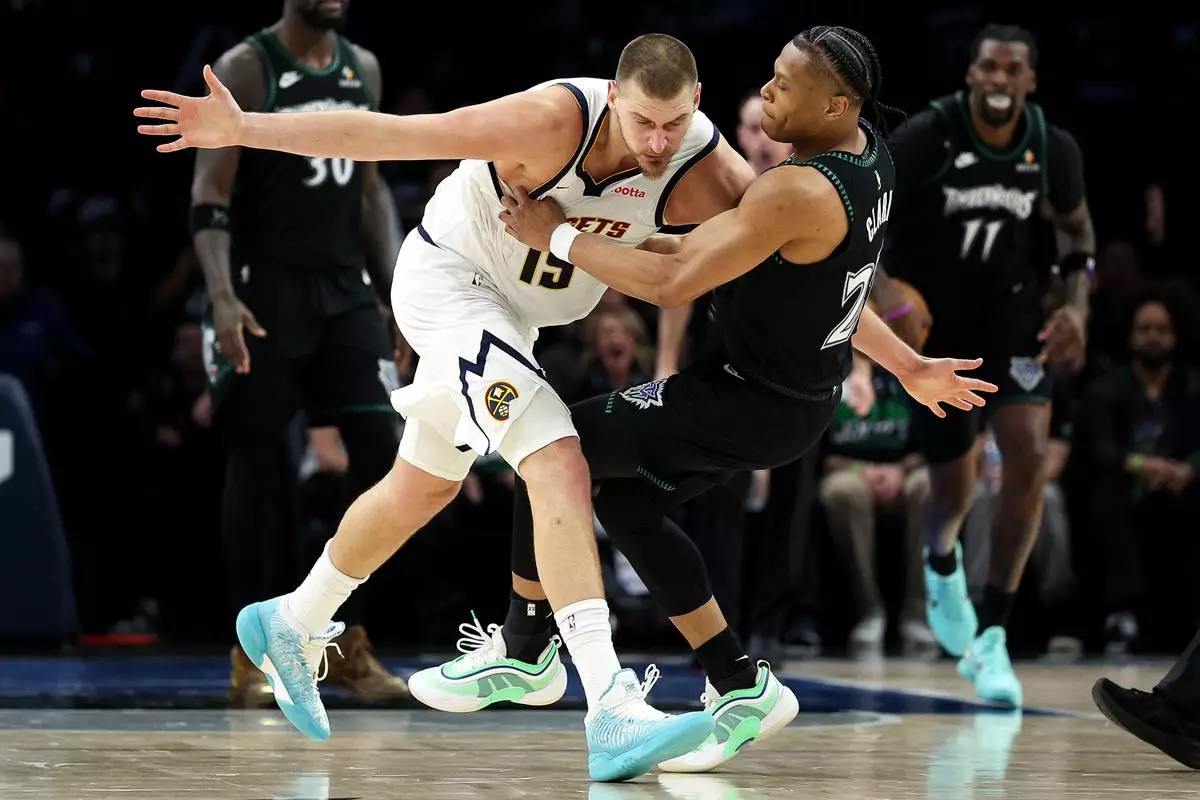
Denver Nuggets center Nikola Jokic, left, and Minnesota Timberwolves guard Jaylen Clark (22) get into an altercation during the second half of Game 6 of a first-round NBA basketball playoffs series, Thursday, April 30, 2026, in Minneapolis. (AP Photo/Matt Krohn)
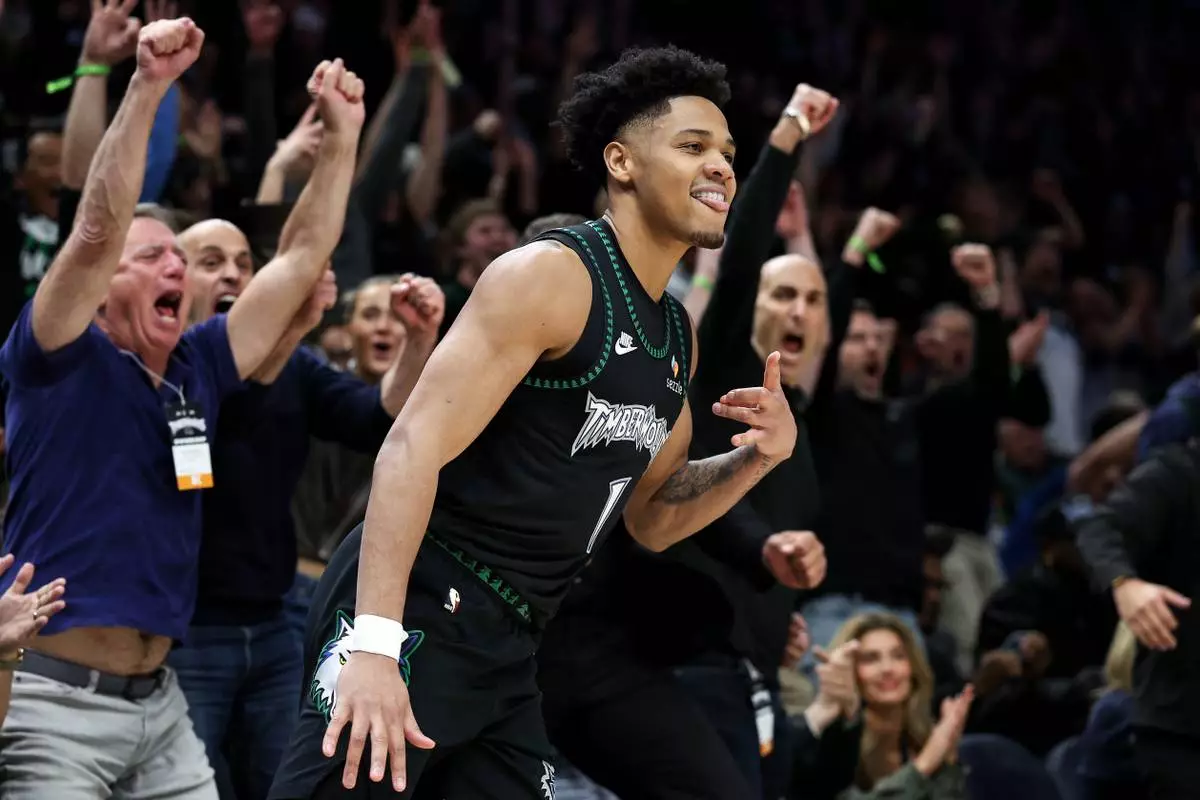
Minnesota Timberwolves guard Terrence Shannon Jr. (1) celebrates his three-point basket against the Denver Nuggets during the second half of Game 6 of a first-round NBA basketball playoffs series, Thursday, April 30, 2026, in Minneapolis. (AP Photo/Matt Krohn)
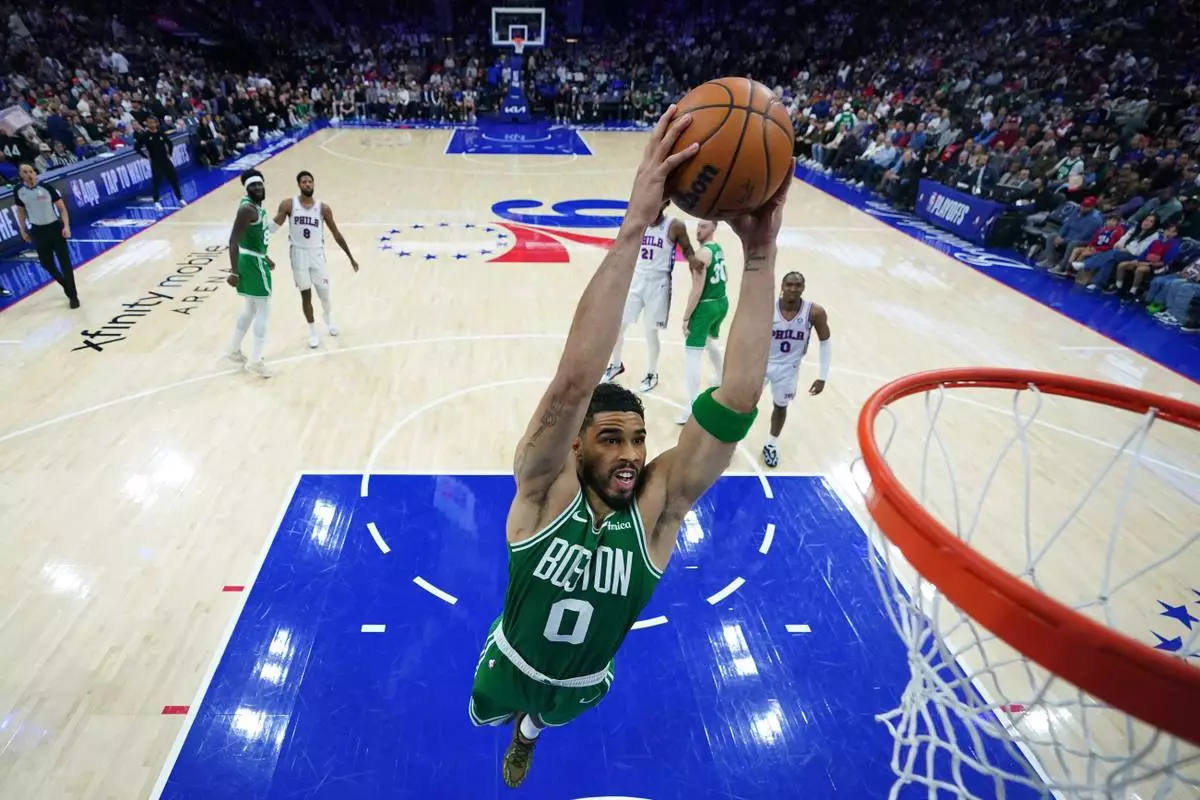
Boston Celtics' Jayson Tatum goes up for a dunk during the second half of Game 6 in a first-round NBA basketball playoff series against the Philadelphia 76ers Thursday, April 30, 2026, in Philadelphia. (AP Photo/Matt Slocum)
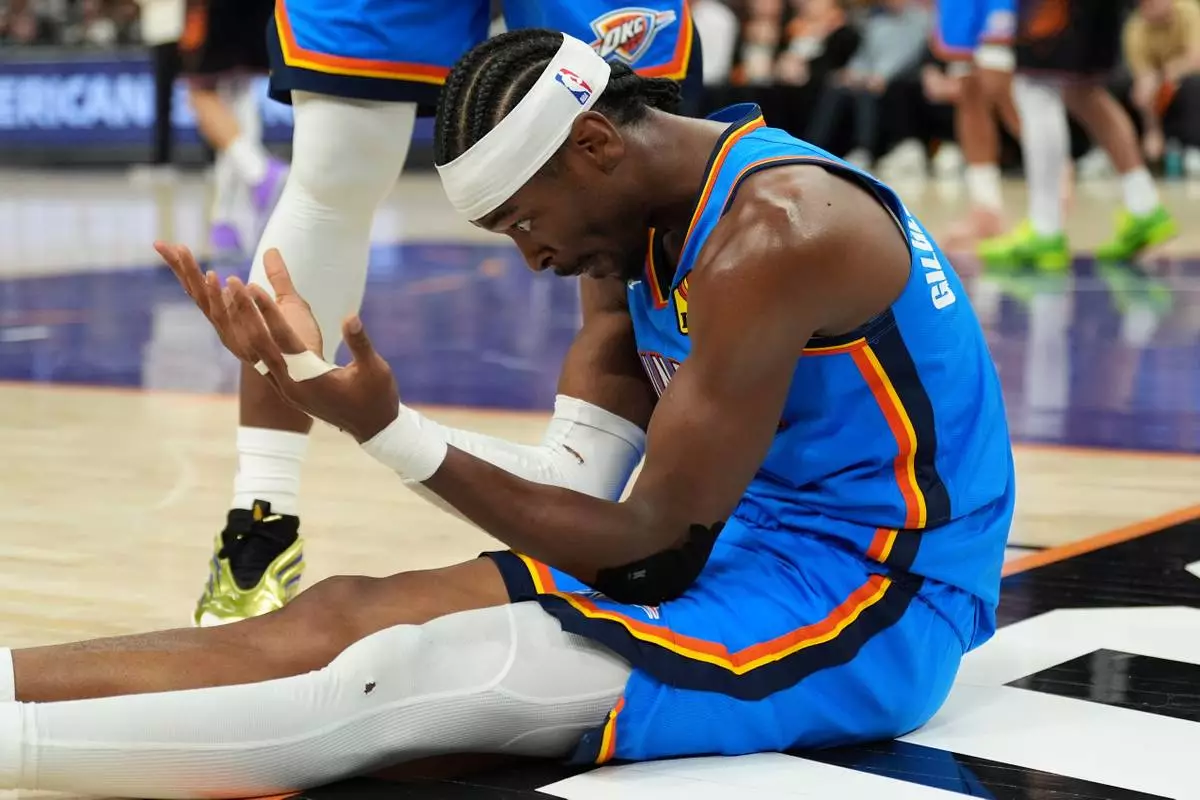
Oklahoma City Thunder guard Shai Gilgeous-Alexander celebrates a scores against the Phoenix Suns during the second half of Game 4 in a first-round NBA playoffs basketball series, Monday, April 27, 2026, in Phoenix. (AP Photo/Ross D. Franklin)
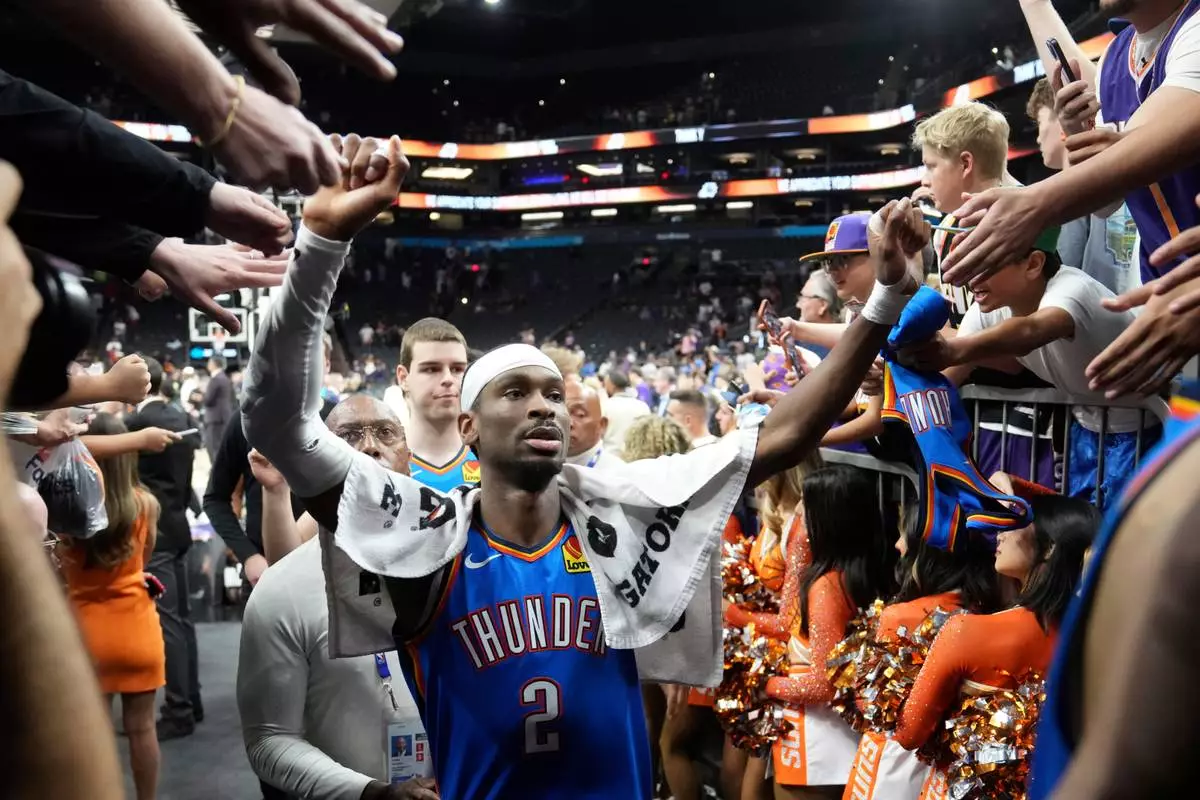
Oklahoma City Thunder guard Shai Gilgeous-Alexander celebrates with fans after Game 4 in a first-round NBA playoffs basketball series against the Phoenix Suns, Monday, April 27, 2026, in Phoenix. (AP Photo/Ross D. Franklin)
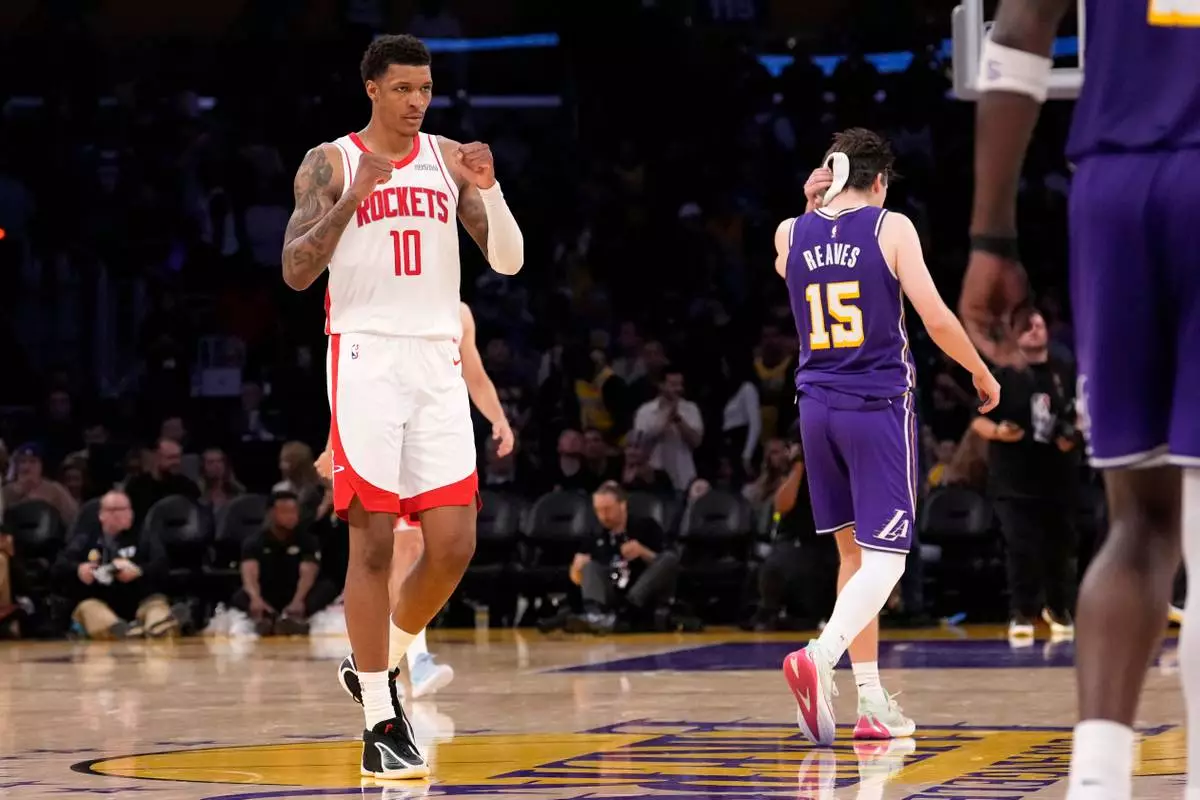
Houston Rockets forward Jabari Smith Jr., left, celebrates as Los Angeles Lakers guard Austin Reaves walks off after the Rockets defeated the Lakers in Game 5 of a first-round NBA playoffs basketball series Wednesday, April 29, 2026, in Los Angeles. (AP Photo/Mark J. Terrill)
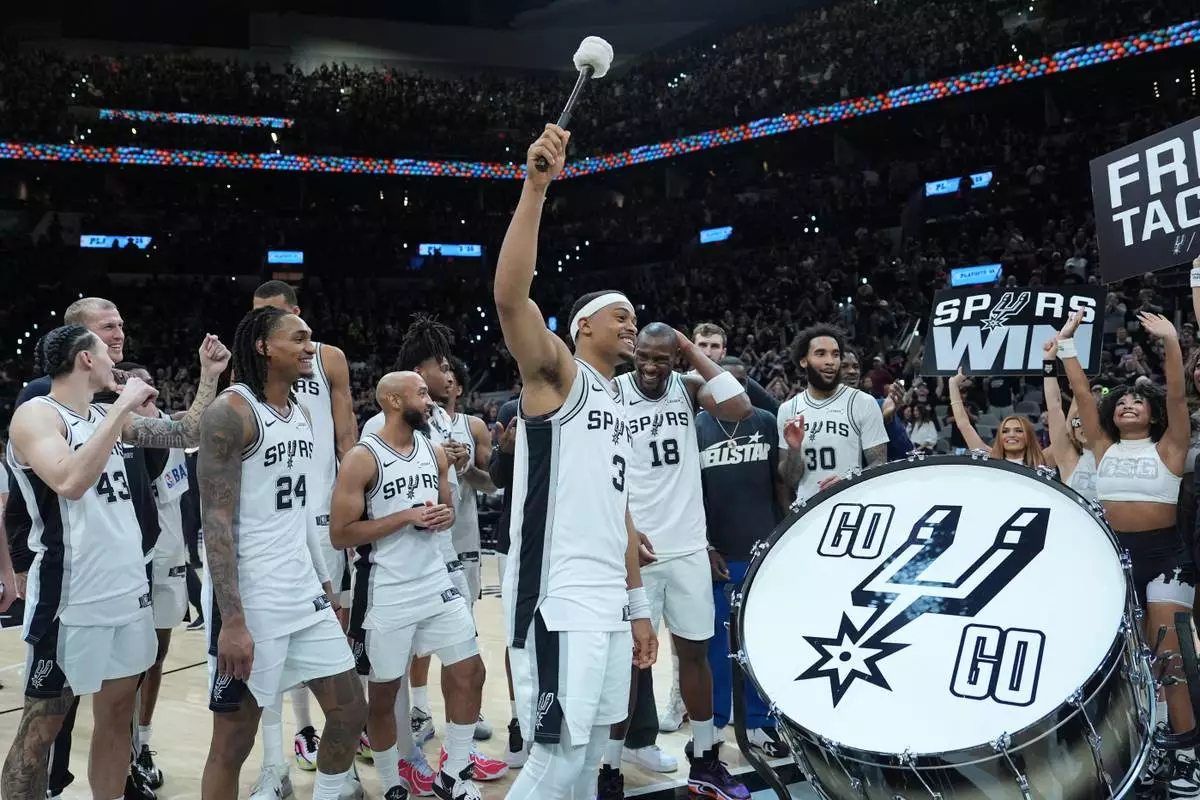
San Antonio Spurs forward/guard Keldon Johnson (3) celebrates with teammates after Game 5 of a first-round NBA playoffs basketball series against the Portland Trail Blazers in San Antonio, Tuesday, April 28, 2026. (AP Photo/Eric Gay)
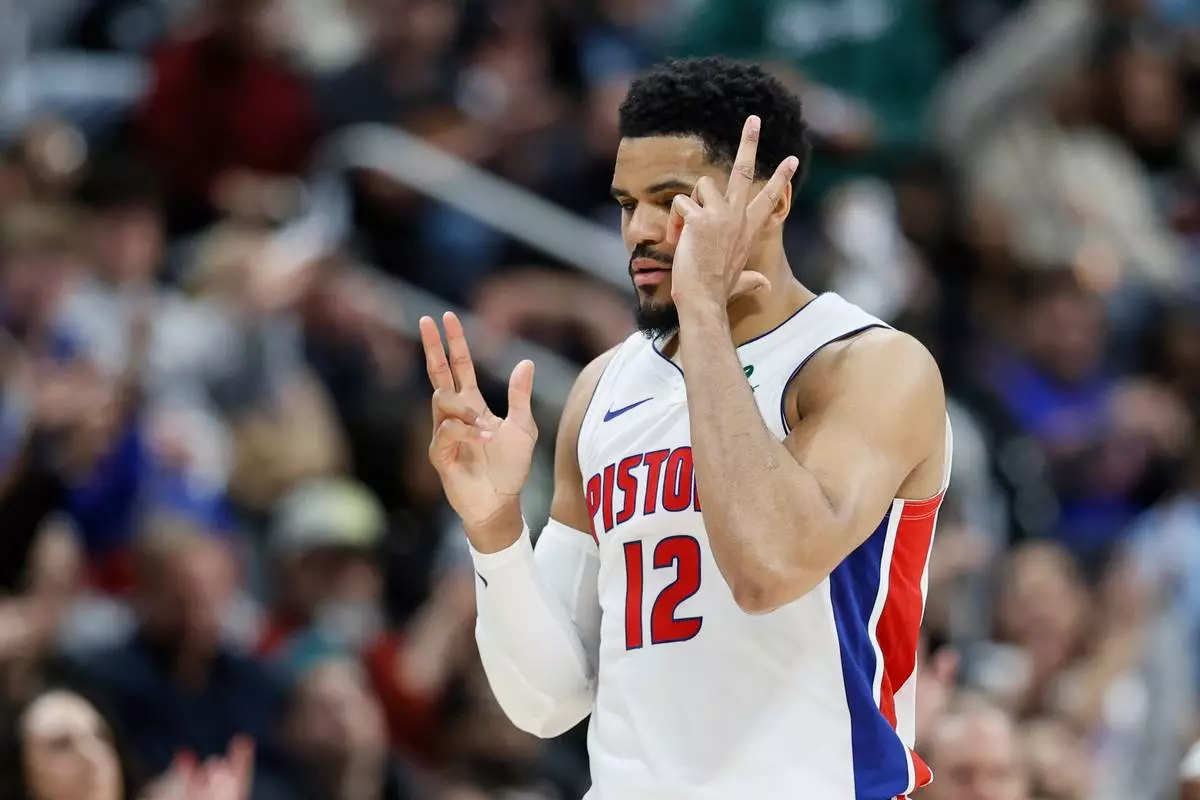
Detroit Pistons forward Tobias Harris (12) celebrates after scoring against the Orlando Magic during the fourth quarter in Game 5 of a first-round NBA basketball playoffs series Wednesday, April 29, 2026, in Detroit. (AP Photo/Duane Burleson)
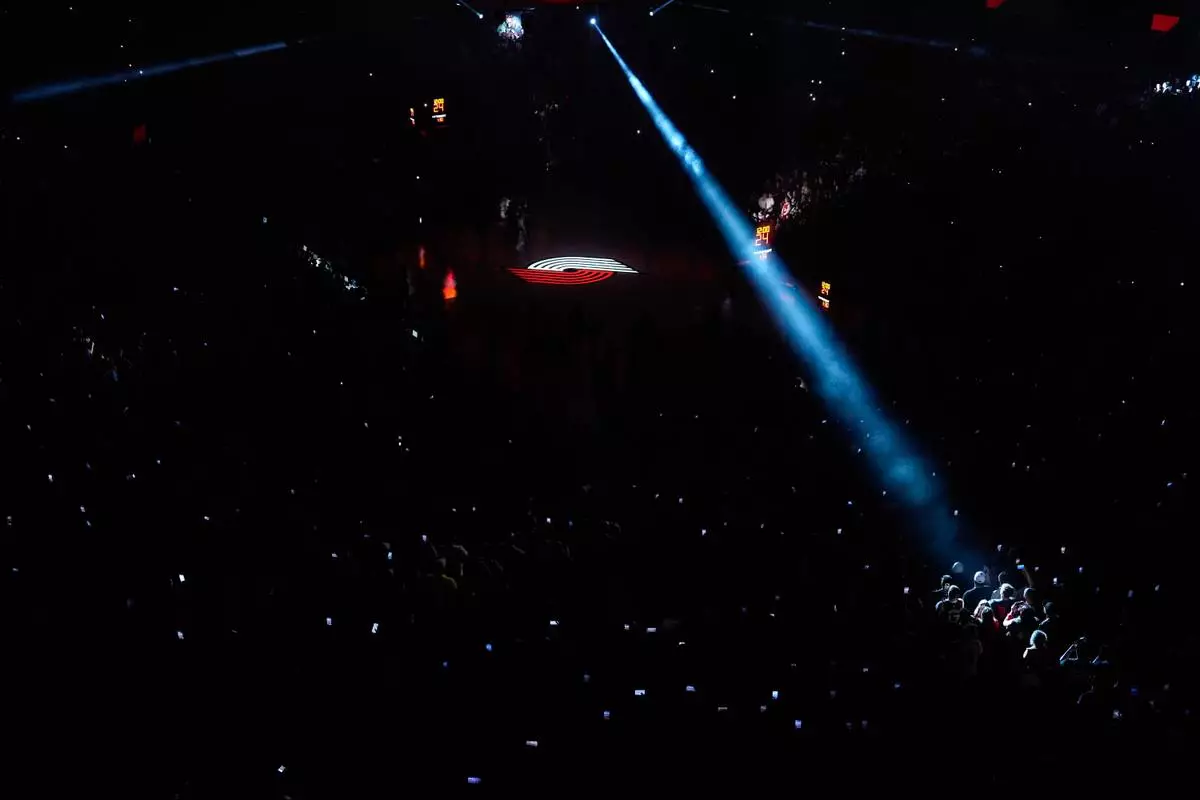
Fans watch Portland Trail Blazers player introductions before Game 4 of a first-round NBA basketball playoffs series against the San Antonio Spurs, in Portland, Ore., Sunday, April 26, 2026. (AP Photo/Jenny Kane)
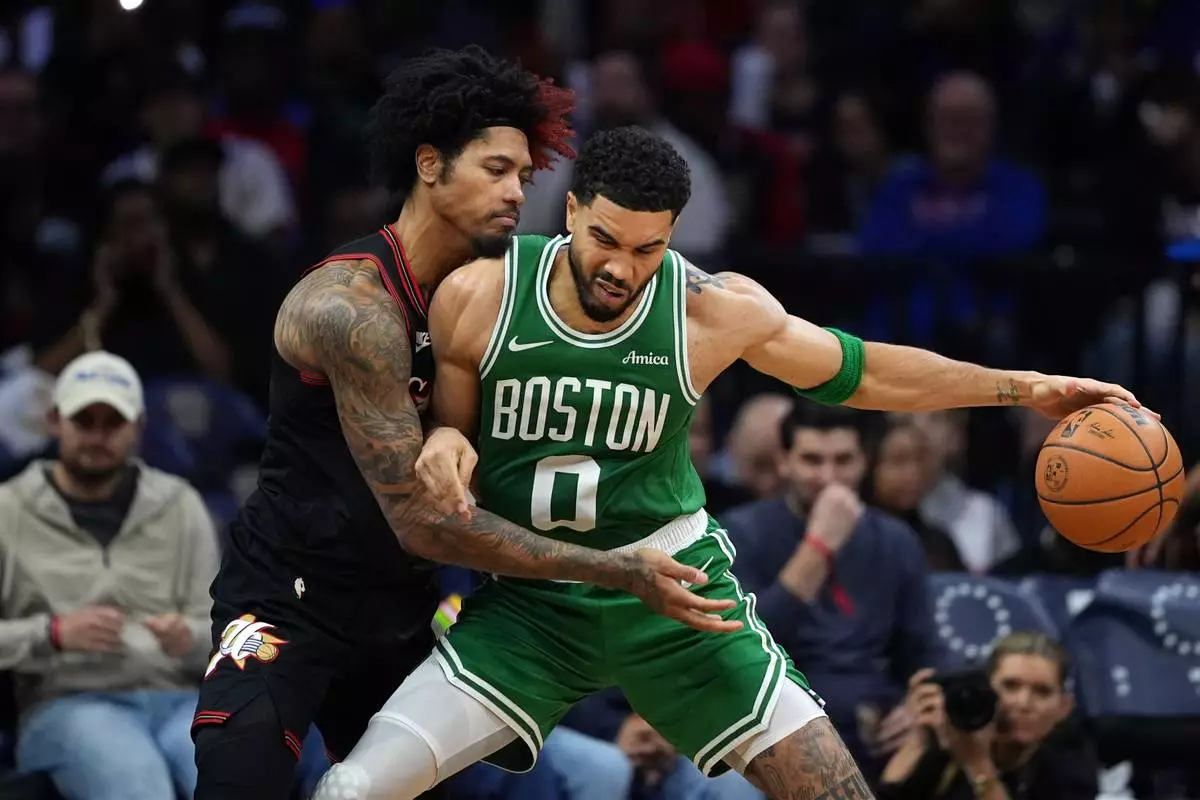
Boston Celtics' Jayson Tatum, right, tries to get past Philadelphia 76ers' Kelly Oubre Jr. during the second half of Game 4 in a first-round NBA basketball playoffs series Sunday, April 26, 2026, in Philadelphia. (AP Photo/Matt Slocum)
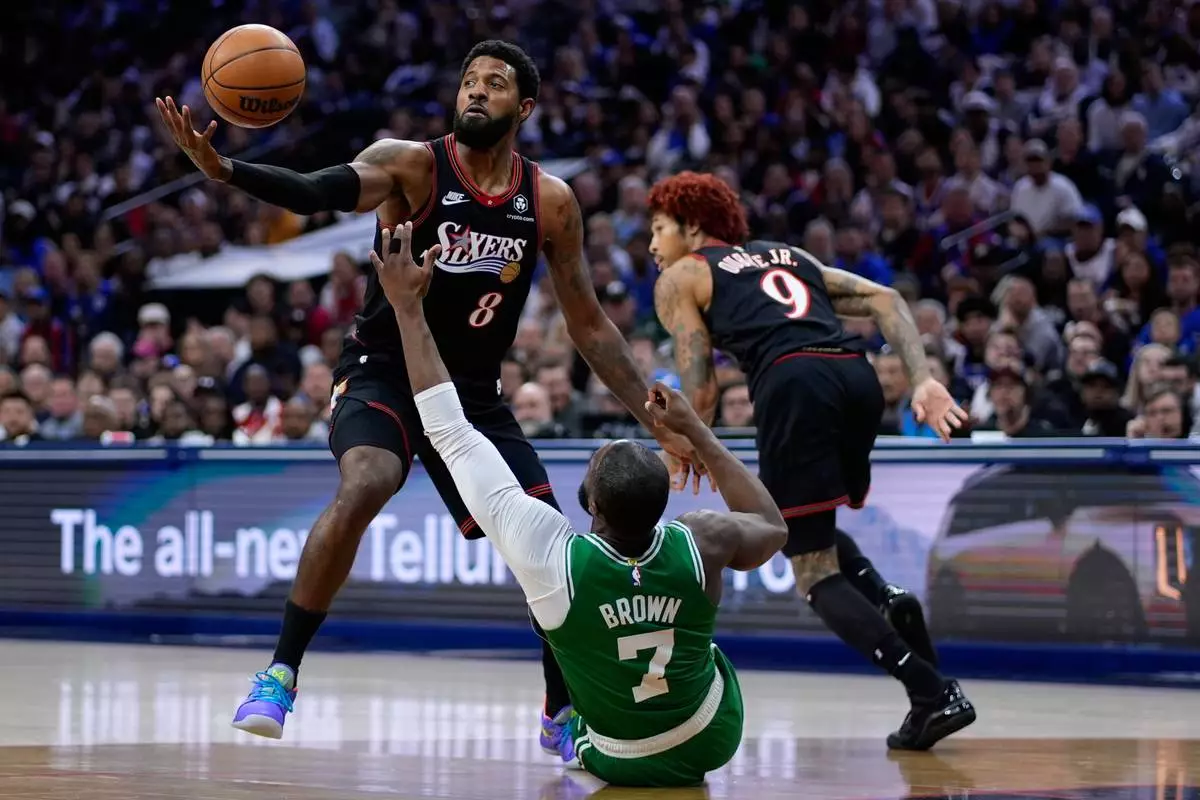
Philadelphia 76ers' Paul George (8) and Boston Celtics' Jaylen Brown (7) reach for a loose ball during the first half of Game 4 in a first-round NBA basketball playoffs series Sunday, April 26, 2026, in Philadelphia. (AP Photo/Matt Slocum)
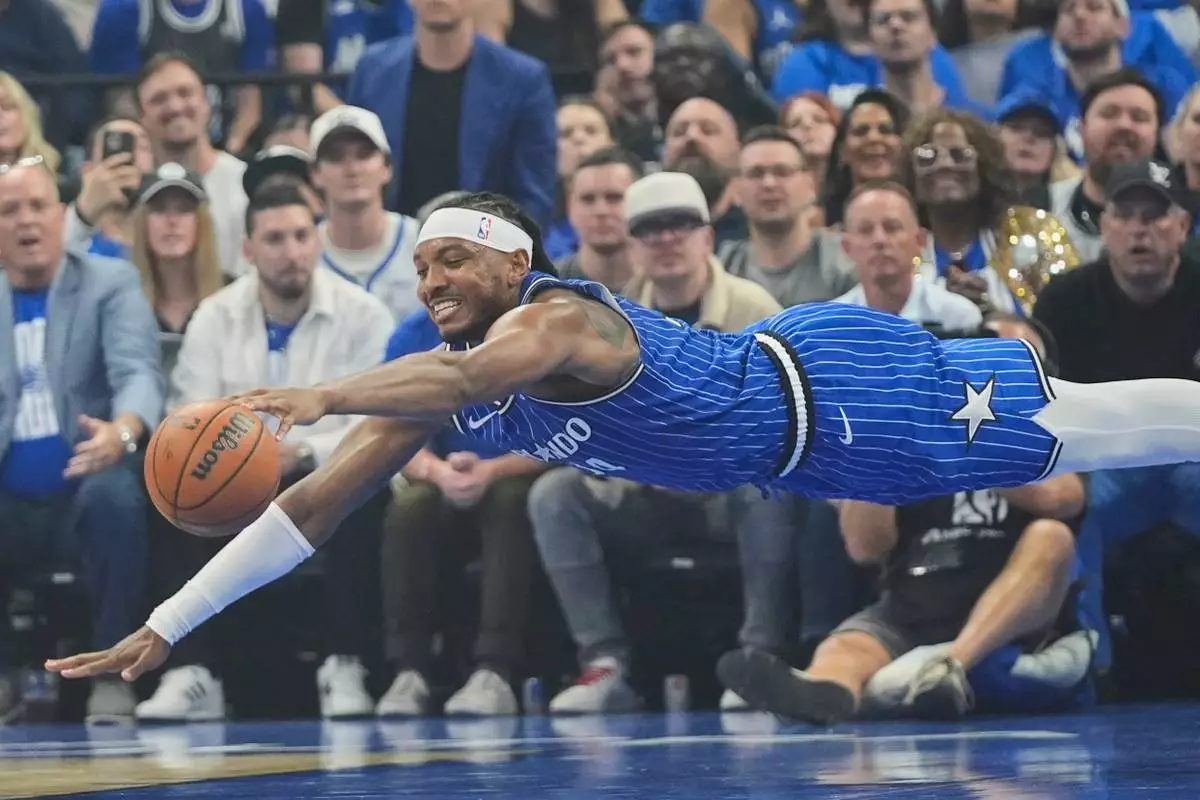
Orlando Magic center Wendell Carter Jr. dives for a loose ball during the first half in Game 4 of a first-round NBA basketball playoff series against the Detroit Pistons, Monday, April 27, 2026, in Orlando, Fla. (AP Photo/John Raoux)
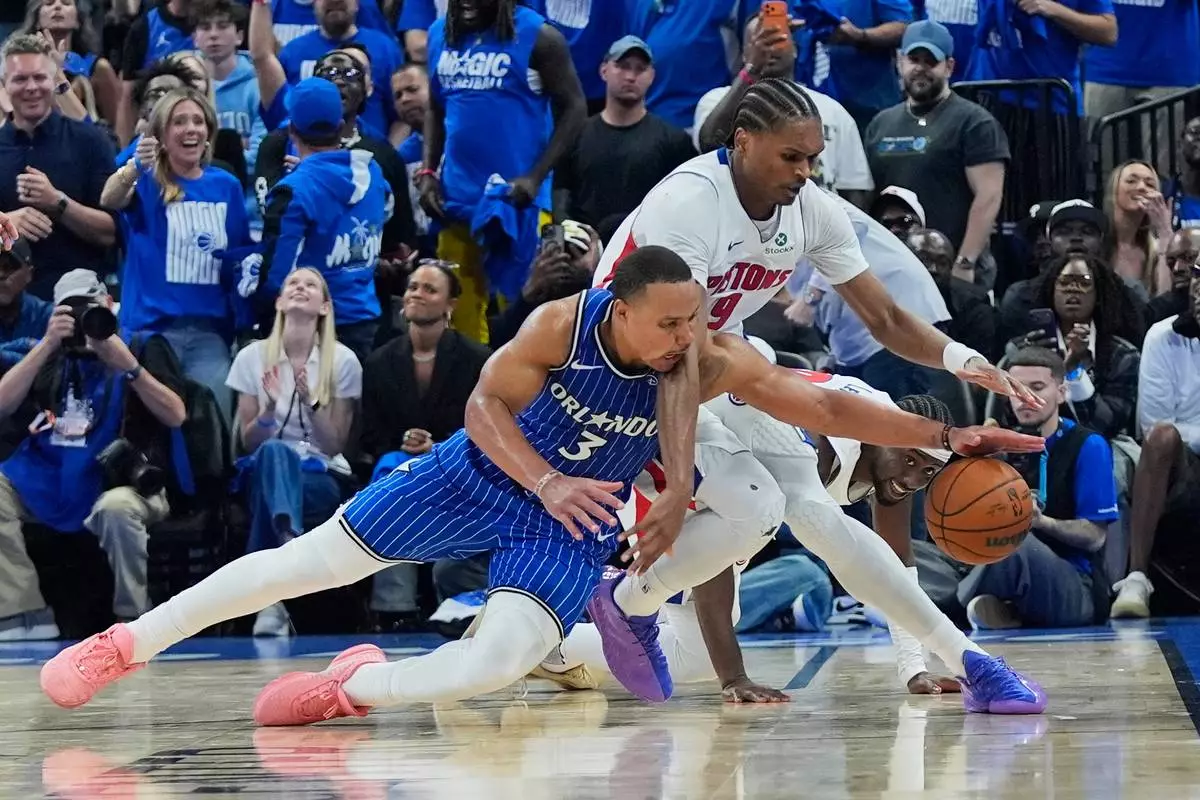
Orlando Magic guard Desmond Bane (3) goes after a loose ball against Detroit Pistons guard Ausar Thompson during the second half in Game 4 of a first-round NBA basketball playoff series, Monday, April 27, 2026, in Orlando, Fla. (AP Photo/John Raoux)
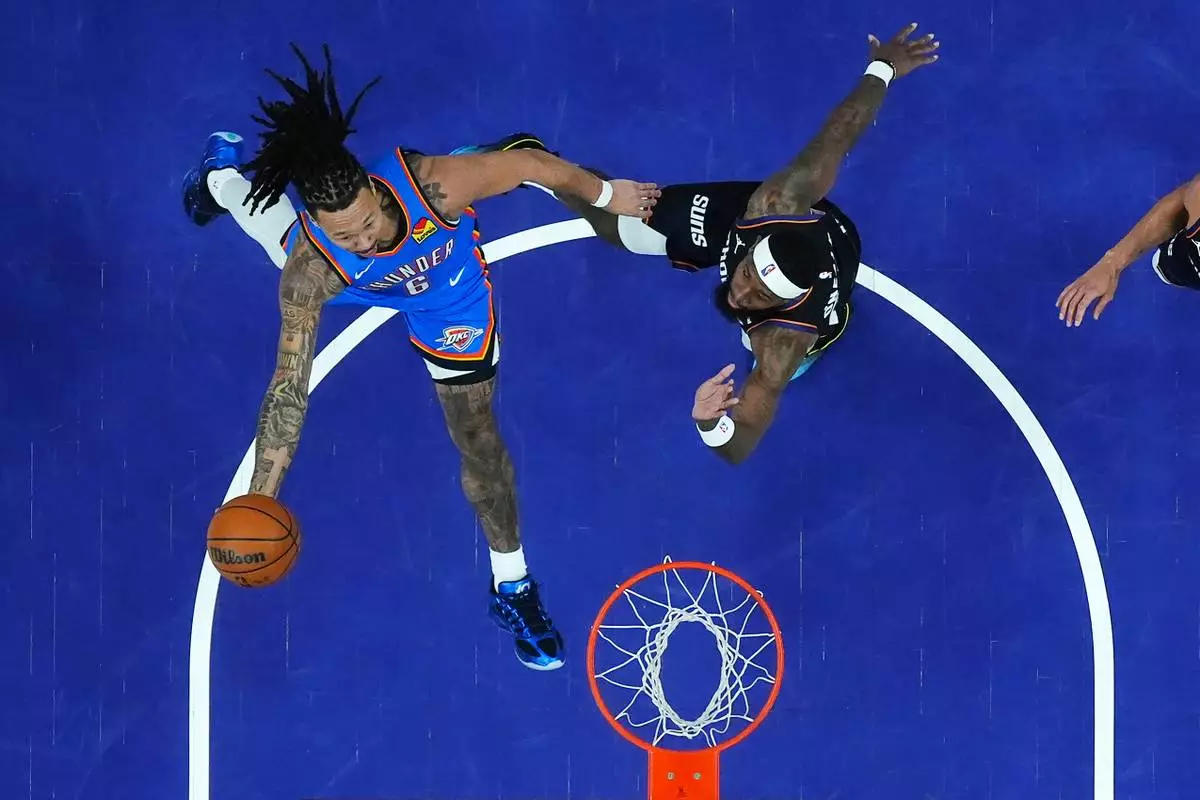
Oklahoma City Thunder forward Jaylin Williams (6) scores against Phoenix Suns forward Royce O'Neale during the second half of Game 3 of a first-round NBA playoffs basketball series, Saturday, April 25, 2026, in Phoenix. (AP Photo/Ross D. Franklin)
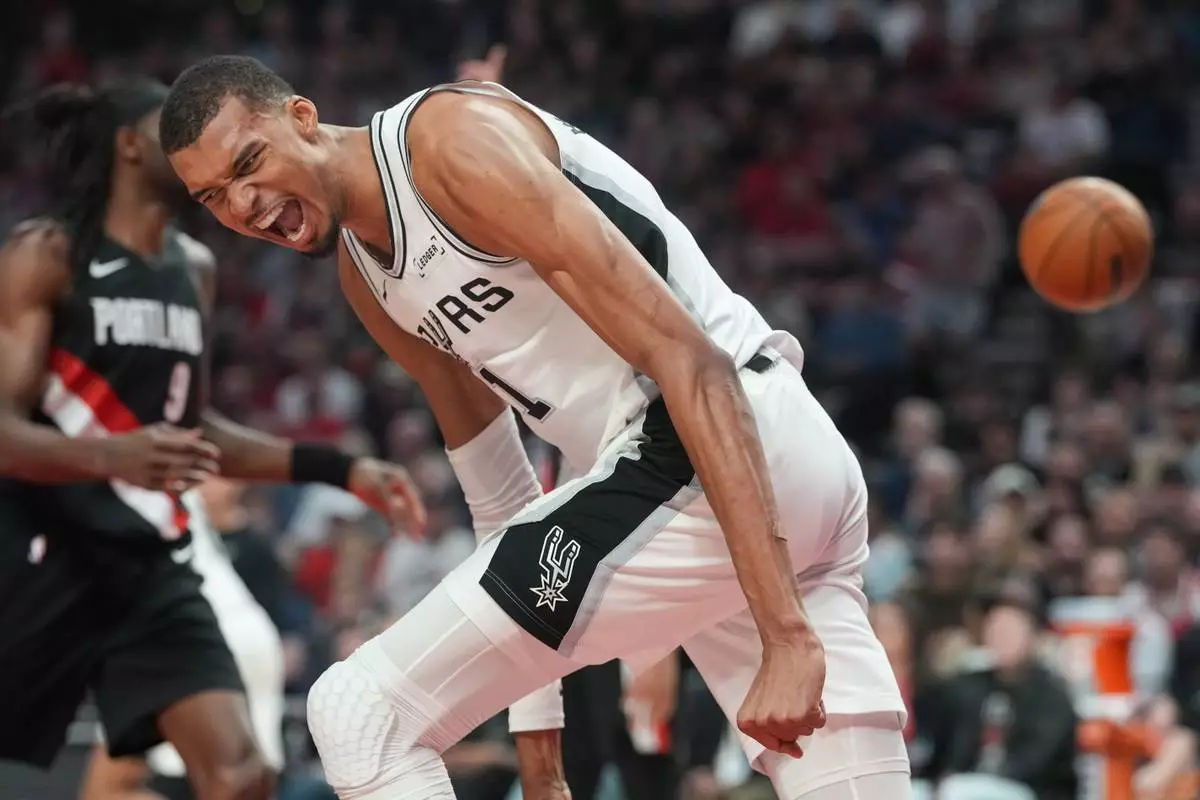
San Antonio Spurs center Victor Wembanyama reacts after a shot during the first half in Game 4 of a first-round NBA basketball playoffs series against the Portland Trail Blazers, in Portland, Ore., Sunday, April 26, 2026. (AP Photo/Jenny Kane)
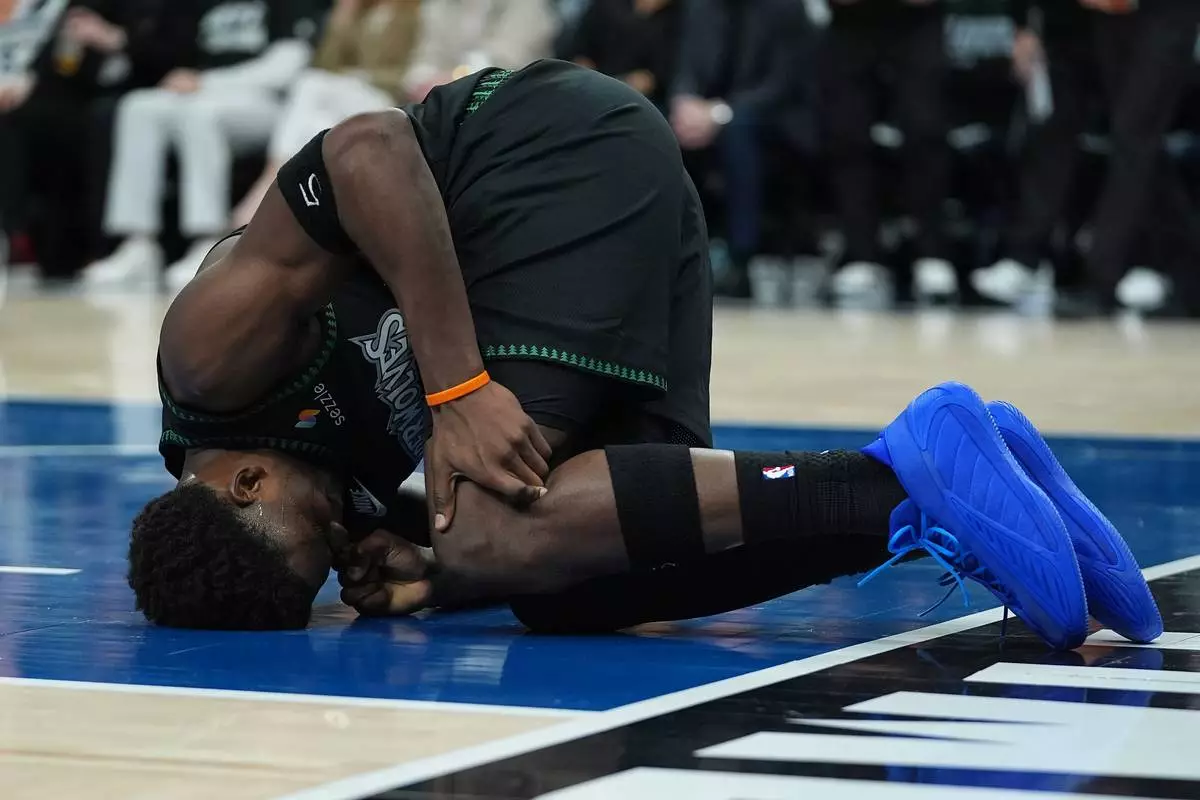
Minnesota Timberwolves guard Anthony Edwards kneels on the court after sustaining an injury during the first half of Game 4 of a first-round NBA basketball playoff series against the Denver Nuggets, Saturday, April 25, 2026, in Minneapolis. (AP Photo/Abbie Parr)
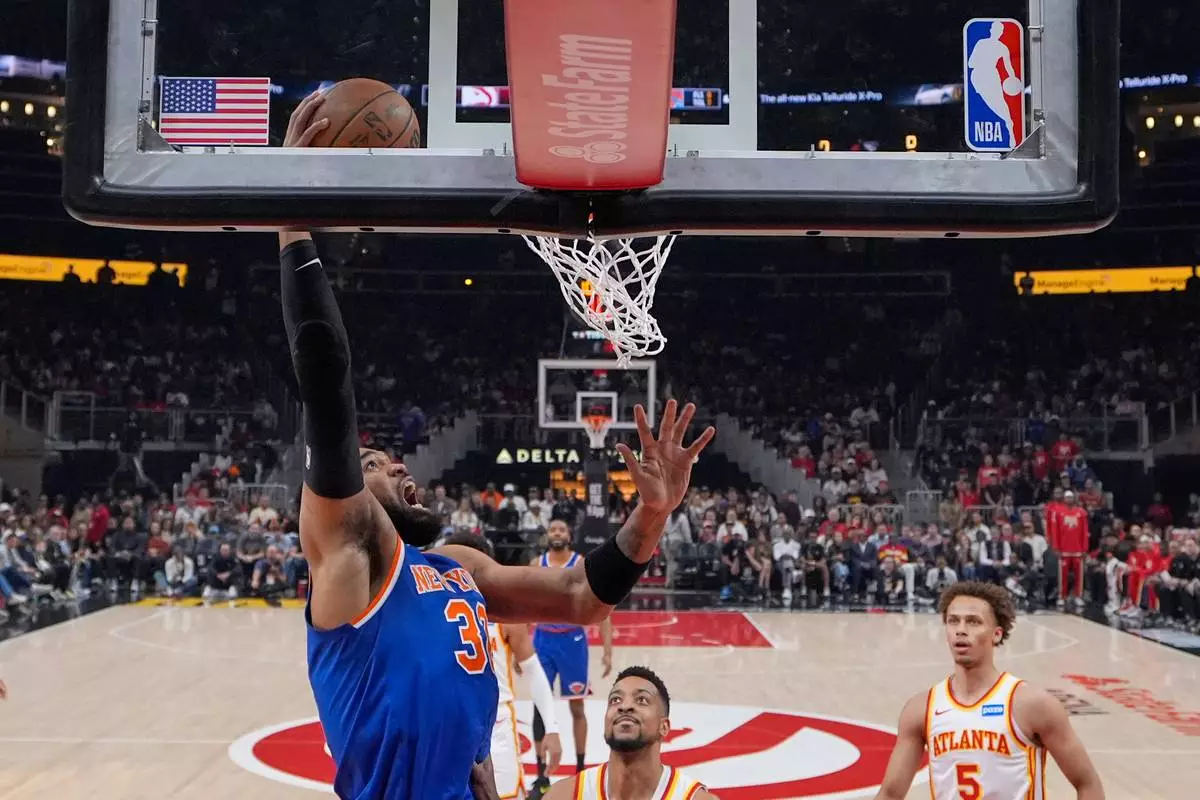
New York Knicks center Karl-Anthony Towns (32) shoots against Atlanta Hawks forward Onyeka Okongwu (17) during the first half of Game 4 in a first-round NBA playoffs basketball series Saturday, April 25, 2026, in Atlanta. (AP Photo/Brynn Anderson)
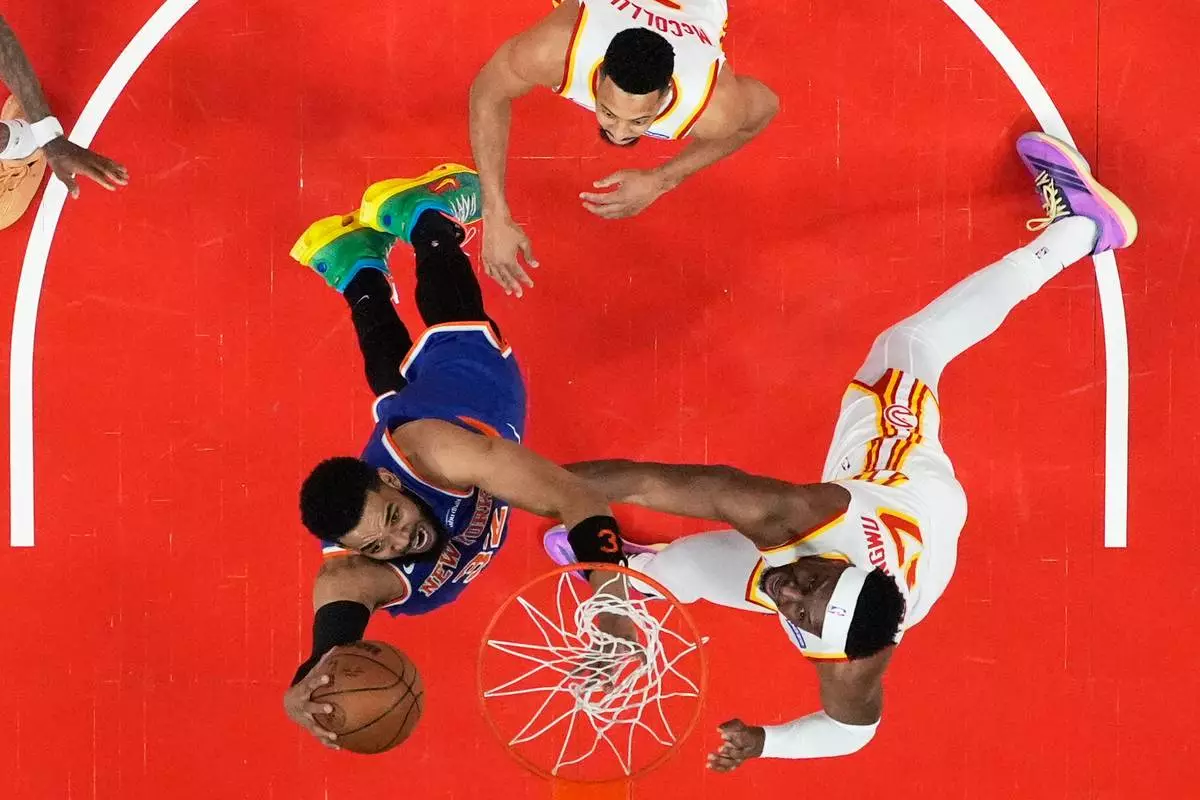
New York Knicks center Karl-Anthony Towns (32) shoots against Atlanta Hawks forward Onyeka Okongwu (17) during the first half of Game 4 in a first-round NBA playoffs basketball series Saturday, April 25, 2026, in Atlanta. (AP Photo/Brynn Anderson)
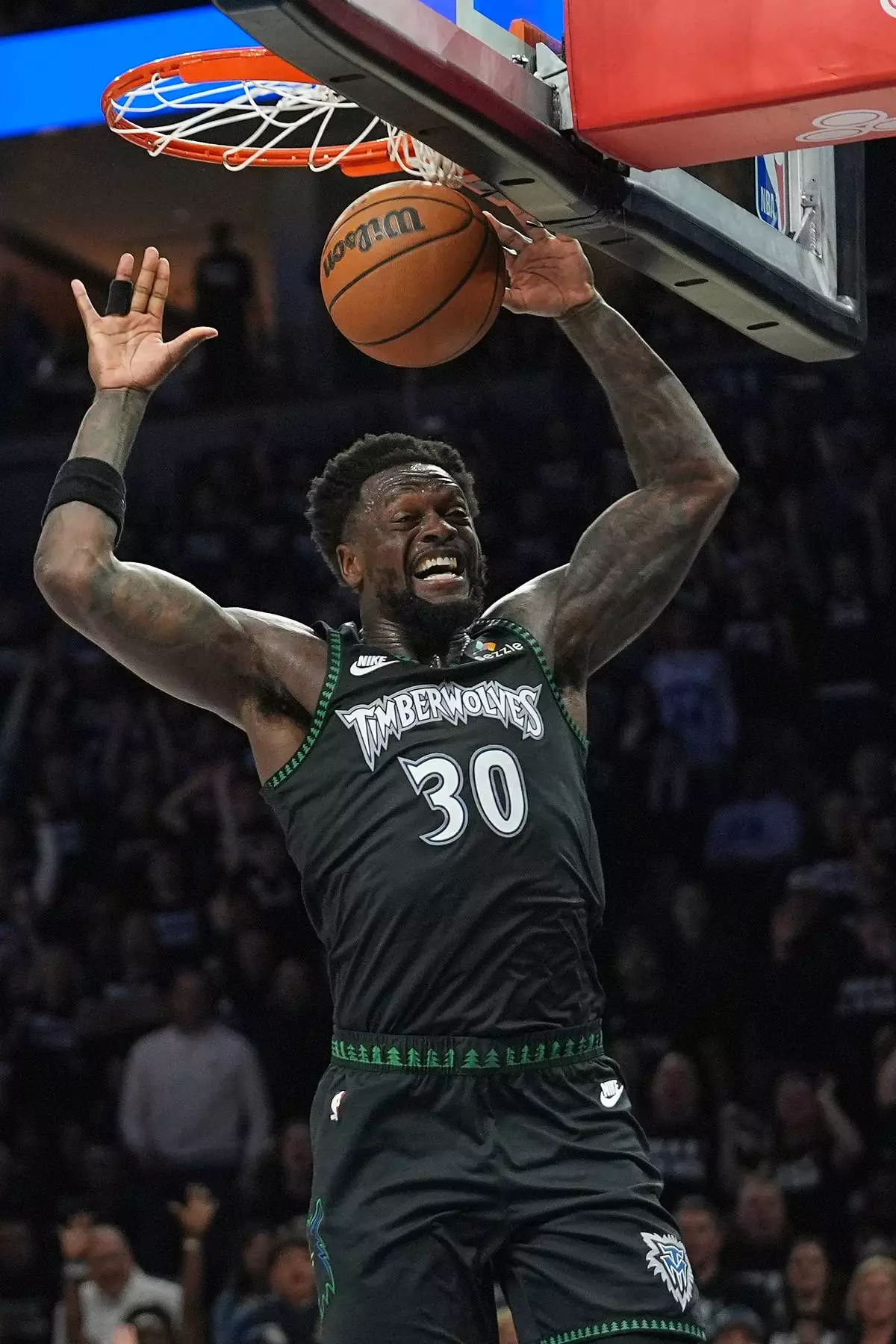
Minnesota Timberwolves forward Julius Randle dunks during the second half of Game 4 of a first-round NBA basketball playoff series against the Denver Nuggets, Saturday, April 25, 2026, in Minneapolis. (AP Photo/Abbie Parr)
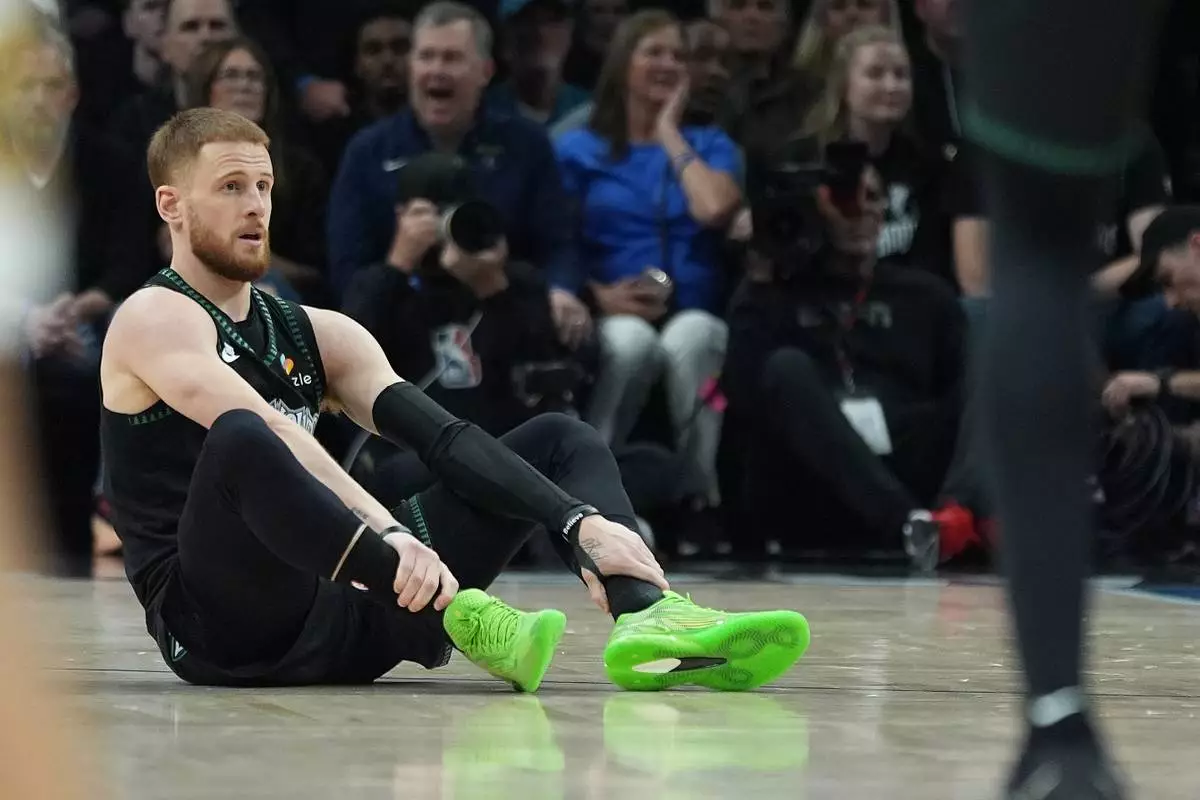
Minnesota Timberwolves guard Donte DiVincenzo (0) sits on the court after sustaining an injury during the first half of Game 4 of a first-round NBA basketball playoff series against the Denver Nuggets, Saturday, April 25, 2026, in Minneapolis. (AP Photo/Abbie Parr)
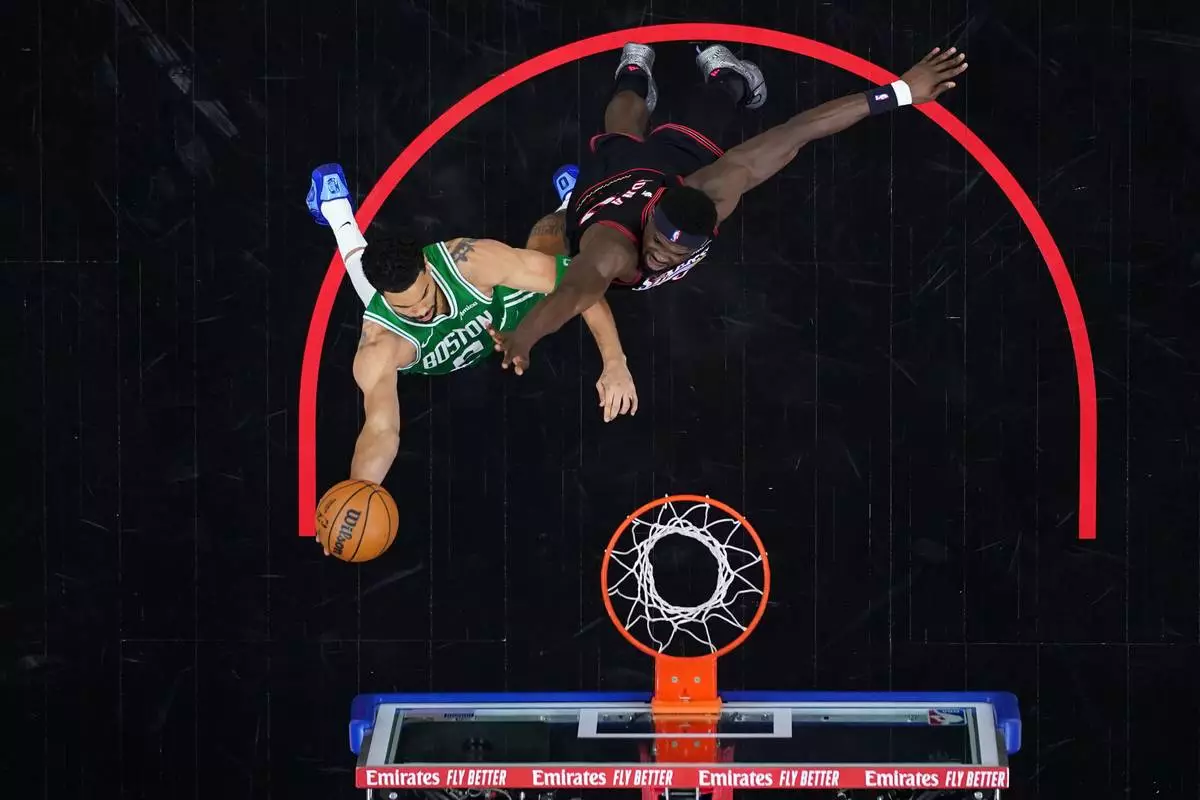
Boston Celtics' Jayson Tatum, left, goes up for a shot past Philadelphia 76ers' Adem Bona during the second half of Game 3 in a first-round NBA playoffs basketball series Friday, April 24, 2026, in Philadelphia. (AP Photo/Matt Slocum)
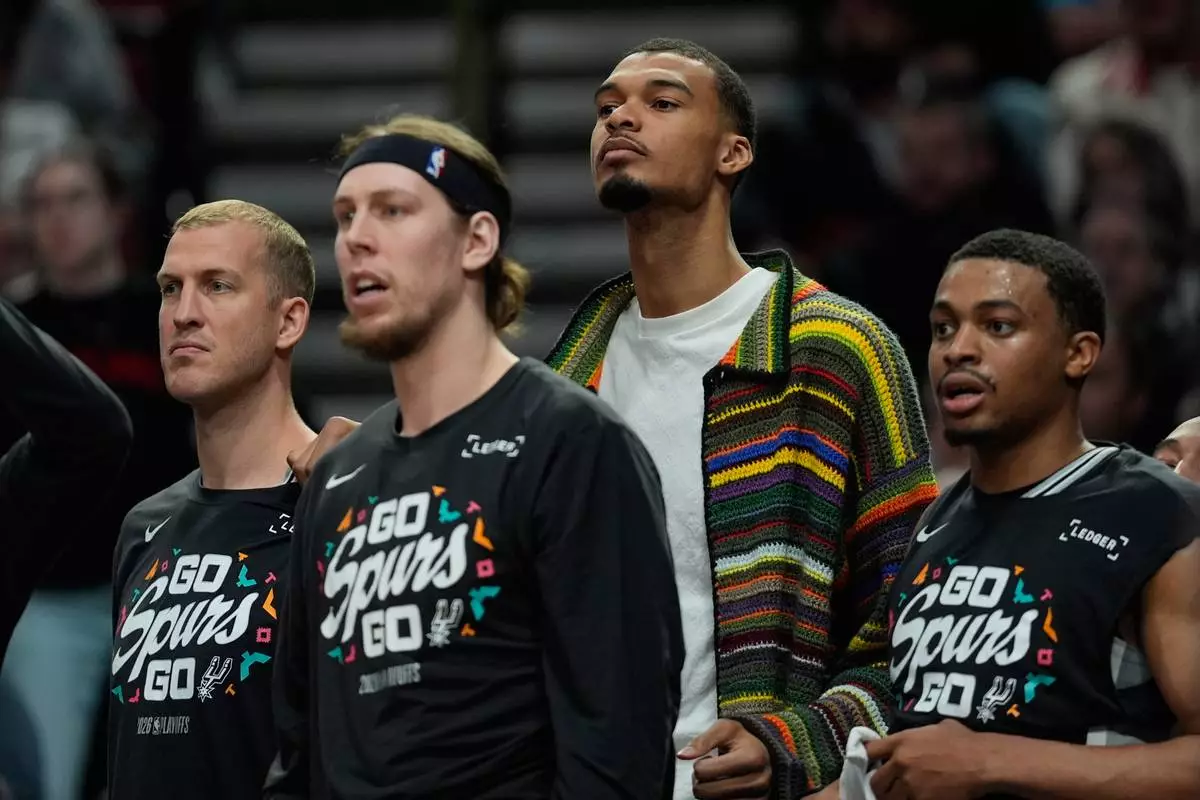
San Antonio Spurs forward Victor Wembanyama, center, wears street cloths on the bench as he sits out Game 3 of a first-round NBA playoffs basketball series against the Portland Trail Blazers in Portland, Ore, Friday, April 24, 2026. (AP Photo/Jenny Kane)
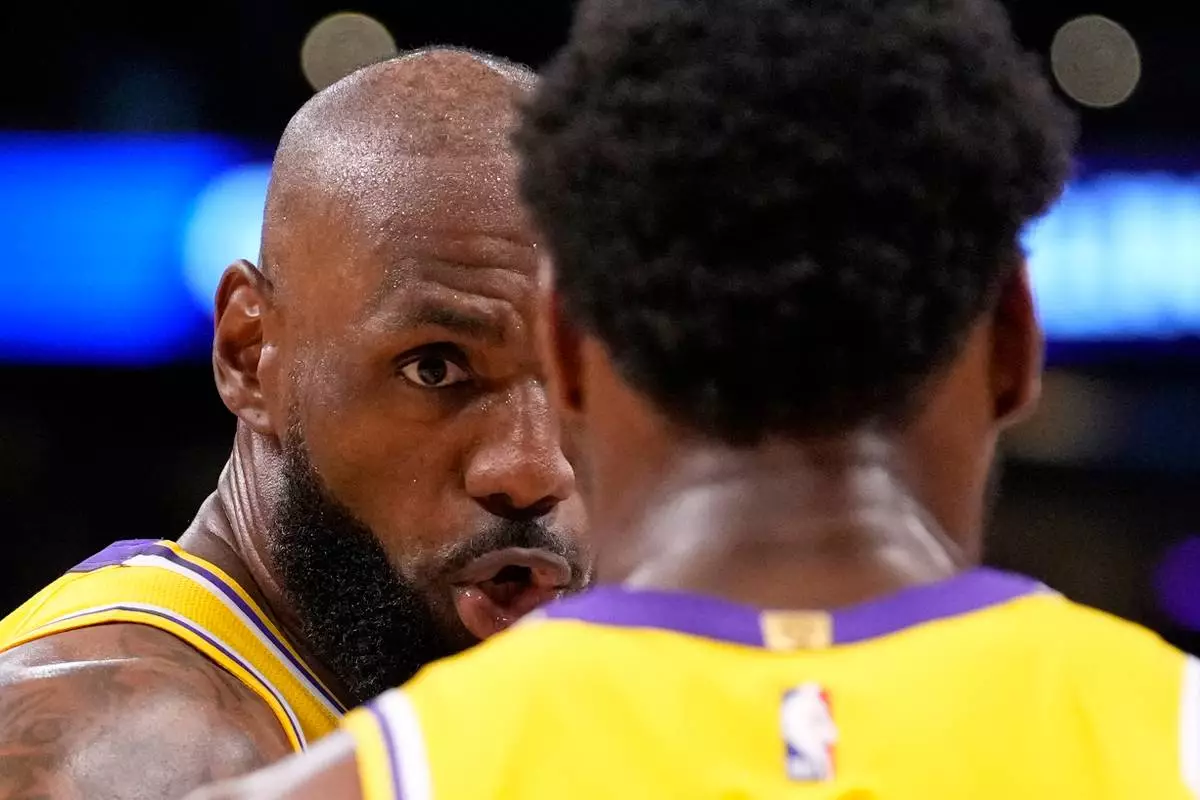
Los Angeles Lakers forward LeBron James, left, talks to guard Bronny James during the first half in Game 1 of a first-round NBA playoffs basketball series against the Houston Rockets, Saturday, April 18, 2026, in Los Angeles. (AP Photo/Mark J. Terrill)
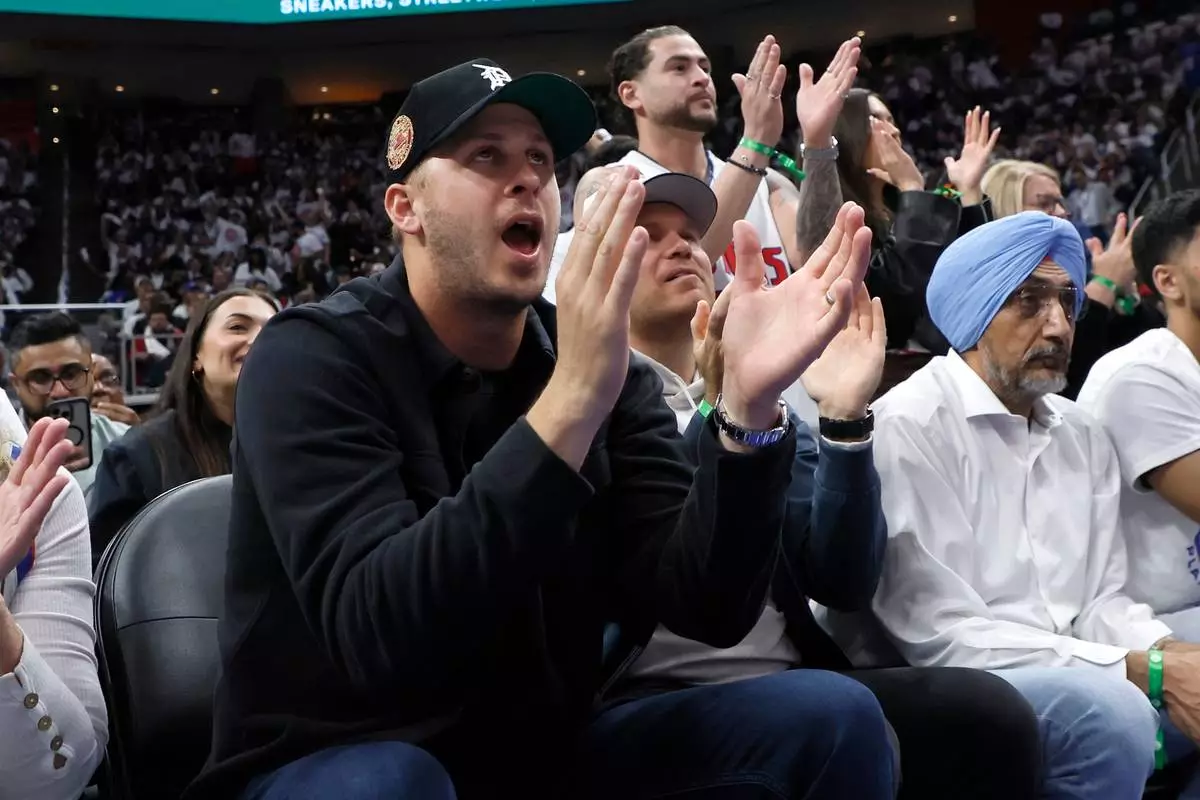
Detroit Lions quarterback Jared Goff cheers on the Detroit Piston during the second half in Game 2 of a first-round NBA basketball playoffs series against the Orlando Magic Wednesday, April 22, 2026, in Detroit. (AP Photo/Duane Burleson)
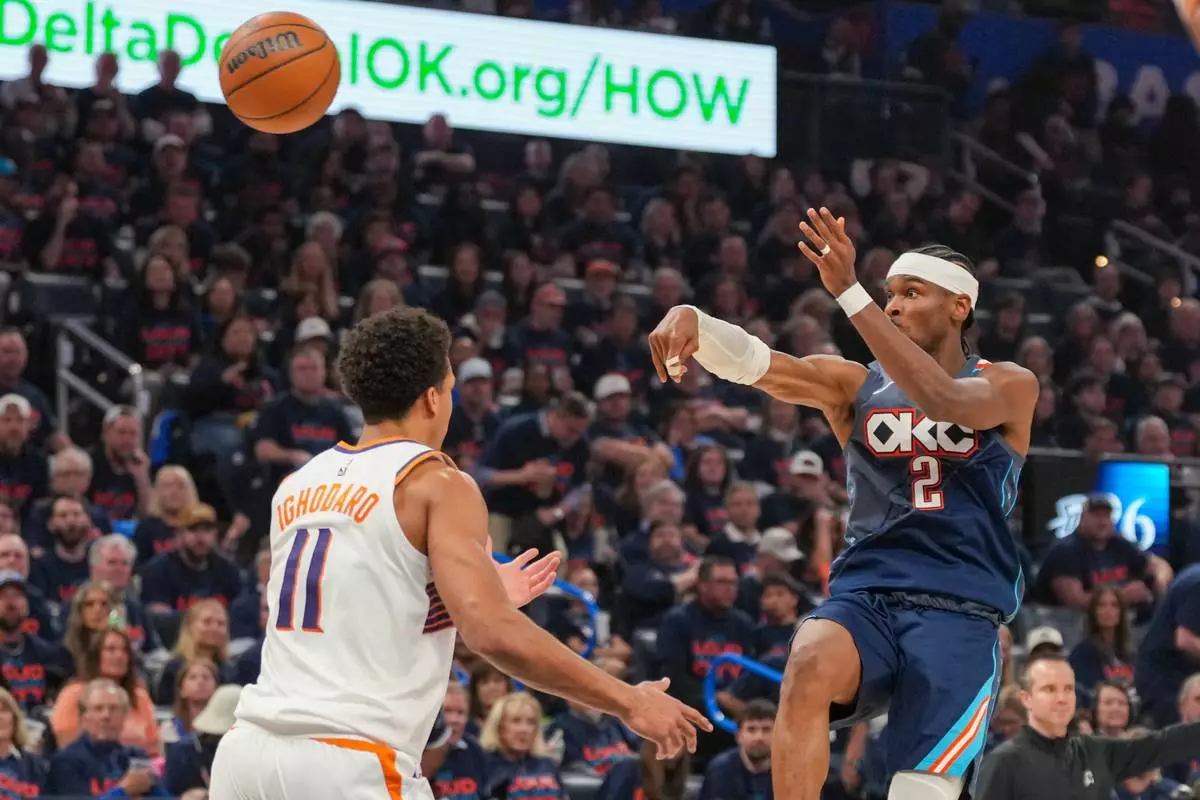
Oklahoma City Thunder guard Shai Gilgeous-Alexander (2) passes over Phoenix Suns forward Oso Ighodaro (11) during the second half in Game 2 of a first-round NBA playoffs basketball series Wednesday, April 22, 2026, in Oklahoma City. (AP Photo/Kyle Phillips)
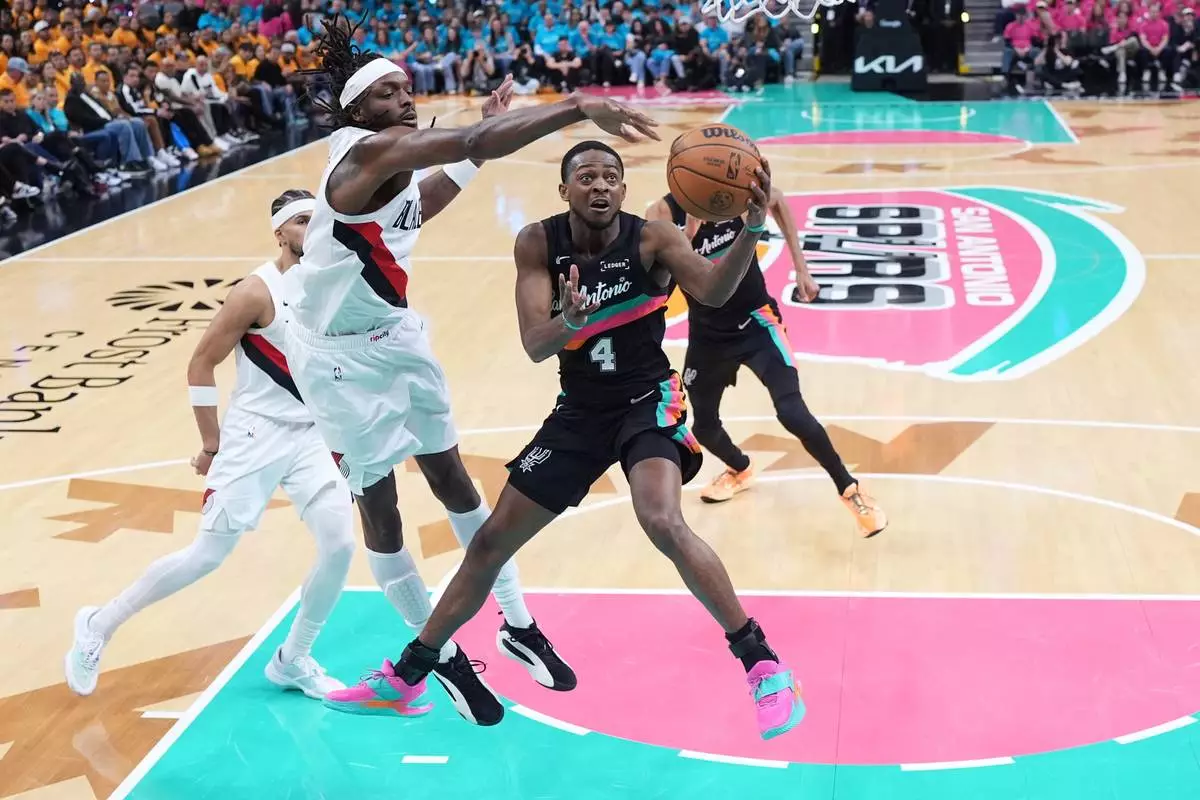
San Antonio Spurs guard De'aaron Fox (4) drives to the basket past Portland Trail Blazers forward Jerami Grant, left, during the second half in Game 1 of a first-round NBA playoffs basketball series in San Antonio, Sunday, April 19, 2026. (AP Photo/Eric Gay)
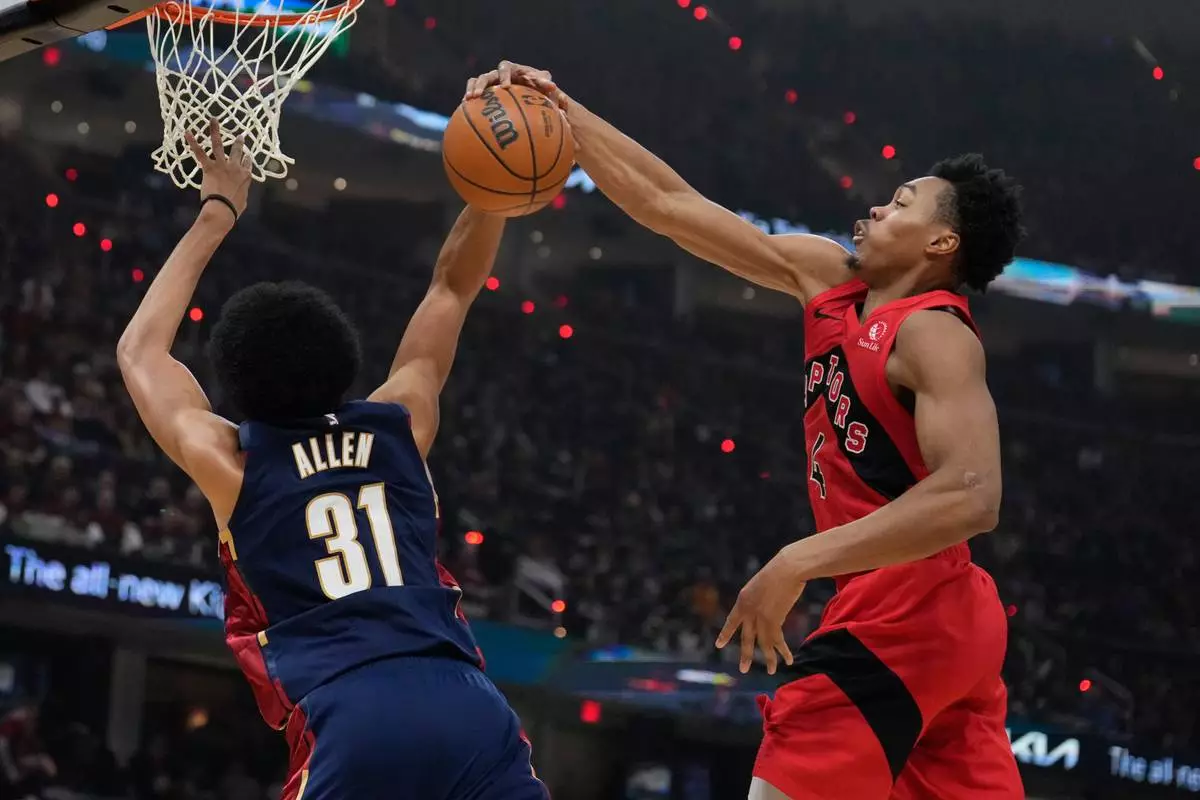
Toronto Raptors forward Scottie Barnes (4) blocks a shot by Cleveland Cavaliers center Jarrett Allen (31) in the second half in Game 2 of a first-round NBA basketball playoffs series in Cleveland, Monday, April 20, 2026. (AP Photo/Sue Ogrocki)
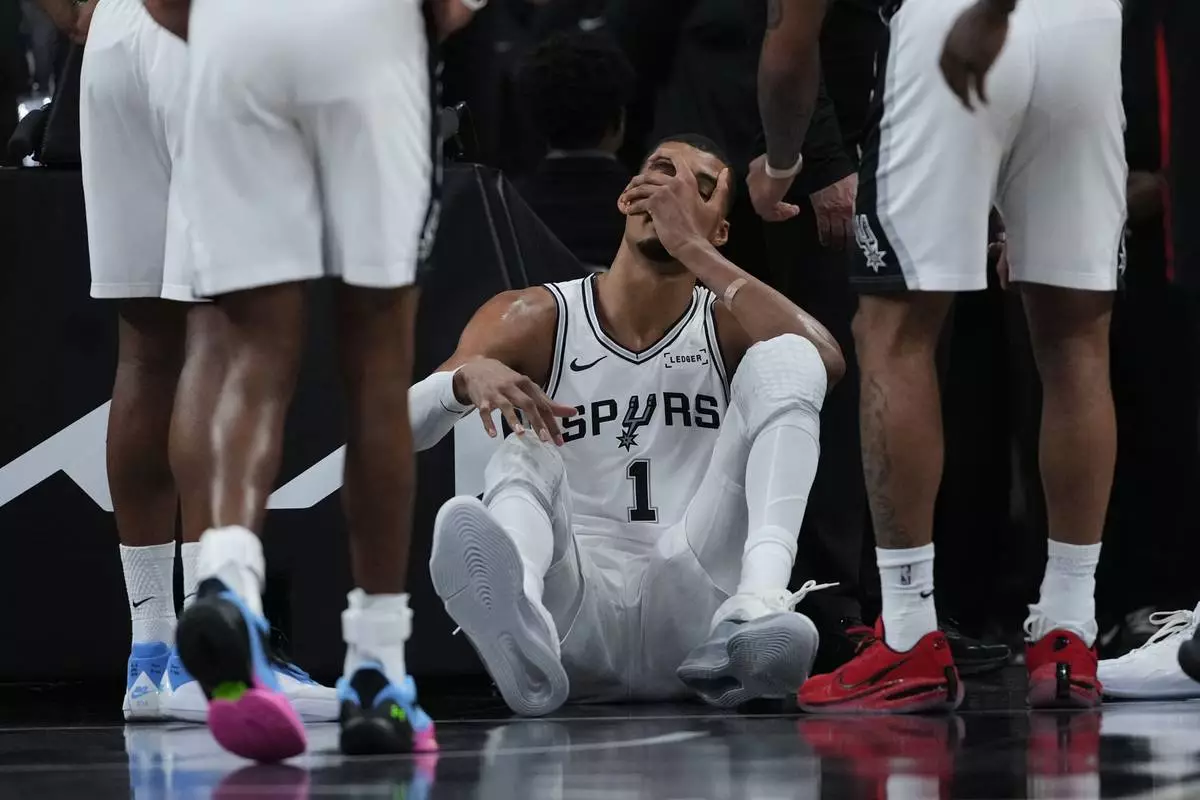
San Antonio Spurs forward Victor Wembanyama (1) sits on the court after a hard fall during the first half in Game 2 of a first-round NBA playoffs basketball series against the Portland Trail Blazers in San Antonio, Tuesday, April 21, 2026. (AP Photo/Eric Gay)
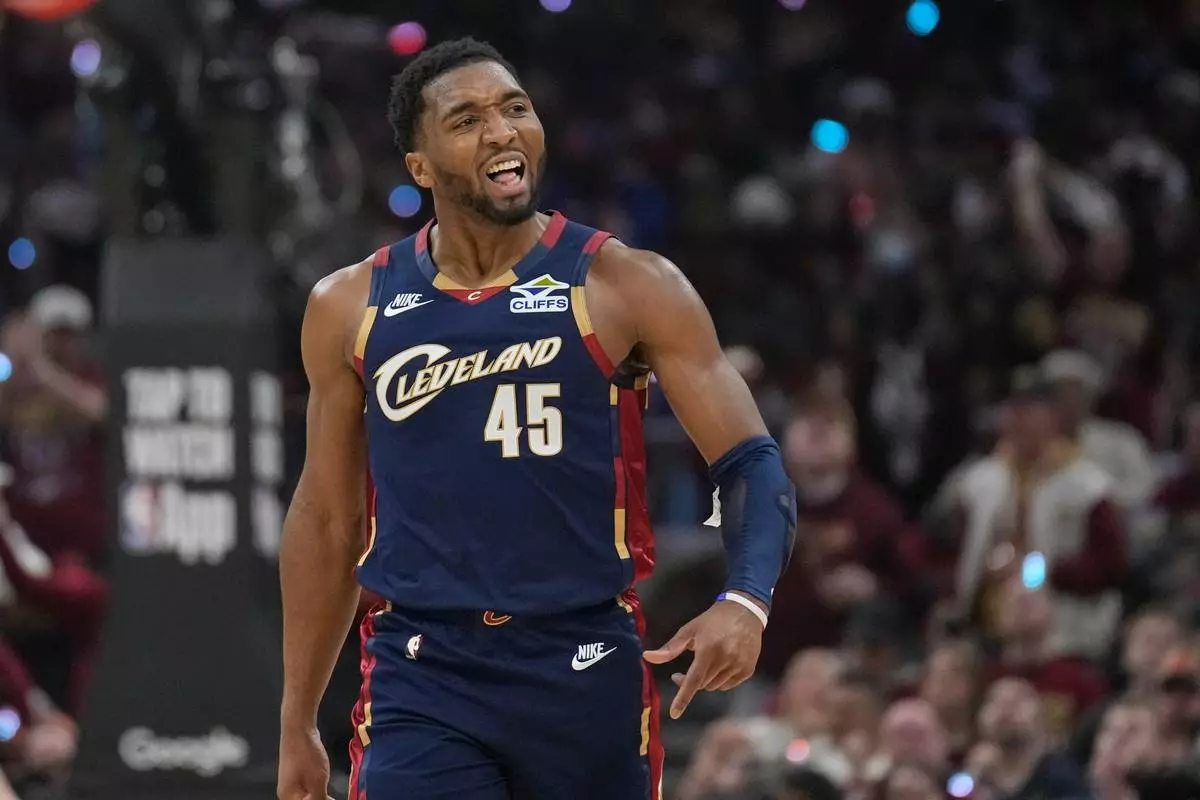
Cleveland Cavaliers guard Donovan Mitchell (45) gestures to the crowd in the first half in Game 2 of a first-round NBA basketball playoffs series against the Toronto Raptors in Cleveland, Monday, April 20, 2026. (AP Photo/Sue Ogrocki)
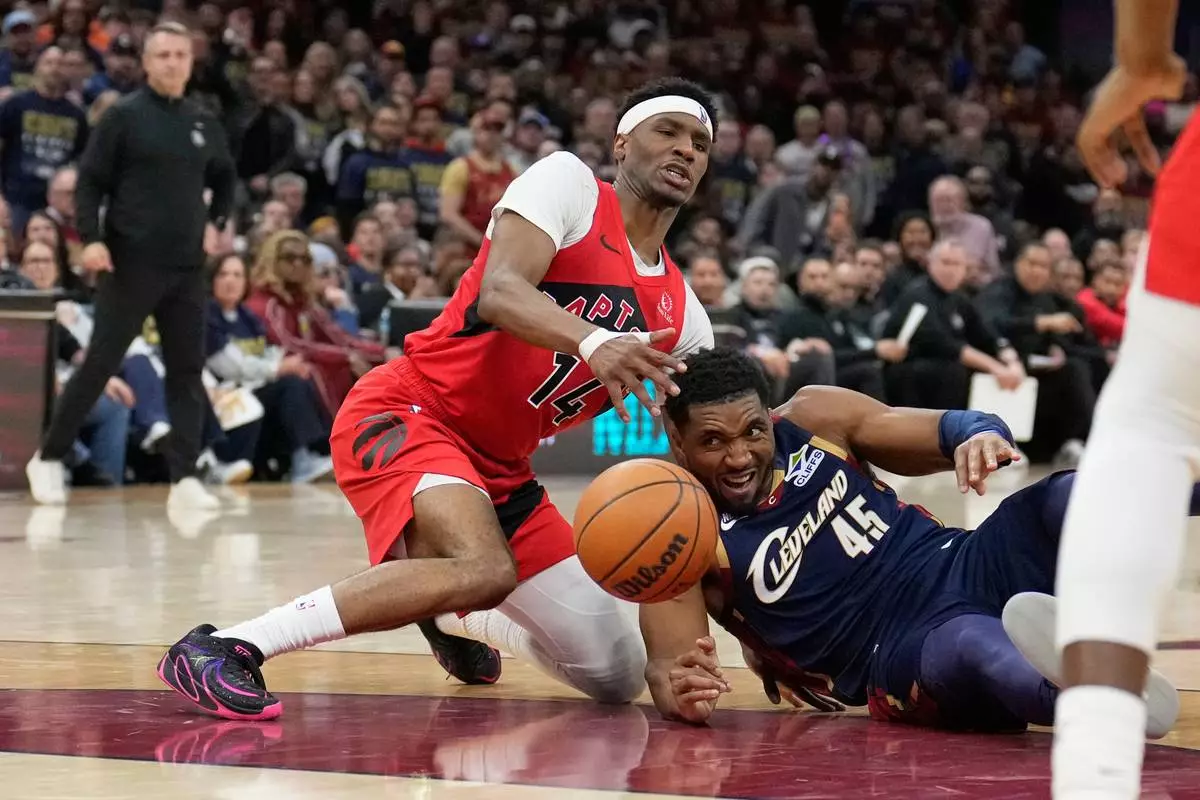
Toronto Raptors guard Ja'kobe Walter (14) and Cleveland Cavaliers guard Donovan Mitchell (45) reach for the ball in the second half in Game 2 of a first-round NBA basketball playoffs series in Cleveland, Monday, April 20, 2026. (AP Photo/Sue Ogrocki)
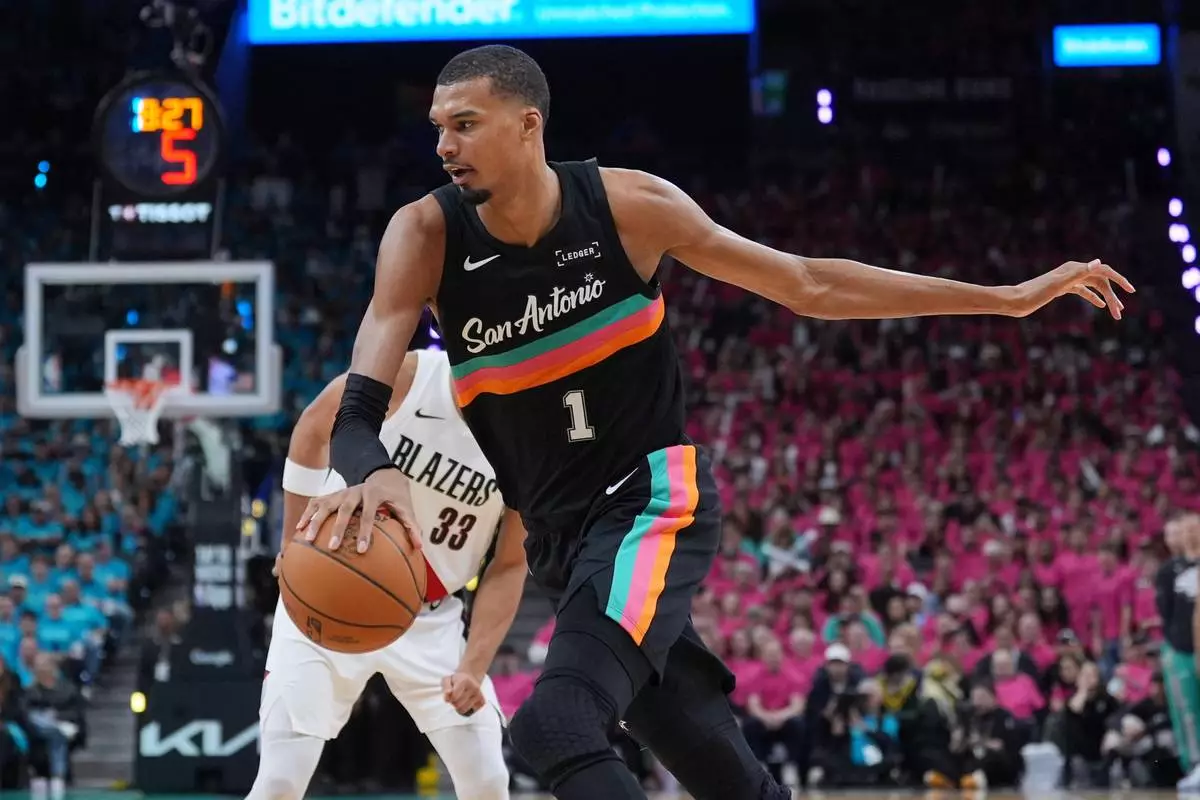
San Antonio Spurs forward Victor Wembanyama (1) drives past Portland Trail Blazers forward Toumani Camara (33) during the second half in Game 1 of a first-round NBA playoffs basketball series in San Antonio, Sunday, April 19, 2026. (AP Photo/Eric Gay)
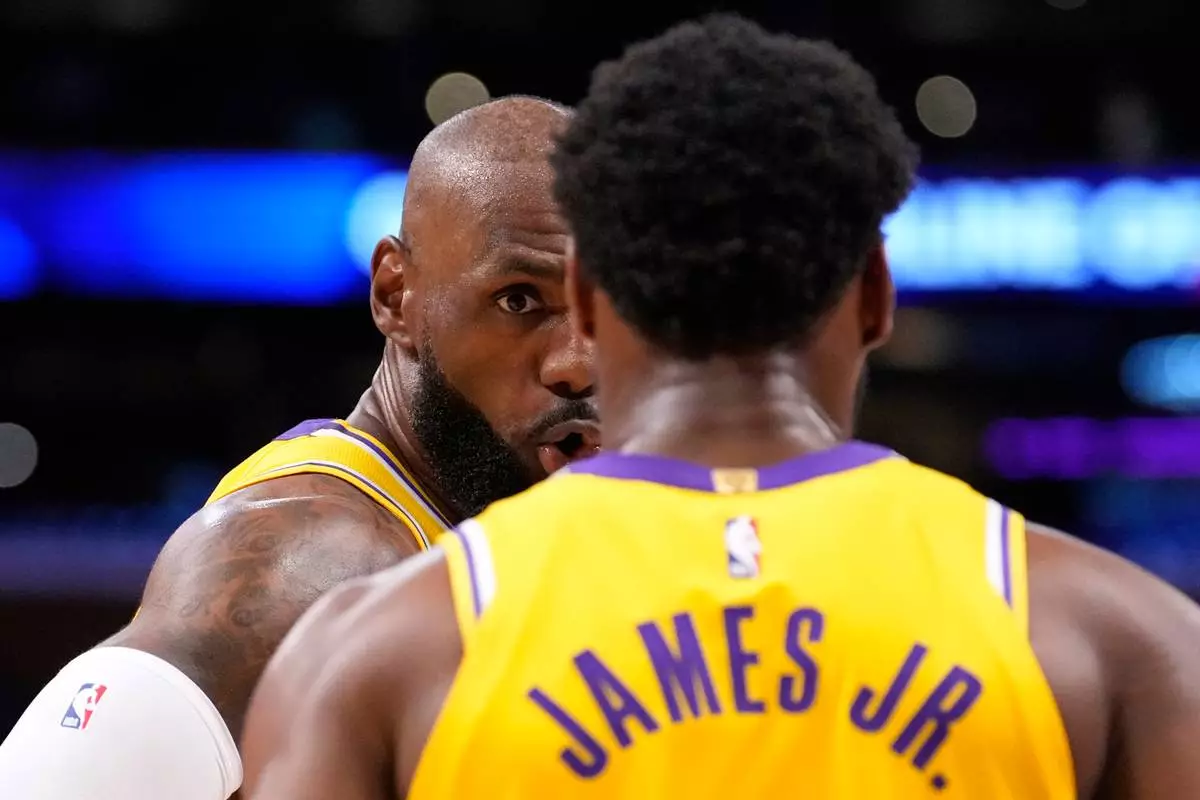
Los Angeles Lakers forward LeBron James, left, talks to his son guard Bronny James during the first half in Game 1 of a first-round NBA playoffs basketball series against the Houston Rockets, Saturday, April 18, 2026, in Los Angeles. (AP Photo/Mark J. Terrill)
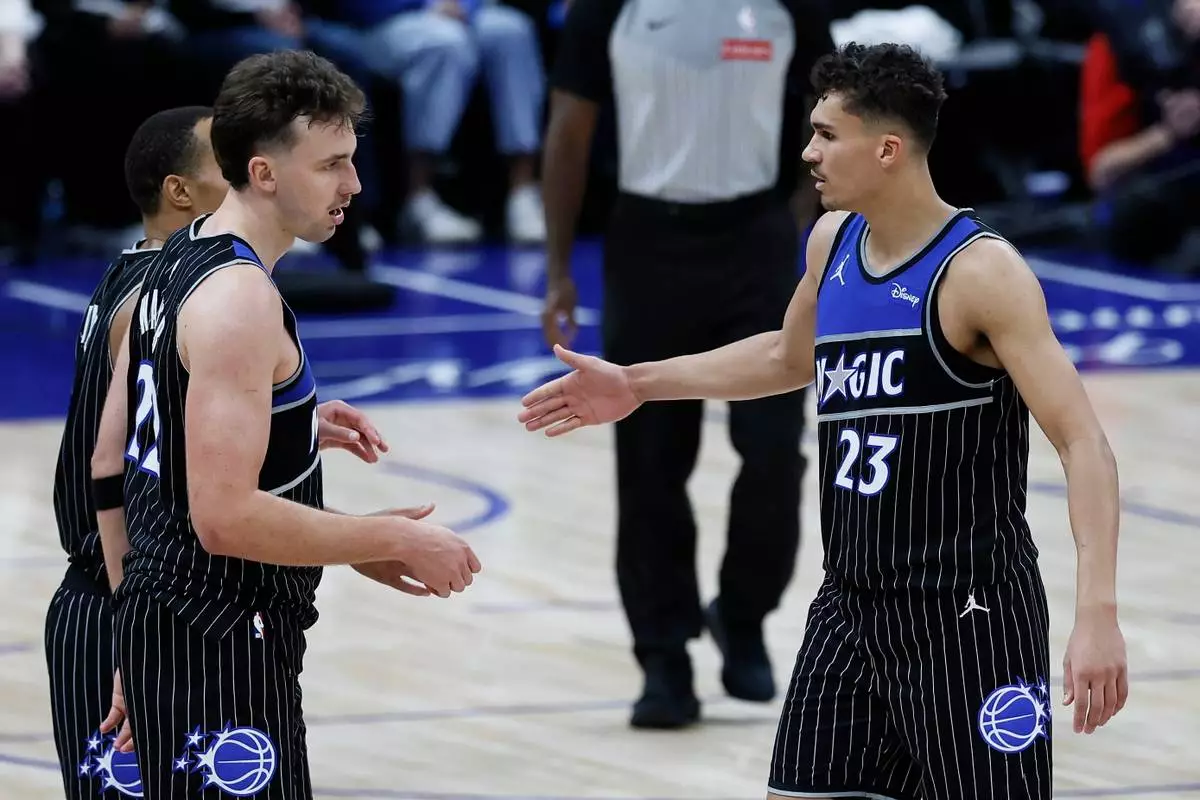
Orlando Magic forward Franz Wagner (22) and forward Tristan da Silva (23) celebrate after a win over the Detroit Pistons in Game 1 of a first-round NBA basketball playoffs series, Sunday, April 19, 2026, in Detroit. (AP Photo/Duane Burleson)
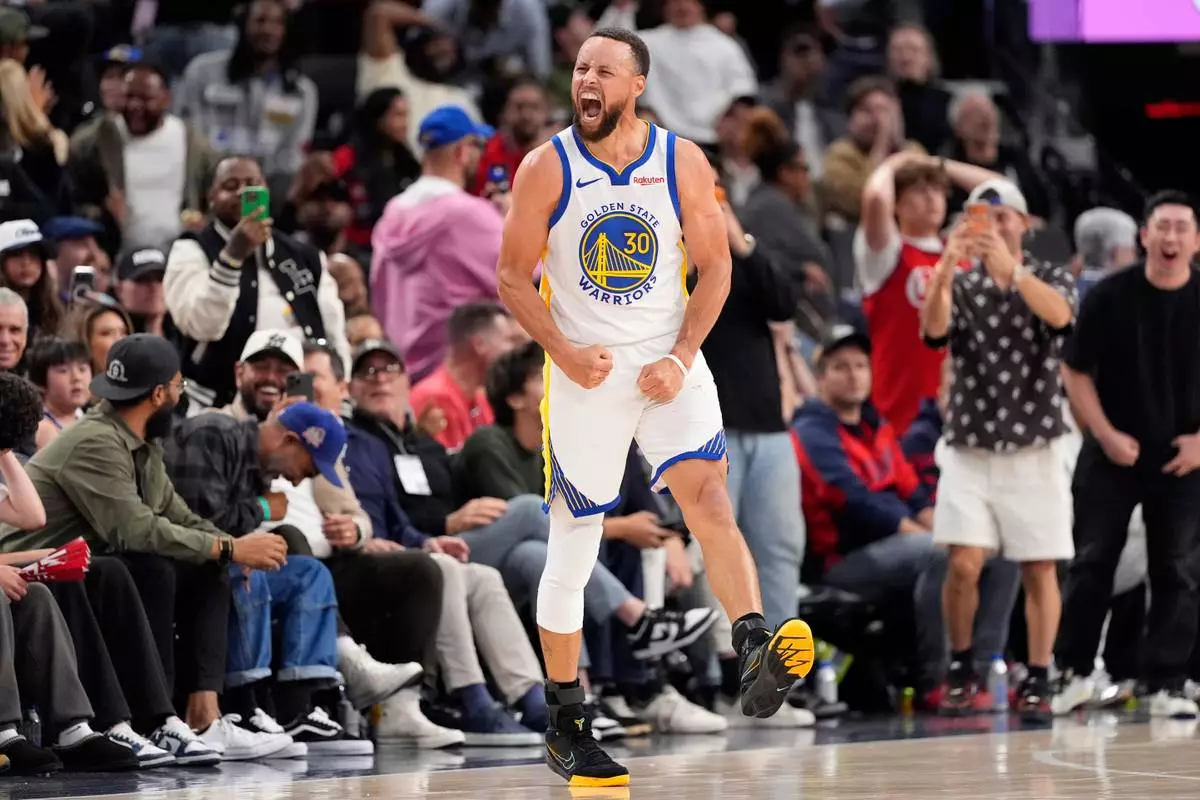
Golden State Warriors guard Stephen Curry celebrates after scoring during the second half of an NBA play-in tournament basketball game against the against the Los Angeles Clippers, Wednesday, April 15, 2026, in Inglewood, Calif. (AP Photo/Mark J. Terrill)
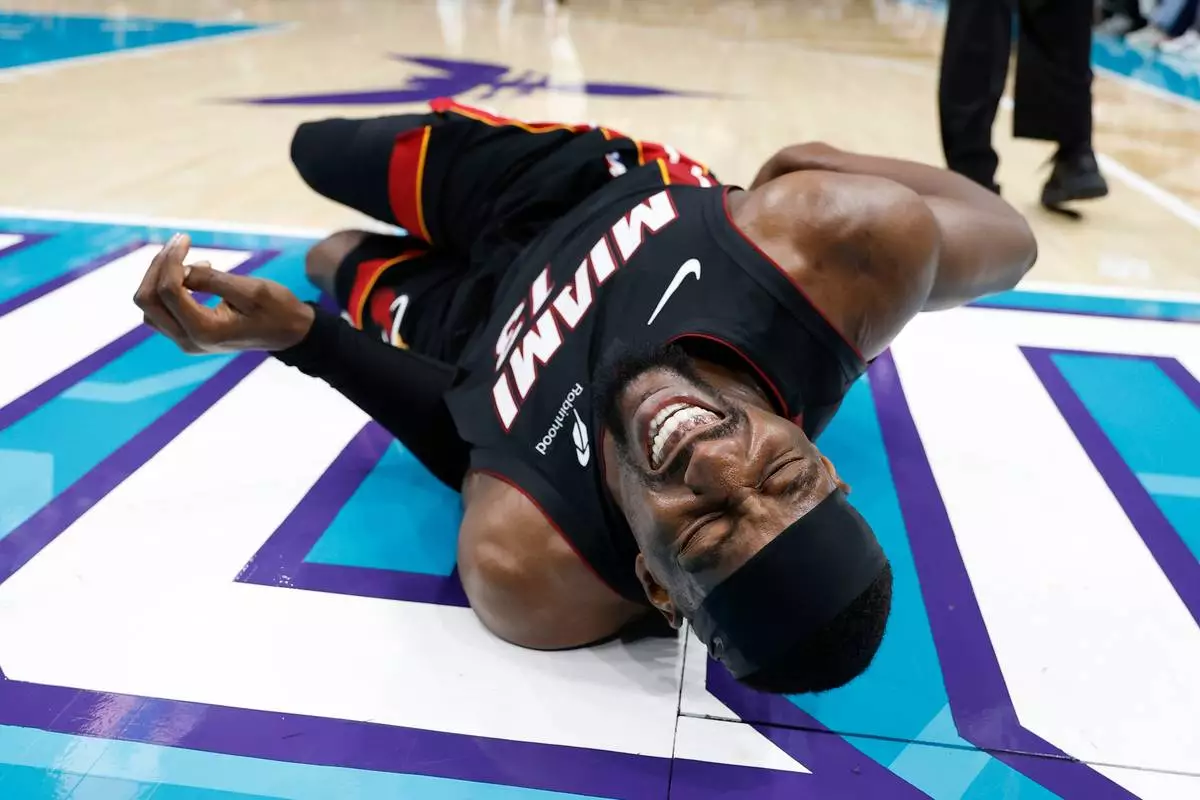
Miami Heat center Bam Adebayo (13) lies on the court during the first half of an NBA play-in tournament basketball game against the Charlotte Hornets in Charlotte, N.C., Tuesday, April 14, 2026. (AP Photo/Nell Redmond)
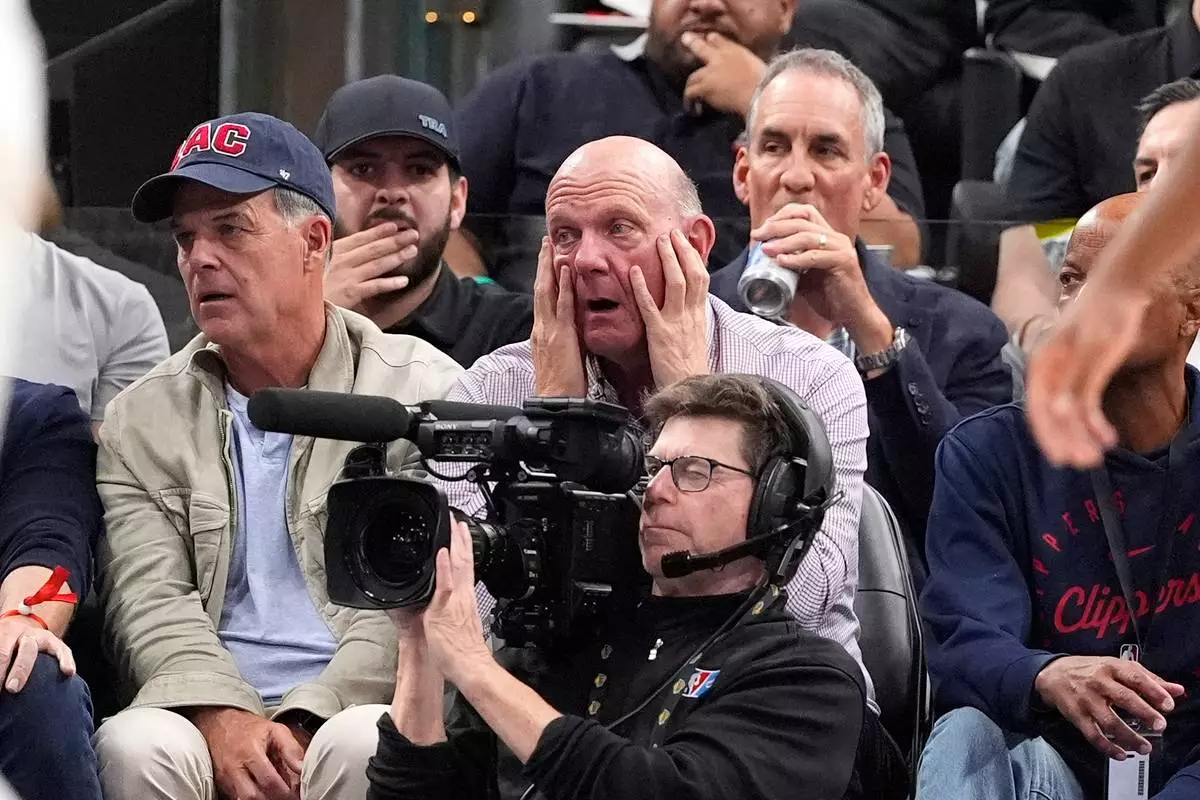
Los Angeles Clippers owner Steve Ballmer watches in the closing minutes of an NBA play-in tournament basketball game between the Clippers and the Golden State Warriors Wednesday, April 15, 2026, in Inglewood, Calif. (AP Photo/Mark J. Terrill)
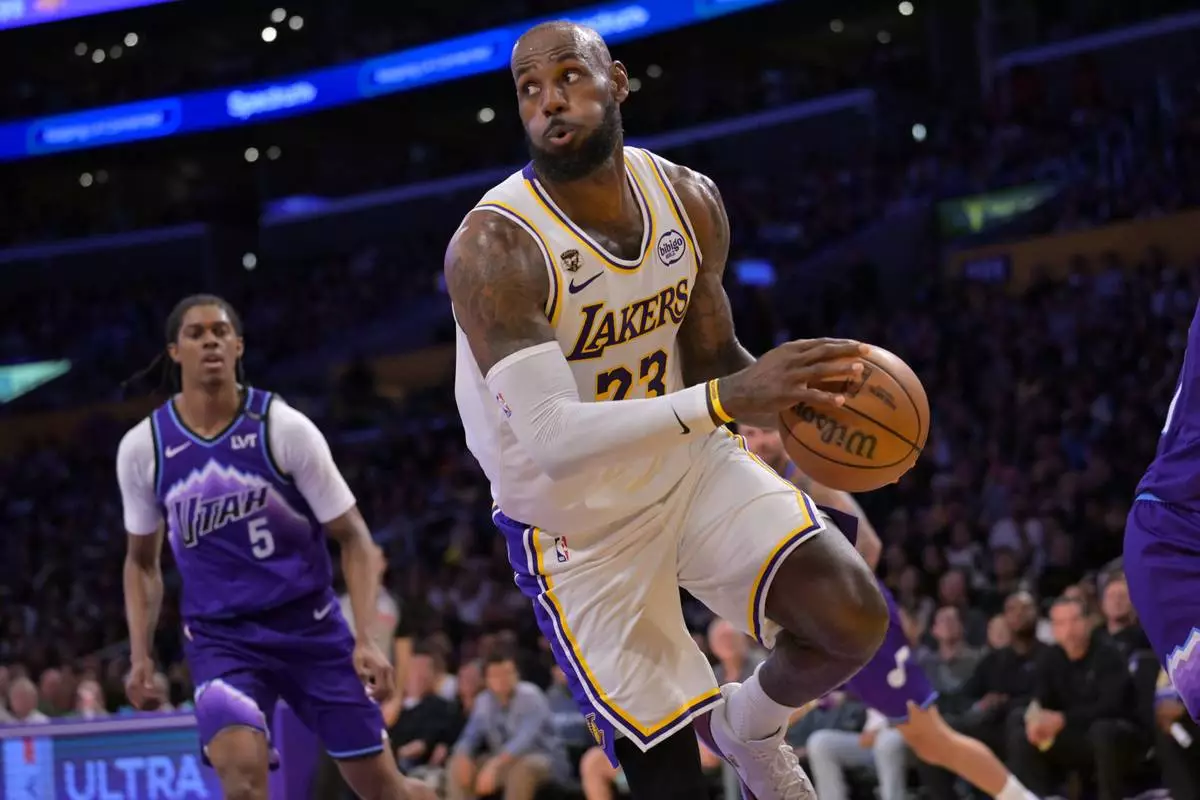
Los Angeles Lakers forward LeBron James looks to make a pass during the first half of an NBA basketball game against the Utah Jazz, Sunday, April 12, 2026, in Los Angeles. (AP Photo/Jayne Kamin-Oncea)
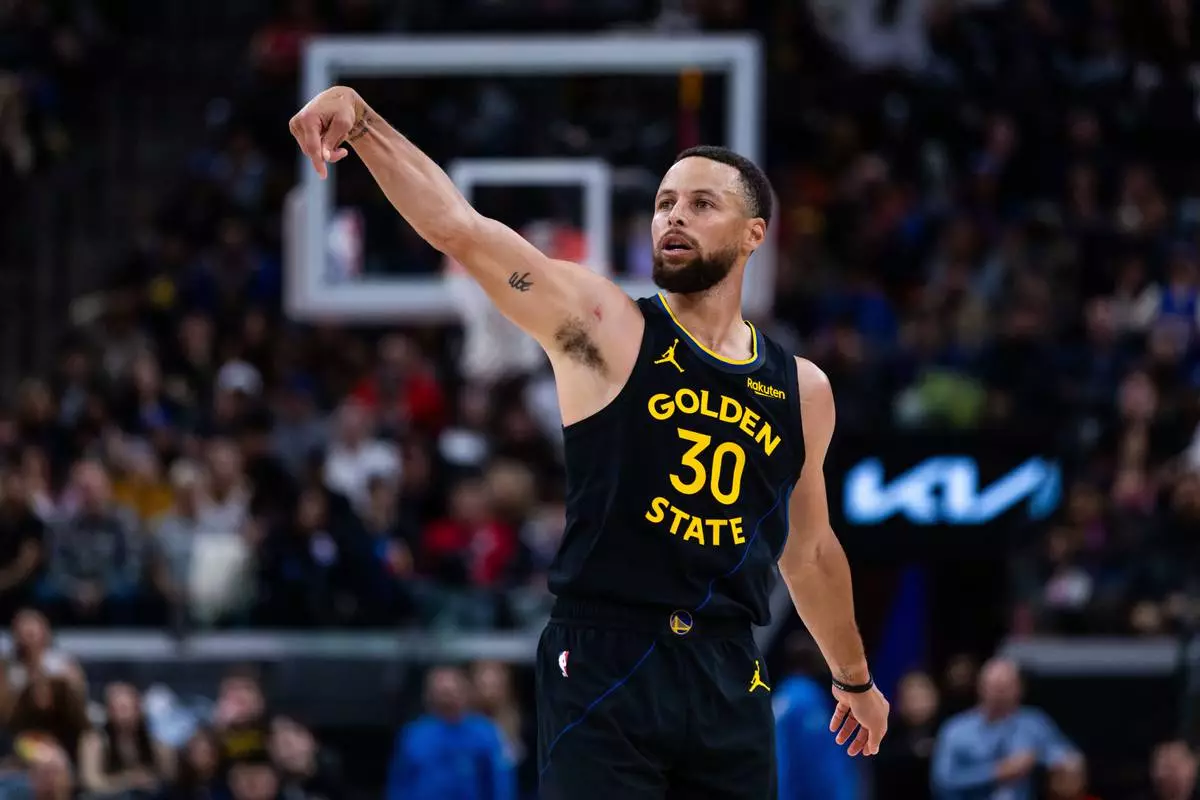
Golden State Warriors guard Stephen Curry (30) shoots against the Los Angeles Clippers during the second half of an NBA basketball game, Sunday, April 12, 2026, in Inglewood, Calif. (AP Photo/Ethan Swope)