WASHINGTON (AP) — Defense Secretary Pete Hegseth spoke Monday to widening concerns that the U.S.-Israeli strikes in Iran could spiral into a protracted regional conflict by declaring: “This is not Iraq. This is not endless," even as he warned that more American casualties are likely in the weeks ahead.
While the Trump administration has cited Iran’s nuclear ambitions as the chief concern to be addressed, officials increasingly are pointing to the threat from Iran’s ballistic missiles as a key reason to launch the attacks as well as an opportunity to take out the government’s leadership and the sense that negotiations around the nuclear program have stalled.
Click to Gallery
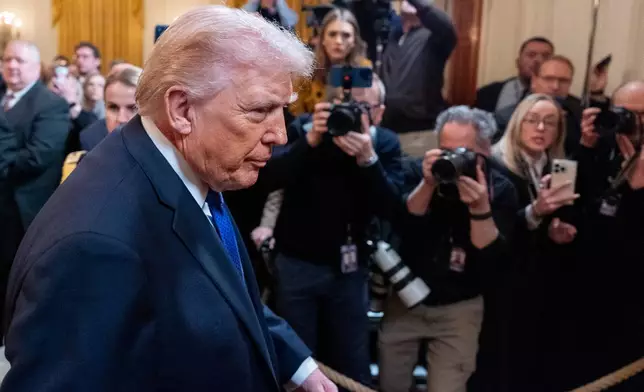
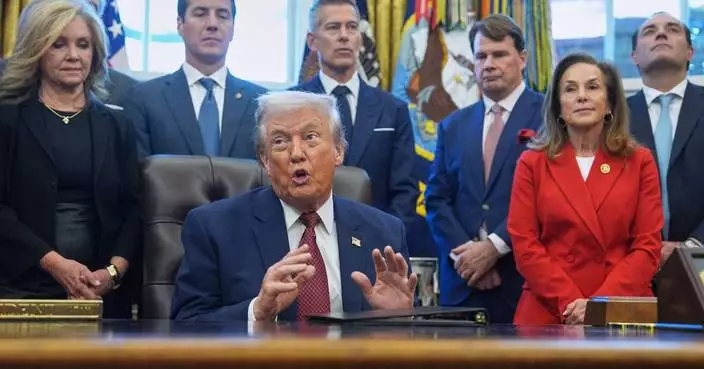
President Donald Trump departs after a Medal of Honor ceremony in the East Room of the White House, Monday, March 2, 2026, in Washington. (AP Photo/Alex Brandon)
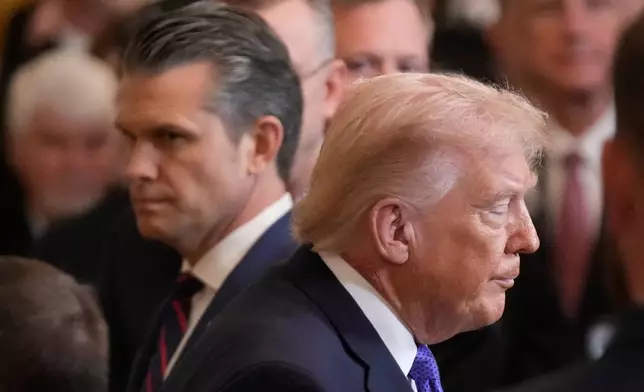
President Donald Trump walks past Defense Secretary Pete Hegseth as he exist the East Room of the White House following the Medal of Honor ceremony, Monday, March 2, 2026, in Washington. (AP Photo/Mark Schiefelbein)
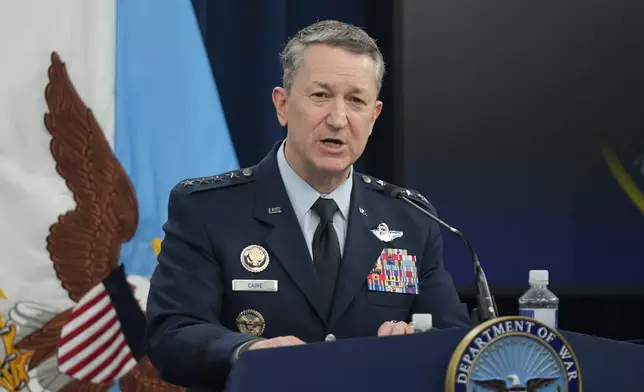
Chairman of the Joint Chiefs of Staff Gen. Dan Caine speak during a press briefing at the Pentagon, Monday, March 2, 2026, in Washington. (AP Photo/Mark Schiefelbein)
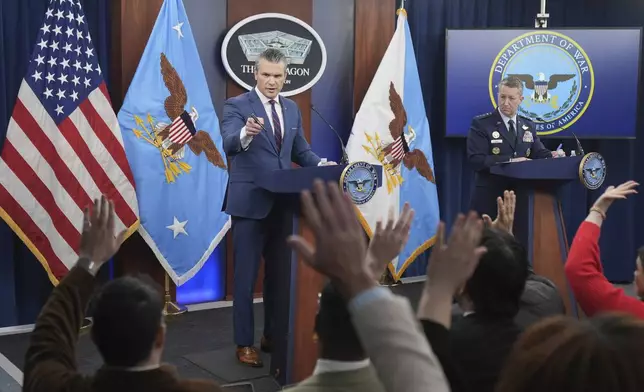
Defense Secretary Pete Hegseth and Chairman of the Joint Chiefs of Staff Gen. Dan Caine take questions during a press briefing at the Pentagon, Monday, March 2, 2026, in Washington. (AP Photo/Mark Schiefelbein)

Defense Secretary Pete Hegseth speaks during a press briefing at the Pentagon, Monday, March 2, 2026, in Washington. (AP Photo/Mark Schiefelbein)

Defense Secretary Pete Hegseth speaks during a press briefing at the Pentagon, Monday, March 2, 2026, in Washington. (AP Photo/Mark Schiefelbein)
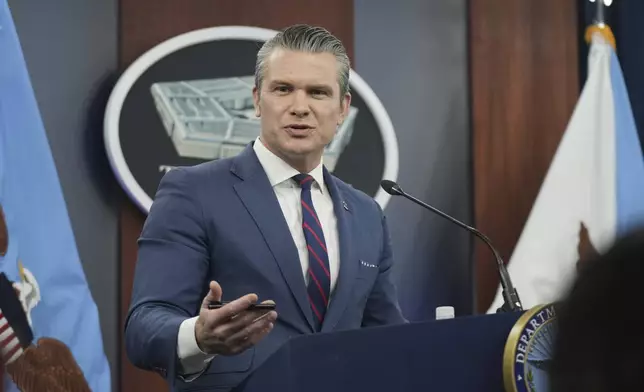
Defense Secretary Pete Hegseth speaks during a press briefing at the Pentagon, Monday, March 2, 2026, in Washington. (AP Photo/Mark Schiefelbein)

Defense Secretary Pete Hegseth listens during a press briefing at the Pentagon, Monday, March 2, 2026, in Washington. (AP Photo/Mark Schiefelbein)

Defense Secretary Pete Hegseth speaks during a press briefing at the Pentagon, Monday, March 2, 2026, in Washington. (AP Photo/Mark Schiefelbein)
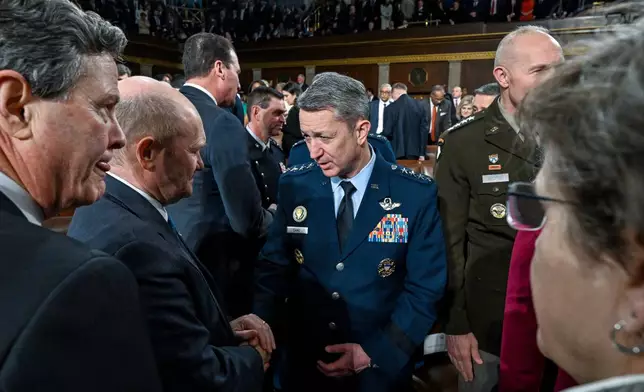
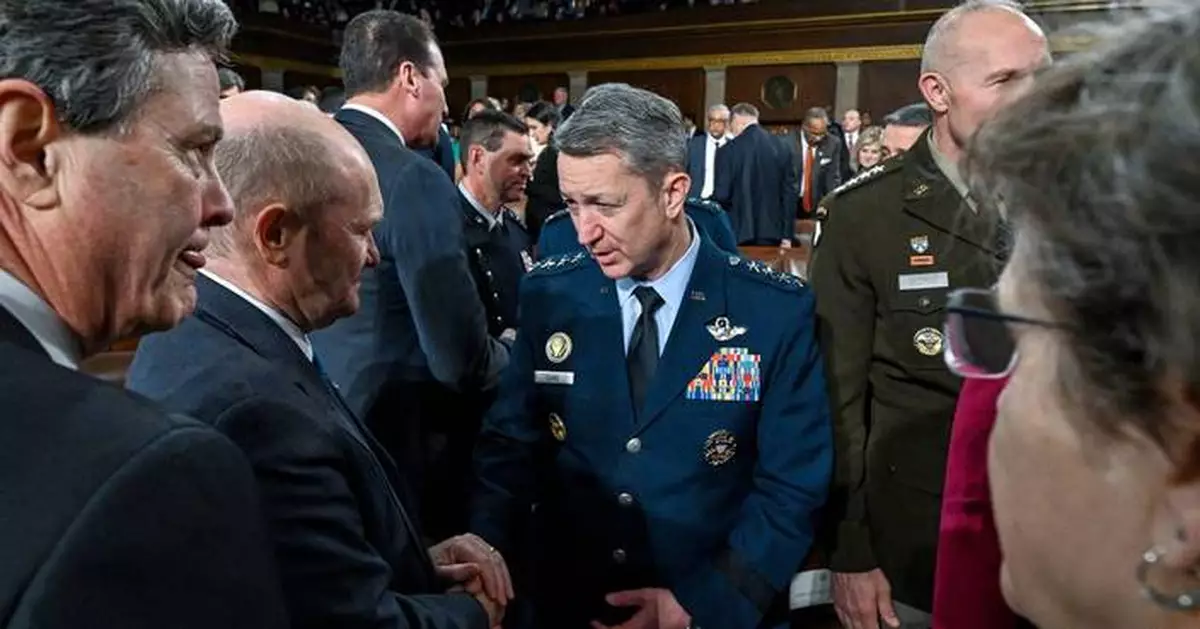
Gen. Dan Caine, chairman of the Joint Chiefs of Staff, greets Sen. Chris Coons, D-Del., before President Donald Trump delivers the State of the Union address to a joint session of Congress in the House chamber at the U.S. Capitol in Washington, Tuesday, Feb. 24, 2026. (Kenny Holston/The New York Times via AP, Pool)
Trump said Monday that Iran’s conventional missile program “was growing rapidly and dramatically, and this posed a very clear, colossal threat to America and our forces stationed overseas.”
Hegseth said at a separate press conference with Gen. Dan Caine, chairman of the Joint Chiefs of Staff, that the operation had a “decisive mission” to eliminate the threat of Iranian ballistic missiles, destroy the country’s navy and ensure “no nukes.”
Trump, Hegseth and Caine have not suggested any exit plan or offered signs that the conflict would end anytime soon as the killing of Iranian Supreme Leader Ayatollah Ali Khamenei cast doubt on the future of the Islamic Republic and hurtled the region into broader instability. Caine said the biggest U.S. military buildup in the Middle East in decades would only grow because the commander in the region “will receive additional forces even today.”
“This is not a so-called regime-change war, but the regime sure did change, and the world is better off for it,” Hegseth said.
Trump, however, in video statements released after the strikes began, urged the Iranian people “to take back your country.”
The conflict has spilled into the wider region, with Iran and its allied armed groups launching missiles at Israel, Arab states and U.S. military targets in the Middle East.
Six American troops have been killed, with Trump, Hegseth and Caine predicting more casualties. All were Army soldiers and part of the same logistics unit in Kuwait, according to a U.S. official who was not authorized to comment publicly and spoke on condition of anonymity.
When asked about the six deaths Monday, Hegseth said an Iranian weapon made it past allied air defenses “and, in that particular case, happened to hit a tactical operations center that was fortified.”
Eighteen American service members also have been seriously wounded, said Capt. Tim Hawkins, a spokesman for U.S. Central Command.
The latest sign of the escalating upheaval came when, the U.S. military said, ally Kuwait “mistakenly shot down” three American fighter jets during a combat mission as Iranian aircraft, ballistic missiles and drones were attacking. U.S. Central Command said all six pilots ejected safely from the American F-15E Strike Eagles and were in stable condition.
Asked if there are boots on the ground now in Iran, Hegseth said, “No, but we’re not going to go into the exercise of what we will or will not do.”
He said it was “foolishness” to expect U.S. officials to say publicly “here’s exactly how far we’ll go.”
Trump told the New York Post on Monday that he wasn’t ruling out U.S. forces in Iran if “they were necessary.” He noted, “I don’t have the yips with respect to boots on the ground."
At the White House, Trump said the mission was expected to take four to five weeks but “we have the capability to go far longer than that.”
Secretary of State Marco Rubio told reporters at the Capitol that the U.S. “will do this as long as it takes to achieve" its objectives and warned that “the hardest hits are yet to come from the U.S. military."
Hegseth also dismissed questions about the time frame and said Trump had “latitude” to decide how long it would take. “Four weeks, two weeks, six weeks," he said. “It could move up. It could move back.”
In laying out a case for the strikes, Hegseth did not point to any imminent nuclear threat from Iran and said again that strikes by the U.S. and Israel last June “obliterated their nuclear program to rubble.”
Instead, Hegseth pointed to threats from other weaponry that justified the operation: “Iran was building powerful missiles and drones to create a conventional shield for their nuclear blackmail ambitions.”
He added: “Our bases, our people, our allies, all in their crosshairs. Iran had a conventional gun to our head as they tried to lie their way to a nuclear bomb.”
Hegseth said that during negotiations leading up to the attack, Iranian officials were “stalling" despite having “every chance to make a peaceful and sensible deal.”
He also justified the operation by describing Iran’s government as having started the conflict from its inception, declaring that for 47 years it has “waged a savage, one-sided war against America.”
In a private briefing Sunday, Trump administration officials told congressional staffers that U.S. intelligence did not suggest Iran was preparing to launch a preemptive strike against the U.S., three people familiar with the briefings said.
Trump, a Republican, had said the objective of the mission was to eliminate “imminent threats from the Iranian regime.” And senior Trump administration officials, who were not authorized to comment publicly and spoke on the condition of anonymity, told reporters Saturday that there were indicators that the Iranians could launch a preemptive attack.
As with the attack that dropped massive bunker-buster bombs on Iranian nuclear facilities last year, Caine said the military used B-2 stealth bombers in the new operation with a 37-hour round trip.
He said the penetrating bombs were dropped on Iranian underground facilities" but did not specify that they were nuclear facilities. Nuclear sites were not among the types of targets on a list released over the weekend by U.S. Central Command.
The administration says Israel and the U.S. have bombed Iranian missile sites and targeted its navy, claiming to have destroyed its headquarters and multiple warships.
Caine on Monday referenced the use of cyber technologies, saying the U.S. “effectively disrupted communications and sensor networks” that left “the adversary without the ability to coordinate or respond effectively.”
Without giving specifics, Caine said the military “delivered synchronized and layered effects designed to disrupt, degrade, deny and destroy Iran’s ability to conduct and sustained combat operations on the U.S. side.”
Caine said Trump gave the go-ahead order for the strikes at 3:38 p.m. EST on Friday. That meant the president gave the green light when he was aboard Air Force One heading to Texas with Republican Sens. Ted Cruz and John Cornyn and actor Dennis Quaid.
Associated Press writers Meg Kinnard in Charleston, S.C.; Bill Barrow in Atlanta; David Klepper, Ben Finley and Lisa Mascaro in Washington; and Farnoush Amiri in New York contributed to this report.
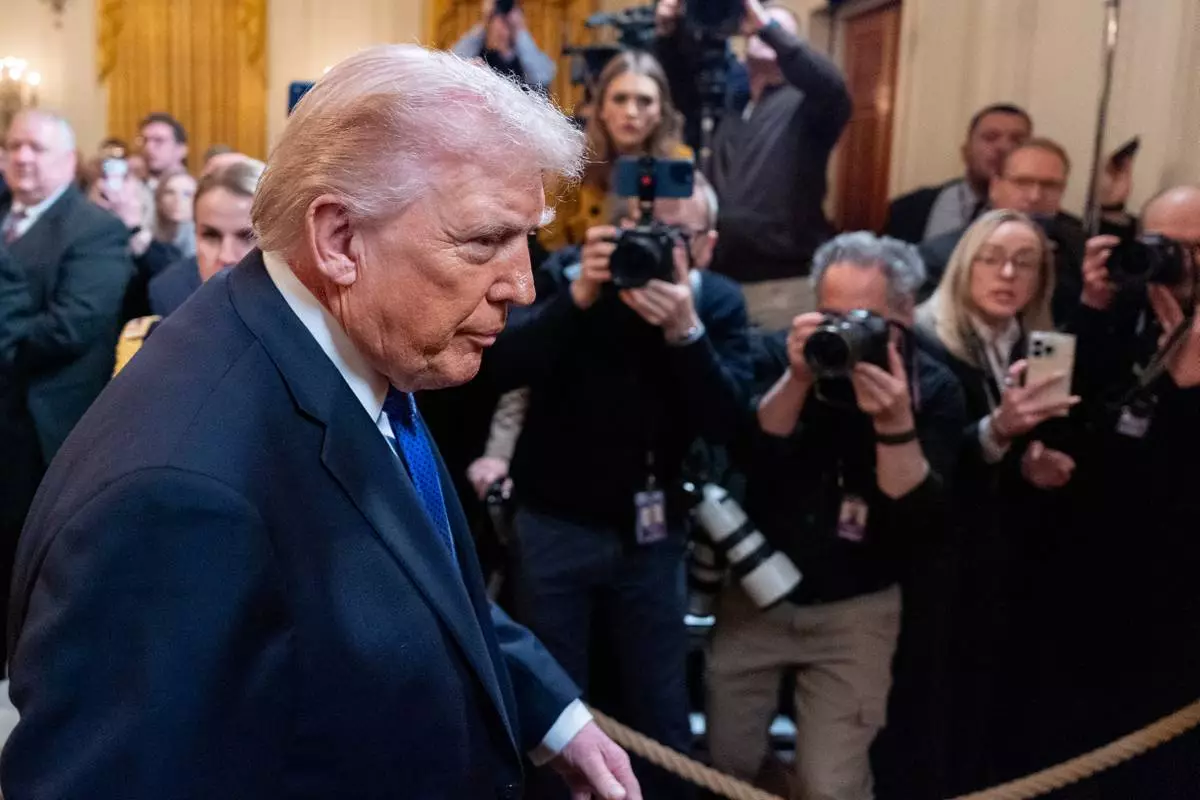
President Donald Trump departs after a Medal of Honor ceremony in the East Room of the White House, Monday, March 2, 2026, in Washington. (AP Photo/Alex Brandon)
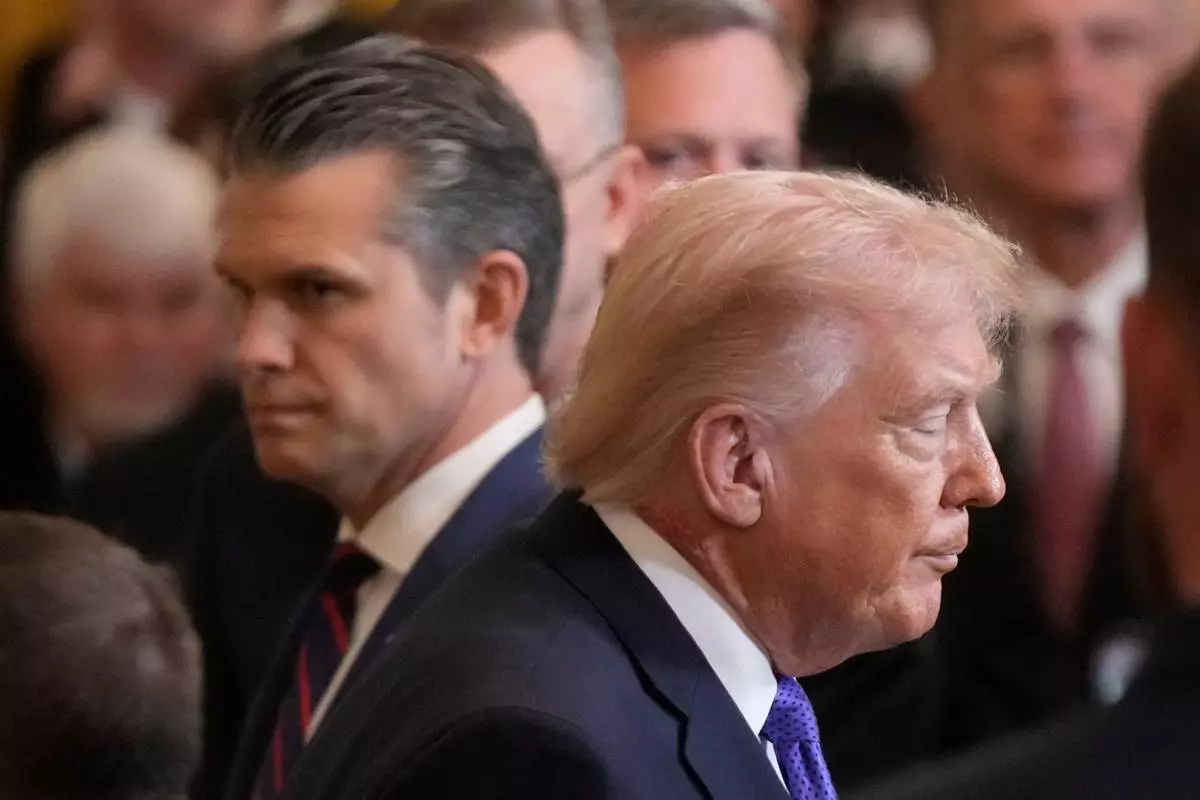
President Donald Trump walks past Defense Secretary Pete Hegseth as he exist the East Room of the White House following the Medal of Honor ceremony, Monday, March 2, 2026, in Washington. (AP Photo/Mark Schiefelbein)
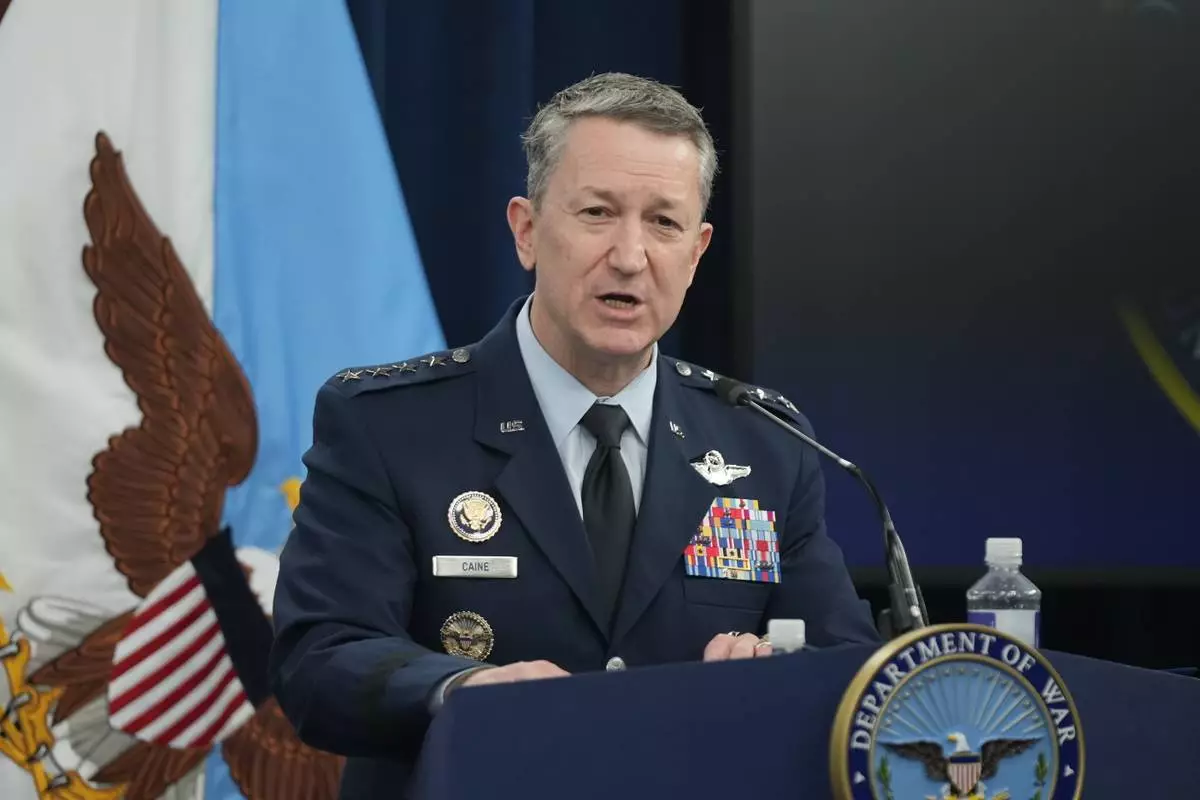
Chairman of the Joint Chiefs of Staff Gen. Dan Caine speak during a press briefing at the Pentagon, Monday, March 2, 2026, in Washington. (AP Photo/Mark Schiefelbein)
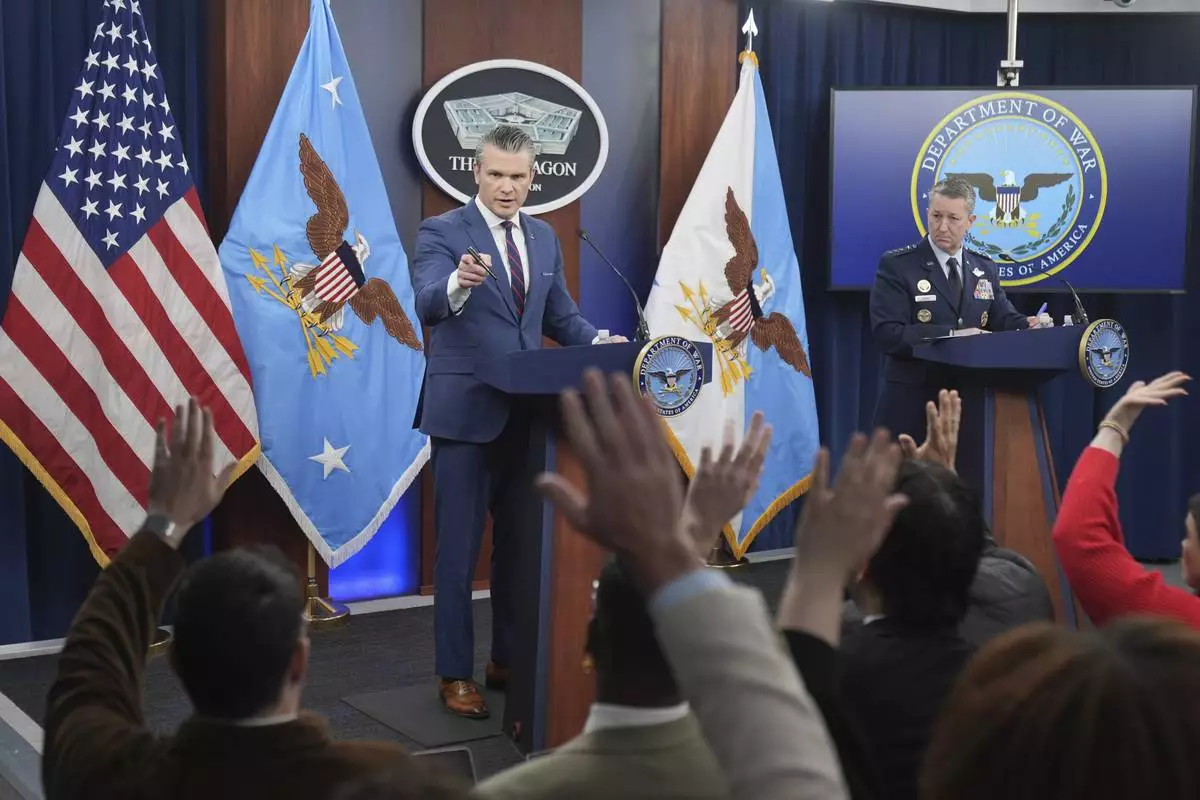
Defense Secretary Pete Hegseth and Chairman of the Joint Chiefs of Staff Gen. Dan Caine take questions during a press briefing at the Pentagon, Monday, March 2, 2026, in Washington. (AP Photo/Mark Schiefelbein)

Defense Secretary Pete Hegseth speaks during a press briefing at the Pentagon, Monday, March 2, 2026, in Washington. (AP Photo/Mark Schiefelbein)
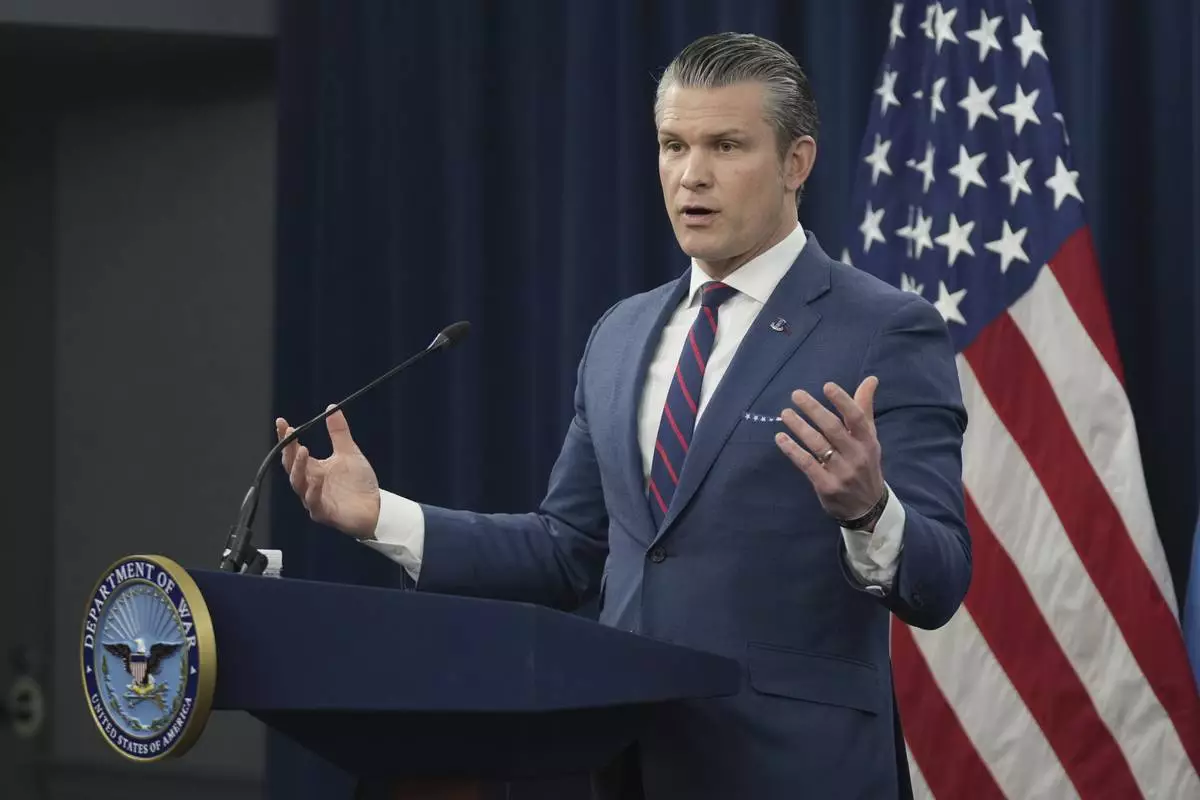
Defense Secretary Pete Hegseth speaks during a press briefing at the Pentagon, Monday, March 2, 2026, in Washington. (AP Photo/Mark Schiefelbein)
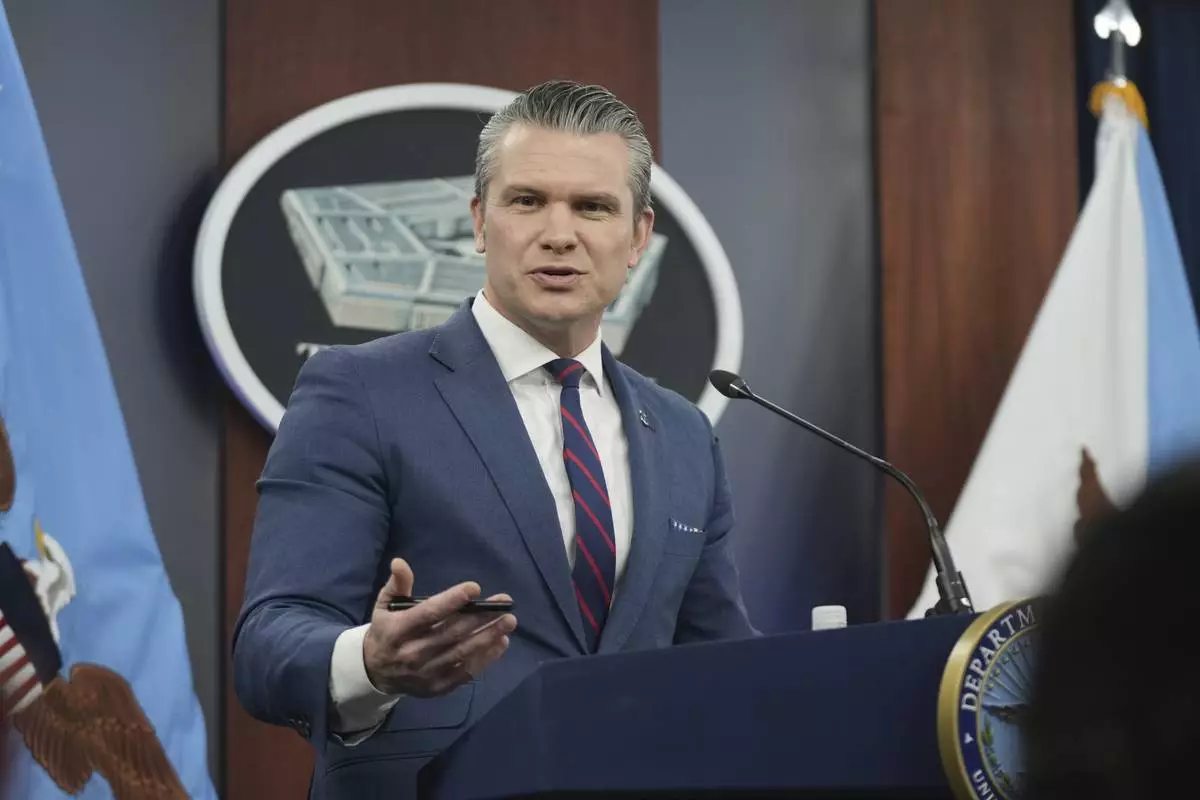
Defense Secretary Pete Hegseth speaks during a press briefing at the Pentagon, Monday, March 2, 2026, in Washington. (AP Photo/Mark Schiefelbein)
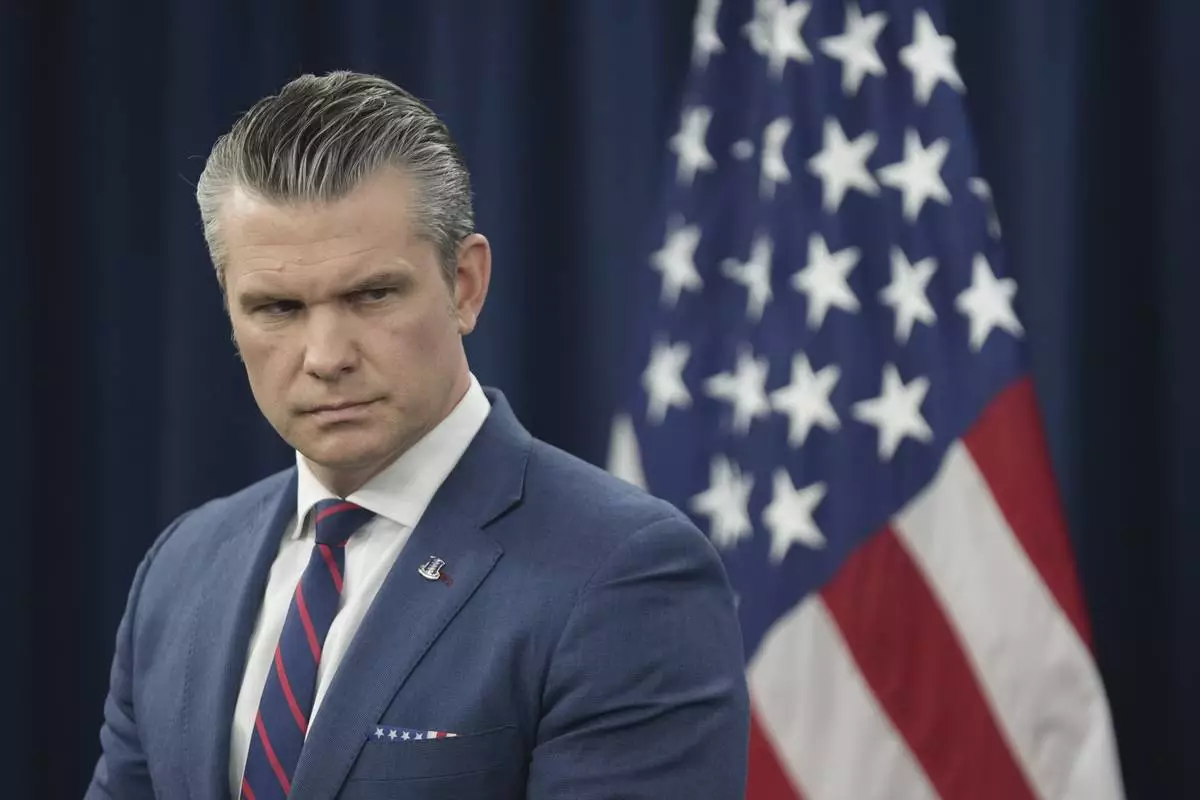
Defense Secretary Pete Hegseth listens during a press briefing at the Pentagon, Monday, March 2, 2026, in Washington. (AP Photo/Mark Schiefelbein)
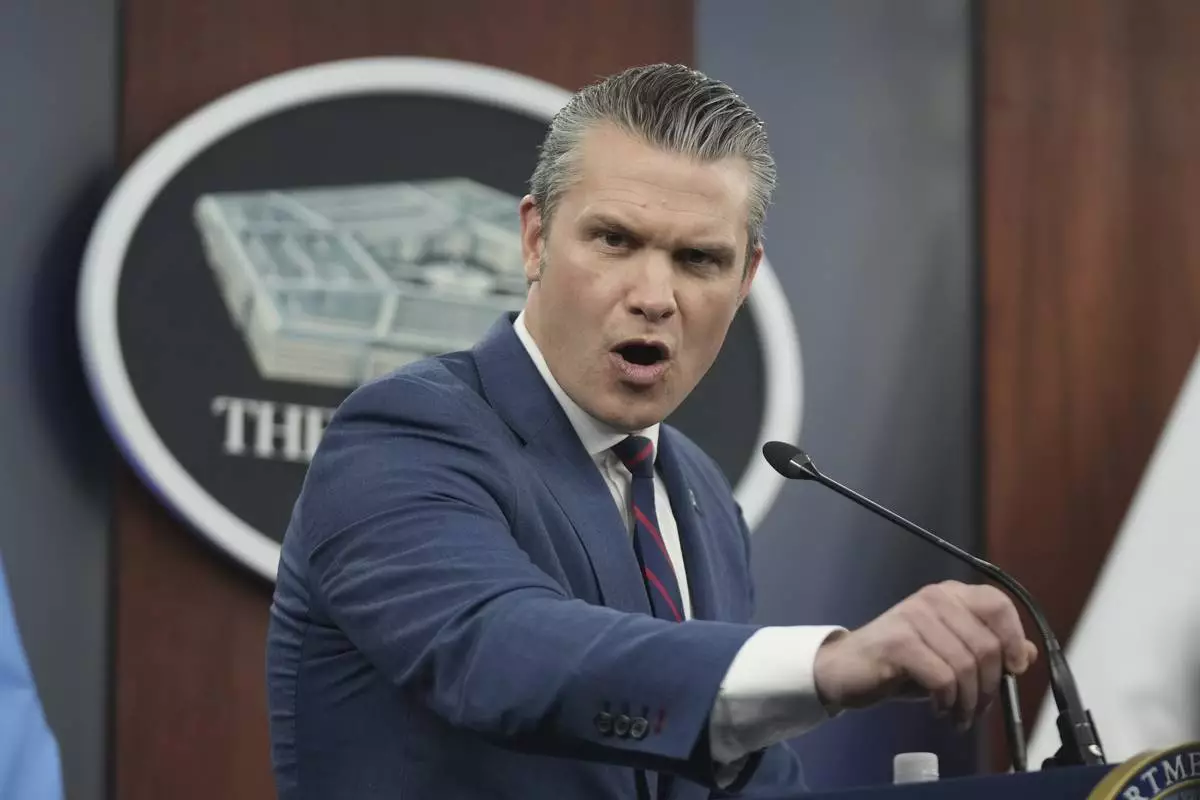
Defense Secretary Pete Hegseth speaks during a press briefing at the Pentagon, Monday, March 2, 2026, in Washington. (AP Photo/Mark Schiefelbein)
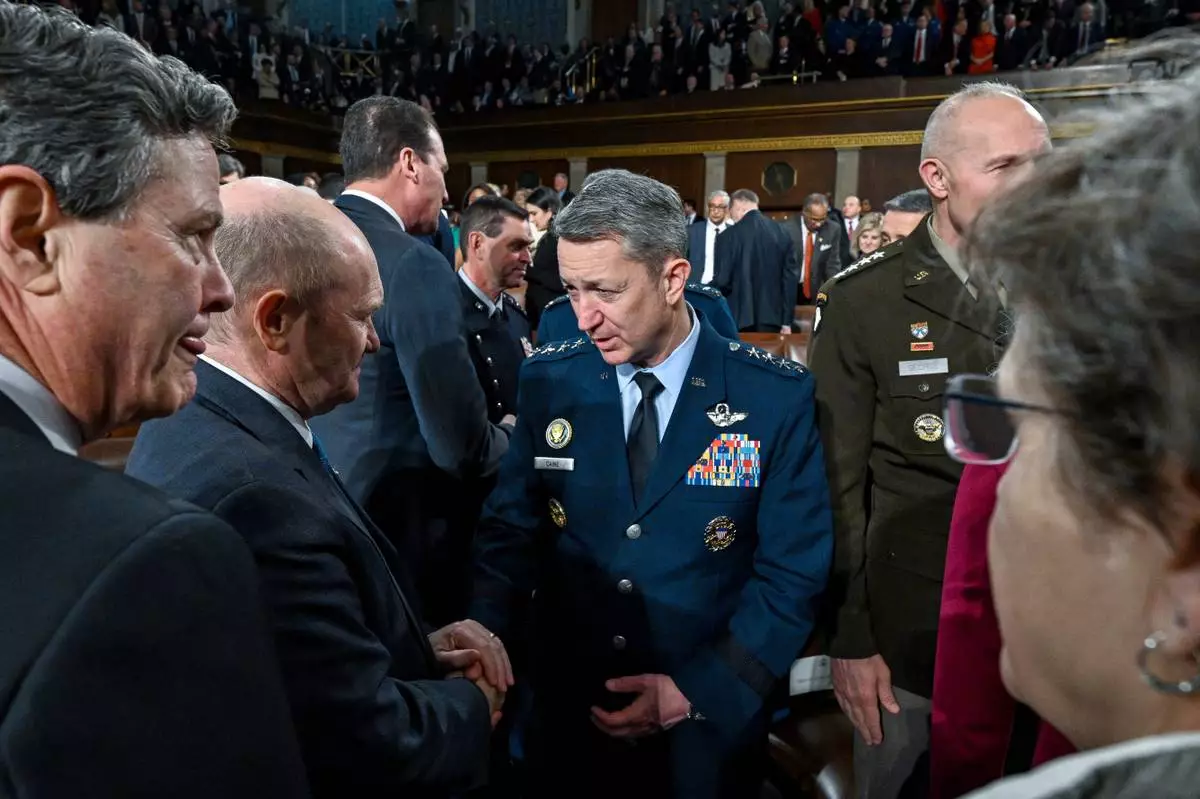
Gen. Dan Caine, chairman of the Joint Chiefs of Staff, greets Sen. Chris Coons, D-Del., before President Donald Trump delivers the State of the Union address to a joint session of Congress in the House chamber at the U.S. Capitol in Washington, Tuesday, Feb. 24, 2026. (Kenny Holston/The New York Times via AP, Pool)