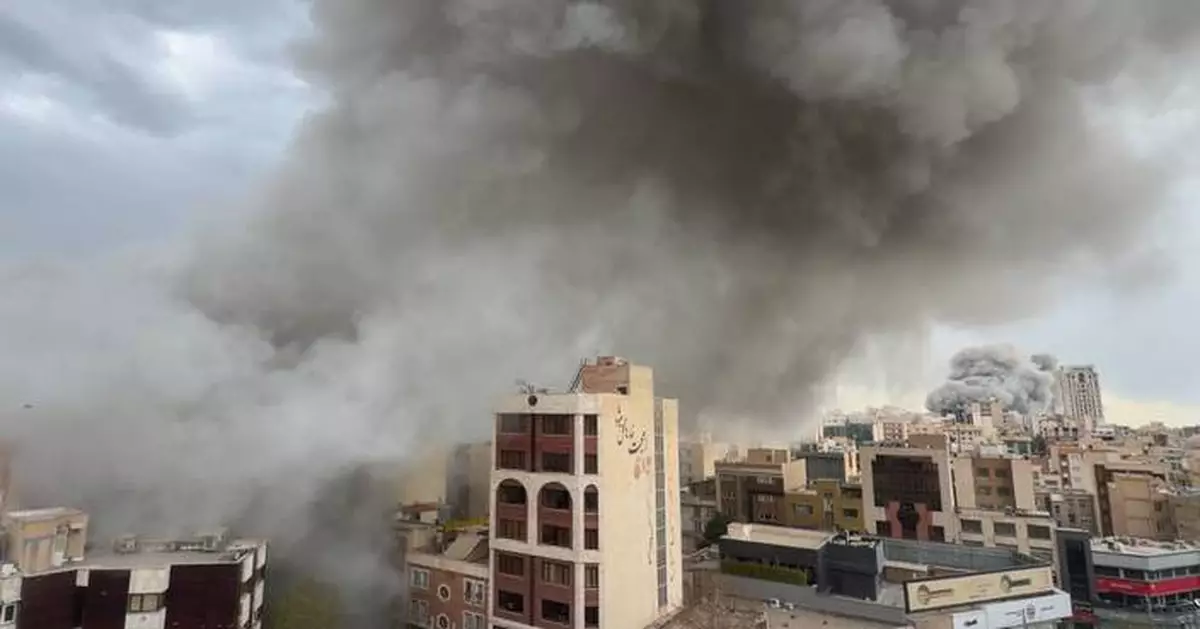
THE HAGUE, Netherlands (AP) — As U.S. and Israeli forces pounded Iran, and Tehran and its affiliates retaliated by firing missiles at targets across the Mideast on Monday, the international legal order was caught in the crossfire.
At the heart of the post-World War II global order — United Nations headquarters in New York — Secretary-General António Guterres told the Security Council on Saturday that U.S. and Israeli airstrikes violated international law, including the U.N. Charter. He also condemned Iran’s retaliatory attacks for violating the sovereignty and territorial integrity of nations in the Mideast.
Officials in the Trump administration insist that the military campaign is a lawful measure to ensure Tehran does not build nuclear weapons. "It’s a matter of global security. And to that end, the United States is taking lawful actions,” Trump's U.N. ambassador, Mike Waltz, said.
Iranian Foreign Minister Abbas Araghchi wrote in a letter to the U.N. on Sunday that the killing of Supreme Leader Ayatollah Ali Khamenei “constitutes a grave and unprecedented breach of the most fundamental norms governing relations among States.”
On Monday, Defense Secretary Pete Hegseth bullishly defended the U.S. military campaign. "No stupid rules of engagement, no nation building quagmire, no democracy building exercise, no politically correct wars. We fight to win and we don’t waste time or lives,” he said at the Pentagon.
The war with Iran comes less than two months after U.S. forces swooped into Caracas to capture former Venezuelan President Nicolás Maduro and fly him to New York to face justice.
David Crane, an American expert on international law and founding prosecutor of a United Nations court that prosecuted crimes in Sierra Leone, wrote in an analysis that U.S. attacks in Iran and Venezuela “highlight a dangerous trend: the normalization of unilateral force as a tool of foreign policy. Even when the outcome is positive, the violation of international law and constitutional limits sets a precedent that threatens global stability and undermines America’s own legal foundations.”
In Washington, many Democrats have called the strikes illegal. They argue that under the Constitution, only Congress has the power to declare war. They say the Trump administration failed to lay out its rationale or plan for the military strikes, and the aftermath.
Congress hurriedly scheduled a war powers debate for Monday over Trump’s authority to bomb Iran.
Under an amendment to the founding treaty of the International Criminal Court, aggression is described as “the use of armed force by a State against the sovereignty, territorial integrity or political independence of another State, or in any other manner inconsistent with the Charter of the United Nations.”
Among acts of aggression listed by the court are: “Bombardment by the armed forces of a State against the territory of another State or the use of any weapons by a State against the territory of another State.”
Neither the United States, Israel nor Iran are members of the court, meaning the court does not have jurisdiction in the ongoing war unless it is referred to ICC prosecutors by a Security Council resolution.
Under the U.N. Charter, nations are only permitted to use force against another nation if it has been authorized by the Security Council or in self-defense, said Marieke de Hoon, an associate professor of international criminal law at the University of Amsterdam.
De Hoon said the attacks on Iran amount to a crime of aggression.
“It is a violation of the prohibition to use force, the cornerstone of the international legal order, and there is no legal justification for it: it is not a self-defense against an armed attack by Iran or an imminent threat” of an attack, "nor is there a UNSC resolution to authorize use of force,” she told The Associated Press. “Regime change moreover violates the sovereignty of another state.”
Iranian authorities have a history of brutal repression of dissent and sponsoring extremism that has destabilized the Mideast. The country's nuclear ambitions were targeted by Trump last year in military strikes on sites in Iran.
But De Hoon said that is not enough to justify the U.S. and Israeli bombardments.
She said that under international law Tehran has the right to self-defense, but she added that "Iran is not allowed to attack civilian infrastructure in other countries. Its response needs to be proportionate to stop the aggression, without offering itself a legitimation toward, for instance, regime change in the aggressor country.”
Crane said that while the removal from power of Maduro and Khamenei could potentially boost regional stability and reduce suffering and ultimately improve the prospects for peace and democracy, “international law does not permit states to unilaterally decide which tyrants to remove by force.”
Marko Milanovic, a professor of international law at Reading University, said that in peacetime, “it is a clear violation of international law to assassinate the head of state or government of some other state.”
He said heads of state and government “enjoy personal immunities and inviolability, and any attacks against them would also violate the sovereignty of their state.”
That changes in wartime, he added, saying that if political leaders also are members of the armed forces, “then they are combatants like any other members of the armed forces and are not immune from attack.”
Associated Press writer Jovana Gec in Belgrade, Serbia, contributed to this report.
This story has been corrected to show Marieke De Hoon's title as associated professor.
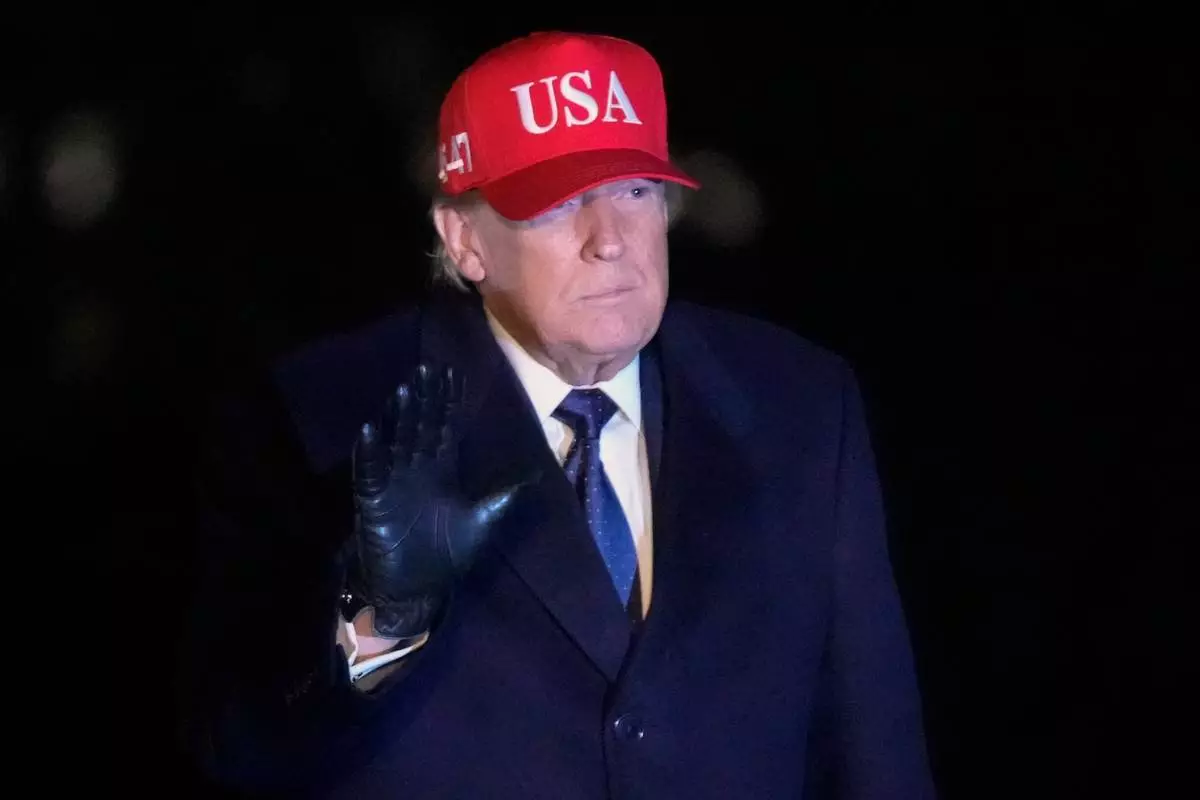
President Donald Trump waves after arriving on Marine One on the South Lawn of White House, Sunday, March 1, 2026, in Washington. (AP Photo/JMark Schiefelbein)
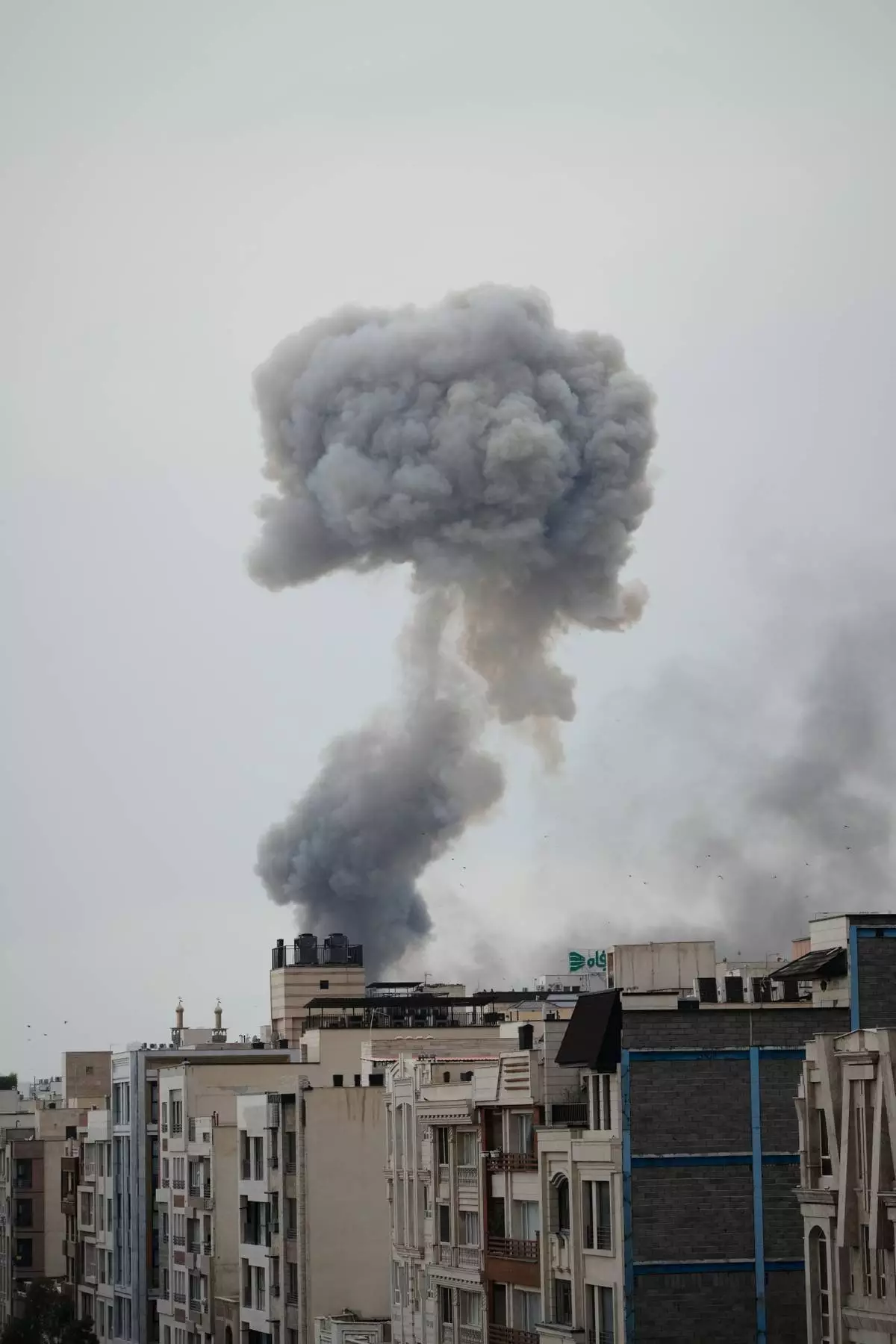
A plume of smoke rises after a strike in Tehran, Iran, Monday, March 2, 2026. (AP Photo/Vahid Salemi)
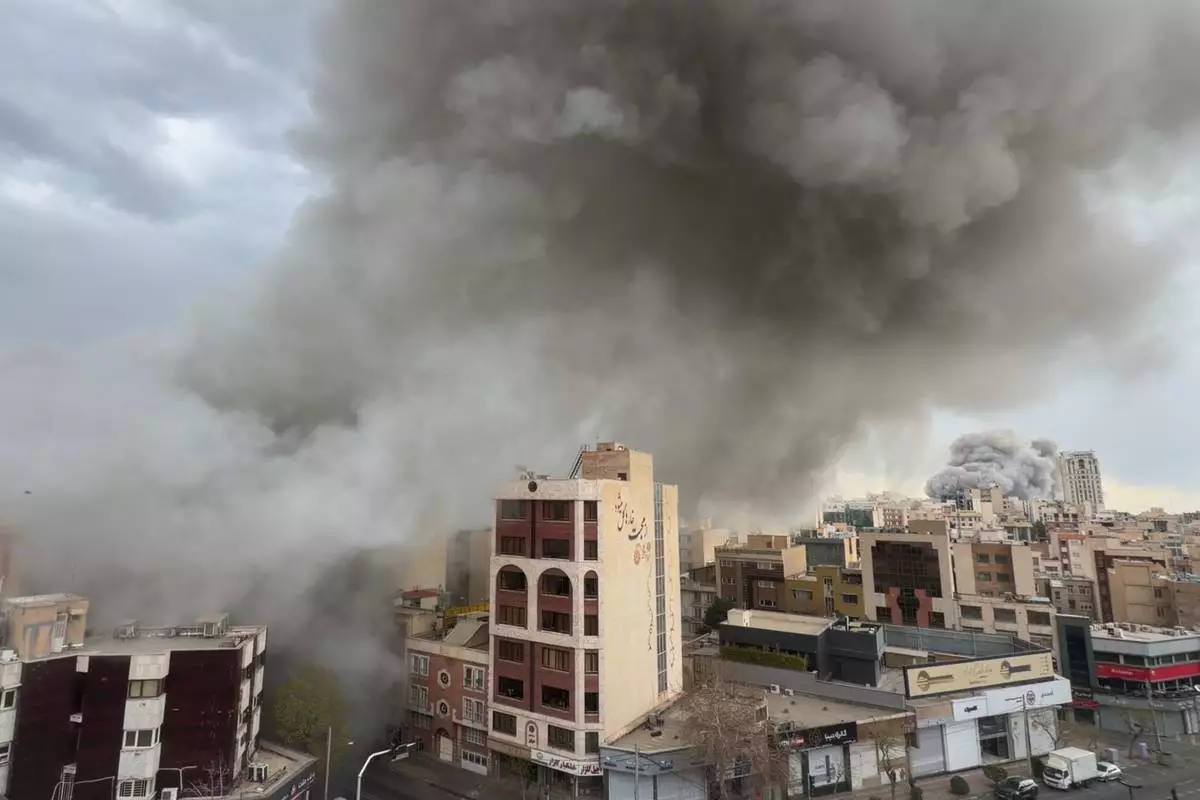
Plumes of smoke from two simultaneous strikes rise over Tehran, Iran, Monday, March 2, 2026. (AP Photo/Mohsen Ganji)
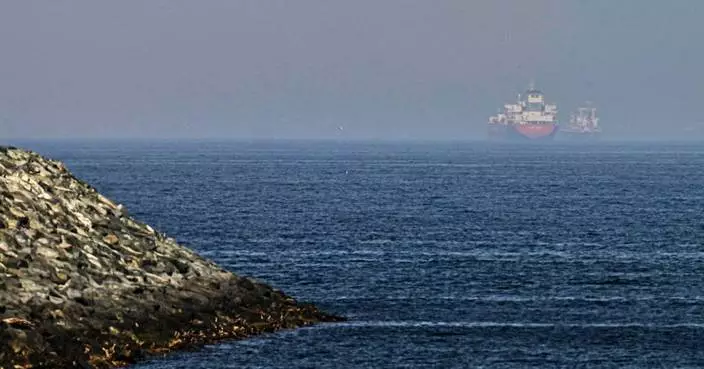
U.S. forces on Monday launched an effort to guide commercial ships through the Strait of Hormuz, where hundreds have been stuck since the Iran war began.
Two American-flagged merchant ships have “successfully transited” through the critical waterway, the U.S. military said. Separately, the U.S. military denied Iran’s claims that it struck an American Navy vessel southeast of the strait.
Iran handed over its latest proposal for negotiations with the U.S. to mediators in Pakistan, Iran’s state-run IRNA news agency reported Friday. Trump subsequently said he’s “not satisfied” with it, but did not elaborate on the proposal’s apparent shortcomings. The shaky ceasefire between the U.S. and Iran has lasted for three weeks.
Here's the latest:
As part of its National Defense Strategy announced in January — a sweeping document laying out a vision on everything from deterring China to defending against cyberattacks to disrupting Iran’s nuclear ambitions — the Trump administration said Europe must do more for its own defense.
While “we are and will remain engaged in Europe, we must — and will — prioritize defending the U.S. Homeland and deterring China,” it said.
Among other things, the document noted that Europe’s economic power, while shrinking in relative terms globally, remains significant, and said Germany’s economy alone “dwarfs that of Russia.”
“Fortunately, our NATO allies are substantially more powerful than Russia — it is not even close,” it said, noting a recent commitment among NATO allies to raise national defense spending to 5% of GDP in total, a push led by Trump.
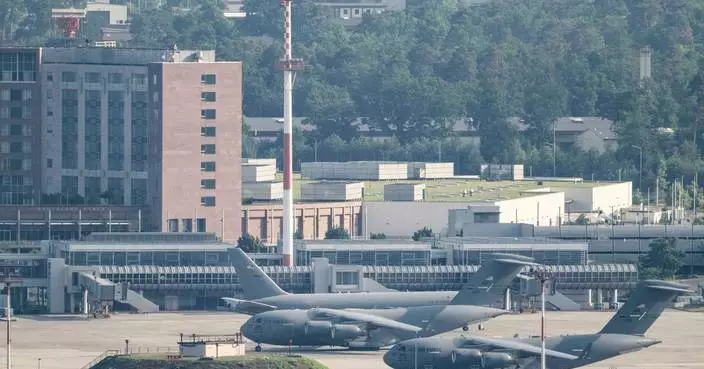
The U.S. European Command, created in 1947 and known as EUCOM, is one of 11 combat commands within the Defense Department, and covers some 50 countries and territories.
In addition to more than 36,000 troops in Germany, Italy hosts more than 12,000 and there’s another 10,000 in the United Kingdom, according to Pentagon numbers from December.
The Pentagon has offered few details about which troops or operations would be affected in the drawdown announced Friday.
The U.S. increased its European deployment after Russia launched its full-scale war on Ukraine four years ago. NATO allies like Germany have expected for over a year that these troops would be the first to leave.
▶ Read more
The event in the East Room will bring together more than 130 small business owners as the president highlights his administration’s policies benefiting them.
“Our nation’s 36 million small businesses now have the confidence to hire, reinvest and expand, unleashing an historic era of sustained growth,” Small Business Administrator Kelly Loeffler said ahead of the event. “America is open for business again.”
The gathering is meant to mark this year’s National Small Business Week and the owners represent manufacturing, food production, defense, energy and retail businesses, among other areas, according to the White House.
European leaders on Monday said President Trump’s snap decision to pull thousands of U.S. troops out of Germany came as a surprise but is a fresh sign that Europe must take care of its own security.
The Pentagon announced last week that it would pull some 5,000 troops out of Germany, but Trump told reporters Saturday that “we’re going to cut way down. And we’re cutting a lot further than 5,000.”
He offered no reason for the move, which blindsided NATO, but his decision came amid an escalating dispute with German Chancellor Friedrich Merz over the U.S.-Israeli war on Iran, and Trump’s anger over European allies’ reluctance to get involved in the conflict in the Middle East.
▶ Read more
The U.S. stock market is holding tentatively near its record heights Monday, while oil prices climb with uncertainty about when oil tankers can resume crossing the Strait of Hormuz and restore the world’s flow of crude. Dueling claims about a possible Iranian strike on a U.S. Navy vessel in the strait heightened the tensions.
The S&P 500 slipped 0.1%, coming off its latest all-time high. The Dow Jones Industrial Average was down 216 points, or 0.4%, as of 9:35 a.m. Eastern time, and the Nasdaq composite was up 0.1%.
The action was stronger in the oil market, where the price for a barrel of Brent crude climbed 2% to $110.37 and briefly topped $114 during the morning. Iran’s closure of the Strait of Hormuz due to its war with the United States has kept oil tankers pent up in the Persian Gulf and away from customers worldwide. That in turn has sent the price of Brent soaring from roughly $70 per barrel before the war.
▶ Read more
Rubio will travel to Rome and Vatican City this week in a bid to ease rising tensions between the Trump administration and Pope Leo over U.S. policies, particularly with Iran.
The State Department said Monday that Rubio, a devout Catholic who’s visited Rome and the Vatican at least three times since becoming Trump’s top diplomat, would be in Italy on Thursday and Friday.
“Secretary Rubio will meet with Holy See leadership to discuss the situation in the Middle East and mutual interests in the Western Hemisphere” the department said. “Meetings with Italian counterparts will be focused on shared security interests and strategic alignment.”
The trip comes as Trump has criticized Pope Leo, the first American pontiff, for his stances on the Middle East and elsewhere and posting social media images likening Trump to Jesus Christ.
The disruption of the waterway has squeezed countries in Europe and Asia that depend on Persian Gulf oil and gas, raising prices far beyond the region.
Trump has promised to bring down gas prices as he faces midterm elections this year.
The U.S. has warned shipping companies they could face sanctions for paying Iran for transit of the strait. It has enacted a naval blockade on Iranian ports since April 13, telling 49 commercial ships to turn back, U.S. Central Command said Sunday. The blockade has deprived Tehran of oil revenue it needs to shore up its ailing economy.
U.S. officials have expressed hope the blockade forces Iran back to the negotiation table.
The U.S. military said Monday that two American-flagged merchant ships had successfully transited the Strait of Hormuz and Navy guided-missile destroyers in the Persian Gulf were helping to restore shipping traffic. It separately denied Iran’s claims to have struck an American Navy vessel.
The announcement came a day after U.S. President Donald Trump announced a new initiative to help guide ships through the critical waterway for global energy. Iran has effectively closed the strait since the U.S. and Israel started the war Feb. 28, rattling the global economy.
The U.S.-led Joint Maritime Information Center has advised ships to cross the strait in Oman’s waters, saying it set up an “enhanced security area.” U.S. Central Command didn’t say when the Navy ships arrived or when the merchant vessels departed.
It was unclear whether shipping companies, and their insurers, will feel comfortable taking the risk given that Iran has fired on ships in the waterway and vowed to keep doing so.
▶ Read more
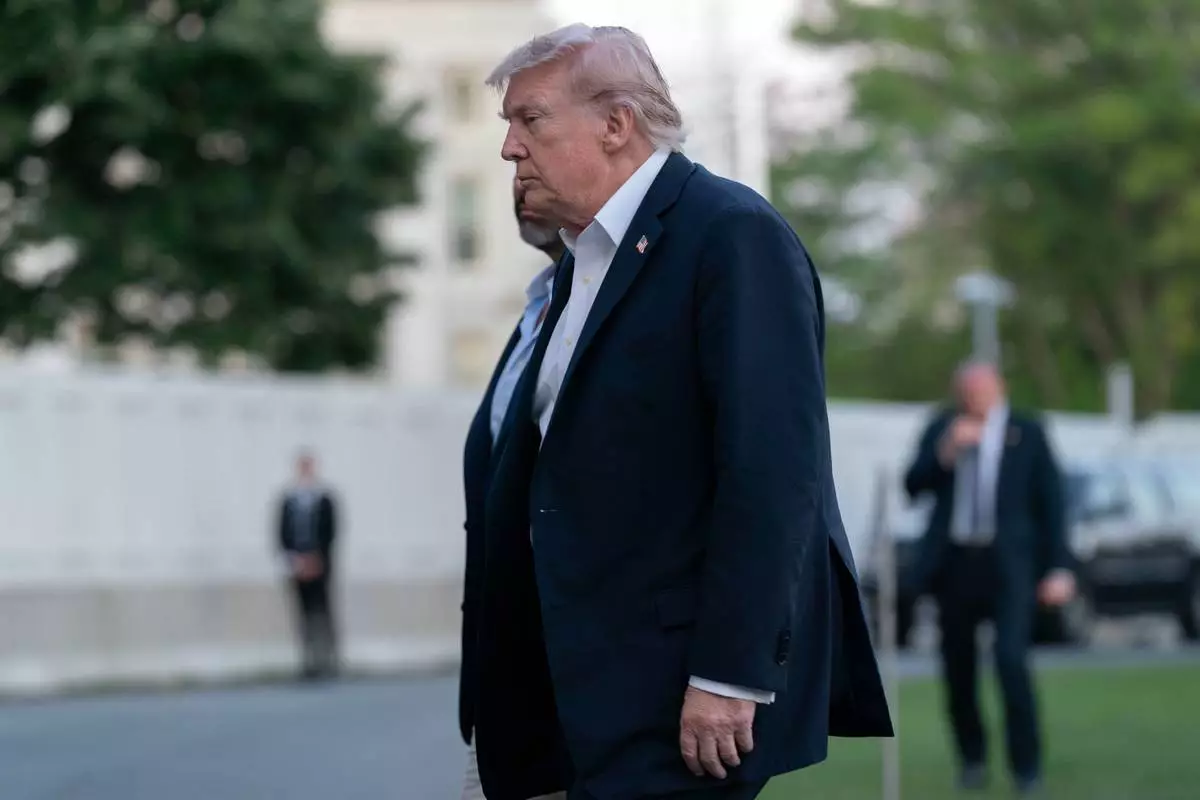
President Donald Trump and Donald Trump Jr. step off from Marine One upon their arrival on the South Lawn of the White House, Sunday, May 3, 2026, in Washington. (AP Photo/Jose Luis Magana)
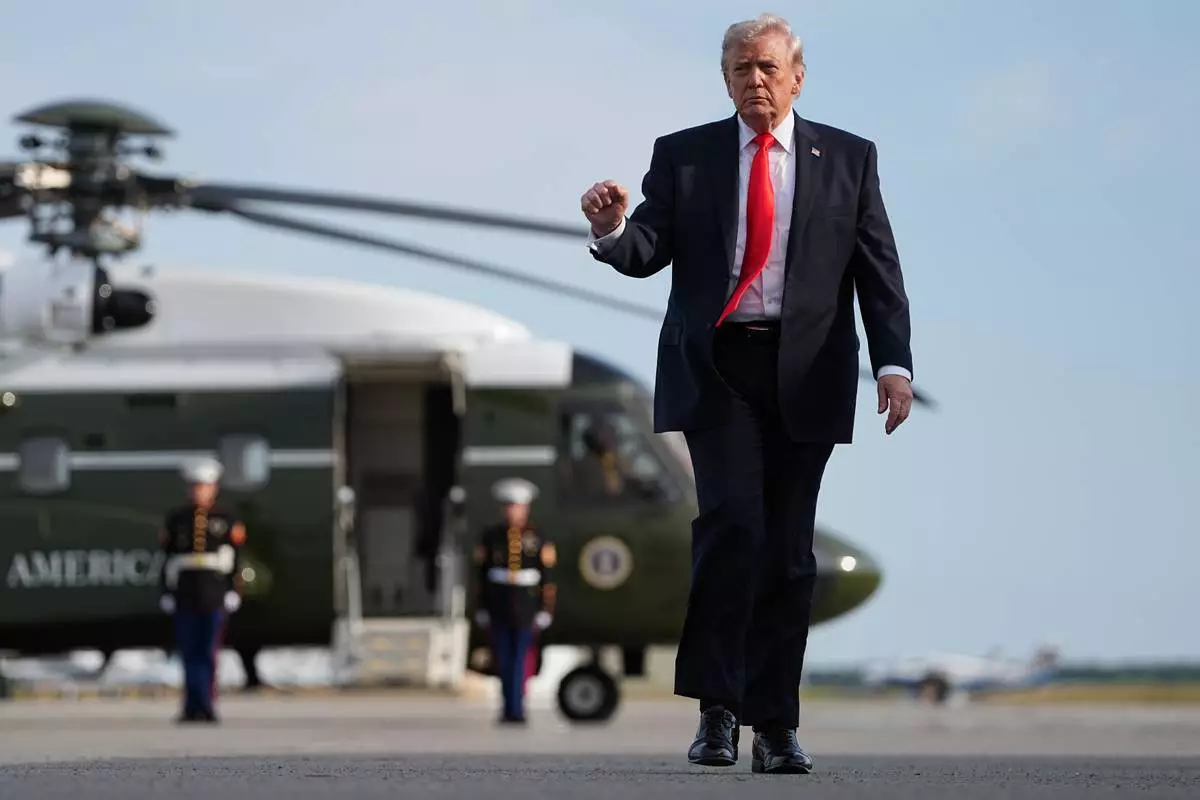
President Donald Trump walks from Marine One to board Air Force One at Ocala International Airport, in Ocala Fla., Friday, May 1, 2026, after speaking at an event in The Villages, Fla. (AP Photo/Matt Rourke)
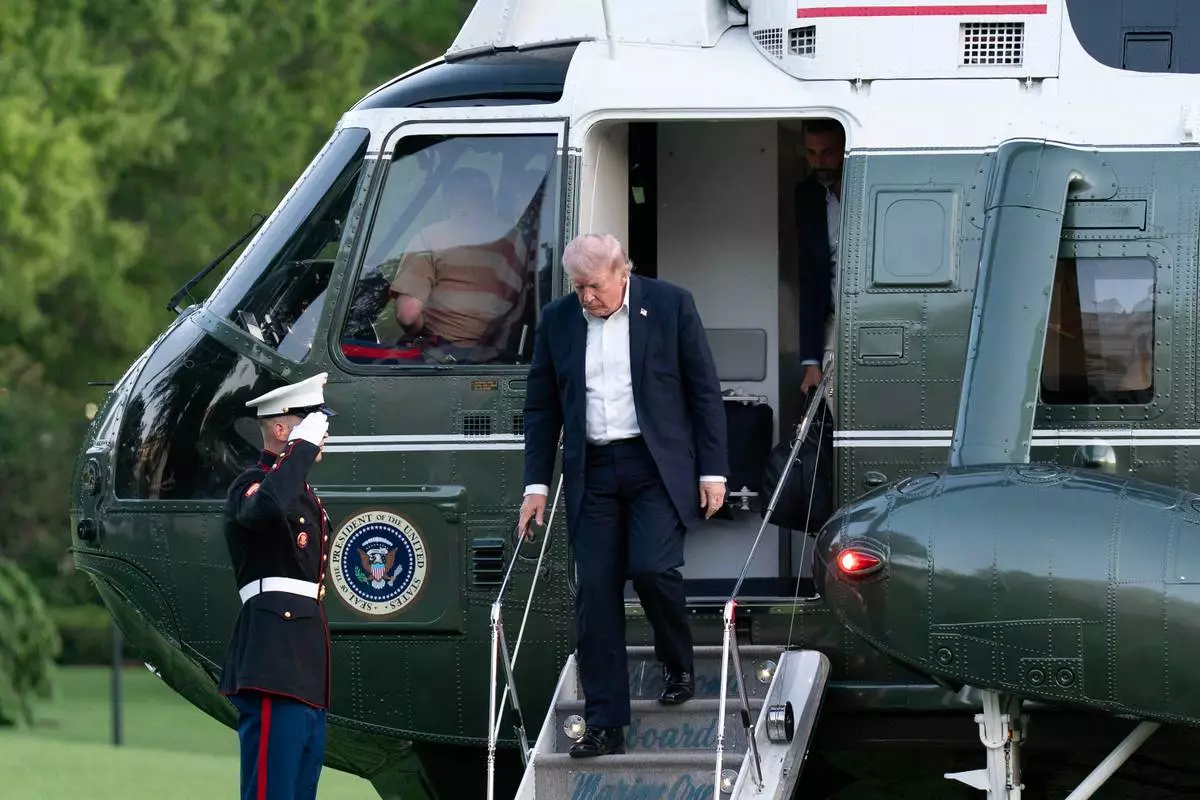
President Donald Trump steps off from Marine One upon his arrival at the South Lawn of the White House, Sunday, May 3, 2026, in Washington. (AP Photo/Jose Luis Magana)