AHOSKIE, N.C.--(BUSINESS WIRE)--Mar 2, 2026--
North Carolina & Virginia Railroad Company, LLC (NCVA), a subsidiary of Genesee & Wyoming Inc. (G&W), will serve a new $875 million specialty steel-manufacturing facility for US Forged Rings (USFR) in Cofield, North Carolina.
This press release features multimedia. View the full release here: https://www.businesswire.com/news/home/20260302856152/en/
Once operational, the plant will manufacture forged rings, tubular components and large-scale steel fabrications for construction, power generation, nuclear, offshore wind, oil and gas, defense and aerospace industries across the U.S. It is expected to bring more than 600 jobs to the area.
“NCVA welcomes the opportunity to support USFR and such a critical project that strengthens the U.S. industrial sector and expands the manufacturing backbone of eastern North Carolina,” says Michael Miller, G&W CEO. “With new rail infrastructure and strong public-private partnerships, Hertford County is a prime location for manufacturing and is bolstered by dependable freight-rail service from NCVA, which has longstanding roots in the area economy and offers customers a connection to the broader North American freight-rail network via CSX.”
NCVA is providing track design consultations to USFR to enable safe and efficient rail service at their facility and anticipates hauling inbound steel plate and slab, as well as outbound components, for the company.
The facility is located adjacent to a Nucor Steel plant, which has also been served by NCVA since 2000.
About G&W
With more than 100 owned or leased freight railroads, Genesee & Wyoming Inc. (G&W) is the largest short line railroad holding company in North America. The company’s subsidiaries and joint ventures serve 2,000 customers over more than 13,000 miles of track and also provide rail service at more than 30 major ports, rail-ferry service between the U.S. Southeast and Mexico, transload services, and industrial railcar switching and repair. G&W is owned by Toronto-based Brookfield Infrastructure Partners, L.P., as well as GIC.
G&W’s North Carolina & Virginia Railroad to Serve New US Forged Rings Facility in North Carolina’s Hertford County
NEW YORK (AP) — U.S. stocks are slipping Monday, while oil prices leap on worries that war in the Middle East will slow the global flow of crude and make inflation even worse.
Crude prices jumped 6%, which will likely mean higher prices soon at gasoline pumps. That would hurt not only U.S. households, whose spending makes up the bulk of the U.S. economy, but also businesses with big fuel bills.
The S&P 500 slipped 0.3%, with some of the sharpest losses hitting cruise lines and airlines. It had sunk as much as 1.2% in the morning before trimming its loss.
The Dow Jones Industrial Average was down 199 points, or 0.4%, as of 10:45 a.m. Eastern time, and the Nasdaq composite was 0.1% lower.
Prices climbed for natural gas, meanwhile, which could mean higher heating bills for the remainder of the winter, after a major supplier of liquefied natural gas to Europe said it would stop production because of the war. Gold climbed 2.1% as investors looked for safer things to own and as U.S. officials tried to persuade the world that this war will not last forever.
“This is not Iraq,” U.S. Defense Secretary Pete Hegseth said Monday. “This is not endless.”
Typically, Treasury yields also fall when investors are feeling nervous. But yields instead climbed, in part because higher oil prices will put upward pressure on inflation, which is already worse than what nearly everyone would like. That could tie the Federal Reserve’s hands and keep it from cutting interest rates.
Lower interest rates can boost the economy and job market, while also worsening inflation. Higher rates can do the opposite.
Past military conflicts in the Middle East have not caused long-term drops for markets. For this war to knock down U.S. stocks in a significant and sustained way, the price of oil would perhaps need to jump above $100 per barrel, according to strategists at Morgan Stanley led by Michael Wilson.
Oil prices are still well below there. A barrel of benchmark U.S. crude rose 6.4% to $71.31. Brent crude, the international standard, climbed 7.8% to $78.59 per barrel.
That helped the U.S. stock market pare some of its steep, opening loss. Morgan Stanley says the S&P 500 has climbed an average of 2%, 6% and 8% in the one, six and 12 months following “geopolitical risk events” historically. That's going back to the Korean War, which began in 1950, and the 1956 Suez crisis.
At the moment, though, fear is still running through markets.
Stocks of airlines were some of Monday’s sharpest losers. Not only do higher oil prices threaten their already big fuel bills, the fighting in the Middle East also closed airports and left travelers stranded.
United Airlines fell 3.2%, and American Airlines lost 4.2%.
Norwegian Cruise Line Holdings fell even more, 9.8%. It needs customers to have plenty of cash to spend after paying for their gasoline bills and other essentials.
The cruise operator also reported weaker revenue for its latest quarter than analysts expected, though its profit was better. Its forecast for profit this upcoming fiscal year was lower than analysts expected.
Hotels, discount retailers and other companies that benefit when customers have more cash in their pocket from lower fuel bills also lagged the market. MGM Resorts fell 3.1%, and Dollar Tree lost 2.5%.
Stocks in the housing industry also struggled as higher Treasury yields could translate into more expensive mortgage rates. Paint company Sherwin-Williams fell 2.9%, and homebuilder D.R. Horton lost 3.9%.
Helping to limit Wall Street's losses were oil companies, which benefited from the rising prices for crude. Exxon Mobil climbed 0.9%, and Occidental Petroleum rose 2.1%.
Companies that make equipment for the military also strengthened. Lockheed Martin climbed 3.1%, and RTX rallied 4.3%.
In stock markets abroad, indexes fell across much of Europe and Asia. Germany’s DAX lost 2.5%, France’s CAC 40 fell 2.3% and Hong Kong’s Hang Seng dropped 2.1% for some of the world’s larger losses.
Stocks in Shanghai were an outlier and rose 0.5%.
In the bond market, the yield on the 10-year Treasury rose to 4.04% from 3.97% late Friday. A report showing growth for U.S. manufacturing was better than economists expected last month also helped to lift yields.
AP Business Writers Matt Ott and Elaine Kurtenbach contributed.

James Denaro, center, and others work on the floor at the New York Stock Exchange in New York, Monday, March 2, 2026. (AP Photo/Seth Wenig)
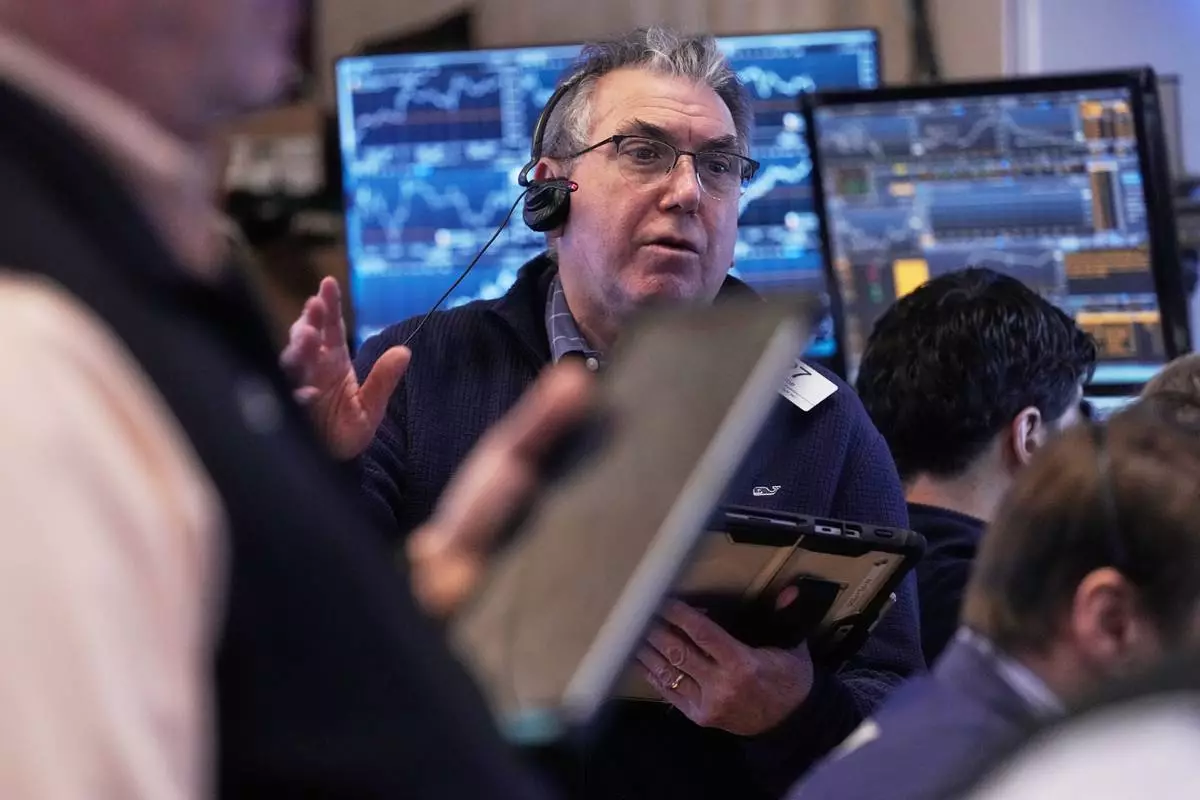
Trader John Bishop works on the floor of the New York Stock Exchange, Friday, Feb. 20, 2026. (AP Photo/Richard Drew)

Iraqi Shiite carry a mock coffin of Iranian supreme Leader Ayatollah Ali Khamenei, who was killed by a U.S. airstrike in Tehran, during a symbolic funeral, in Najaf, Iraq, Sunday, March 1, 2026. (AP Photo/Anmar Khalil)
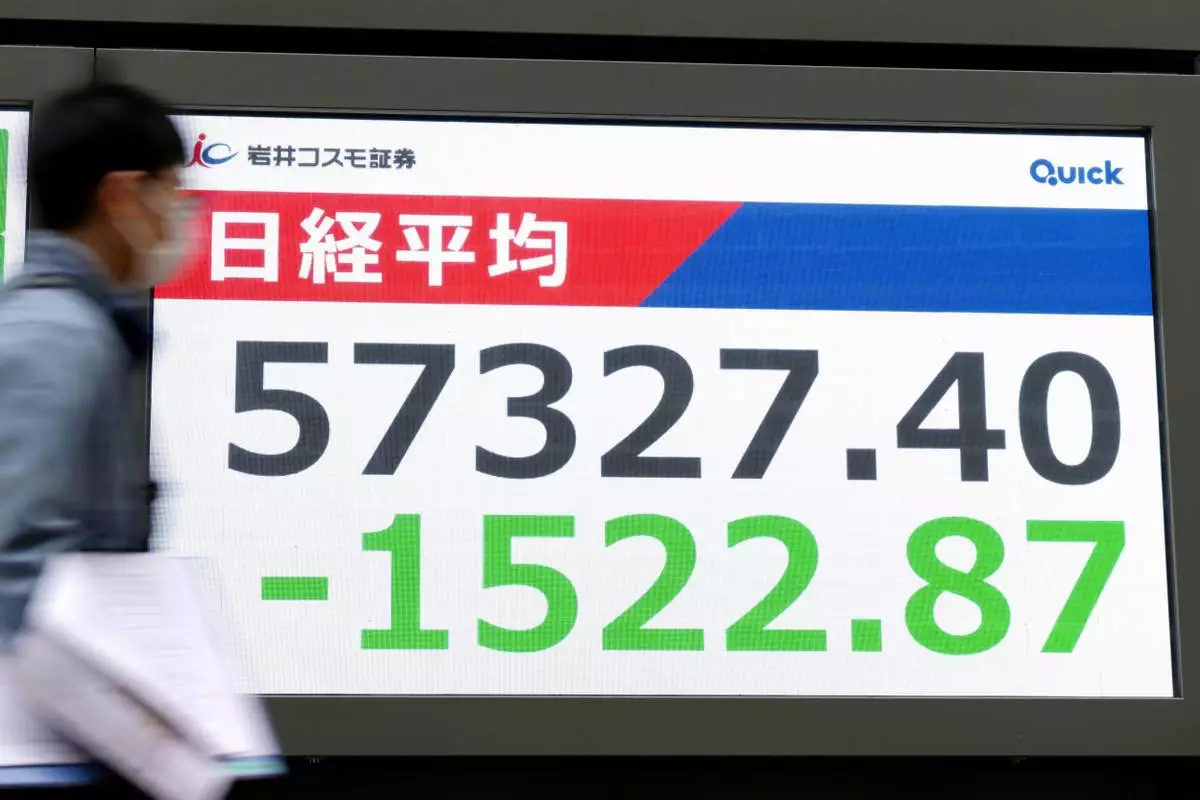
People walk in front of an electronic stock board showing Japan's Nikkei index at a securities firm Monday, March 1, 2026, in Tokyo.(Yohei Fukai/Kyodo News via AP)
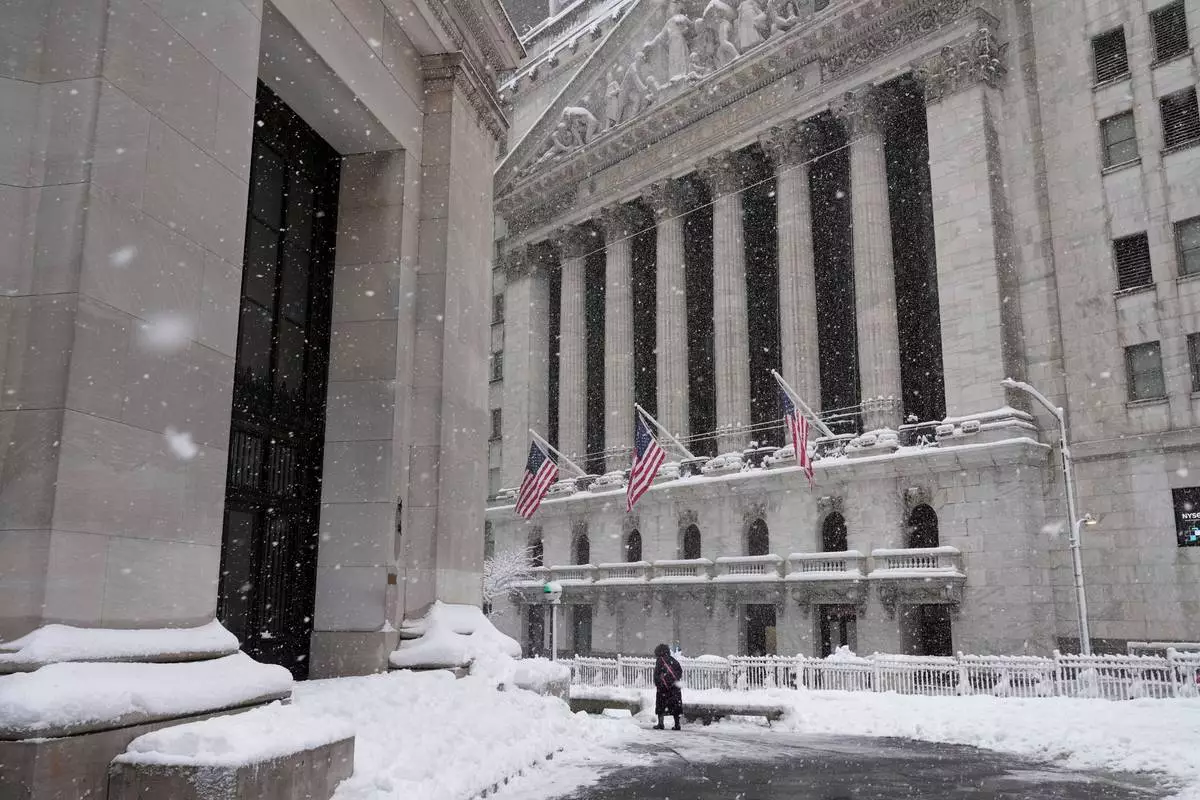
A pedestrian walks outside the New York Stock Exchange during a snow storm, Monday, Feb. 23, 2026, in New York. (AP Photo/Seth Wenig)
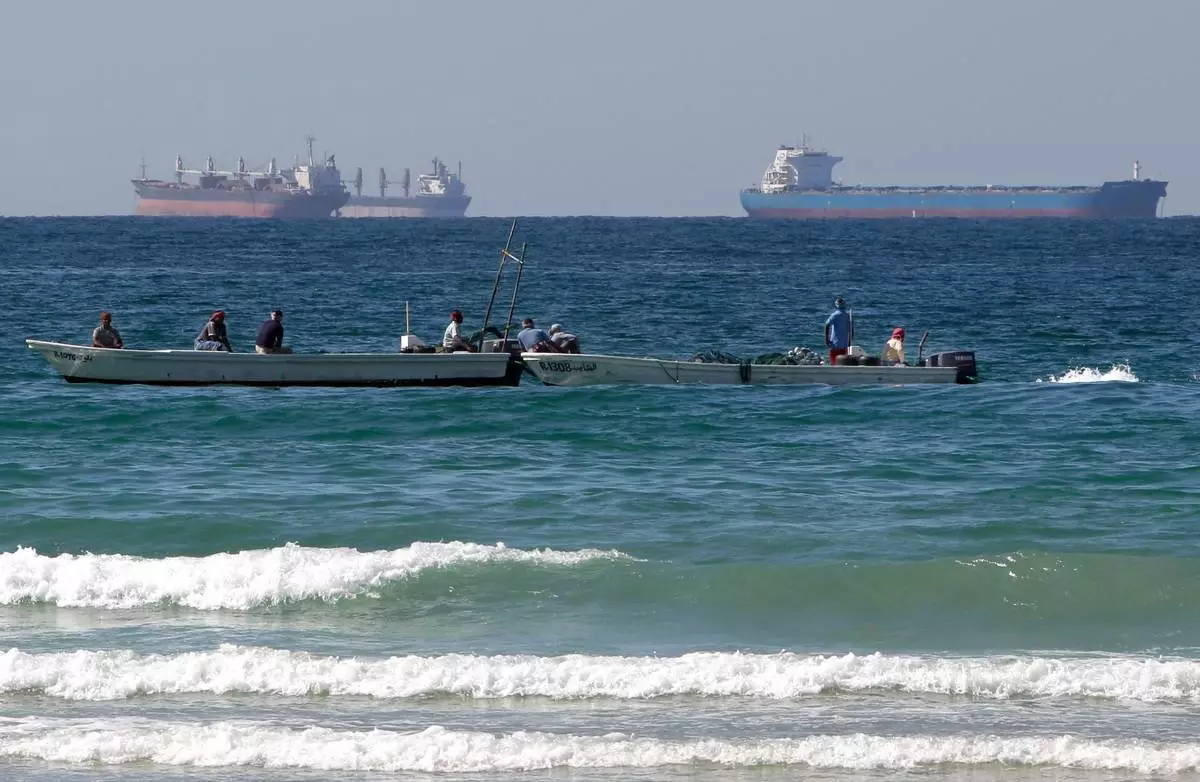
FILE - Fishermen work in front of oil tankers south of the Strait of Hormuz Jan. 19, 2012, offshore the town of Ras Al Khaimah in United Arab Emirates. (AP Photo/Kamran Jebreili, File)
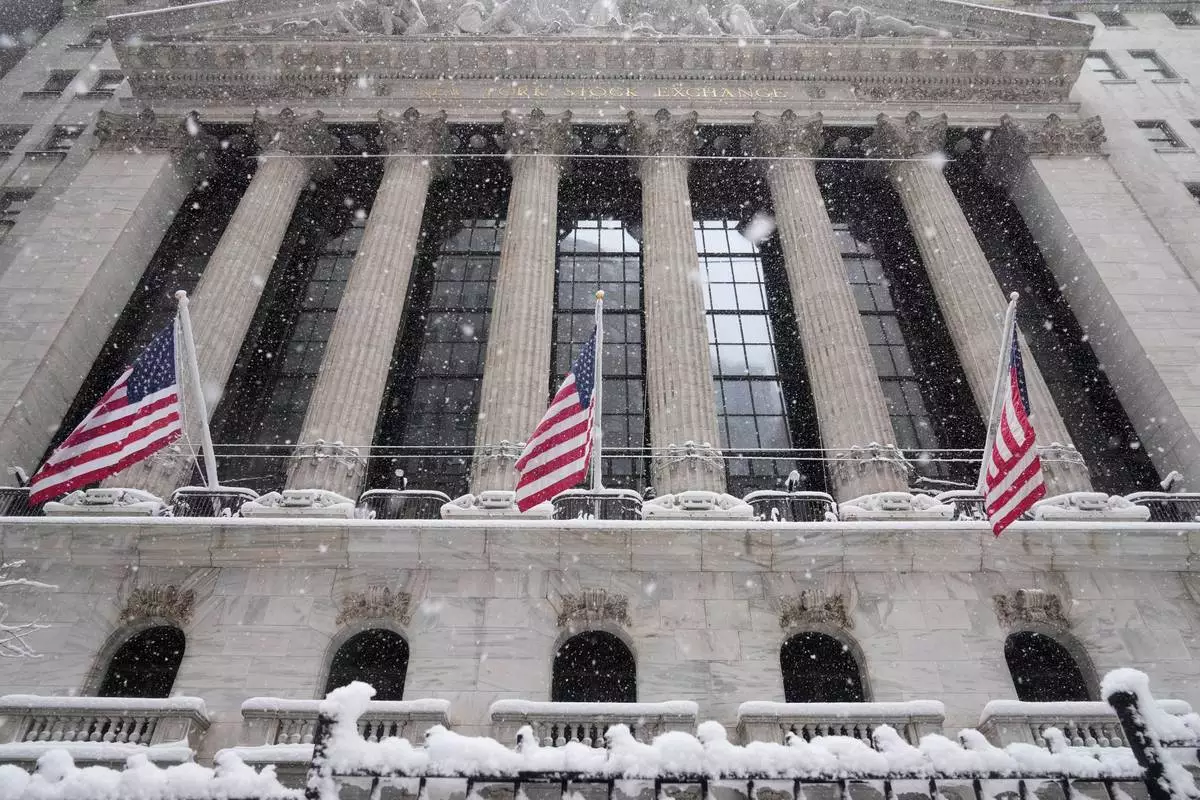
Snow falls outside the New York Stock Exchange, Monday, Feb. 23, 2026, in New York. (AP Photo/Seth Wenig)