Iran's leaders are scrambling to replace Supreme Leader Ayatollah Ali Khamenei, who ruled the country for 37 years before he was killed in the surprise U.S. and Israeli bombardment.
It's only the second time since the 1979 Islamic Revolution that a new supreme leader is being chosen. Potential candidates range from hard-liners committed to confrontation with the West to reformists who seek diplomatic engagement.
The supreme leader has the final say on all major decisions, including war, peace and the country's disputed nuclear program.
In the meantime, a provisional governing council composed of President Masoud Pezeshkian, hard-line judiciary chief Gholamhossein Mohseni Ejei and senior Shiite cleric Ayatollah Ali Reza Arafi is guiding the country through its biggest crisis in decades. Foreign Minister Abbas Araghchi said Sunday that a new supreme leader would be chosen early this week.
The supreme leader is appointed by an 88-member panel called the Assembly of Experts, who by law are supposed to quickly name a successor. The panel consists of Shiite clerics who are popularly elected after their candidacies are approved by the Guardian Council, Iran’s constitutional watchdog.
Khamenei had major influence over both clerical bodies, making it unlikely the next leader will mark a radical departure.
Here are the top contenders.
The son of Khamenei, a mid-level Shiite cleric, is widely considered a potential successor. He has strong ties to Iran's paramilitary Revolutionary Guard but has never held office. His selection could prove awkward, as the Islamic Republic has long criticized hereditary rule and cast itself as a more just alternative.
Arafi is a member of the provisional government council. The senior Shiite cleric was handpicked by Khamenei to be a member of the Guardian Council in 2019, and three years later he was elected to the Assembly of Experts. He leads a network of seminaries.
Rouhani, a relative moderate, was president of Iran from 2013 to 2021 and reached the landmark nuclear agreement with the Obama administration that U.S. President Donald Trump scrapped during his first term. Rouhani served on the Assembly of Experts until 2024, when he said he was disqualified from running for reelection. Rouhani criticized it as an infringement on Iranians' political participation.
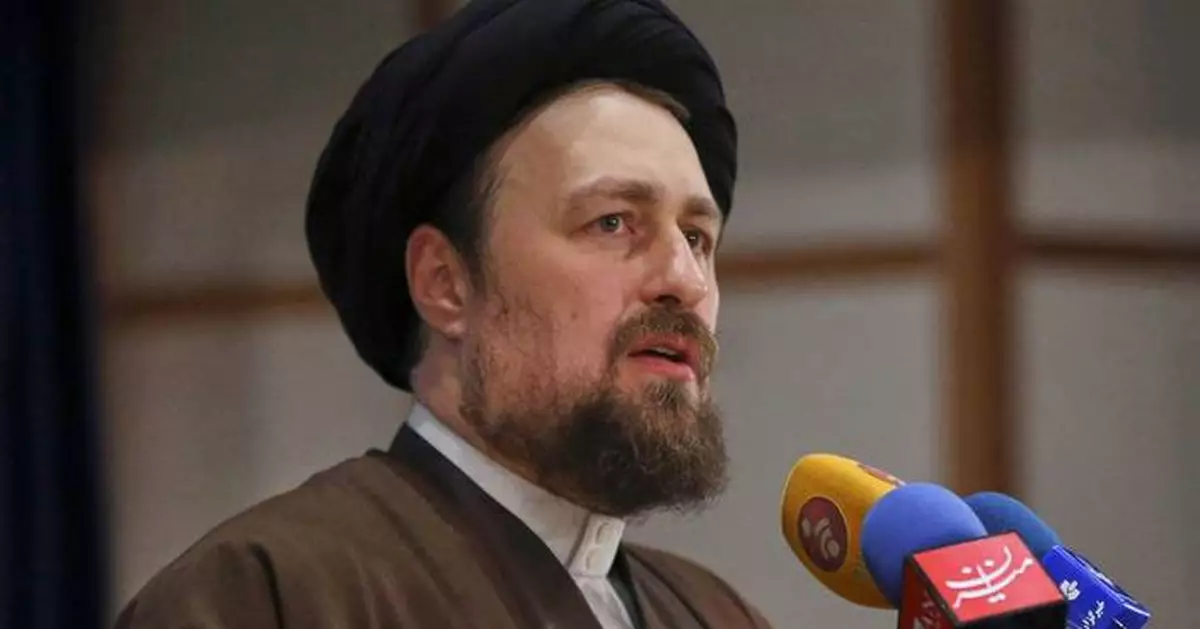
Khomeini is the most prominent grandson of the founder of the Islamic Republic, Ayatollah Ruhollah Khomeini. He is also seen as a relative moderate, but has never held government office. He currently works at his grandfather’s mausoleum in Tehran.
Mirbagheri is a senior cleric popular with hard-liners who serves on the Assembly of Experts.
He was close to the late Ayatollah Mohammad Taghi Mesbah Yazdi, a fellow hard-liner who wrote that Iran should not deprive itself of the right to produce “special weapons,” a veiled reference to nuclear arms.
During the COVID-19 pandemic, Mirbagheri denounced the closure of schools as a “conspiracy.”
He is currently the head of the Islamic Cultural Center in Qom, the main center for Islamic teaching in Iran.
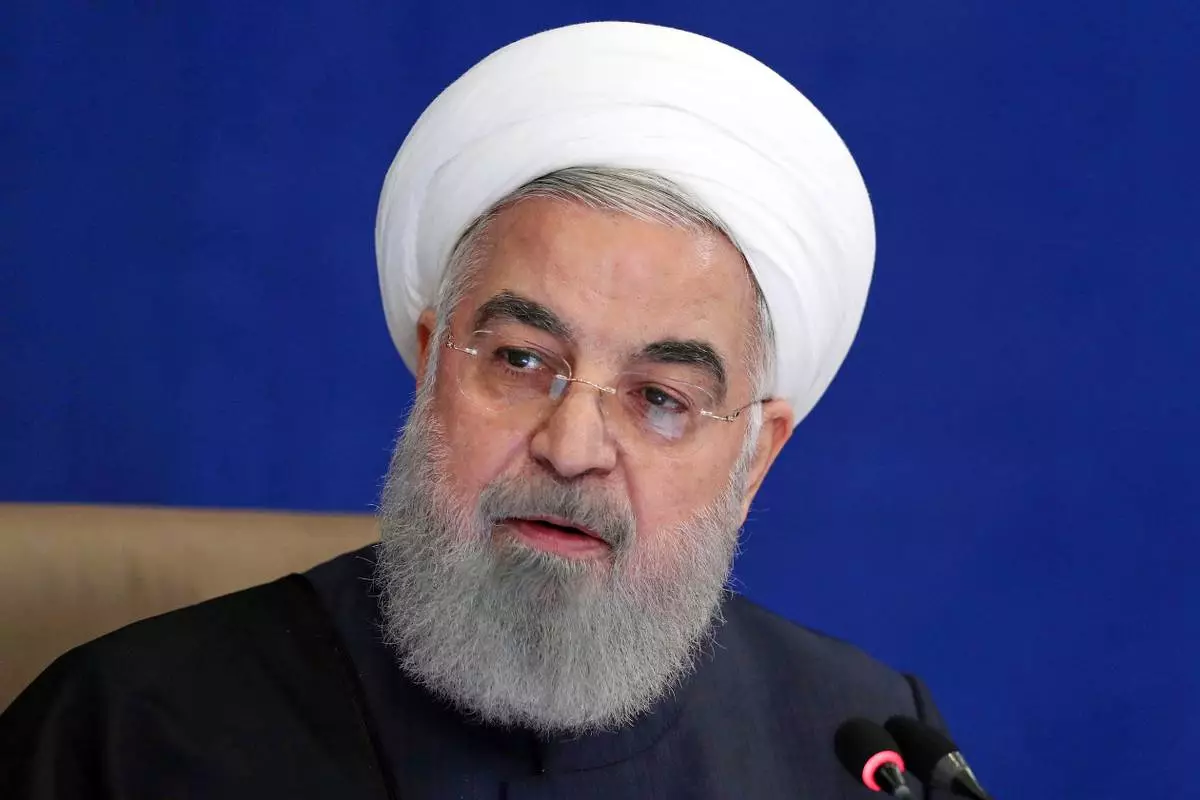
FILE - In this Dec. 9, 2020 file photo, released by the official website of the office of the Iranian Presidency, President Hassan Rouhani speaks, during a meeting in Tehran, Iran. (Iranian Presidency Office via AP, File)
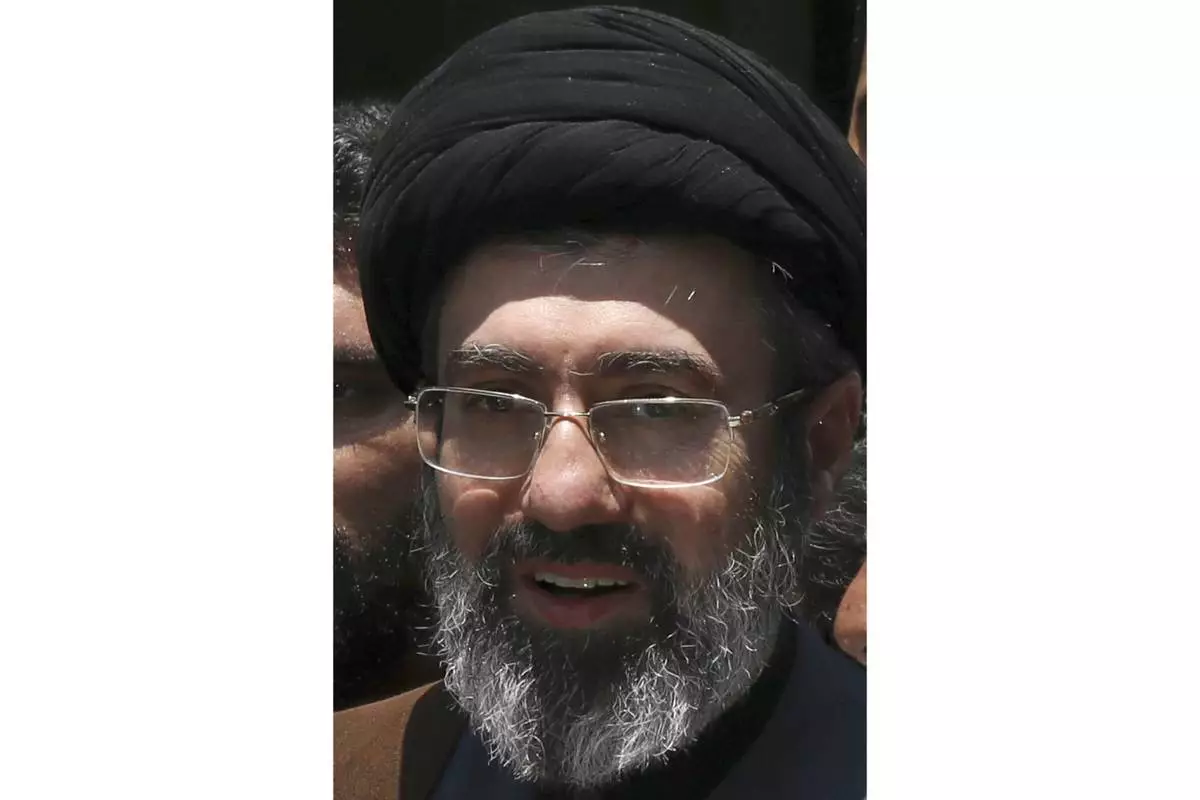
FILE - Mojtaba, son of Iranian Supreme Leader Ayatollah Ali Khamenei, center, attends the annual Quds, or Jerusalem Day rally in Tehran, Iran, on May 31, 2019. (AP Photo/Vahid Salemi, File)
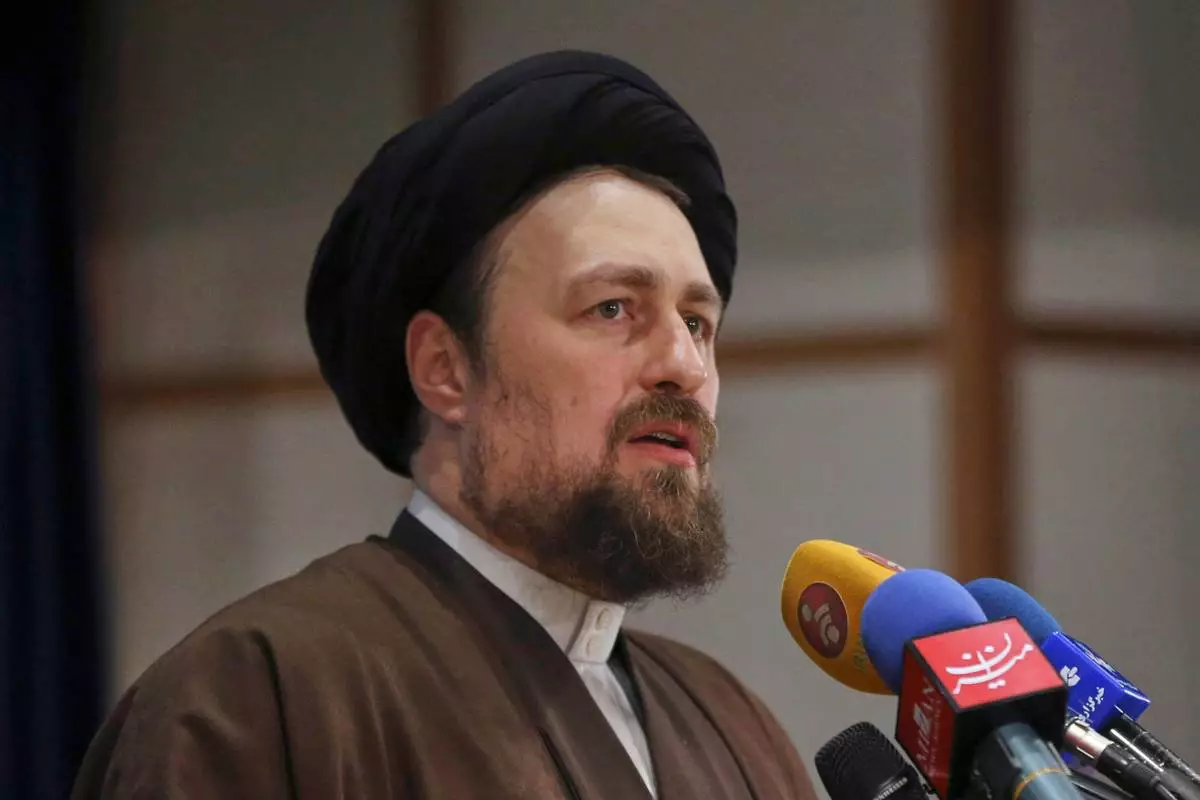
FILE - In this Dec. 18, 2015 file photo, Hassan Khomeini, grandson of Ayatollah Khomeini, speaks at the election headquarters of the interior ministry in Tehran, Iran. (AP Photo/Vahid Salemi, File)
L’ILE LONGUE, France (AP) — French President Emmanuel Macron announced Monday that France would allow the temporary deployment of its nuclear-armed aircraft to allied countries as part of its new nuclear strategy aimed at strengthening Europe’s independence.
Macron said the new posture could “provide for the temporary deployment of elements of our strategic air forces to allied countries," but said there would be no sharing of decision-making with any other nation regarding the use of the nuclear weapons.
Talks about such arrangements have started with Britain, Germany, Poland, the Netherlands, Belgium, Greece, Sweden and Denmark, Macron said at a military base at L’Ile Longue in northwestern France that hosts the country’s ballistic missile submarines.
Macron’s long-planned speech, scheduled before the most recent outbreak of hostilities in Iran, was aimed at spelling out how French nuclear weapons fit into Europe’s security amid concerns raised on the continent by recurring tensions with U.S. President Donald Trump.
France also will allow partners to participate in deterrence exercises and allow allies’ non-nuclear forces to participate in France’s nuclear activities, said Macron, who is the commander-in-chief of the armed forces under the French constitution.
Macron also announced that France will increase its number of nuclear warheads from the current level of below 300, but did not give a figure for the increase. It will be the first time France increases its nuclear arsenal since at least 1992.
“I have decided to increase the numbers of warheads of our arsenal,” Macron said. “My responsibility is to ensure that our deterrence maintains — and will maintain in the future — its assured destructive power."
European leaders have voiced growing doubts about U.S. commitments to help defend Europe under the so-called nuclear umbrella, a policy long intended to ensure that allies — particularly NATO members — would be protected by American nuclear forces in the event of a threat.
Macron said that recent changes in U.S. defense strategy have demonstrated a refocusing of American priorities and have encouraged Europe to take more direct responsibility for its own security. He said Europeans should take their destiny more firmly into their hands.
“To be free, one needs to be feared,” Macron said.
France is the only nuclear power in the European Unio n, following Britain's exit from the bloc in 2020.
“If we had to use our arsenal, no state, however powerful, could shield itself from it, and no state, however vast, would recover from it,” Macron said.
Some European nations have already taken up an offer Macron made last year to discuss France’s nuclear deterrence and even associate European partners in nuclear exercises.
Last month, German Chancellor Friedrich Merz said he’d had “initial talks” with Macron on the issue and had publicly theorized about German Air Force planes possibly being used to carry French nuclear bombs. But Macron ruled out any such possibility in Monday's speech.
France and Britain also adopted a joint declaration in July that allows both nations' nuclear forces, while independent, to be “coordinated.” The U.K., no longer an EU member but a NATO ally, is the only other European country with a nuclear deterrent.
Macron has consistently insisted any decision to use France’s nuclear weapons would remain only in the hands of the French president.
Macron added that the evolution of France competitors’ defenses, the emergence of regional powers, the possibility of coordination among adversaries, and the risks linked to proliferation led him to the conclusion that it was essential for France to enhance its nuclear arsenal.
Petrequin reported from Paris.
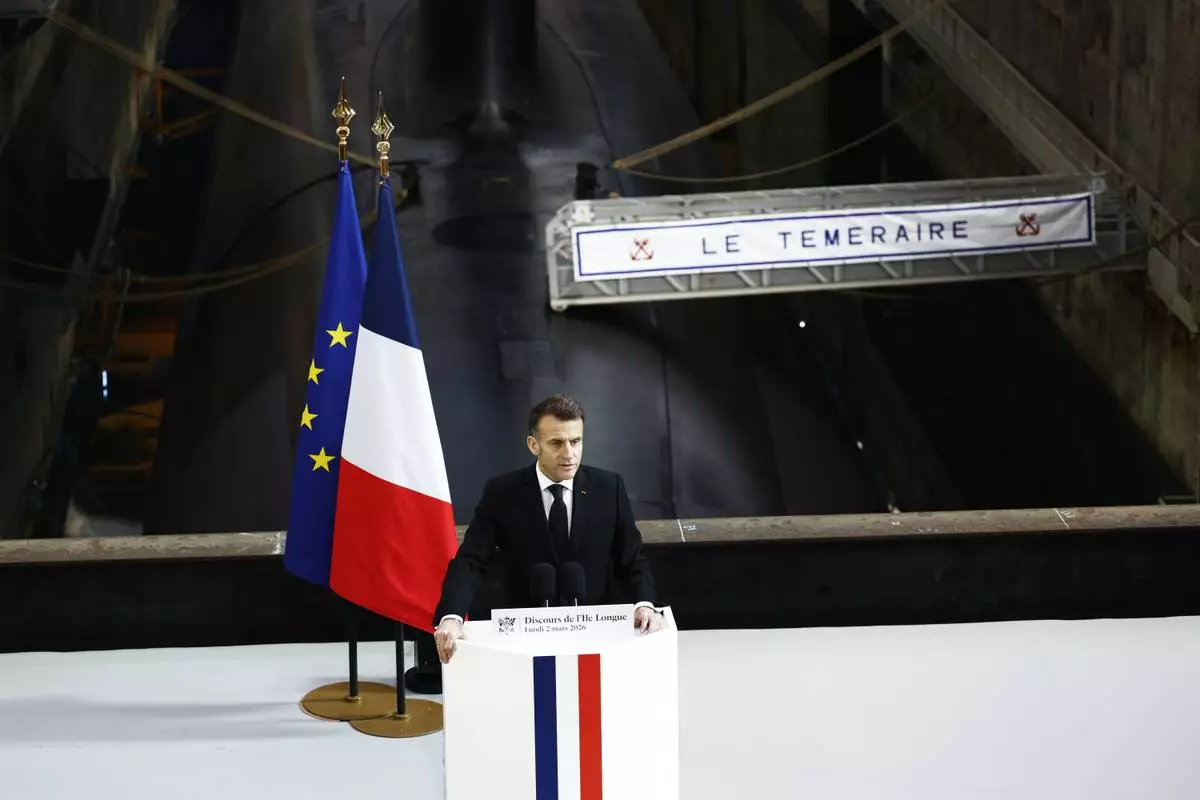
French President Emmanuel Macron delivers a speech next to the submarine 'Le Temeraire' (The Temerarious) at the Nuclear submarines Navy base of Ile Longue in Crozon, France, Monday March 2, 2026. (Yoan Valat/Pool Photo via AP)
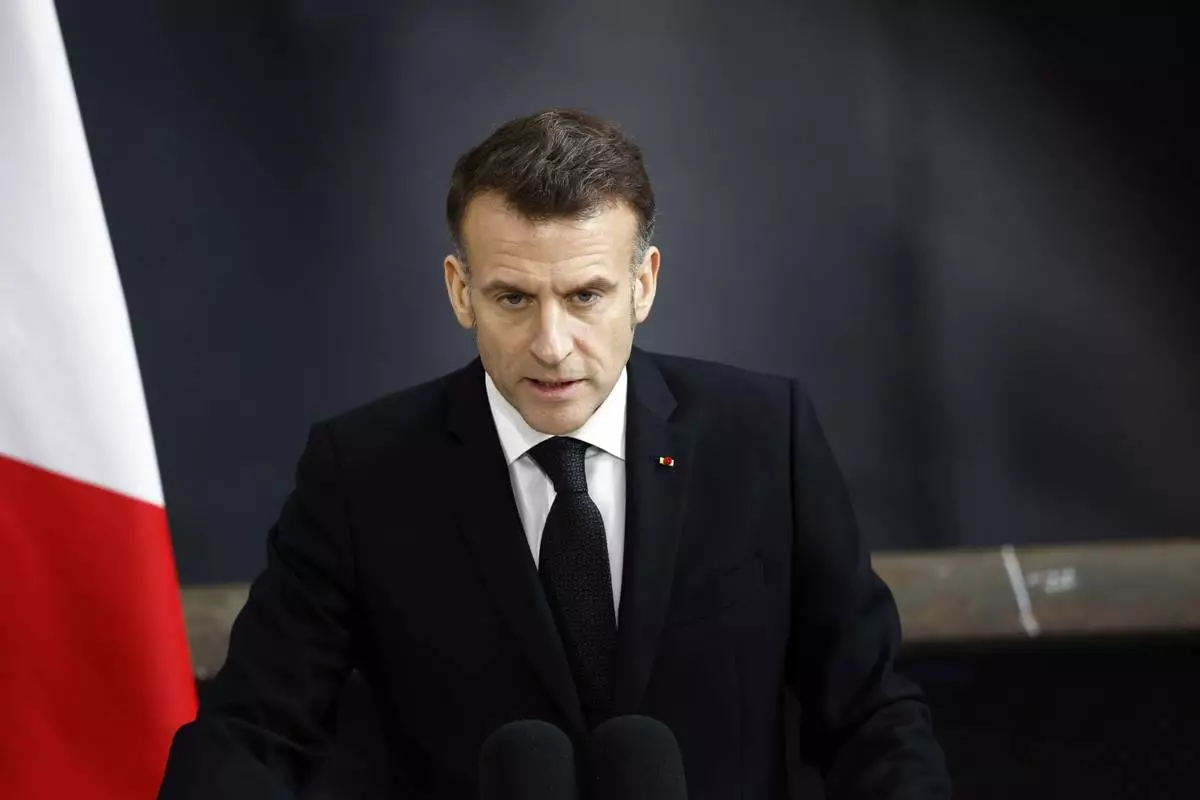
French President Emmanuel Macron delivers a speech next to the submarine 'Le Temeraire' (The Temerarious) at the Nuclear submarines Navy base of Ile Longue in Crozon, France, Monday March 2, 2026. (Yoan Valat/Pool Photo via AP)
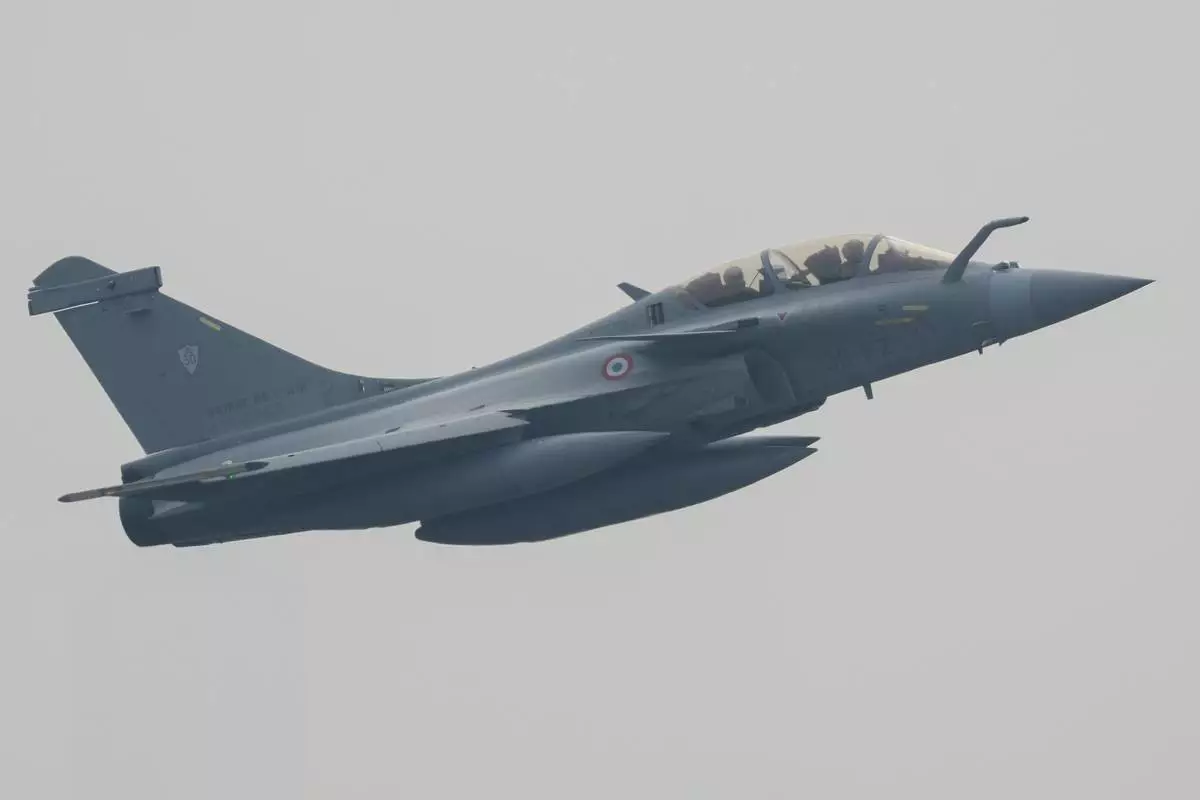
FILE - France's Rafale B twin-seat multirole fighter performs during the Pegase 2024 mission at Halim Perdanakusuma airport in Jakarta, Indonesia, Wednesday, July 24, 2024. (AP Photo/Tatan Syuflana, File)
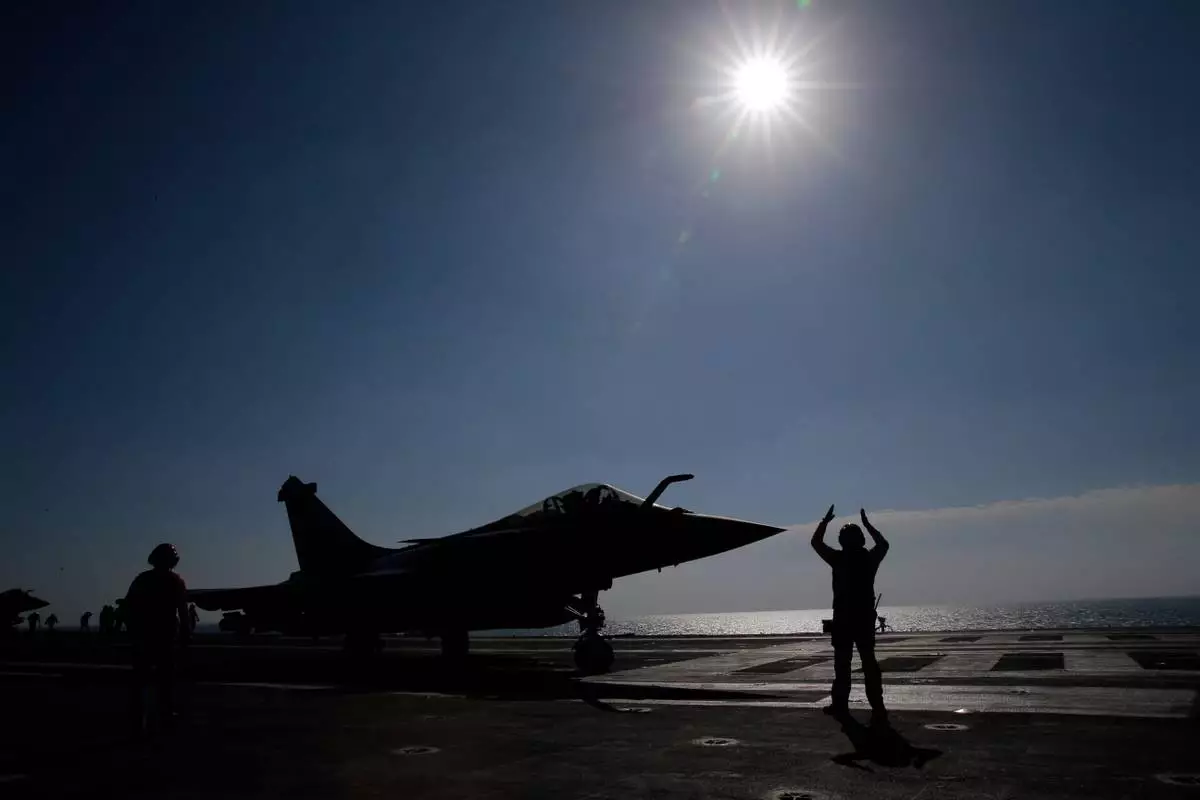
FILE - A Rafale M single seater fighter jet is catapulted on France's flagship Charles de Gaulle aircraft carrier in the Persian Gulf, Jan. 12, 2016. (AP Photo/Christophe Ena, File)
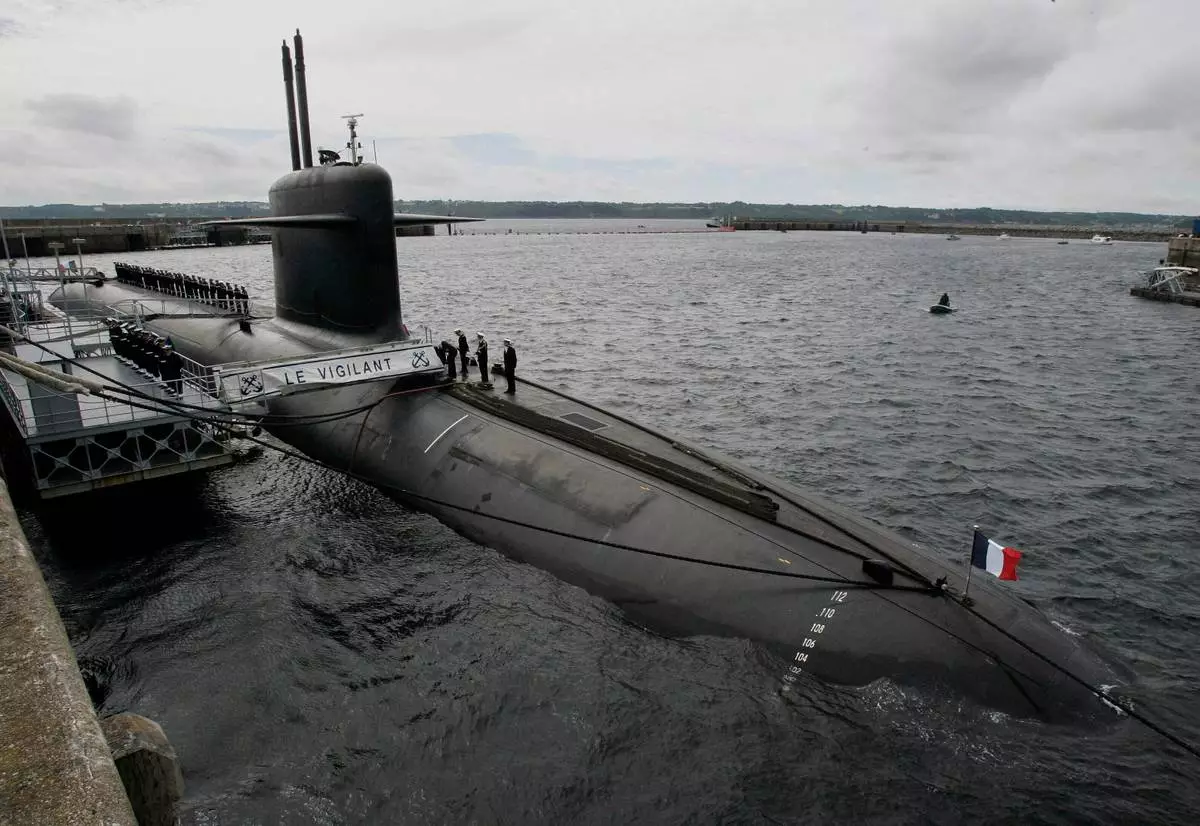
FILE - French Marine officers wait atop "Le Vigilant" nuclear submarine at L'Ile Longue military base, near Brest, Brittany, July 13, 2007. (AP Photo/Francois Mori, Pool, File)