A court in Russia on Tuesday designated a prominent LGBTQ+ rights group as an extremist organization, the latest blow to the country’s beleaguered community that has faced an intensified crackdown in recent years under President Vladimir Putin.
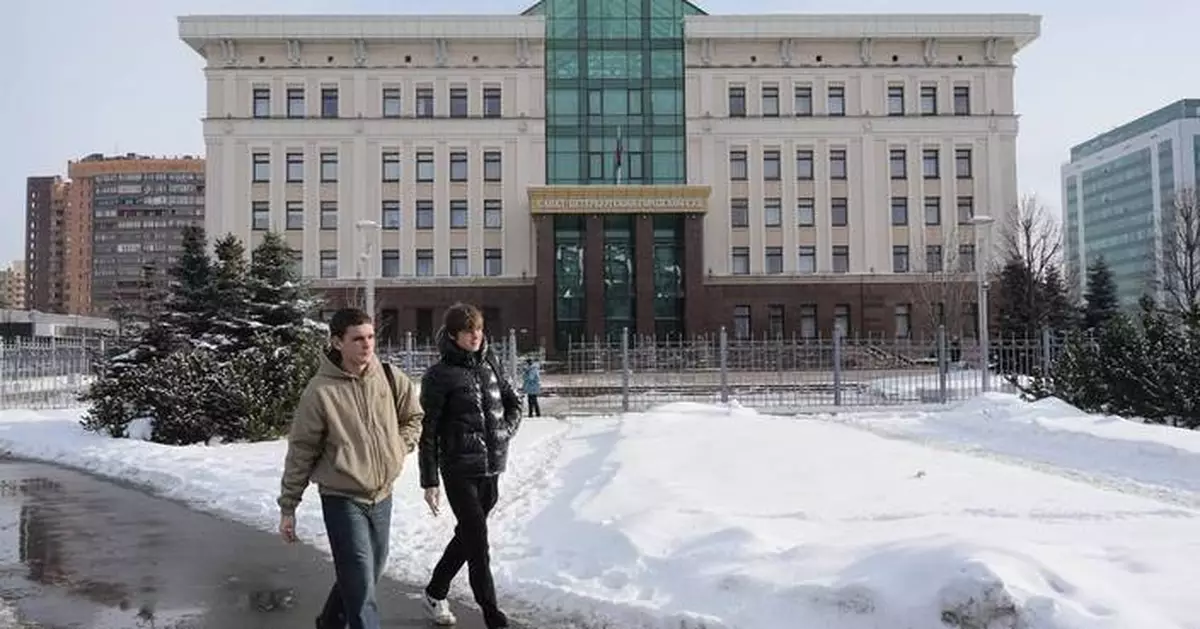
In a hearing that took place behind closed doors, the St. Petersburg City Court banned the Coming Out group as “extremist.” The authorities did not reveal any details of the lawsuit filed last month by Russia’s Justice Ministry and classified as secret.
The group, which now operates from abroad, said it will continue to help LGBTQ+ people in Russia and beyond, and fight for their rights despite the ruling.
“We have been preparing for this development for a long time. We enhanced security, developed sustainable work formats and continue to act responsibly, first and foremost for those who count on us,” Coming Out said in an online statement.
“Today it is especially important not to give into fear and not to be alone. Our community is stronger than any labels, and history has proven that.”
Coming Out is the first LGBTQ+ rights group to be designated since the 2023 Supreme Court ruling that effectively banned any LGBTQ+ activism. Similar lawsuits have been filed against two other LGBTQ+ rights groups, with courts in St. Petersburg and the Samara region still to rule on them.
Russia’s LGBTQ+ community has been under legal and public pressure for over a decade, but especially since the Kremlin invaded Ukraine four years ago. Putin has argued that the war in Ukraine is a proxy battle with the West, which he says aims to destroy Russia and its “traditional family values” by pushing for LGBTQ+ rights.
Any depiction of gay and transgender people that portrays them in a positive or even neutral light has been banned ever since. Gender-affirming medical care and changing one’s gender in official documents are prohibited.
In November 2023, Russia’s Supreme Court declared what the government called “the international LGBT movement” to be an extremist organization, exposing anyone involved with that community to prosecution and potential imprisonment.
Days after the ruling, the community was rattled by news of police raiding gay bars, nightclubs and venues that hosted drag shows in Moscow, St. Petersburg and other cities. Criminal cases on the charges of involvement with the “LGBT movement” have followed, and some people have faced fines for displaying what the authorities determined to be “extremist” symbols such as a rainbow flag.
The Russian authorities are seeking to make the LGBTQ+ community “as vulnerable, as lonely as possible,” said Denis Oleinik, executive director of the Coming Out LGBTQ+ rights group.
The group, formerly based in Russia’s second-largest city of St. Petersburg, has been operating entirely from abroad since the full-scale invasion of Ukraine. It no longer offers support groups or offline activities, but still provides psychological and legal support remotely. It also works with international organizations in advocating for LGBTQ+ rights in Russia and for helping those fleeing the country, Oleinik told The Associated Press in February.
The ruling makes it unsafe for people to share any Coming Out content publicly or for anyone inside Russia or who travels there to donate money to the group, he said.
The “extremist” designation also sometimes scares people away from reaching out for help, as well as other rights groups or media outlets from working with them, Oleinik said. There also might be risks for relatives of activists who speak openly in public.
But otherwise, “we can provide help, and receiving our help is also allowed,” he said.

Russian President Vladimir Putin listens to Head of the Federal Treasury Roman Artyukhin at the Kremlin in Moscow, Tuesday, March 3, 2026. (Gavriil Grigorov/Sputnik, Kremlin Pool Photo via AP)
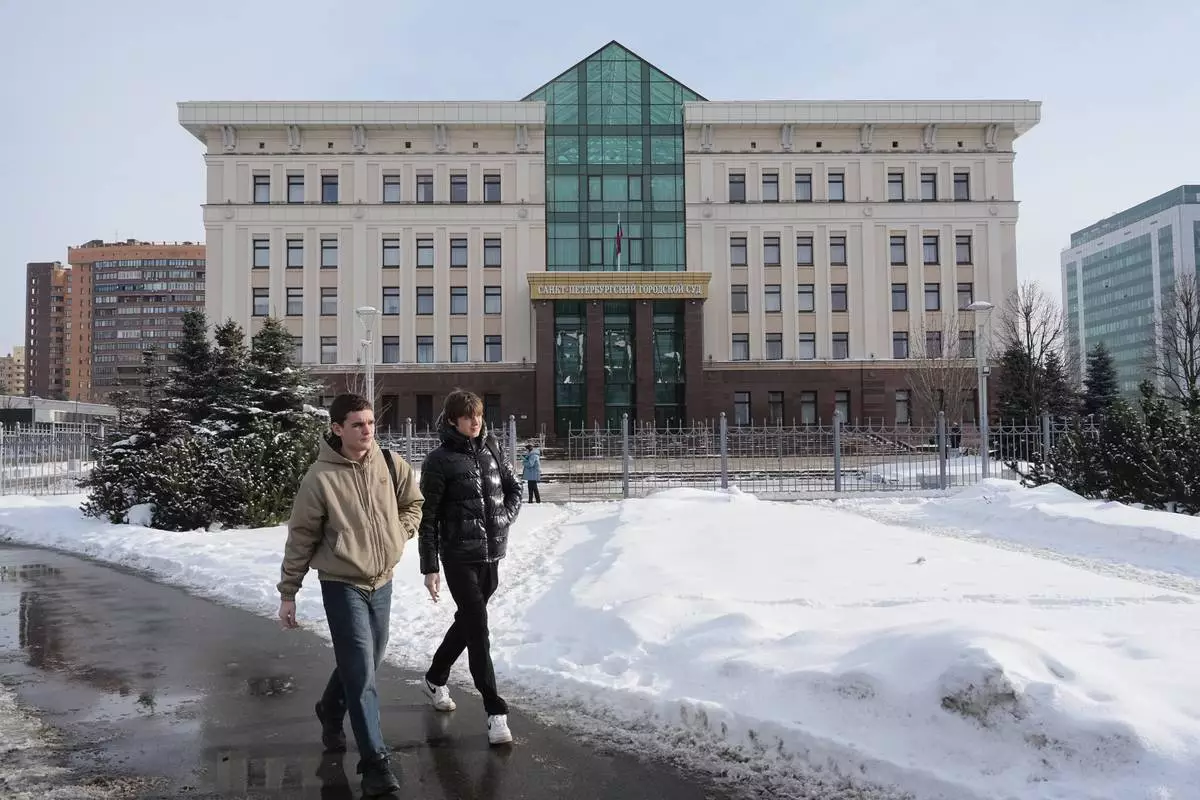
A view of the City Court in St. Petersburg, Russia, Tuesday, Feb. 24, 2026, during a session to decide whether to designate two prominent LGBTQ+ rights groups as extremist. (AP Photo)
The midterm elections officially begin Tuesday with primaries in Texas, North Carolina and Arkansas. As war with Iran breaks out, Democrats and Republicans are figuring out who they want to lead their party into November’s general election, when control of Congress and statehouses around the country will be up for grabs.
The most hotly contested races of the day are in Texas, with fierce competition on both sides of the aisle for U.S. Senate nominations. It’s possible that the Republican campaign will continue into a runoff.
Here's the latest:
Tanu Sani, a registered Democrat, said she had been undecided on who to vote for but ultimately chose state Rep. James Talarico, saying he “really spoke to me in the way he tries to unify.”
Andrew Kern, a registered Democrat, said he went the same way. Kern said he feels Talarico “is taking an approach that’s bridging some of the divisiveness.”
In almost all cases, races can be called well before all votes have been counted. The AP’s team of election journalists and analysts will call a race as soon as a clear winner can be determined.
In competitive races, AP analysts may need to wait until additional votes are tallied or to confirm specific information about how many ballots are left to count.
Competitive races in which votes are actively being tabulated — for example, in states that count a large number of votes after election night — might be considered “too early to call.” A race may be “too close to call” if a race is so close that there’s no clear winner even once all ballots except for provisional and late-arriving absentee ballots have been counted.
The AP’s race calls are not predictions and are not based on speculation. They are declarations based on an analysis of vote results and other election data that one candidate has emerged as the winner and that no other candidate in the race will be able to overtake the winner once all the votes have been counted.
The AP’s vote count brings together information that otherwise might not be available online for days or weeks after an election or is scattered across hundreds of local websites. Without national standards or consistent expectations across states, it also ensures the data is in a standard format, uses standard terms and undergoes rigorous quality control.
The AP hires vote count reporters who work with local election officials to collect results directly from counties or precincts where votes are first counted. These reporters submit them, by phone or electronically, as soon as the results are available. If any of the results are available from state or county websites, the AP will gather the results from there, too.
In many cases, counties will update vote totals as they count ballots throughout the night. The AP is continually updating its count as these results are released. In a general election, the AP will make as many as 21,000 vote updates per hour.
The 2026 midterm season begins in earnest Tuesday with two of the nation’s most consequential Senate primaries playing out in Texas, a political behemoth Democrats have been fighting to flip for decades.
Is this the year? Republican leaders in Washington openly fret that a victory by conservative firebrand Ken Paxton over four-term incumbent Sen. John Cornyn would give Democrats a rare shot of winning the seat come November. The contest has already cost Republicans tens of millions of dollars, and there will be much more spent ahead of a May 26 runoff if no one gets 50% in the three-way primary that also includes Rep. Wesley Hunt.
Democrats, meanwhile, are picking between two rising stars with conflicting styles. There’s U.S. Rep. Jasmine Crockett, who made a name for herself through confrontation, and state Rep. James Talarico, a former middle school teacher who’s working toward a divinity degree.
▶ Read more
The United States doesn’t have a nationwide body that collects and releases election results. Elections are administered locally, by thousands of offices, following standards set by the states. In many cases, the states themselves don’t even offer up-to-date tracking of election results.
The AP fills this gap by compiling vote results and declaring winners in elections, providing critical information in the period between Election Day and the official certification of results, which typically takes weeks.
Republican Gov. Greg Abbott said in January that the state should seize control of elections in Harris County, which includes Houston and is a key battleground.
His comments continued years of Republican criticism over how elections are run in the county of more than 5 million, where Hispanic and Black residents make up a majority. Democrats have controlled the county since 2018.
Abbott signed laws that eliminated Harris County’s independent elections administrator and banned drive-thru voting in Houston. And last year he waited nine months to hold a special election to fill a U.S. House seat representing Houston, saying the county needed extra time to prepare for a vote without any problems.
Democrats accused Abbott of delaying that election to help Republicans maintain their razor-thin margin in the House.
Republican incumbents, including U.S. Sen. Tom Cotton, are heavy favorites to win their primaries in Arkansas.
Cotton, who is seeking his third term in office, will face Jeb Little, an Arkansas State Police trooper, and Micah Ashby, a minister from Bradford.
Republican Gov. Sarah Huckabee Sanders, who served as President Donald Trump’s press secretary during Trump’s first term, is seeking her second term in office. She did not draw a Republican opponent.
Arkansas hasn’t elected a Democrat statewide since 2010, and Sanders and Cotton will be heavy favorites to win reelection in November.
Polls have now opened for voters in El Paso and Hudspeth counties, an area of about 1 million people on the western tip of Texas in the Mountain Time Zone.
Polls in Arkansas are open from 7:30 a.m. to 7:30 p.m., and voters are required to show photo identification before voting.
About 2,600 sites nationwide opened at 6:30 a.m. ET and will close at 7:30 p.m. ET. Some ballots have already been cast by mail or during an early in-person voting period that ended Saturday.
There’s an open race for a seat in the U.S. Senate because Republican Sen. Thom Tillis decided not to seek reelection after clashing with Trump. Former Gov. Roy Cooper is seeking the Democratic nomination, while former Republican National Committee Chairman Michael Whatley is running to represent his party.
Voters are also picking nominees for U.S. House seats, including the Republican choice to challenge Democratic Rep. Don Davis in the 1st District. That district became more Republican as state legislators redrew it during Trump’s redistricting effort to help his party maintain control of the House.
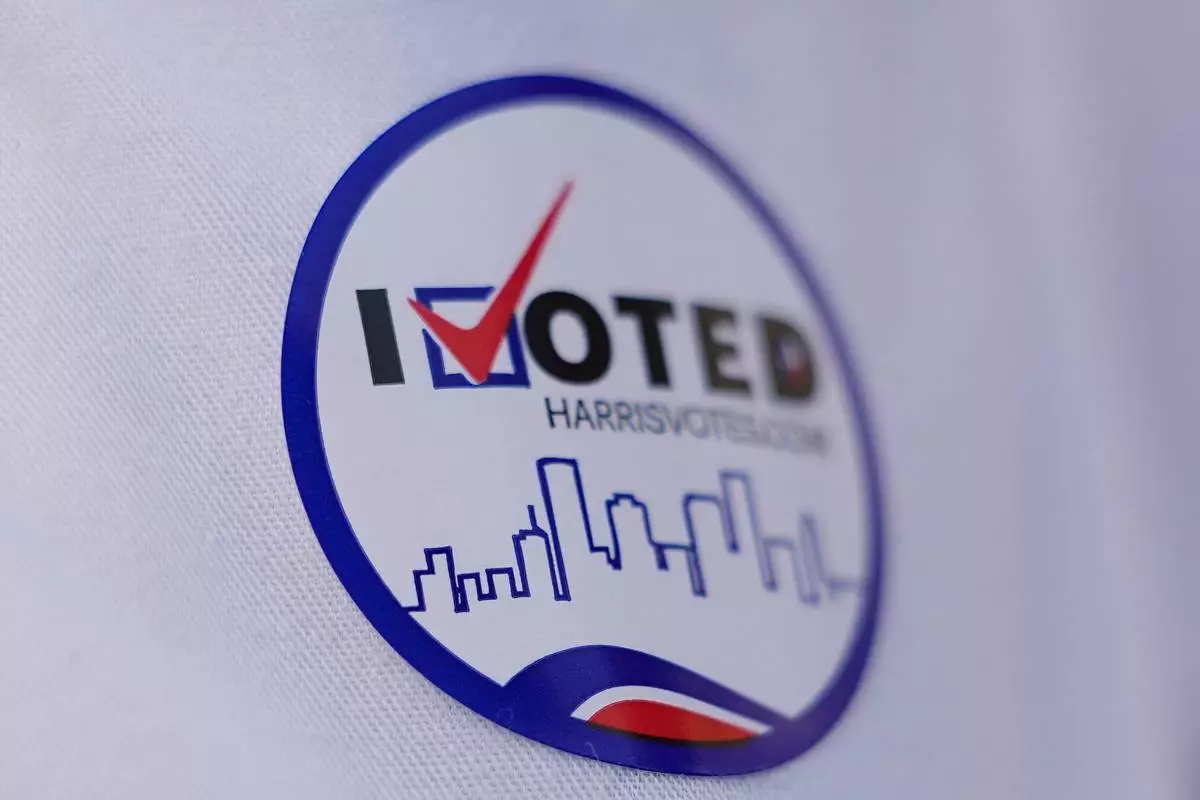
A man wears an "I voted" sticker outside a polling location Tuesday, March 3, 2026, in Spring, Texas. (AP Photo/David J. Phillip)
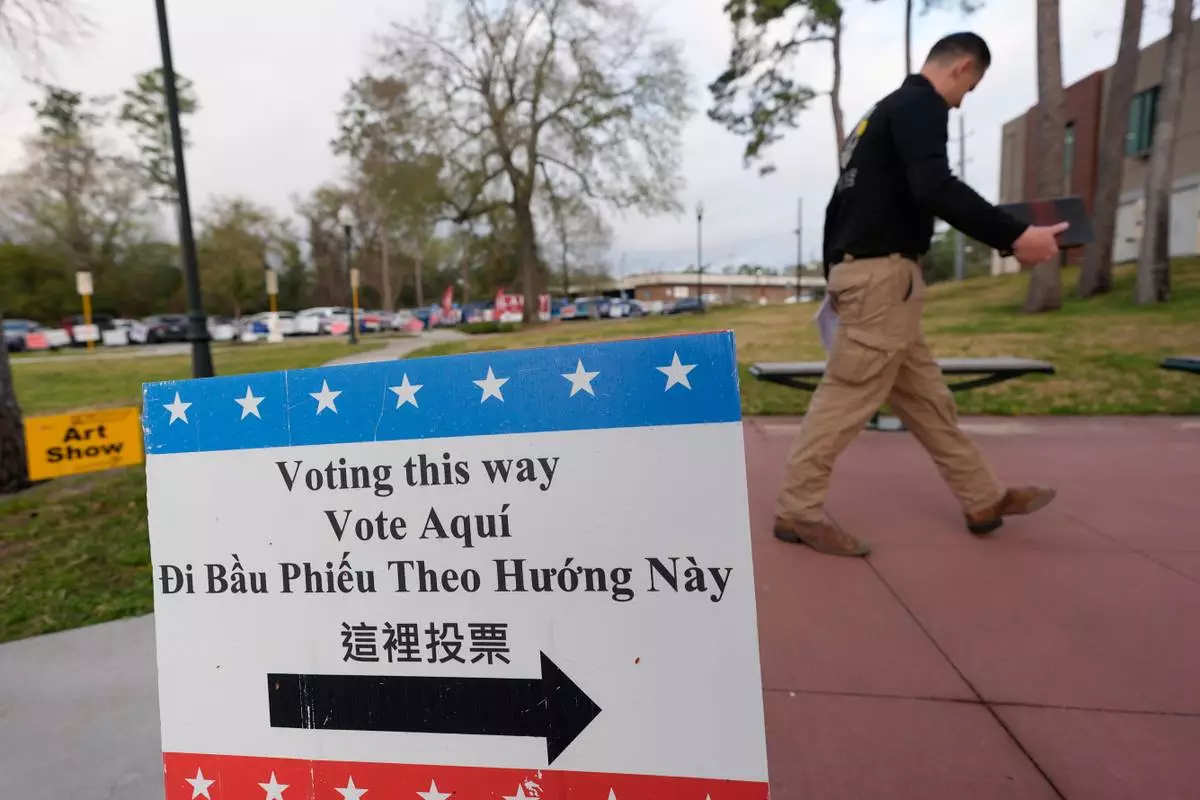
A voter makes his way into a polling location, Tuesday, March 3, 2026, in Spring, Texas. (AP Photo/David J. Phillip)
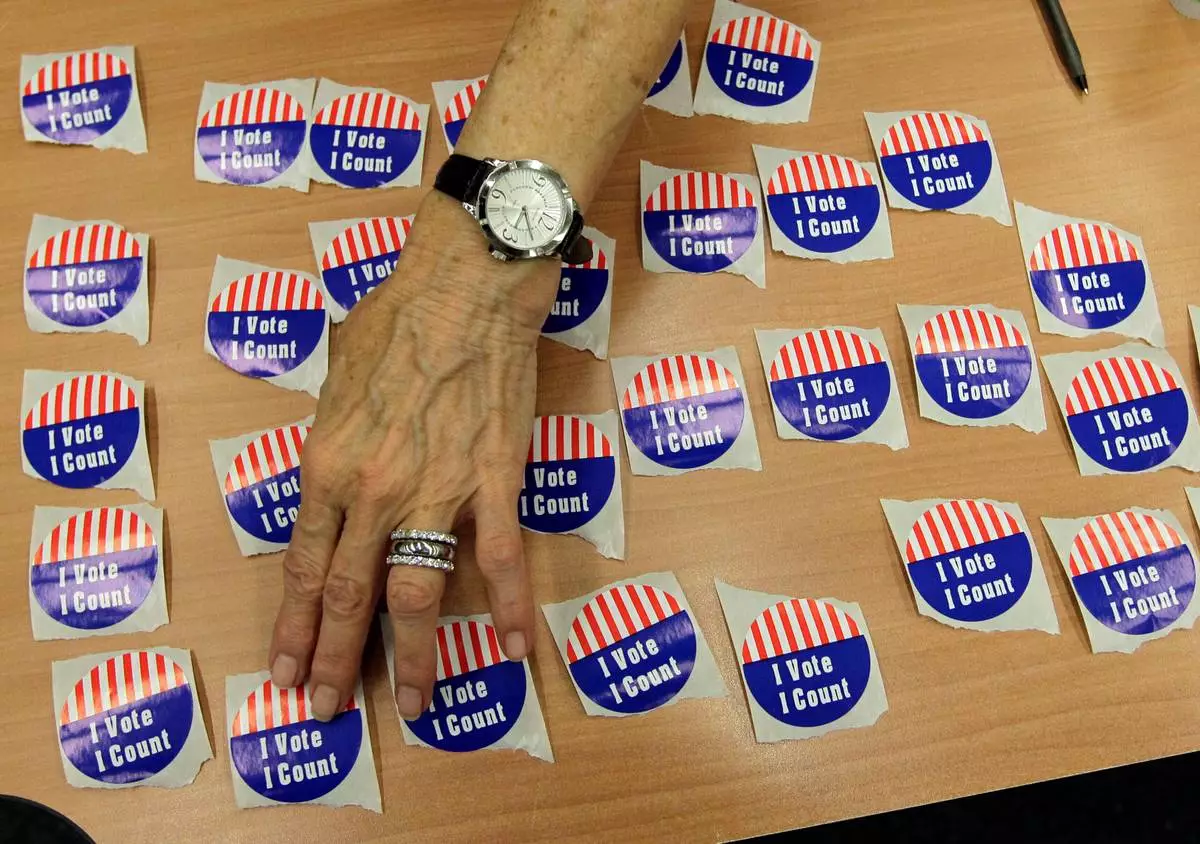
FILE - An election judge arranges "I Vote, I Count" stickers on a table in the Marion County Clerks office as voters cast early ballots in Indianapolis, Oct. 22, 2012. (AP Photo/Michael Conroy, File)