China is stepping up efforts to expand shipping capacity and advance smart and green maritime transport, a national political advisor said on Wednesday in Beijing.
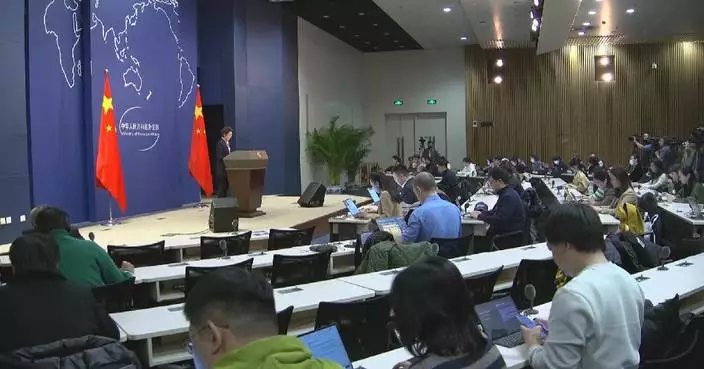
Li Ying, a member of the 14th National Committee of the Chinese People's Political Consultative Conference (CPPCC), made the remarks at a group interview ahead of the opening of the fourth session of the 14th CPPCC National Committee.
Noting that more than 80 percent of global goods are transported by sea, Li, a professor of Navigation College of Dalian Maritime University, said that transportation, especially maritime transport, must be strengthened to support economic growth and national development.
She outlined three priorities for the industry: larger scale, smarter systems, and greener development.
"On a broader scale, China boasts the world's largest maritime fleet. The completion of its first home-grown large cruise ship, the Adora Magic City, marked the fact that our shipbuilding industry has so far been successful in making three key types of vessels, namely, aircraft carriers, large liquefied natural gas (LNG) carriers, and large cruise ships," said Li.
"In terms of advancing smart maritime transport, China is making more efforts to promote the intelligent upgrade of maritime safety systems. With sensing devices and collaborative management systems, ships are sort of equipped with 'eyes' and 'brains'," she said.
She added that the intelligent transformation enables ship crews to have a view of the sea and weather conditions for their passage ahead, detect any vessel that could obstruct their way, optimize routes and calculate arrival times. They can also operate in close collaboration with shore teams with smart systems.
"From a greener perspective, China is accelerating the development of green ports and green ships. Eight near-zero carbon ports, including Tianjin Port and Qingdao Port, are operating on a trial basis. Terminals that previously relied on crude oil are now powered by green electricity. New orders for green vessels have also reached a 70-percent share of the international market," said Li.
Noting that a methanol dual-fuel intelligent very large crude carrier (VLCC) has also been put into use, and constructions are underway for ammonia-fueled vessels and all-electric ships, she expects China's shipping industry to forge ahead with de-carbonization efforts.
The fourth session of the 14th CPPCC National Committee opened on Wednesday and is scheduled to run through March 11.
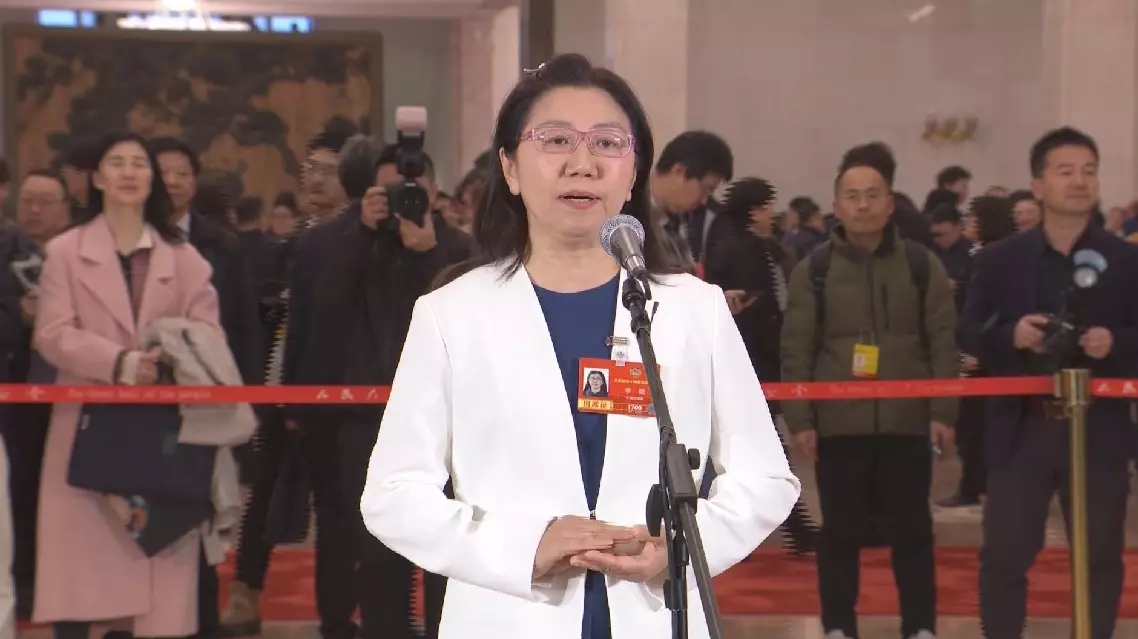
CPPCC member outlines priorities for strengthening maritime transport capacity