LONDON--(BUSINESS WIRE)--Mar 4, 2026--
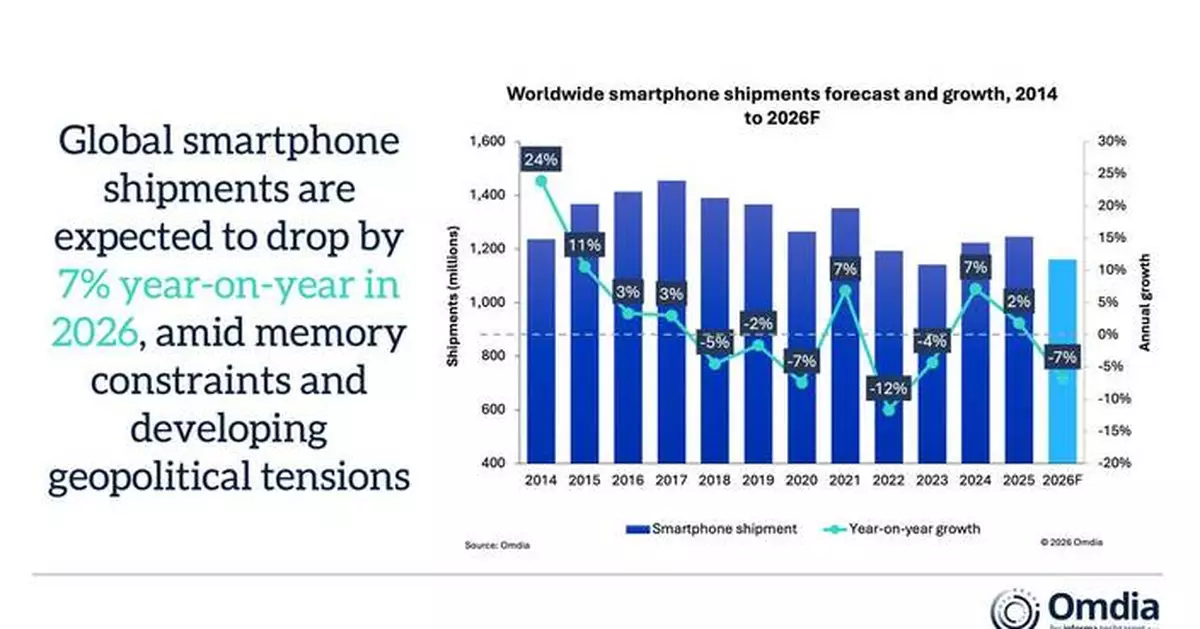
Global smartphone shipments are forecast to decline by around 7% year-on-year in 2026 according to Omdia’s latest outlook. This projection based on Q1 memory price assumptions, which indicate that pricing pressure and constrained supply will begin to ease in the second half of the year. The global smartphone market will face significant challenges in 2026 as tightening memory supply and elevated pricing place increasing cost pressures for vendors. Memory now accounts for a significantly larger share of the smartphone bill of materials (BOM), eroding vendor profitability, particularly in entry-level devices. Since 4Q25, smartphone manufacturers have already begun raising retail prices in order to maintain profit margins. However, sustained price increases are likely to weaken demand, particularly in price-sensitive emerging markets.
This press release features multimedia. View the full release here: https://www.businesswire.com/news/home/20260304209331/en/
Further memory pressure and geopolitical volatility raise the risk of over 15% smartphone shipment decline in 2026
Downside risks to the forecast remain significant. If memory prices continue rising into the second half of 2026 due to tight supply and increasing AI server demand locking in production capacity, smartphone vendors will face further cost escalation across both entry-level and premium devices. At the same time, escalating geopolitical tensions in the Middle East could amplify macroeconomic volatility including higher energy prices, freight costs, and foreign-exchange instability, further weakening consumer upgrades in price-sensitive markets. Under this downside scenario, global smartphone shipments are expected to decline by more than 15% in 2026, potentially exceeding the 12% contraction recorded in 2022.
“Rising memory costs and macro headwinds are expected to impact smartphone demand unevenly across price segments,” said Zaker Li, Principal Analyst at Omdia. “Devices priced below $100 are forecast to decline by nearly 31% year-on-year in 2026, reflecting the severe margin pressure vendors face in ultra-low-cost segments, which are highly sensitive to even modest shifts in the macroeconomic environment. Smartphones in the $100–$399 range, which represent the core volume bands of the global market, are also expected to contract as rising memory prices push retail prices upward in price-sensitive markets. These segments are largely served by entry-focused vendors that rely heavily on LPDDR4X memory, operate with thin margins, and often have lower priority in the memory supply chain, leaving them more exposed to cost inflation and potential supply shortages. As a result, vendors concentrated in these price tiers are expected to face production constraints and shipment reductions, with many projected to experience double-digit declines in 2026.”
“In contrast, the premium segment is expected to remain relatively resilient despite rising component costs. Devices priced above $800 are forecast to grow by around 4% in 2026, supported by stronger brand positioning and greater pricing flexibility. Apple maintains a dominant presence in the high-end market and benefits from strong supply chain relationships and higher margins that help absorb component cost inflation. Samsung also benefits from vertical integration and internal semiconductor capabilities, which provide greater security of supply and priority access to key components. While Samsung still utilizes LPDDR4X in some models and faces similar cost pressures, its supply chain advantages reduce the risk of significant shortages.”
“The evolving cost environment is reshaping dynamics across the global smartphone supply chain,” added Li. “As entry-level smartphone demand weakens, suppliers of mid- and low-end components – including chipsets, camera modules, and other key parts – are likely to face declining orders and intensified pricing pressure. Vendors are already responding by simplifying product configurations and tightening BOM costs. At the same time, volatility in memory pricing is pushing brands toward shorter-term production planning and smaller order volumes, increasing operational pressure across the supply chain. Smaller ODMs and specialized component suppliers will also face growing consolidation risks as margins compress and demand becomes more concentrated among leading brands. In this environment, vendors will need to prioritize higher-value product innovation and disciplined production planning, while channel partners strengthen inventory management and demand forecasting to navigate slower replacement cycles and shifting consumer demand.”
ABOUT OMDIA
Omdia, part of TechTarget, Inc. d/b/a Informa TechTarget (Nasdaq: TTGT), is a technology research and advisory group. Our deep knowledge of tech markets grounded in real conversations with industry leaders and hundreds of thousands of data points, makes our market intelligence our clients’ strategic advantage. From R&D to ROI, we identify the greatest opportunities and move the industry forward.
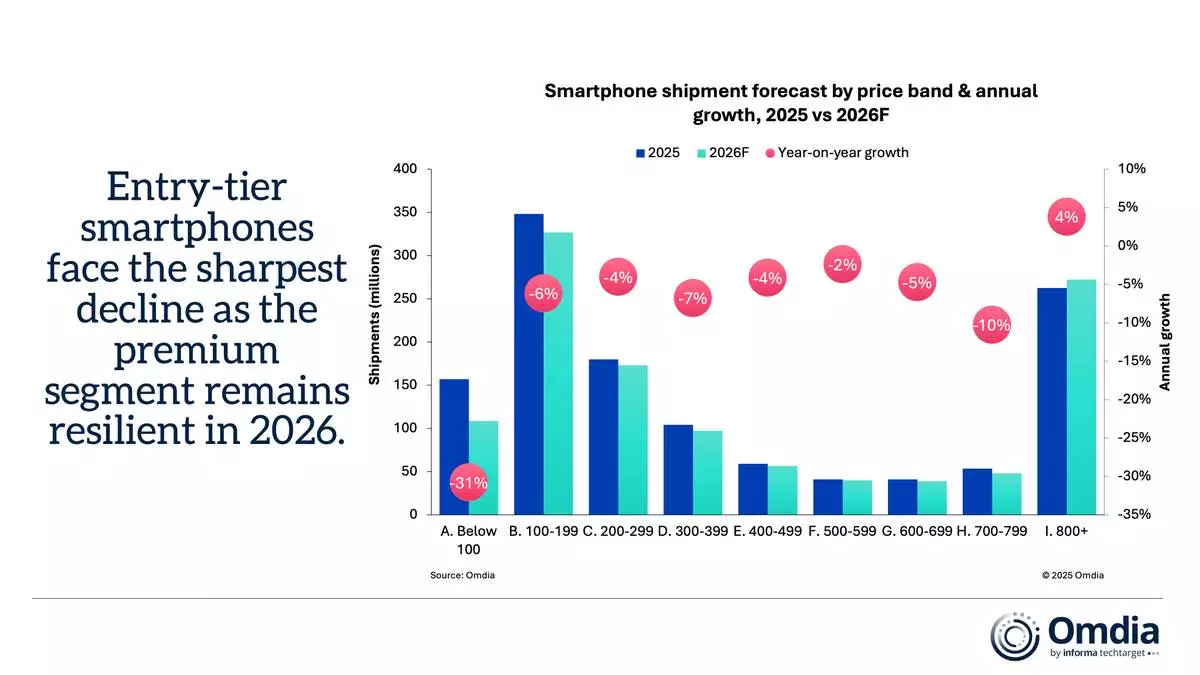
Smartphone shipment forecast by price band & annual growth, 2025 vs 2026F
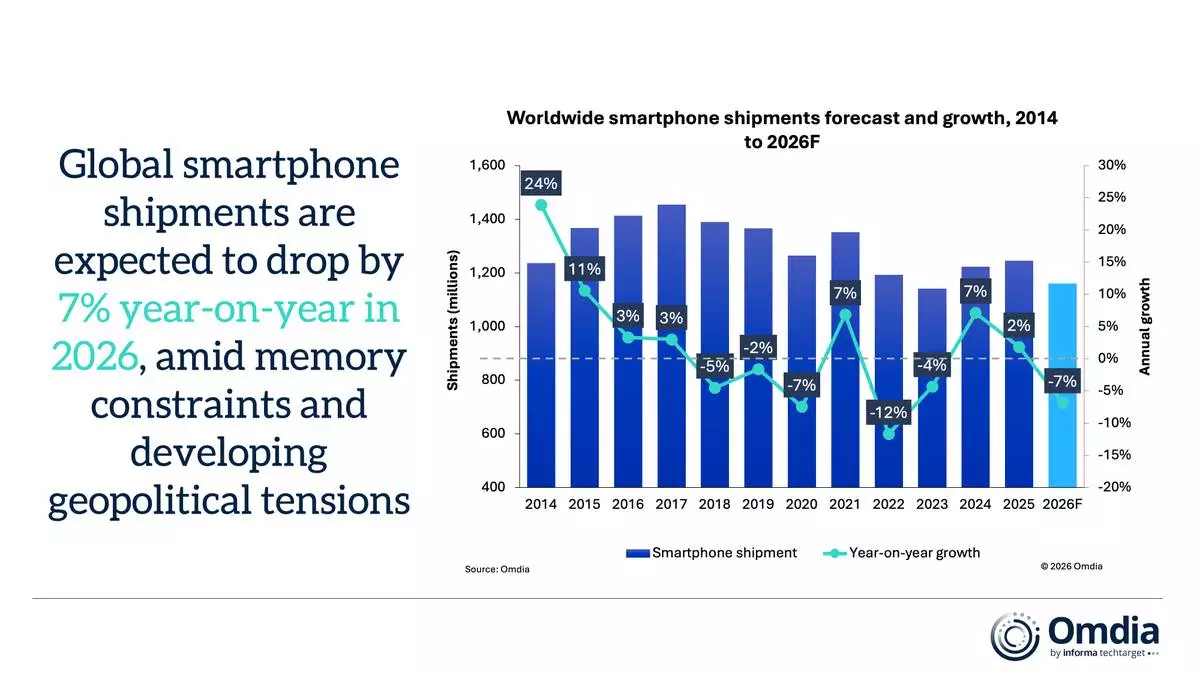
Worldwide smartphone shipments forecast and growth, 2014 to 2026F
BEIRUT (AP) — President Donald Trump acknowledged criticizing Israeli Prime Minister Benjamin Netanyahu as “crazy” in a phone call that involved expletives, saying he was “a little bit perturbed” that Israel’s fighting with Hezbollah militants in Lebanon was holding back peace talks with Iran.
But even as the U.S. president conceded the tensions in an interview released Wednesday, he insisted that his relationship with Netanyahu was solid and that they connected, in part, because they are both “wartime” leaders.
“We’ve worked very well together. I like Bibi a lot. And I work very well with him,” Trump told The New York Post’s “Pod Force One.”
In an interview on the American business-news channel CNBC, Netanyahu responded that he and Trump sometimes have “tactical disagreements” but have “common goals” and “agree on the main things.”
“He respects me. I respect him. We always find a way to work out our differences,” the prime minister said.
The president's comments about the Monday call offered a sign of the growing pressure he faces to resolve the Iran war as higher energy prices and economic uncertainty threaten Republican prospects in the midterm elections and hamper global commerce.
Talks have dragged on for weeks as mediators seek to extend a fragile ceasefire into a more enduring truce. The negotiations are further strained by Israel’s broadening war with the Iranian-backed militia group in Lebanon. The conflicts have become increasingly intertwined as Iran insists that any potential truce in the war there must also quell the fighting in Lebanon.
Trump remained noncommittal about a timeline for settling the Iran conflict, saying the Strait of Hormuz might stay blocked through the Labor Day holiday on Sept. 7. He has insisted that Iran stop any efforts that could lead to a nuclear weapon and that the strait be reopened for shipments of oil and natural gas.
“I don’t know. I mean, I think it could be (closed through Labor Day), but I think it’s unlikely. I think that we’ll have it. I think this will resolve itself fairly quickly,” Trump said.
Iran’s Supreme Leader Mojtaba Khamenei, who succeeded his late father, is “involved” in peace talks, Trump added.
“They have a lot of respect for him,” the president said in the interview.
Trump said that Khamenei is not doing well due to wounds sustained in an airstrike, but “they say he’s giving approval because that’s the way it has been for a long, long time." Khamenei's father was killed in an airstrike when the U.S. and Israel attacked Iran at the end of February.
Meanwhile in the Persian Gulf region, Kuwait briefly shut its main airport Wednesday after Iranian drones hit a passenger terminal building, killing one person and wounding dozens. It was the latest in the back-and-forth attacks by Tehran and Washington that have tested the ceasefire.
The strike again brought home the risks to residents and travelers in Gulf countries that had considered themselves relative safe havens before the war, now in its fourth month.
The path toward a lasting ceasefire between Israel and Hezbollah remained unclear as hostilities continued in Lebanon.
An Israeli strike Wednesday hit a car on a busy highway just south of Beirut, hours before the second day of talks between Lebanon and Israel in Washington were set to take place.
The strike in Khaldeh came without warning, and it was not immediately clear if the person targeted was killed.
Israel and Lebanon on Monday reached a U.S.-brokered agreement in which Israel would not strike Beirut's southern suburbs and Hezbollah would end its attacks on northern Israel.
The agreement was made hours after Israel announced that it was going to launch strikes across the sprawling urban neighborhoods near the Lebanese capital in what would have been the most intense strikes since a nominal ceasefire went into effect on April 17.
The State Department said progress was made during the first day of talks on Tuesday. Lebanon hopes to widen the scope of the ceasefire so it becomes comprehensive across the country. Israel wants to disarm Hezbollah immediately before the Israeli military ends its operations in Lebanon and withdraws its troops from dozens of villages and towns.
Not long after the strike on Khaldeh, the Israeli military said it intercepted what it called a hostile aircraft coming from southern Lebanon, but it did not immediately blame Hezbollah. Hezbollah has not claimed a cross-border attack since the agreement.
Israeli strikes over southern Lebanon continued, especially in and around the battered cities of Tyre and Nabatiyeh. Two overnight strikes near Tyre, a coastal city, killed four Syrians and two Palestinians.
Israel warned the Christian neighborhoods in Tyre that Hezbollah members were among them. Many Lebanese Shiite Muslims fled to those areas in recent days because they were spared from the aerial bombardment along the Mediterranean coast.
After the warning, the Lebanese army deployed to the Christian district of Tyre in an effort to prevent Israeli attacks there and to show that Hezbollah has no armed presence in the area.
Israel launched an invasion of southern Lebanon days after the latest war was sparked on March 2, when Iran-backed Hezbollah fired rockets toward northern Israel in solidarity with Iran. Israeli troops have pushed deeper into Lebanon over the past week, as Hezbollah continues to claim rocket and drone attacks.
The latest round of fighting between Israel and Hezbollah has killed 3,468 people in Lebanon and displaced 1.2 million people. According to Netanyahu’s office, at least 27 Israeli soldiers and a defense contractor have been killed in or near southern Lebanon. Two civilians have also been killed in northern Israel.
Many residents of southern Lebanon remained in villages near the hostilities or returned to areas where strikes occurred after evacuation warnings.
The Al-Abdallah family returned to their home in Marwanieyh, which they left because they thought the village was unsafe following earlier strikes. A day later, two rockets hit the home, bringing down the three-story building and killing six family members, said the brother of Hassan Al-Abdallah, who was killed.
Ahmed Al-Abdallah, 13, was thrown away from the building by the force of the blasts and was the only member of his family to survive. His uncle, Eissa Al-Abdallah, said the boy has two broken legs and shrapnel wounds all over his body.
“What good is talking now? They are gone, and nothing will bring them back,” the uncle told The Associated Press in a phone call Tuesday. “This land costs blood.”
Boak reported from Washington.
This version has been updated to correct that the Iran war began at the end of February, not March.
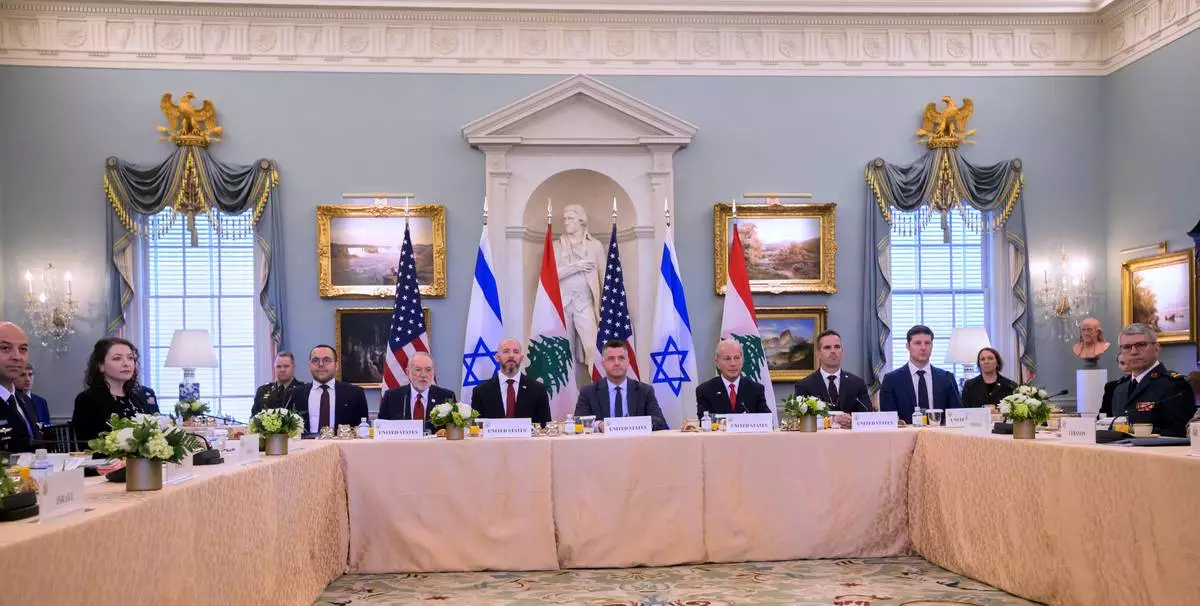
United States Ambassador to Israel Mike Huckabee, second from left, is joined by third from left: State Department Chief of Staff Dan Holler, Sr., State Department Counselor and Director, Office of Policy Planning Michael A. Needham and United States Ambassador to Lebanon Michel Issa, as they meet with Israeli Ambassador to the United States Yechiel Leiter and Lebanese Ambassador to the United States Nada Hamadeh, at the State Department, Tuesday, June 2, 2026, in Washington. (AP Photo/Rod Lamkey, Jr.)
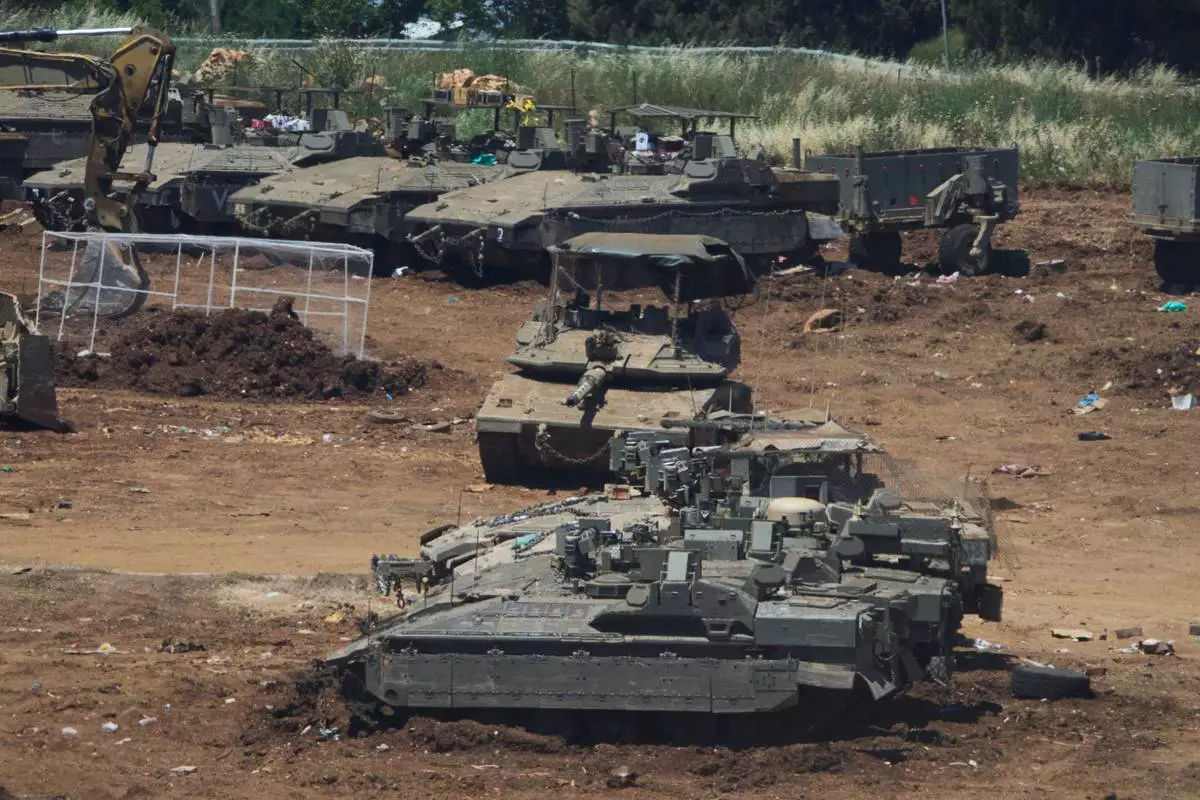
Israeli troops gather on the border with Lebanon in northern Israel, Tuesday, June 2, 2026. (AP Photo/Ariel Schalit)
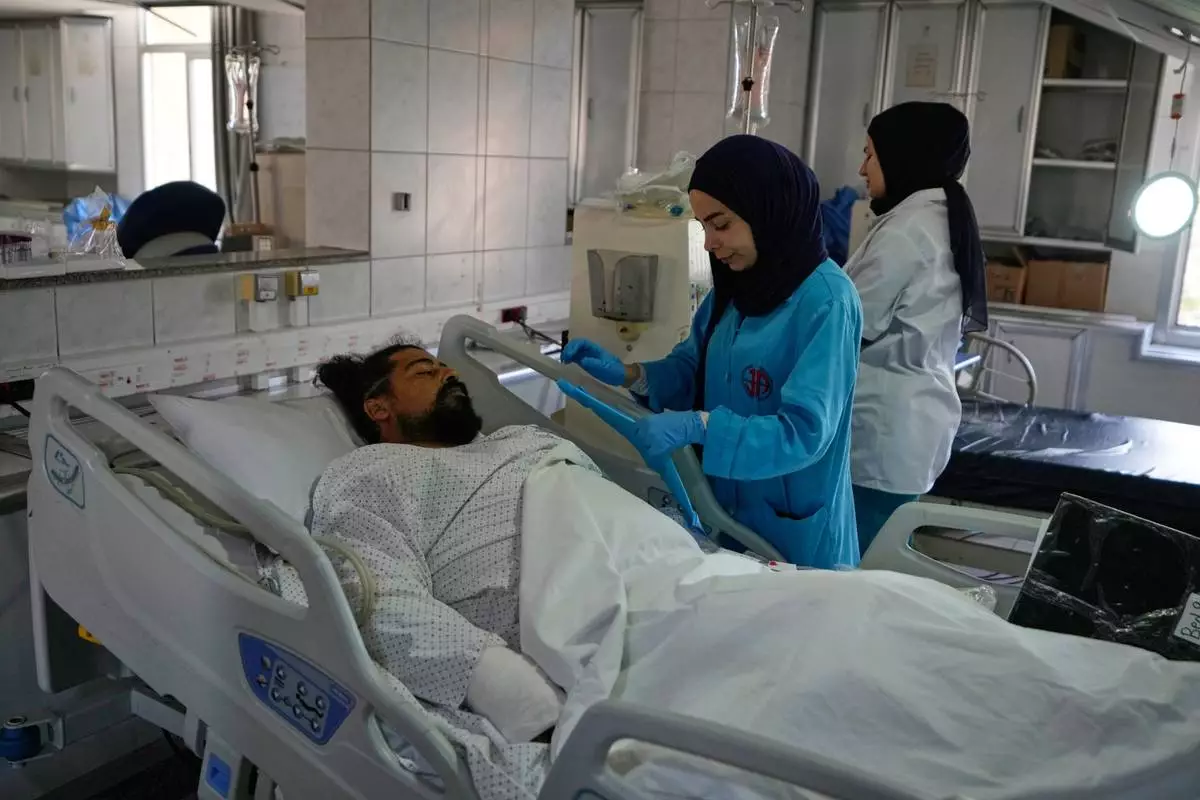
A nurse treats an injured man at the damaged Jabal Amel Hospital, following Monday's Israeli airstrike that was hit a nearby building, in the southern port city of Tyre, Lebanon, Tuesday, June 2, 2026. (AP Photo/Mohammed Zaatari)
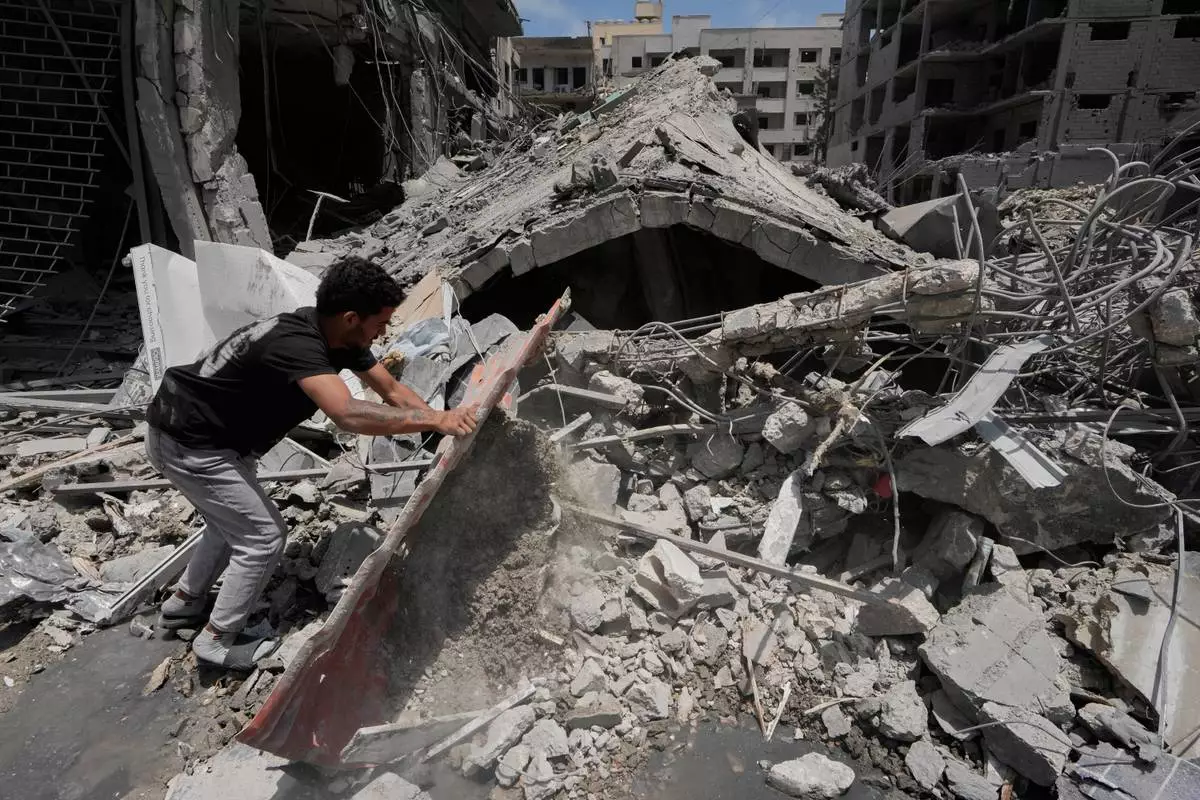
A man removes debris of a building that was hit Monday in an Israeli airstrike in the southern port city of Tyre, Lebanon, Tuesday, June 2, 2026. (AP Photo/Mohammed Zaatari)
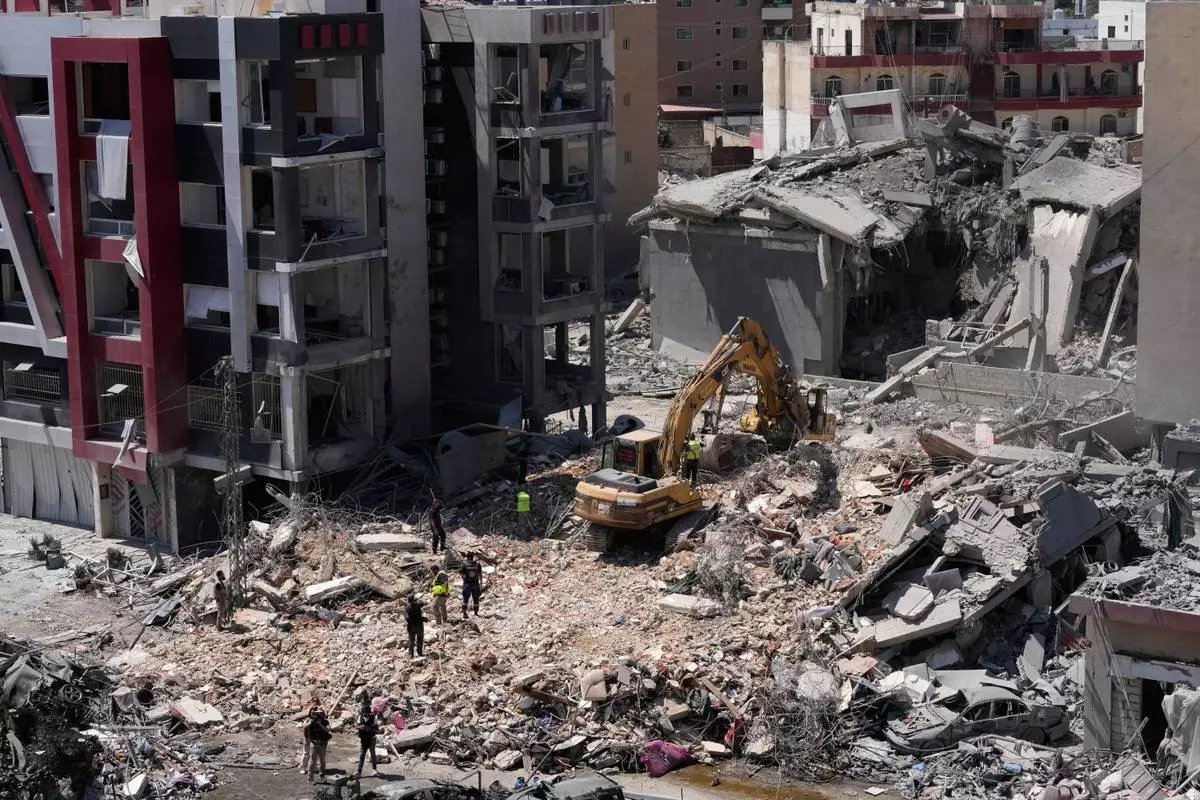
Rescue workers use an excavator, as they search for victims under the rubble of a building that was hit Monday in an Israeli airstrike in the southern port city of Tyre, Lebanon, Tuesday, June 2, 2026. (AP Photo/Mohammed Zaatari)
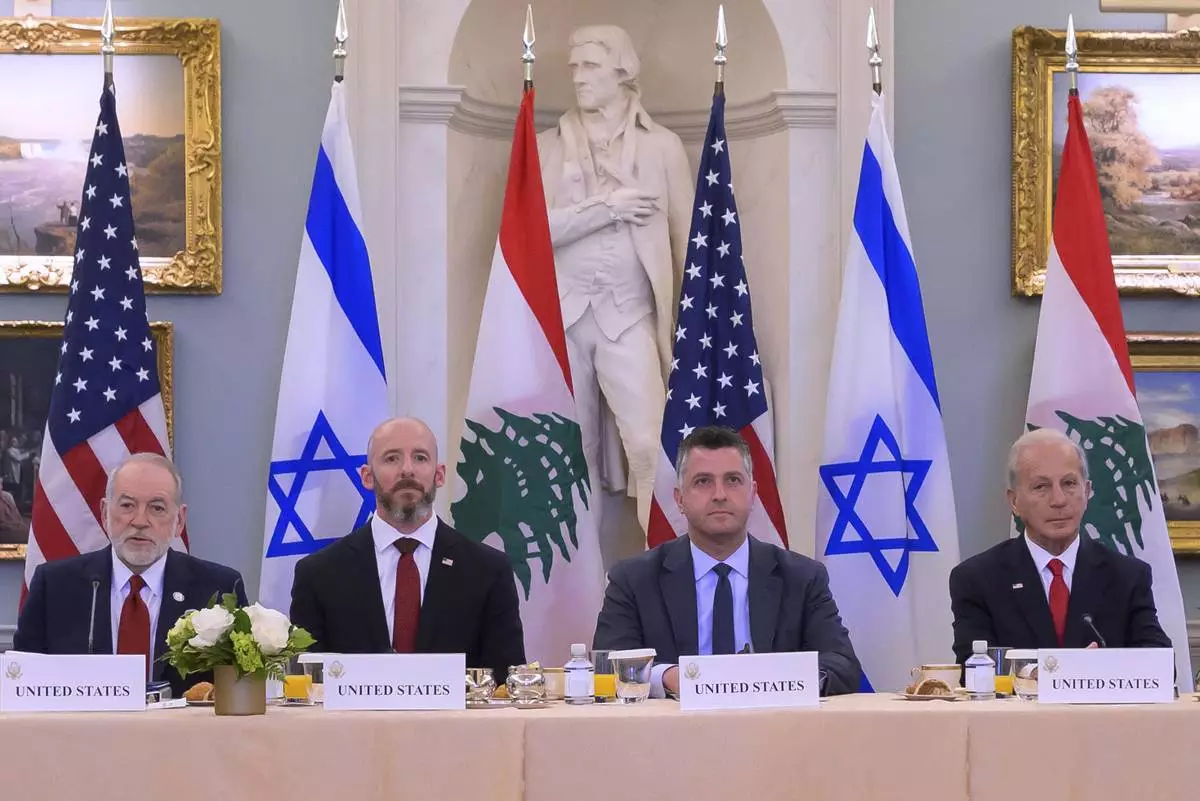
United States Ambassador to Israel Mike Huckabee, left, is joined by second from left: State Department Chief of Staff Dan Holler, Sr., State Department Counselor and Director, Office of Policy Planning Michael A. Needham and United States Ambassador to Lebanon Michel Issa, as they meet with Israeli Ambassador to the United States Yechiel Leiter and Lebanese Ambassador to the United States Nada Hamadeh, at the State Department, Tuesday, June 2, 2026, in Washington. (AP Photo/Rod Lamkey, Jr.)
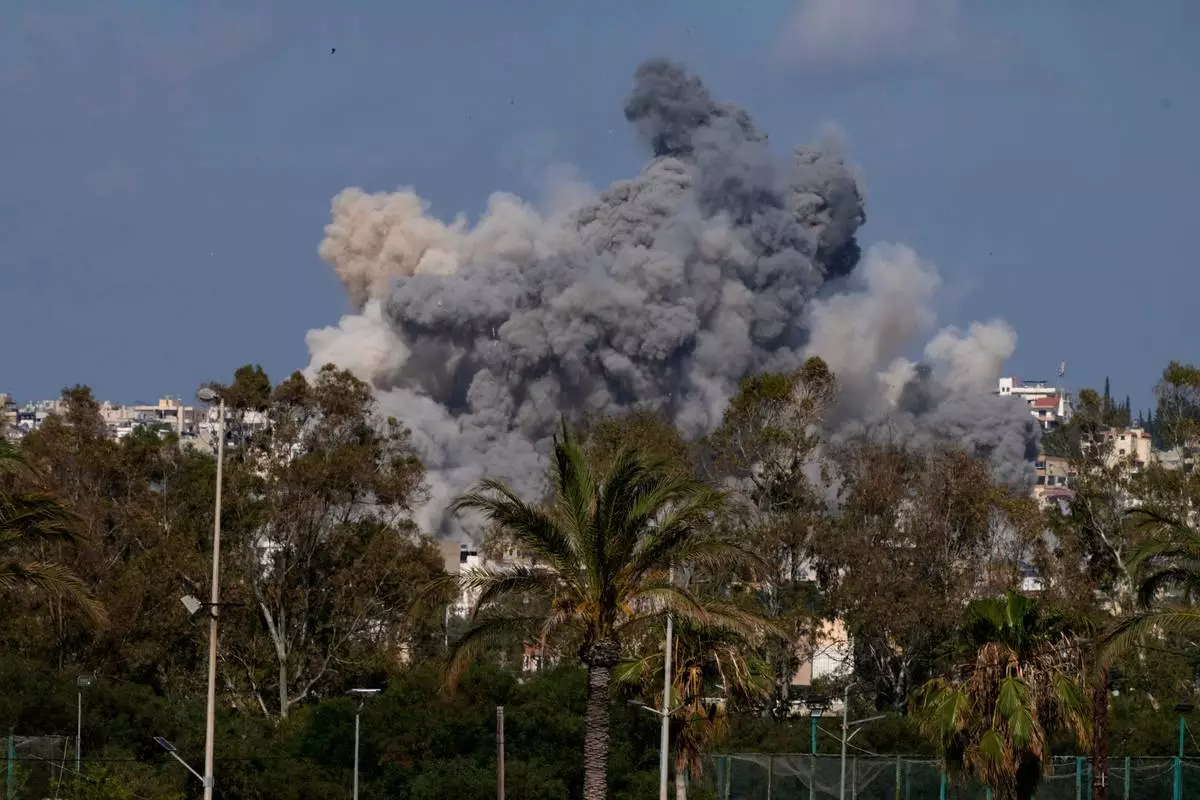
Smoke rises from an Israeli airstrike that hit Burj al-Shamali village near the southern port city of Tyre, Lebanon, Tuesday, June 2, 2026. (AP Photo/Mohammed Zaatari)