NEW YORK (AP) — A stroll by the paddock at Belmont Park is a glimpse into the past before becoming a window into the future. The white pine tree that has stood there for more than two centuries remains.
Around it, everything else is brand new.
Click to Gallery
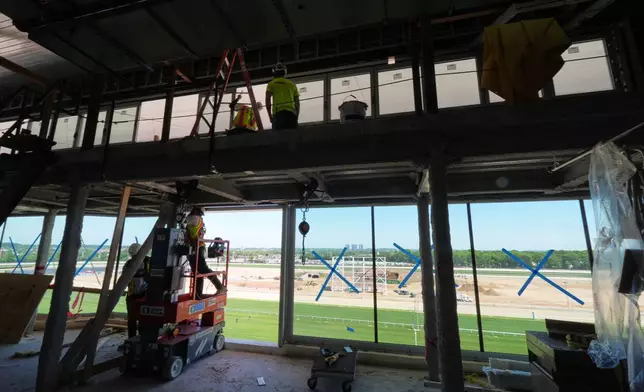
Construction continues at Belmont Park Tuesday, May 19, 2026, in Elmont, N.Y. (AP Photo/Frank Franklin II)

New York Racing Association's Executive Vice President of Operations Glen Kozak responds to questions during a news interview at Belmont Park Tuesday, May 19, 2026, in Elmont, N.Y. (AP Photo/Frank Franklin II)

Contruction continues at Belmont Park Tuesday, May 19, 2026, in Elmont, N.Y. (AP Photo/Frank Franklin II)

Contruction continues at Belmont Park Wednesday, May 20, 2026, in Elmont, N.Y. (AP Photo/Frank Franklin II)

Contruction contineus at Belmont Park Tuesday, May 19, 2026, in Elmont, N.Y. (AP Photo/Frank Franklin II)
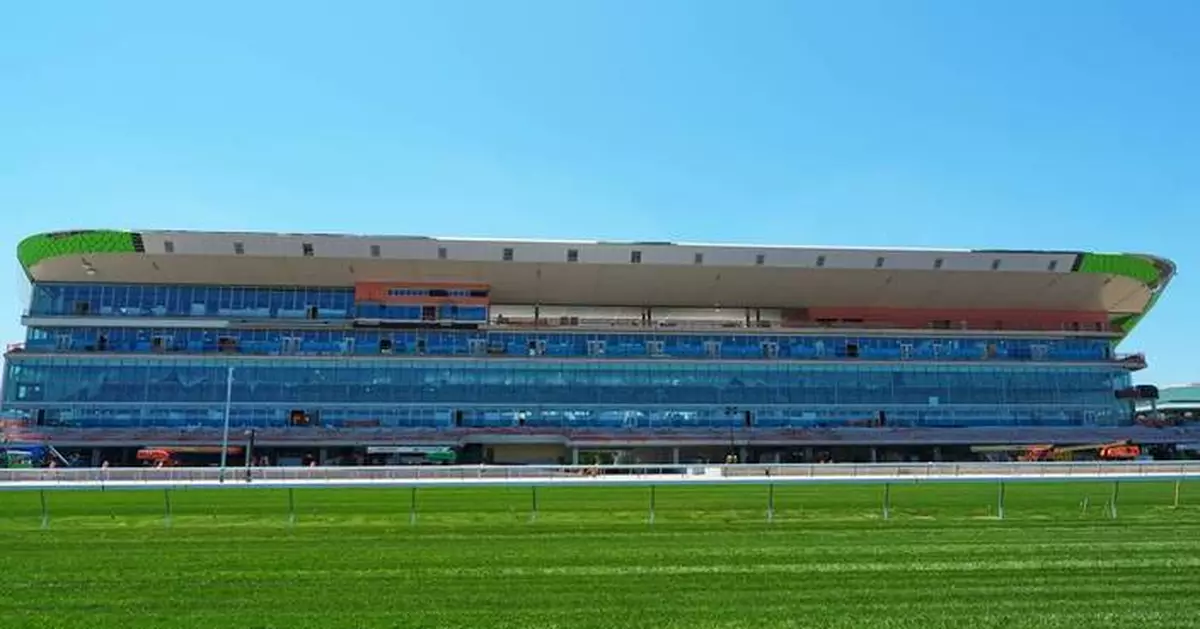
The racetrack that straddles the border of Queens and Long Island is smack in the middle of a massive $550 million reconstruction project that included knocking down the gargantuan brick grandstand and rebuilding a smaller, modern facility suited for horse racing in the 21st century. A year from now, the Belmont Stakes will return to its traditional home at Belmont Park after a three-year hiatus upstate at Saratoga Race Course to allow for the work to get done.
“It’s hugely important to get it back to Belmont,” Hall of Fame trainer Todd Pletcher said. “The opening of a new facility is something that can really give the industry a shot in the arm.”
Aqueduct Racetrack will close to consolidate racing in New York to two locations after shiny new Belmont Park reopens on a limited basis Sept. 18. It is scheduled to be fully complete by next spring, ahead of the 159th Belmont Stakes and then the Breeders' Cup World Championships in the fall of 2027.
“Once you’re in the paddock and you get towards the building, you start to really see how it’s going to feel on a big day here,” said New York Racing Association president and CEO David O’Rourke, who has been with the organization since 2008.
“This consolidation was always discussed from Day 1. It was always on paper. To finally get to that point, we’re really excited."
The Associated Press took a hard hat tour of the construction site last month, where tarps and ladders are everywhere and tools strewn about the building, which is significantly smaller than the structure that reopened in 1968 after the last demolition and rebuild and held 100,000 people.
Roughly 300 construction workers plus 100 more support staff have put in more than 2 million hours, installing 1,728 tons of structural steel and pouring 40,000 cubic yards of concrete.
All the perks are there, including 31 suites — the old Belmont Park had none — along with a sports bar, a giant infield video screen and all the amenities of a stadium or arena. Lone Star Park in Texas was the last new racetrack to open in the U.S., back in 1997.
“This is a modern facility,” O'Rourke said. “It’s state of the art.”
That includes the racing surfaces because unlike stadiums and arenas for all-human sports, a ton of effort goes into making sure conditions are as good as possible for the horses. While the building is still a work in progress, the surfaces are done and ready: the dirt track known as “Big Sandy," two turf courses with grass that look straight out of European racing, and a synthetic track designed to race through the winter.
Updated technology allowed NYRA executive VP of operations and capital projects Glen Kozak and his team to install new drainage systems, along with track mats and bases designed to make the surfaces as safe as possible. Each marker pole has a robotic camera, and a 15-million gallon pond in the infield should hold enough water to irrigate without needing outside hydration.
“We’ve been given the opportunity here to start from the ground up and put all best practices in place,” Kozak said. “The quality of the irrigation, the health of the grass — all those components that go into better racing and better for the horse and rider, we were able to implement here.”
While the Belmont has been up at Saratoga, the third leg of the Triple Crown was shortened to 1 1/4 miles from the “test of the champion” 1 1/2-mile distance that was its hallmark. O'Rourke confirmed the plan is to go back to normal next year.
“The Belmont being a mile and a half with their big racetrack, I really kind of think that’s a unique opportunity as a lot of these horses won’t ever have to do that again in their career,” Kentucky Derby-winning trainer Cherie DeVaux said.
When American Pharoah ended the sport's 37-year Triple Crown drought in 2015 and Justify swept the Derby, Preakness and Belmont in 2018, each won the final race at 1 1/2 miles in front of a huge crowd. Pletcher wondered if it would have been the same the past three years at Saratoga and is glad the future includes the traditional distance.
“It’s such a unique race, and you don’t get the opportunity to run that far very often,” Pletcher said. “And to do it at a facility like Belmont, where it’s a once around mile and a half oval that's, to me, the ultimate race, especially when there’s a Triple Crown on the line.”
AP horse racing: https://apnews.com/hub/horse-racing

Construction continues at Belmont Park Tuesday, May 19, 2026, in Elmont, N.Y. (AP Photo/Frank Franklin II)
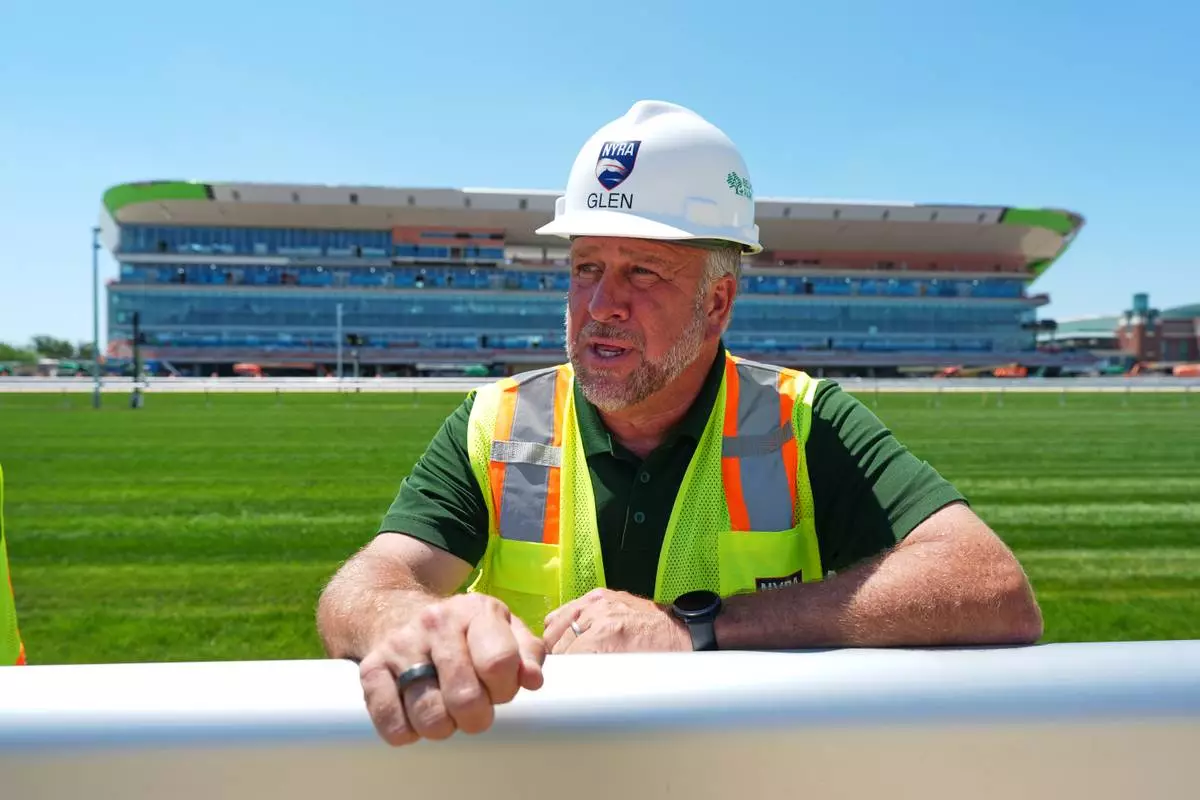
New York Racing Association's Executive Vice President of Operations Glen Kozak responds to questions during a news interview at Belmont Park Tuesday, May 19, 2026, in Elmont, N.Y. (AP Photo/Frank Franklin II)

Contruction continues at Belmont Park Tuesday, May 19, 2026, in Elmont, N.Y. (AP Photo/Frank Franklin II)

Contruction continues at Belmont Park Wednesday, May 20, 2026, in Elmont, N.Y. (AP Photo/Frank Franklin II)

Contruction contineus at Belmont Park Tuesday, May 19, 2026, in Elmont, N.Y. (AP Photo/Frank Franklin II)