Skip to Content Facebook Feature Image

US issues first commercial construction permit for a nuclear reactor in years to a Wyoming project

News

US issues first commercial construction permit for a nuclear reactor in years to a Wyoming project
News

News

US issues first commercial construction permit for a nuclear reactor in years to a Wyoming project

2026-03-05 07:55 Last Updated At:08:11

The U.S. Nuclear Regulatory Commission on Wednesday approved its first construction permit for a commercial nuclear reactor in eight years, one that will allow a Bill Gates-backed company to build a sodium-cooled reactor in western Wyoming.

TerraPower filed for the permit in 2024 and construction is now set to begin within weeks. Completion of the up to $4 billion plant is targeted for 2030, according to TerraPower. Microsoft co-founder Gates, who is eyeing nuclear generation as a power source for the electricity-hungry data centers behind artificial intelligence, is a founder of TerraPower and its primary investor.

“We have spent thousands of manpower hours working to achieve this momentous accomplishment,” TerraPower President and CEO Chris Levesque said in a statement.

The TerraPower plant is set to be built near a coal-fired power plant that is being converted to burn natural gas outside Kemmerer, a town of about 2,500 people some 130 miles (210 kilometers) northeast of Salt Lake City.

Gates and his energy company are seeking to develop a next-generation nuclear plant that would “revolutionize” how power is generated. The 345-megawatt reactor is expected to produce up to 500 megawatts at its peak, enough energy for up to 400,000 homes.

Construction at the TerraPower plant site — though not on the reactor itself — began in 2024.

The reactor construction permit for a TerraPower subsidiary is the NRC’s first approval for a non-light-water commercial reactor in more than 40 years, the NRC said in a statement.

Virtually all of the world’s commercial nuclear reactors use water to control reactions and transfer heat to drive turbines and produce electricity.

The NRC last issued a construction permit for a conventional light-water reactor to Florida Power & Light Company for a power plant south of Miami in 2018. That project has yet to be built.

The TerraPower reactor would use molten sodium, not water, as a coolant.

The last commercial non-light-water reactor in operation in the U.S. was the Fort St. Vrain nuclear plant in northern Colorado. The problem-plagued, helium-cooled plant produced electricity from the mid-1970s until it was shut down in 1989.

In October, Gates told reporters he thinks nuclear power will be a “gigantic contributor” to powering data centers. He had recently met with Energy Secretary Chris Wright, Interior Secretary Doug Burgum and various members of Congress and said the government was “very involved” in the TerraPower reactor.

“I wish I could deliver nuclear fission like three years earlier than I can, because then we’d have a perfect match to the current demand pattern of these data center guys,” he said.

The plant would use a highly enriched form of uranium that in recent years has been obtainable only from Russia. TerraPower has been lining up other sources to produce the fuel domestically and in South Africa, according to the company.

While the Trump administration pushes toward nuclear power, the federal government has yet to address the thousands of tons of spent fuel that have been piling up for decades at nuclear plants nationwide. New Mexico and Texas have dug in their heels to keep from becoming dumping grounds in the absence of a permanent solution.

In January, the U.S. Department of Energy announced it was taking what it called a first step toward possible partnerships with states to modernize the fuel cycle, including reprocessing spent fuel and disposing of waste. The agency gave states until April 1 to step forward if they’re interested in participating.

The TerraPower reactor would produce relatively less nuclear waste than conventional reactors, according to the company.

Jennifer McDermott in Providence, Rhode Island, and Susan Montoya Bryan in Albuquerque, New Mexico, contributed to this report.
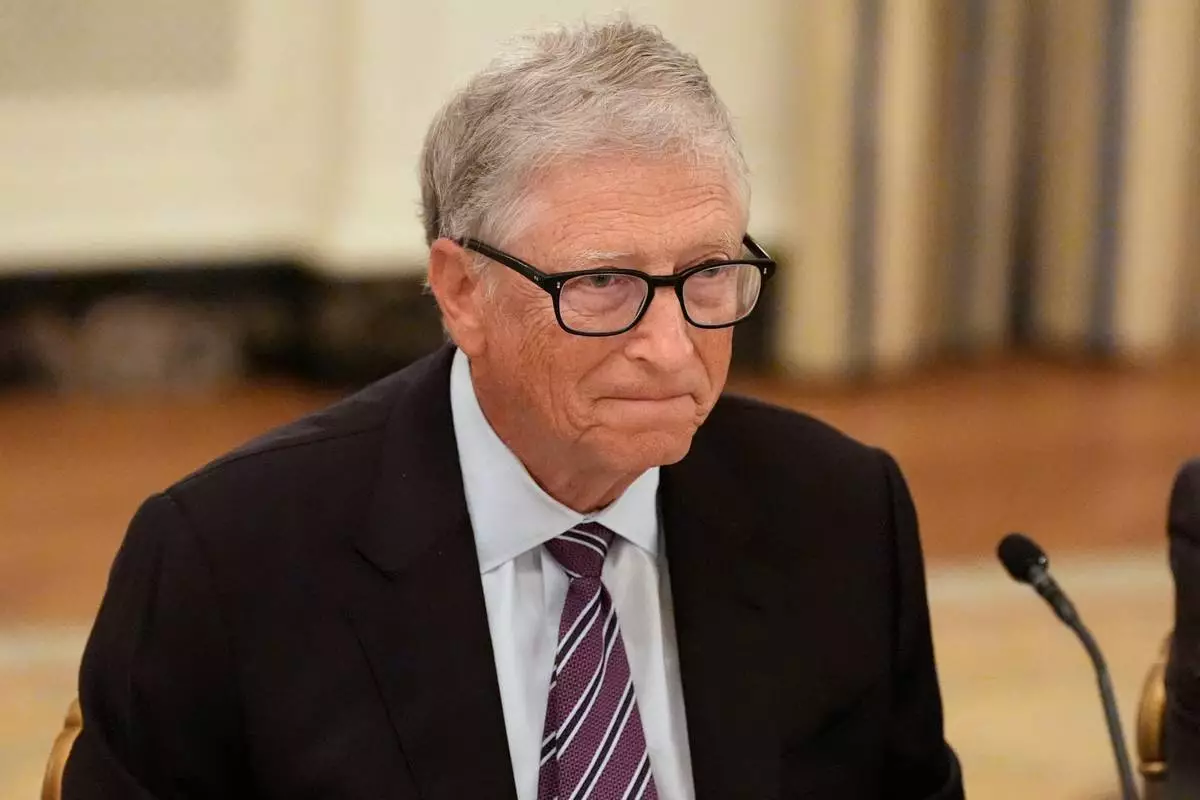
FILE - Bill Gates attends a dinner with President Donald Trump in the State Dining Room of the White House, Sept. 4, 2025, in Washington. (AP Photo/Alex Brandon, File)
FILE - Bill Gates attends a dinner with President Donald Trump in the State Dining Room of the White House, Sept. 4, 2025, in Washington. (AP Photo/Alex Brandon, File)
QUITO, Ecuador (AP) — Ecuador declared Cuba’s ambassador, Basilio Antonio Gutiérrez, and his diplomatic staff “persona non grata” on Wednesday and gave them 48 hours to leave the South American country.

Ecuador’s Ministry of Foreign Affairs said in a statement that the measure was adopted within the framework of international diplomatic law, but didn't say why they were forcing the diplomats to leave. The Vienna Convention allows countries to declare diplomatic personnel a persona non grata without explanation.

Shortly after the announcement, a man could be seen on the roof of the Cuban Embassy in Quito burning a bag of papers in a oven. The burning was witnessed by the Associated Press and later posted in a video on social media by Ecuadorian President Daniel Noboa, who remarked bluntly: “A paper barbecue.”

Ecuadorian officials did not provide more details on the incident or identify the man.

Cuba's government strongly rejected the move in a statement on Wednesday night, calling it an “unfriendly and unprecedented act that significantly damages the historic relations of friendship and cooperation between both countries."

“This action also demonstrates the contempt of the current government of Ecuador for the diplomatic practices and courtesies observed by the international community,” wrote Cuba's Foreign Ministry.

The decision follows an executive order signed Tuesday by Noboa in which he canceled Ecuadorian ambassador to Cuba José María Borja's diplomatic duties, also without explanation.

The same day, the United States and Ecuador announced they have begun joint military operations against organized crime groups in the Andean nation. Noboa has sought to position himself as a tough-on-crime leader in the wake of a surge of armed group violence in recent years.

The measure comes amid mounting pressure by U.S. President Donald Trump on Cuba, which intensified after a U.S. military operation deposed former Venezuelan leader Nicolás Maduro.

Since, Trump has placed restrictions of oil sales to Cuba and said the government was “ready to fall.” Ecuador is one of the Trump administration’s allies and collaborators in the fight against drug trafficking and organized crime in the region.

Cuba's Foreign Minister Bruno Rodríguez said Wednesday in a post on X that it seemed like "no coincidence” that Ecuador expelled Cuba's diplomatic staff at the same time the U.S. was asserting pressure on Cuba and other governments in the region, and ahead of a meeting of mostly right-wing Latin American leaders in Miami next week, which Noboa is slated to attend.

Ecuador and Cuba have maintained bilateral relations since 1960, which have ebbed and flowed with shifts in Ecuadorian politics.

The Wednesday decision has an “ideological component,” said Andrea Endara, coordinator of Political Science and International Relations at Casa Grande University. She said that Noboa “has aligned himself with the interests of the United States.”

The effective expulsion of the Cuban officials follows a number of diplomatic dramas between Ecuador and other Latin American nations in recent years. In 2024, Ecuadorian officials raided the Mexican embassy to arrest the former vice president taking shelter there. Experts said this was a blatant violation of international law, causing Mexico to cut off relations.

More recently, a trade war has broken out between Ecuador and neighboring Colombia, which Noboa’s government accused of not doing enough to crack down on crime on their shared border.

Follow AP’s Latin America coverage at https://apnews.com/hub/latin-america

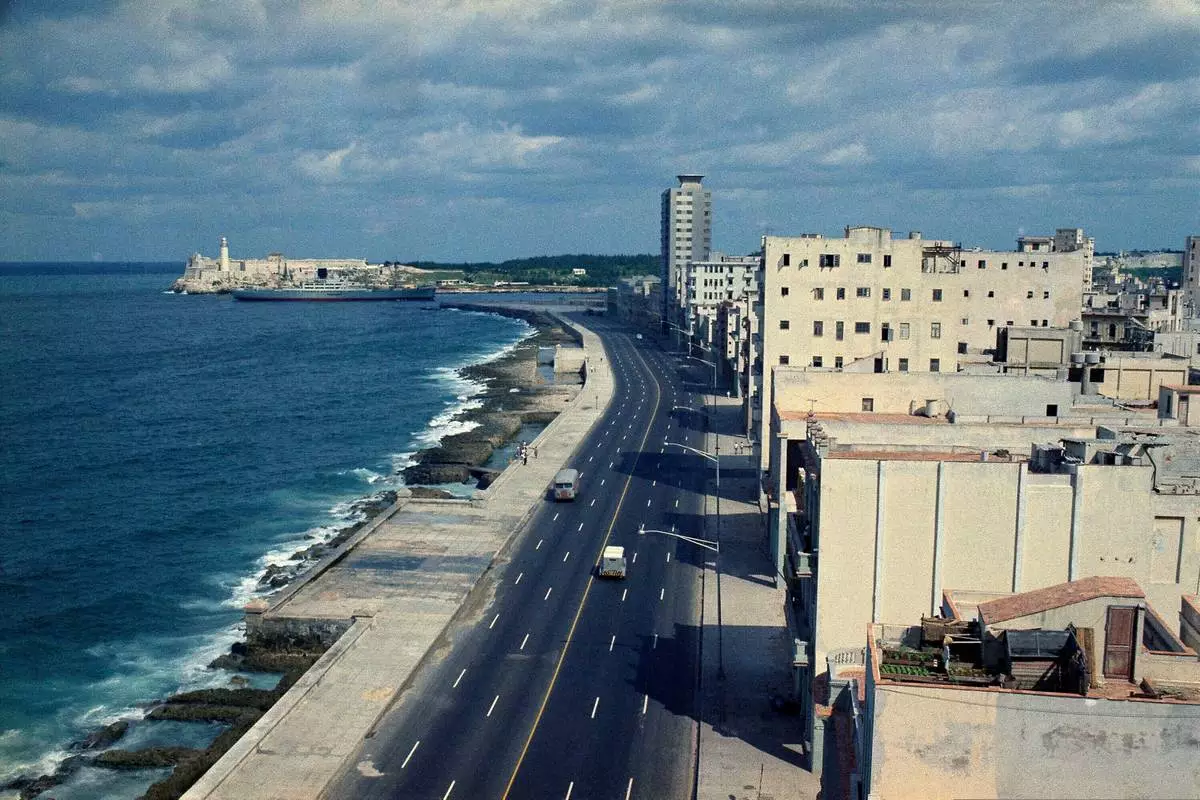
FILE - This is a general view of El Malecon in Havana, Cuba, seen Nov. 1971. (AP Photo/Beverley Reed, File)

FILE - This is a general view of El Malecon in Havana, Cuba, seen Nov. 1971. (AP Photo/Beverley Reed, File)

Recommended Articles