Multiple times during Donald Trump's second presidency, Congress has debated his military authority, first in Latin America and now the Middle East.
The latest test will come in the GOP-controlled House on Thursday after the Senate voted down a Democratic measure to limit Trump, at least theoretically, in the U.S.-Israeli war against Iran.
Like many predecessors, Trump claims broad, even unlimited power over U.S. forces. He approved boat strikes near Venezuela, established a naval blockade and authorized a military operation to arrest and depose its leader, Nicolás Maduro — all arguable acts of war under international law. He made noise about additional action in Greenland and Latin America, before launching a sweeping bombing campaign in Iran.
Under the Constitution, the military reports to the president. But the document grants oversight roles to Congress. Trump says he won’t sign anything limiting his options — proof for some experts that control over a civilian-led military has skewed from its original design.
“The Constitution gives war powers to two different branches of government,” said military historian Peter Mansoor, an Ohio State University professor and retired U.S. Army colonel. “The pendulum has swung towards the executive,” he lamented, arguing that “the framers meant for Congress to be the most powerful branch.”
Here is a look at what the Constitution says and how U.S. war powers have played out.
Article I, which established Congress, states that lawmakers “shall have power ... to declare war.” Article II, which established the presidency, makes the chief executive the “commander in chief of the Army and Navy.” The Constitution also gives Congress authority over military budgets.
Congress has not declared an official state of war since World War II. Yet since 1945, U.S. service members have fought and died in full-scale conflicts in Korea, Vietnam, Iraq and Afghanistan, among other places.
In the Maduro mission, an Army pilot was injured, leading Trump to award him the Medal of Honor — recognition legally restricted to actions taken when fighting a foreign enemy. As of Wednesday, six U.S. service members had died in the Iran war.
During Senate debate last month on Venezuela, Sen. Rand Paul, R-Ky., mocked an “elaborate song and dance” and said it's “an absurdity” to argue that Trump's actions were anything other than waging war.
Sen. Tim Kaine, the Virginia Democrat who sponsored Venezuela and Iran war powers resolutions, said the latest version — which failed 47-53 — would prevent a presidential “end-run around the Constitution.”
Congress has declared war against 11 nations across across five wars. Three declarations came in the 19th century, two during World War I and six during World War II. Each time, the president formally asked Congress to act, citing some specific attack on the U.S. or another national interest.
President James K. Polk asked even for the Mexican War, which was principally about expanding U.S. territory.
Over the same span, Congress voted many times to authorize force without declaring war. Early measures were usually for specific naval actions defending U.S. commercial interests. Congress first took this route in 1798; it became a roadmap for the post-World War II era.
President Harry Truman won World War II under declarations issued while Franklin Roosevelt was president. Then, in 1950, the fledgling United Nations voted to act in Korea and asked member nations to assist.
Citing the U.N., Truman engaged U.S. troops in a so-called “police action" without seeking lawmakers' approval. Congress later that year approved the Defense Production Act to mobilize U.S. war capacity. It was an after-the-fact endorsement of Truman's decision, and the law remains a potential Pentagon tool.
Presidents from Dwight Eisenhower to Gerald Ford presided over what history remembers as the “Vietnam War,” though it was often called “the Vietnam conflict” as U.S. administrations expanded southeast Asia operations.
Lyndon Johnson persuaded Congress to pass the Gulf of Tonkin Resolution in 1964 and used that to accelerate U.S. involvement.
As U.S. deaths rose, the war grew unpopular, but Johnson — and then Richard Nixon — had broad authority from lawmakers. “Congress approves and supports the determination of the President, as Commander-in-Chief, to repel any armed attack against the forces of the United States and to prevent further aggression,” the 1964 resolution stated.
Congress repealed that measure in 1971, but Nixon did not withdraw.
Mansoor said war declarations don’t just define the start of a war. They also effectively require an official end — which triggers the Senate’s role in ratifying peace treaties. Sidestepping those legal bookends, Mansoor said, is “how you get in these forever wars.”
In 1973, as the U.S. limped toward its Vietnam exit, Congress passed the War Powers Resolution, intending to impose guardrails on presidents by requiring certain communication with lawmakers and allowing Congress to hold votes setting parameters for military action. That was the legislative trigger this year for failed Venezuela resolutions and the Iran resolutions.
In 2020, a Democratic-controlled House narrowly adopted a measure intended to curtail Trump’s powers against Iran at that point. But in practice the War Powers Resolution has not served as a functional check on executive power.
Ronald Reagan sent troops to Lebanon in 1982 as part of a multinational peacekeeping force. He did not cite the War Powers Resolution when notifying Congress and did not agree to congressional authorization until 1983 — after service members already had died.
In 1990, George H.W. Bush notified Congress under the War Powers Resolution that he'd dispatched troops to the Middle East after Iraq invaded Kuwait. Bush asked Congress for “support” — as opposed to “authorization” — only after securing U.N. backing for action by an international coalition led by U.S. forces. Congress authorized force in January 1991.
Bill Clinton deployed U.S. troops multiple times — to Somalia, Haiti, Rwanda, Bosnia and Herzegovina, Kosovo and Iraq. He asked Congress for appropriations but not explicit authorizations. When some lawmakers pressed Clinton to seek approval for strikes in Iraq in 1998, Clinton asserted his interpretation of presidential authority — not unlike Trump's arguments.
George W. Bush quickly mobilized the military after terrorist attacks on Sept. 11, 2001. He consulted quickly with Congress, resulting in a joint resolution authorizing sweeping action. It was unique because no specific country was targeted and it initially focused on al-Qaida. Congress nearly unanimously supported the measure but asked for reports every 60 days.
Mansoor, the military historian, noted that Bush used the vote to conduct antiterrorism efforts anywhere in the world. Bush returned to Congress in 2002, telling leaders he wanted authorization for action against Iraq.
What Congress passed for Bush had no effective end date. His successor, Barack Obama, inherited troops in Iraq and did not initially withdraw them. Afghanistan carried on through Obama's two terms and Trump's first presidency and into Joe Biden's term.
Biden withdrew U.S. troops from Afghanistan after it had become the longest U.S. war — never declared — in the nation's history.
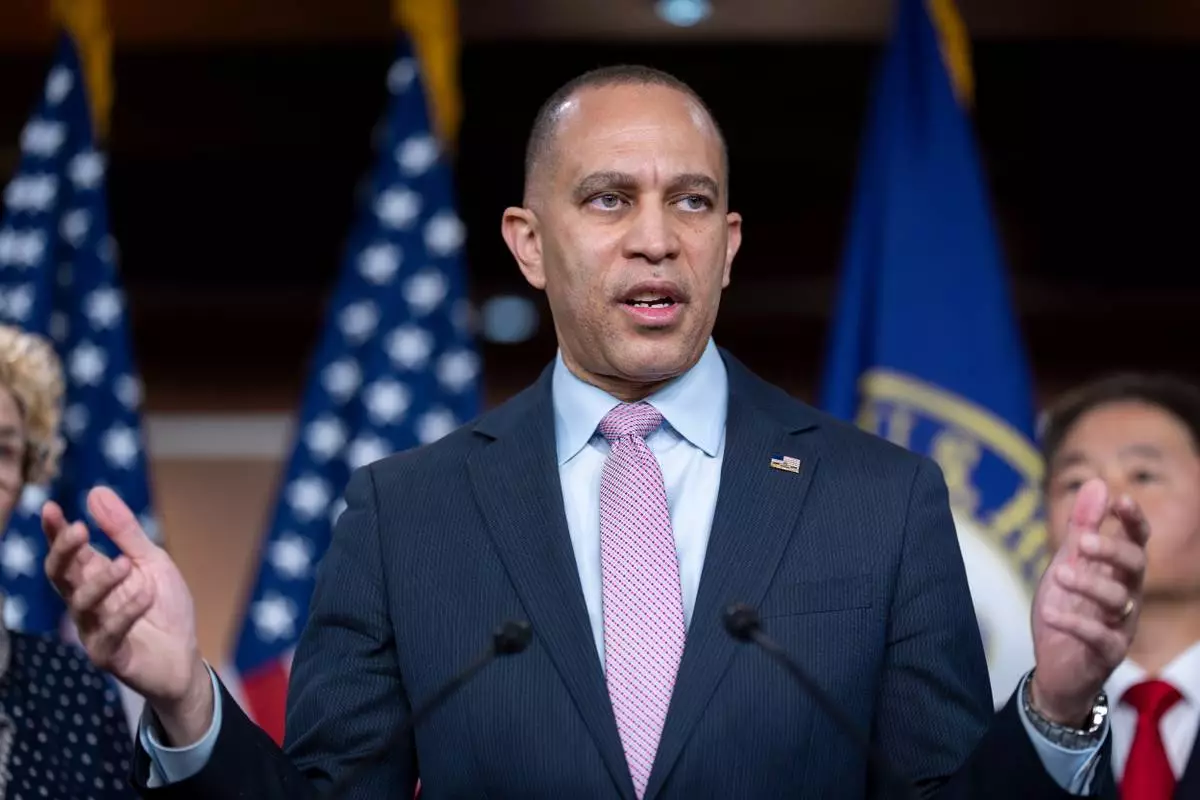
House Minority Leader Hakeem Jeffries, D-N.Y., talks about President Donald Trump's decision to attack Iran and Democratic efforts to force congressional approval for going to war, during a news conference at the Capitol in Washington, Wednesday, March 4, 2026. (AP Photo/J. Scott Applewhite)
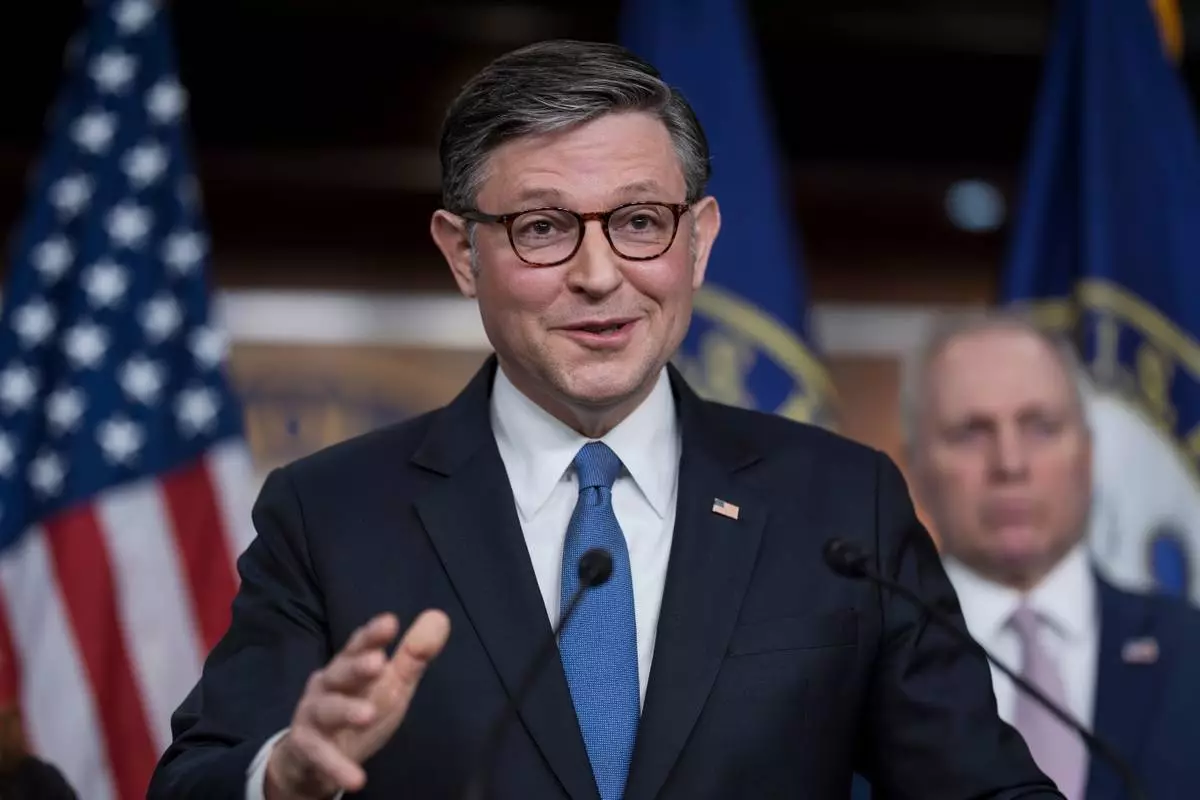
Speaker of the House Mike Johnson, R-La., gestures as he and the GOP leadership talk about the war against Iran, during a news conference at the Capitol in Washington, Wednesday, March 4, 2026. (AP Photo/J. Scott Applewhite)
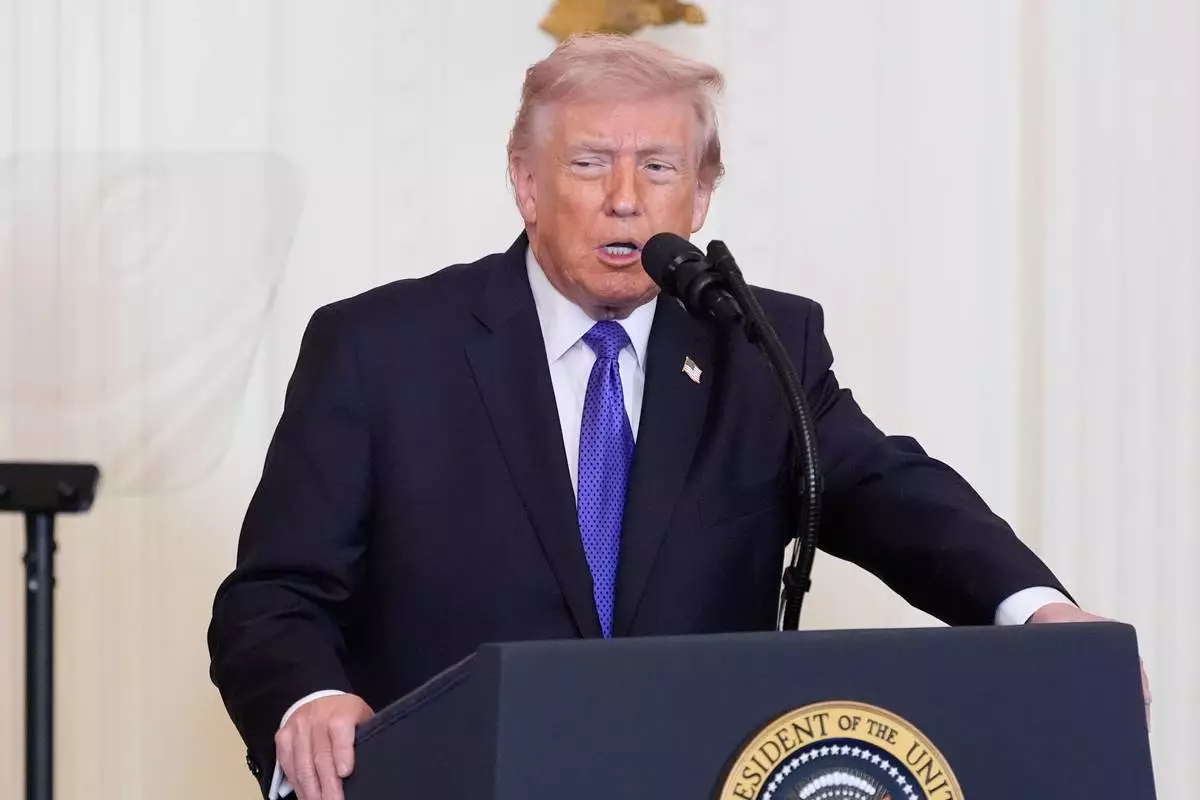
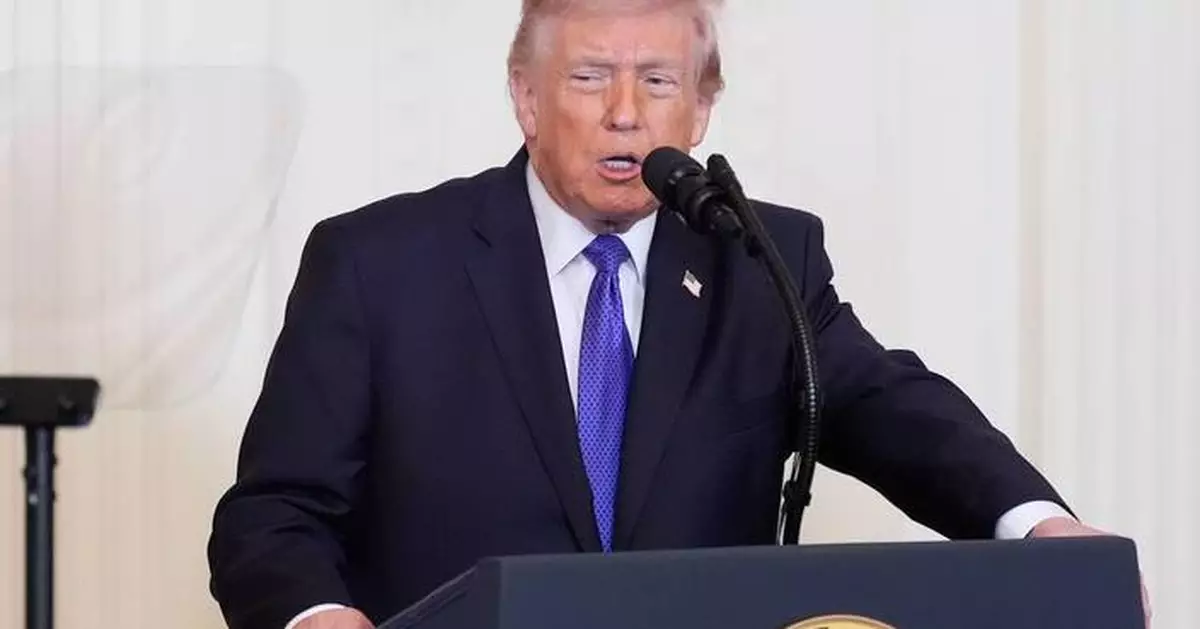
President Donald Trump speaks about Iran before a Medal of Honor ceremony in the East Room of the White House, Monday, March 2, 2026, in Washington. (AP Photo/Alex Brandon)
Lou Holtz never met an opponent that couldn't beat him. Somehow, he squeaked out nearly 250 wins and a national title while cementing himself both as one of the most lovable and unlikable characters in college football — a one-of-a-kind iconoclast in a profession brimming with originals.
The pint-sized motivator who restored greatness at Notre Dame and demanded it everywhere else he went died in Orlando, Florida, Notre Dame announced Wednesday. He was 89.
Spokeswoman Katy Lonergan said the family did not provide a cause of death.
“Notre Dame mourns the loss of Lou Holtz, a legendary football coach, a beloved member of the Notre Dame family and devoted husband, father and grandfather,” Notre Dame president the Rev. Robert A. Dowd said in a statement.
His son, Skip, who followed Holtz into coaching, said in a post on X that his father had passed away and was "resting peacefully at home.”
“He was successful, but more important he was Significant," Skip Holtz wrote.
Holtz went 249-132-7 over a career that spanned 33 seasons and included stops at Minnesota, Arkansas, South Carolina and, most notably, Notre Dame.
It was there that he won his lone national championship, in 1988, capped with a win over West Virginia in the Fiesta Bowl but highlighted by a 31-30 victory earlier in the season over Miami — one of the notable meetings in the so-called “Catholics vs. Convicts” rivalry of the '80s.
For all the big personalities coarsing through college football during the day, none stood bigger than Holtz. He was only 5-foot-10, but commanded the sideline like someone much bigger. The lead-up to the big games were sometimes his best theatre.
Armed with a homespun brand of folksiness that could trickle into corny but always contained a kernel of truth, Holtz lit up bulletin boards and motivational posters with dozens of memorable quotes and pithy observations, virtually all of them constructed to inspire:
—“Life is ten percent what happens to you and ninety percent how you respond to it.”
—"When all is said and done, more is said than done."
—“You’re never as good as everyone tells you when you win, and you’re never as bad as they say when you lose.”
He could make any team — from Akron to Army to Alabama — sound like a world beater on any given week. More often than not, his Fighting Irish figured out a way to scratch out the wins.
Before Holtz arrived in South Bend, Notre Dame was wallowing in mediocrity — a mere shell of the program built on a foundation of Knute Rockne, Ara Parseghian, the Golden Dome and Touchdown Jesus. Holtz turned things around quickly and had the Irish in the Cotton Bowl in Year 2 and winning the national title the season after that.
His 1988 and 1989 teams won a school-record 23 consecutive games and he beat three teams ranked No. 1 — Miami in 1988, Colorado in 1989 and Florida State in 1993.
The Irish finished No. 2 in the AP poll in 1993. Holtz left South Bend after the 1996 season with a record of 100-30-2.
“Lou and I shared a very special relationship," said current Notre Dame coach Marcus Freeman, who led the Irish back to the national title game in 2025 — a contest Holtz attended and spiced up with some trolling of the Ohio State program that beat the Irish that day. "Our relationship meant a lot to me as I admired the values he used to build the foundation of his coaching career: love, trust and commitment.”
Notre Dame was the highlight of a head-coaching career that began at William & Mary and North Carolina State and also included a one-year stop in the NFL.
Like so many who mastered the college game in his profession, he failed up there, resigning with one game left in a 3-10 campaign with the New York Jets in 1976 and proclaiming “God did not put Lou Holtz on this earth to coach in the pros."
That opened the door at Arkansas, which was one of the four schools he led into the AP Top 25. His teams made 18 appearances there; eight of those were in the top 10.
After Notre Dame, Holtz transitioned into the TV booth with CBS, promising he would never coach again.
“I said, ‘You could put it in granite.’ I’ve got the granite stone,” Holtz said. “It wasn’t very good granite.”
He took an open job at South Carolina, where he had once served as an assistant coach. Despite posting a career-worst 0-11 mark in his first season with the Gamecocks, Holtz went 17-7 over the next two seasons, beat then No. 9 Georgia in the second game of 2000 and also beat Ohio State twice in the Outback Bowl.
He left the sideline for good following the 2004 season and returned to the airwaves, working 11 more seasons with ESPN.
On the field, each program he led reached new heights in part because he never wavered from his core values of trust, a commitment to excellence and caring for others.
“I think you have to go in there with a vision of where you want to go and a plan of how you’re going to get there,” Holtz once said. “You have to hold people accountable, and you have to believe it can be done."
The results were impressive, even if he sometimes used unconventional methods.
He once tackled quarterback Tony Rice following a failed play in practice and was widely critiqued in 1991 when he grabbed a player by the facemask, pulling him to the sideline and yelling at him the entire way after the player committed a personal foul. Holtz later apologized.
Holtz suspended his leading rusher, Tony Brooks, and leading receiver, Ricky Watters, in 1988 because they were 40 minutes late to a team meal the night before Notre Dame faced then No. 2 Southern California. The Irish still won 27-10.
At Arkansas, he once suspended three starting offensive players for disciplinary reasons before facing then No. 2 Oklahoma in the Orange Bowl. Arkansas, an 18-point underdog, still won 31-6.
As demanding as Holtz could be, though, he used his charm and eye for good players to recruit top talent. Notre Dame’s 1990 recruiting class included five future first-round NFL draft picks, and he found unique ways to motivate his team.
“The first thing I said at every practice was, ‘Boy, what a great day to work,’” Holtz recounted. “It could be raining. It could be whatever. I’d be, ‘Boy, am I glad to be here. No place I’d rather be than here.’ I used to say to them, ‘I travel all over the world speaking to every major corporation and they’d pay me money. I speak to you for free and you don’t have to take notes.’”
Louis Leo Holtz was born Jan. 6, 1937, in Follansbee, West Virginia, and aspired to be a high school football coach. His future wife broke off their engagement in 1960. That’s when Holtz, once a 150-pound linebacker at Kent State, took a graduate-assistant job at Iowa. A year later, he married Beth Barcus, and they were together more than 50 years.
She inspired him again in 1966 when, eight months pregnant with their third child, Holtz was jobless. Beth bought him a book about setting goals, and Holtz created a wish list of what he wanted to do: attend a White House dinner, appear on “The Tonight Show” and see the Pope.
Holtz said there were 107 entries on the list: “She said, ‘Gee, that’s nice. Why don’t you add 'get a job.’ So we made it 108,” he said.
In 2008, Holtz was inducted into the College Football Hall of Fame and Notre Dame placed a statue of him outside its home stadium.
He said numerous times that his plan was to be buried on that campus, as well. He figured it was only fitting because, as he said in 2015: “The alumni buried me here every Saturday,."
AP Sports Writer Michael Marot in Indianapolis contributed to this report. Tom Coyne is a former AP sports writer.
Get poll alerts and updates on the AP Top 25 throughout the season. Sign up here. AP college football: https://apnews.com/hub/ap-top-25-college-football-poll and https://apnews.com/hub/college-football
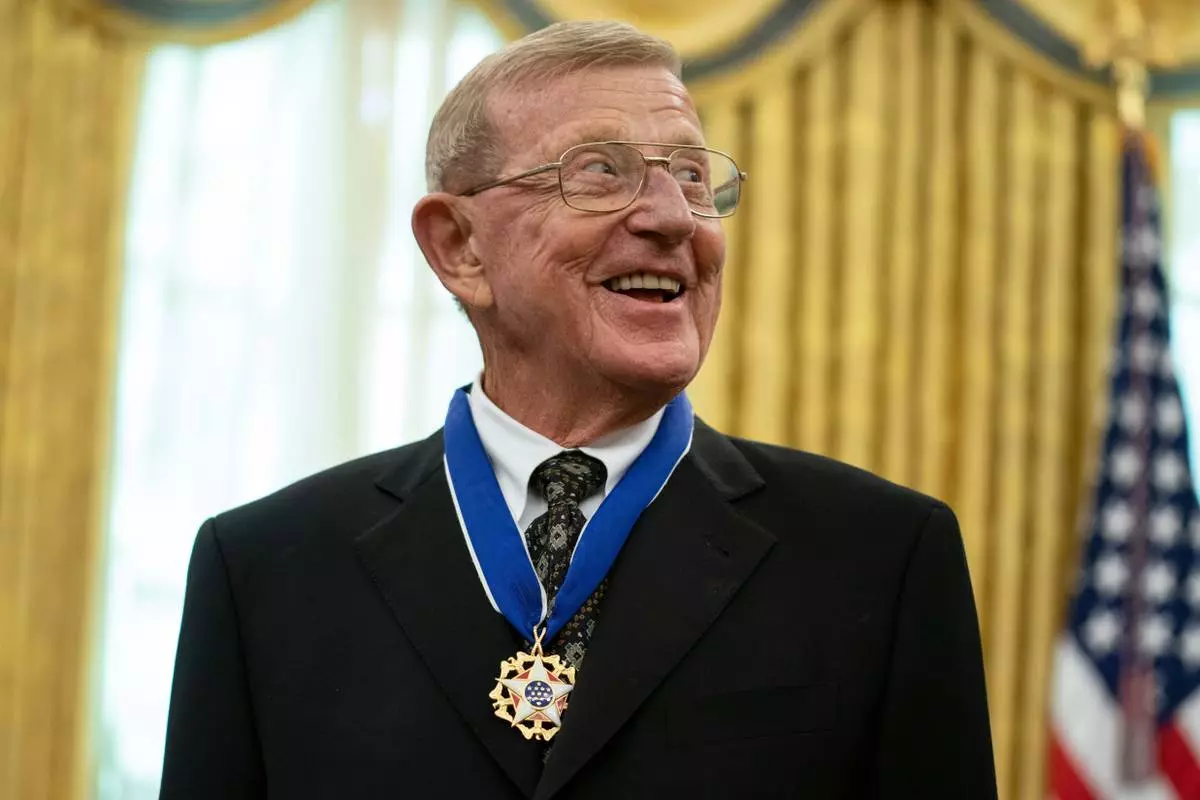
FILE - Former football coach Lou Holtz smiles after receiving the Presidential Medal of Freedom from President Donald Trump, Thursday, Dec. 3, 2020, in the Oval Office of the White House in Washington. (AP Photo/Evan Vucci, File)
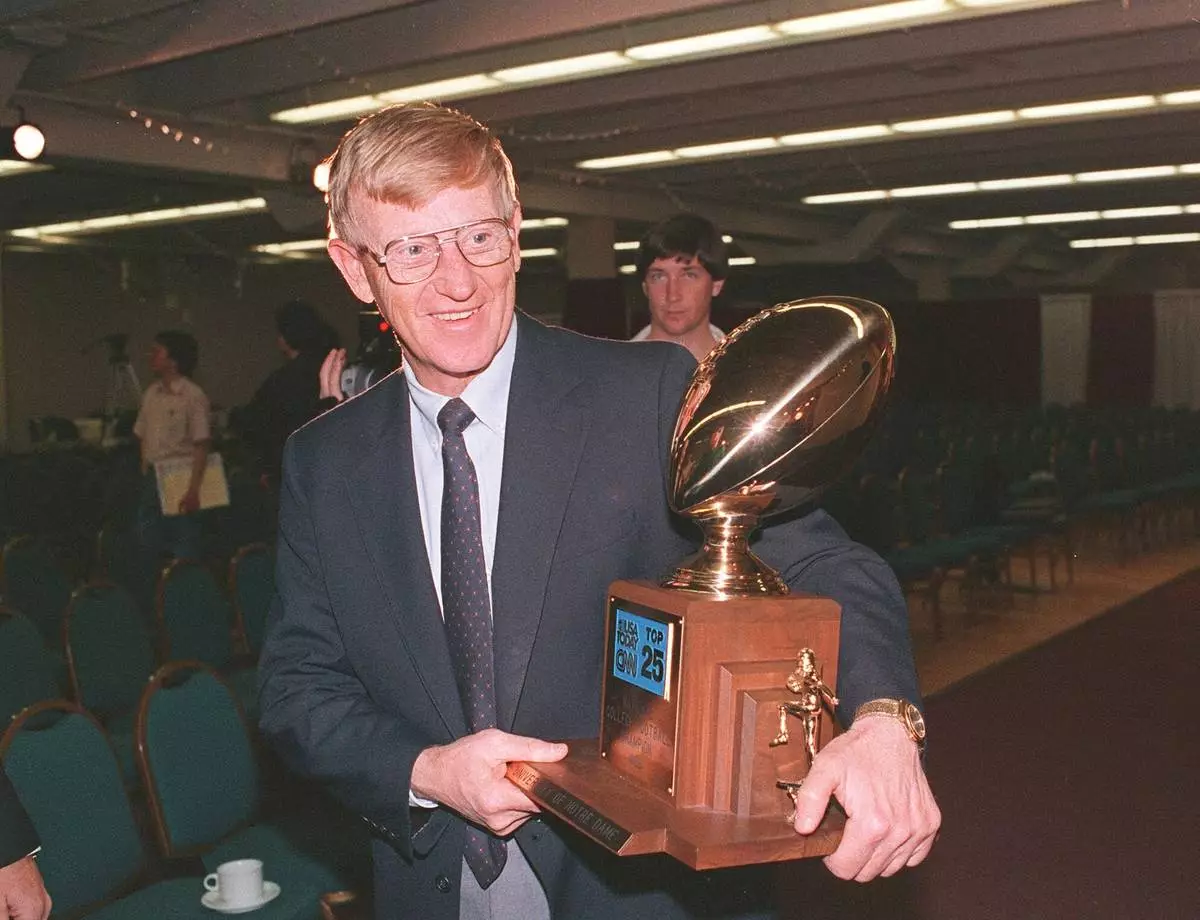
FILE - Notre Dame head coach Lou Holtz carries away the National College Champion Trophy following a news conference in Tempe, Ariz. in this Jan. 3, 1989 photo. (AP Photo/Rob Schmacher, File)
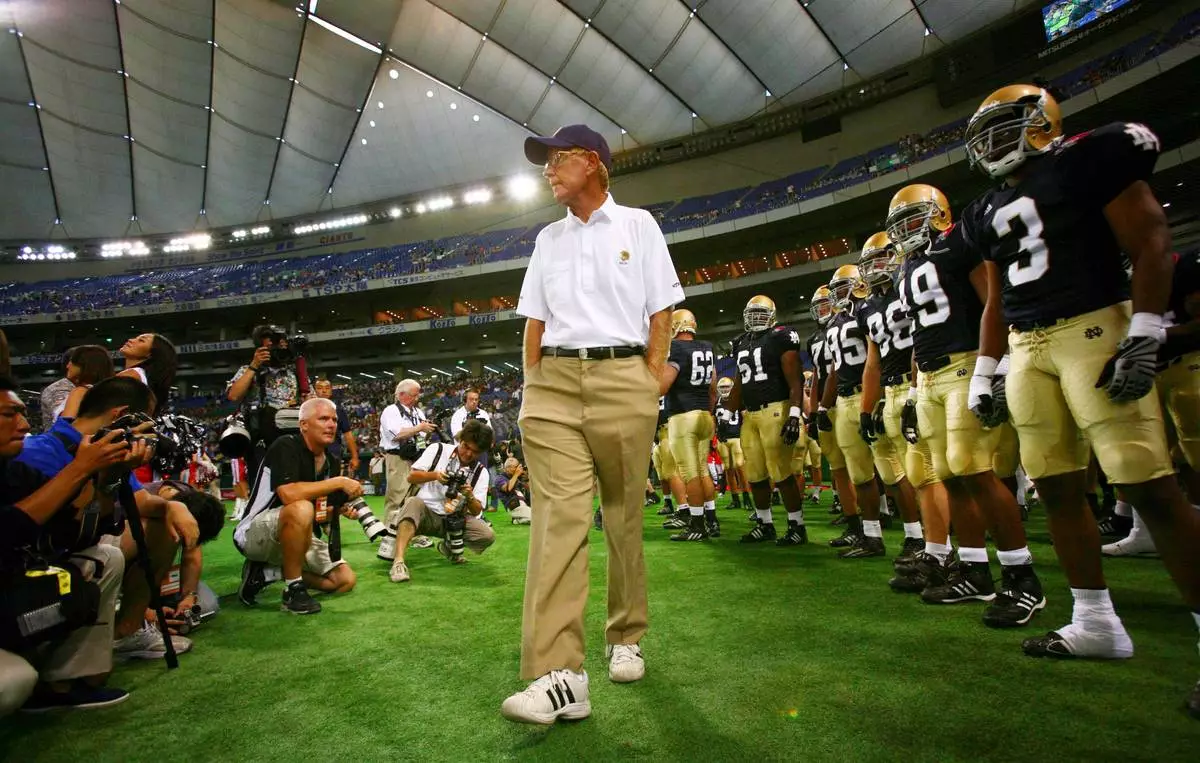
FILE - Notre Dame football coach Lou Holtz and his team players await before the start of their game against Japan's national American football team at the Notre Dame Japan Bowl in Tokyo, Saturday, July 25, 2009. (AP Photo/Junji Kurokawa, File)
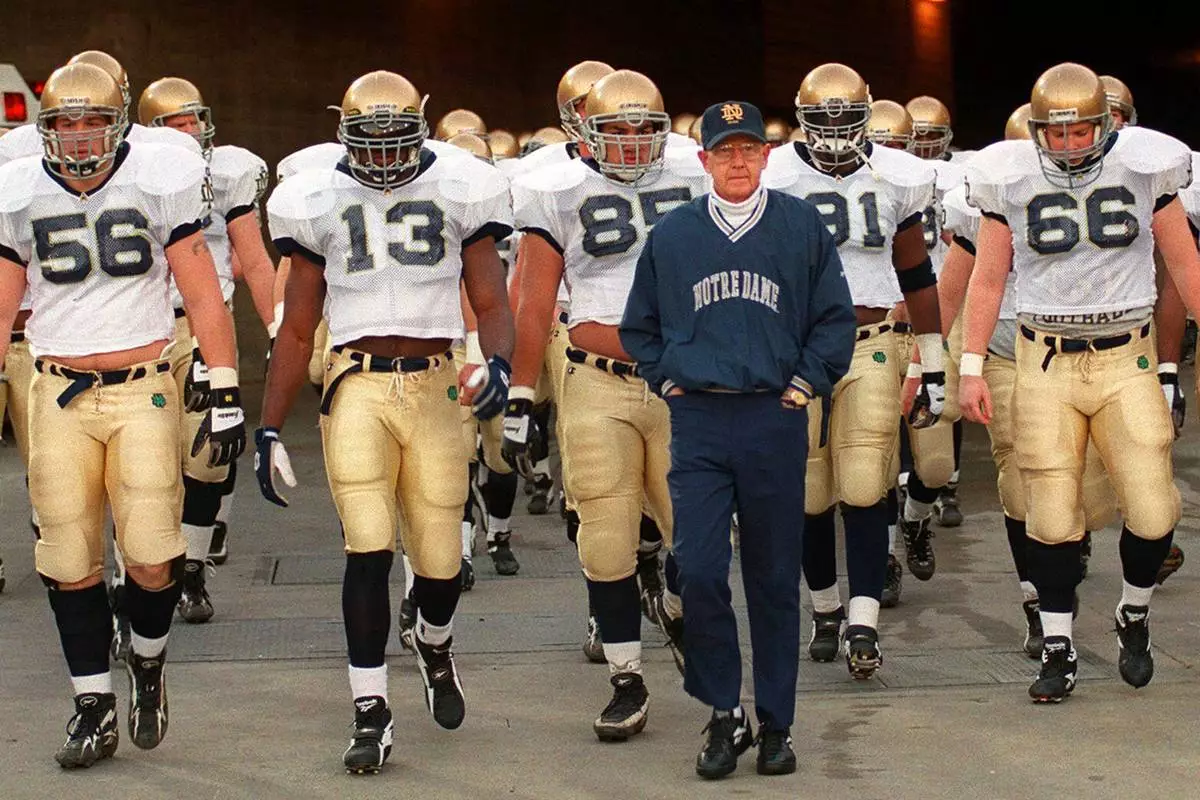
FILE - Notre Dame's head coach Lou Holtz and the Fighting Irish walk onto the field of the Los Angeles Coliseum to warm up for an NCAA college football game against Southern California Saturday, Nov. 30, 1996 in Los Angeles. (AP Photo/Kevork Djansezian, File)
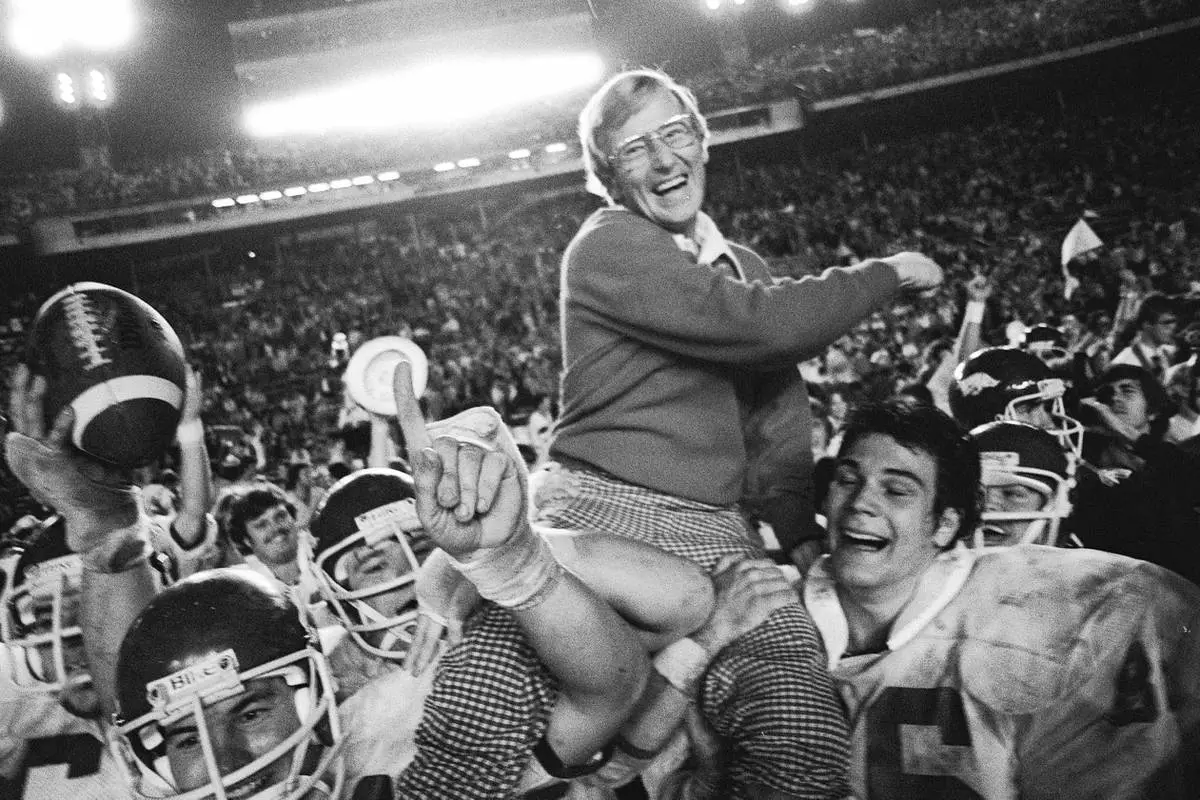
FILE - Arkansas coach Lou Holtz is carried by his players after defeating Oklahoma in the Orange Bowl NCAA college football game, Jan. 2, 1978, in Miami, Fla. (AP Photo/Phil Sandlin, File)