NEW YORK--(BUSINESS WIRE)--Mar 5, 2026--
Hack The Box (HTB), the global leader in AI-powered cybersecurity readiness, today released findings from its AI-Augmented vs Human-Only Cybersecurity Performance Benchmark Report, which includes data from its NeuroGrid Capture The Flag (CTF) competition, the largest side-by-side benchmark of agentic AI and human performance on cybersecurity tasks to date.
This press release features multimedia. View the full release here: https://www.businesswire.com/news/home/20260305565272/en/
The results demonstrate that AI levels the playing field and accelerates performance, depending on the skills of the AI-augmented teams, which:
The benchmark analyzed performance data from 1,078 teams, including 120 agentic AI teams and 958 human teams, across 36 cybersecurity challenges spanning nine technical domains and four difficulty levels during a three-day competition.
“AI can raise the bar of cybersecurity performance, but it does not eliminate the need for human expertise,” said Haris Pylarinos, Founder and CEO of Hack The Box. “Our findings show measurable productivity gains, but also predictable failure patterns. Security leaders must build and test human-in-the-loop workflows that are proven under pressure, and develop the AI and cybersecurity skills needed to unlock benefits safely as models evolve.”
How AI Impacts Performance by Experience Level
The findings showed that AI requires a targeted workforce development strategy, as it impacts less-experienced to elite operators in fundamentally different ways. Results include:
“Routine and mid-level work is where enterprises will see immediate ROI,” said Gibb Witham, President of Hack The Box. “If organizations over-index on automating the tasks that build judgment, they risk trading long-term resilience for short-term efficiency. Agentic automation must be paired with deliberate human skill development. For enterprises, the competitive advantage will not come from AI adoption alone. It will come from training cybersecurity professionals to effectively orchestrate, validate, and govern AI-driven workflows and agents.”
The data reveals that AI’s strongest impact occurs in medium-complexity work (3.89x), the very layer where mid-level cybersecurity talent traditionally develops the judgment needed to become security practitioners. Medium-tier challenges showed the highest solve-rate ratios for AI-augmented teams. These are the problems that build experience and pattern recognition in developing analysts. If AI absorbs this layer without structured upskilling and deliberate exposure to increasingly complex scenarios, organizations risk hollowing out the very pipeline that produces future senior experts.
Human-AI Hybrid Models Win
The findings show how AI-augmented teams, often operating with human-in-the-loop, raised baseline performance across the field, yet the hardest and most novel challenges still demanded human judgment and verification. For CEOs and CISOs, the takeaway is clear: use AI to amplify human capability with oversight, not replace it.
Hack The Box will present a deeper analysis of its research at RSAC 2026 on March 26, 2026, in the Village showcase.
Learn more about the AI-Augmented vs Human-Only Cybersecurity Performance Benchmark Report and CISO briefing here.
About Hack The Box
Hack The Box is the leading cyber readiness platform for the agentic era, battle-testing and upskilling both humans and AI agents to enhance organizational cyber resilience. Trusted by the Fortune 500, government agencies, and MSSPs, the platform delivers threat-informed learning paths consisting of real-world scenarios in gamified labs and live-fire simulations that build and validate offensive and defensive cyber capabilities. With a loyal community of more than 4 million members and 800+ enterprise customers, Hack The Box empowers teams and intelligent systems alike to strengthen cyber defenses and reduce breach risk effectively. For more information, visit hackthebox.com.
Find us on:
LinkedIn - Facebook - Instagram - X - Discord - YouTube

Hack The Box Benchmark Report Finds AI Boosts Cybersecurity Productivity 3-4x for AI-Augmented Elite Teams, but Cautions on a Talent Pipeline Risk
DHADING, Nepal (AP) — Authorities in Nepal warned of possible fresh flooding on Sunday and urged residents in flood-affected districts to remain on high alert after water levels rose in the Bhotekoshi River.
Flood warning notices were sent to people's phones early Sunday as rescue crews worked to clear a major highway connecting Kathmandu to one of the areas worst hit by Wednesday's catastrophic floods, which killed at least 800 people and left more than 3,000 missing in Nepal and Tibet.
The latest warnings came after Chinese authorities informed their Nepalese counterparts of increased water flow upstream, according to Dharam Raj Uprety, chief executive of Nepal’s National Disaster Risk Reduction and Management Authority.
The Chinese state news agency Xinhua, citing the country’s water resources ministry, said a new lake formed after Wednesday’s floods high in the mountains had largely drained.
But Xinhua said the ministry warned that a crater located 5.6 kilometers (3.5 miles) upstream, which held an estimated 1.4 million cubic meters (370 million gallons) of water, still posed some risk and required close monitoring.
Nepal’s disaster agency said Sunday the death toll had climbed to 788 with 2,502 missing, while Chinese authorities reported 16 deaths and 546 missing on the Chinese side of the border.
The missing include hundreds of people from over a dozen countries who were in the region to work, visit the mountains or make a pilgrimage to a sacred peak. On Sunday, Chinese state media said 261 foreigners were missing in Tibet, including over a hundred Nepalis and others from around the world.
In Dhading, one of the worst-hit regions in Nepal, some residents began returning to ruined homes to see what can be salvaged.
Residents sat in homes with walls washed away by the floods, shoveling sludge-like mud and rubble off balconies or window frames. Others scanned the ground for items they could pick out of the mud and rinse off. One man had returned for his chickens, which he found alive. He tied them up and put them in the cabin of his truck.
“Everything is finished. Nothing is left. Not even our home,” Sharmila Tamang, a Dhading resident who was trying to salvage items from her home, told The Associated Press.
At a key power plant that was severely damaged by the floods, workers started inspecting the facilities Sunday to survey the destruction. The plant serves over 20,000 people across four districts.
In the town of Galchhi, a group of residents sought higher ground on a nearby bridge and watched as the river roared by. Some pointed to enormous rocks washed downriver during the earlier floods, while others standing on a suspension bridge were warned off with whistles.
Along the river, homes, vehicles and farm tractors could be seen jutting from the thick gray-brown sediment that enveloped entire villages in some areas. Parts of rice terraces along the riverside had dropped into the river after landslides hit them.
Homes and businesses left intact after the flooding were still without electricity on Sunday, as twisted power line poles and wires lay tangled in the mud.
Residents of flood-hit villages said they were struggling to make sense of near-constant alarms they've received since the initial floods.
“Sometimes they say a flood is coming, then we have to run again to higher ground, even at night. There is also rain,” said Govind Shreshta, a resident. “It’s really difficult for me. I have a 72-year-old father and 70-year-old mom. I must carry them and I am exhausted. It’s going on like this for those who are still alive.”
Large concrete and smaller suspension bridges were destroyed, leaving communities on the other side of the river with less easy access.
“Those who are there are now stuck there. Those who are here are stuck here. It’s going to be very difficult,” said Sattan Singh Tamang, 47, who was working near a bridge when Wednesday’s floods came.
Wednesday’s flash floods started after a glacial collapse high in the Himalayan region. Scientists who studied satellite images said bedrock underneath a glacier high in the Himalayan region had collapsed, taking part of the glacier with it. The rockfall was so extreme that it registered as a magnitude 5.2 earthquake.
The rocks and melted water then swelled the rivers in the valleys below, causing a torrent of water that swept buildings, bridges and earth downstream in Tibet and Nepal.
Nepal’s foreign minister called for a global response to climate change, saying Nepal was bearing a disproportionate share of its impact.
“Despite having only 0.1% contribution to the global emissions, people of Nepal have become major victims of climate change,” Shisir Khanal said Saturday.
Scientists have said it is too early to draw a direct connection between global warming and Wednesday’s catastrophe. However, they said that as Earth’s temperature rises because of human activities such as burning oil, gas and coal, the chances of such disasters increase, especially in the Himalayan mountains, which are warming considerably faster than many other parts of the world.
Meanwhile, Malaysia's Prime Minister Anwar Ibrahim said Sunday his country will send a search-and-rescue team to Nepal to assist with relief efforts and help evacuate Malaysians affected by the disaster.
Malaysia has also pledged $1 million in financial aid to Nepal, he said in a statement.
Associated Press writers Aijaz Hussain in New Delhi and Shristi Kafle in Kathmandu, Nepal, and video journalist Shonal Ganguly in Dhading, Nepal, contributed to this report.
The Associated Press’ climate and environmental coverage receives financial support from multiple private foundations. AP is solely responsible for all content. Find AP’s standards for working with philanthropies, a list of supporters and funded coverage areas at AP.org.
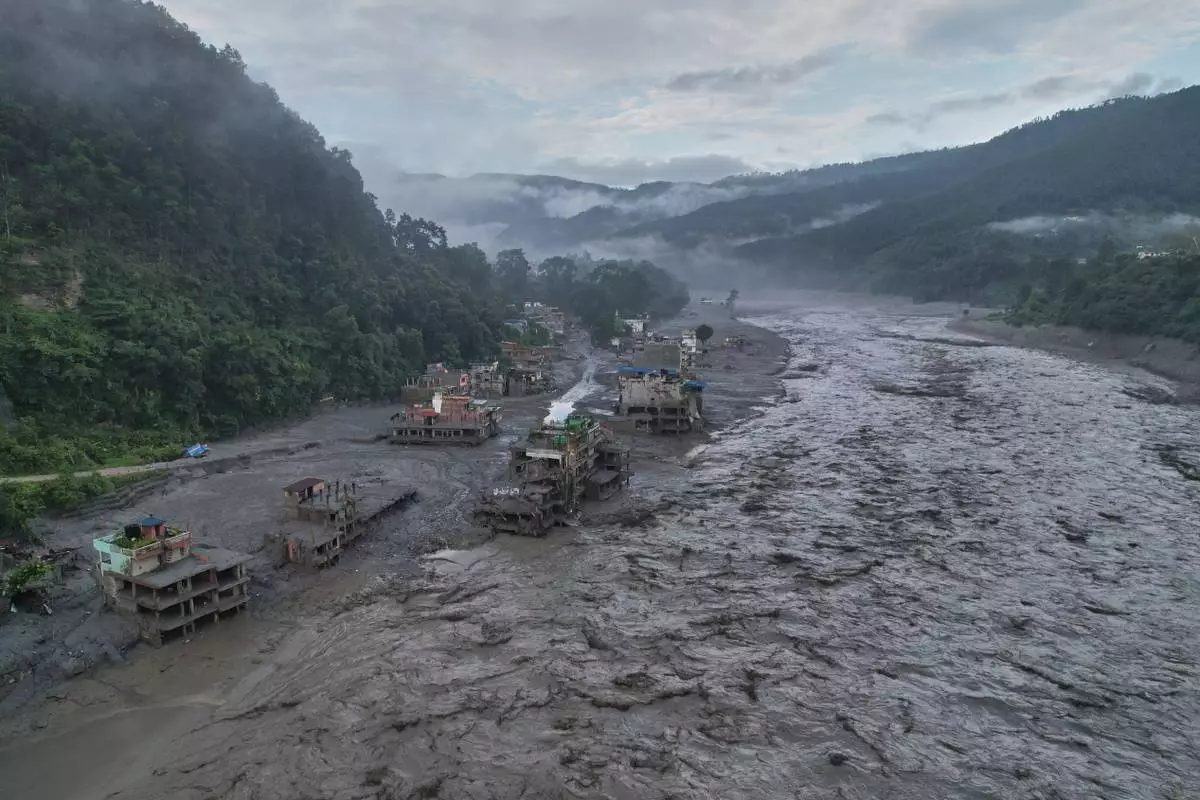
A drone view of the aftermath of flash flooding along the Trishuli river amidst fresh water surge warning in the Trishuli Bazaar area of Nuwakot district, Nepal, Sunday, Aug. 30, 2026. (AP Photo/Rajesh Kumar Singh)
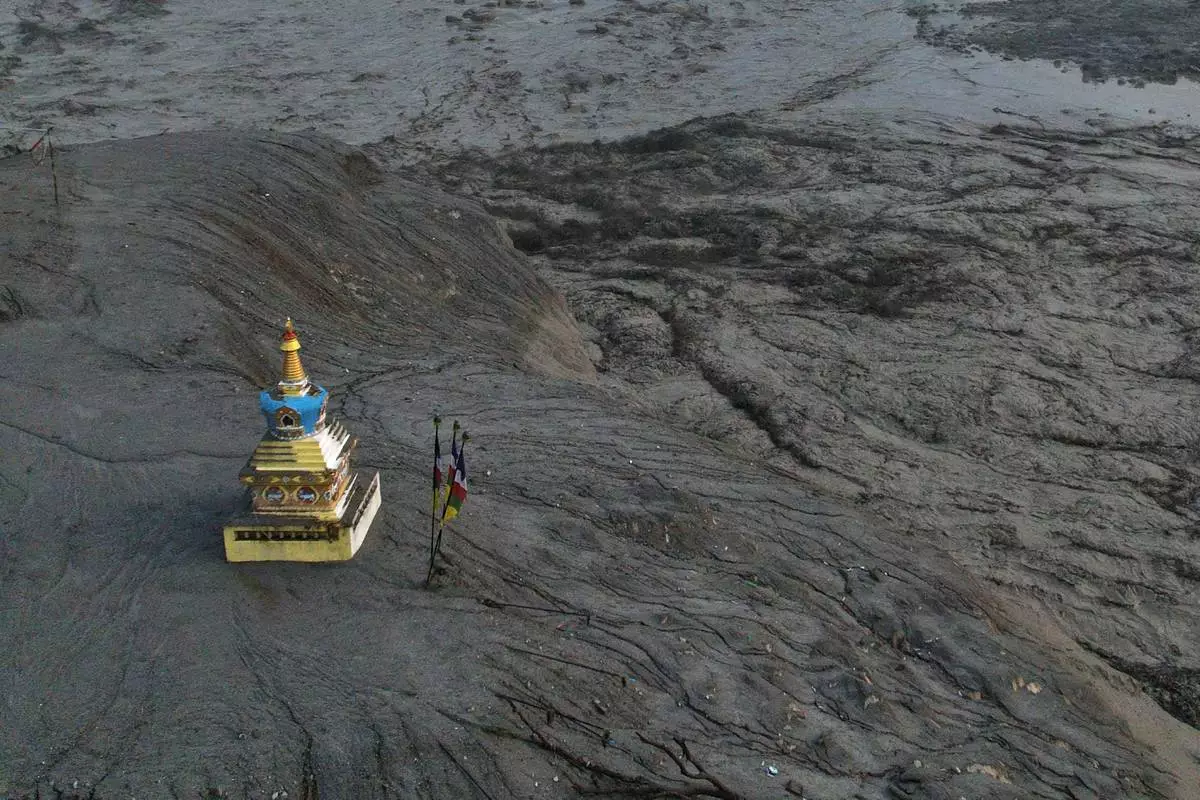
A drone view of the aftermath of flash flooding along the Trishuli river amidst fresh water surge warning in the Trishuli Bazaar area of Nuwakot district, Nepal, Sunday, Aug. 30, 2026. (AP Photo/Rajesh Kumar Singh)
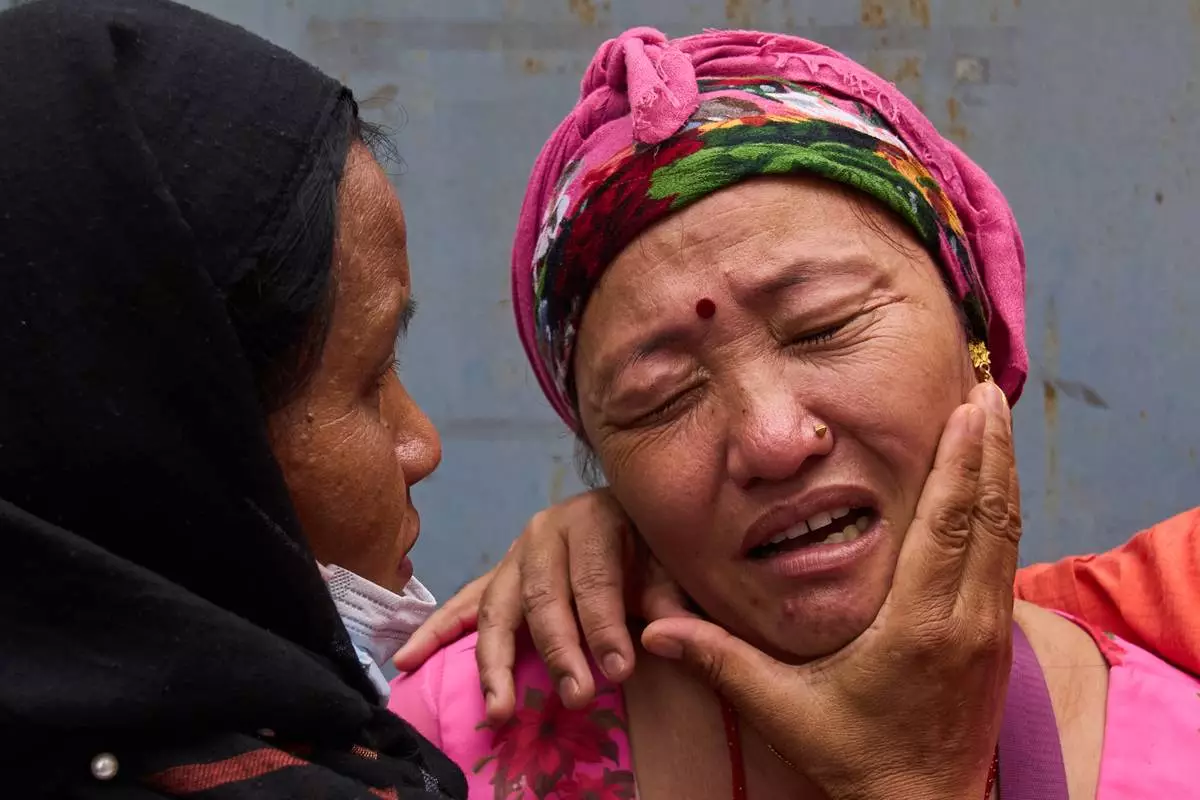
Relatives comfort Jantari Gurung, whose husband is missing, as she looks at photographs of people killed in flash floods displayed outside a government hospital in Kathmandu, Nepal, Sunday, Aug. 30, 2026. (AP Photo/Dar Yasin)
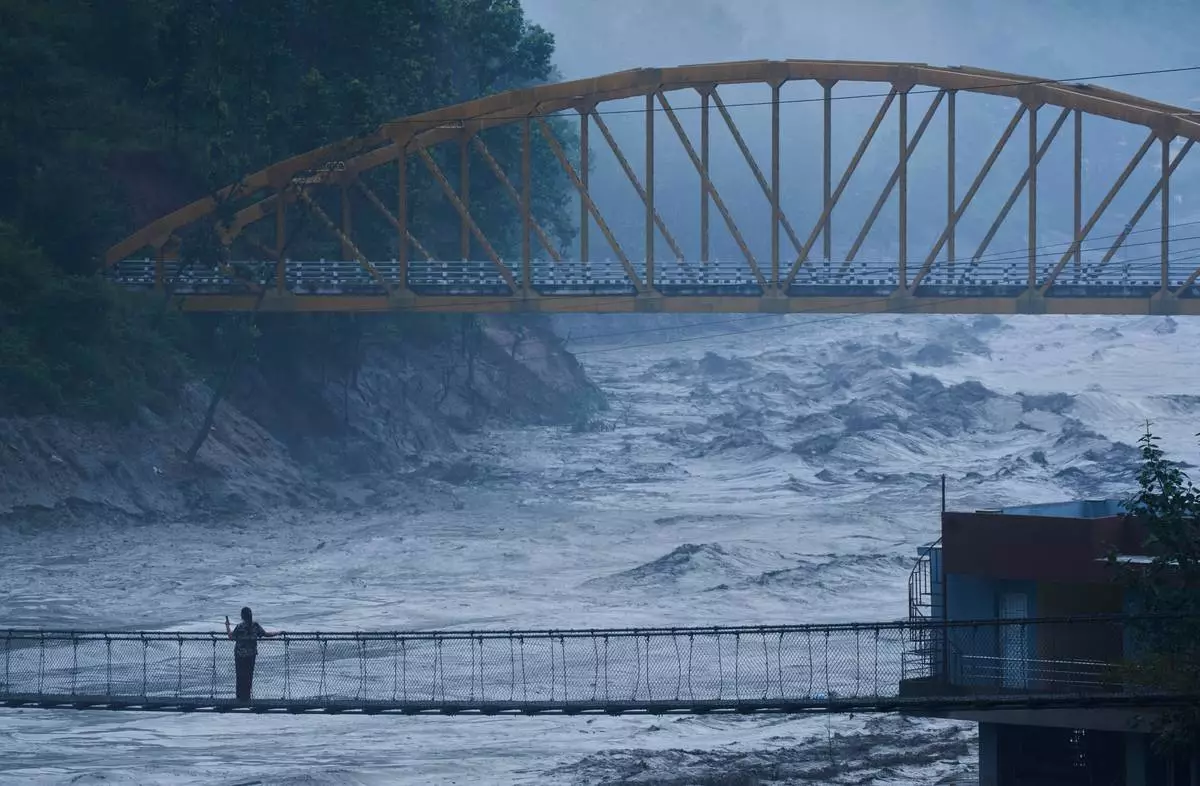
A resident looks at the swollen Trishuli river in Galchhi, Dhading District, Nepal, Sunday, Aug. 30, 2026. (AP Photo/Niranjan Shrestha)
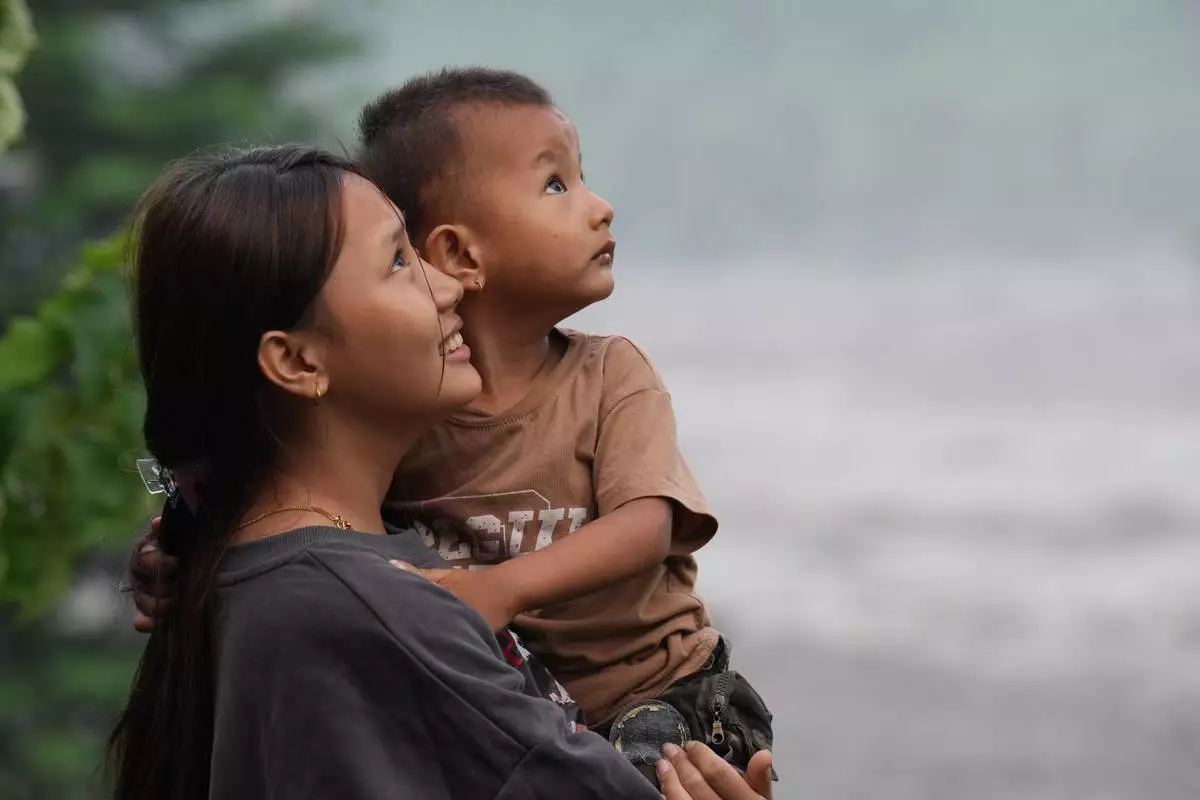
A girl holds a child as they watch a rescue helicopter fly by in Trishuli Bazaar area of Nuwakot district, Nepal, Sunday, Aug. 30, 2026. (AP Photo/Rajesh Kumar Singh)
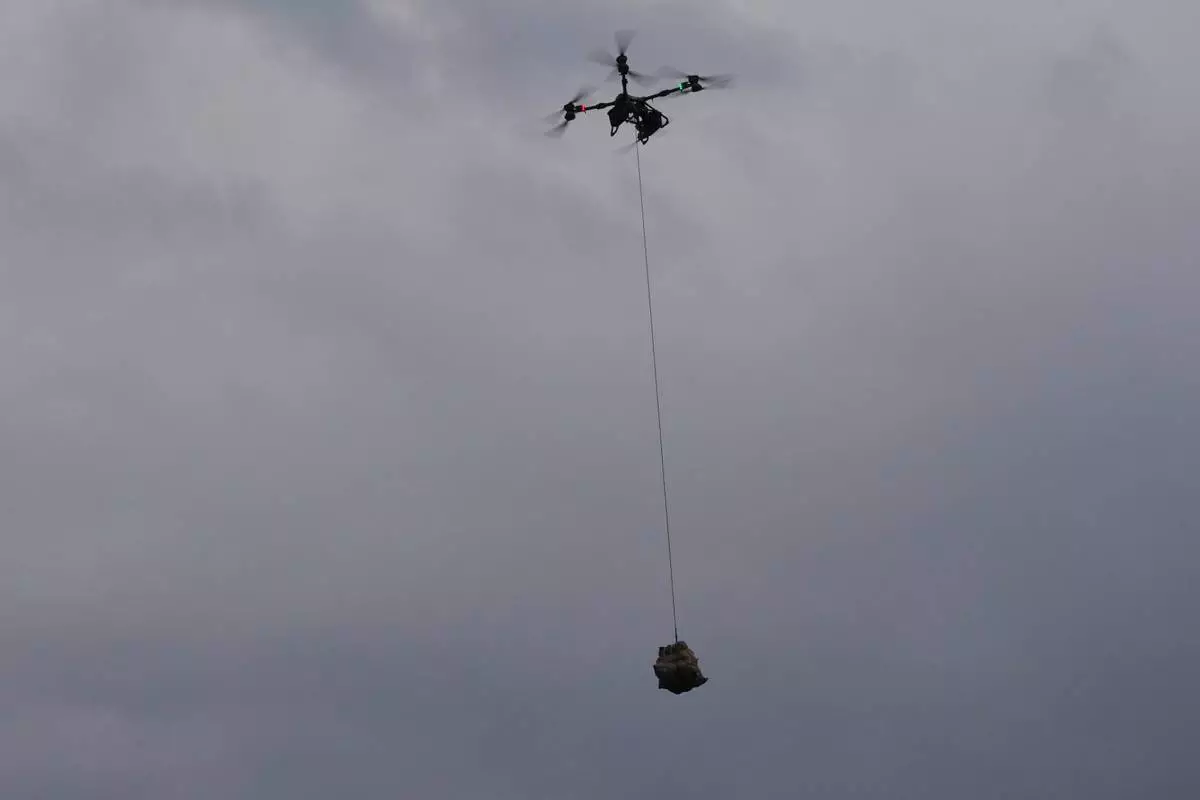
Authorities use drones to distribute relief materials in the areas cut off from the flash floods in Nepal's Nuwakot district, Saturday, Aug. 29, 2026. (AP Photo/Rajesh Kumar Singh)
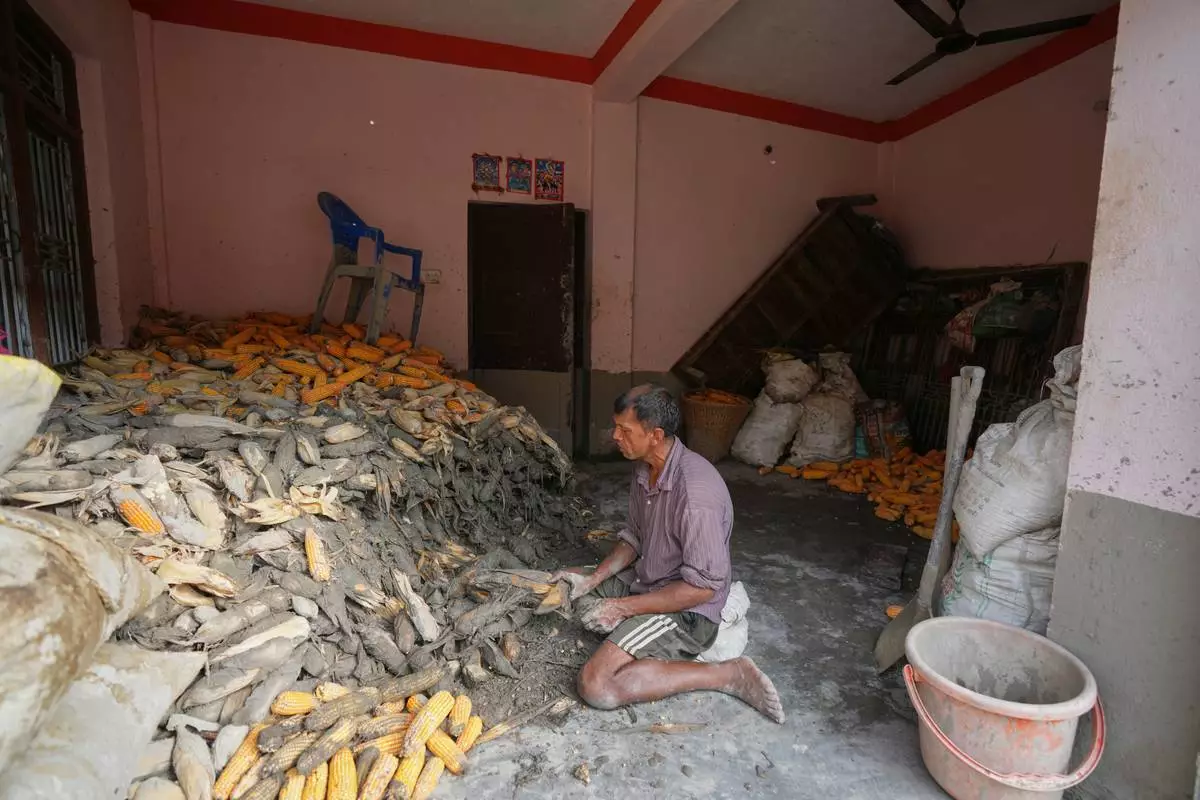
A farmer cleans his corn crop after flash floods in Nepal’s Nuwakot district on Saturday, Aug. 29, 2026. (AP Photo/Rajesh Kumar Singh)
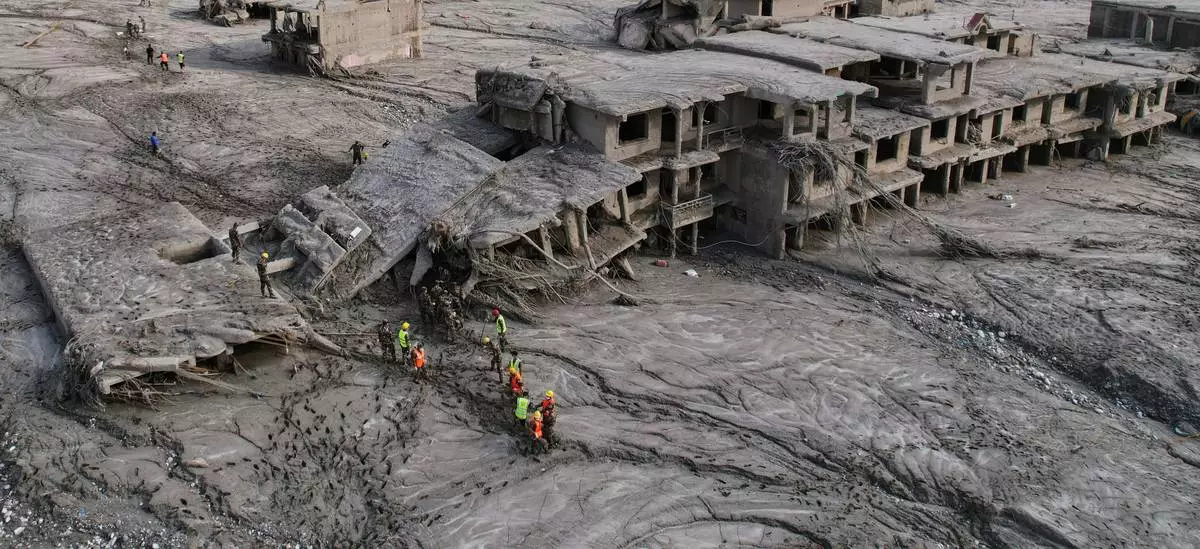
A drone view shows rescue workers inspect the area and damaged structures following recent flash flooding along the Trishuli River in the Devighat area of Nuwakot district, Nepal, Saturday, Aug. 29, 2026. (AP Photo/Rajesh Kumar Singh)
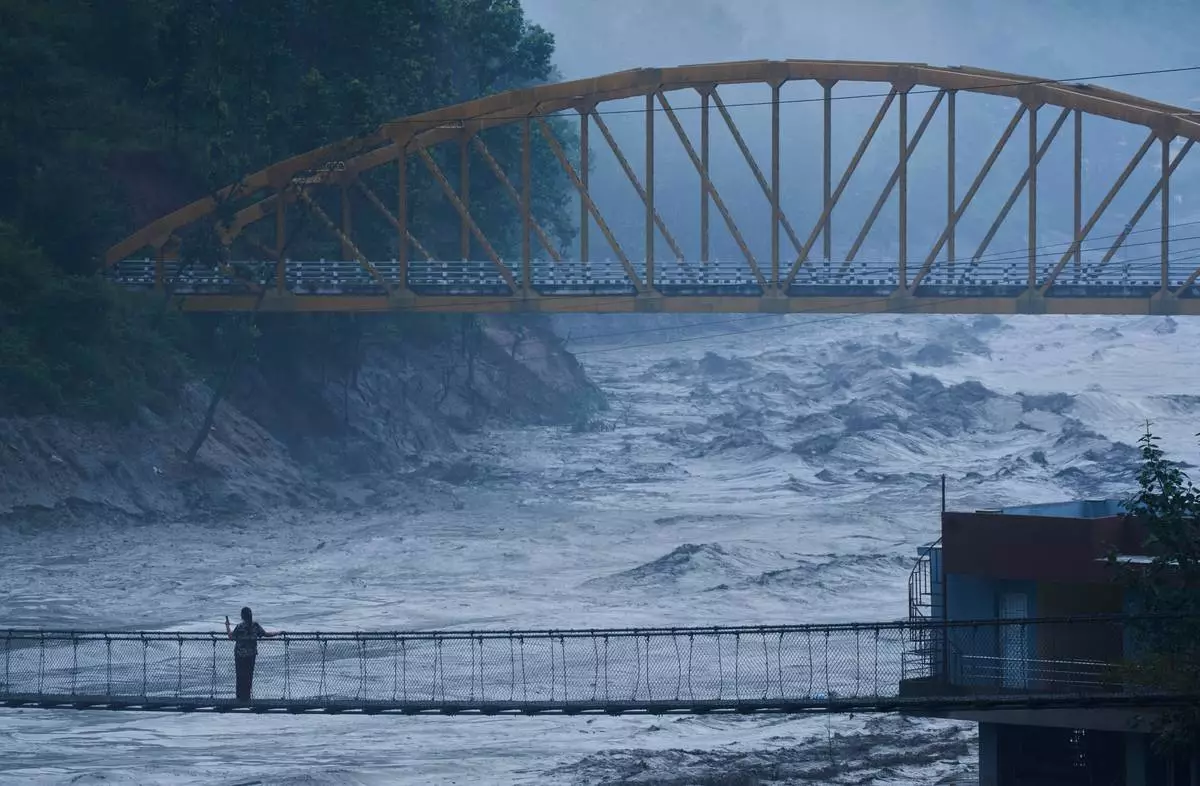
A resident looks at the swollen Trishuli river in Galchhi, Dhading District, Nepal, Sunday, Aug. 30, 2026. (AP Photo/Niranjan Shrestha)