Skip to Content Facebook Feature Image

China's largest coalbed methane field reaches milestone output

China

China

China

China's largest coalbed methane field reaches milestone output

2026-03-05 20:42 Last Updated At:03-06 11:42

China's Daji coal-rock gas field, the country's largest coalbed methane (CBM) project, had seen its annual production capacity exceeding 4 billion cubic meters as of Thursday, marking a major step in securing domestic natural gas supply.

Coalbed methane is an unconventional natural gas resource adsorbed or freely existing in deep underground coal seams, typically buried at the depths of more than 1,500 meters, with broad prospects for exploration and development.

Located in north China's Shanxi Province, the Daji gas field is the country's first coalbed methane demonstration project.

Since the beginning of 2026, 16 new wells have been drilled at the field, adding annual production capacity of 250 million cubic meters and pushing daily gas production to over 11 million cubic meters, an increase of 32 percent year on year.

"Over the recent years, the Daji Gas Field has maintained strong production growth. In 2025, the field produced a total of 3.05 billion cubic meters of coalbed methane and now has an output capacity equivalent to 3 million tonnes of oil and gas. Since supplying gas for the winter heating season last year, the field has produced a cumulative 1.05 billion cubic meters of natural gas, setting a record high," said Chen Ming, head of Linfen gas production management area under PetroChina Coalbed Methane Company Limited.

Compared with conventional natural gas, coalbed methane is buried deeper and under more complex geological conditions, making extraction technically challenging and long regarded as a "forbidden zone" for oil and gas exploration.

In 2019, PetroChina, China's largest oil and gas producer, made technological breakthroughs, with the first coalbed methane well, Daji 3-7, obtaining industrial gas flow.

In December 2021, the Jishen 6-7 well produced more than 100,000 cubic meters of gas per day, becoming the country's first "breakthrough well" for efficient coalbed methane development.

"In recent years, technology has driven coalbed methane exploration into the fast lane of development. We have successfully developed multiple key core technologies, boosting rapid output growth. The second-phase capacity expansion project of the Daji Gas Field is now underway and is expected to add 1.5 billion cubic meters of annual production capacity," said Wang Weibin from a branch company of PetroChina Coalbed Methane Company Limited on gas exploration, development and construction.

The Daji Gas Field, the first coalbed methane field to achieve large-scale development in China, has an average burial depth of 2,130 meters and proven geological reserves of 400 billion cubic meters.

It currently has an annual production capacity of 4 billion cubic meters, accounting for more than 80 percent of the country's total coalbed methane output.
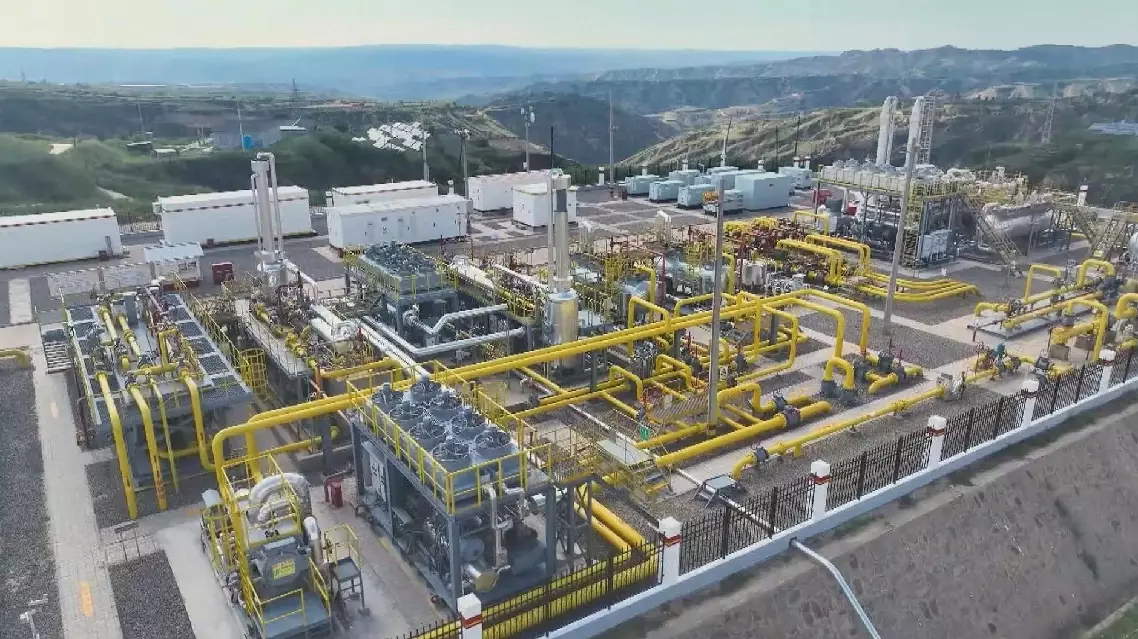
China's largest coalbed methane field reaches milestone output
China's largest coalbed methane field reaches milestone output
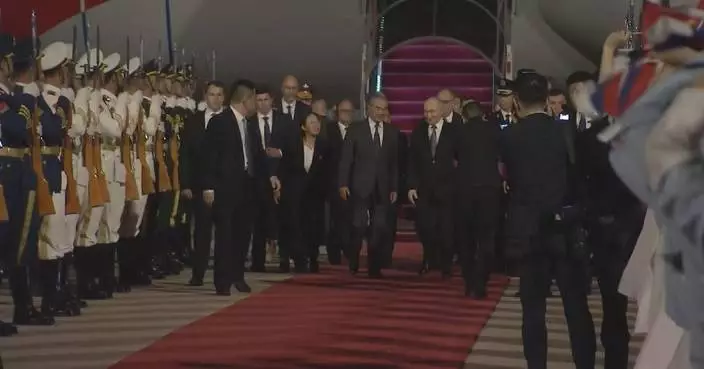
Russian officials and scholars say they expect Russian President Vladimir Putin's visit to China to bring new progress in ties with China, pointing to the importance of educational exchanges and the close cooperation between the two sides when it comes to global issues.

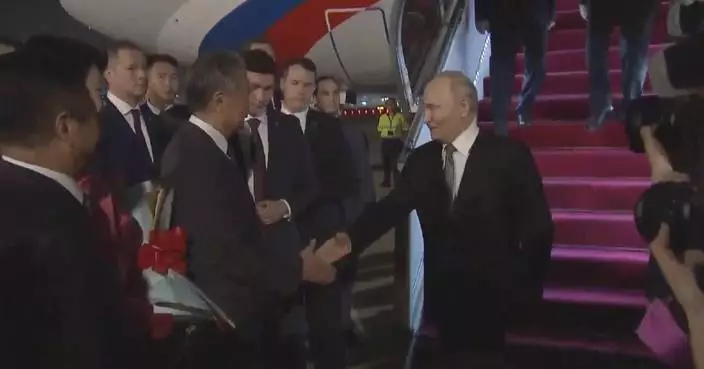
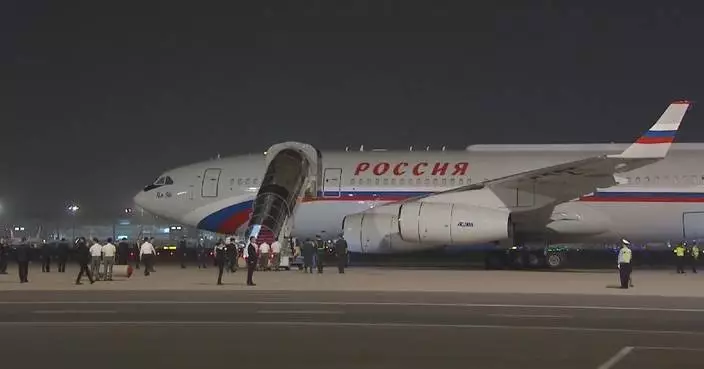
Putin arrived in Beijing late on Tuesday night to begin a two-day state visit at the invitation of Chinese President Xi Jinping.

This marks President Putin's 25th visit to China, with the two presidents set to exchange views on bilateral relations, cooperation in various fields, as well as international and regional issues of mutual interest, according to a spokesman for the Chinese Ministry of Foreign Affairs.

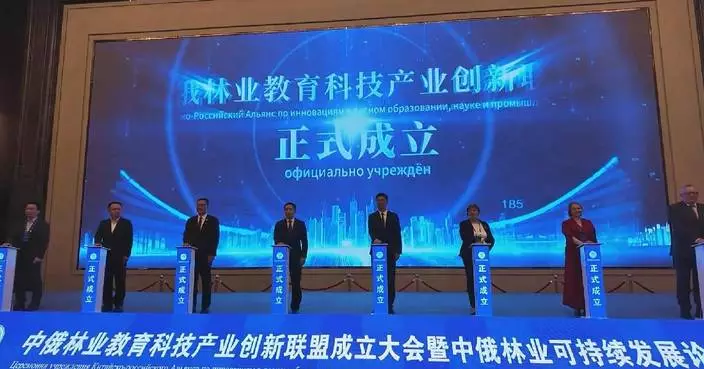
The visit comes as this year marks the 30th anniversary of the establishment of China-Russia strategic partnership of coordination, the 25th anniversary of the signing of the China-Russia Treaty of Good-Neighborliness and Friendly Cooperation and also sees the launch of events under the China-Russia Years of Education for 2026 and 2027.

Russia’s Minister of Science and Higher Education Valery Falkov pointed to the importance of these educational exchanges between the two sides.

"We believe the designation of 2026 and 2027 as the China-Russia Years of Education is a natural progression [in our ties]. We sincerely welcome the continued deepening of such exchanges and cooperation. We also welcome the growing attention from multiples sectors towards education in Russia and China, as this is mutually beneficial and reciprocal," Falkov said in a recent interview with the China Global Television Network (CGTN).

In recent years, the China-Russia comprehensive strategic partnership of coordination for a new era has enjoyed sound, steady and in-depth development, with expanding cooperation in various fields, and the two sides have also made an important contribution to maintaining global strategic stability and upholding international fairness and justice, Chinese foreign ministry spokesman Guo Jiakun said on Monday.

Vasily Kashin, director of the Center for Comprehensive European and International Studies at the HSE University in Moscow, expects the meeting between the two heads of state to further address these key issues.

"China and Russia have established a strategic partnership for 30 years. During this period, we have closely coordinated on the international stage and jointly responded to various crises and global political changes. We expect that in their talks, the leaders of the two countries will discuss issues related to the world order," he said.

Russian officials, scholars expect Putin visit to open up new chapter in relations with China

Russian officials, scholars expect Putin visit to open up new chapter in relations with China

Recommended Articles