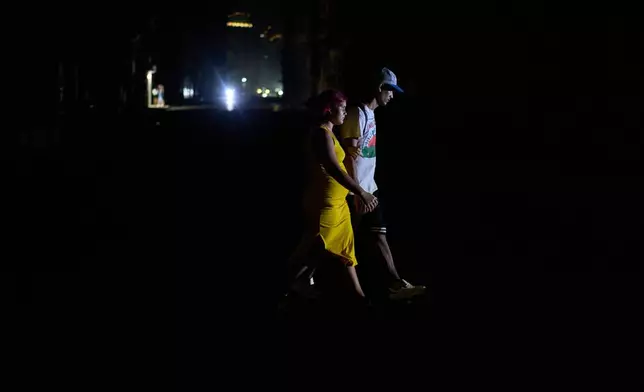
HAVANA (AP) — Swaths of Cuba remained without power on Thursday nearly a day after a huge blackout hit the western part of the island in the latest outage blamed on a fragile electric grid and a lack of fuel.
Crews worked overnight to repair a broken boiler at one of Cuba’s largest thermoelectric plants, but officials have warned that it could take three to four days for power to be fully restored.
Click to Gallery
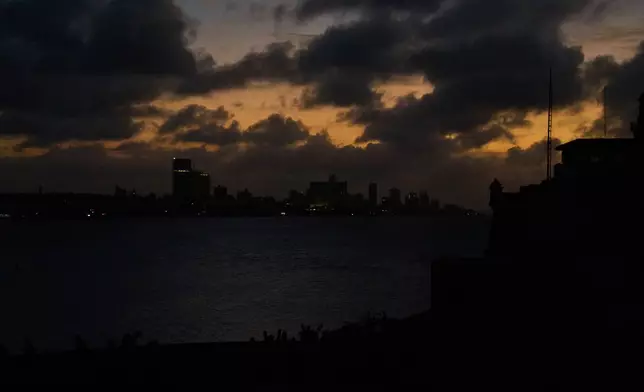
Clouds gather above Havana during a blackout, Wednesday, March 4, 2026. (AP Photo/Ramon Espinosa)
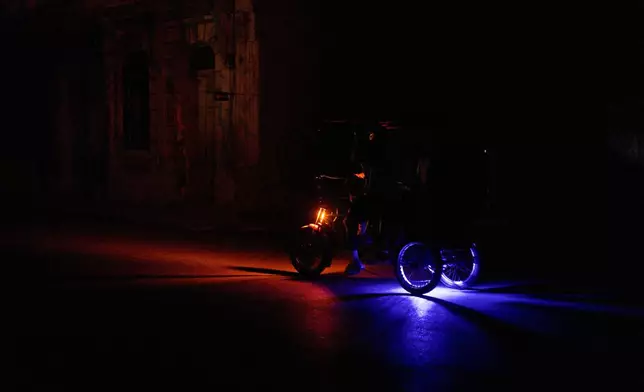
A vehicle drives down a street during a blackout in Havana, Wednesday, March 4, 2026. (AP Photo/Ramon Espinosa)
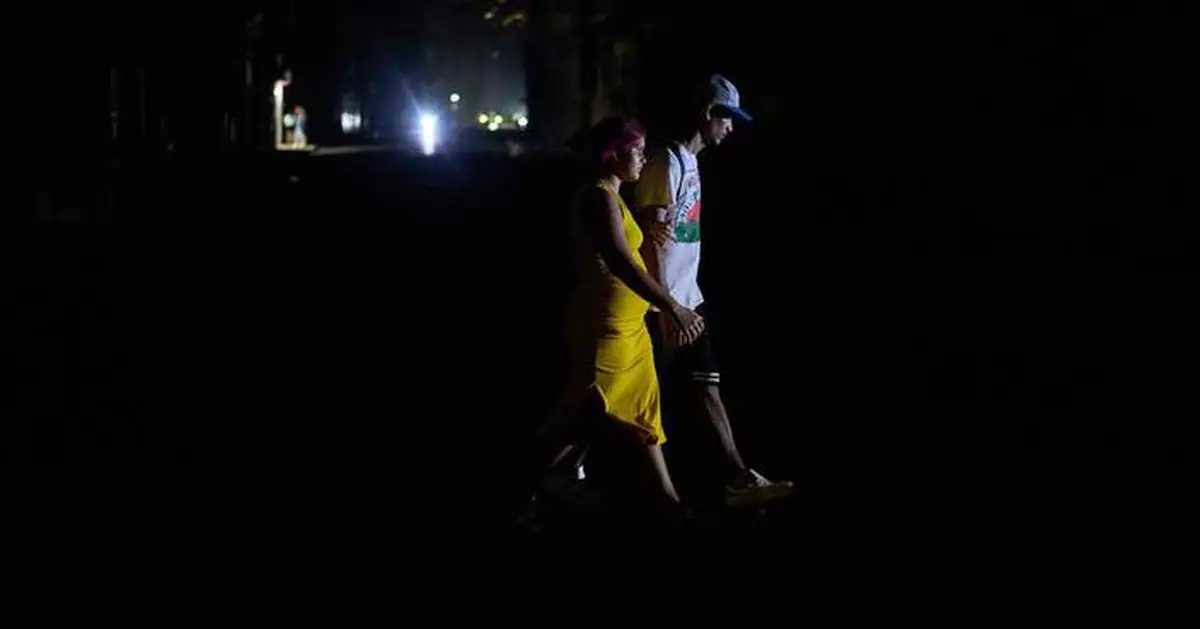
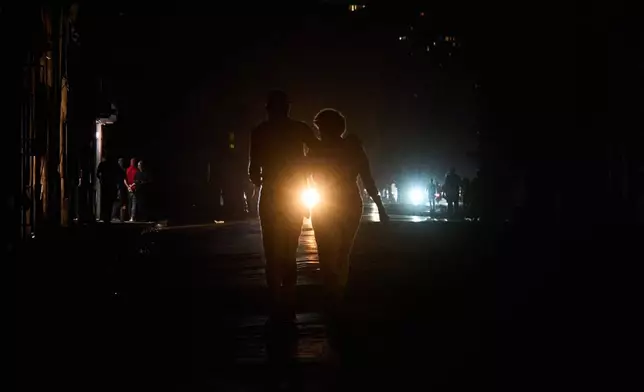
People cross a street during a blackout in Havana, Wednesday, March 4, 2026. (AP Photo/Ramon Espinosa)
People cross a street during a blackout in Havana, Wednesday, March 4, 2026. (AP Photo/Ramon Espinosa)
State media reported that some 444,700 customers in Havana, or 52%, had power, as well as 30 hospitals and 10 water supply stations.
But millions still remained without power, including Miguel Leyva, 65, who lives with his mother and brother, both of whom are ill.
“I have no words to describe what I’m going through: the heat, the mosquitoes and no electricity. The food could spoil,” he said. "I'm aware of all the problems that exist, but listen, it’s been more than 24 hours now.”
Cuba’s Ministry of Energy and Mines wrote on X that the electrical system is operating “in a limited capacity, prioritizing basic services, primarily health and water supply.”
State media reported that two power plants are offline because of a lack of petroleum.
Sonia Vázquez, 61, said the blackout didn't stop her from selling coffee to passersby daily, saying she prepared it with gas at 5 a.m. under a rechargeable lamp.
“I didn't sleep last night. Too many mosquitoes,” said Vázquez, who lives with her grandson.
Meanwhile, 57-year-old cafe owner José Ignacio Dorta, said that some of his frozen food has spoiled.
“We’ve looked for ways to prevent further spoilage. We’re working on it. We hope nothing else will spoil,” he said.
Cuba has long struggled with an aging electric grid and intermittent fuel supplies, but the crisis has deepened in recent months.
Key oil shipments from Venezuela were halted after the United States attacked the South American country in early January. Then later that month, U.S. President Donald Trump warned that he would impose tariffs on any country that sells or supplies oil to Cuba.
Last month, Cuba’s government implemented austere fuel-saving measures and warned that jet fuel wouldn’t be available at nine airports until mid-March.
Wednesday’s outage is the second one to hit western Cuba in three months.
The outage in early December lasted nearly 12 hours. Officials said that a fault in a transmission line linking two power plants caused an overload and led to the collapse of the energy system’s western sector.
Some of Cuba's thermoelectric plants have been operating for more than three decades and receive little maintenance because of high costs. U.S. sanctions also have prevented the government from buying new equipment and specialized parts, officials say.
Dánica Coto contributed to this report from San José, Costa Rica.
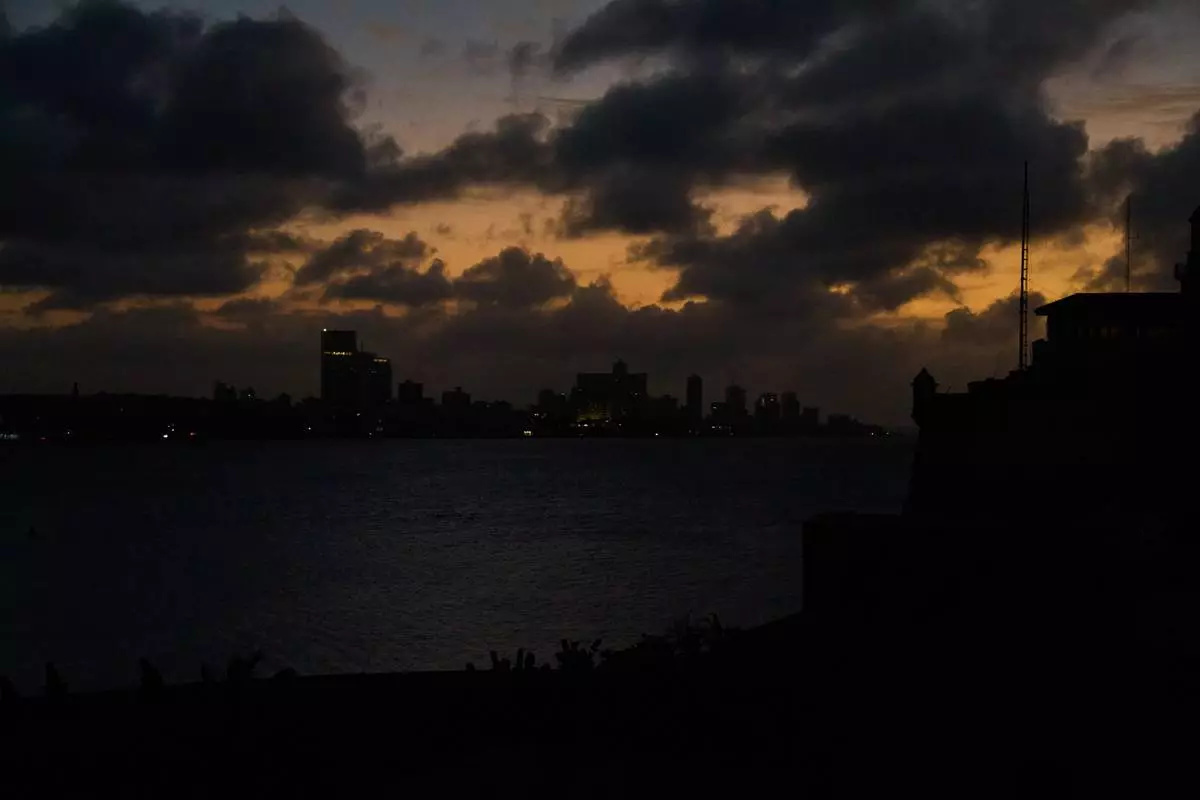
Clouds gather above Havana during a blackout, Wednesday, March 4, 2026. (AP Photo/Ramon Espinosa)
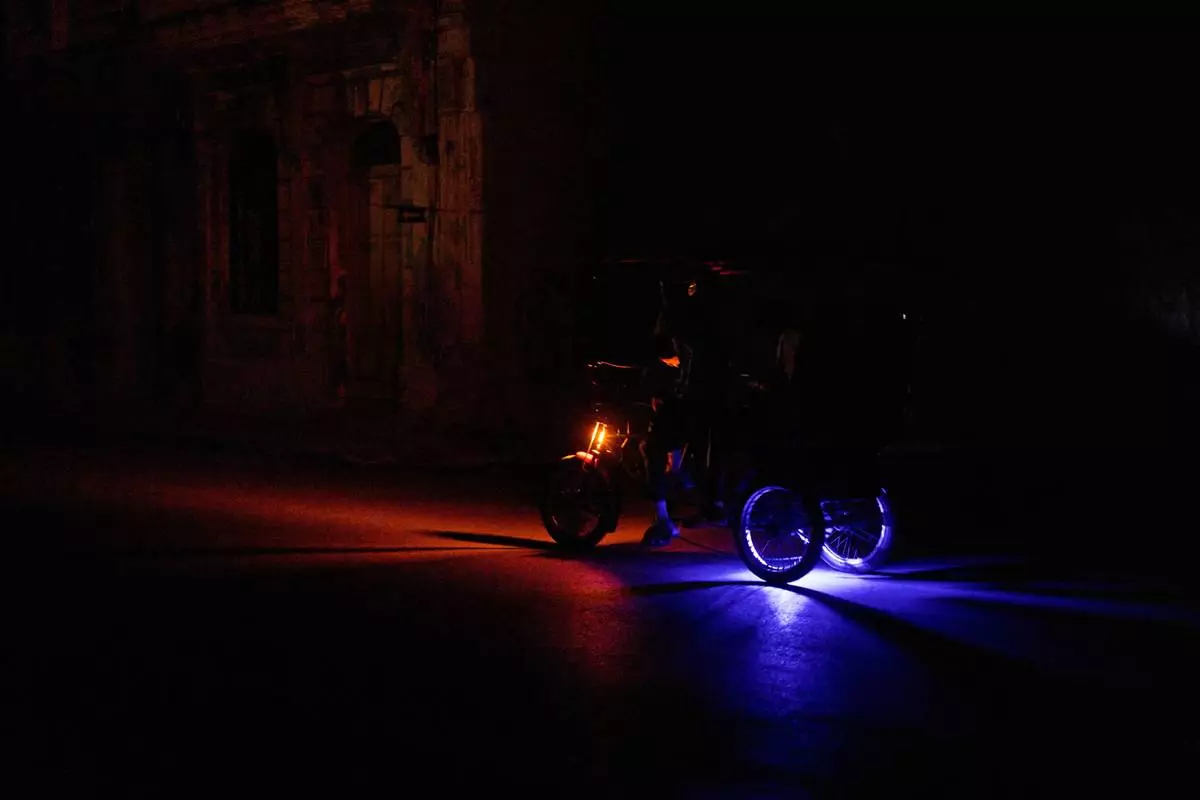
A vehicle drives down a street during a blackout in Havana, Wednesday, March 4, 2026. (AP Photo/Ramon Espinosa)
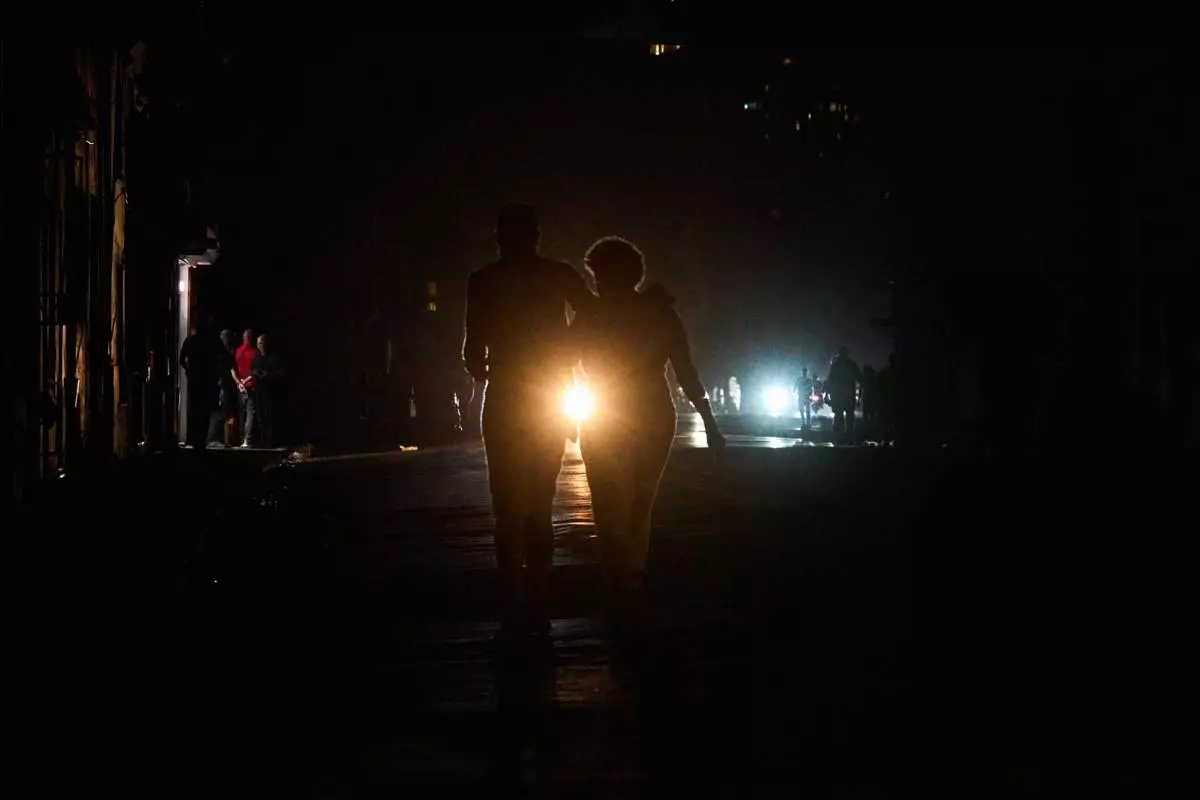
People cross a street during a blackout in Havana, Wednesday, March 4, 2026. (AP Photo/Ramon Espinosa)
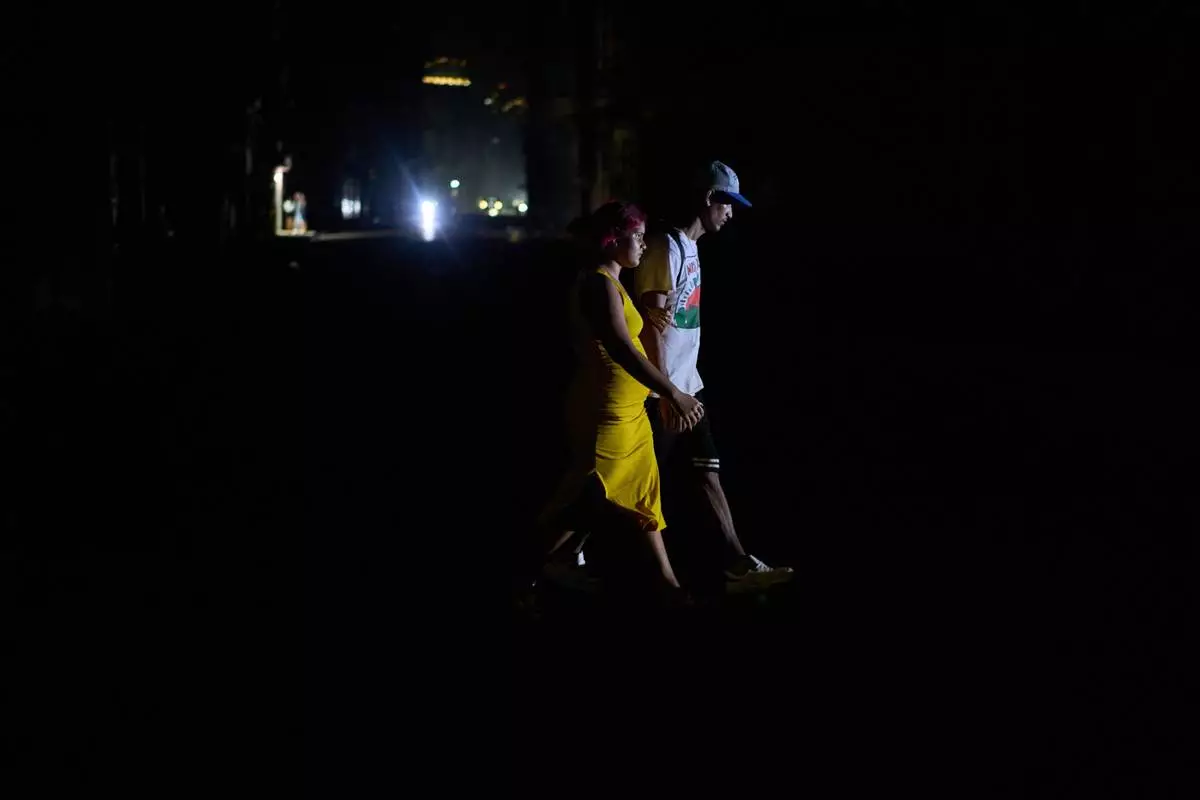
People cross a street during a blackout in Havana, Wednesday, March 4, 2026. (AP Photo/Ramon Espinosa)
Hundreds of thousands of people have been stranded across the Middle East amid the U.S. and Israel’s joint war against Iran. And between swaths of flight cancellations and airspace closures, many are still scrambling for next steps.
In a matter of days, the conflict has continued to escalate — particularly with strikes in the Gulf states where, beyond the Middle East, airports serve as critical hubs connecting travelers going to Europe, Africa and Asia. Despite ongoing evacuation efforts, flights remain deeply disrupted. Many tourists, business travelers, migrant workers and others are navigating it all.
Some travelers shared their stories with The Associated Press. Here's a glimpse of what they've experienced.
Viktoriia Lokhmatova, who lives in Serbia, and Michael Crepin, who lives in Belgium, had traveled to Dubai with their children for a special milestone.
Although the couple have been together for more than a year, the trip was the first time their children — her 8-year-old daughter, Anny, and his 13-year-old son, Gabriel, — would meet in person. And all four were celebrating their birthdays in February.
But their plans changed when their return flight was canceled amid regional airspace disruptions with the outbreak of the war. A rebooking was also canceled, leaving the group scrambling to find a way home while facing the cost of extending their stay.
“We stayed on calls with the airline for almost two days trying to figure out another flight,” Lokhmatova said.
While searching for options, she discovered an initiative by local vacation-home operators offering temporary accommodation to stranded travelers. The couple and their children were offered a free stay for one night in an apartment managed by AraBnB Homes, a Dubai-based luxury rental company that had opened vacant units to passengers unable to leave the city.
The temporary stay gave them time to regroup and make arrangements for the rest of their extended trip. During the first few days, they occasionally heard explosions from air defense systems intercepting missiles or drones — but “we tried to stay calm because the kids were there,” Crepin said.
But, he said, they’ve felt safe and have been grateful to be together throughout the experience. They now hope to leave Dubai on Saturday, if their latest flight goes ahead. They will then travel together to Istanbul before separating — Lokhmatova and Anny returning to Serbia and Crepin and Gabriel to Belgium.
Two hours into his flight over the weekend from the Qatari capital of Doha to Barcelona, Varun Krishnan says it became clear the aircraft was no longer heading toward Spain.
Krishnan, who runs the Indian technology business Fone Arena, was on the final leg of his flight from India to a telecommunications conference, Mobile World Congress, in Barcelona.
“It seemed something was off," Krishnan said, noting that he had been tracking the flight and realized it didn't seem to be proceeding on course.
Breakfast had just been served when the captain announced that Baghdad airspace was closed due to security issues. Instead of continuing across Iraq towards Europe, the aircraft began circling around the United Arab Emirates.
Krishnan said the captain provided updates about what was happening, “but still people were panicking.”
As the aircraft prepared to land back in Doha, emergency notifications sounded across the cabin. Once on the ground, long lines formed as departure boards filled with cancellations.
Krishnan said he's been staying at a hotel since. And on Wednesday, he was still waiting for airlines to confirm when flights might resume.
Louise Herrle, a retiree from Pittsburgh, and her husband got stranded in Dubai, where the couple had been vacationing when the war broke out.
She told the AP that they've had several flights canceled and are now scheduled to leave early Thursday morning, but don't know if that flight will be canceled as well.
They've heard fighter jets flying overhead “from time to time,” as well as some explosions, she said. But despite the “extremely stressful" situation, she's found support from fellow travelers.
“It’s not a great experience, but it’s, you know, a shared experience and it brings people together,” she said.
Agnes Chen Pun, a Hong Kong expatriate who moved to Dubai with her husband and their 1 1/2-year-old last year, said she has tried to keep her family safe amid escalating tensions in the United Arab Emirates. They have moved twice — first to a resort about an hour and a half away in Fujairah, then to one near the port city of Sharjah — after worrying about potential attacks.
“We were so nervous, so anxious,” said Chen, a partner at Asia Bankers Club, a Hong Kong- and Dubai-based investment company.
She finally secured commercial tickets for $2,200 per person to Singapore, although her departure is still uncertain. Despite the disruption, Chen said she plans to return to the UAE once the situation stabilizes, viewing the country as an attractive place to live and work.
“I think the scare, the fears, will be short-term. Definitely now, safety is the most important,” she said. “I will go to Hong Kong ... wait (until) the war is over, and then I probably, definitely would come back again.”
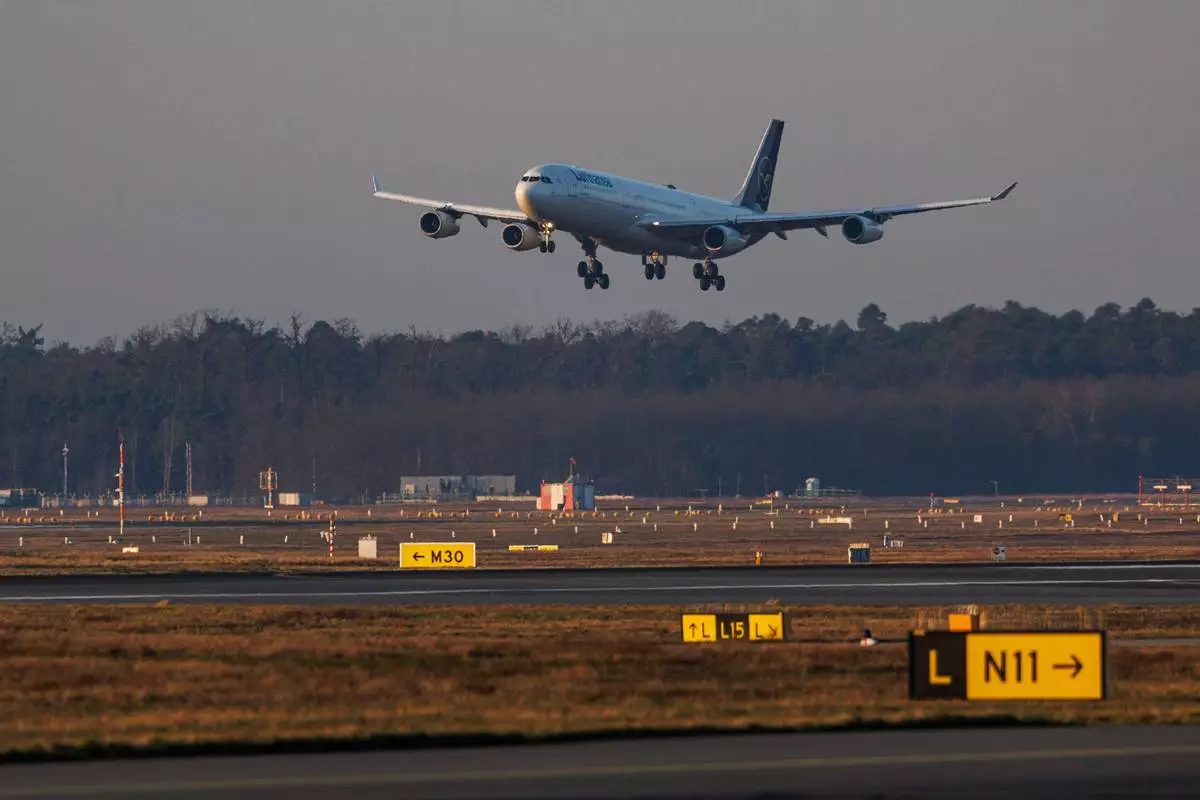
A Lufthansa plane from Muscat, Oman, the first evacuation flight on behalf of the German government, lands at Frankfurt Airport in Frankfurt/Main, Germany Thursday, March 5, 2026. (Hannes P. Albert/dpa via AP)
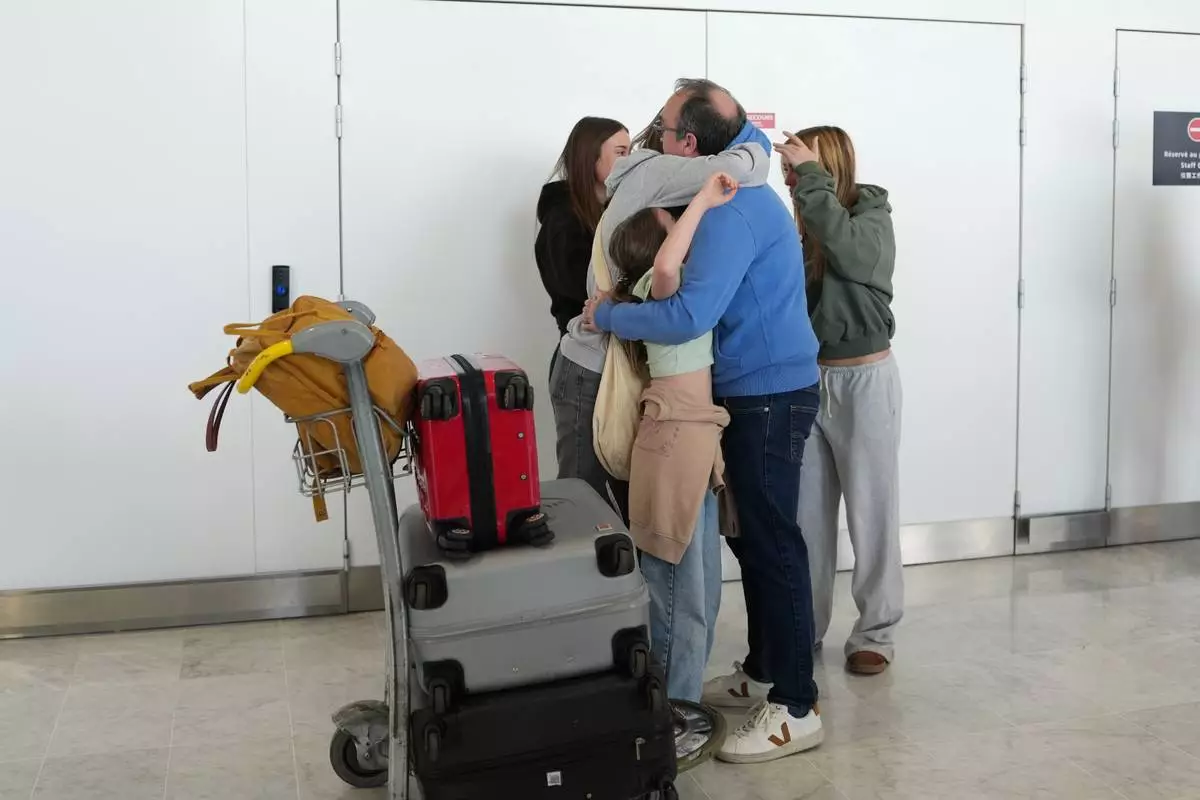
People arrive from Dubai at the Charles de Gaulle international Airport in Roissy, outside Paris, France, Thursday, March 5, 2026. (AP Photo/Thibault Camus)
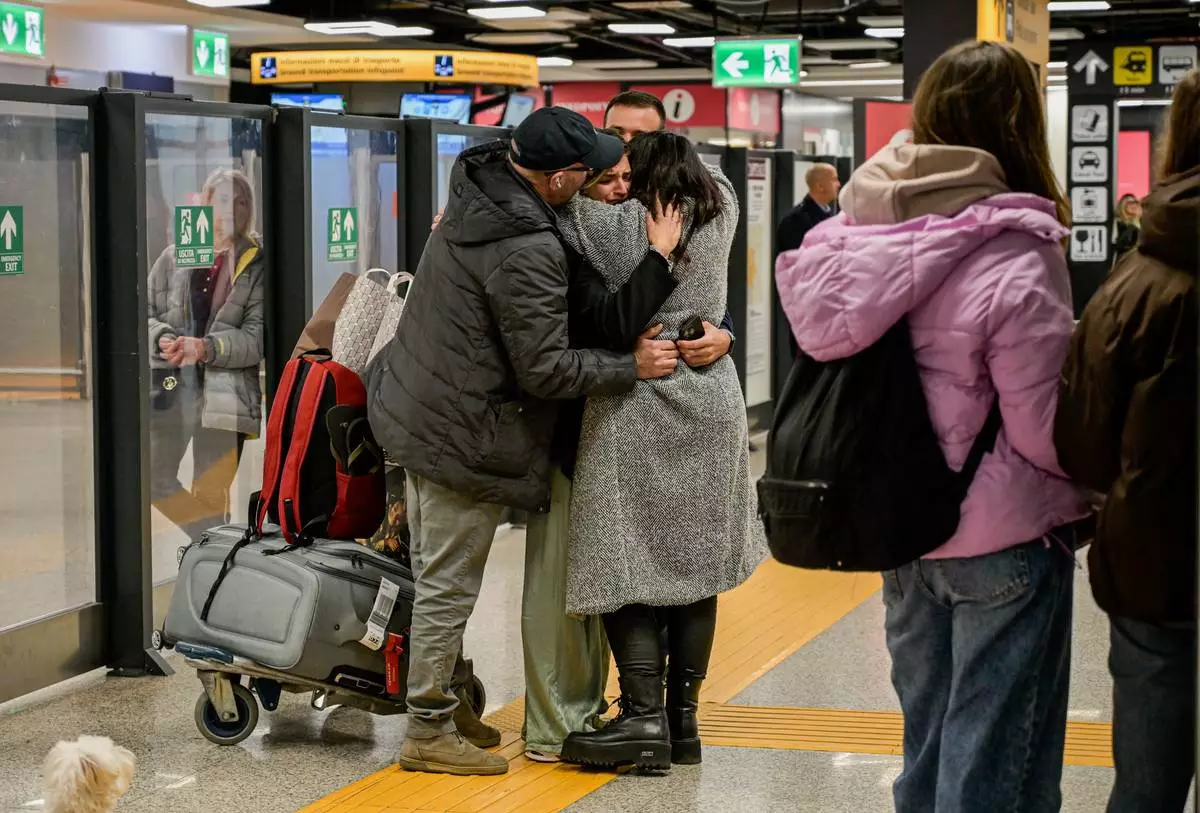
The flight from Abu Dhabi with passengers returned to Italy arrives at Fiumicino Airport, in Rome, Tuesday, March 3, 2026. (Valentina Stefanelli/LaPresse via AP)
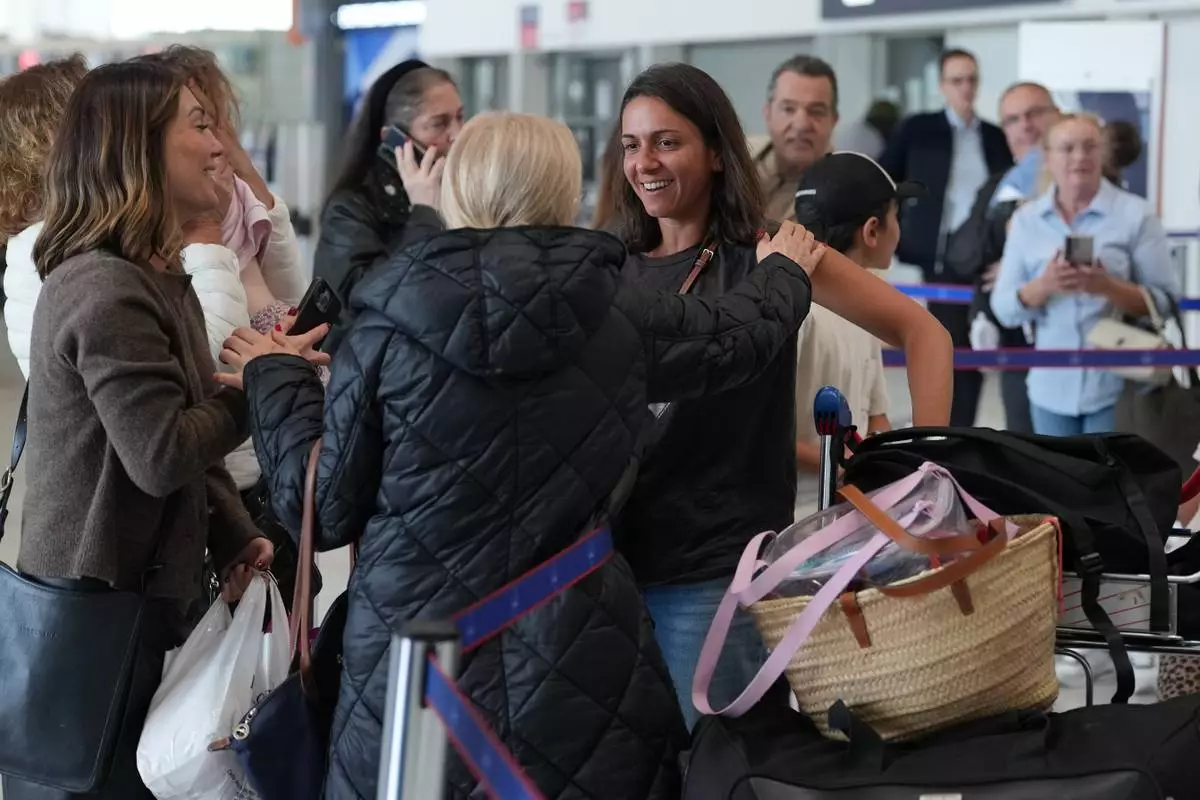
People arrive from Dubai at the Charles de Gaulle international Airport in Roissy, outside Paris, France, Thursday, March 5, 2026. (AP Photo/Thibault Camus)
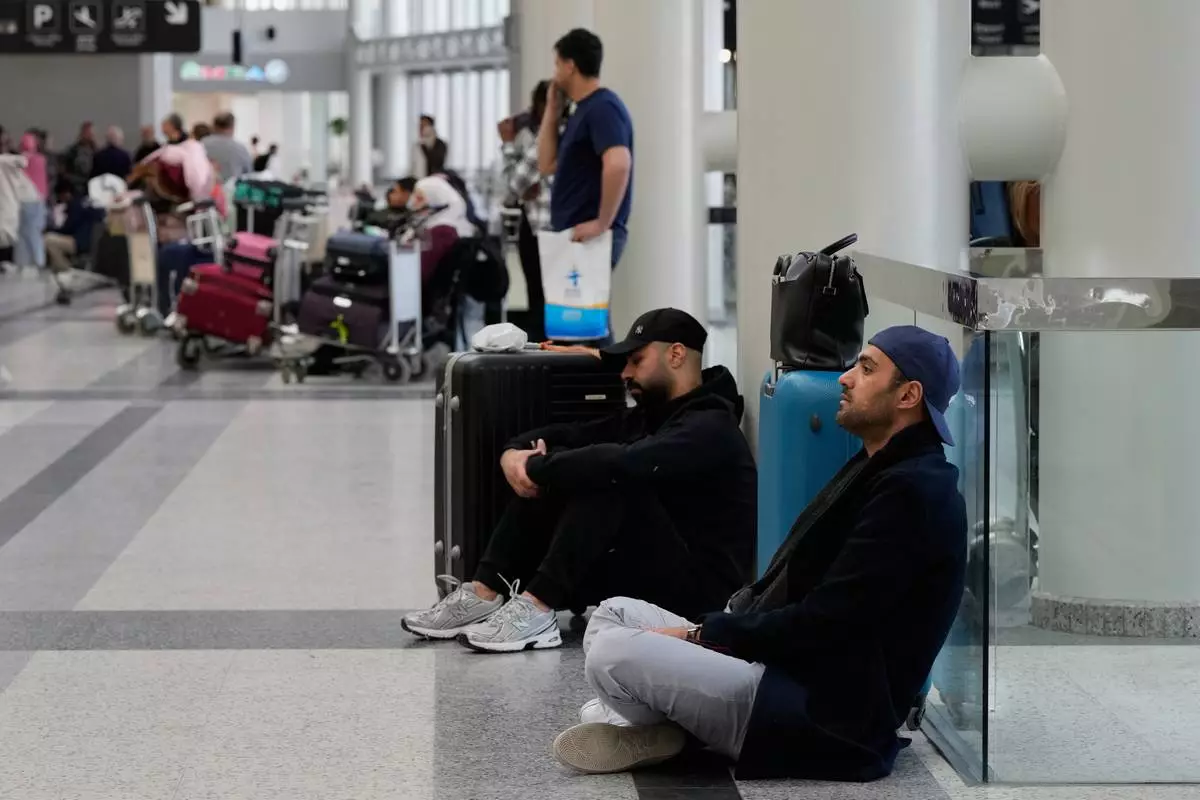
Passengers whose flights were cancelled, wait at the departure terminal of Rafik Hariri International Airport in Beirut, Lebanon, Saturday, Feb. 28, 2026, as many airlines canceled flights due to the conflict involving the United States, Israel and Iran. (AP Photo/Hassan Ammar)
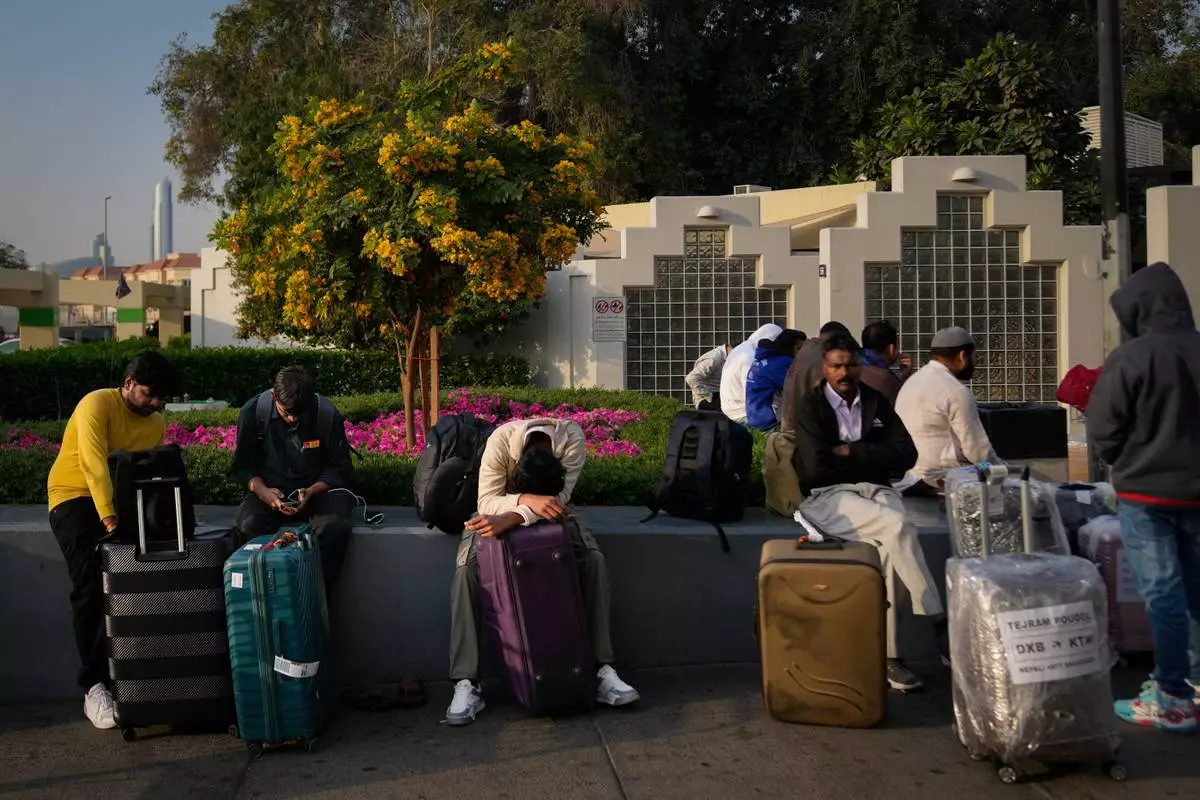
Passengers stranded by the closure of Dubai International Airport await for assistance in the airport parking lot in Dubai, United Arab Emirates, Sunday, March 1, 2026. (AP Photo/Altaf Qadri)