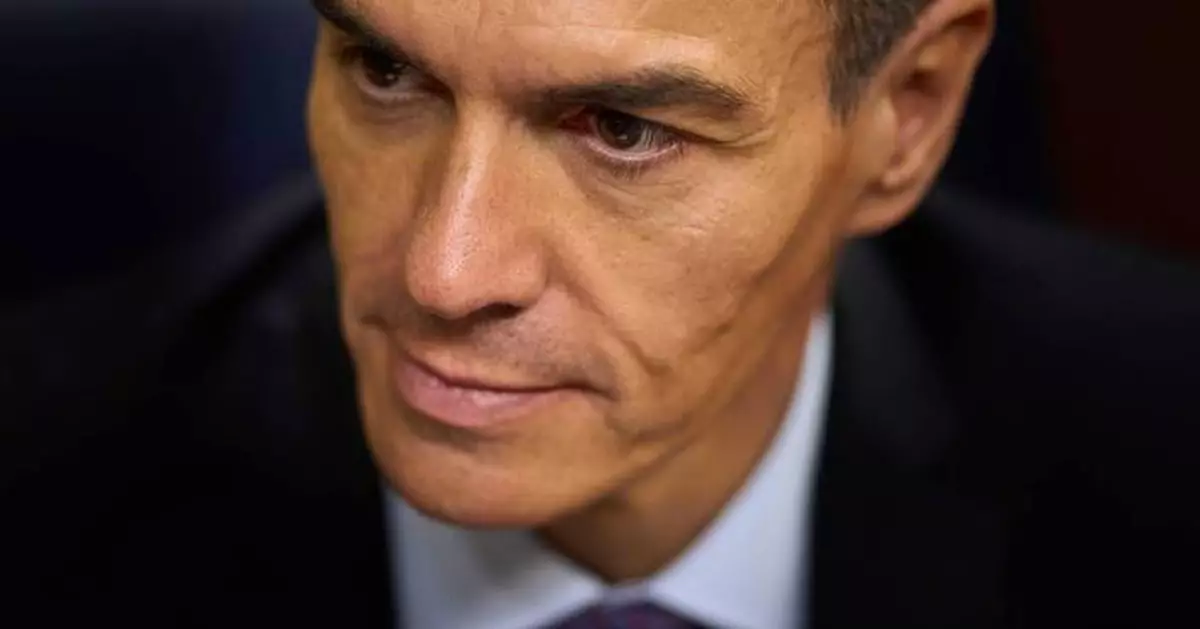
BARCELONA, Spain (AP) — Spain's Pedro Sánchez has once again emerged as Europe's most consistently vocal critic of U.S. President Donald Trump, drawing his ire for refusing to allow the American military to stage operations for its attacks on Iran from Spanish military bases.
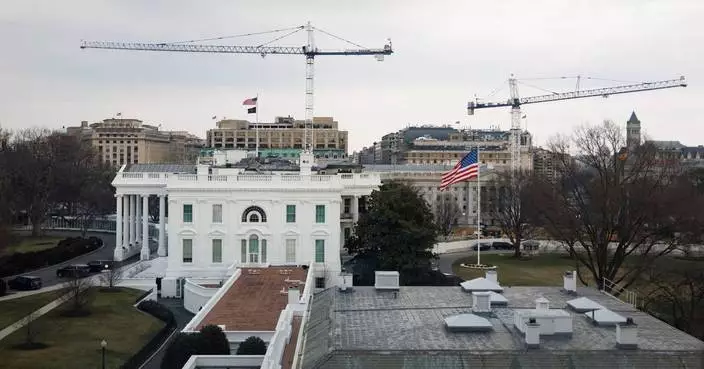
Trump lashed out at the Spanish prime minister on Tuesday, saying he would “ cut off all trade with Spain " in retaliation for the affront. The spat intensified the next day when Spain's foreign minister contradicted a claim by the White House press secretary that Spain had heard Trump's message “loud and clear" and was cooperating with the U.S. military.
While denouncing the repressive government in Tehran, Sánchez said he would not back a war that he said was an unjustified assault.
“We are not going to be complicit in something that is bad for the world and is also contrary to our values and interests, just out of fear of reprisals from someone,” Sánchez said, using the slogan “No to the war” in a speech this week.
The tussle over the Spanish military bases is likely more a diplomatic question than one of military consequence. The U.S. has bases across Europe and the Middle East, and other European countries have agreed to cooperate.
Madrid and Washington have had stable, friendly and mostly low-key relations for decades, starting in the 20th century when the U.S. began sharing military bases with Spain when the latter was still under the dictatorship of Francisco Franco.
Sánchez, 54, first took power in 2018 and is one of Europe's most prominent left-leaning leaders.
He has stuck by the pillars of progressive politics, defending feminism, authorized immigration, human rights, the rules-based international order and the importance of climate change — all topics that have become punching bags of Trump’s MAGA movement and far-right politicians in many European neighbors.
Even before the Iran war, Sánchez has stood out as an ideological rival to Trump on a number of issues.
Sánchez has been among the most vocal critics of Israel’s military action in Gaza. He has consistently criticized the massive civilian causalities from Israel's campaign following Hamas’ surprise attack on Israeli territory in 2023.
“This is not self-defense, it’s not even an attack — it’s the extermination of a defenseless people," he said, while touring Europe and the Middle East to try to broker a peace deal.
Among NATO members, Spain was the only country to refuse to agree to commit to increasing military spending to 5% of gross domestic product. Sánchez secured a last-minute exemption in a NATO meeting last year, saying that Spain will only spend up to 2.1%, which he called “sufficient and realistic.”
Trump responded by floating the idea that Spain should be kicked out of the military bloc. That has so far remained a veiled threat.
While many European countries raised barriers at their borders and the Trump administration broadened an immigrant crackdown in the U.S., Spain is in the process of granting work and residency permits to half a million foreigners already in Spain.
Sánchez has pointedly alluded to Trump as he extolled the benefits of migration for the country’s strong economy.
“MAGA-style leaders may say that our country can’t handle taking in so many migrants — that this is a suicidal move, the desperate act of a collapsing country," he wrote in a recent New York Times op-ed. "But don’t let them fool you. Spain is booming.”
Under Sánchez, Spain has joined countries like Australia and France in trying to curb the use of social media among younger teens. That’s in direct contrast to the Trump administration’s embrace of Big Tech companies and what they consider the defense of the freedom of speech on social media.
Elon Musk, X’s owner, lashed out at the Spanish leader last month, calling Sánchez “the true fascist totalitarian” after he announced a plan to prohibit under 16-year-olds from accessing social media accounts.
AP journalist Suman Naishadham contributed from Madrid.
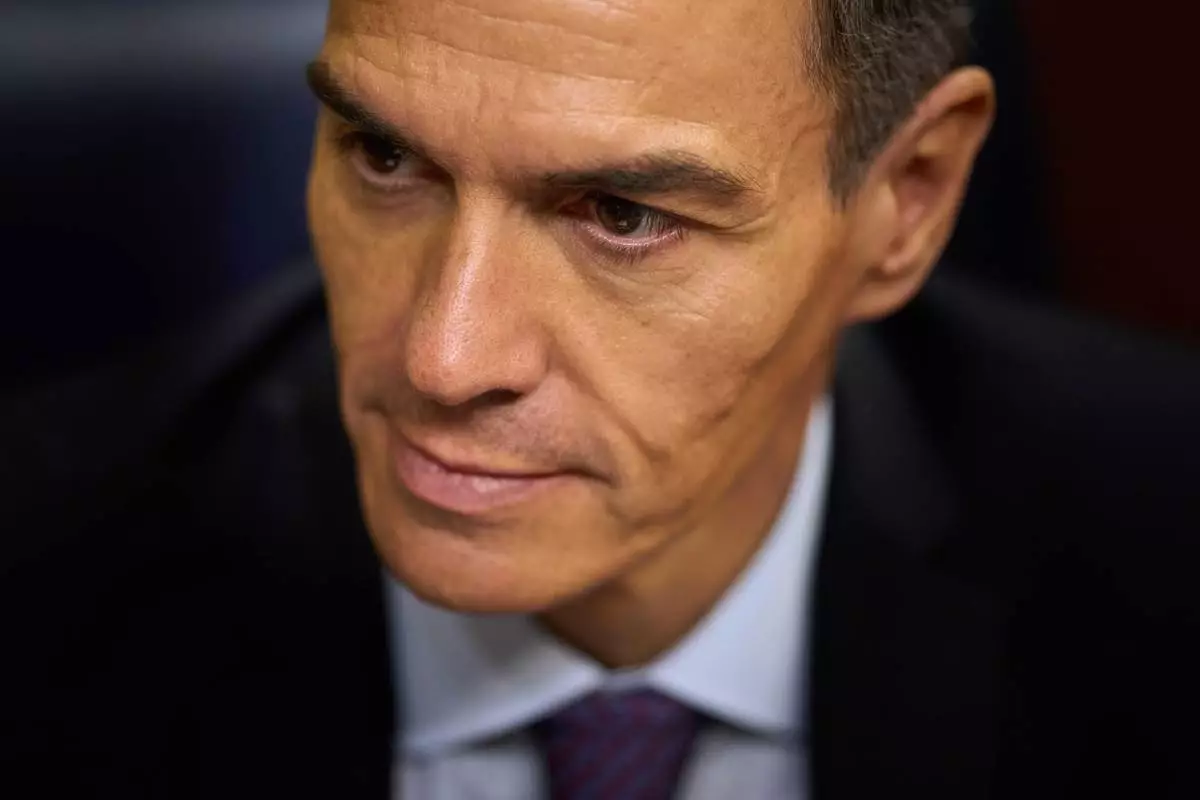
FILE - Spanish Prime Minister Pedro Sanchez attends a session of parliament in Madrid, Wednesday, July 9, 2025. (AP Photo/Bernat Armangue, File)
NEW YORK (AP) — Stocks are back to falling on Wall Street Thursday, as oil prices rise further because of the war with Iran.
The S&P 500 sank 0.7% in midday trading, coming off a frenetic start to the week that saw financial markets swerve sharply, sometimes hour by hour. The Dow Jones Industrial Average was down 764 points, or 1.6%, as of 11:45 a.m. Eastern time, and the Nasdaq composite was 0.3% lower.
Financial markets are again following the cue of oil prices. They're cranking up the pressure because of worries that a long-term spike could exhaust households’ ability to spend, grind down the global economy and push interest rates higher.
A barrel of Brent crude, the international standard, rose 3.8% to $84.52. That’s up from close to $70 late last week. A barrel of benchmark U.S. crude climbed 5.9% to $79.07.
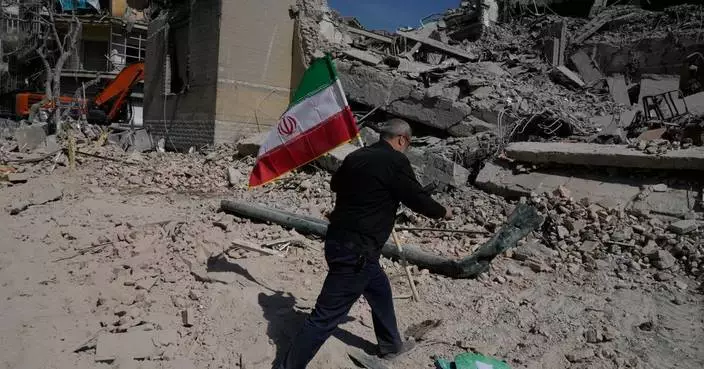
Oil prices rose after Iran launched a new wave of attacks against Israel, American bases and countries around the region. The war's escalations are raising worries about how long disruptions will last for the production and transport of oil and natural gas in the region.
Prices at U.S. gasoline pumps have already jumped because of them. The average price for a gallon is $3.25, up 9% from $2.98 a week ago, according to auto club AAA.
To be sure, the U.S. stock market has a history of bouncing back relatively quickly following conflicts in the Middle East and elsewhere. That has many professional investors suggesting patience and riding through the market’s swings.
“While further escalation remains a risk, we think the more likely outcome is an increase in market risk aversion that likely lasts only a short time until investors can see a winding down of hostilities,” according to Scott Wren, senior global market strategist at Wells Fargo Investment Institute.
But if oil prices spike, like to $100 per barrel, and stay there, it could be too much for the global economy to withstand. Uncertainty about that has caused this week’s sharp swings, and much will depend on what happens with the Strait of Hormuz. Roughly a fifth of the world’s oil typically sails through the narrow waterway off Iran's coast.
Stocks of retailers fell to some of the U.S. market's worst losses on Thursday. High gasoline prices mean their customers would have less to spend on other things.
American Eagle Outfitters fell 11.8% even though it reported stronger profit and revenue for the latest quarter than analysts expected.
Airlines also took sharp losses. Higher oil prices are increasing their already big fuel bills, while the war has left hundreds of thousands of passengers stranded across the Middle East.
American Airlines lost 5.2%, United Airlines fell 6% and Delta Air Lines sank 5.5%.
Stocks of smaller companies, meanwhile, took the heaviest losses. That's typical when worries are growing about the strength of the economy and about interest rates rising. The Russell 2000 index of the smallest stocks fell 1.9%.
Wall Street's drop would have been worse if not for Broadcom. The chip company’s stock rose 5.5% after it reported stronger profit and revenue for the latest quarter than analysts expected. It’s one of Wall Street’s most influential stocks because it’s one of the biggest by total value, and CEO Hock Tan said it benefited from a 74% jump in revenue for AI chips.
In the bond market, Treasury yields climbed as rising oil prices put more upward pressure on inflation, which could keep the Federal Reserve from cutting interest rates.
The yield on the 10-year Treasury rose to 4.14% from 4.09% late Wednesday and from just 3.97% before the war with Iran started.
The Fed could keep interest rates high to keep a lid on inflation. But high interest rates would also keep it more expensive for U.S. households and companies to borrow money, grinding down on the economy.
The central bank had indicated it planned to resume its cuts to interest rates later this year, in hopes of giving a boost to the job market and economy. Because of the war and higher oil prices, traders have pushed their forecasts further into the summer for when the Fed could begin cutting rates again.
Several reports on the U.S. economy also came in mixed.
One said fewer U.S. workers filed for unemployment benefits last week than economists expected. That's an encouraging signal for the job market.
In stock markets abroad, indexes rebounded in Asia following historic losses a day before. South Korea’s Kospi jumped 9.6% to recover much of its 12.1% plunge from Wednesday, which was its worst drop ever.
But indexes fell in Europe as oil prices began to accelerate. France’s CAC 40 fell 1.7%, and Germany’s DAX lost 1.8%.
AP Writers Kim Tong-hyung and Elaine Kurtenbach contributed.
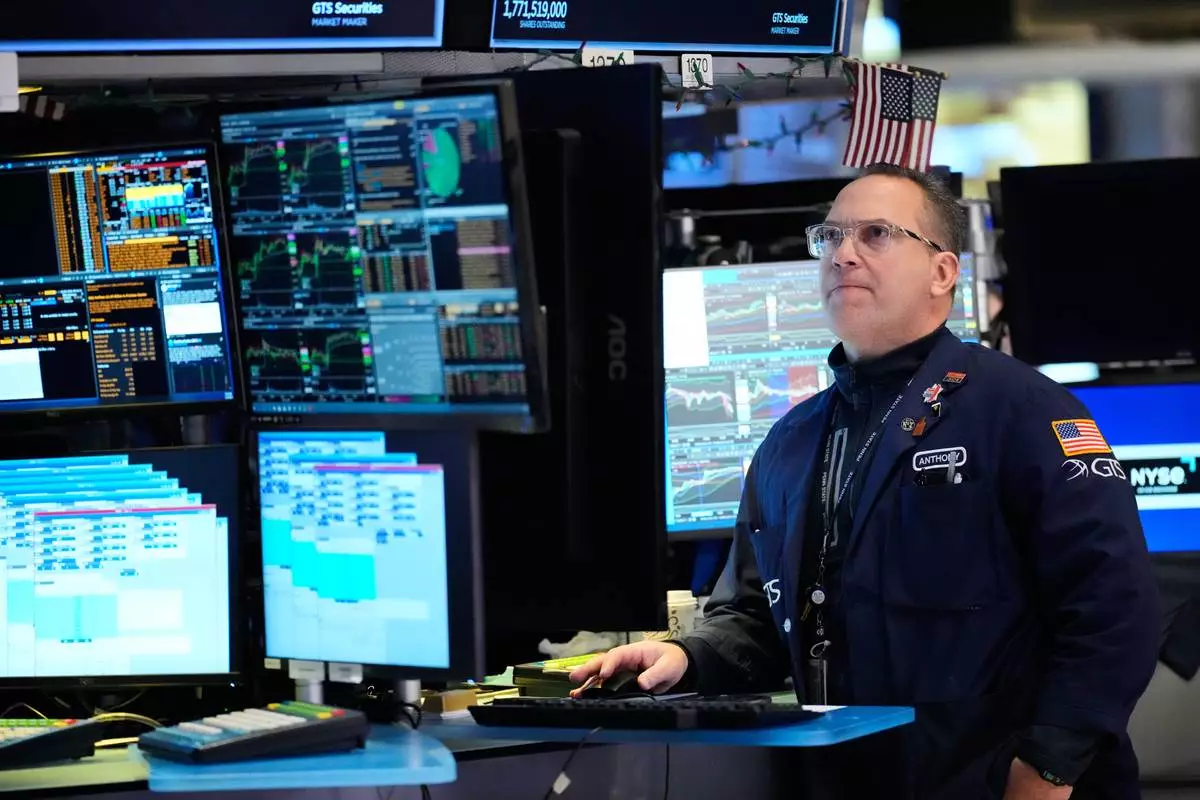
Anthony Matesic works on the floor at the New York Stock Exchange in New York, Thursday, March 5, 2026. (AP Photo/Seth Wenig)
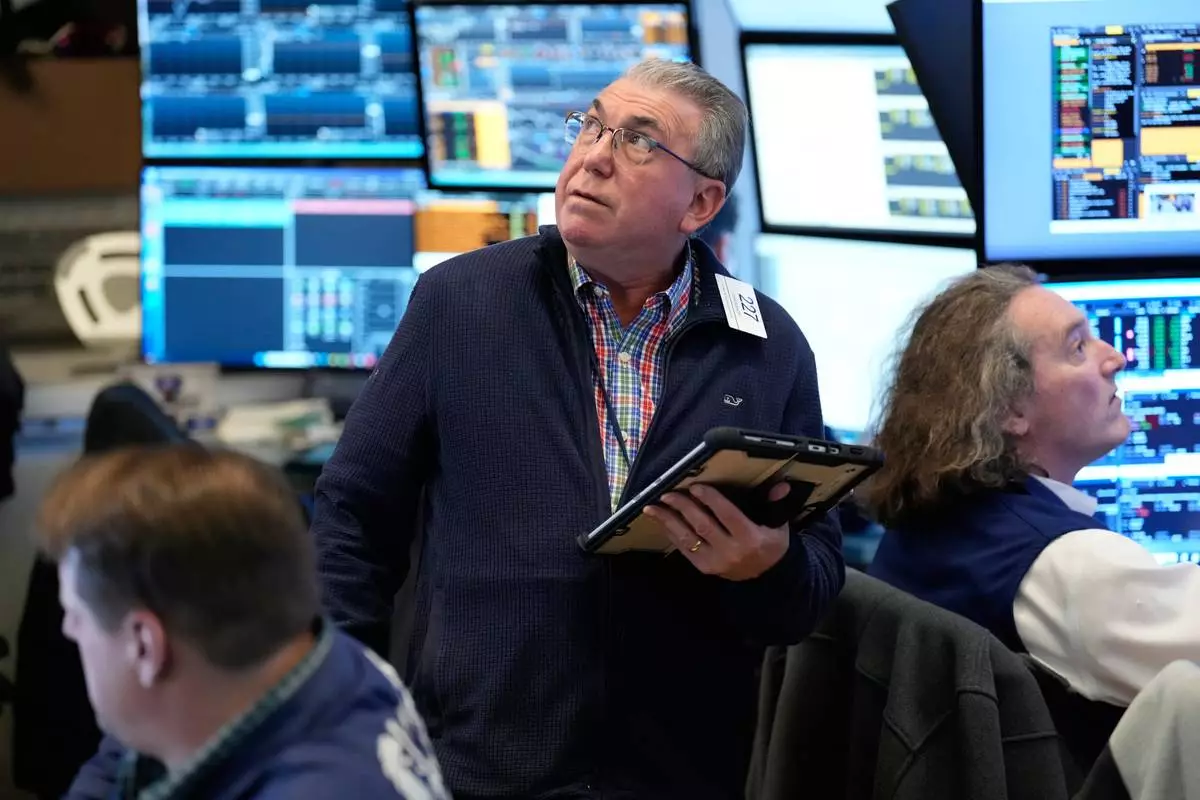
John Bishop works on the floor at the New York Stock Exchange in New York, Wednesday, March 4, 2026. (AP Photo/Seth Wenig)
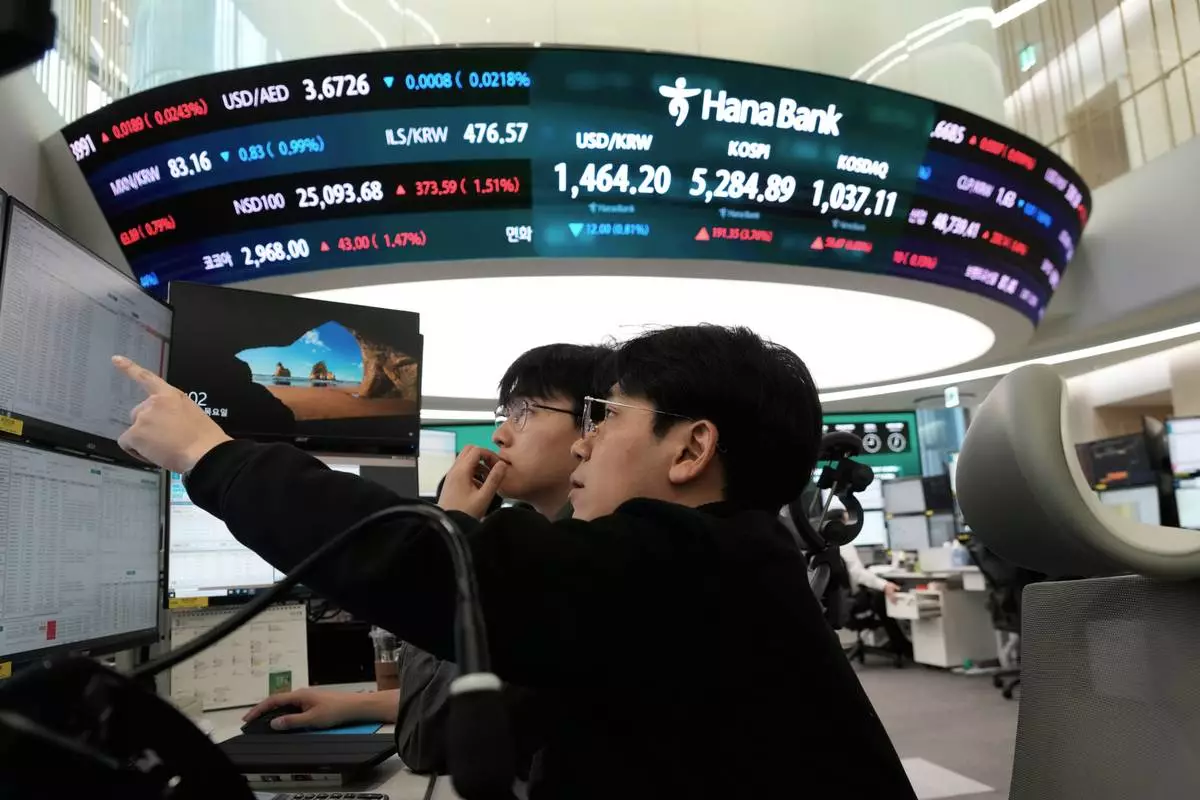
Currency traders watch monitors near a screen showing the Korea Composite Stock Price Index (KOSPI), top center, and the foreign exchange rate between U.S. dollar and South Korean won, top center left, at the foreign exchange dealing room of the Hana Bank headquarters, in Seoul, South Korea, Thursday, March 5, 2026. (AP Photo/Ahn Young-joon)
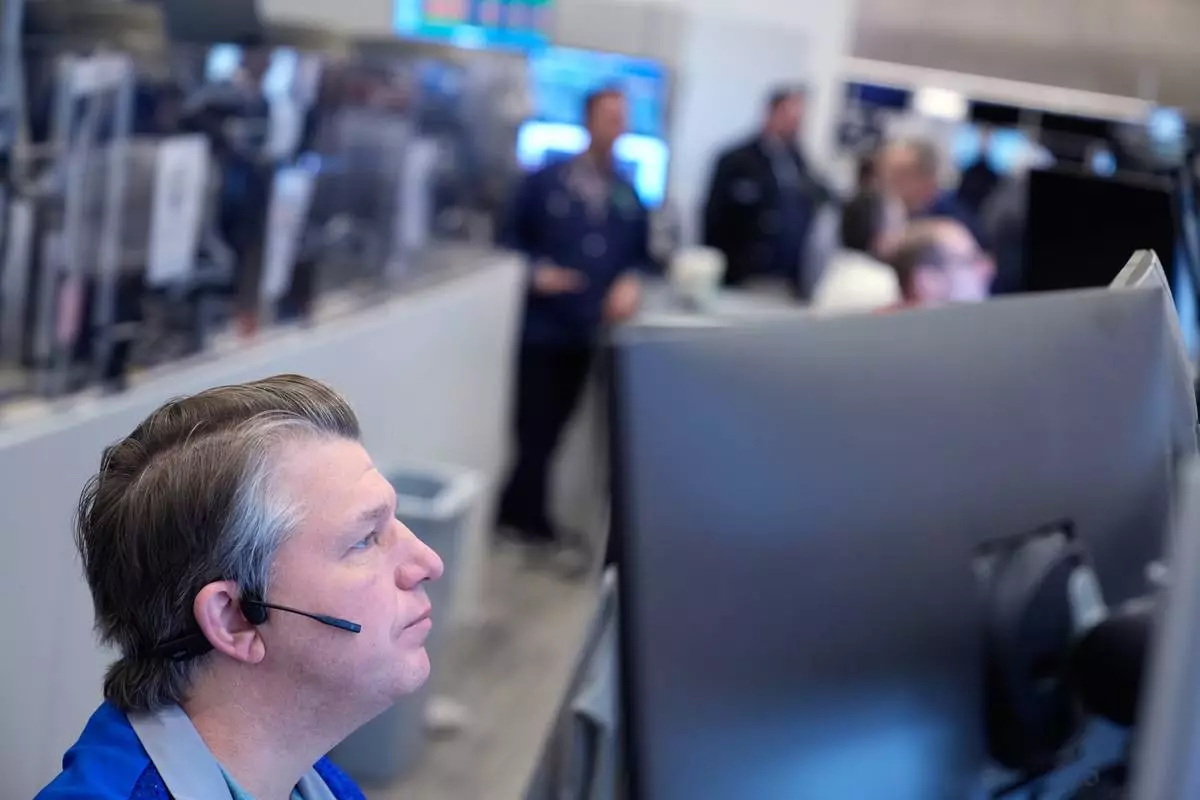
Ed Nangle works on the floor at the New York Stock Exchange in New York, Wednesday, March 4, 2026. (AP Photo/Seth Wenig)

Financial information is displayed on the floor at the New York Stock Exchange in New York, Wednesday, March 4, 2026. (AP Photo/Seth Wenig)