WASHINGTON (AP) — President Donald Trump's proposed White House ballroom is “ugly,” “grossly out of scale” and a “gold gilded edifice to one man's ego,” according to members of the public who oppose the project and got a chance to speak their minds Thursday to a federal panel that's reviewing it.
Others characterized the project as an “invitation for corruption” because Trump said he'll pay for it with money donated by rich people and corporations, some of which do business with the federal government. And a few people suggested to the National Capital Planning Commission that the Republican president build the ballroom underground if he wants one so badly.
Click to Gallery

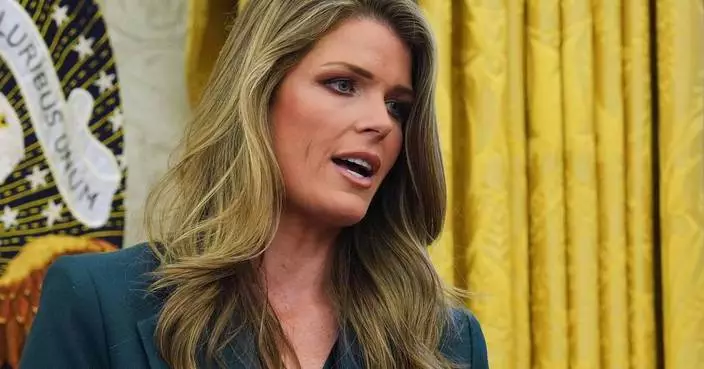
President Donald Trump speaks about the new ballroom construction before a Medal of Honor ceremony in the East Room of the White House, Monday, March 2, 2026, in Washington. (AP Photo/Alex Brandon)
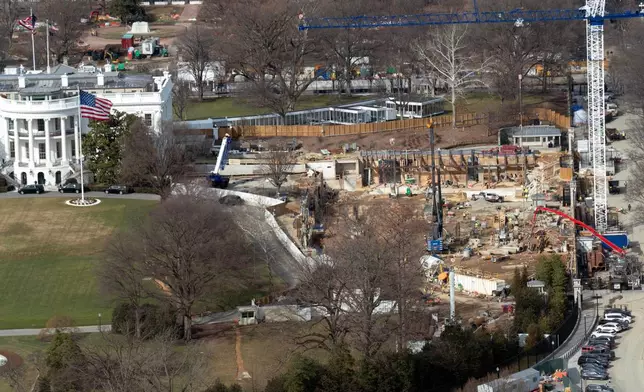
Work continues on the construction of the ballroom at the White House, Tuesday, Feb. 24, 2026, in Washington, where the East Wing once stood. (AP Photo/Jose Luis Magana)
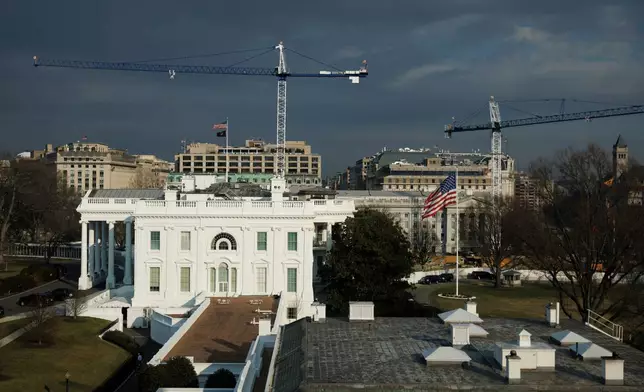
The White House is viewed from the Old Eisenhower Executive Office Building on the White House campus Wednesday, Feb. 25, 2026, in Washington. (AP Photo/Tom Brenner)
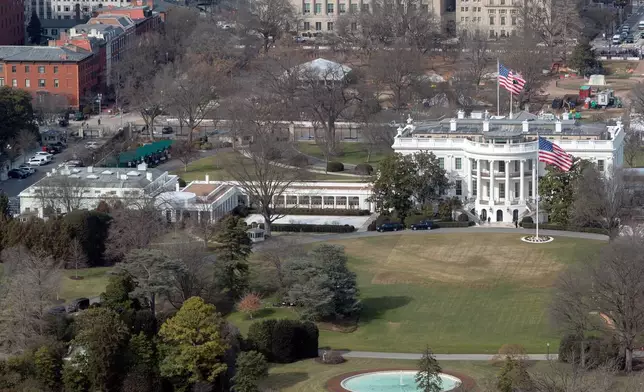
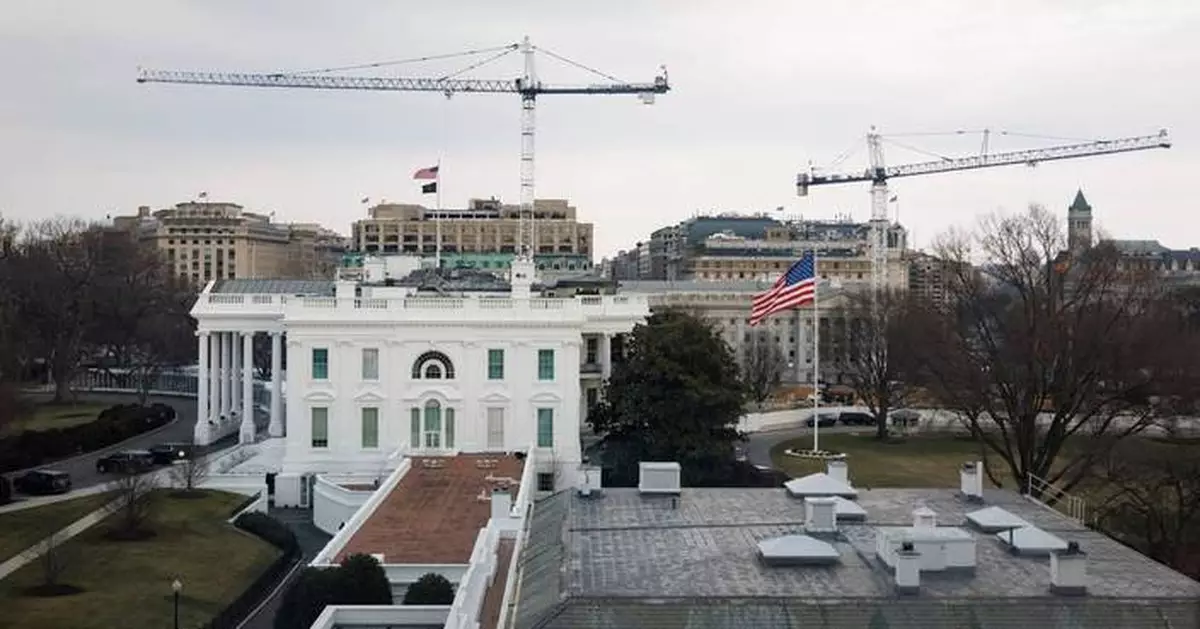
The White House and the West Wing is seen Tuesday, Feb. 24, 2026, in Washington. (AP Photo/Jose Luis Magana)
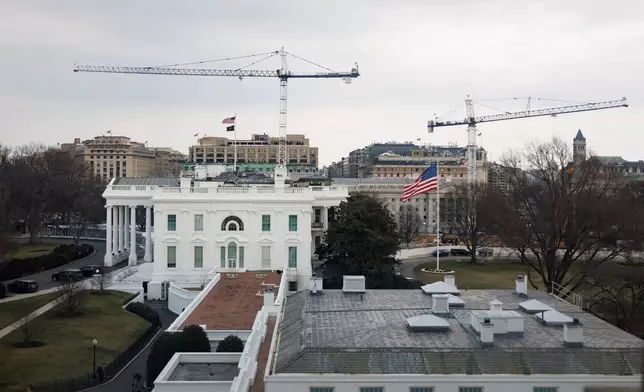
The White House, including the West Wing and construction of the new ballroom, is seen from the Old Eisenhower Executive Office Building on the White House campus Wednesday, Feb. 25, 2026, in Washington. (AP Photo/Tom Brenner)
The public's overwhelmingly negative assessment appeared to be a minor bump in the road for Trump's plan for a new 90,000-square-foot (8,360-square-meter) addition, including a ballroom, on the east side of the White House. Trump had the East Wing demolished in October.
The commissioners on the panel — one of two that play a role in advancing the project — showed little sign that their approval process could be delayed. A final vote was set for April 2.
A separate federal panel, the U.S. Commission of Fine Arts, has already signed off on the project while the National Trust for Historic Preservation lost its federal court bid to force the White House to temporarily halt the construction.
A total of 31 people offered their views at the commission’s meeting Thursday, but only one panel member spoke up during the session, which went on for more than two hours — and those inquiries went to a duo that beamed into the online session from Caracas, Venezuela, to discuss an alternative to the ballroom. They did not praise or condemn Trump’s plan.
“It's ugly. It's just ugly. It's too much,” said Kye Rowan, who described herself as an “ordinary citizen” with no architectural background.
Other speakers asked the commission to properly deliberate before making a decision, or openly wondered if the commissioners would treat their comments seriously.
“I urge you to send this back to the drawing board,” said Diane Marlin, who recently retired as mayor of Urbana, Illinois. “Take the time to get this right.”
Concerns also were raised about Trump's plan to pay the estimated $400 million construction cost with money donated by wealthy people and corporations, many of whom have business before the government. Will Scharf, a top White House aide named by Trump to chair the commission, noted that such concerns were beyond the panel's scope.
Abigail Bellows, senior policy director for anti-corruption and accountability at Common Cause, a nonpartisan grassroots group, called the arrangement a “golden invitation for corruption.”
The lone voice in support of the project invoked Trump's background in construction, saying the public should be “thankful and blessed” that he decided to build the ballroom.
“I think this is great that our president is giving us a gift, this incredible ballroom that is much needed, especially for his security and allowing him to have a place that he can have people come together and have it safe,” said Tara Brown.
Jon Golinger, an attorney who represented Public Citizen, a nonprofit consumer advocacy organization, used his testimony to challenge the credentials of Scharf and two other White House officials Trump appointed to the commission last year. Presidents get to name three of the 12 commission members.
Golinger said only people with city or regional planning experience should serve and he asserted that Trump put Scharf, White House deputy chief of staff James Blair and Stuart Levenbach, the government's chief statistician, on the panel to “rubber stamp” his pet projects.
He called on all three to recuse themselves from voting on the ballroom and to resign from the commission.
Scharf responded by directly telling Golinger, “you're just completely wrong.” Scharf, an attorney, cited his experience in real estate law and his past work for the Missouri governor. He said he was involved in a rewrite of the state's historic preservation tax credit program and served on state boards dealing with housing and development.
“So to say that I lack the credentials to serve on this commission is, frankly, insulting,” Scharf said.
Rebecca Miller, executive director of the DC Preservation League, criticized Trump's proposal as “disproportionately large and impersonal” and said he can use the Mellon Auditorium, which is owned by the federal government on Constitution Avenue a few blocks away from the White House. The auditorium has a meeting room that can seat 2,500 people, according to a government website. Trump delivered remarks there at an event in January.
More than 100 people had signed up to comment at Thursday's meeting, which Scharf said was being conducted online to ease that process. But about two-thirds of the people didn't show up. Scharf initially had said he expected the public comment session to extend into Friday.
The panel also received written comments submitted by more than 35,000 people, according to the commission, with the majority opposed to Trump's plans.
The National Trust for Historic Preservation, a private, nonprofit group, asked a federal judge to temporarily halt construction until the White House submitted the plans both to federal panels and to Congress for approval, and allowed the public to comment.
U.S. District Judge Richard Leon rejected the request last week, and the trust has said it plans to file an amended lawsuit.

President Donald Trump speaks about the new ballroom construction before a Medal of Honor ceremony in the East Room of the White House, Monday, March 2, 2026, in Washington. (AP Photo/Alex Brandon)
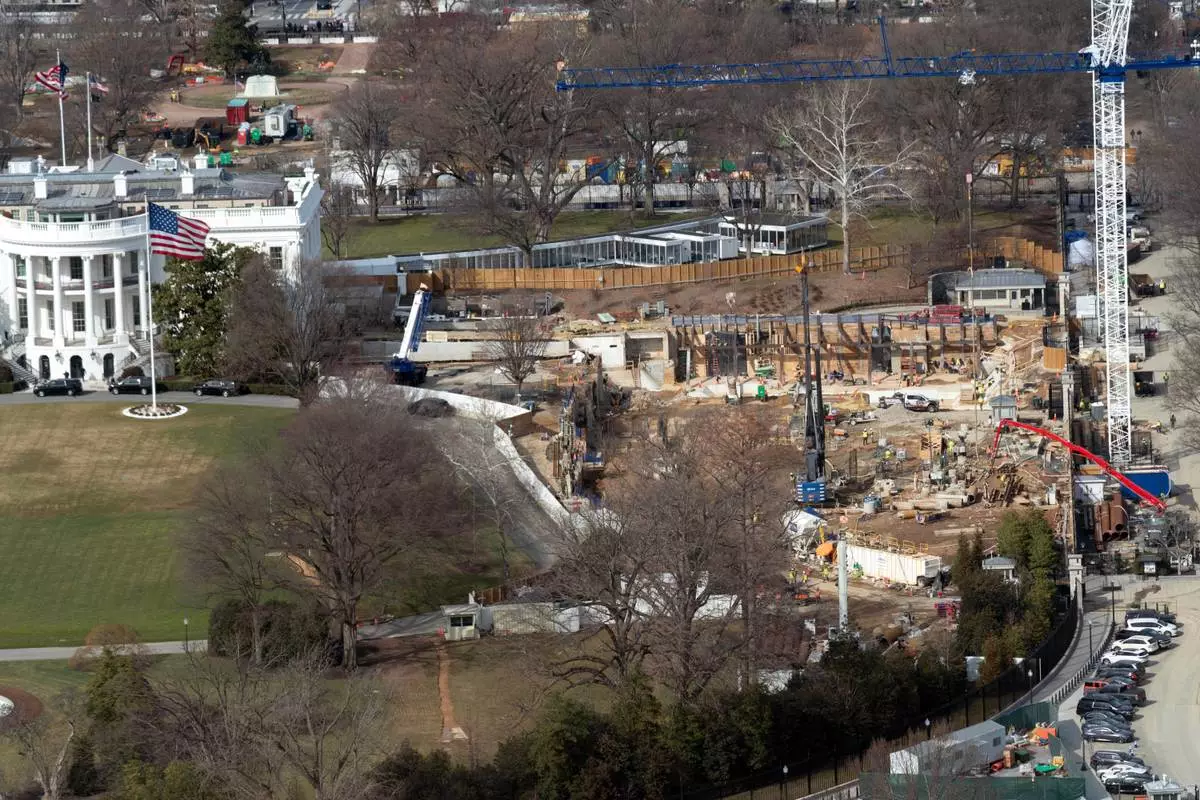
Work continues on the construction of the ballroom at the White House, Tuesday, Feb. 24, 2026, in Washington, where the East Wing once stood. (AP Photo/Jose Luis Magana)
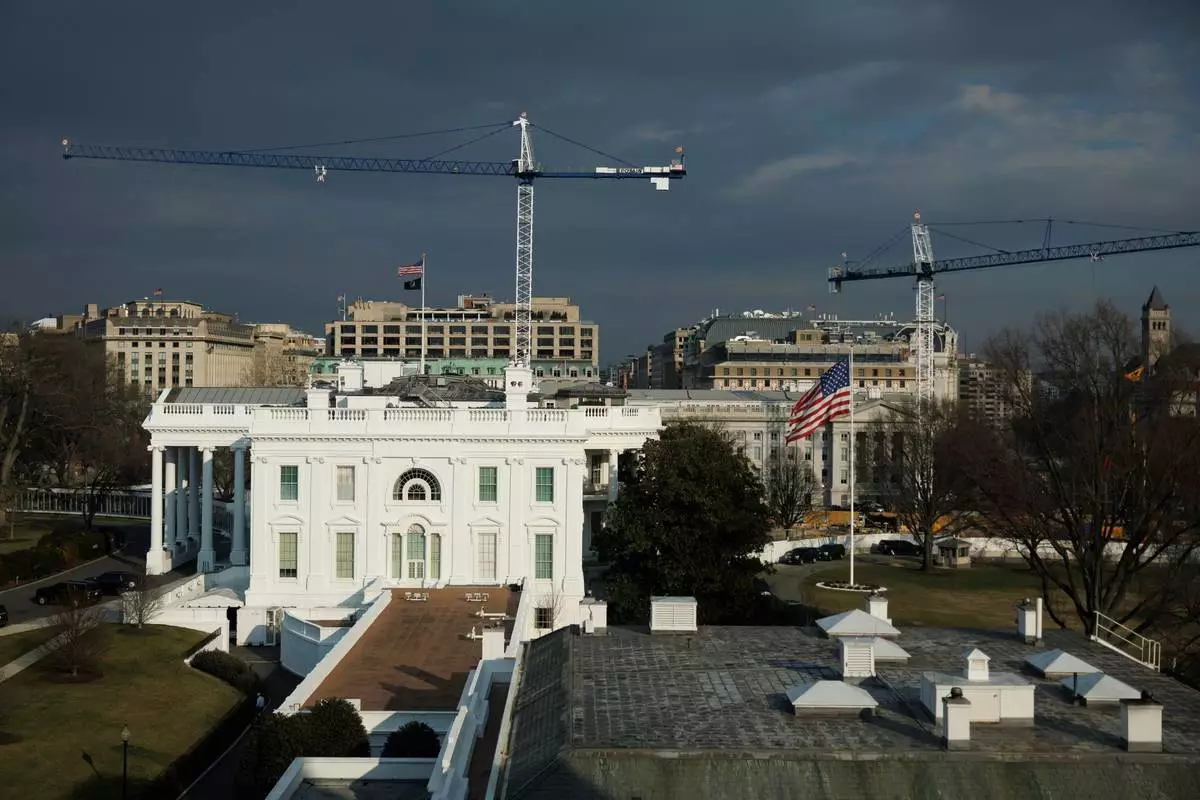
The White House is viewed from the Old Eisenhower Executive Office Building on the White House campus Wednesday, Feb. 25, 2026, in Washington. (AP Photo/Tom Brenner)
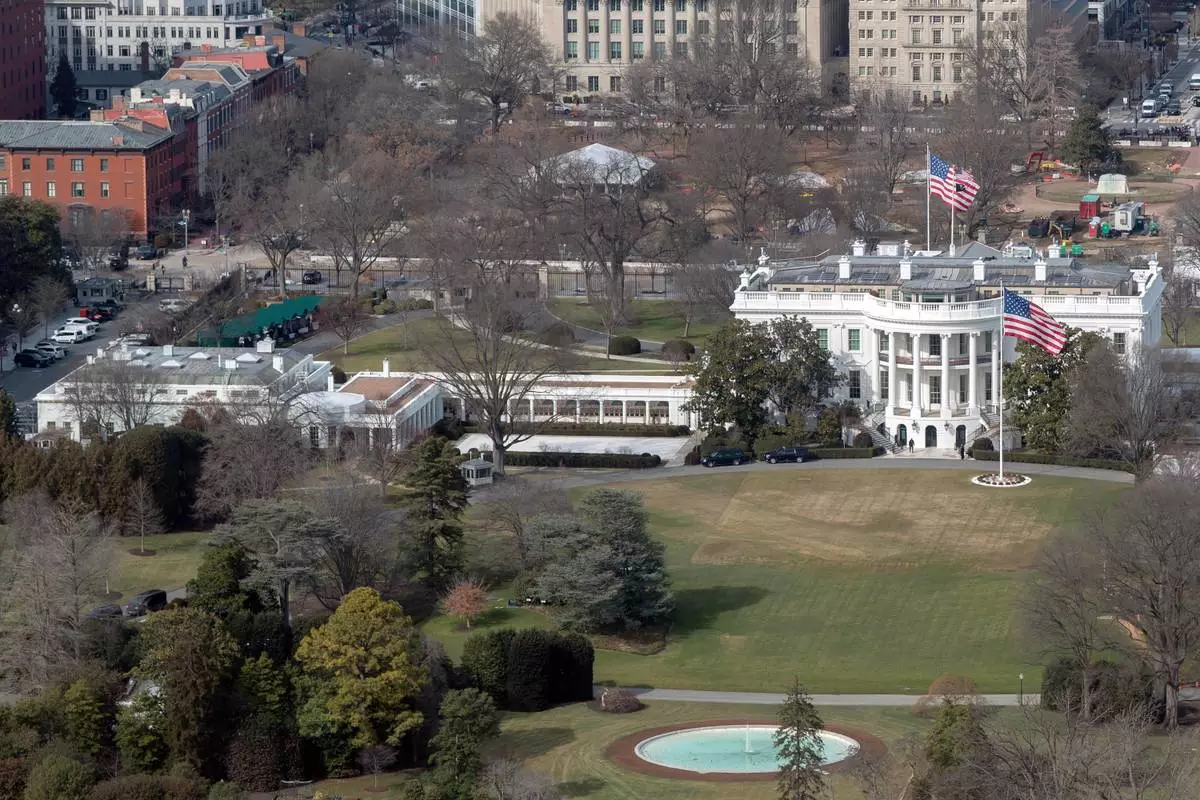
The White House and the West Wing is seen Tuesday, Feb. 24, 2026, in Washington. (AP Photo/Jose Luis Magana)
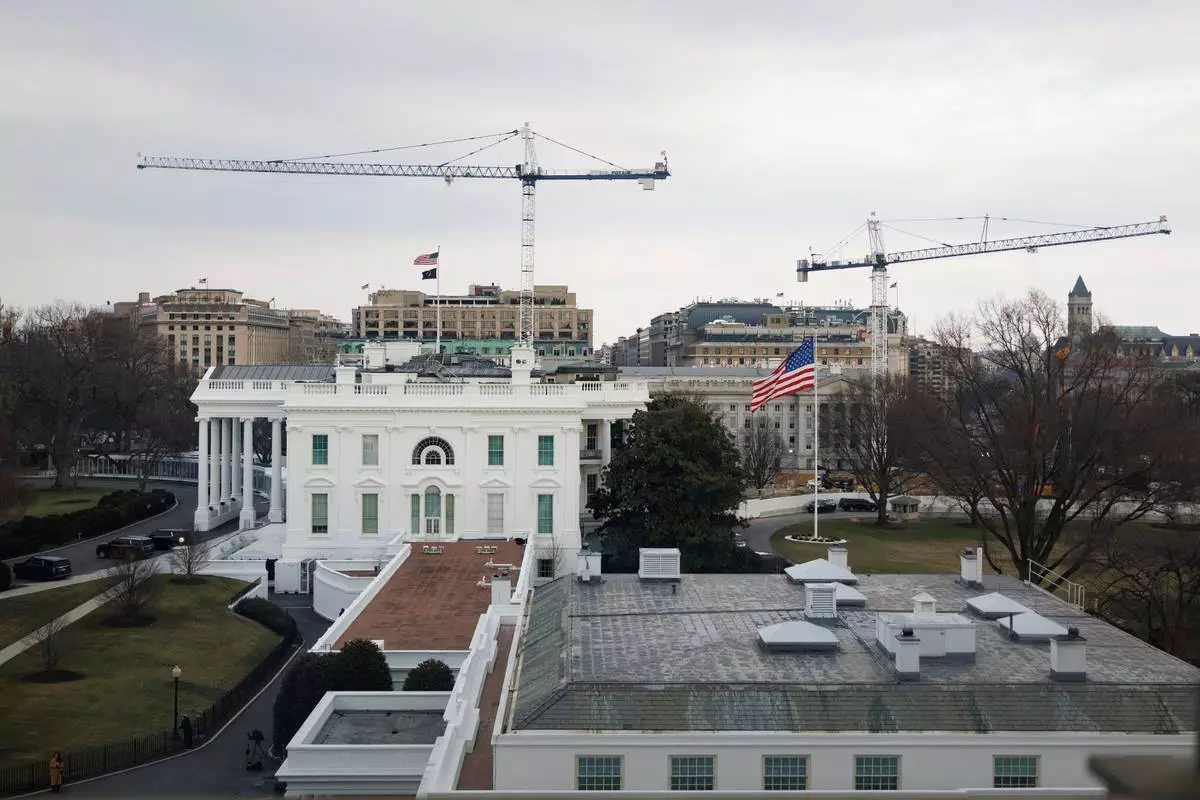
The White House, including the West Wing and construction of the new ballroom, is seen from the Old Eisenhower Executive Office Building on the White House campus Wednesday, Feb. 25, 2026, in Washington. (AP Photo/Tom Brenner)